

What Is a Good Cap Rate for Rental Property? A 2026 Guide for Investors
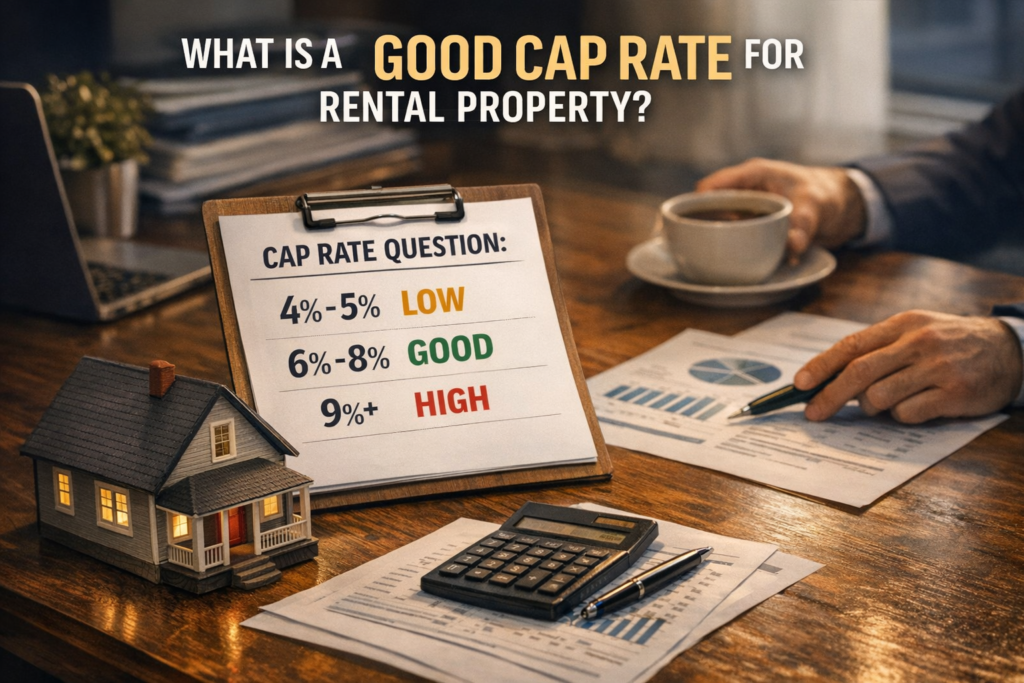

Cap rate is one of the most critical measures for evaluating any investment property, yet few investors—especially new ones—truly understand its power, limitations, and how market shifts in 2026 are transforming rental property analysis. In this guide, KT Rents’ experts give you the latest cap rate benchmarks, break down essential factors like net operating income (NOI), and reveal actionable strategies for securing stronger, more stable rental returns and cash flow in both residential real estate and commercial real estate markets.
Understanding Cap Rate: The Basics

What Is Cap Rate?
The capitalization rate (cap rate) is a popular metric used to estimate the potential return on a real estate investment, especially for rental property investments. The cap rate expresses the relationship between a property’s net operating income (NOI) and its current market value or purchase price—allowing you to compare cap rates across properties and markets using a consistent, risk-adjusted standard. Understanding a property’s cap rate helps investors gauge the expected annual return, excluding debt service and income tax impacts.
How Cap Rate Is Calculated
The cap rate formula is straightforward:
- Cap Rate = Net Operating Income (NOI) ÷ Current Market Value (or Purchase Price)
To calculate cap rate, use the annual net operating income (NOI), defined as gross rental income minus all operating expenses. Excluded from NOI are mortgage payments, depreciation, and capital improvements, so the formula provides an unbiased measure of a property’s earning potential.
Definition of Net Operating Income (NOI)
Net operating income (NOI) is a property’s gross income (all rental income plus ancillary fees) minus all necessary operating costs (property taxes, insurance, repairs, property management services, utilities not paid by tenants, and routine maintenance). NOI is the cornerstone for analyzing rental property as it shows the core cash flow a property generates, regardless of financing structure or the owner’s personal borrowing costs.
Cap Rate vs. Other Metrics (Cash-on-Cash, ROI)
While cap rate focuses on property performance irrespective of financing, metrics such as cash-on-cash return, ROI, and gross rent multiplier incorporate leverage, cash invested, or rental income multiples. Investors should not rely solely on cap rate; supplement with cash-on-cash return (which measures how much actual cash flow you receive relative to the cash invested) and gross rent multiplier for a 360-degree investment analysis. Increasingly, commercial real estate investors utilize advanced analytics to compare cap rates, track cap rate compression trends, and benchmark performance by asset class.
Quick Tips:
The cap rate is your first checkpoint for a property’s earning power, but always look deeper—use NOI, cash-on-cash return, and property management cost breakdowns for a high-confidence investment decision. Compare cap rates within your local market and across property types to balance risk and reward smartly.
Why Cap Rate Matters for Rental Property Investors
Cap Rate and Investment Decisions
For both first-time landlords and seasoned real estate investors, cap rates provide an apples-to-apples way to assess an investment property’s expected return and relative risk. Higher risk locations or asset classes typically offer higher cap rates as compensation for volatility or market uncertainty. Conversely, lower cap rates often signal strong fundamentals and investor appetite in established markets. Understanding a rental property’s cap rate helps clarify potential returns from both income and appreciation.
How Cap Rate Influences Rental Property Valuation
Cap rates are fundamental in determining a rental property’s value. A lower cap rate means buyers pay a premium for stable, predictable returns, often associated with high-demand areas or Class A properties. A higher cap rate suggests the possibility of better yield but with greater perceived risk—often due to factors such as emerging neighborhoods, higher operating expenses, or uncertain rent growth. Always evaluate the current market value relative to market cap rates when making purchase decisions.
Balancing Risk and Reward
Not all properties with high cap rates will yield better results; factors such as vacancy, deferred maintenance, and local market headwinds can erode actual returns. The savvy real estate investor balances cap rate with the likelihood of consistent cash flow and defensible property value, watching for hidden risks in unusually high or low cap rates by asset class or region.
Quick Tips:
Don’t chase high cap rates alone—an investment property is only as good as its market fundamentals, tenant demand, and your ability to manage risk and expenses. Assess annual net operating income, projected rent growth, and other risk factors before finalizing any purchase.
Current Market Trends Affecting Cap Rates in 2026

Interest Rates and Lending Criteria
In 2026, interest rates remain a dominant force in the real estate investment landscape. Rising borrowing costs push investors to demand higher returns, resulting in higher cap rates. On the other hand, falling rates often trigger cap rate compression, where cap rates decrease and market value increases—even if NOI stays flat. Analyzing the interplay of borrowing money, interest rates, and cap rates is essential for real estate investors seeking to time purchases advantageously.
Impact of Short-Term Rental Growth
The explosion of vacation rentals and short-term rental (STR) platforms has upended both residential real estate and commercial real estate investments. Vacation rental cap rates may be higher due to elevated gross income, but greater operating expenses, stricter regulations, and high management needs present unique risks. The market trends for vacation rental property ownership require investors to factor in volatility and compliance to avoid overestimating the property’s potential returns.
Smart Home Amenities and Cap Rate Premiums
Upgraded amenities—like smart locks, high-speed internet, and energy management systems—now command higher rents and can positively influence cap rates by reducing vacancy, minimizing operating costs, and increasing NOI. Forward-thinking property owners leverage these trends to strengthen their property’s cap rate and long-term asset value.
Quick Tips:
Monitor market trends, borrowing costs, and demand for amenities. Cap rate shifts are early signals of opportunities or risks changing beneath the surface. Always check local market cap rates and compare cap rates periodically.
What Is a Good Cap Rate for Rental Property in 2026?
Typical National Ranges: 4% to 7%
In the current market, what is a good cap rate for rental property? Generally, a good cap rate falls between 4% (in prime urban, high-demand markets) and 7% (for secondary or higher-risk markets and asset types). For primary multifamily assets in mature cities, cap rates may even dip below 4% as buyers accept lower yields for long-term stability. Commercial real estate and secondary market sectors may reflect higher or lower cap rates based on asset class volatility.
How Local Markets Shift Expectations
Local economic health, population trends, employment, rent growth, vacancy rates, and local regulation all affect expected cap rate targets. Seasoned real estate investors compare cap rates for similar properties in their area to gauge what’s competitive. Use local property search tools and consult property management services to fine-tune your expectations and target neighborhoods with resilient net operating income profiles.
Asset Classes: A, B, and C Properties
- Class A (New, high-demand): Cap rate 4–5%. Lower risk, lower return. Often reflects cap rate compression and attract institutional real estate investors.
- Class B (Stable, mid-market): Cap rate 5–6%. Balanced risk/return, diversified tenant base, stable NOI.
- Class C (Older, more volatile): Cap rate 6–8%+. Higher risk, more management intensity, but often with greater upside if repositioned.
Quick Tips:
A good cap rate reflects both the asset class and your comfort with risk. Evaluate market cap rates frequently as competitive pressures, borrowing costs, and rent growth expectations shift.
Comparing Cap Rates: Long-Term vs. Short-Term Rentals

Cap Rate Benchmarks for Traditional Rentals
Traditional long-term rentals usually return more stable, predictable cap rates, with performance rooted in consistent monthly rent payments, low vacancy, and sustainable NOI. Residential real estate investors often prefer this asset class for lower volatility and operational simplicity.
Unique Considerations for Vacation/STR Properties
Vacation rental cap rate can be higher—often ranging from 7% to 12%—but comes paired with greater operational complexity, higher average operating expenses (e.g., cleaning, turnovers, utilities), and higher management intensity. Understanding the impact of short-term rent volatility, frequent marketing, and regulatory changes is critical before investing in a vacation rental property.
Operational Complexity and Market Fluctuations
Short-term rentals’ NOI is sensitive to seasonal peaks, online ratings, and sudden regulation. Cap rate for vacation rentals should be compared carefully to long-term rentals—use a cap rate calculator that factors in seasonal vacancy, special insurance, and added maintenance demands. Always analyze annual net operating income under both best- and worst-case scenarios.
Quick Tips:
Factor in higher operating costs, seasonal fluctuations, and potential for regulatory change in your cap rate calculation for vacation or short-term rental property.
Hidden Costs: Insurance, Climate Risk, and Regulatory Changes
Rising Insurance Premiums and Their Cap Rate Impact
Escalating insurance premiums, especially in regions with elevated climate risk, are directly eroding NOI and, ultimately, lowering achievable cap rates. Gross income may be steady, but higher insurance costs undermine property cash flow and asset value, particularly in coastal or disaster-prone markets.
Climate Change, Resilience, and Property NOI
Climate-related risks—from hurricanes to wildfires—increasingly affect long-term cash flow, property maintenance budgets, and the stability of net operating income (NOI). Failing to address resilience results in cap rate compression, higher risk premiums, and suppressed market value.
Local Regulations and Rent Control Effects
Local regulations—such as rent control ordinances, stricter licensing, or caps on rent increases—can suppress rent growth and compress cap rates. Always review local rules for both residential and commercial real estate to identify potential risks to NOI or cash on cash return.
Quick Tips:
Budget conservatively for insurance, property taxes, and legal compliance when projecting a rental property’s cap rate. Ignoring hidden costs or regulatory risks can quickly alter return profiles.
Calculating a Realistic Cap Rate: Step-by-Step Example

Sample Calculation for a Traditional Rental
Let’s say your annual gross rental income is $24,000. Operating expenses—including property taxes, insurance, maintenance, and management—total $9,000 annually. The property’s purchase price is $250,000.
- NOI = $24,000 – $9,000 = $15,000 (annual net operating income)
- Cap Rate = $15,000 ÷ $250,000 = 6%
Sample Calculation for a Short-Term Rental
For a vacation rental property with $45,000 gross income and $24,000 in operating costs (cleaning, marketing, insurance):
- NOI = $45,000 – $24,000 = $21,000
- Cap Rate = $21,000 ÷ $350,000 = 6%
Adjustments for Market-Specific Variables
In real estate investment, always stress-test cap rate calculations with assumptions for vacancy, local taxes, rent control, and fluctuating borrowing money costs. Input accurate, local, and recent data into your cap rate calculator; projecting with outdated or overly optimistic incomes skews risk analysis and expected returns.
Quick Tips:
Cap rate calculations must reflect actual, not projected, net operating income NOI. Use real numbers, considering all probable expenses and market-specific risks in each investment property.
How Property Condition and Management Affect Cap Rate
Capital Expenditures and Maintenance
Deferred maintenance, aging systems, or inefficient utilities will drag on NOI and suppress cap rates. Savvy real estate investors account for ongoing capital expenditures, creating a reserve for long-term upgrades or emergency repairs, and tracking these investments’ impacts on the property’s net operating income year over year.
Professional vs. Self-Management Scenarios
Proper property management services can optimize both rental income and operational efficiency, often justifying their fees by minimizing vacancy, driving rent growth, and executing cost-saving maintenance. Self-management may cut fees but can risk cash flow losses if inexperienced owners overlook tenant quality or preventive care.
Importance of Preventive Maintenance and Asset Upgrades
Regular upgrades—energy-efficient systems, modern appliances, smart tech—boost tenant retention and monthly rent, directly enhancing NOI and the property’s cap rate. Analyze the ROI for each improvement by tracking changes in rental income and operating expenses post-upgrade.
Quick Tips:
Property condition and proactive management are direct levers for NOI growth, stronger cap rates, and resilient asset value. Calculate future value with a focus on preventable repair costs as part of long-term real estate investment strategy.
Strategies to Improve Cap Rate and Maximize Returns

Increasing Rental Income Effectively
To improve your property’s cap rate, focus on strategies that increase rental income: regular market rent evaluations, value-add improvements, flexible lease terms, and revenue-boosting amenities. For vacation rentals, dynamic pricing tools and marketing optimizations can help you capture seasonal peaks and outperform market cap rates.
Reducing Expenses Without Cutting Corners
Audit all recurring operating costs, including insurance, maintenance contracts, and utilities. Negotiate bulk discounts and optimize property management services. Efficiently managed operating expenses are essential for optimizing NOI and sustaining cash flow, especially as borrowing costs and interest rates change.
Leveraging Smart Technology and KT Rents Services
Embrace technology—automated rent collection, smart home features, preventive maintenance software—to increase NOI while keeping operating expenses in check. Our experienced property management professionals streamline asset management, enabling you to maximize annual net operating income and compare cap rates confidently year after year.
Quick Tips:
Every dollar added to NOI or saved on expenses is multiplied by your cap rate. Track cash on cash return and net operating income to measure real improvements in your investment property’s performance.
Mistakes to Avoid When Relying on Cap Rate Alone
Ignoring Local Market Nuances
National averages only offer rough guidelines. Compare cap rates within your market, property type, and asset class. Differences in neighborhood, property management approaches, and tenant demographics can dramatically affect cap rates and the sustainability of returns.
Overlooking Total Cost of Ownership
Don’t focus solely on cap rate; unrecognized expenses—capital improvements, hidden maintenance, or unpredictable insurance—can erode ROI and cash flow. Sophisticated real estate investors analyze cost of ownership across multiple holding periods and under varying market trends and interest rate scenarios.
Focusing Solely on High Cap Rates—Risks and Trade-Offs
Properties with exceptionally high cap rates may reflect higher risk, location disadvantage, or distressed conditions. True returns depend on the sustainability of NOI; sometimes, lower cap rates in prime areas with long-term rent growth and resilient tenant demand are a safer, stronger bet.
Quick Tips:
Use cap rate as a guide, not a rule. Prioritize comprehensive due diligence, local data, and an understanding of all the variables that influence cap rates.
KT Rents’ Ownership Mindset: How We Help You Make Data-Driven Decisions

Our Approach to Transparent Property Analysis
At KT Rents, we evaluate every rental property as if it were our own—validating gross income assumptions, annual net operating income, and detailed expenses for a truly accurate cap rate calculation. We analyze how operating expenses, changing market value, insurance, and future borrowing costs affect cap rate projections and protect your bottom line through every market cycle.
Experience in Multiple Market Types
Our expert team brings insight into all asset classes and regions, from urban multifamily to vacation rental property and commercial real estate investments. We leverage in-house technology, up-to-date market trends, and local connections to identify high-performance opportunities and anticipate shifts that may influence cap rates.
Ready for a Cap Rate Review? (CTA)
If you’re considering a new investment property, seeking to reposition an asset, or want to improve your property’s net operating income, contact KT Rents for a complementary property and cap rate review. Let us help you make smarter real estate decisions and build wealth in 2026 and beyond.