

How to Organize Small Spaces: A Renter-Friendly, Room-by-Room Guide

Key Takeaway
To organize small spaces, declutter first, then assign every category a specific home before adding any storage. Use walls, doors, corners, and under-furniture space in that order, keeping exits, smoke alarms, and walkways clear. Studies show the median U.S. rental apartment is 850 square feet, so compact living is common, and a proven system beats more square footage every time.
The Quick Answer: A Five-Step System for Organizing Small Spaces
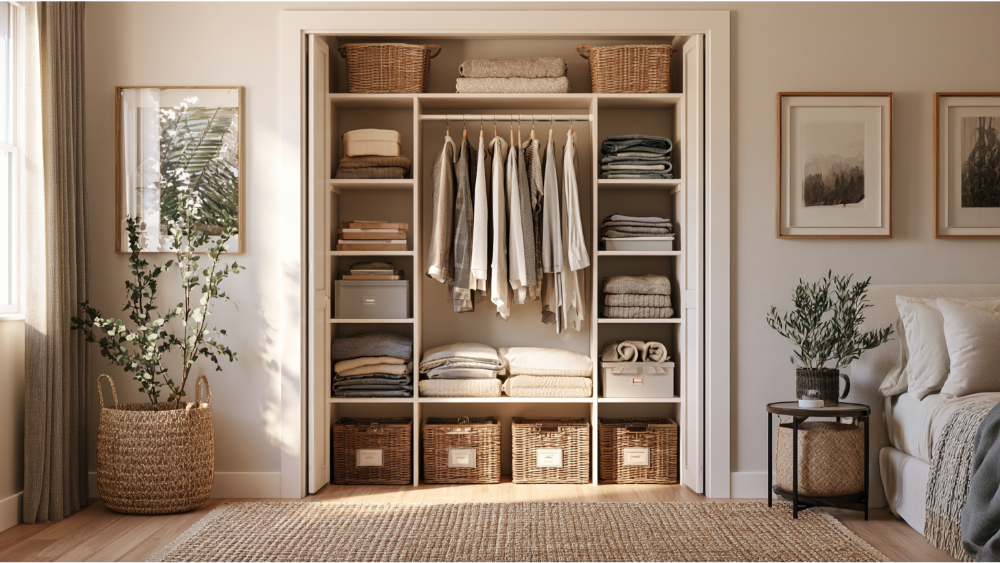
To organize a small space, declutter first, group what’s left by how and where you actually use it, then assign every category one specific home. Only after that should you add measured storage, using walls, doors, corners, and the space under your furniture, while keeping exits, smoke alarms, vents, and walkways clear. That order matters. Containers can’t fix excess inventory, and a shelf you can’t reach safely isn’t storage, it’s a hazard.
This guide is written for renters and residents in apartments, studios, condos, and townhouses who want a compact home to work better without moving, drilling holes, or risking a lease dispute. At KT Rents, we’re a full-service, broker-owned property management company, which means we see both sides of a rental home: residents who want to feel settled, and the walls, floors, and safety systems that need to stay intact. The framework is simple enough to keep in your head: Edit, Map, Measure, Store, Maintain. This is national, renter-first guidance, so always check your own lease before anything permanent.
Why “Small” Is Relative, and Why That’s Good News
There’s no official square-foot number that makes a home “small.” What feels cramped depends on your belongings, your routine, and how the layout flows. For context, the 2023 American Housing Survey found that 61% of renter-occupied homes were in buildings with two or more apartments, and the median size of those units was 850 square feet. Those are 2023 survey figures, not a rule you need to measure yourself against, but they confirm something useful: compact rentals are the norm for a lot of people, not a personal failing.
That’s the good news. The challenge of limited space is universal, which means the storage solutions are well-tested. Good organization is about fit, not footage. And fit has two parts that often get confused: a room can look tidy while still being hard to live in. A shelf of matching storage boxes photographs well, but if you can’t remember what’s inside or can’t reach what you use daily, it isn’t actually organized. We’ll keep coming back to that difference: does it look calm, and does it work?
Get Rid of the Excess Before You Buy a Single Organizer

The fastest way to waste money is to buy bins before you edit. New containers just rehouse clutter, giving your excess a nicer place to live while your floor space stays gone. When you have too much stuff and get rid of what you don’t use, you remove the root problem, and it has the side benefit of making the space calmer the moment you finish, before you’ve spent a dollar.
Work one category or one contained zone at a time. Pulling all your stuff out of every closet at once leaves you buried and discouraged. Pick a single drawer, one of your cabinets, or the clothes you actually wear, and finish it before moving on. As you go, sort into four buckets:
- Keep: items you use or genuinely value, that belong in this room.
- Relocate: things that live better somewhere else in the home.
- Donate or sell: good condition, no longer serving you.
- Recycle or dispose: broken, expired, or beyond use.
Pull out duplicates while you’re at it. Most of us don’t need five spatulas or three phone chargers in one drawer. The hardest part is following through, so give outgoing items a deadline. Keep a designated donation box by the door, and set a day to actually drop it off. Items that linger in a “maybe” pile usually creep back onto shelves. A little daily editing, tossing junk mail as it arrives, clearing the counter each night, keeps buildup from starting over.
Map How You Actually Use Each Room
Before you store anything, watch how you move through the space. Most rooms do several jobs: sleep, work, cook, relax, dress, and the simple act of coming in and going out. Name those jobs, then store things near the point where you use them. Coffee supplies belong by the coffee maker. Keys belong by the door. It sounds obvious, but misplaced storage is why things never get put back.
Give each zone one clear job so the lines don’t blur. In a studio apartment, a dorm room, or a one-room setup, this is how you create order without walls. A rolling cart is useful here because it’s a movable zone: craft supplies, kitchen overflow, or an end table that rolls out of the way. It’s self-contained and liftable, which also matters for cleaning and safety.
Build an entryway landing area while you’re at it. A small tray or a few hooks for keys, mail, shoes, and bags stops the pileup that spreads into the rest of the home. Multipurpose furniture earns its keep here too, serving more than one zone at once, which we’ll get to shortly.
Measure Every Usable Storage Space First

“Measure first” is common advice, and it’s usually too shallow to help. The fix is a real checklist. Before you buy anything, write down the actual numbers for every storage space you plan to use. Measuring the opening is often more important than the interior, because a wide cabinet with a narrow door frame won’t take a wide bin.
- Opening width, not just the interior width of a cabinet or closet
- Shelf depth and the height of the gap between shelves
- Closet door and cabinet door swing (how far each opens into the room)
- Drawer travel (how far drawers pull out)
- Under-bed clearance from floor to frame
- Available vertical height from floor or counter to ceiling
- Baseboard and trim depth, which pushes furniture out from the wall
- Locations of outlets, vents, radiators, smoke alarms, and sprinklers
Note weight and anchoring needs too. If a shelf or a tall unit will hold anything heavy, you’ll want to know the wall type and whether anchoring is allowed before you buy. Five minutes with a tape measure prevents the return trips and the unsafe “it almost fits” setups that cause problems later.
The Small-Space Storage Hierarchy (Use What You Have First)
When storage space is tight, the instinct is to shop. Reverse it. Spend your money last, after you’ve used every free option you already own. Follow this order:
- Existing drawers and cabinets: empty the junk, and you often find room you forgot you had.
- Space inside existing furniture: hollow ottomans, nightstands, bench seats.
- Under-furniture space: under the bed, under a console, behind a sofa.
- Door backs: the flat space behind every door is usually unused.
- Corners and narrow gaps: the slim space beside the fridge or a dresser.
- Freestanding vertical storage: a tall shelf unit that needs no installation.
- Wall-mounted storage: last, and only with written permission and safe installation.
Furniture that doubles as storage saves the most space because it does two jobs at once. Under-bed containers use low space that’s otherwise dead. Hooks on the backs of your cabinets and inside closets add storage without touching a wall. The whole sequence is really Remove, Relocate, Reuse, Measure, then buy only what solves a problem you’ve actually defined. If you can’t name the problem a product fixes, skip it. Thrift stores are worth a look here, since a secondhand shelf or bin costs a fraction of new and keeps the budget down.
Choose Storage by How Often You Use Things
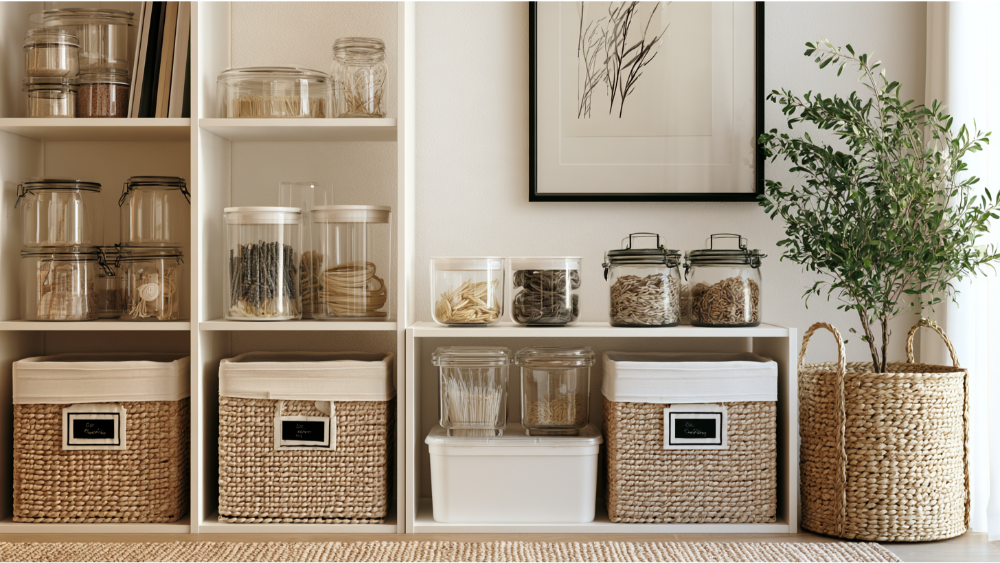
Where something lives should match how often you touch it. Put everyday items at the easiest, safest reach, roughly between your knees and your eyes, so you’re not climbing or crouching every morning. Weekly items go in nearby enclosed storage. Seasonal items can head to higher shelves or the back of a closet. Heavy objects always go low and stable, never up high. And emergency supplies, a flashlight, a first-aid kit, stay immediately accessible.
One caution the quick tips skip: not every resident can reach a high shelf or crouch for an under-bed bin. If reach or mobility is a factor for you, your daily-use stuff should stay accessible to you specifically, not to some average person. Federal fair housing guidance recognizes that residents with disabilities can request reasonable accommodations or modifications for equal use of their own home, so don’t force a setup that doesn’t work for your body.
For seasonal gear, clear bins let you see what’s inside without opening every one, and vacuum bags shrink bulky bedding and coats down to a fraction of their size. Storage boxes on wheels make heavy or deep storage easy to pull out and push back.
Multipurpose Furniture That Pulls Double Duty
In a small home, every piece of furniture should earn its footprint. The best pieces pull double duty, which is how you get more storage without adding more items to the room.
- Storage ottoman or coffee table: a lid that lifts to store things like blankets, pillows, or board games, doubling as a footrest and a surface.
- Storage bench: seating by the door or the foot of the bed that conceals seasonal clothing and linens.
- Dresser as a TV stand or room divider: one piece that holds the television, your clothes, and quietly splits a studio into zones.
- Fold-down or murphy table: a surface that drops flat against the wall and becomes a dining table only when you need it, which is a real game changer when the dining space doubles as a work space during the day.
A couple of design choices make the whole room feel bigger. Furniture with exposed legs lets light and floor show through underneath, which reads as more room than a boxy piece sitting flush to the ground. A mirror stretches light and makes a small house or studio apartment feel larger than its square footage. These are the touches that help a compact rental feel like a real home rather than a holding cell. One rule before you buy any storage furniture: it has to be stable. A tall or top-heavy piece full of weight can tip, which brings us to safety.
Creative Storage Ideas to Utilize Vertical Space and Keep Things in Plain Sight
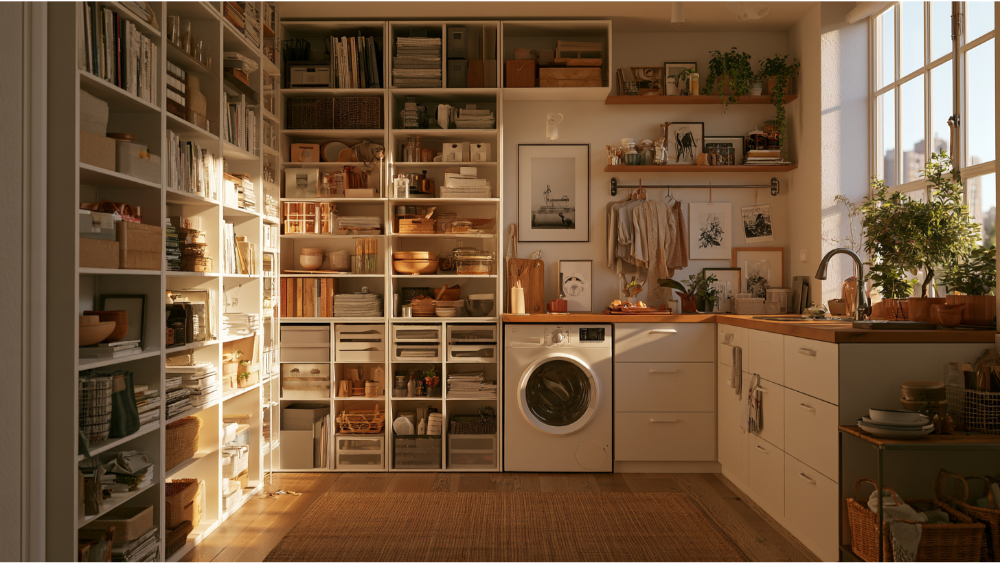
When the floor is full, look up and look at the flat surfaces you’re ignoring. Learning to utilize vertical space is one of the most effective ways to add storage in a small room, but it is never a stand-alone tip. Every vertical idea below comes with the same three reminders: respect the weight limit, make sure it’s stable, and get lease approval before anything attaches to a wall. These storage ideas work in any room, from a tiny kitchen to a bedroom closet.
- Over-the-door organizers: a hanging shoe rack can hold up to 26 pairs on a closet or bathroom door, and the same style works for cleaning supplies, snacks, or craft gear.
- Pegboards: a wall of hooks for cookware or tools, some rated to hold up to 200 pounds, though the manufacturer’s rating is what actually controls what’s safe.
- Floating shelves and open shelving: storage up high that keeps the floor clear, ideal for books or decor you don’t handle daily.
- Tall freestanding shelving: vertical capacity with no drilling, good for kids toys, craft supplies, or pantry overflow.
- Corner and narrow-gap units: slim shelving that claims the awkward small space most people waste.
Keeping the things you reach for most in plain sight, rather than buried in a deep bin, means you actually use and restock them. Vertical storage isn’t right for everyone or everything. If reaching high is hard for you, keep the top shelves for things you rarely need. Heavy items belong low, never overhead. And avoid loading shelves in the space directly above a bed or seating, where anything that falls lands on a person. We’ll cover the stability specifics next, because this is exactly where “go vertical” advice usually goes wrong.
Room-by-Room Storage Ideas
Here’s where the system meets each space. The table below gives a problem, a free fix to try first, a storage option, and the renter or safety check to run before you commit.
| Room | Problem | First free fix | Storage option | Renter / safety check |
|---|---|---|---|---|
| Entryway | Keys, mail, shoes pile up | Clear a shelf or tray near the door | Over-door hooks, a slim shoe rack or bench | Don’t narrow the exit path |
| Kitchen | Full cabinets, no counter | Purge duplicates and expired food | Shelf risers, inside-cabinet door hooks, a rolling cart | Keep vents and outlets clear |
| Small bathroom | Toiletries everywhere | Use the medicine cabinet fully | Over-toilet shelf, bathroom door organizer, under the bathroom vanity bins | Keep toilet paper, paper towels, and cleaning supplies in plain sight so you restock on time |
| Bedroom / closet | No closet or a tiny one | Edit clothes to what you wear | Freestanding garment rack, under-bed bins, closet-rod hooks | Secure the rack; don’t block windows |
| Living room | Clutter on every surface | Give remotes and chargers a home | Storage ottoman, media console with doors | Keep walkways and the main exit open |
| Work-from-home / studio | Work and life bleed together | Define a work zone with a rug or divider | Rolling cart, fold-down desk, wall file | Don’t run cords across a walkway |
A note on the small bathroom, since it’s the smallest room most renters face: a shallow over-toilet shelf and a door organizer add real capacity without touching a wall. Make full use of the medicine cabinet before anything else, and store daily supplies in plain sight rather than tucking everything away, because you actually use and restock what you can see. In the bedroom, under-bed bins and a few hooks on the closet doors turn dead space into real storage without a single hole in the wall. In the living room, a storage ottoman and a console with cabinets keep everyday items off the surfaces. For shoes, the right shoe boxes stacked in a closet keep pairs dustfree and visible, and a slim shoe rack by the door handles the ones you grab daily.
Renter-Friendly Storage: What to Use and What to Ask About

Storage falls into three types, and knowing which is which keeps you out of lease trouble. Portable options go with you and leave no trace. Semi-permanent options use tension or adhesion and usually come off clean. Permanent options involve drilling, mounting, or installing fixtures, and those always need approval.
Safe, no-drill options renters can use freely include freestanding shelves, over-the-door organizers, a tension-mounted shoe rack, tension rods and tension shelving, rolling carts, and storage ottomans and benches. Adhesive hooks and strips are fine as long as you stay within the manufacturer’s weight rating, because overloading them pulls paint off the wall. These give you extra storage in a tiny apartment without risking your deposit.
For anything permanent, review your lease and get written approval before you drill, mount, or install shelves or a fixture. A wall mounted rack or cabinet can be a smart move in a tiny space, but only once the property has signed off. Rules vary by property, so don’t rely on what a friend did in a different building. If you’re a resident with a disability, federal fair housing guidance allows you to request reasonable modifications or accommodations for equal use of your own home. A housing provider may require that certain modifications be done professionally and to code, and in some cases, restoration when you move out. Ask first, in writing, and you avoid surprises at the end of the lease.
Small-Space Safety Checks People Overlook
This is where most organizing guides fall short. Packing a small house full of storage can quietly create real hazards, so run these checks as you go.
Keep exits clear. The U.S. Fire Administration notes you may have less than two minutes to escape after a smoke alarm sounds, and recommends planning two ways out of every room. Storage can never block a door, a window that serves as an escape route, or the path to them.
Don’t cover safety devices. The NFPA recommends smoke alarms in every bedroom, outside each sleeping area, and on every level, tested at least monthly and replaced at 10 years old. Tall shelving, storage boxes, and decorative pieces should never block an alarm, a vent, a radiator, an electrical panel, or an outlet.
Anchor furniture that can tip. CPSC estimated an annual average of 17,800 emergency-room-treated tip-over injuries during 2020 to 2022, with furniture accounting for about 14,500 of them, or 82%. The federal clothing-storage-unit safety standard took effect September 1, 2023. Don’t assume a wide or heavy dresser with loaded drawers can’t fall. Anchor it following the manufacturer’s instructions with weight-rated hardware, keep heavy objects low, and avoid opening several drawers at once.
Don’t overload. Doors, shelves, cabinets, and hanging organizers all have limits. Respect them.
Watch for moisture. The EPA recommends keeping indoor humidity between 30% and 50%, and below 60%, and drying wet or damp materials within 24 to 48 hours. Don’t pack storage tight against a damp wall, around plumbing under a sink, or over HVAC equipment, where trapped moisture invites mold.
When to Submit a Maintenance Request, and When a Rental Just Doesn’t Fit

Organizing behind furniture and under sinks has a way of revealing things. If you find a leak, mold or persistent condensation, pest activity, a damaged outlet, loose built-in shelving, or a blocked vent, stop organizing and report it. Don’t hide the problem behind a bin, and don’t attempt a repair that isn’t yours to make. Residents of KT-managed homes can use our owner and resident portal to submit a maintenance request, and form submissions get a response within 24 hours.
Sometimes the honest answer is that organization can’t solve a capacity problem. No amount of clever storage ideas will create more room that simply isn’t there. Watch for these signs that the unit may not fit your real needs:
- Necessary furniture blocks a safe walkway, and there’s nowhere else for it.
- Essential belongings can’t be stored where you can reach them.
- Your sleep, work, and cooking zones constantly collide.
- There’s no room for mobility or medical equipment you depend on.
- You’re paying for off-site storage month after month with no end in sight.
If a one-bedroom apartment has reached its limit no matter how you arrange it, forcing an unsafe setup isn’t the answer. Browse KT Rents’ rental listings nationwide and compare options with the space and storage you actually need to live well.
Keeping Your Small Space Organized Long Term
The system holds when putting something away is easier than leaving it out. If the “home” you assigned an item is convenient, you’ll use it. If it’s a hassle, clutter wins. So keep the easy homes easy, and make sure the most-used stuff lives where you naturally reach for it.
- Do a brief daily reset, clearing surfaces before bed. A 10-minute timer helps some people, but treat it as an optional habit, not a rule.
- Process mail and packages right at the entry, so paper never migrates inside.
- Keep a donation container going year-round, and empty it on a schedule to get rid of what you’ve outgrown.
- Reassess your high-volume categories, clothes, kitchen gear, kids toys, paper, every so often to keep small rooms from filling back up.
Be selective about what comes in. The “one in, one out” idea, where a new item means an old one leaves, is a useful experiment for some, but it’s a personal habit to try, not a law. Pick the routines that actually fit your life and skip the rest, and the things you keep will tuck neatly into the homes you set up.
Frequently Asked Questions
What is the 10-10-10 rule for decluttering?
It’s a popular method where you find 10 items to throw away, 10 to donate, and 10 to return to their proper place. It’s a helpful push to get started, not an official standard, so use it as a game rather than a target you have to hit.
What is the 12-12-12 rule for decluttering?
This challenge has you locate 12 items to toss, 12 to donate, and 12 to put back where they belong. Like the 10-10-10 version, it’s an optional motivator that works well when you need momentum on a cluttered room.
What is the 50% rule in decluttering?
Some people aim to leave shelves and cabinets about half empty so storage space stays easy to use and nothing gets jammed. It’s a personal guideline, not a fact, so adapt the number to your own home instead of treating it as required.
What should I not throw out when decluttering?
Hold onto important documents, warranties and manuals you still need, irreplaceable sentimental items, and anything you’d have to rebuy soon. When you get rid of things, be deliberate, so slow down on these categories rather than purging on autopilot.
Ready for a home that fits how you live? Browse KT Rents’ listings nationwide, or reach us at (800) 716-4950 or info@ktrents.com. Form submissions get a response within 24 hours.