

Bangor, Maine
Homes for rent and for sale — search the map or open the full city SEO catch-all page.
Bangor, Maine
Moving to Bangor, Maine means trading big-city costs for a mid-size regional city of about 32,500 people where median gross rent is $1,055, the average commute is 16.6 minutes, and winters average 74.6 inches of snow. The city anchors healthcare for much of northern Maine with two acute-care hospitals and roughly 17,500 education and health jobs. It suits remote workers, healthcare and education professionals, and budget-conscious renters more than those needing a deep specialized job market.
Moving to Bangor, Maine
Bangor, Maine is a regional city of about 32,500 people where housing costs sit below big city levels, the average commute runs under 17 minutes, healthcare access is unusually strong for a city this size, and winters bring roughly 75 inches of snow. Median gross rent was $1,055 in the 2020 to 2024 American Community Survey. Whether you should live here comes down to your budget, your line of work, and how you feel about cold weather.
If you’re weighing a move from one of the other states, here’s the honest picture on housing, jobs, schools, hospitals, getting around, parks, food, and the paperwork Maine expects in your first 30 days.
Is Bangor, Maine a Great Place to Live? The Short Answer
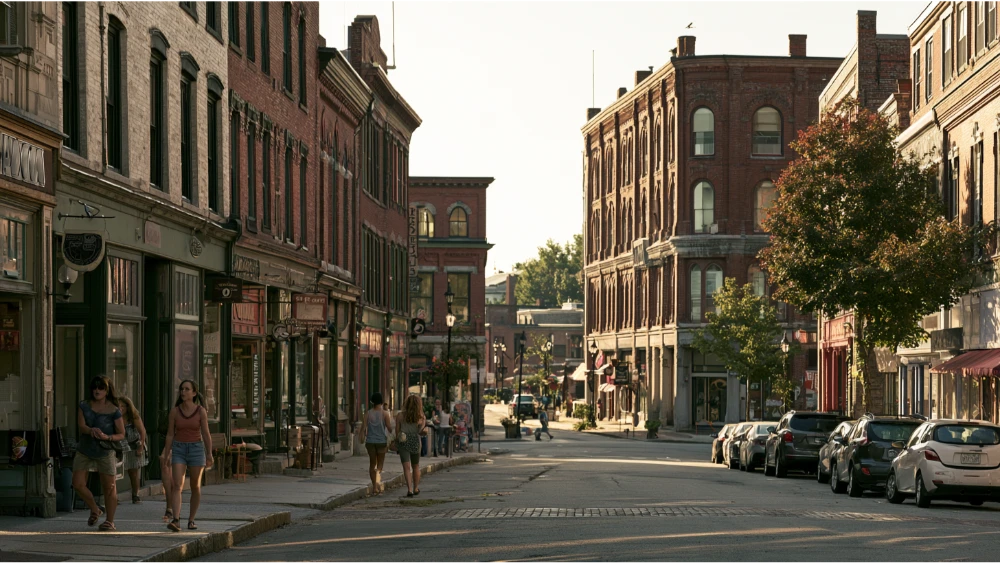
Living in Bangor works well if you’re a renter or remote professional who wants a short commute, four honest seasons, quick access to the outdoors, and housing that costs less than a big city. It works less well if you need a deep market for specialized corporate or tech roles, or if you want big city nightlife and frequent transit. Education and health services make up the largest employment sector in the metro at roughly 17,500 jobs (July 2026 preliminary, BLS).
Keep two things straight. “Bangor city” and “Bangor metro” (Penobscot County) figures aren’t interchangeable, and Census median rent is a five-year historical average that includes existing leases, not what a listing shows today.
Bangor at a Glance: Population, Income, and Home Prices
| Metric | Figure | Date |
|---|---|---|
| Population | 32,518 (up 2.4% since 2020 base) | Est. July 1, 2025 |
| Median household income | $59,942 (2024 dollars) | 2020 to 2024 ACS |
| Median gross rent | $1,055 | 2020 to 2024 ACS |
| Median owner-occupied home value | $219,600 | 2020 to 2024 ACS |
| Owner-occupancy rate | 47.2% | 2020 to 2024 ACS |
| Households with broadband | 89.2% | 2020 to 2024 ACS |
| Mean commute | 16.6 minutes | 2020 to 2024 ACS |
All figures above are Bangor city scope, from U.S. Census Bureau QuickFacts. The Bangor population has ticked up since 2020, which makes this a slowly growing city rather than a shrinking one. Renters make up slightly more than half of occupied households, and near-90% broadband is a real point in Bangor’s favor if you work remotely.
Cost of Living in Bangor vs. Big City and National Averages
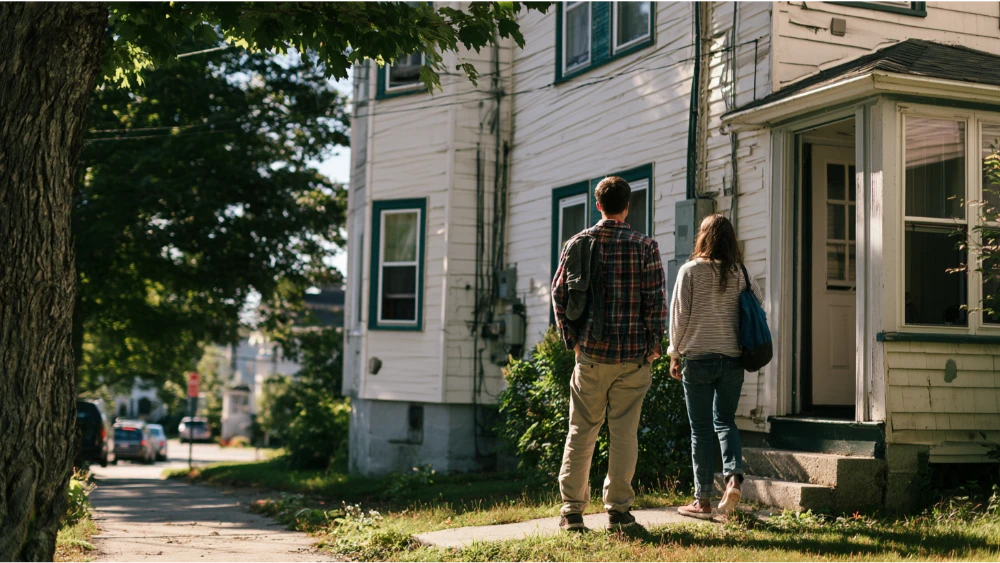
Housing generally costs quite a bit less than in Portland, southern Maine, and most big city markets, but local wages also sit below the national average. The BLS put the Bangor metro mean wage at $29.26 per hour in May 2025 against a national mean of $33.54. The arbitrage works cleanly only if your income comes from somewhere else.
MIT’s Living Wage Calculator (February 2026, Bangor metro) models $23.98 per hour, about $49,871 before taxes, for one adult with no children, and $16.32 each for two working adults. Maine charges 5.5% general sales tax, 8% on prepared food, and 2026 income tax brackets of 5.8% to 7.15%.
The line item movers from warm states underestimate is winter heat. Budget it separately from rent, and run what daily life costs here through the KT Rents Cost of Living Calculator and Rent Calculator.
Renting in Bangor: What to Ask Before You Sign
Supply is tight, so start early. Good units don’t sit waiting for a slow applicant. The city’s 2025 housing study found rents rising at a 6.5% compound annual rate from 2020 through 2022 and home prices at 11% annually through 2024, with an estimated shortage of 700 homes for households earning under $35,000. Affordable housing is the pressure point: as of 2022, 86% of renters at or below half the area median income were cost-burdened. The city certified 82 dwelling units for occupancy in FY2026, so inventory is growing, just not fast.
Before you apply for an apartment, ask:
- What’s the heat source, and who pays for it?
- Can you provide the 12-month energy use and cost history? Maine landlords generally must give this disclosure or tell applicants of their right to request it before a lease is signed or a deposit paid.
- Who clears the walk and driveway once the cold weather hits?
- Is there off-street parking or a shared parking lot, and how many spaces?
- Laundry, pet policy, and which utilities are included?
Maine caps security deposits at two months’ rent. Deposits or an itemized withholding statement must return within 30 days on a written lease, 21 days for a tenancy at will. The state’s model lease caps late fees at 4% of one month’s rent and bars them until rent is 15 days late. Some small owner-occupied buildings are exempt from certain deposit rules, so read the Maine Attorney General’s tenant rights page.
Rent First or Buy? Home Prices and Property Taxes
We’d rent one lease cycle first. A full winter teaches you your real commute, which streets get plowed early, and which blocks you actually want to live on.
Median home value for owner-occupied units was $219,600, with median monthly owner costs of $1,620 with a mortgage and $704 without (2020 to 2024 ACS). Bangor’s FY2027 municipal property tax rate is $17.13 per $1,000 of assessed value, due September 15, 2026 and March 15, 2027. Revaluation work is underway, so treat the mill rate as context, not a prediction.
Bangor Neighborhoods: Where to Live Without the Hype
Compare neighborhoods by objective factors, not by who lives there. Boundaries aren’t always formally drawn, and these are the labels locals and city maps commonly use.
| Area | Typical housing | To downtown | What’s nearby |
|---|---|---|---|
| Downtown / waterfront | Apartments, upper-floor units | In it | Dining, library, waterfront concerts; downtown winter parking ban applies |
| West Side / Fairmount | Older detached homes, small multifamily | Short drive | Parks, neighborhood schools, groceries |
| Little City / Broadway | Older multifamily, detached homes | Walkable | Hospitals, corridor shopping, good bus access |
| Tree Streets / east side | Mixed multifamily and single-family | Short drive | Schools, local retail |
| Outer corridors | Detached homes, newer complexes | 10 to 15 minutes | Big-box shopping, easy access to the highway, off-street parking |
The city’s sidewalk and snow-clearing map is a useful winter walkability reference. School assignment follows the physical address, so verify before you sign.
The Bangor Job Market: Who’s Actually Hiring
These figures are metro-level. Preliminary July 2026 unemployment was 3.3% with roughly 74,300 nonfarm jobs: about 17,500 in education and health services, 16,000 in trade, transportation and utilities, 11,800 in government, and 8,400 in leisure and hospitality. Healthcare practitioner and technical occupations totaled 6,140 jobs in May 2025, including roughly 2,190 registered nurses.
The University of Maine’s flagship campus sits in nearby Orono, and the university adds steadily to the education base. Be clear-eyed, though: specialized tech and corporate roles are thinner here than in Portland or southern Maine. Lock in the job or the remote arrangement before you sign a long-term lease.
Schools and Education in Bangor, Maine
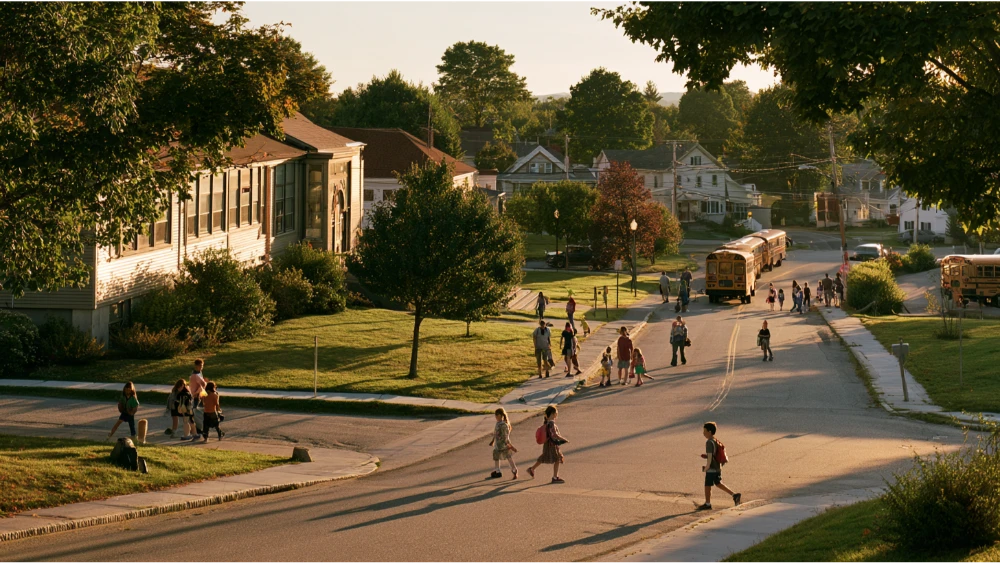
Your physical address determines your assigned K-8 school, the single most actionable fact for anyone enrolling kids. The Bangor School Department lists 10 schools: five early elementary schools, two upper elementary schools, two middle schools, and Bangor High School.
- Full-day pre-K is for children who turn 4 by October 15. Space is limited and screening is required.
- Kindergarten is for children who turn 5 by October 15.
- Registration requires two forms of residency documentation.
- Transfers need an original birth certificate and immunization records.
For performance and spending data on individual schools, use the Maine Department of Education ESSA dashboard rather than commercial letter grades. For higher education, the University of Maine in Orono anchors the region, with additional college and university campuses in and around Bangor.
Hospitals and Healthcare Access
This is a real relocation advantage. Northern Light Eastern Maine Medical Center has 411 beds and an American College of Surgeons-verified Level II regional trauma center. St. Joseph Hospital has 112 beds and a 24-hour emergency department. Bangor is the healthcare hub for northern, eastern, and much of central Maine. Confirm your physicians, prescriptions, and facilities are in network, and expect some subspecialty care to route to Portland or Boston.
Getting Around: Do You Need a Car to Live in Bangor?
The mean commute is 16.6 minutes, short by any standard. Downtown residents can often walk to restaurants, events, and transit. Elsewhere it depends on your address, workplace, school assignment, and weather.
Community Connector runs local and regional bus service with a live bus map and fare-free rides for students with valid ID, linking Bangor with Brewer, Hampden, Old Town, and Orono. Bangor International Airport offers nonstop service to several major U.S. destinations, some year-round and some seasonal. A car adds flexibility for regional work, appointments, and drives to the coast or other Maine cities.
Cold Weather in Maine: Long Winters, Snow, Heat, and Street Parking
NOAA’s 1991 to 2020 normals for Bangor International Airport show 74.6 inches of annual snowfall, a normal January high of 28.1°F and low of 9.0°F, with January alone averaging 18.6 inches. Those are genuinely snowy winters, and the cold is manageable if you plan for it.
Get winter tires and keep an emergency kit in the car. Know who shovels before you sign. Bangor generally allows overnight winter street parking under odd/even address-side rules, but a citywide snow-clearing order requires every vehicle off the street, and a separate ban applies downtown. Sign up for parking and snow alerts. People who live here plan for the cold months and the utility bills that come with them.
Food, Parks, and Outdoor Activities in Downtown Bangor and Beyond
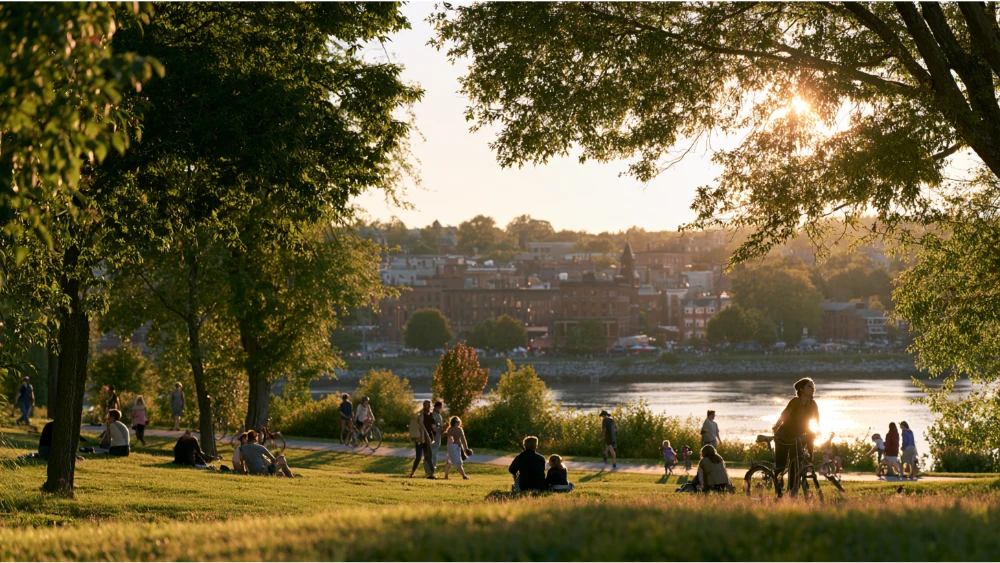
Downtown Bangor carries most of the food energy: cafes, sit-down dining, Maine seafood, New England comfort cooking, breweries and pub food. Almost everything in the core is walkable in good weather. Seasonal farmers markets and food trucks fill the warm months, and specialty markets round out grocery shopping. Late-night options are thinner than in a big city or the larger Maine cities to the south.
The calendar stays busy with First Friday art walks, local theaters, public markets, community runs, library programming, and summer concerts on the waterfront. Photos with the Paul Bunyan statue are close to mandatory for new arrivals. The Rolland F. Perry City Forest, known locally as the Bangor City Forest, gives you 680-plus acres, more than 9 miles of trails and 4 miles of access roads for walking, biking, snowshoeing, and cross country skiing. Neighborhood parks and the waterfront cover everyday outdoor time, and Acadia National Park is an easy weekend reach in summer or in the cold months.
Is Bangor a Safe Place to Live? Researching a Specific Address
Whether a block is a safe place to live is a question you answer with data. Crimes, arrests, and calls for service are three different things. Bangor Police’s 2025 report lists 36,487 calls for service and incidents, 2,065 arrests or criminal charges, and 9,175 traffic stops, and the department notes that calls for service are assignments requiring police involvement, not a crime rate. Review several years of official police and FBI data, then walk the block at different hours and check lighting, entry security, sidewalk condition, and winter access.
Your First 30 Days in Maine: A Moving Checklist
- 60 to 90 days out: Set your budget, confirm your job or remote arrangement, start the rental search.
- Before signing: Request the 12-month energy history, confirm the heat source and who pays, settle snow duties and parking, verify school assignment for that exact address.
- Moving week: Transfer utilities, forward mail, bind renters insurance.
- First 30 days: Coming from other states, you’ll need a Maine driver’s license within 30 days of residency, plus vehicle registration and title conversion in the same window. Registration starts with municipal excise tax and requires title, insurance, lienholder, and tax documents. Then register children for school and sign up for snow alerts.
Pros, Cons, and Whether Moving to Bangor, Maine Is Right for Me: Bangor’s Honest Trade-Offs
Bangor rewards a certain kind of person, so be honest about which one you are. The real question isn’t whether the city works for everyone. It’s whether moving to Bangor, Maine is right for me. Bangor answers that with specifics rather than slogans.
- Pros: 16.6-minute average commute, major regional healthcare, housing below big city pricing, the City Forest, neighborhood parks, friendly people at the counter and on the trail, and Acadia National Park within a weekend drive.
- Cons: long winters and heating costs, a narrower market for specialized roles, tight rental supply, limited late-night and transit options, local mean wages below the national mean.
Living in Bangor fits if your income travels with you or lands in healthcare, education, government, or regional services, and you’d trade nightlife for a short drive and 75 inches of snow. Bangor offers a lot for the money if that’s your profile. It doesn’t fit if you need a deep specialized job market or a car-free lifestyle.
Start with the numbers: run the Cost of Living, Rent, and Rent vs. Buy Calculators at ktrents.com, then browse listings. KT Rents is a full-service, broker-owned property management company in business since 2009 and operating nationwide, across 34 states as of January 2025. Call (800) 716-4950, text (608) 207-0657, or email info@ktrents.com. We reply within 24 hours. Your Rental. Your Way.
Frequently Asked Questions
Is Bangor, Maine a good city to live in?
It suits people who want short commutes, strong regional healthcare, and lower housing costs than a big city. Median gross rent was $1,055 and median household income $59,942 (Bangor city, 2020 to 2024 ACS). The trade-offs are a narrower specialized job market and 74.6 inches of annual snow.
Is Bangor, Maine a good place to raise a family?
Judge it on facts tied to your address. K-8 school assignment follows your physical address, the mean commute is 16.6 minutes, and two acute-care hospitals operate in the city. Verify the assigned school with the district and check the Maine DOE dashboard first.
How do I tell whether Bangor is a safe place to live for me?
Bangor Police publish annual call, arrest, and traffic stop counts, which are not the same as a crime rate. Pair several years of official police and FBI data with a visit to the block at different hours.
Can you live in Bangor without a car, and how much snow falls?
NOAA’s 1991 to 2020 normals show 74.6 inches annually at Bangor International Airport. Going car-free is workable downtown, where you can walk to dining, waterfront concerts, and Community Connector routes, but it gets harder by address, workplace, and season.