

Best Winter Getaway Destinations in the U.S.


Key Takeaway
The best winter getaway destinations in the U.S. include Maui, St. Thomas, and New York City, each suiting a different travel style. Maui averages 82°F highs and peaks for humpback whale watching in January through March. St. Thomas delivers Caribbean warmth with January highs of 84.1°F and no passport required for U.S. citizens. New York City offers world-class museums, dining, and theater in cold but energizing winter conditions.
If you want warm water and whales, go to Maui. If you want a Caribbean beach without pulling out a passport, go to St. Thomas. If you want museums, restaurants, and the sound of a city in December, go to New York City. Those three cover the honest range of what an American winter trip can be, and picking between them comes down to a single question: are you escaping winter or leaning into it? Everything below helps you answer that with real climate numbers, real reservation rules, and a practical way to pick a vacation rental instead of settling for whatever is left.
Quick comparison: which winter getaway is right for you?

Winter, for planning purposes, means December through February. That’s NOAA’s definition of meteorological winter, and it’s a cleaner framework than the solstice when you’re comparing weather across months.
| Destination | Typical winter weather | Best for | Signature experience | Best month | Car or transit | Trip length |
|---|---|---|---|---|---|---|
| Maui, Hawaii | Coastal highs around 82°F to 83°F, lows in the mid-60s | Warm weather, nature, longer stays | Humpback whale season | January or February | Car, almost always | A week or much longer |
| St. Thomas, USVI | January normal high 84.1°F, low 73.6°F | Tropical beaches, no passport for U.S. citizens | Snorkeling and beach days | Any winter month | Car or arranged transport | Long weekend to extended stay |
| New York City | Highs 39°F to 44°F, lows in the high 20s to low 30s | Culture, food, walkable city energy | Museums, shows, neighborhood wandering | December for atmosphere, February for quiet | Transit, skip the car | Three days to a month |
How we picked these three
Most winter roundups hand you twenty destinations and never explain the reasoning. We’d rather show our work, and we’d rather name three places we actually connect travelers to than pad a list.
- Typical winter conditions drawn from National Weather Service climate normals, not adjectives like “mild.”
- Range of things to do across a full week, including rainy days and non-beach days.
- How well the destination suits a vacation rental versus a two-night hotel stop.
- Practical access: flights, ground transportation, and whether you’ll need a car.
- Fit for different travelers, from couples and families to solo travelers and remote professionals.
- Confirmed connection to KT Rents’ vacation destination content, so we can point you to something real when you’re ready to book.
One note on weather throughout this guide: everything cited is a climate normal, meaning the 30-year average for that place and month. A normal is not a forecast. Check the current seven-day outlook before you pack, and if you’re planning months out, glance at the NOAA Climate Prediction Center’s seasonal outlook, which deals in probabilities rather than promises.
Maui: best for warm weather, nature, and whale season
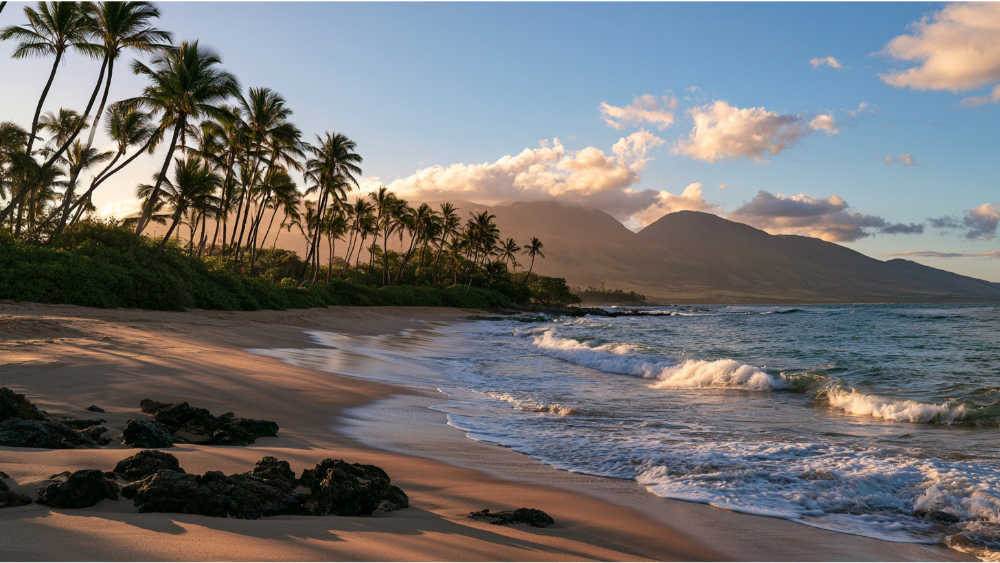
Maui in winter is the closest thing to a sure bet on the warm side. At Kahului, the 1991 to 2020 climate normals put December’s average high at 83.3°F with a low of 65.9°F. January and February both average 82.2°F for highs, with lows of 63.6°F and 63.8°F. That’s a shorts-and-slippers winter with almost no month-to-month drama.
Whale season is the reason to go in winter, specifically
Humpback whales are present around Hawaii from roughly November through April or May, and the Hawaiian Islands Humpback Whale National Marine Sanctuary identifies January through March as peak viewing. The Maui Nui region is one of the primary areas the whales use. You do not need a boat charter to see them, though a boat helps. From a west or south shore lanai in February, breaches off the horizon are a normal part of morning coffee.
Pack a jacket anyway
Here’s what most winter lists get wrong about Maui: it is not uniformly hot. Elevation changes everything. Haleakalā’s summit can be wet, windy, and below freezing while the beach 30 miles away sits at 82°F. If sunrise at the summit is on your list, the National Park Service requires an advance reservation for entry between 3:00 a.m. and 7:00 a.m. Reservations open up to 60 days ahead, with a portion released two days out. Set a calendar reminder. They go fast, and showing up without one means turning around at the gate.
Conditions also vary sharply between the windward and leeward sides of the island. Hana can be soaked while Kihei is dry. Plan loosely and let the weather pick your days.
Why a rental changes a Maui trip
Maui rewards longer stays, and longer stays reward a real kitchen. Groceries on the island are expensive, but cooking three or four meals a week at home costs a fraction of eating out every night. Add laundry so you’re not repacking sandy towels, parking for the rental car you’ll definitely need, and outdoor space to rinse snorkel gear and hang suits to dry. A hotel room gives you none of that. A vacation rental gives you a place to actually settle in, which is the whole point of a feel-like-a-local stay.
St. Thomas: best for a tropical U.S. Caribbean escape
St. Thomas is the answer for travelers who want Caribbean water without the international-travel paperwork. At Cyril E. King Airport, the January climate normals show an average high of 84.1°F, an average low of 73.6°F, a mean of 78.8°F, and 2.64 inches of precipitation for the month. Warm days, warm nights, and rain that tends to pass through rather than settle in.
The passport question, answered precisely
U.S. citizens do not need a passport to travel between the mainland United States and the U.S. Virgin Islands, according to USAGov. That’s the whole appeal for a lot of families. The qualifier matters, though: you still need TSA-acceptable identification to fly, and if you’re adding a stop at a nearby non-U.S. island (an easy thing to do from St. Thomas), you’ll want a passport in hand. Carrying proof of citizenship is simply smart practice when you’re moving around the territory.
Beaches, water, and the transportation detail people forget
Snorkeling is the daily activity here, and the island’s coves and cays give you a different water experience most days of the week. Ferries reach neighboring islands. Charlotte Amalie offers history, markets, and dining that has nothing to do with a resort buffet.
What trips people up is ground transportation. St. Thomas is hilly, roads are narrow, and driving is on the left. Before you book any rental, confirm how you’ll get from the property to the beaches and the ferry docks. Ask whether parking is included, whether the driveway is steep, and whether taxis or vans serve the area reliably. That one question separates a relaxed week from a frustrating one.
Stay longer than you think
St. Thomas is a legitimate remote-work destination in January. The time zone works with East Coast hours, the weather removes the excuse to stay inside, and a rental with reliable Wi-Fi and a real desk lets you work mornings and swim afternoons. If you’ve been thinking about a month somewhere warm instead of a week, this is a sensible place to test it.
New York City: best for a classic winter city getaway

Not everyone wants to escape winter. Some travelers want the version of winter that looks good: cold air, warm rooms, and a city that does not slow down in January.
Central Park’s 1991 to 2020 normals lay out what to expect:
| Month | Average high | Average low | Average snowfall |
|---|---|---|---|
| December | 44.3°F | 33.8°F | 4.9 in |
| January | 39.5°F | 27.9°F | 8.8 in |
| February | 42.2°F | 29.5°F | 10.1 in |
The normal average across the full meteorological winter is 36.2°F. Cold, but not brutal, and entirely manageable with a real coat and boots you can walk ten miles in.
Don’t book a trip expecting snow
Those snowfall figures are 30-year averages. Any given week can deliver a foot or nothing at all. Book New York for the museums, the food, the theater, and the neighborhoods. If snow shows up, it’s a bonus, not the itinerary.
Neighborhood rentals beat a room near the tourist core
A rental in a residential neighborhood gives you a coffee shop you return to, a grocery store, and a subway stop you learn by heart. That’s a different trip than a room off Times Square. Ask about heating (older buildings vary wildly), laundry access, elevator or walk-up, building entry procedures, and whether early bag storage is possible on arrival day.
Skip the car. Parking is expensive and the subway is faster. If you’re extending into a regional road trip, prepare for winter roads. NHTSA reported 320 fatal crashes in 2023 while snow or sleet was present, along with an estimated 22,293 injury crashes and roughly 101,390 police-reported crashes in those conditions. Their winter driving guidance is simple: slow down, add following distance, keep the tank near full, and carry blankets, water, food, medicine, an ice scraper, jumper cables, and a charger.
Maui vs. St. Thomas vs. New York City
There’s no universal winner. There’s a right answer for your trip.
- Warmest overall: St. Thomas, on the strength of those 73.6°F January lows. Maui’s coasts are close behind but cool off more at night.
- Best for whale watching: Maui, January through March.
- Best without a passport: All three, for U.S. citizens. St. Thomas is the one that surprises people, since it delivers a Caribbean trip on domestic terms.
- Best for museums, dining, and shows: New York City, and it isn’t close.
- Best for remote work: St. Thomas for East Coast hours, New York for meetings and networking, Maui if your team is West Coast and you don’t mind early mornings.
- Best short trip: New York. Three days is a real vacation there. Maui is not worth a long weekend from the mainland.
- Best long winter stay: Maui, if you have the flexibility. Two or three weeks lets the island stop feeling like a checklist.
What to look for in a winter vacation rental
The property matters as much as the destination. Run this checklist before you commit:
- A verified address you can look up independently, not just a neighborhood name.
- Written cancellation and refund terms before any money moves.
- Wi-Fi you can rely on, with speeds confirmed if you’re working.
- A dedicated workspace, meaning a desk and a chair, not a kitchen counter.
- Kitchen and laundry, the two amenities that make a long stay feel livable.
- Heating or air conditioning that fits the destination. Ask about heat in New York and about A/C or cross-breeze in the tropics.
- Parking or transit access, including how far you’ll walk with luggage.
- A clear maintenance contact, so you know who answers when something breaks at 9 p.m.
- Accessibility features if anyone in your group needs them, including stairs, thresholds, and bathroom layout.
- Pet policy in writing.
- Flexible short-term and long-term leasing, in case a two-week trip turns into six.
That maintenance question is worth pressing on. A vacation rental without a support system behind it is just someone’s spare key and a phone that may or may not get answered. KT Rents has been managing properties since 2009, and the same maintenance-request infrastructure our residents use backs the stays we place travelers into.
Documents, reservations, and weather checks
A short list of things to handle before you go:
- Identification. Since May 7, 2025, travelers 18 and older need a REAL ID-compliant state ID or another accepted document at airport checkpoints. Check the current TSA list rather than trusting a summary, since it changes.
- St. Thomas. No passport needed for U.S. citizens traveling directly from the mainland, but bring one if any part of the trip touches a non-U.S. island.
- Haleakalā. Reserve sunrise entry 60 days out, or watch for the two-day release.
- Forecasts. Pull the local National Weather Service seven-day forecast the week you leave. Climate normals tell you what to pack. Forecasts tell you what to expect.
- Roads. If your itinerary includes winter driving, prep the car and the emergency kit.
How to avoid a vacation rental scam

Fake listings spike around peak travel windows, and winter is one of them. The FTC’s guidance is short and worth following exactly:
- Search the property address and the company name online before you engage.
- Confirm the listing also appears on the company’s official website.
- Get the rental contract in hand before sending a deposit.
- Walk away from anyone pressuring you to decide right now.
- Treat requests for wire transfers, gift cards, or cryptocurrency as a scam. Full stop.
Booking through an established, broker-owned company shortcuts most of this. You can call us at (800) 716-4950, text (608) 207-0657, or email info@ktrents.com, and you’ll hear back within 24 hours on form submissions. That’s the difference between a listing and a company standing behind it.
Find a winter stay that feels like home
Hotels give you a room. A vacation rental gives you a kitchen, a door that locks behind your own space, laundry, and enough room to stop living out of a suitcase by day three. That’s what makes a week feel restorative and a month feel possible. Our vacation destinations include Maui, St. Thomas, and New York City alongside Greece, the Maldives, the Bahamas, Bora Bora, Costa Rica, Bali, Paris, Tokyo, the Swiss Alps, and Machu Picchu, and our destination stays can also be found through Vrbo, Expedia, Travelocity, and Hotels.com.
Browse the vacation destinations, compare current availability for your dates, and Book Your Travel. If you’d rather talk it through, call (800) 716-4950 and we’ll help you match the destination to the trip you actually want. Your Rental. Your Way.
Is Maui or St. Thomas better for a winter vacation?
St. Thomas is warmer at night (January normal low of 73.6°F versus Maui’s 63.6°F) and easier to reach from the East Coast. Maui wins on scenery, hiking, and whale season. Pick St. Thomas for pure beach time, Maui for a more varied outdoor trip.
Do U.S. citizens need a passport to visit St. Thomas?
No. U.S. citizens traveling directly between the mainland U.S. and the U.S. Virgin Islands don’t need a passport, though you still need TSA-acceptable ID to fly. Bring a passport if you plan to hop to any non-U.S. island.
What is New York City weather like in December, January, and February?
Central Park normals show highs of 44.3°F, 39.5°F, and 42.2°F, with lows of 33.8°F, 27.9°F, and 29.5°F. Average snowfall runs 4.9, 8.8, and 10.1 inches, but any single week can bring far more or none.
When is Maui’s peak whale-watching season?
Humpbacks are around Hawaii from about November into April or May, with peak viewing January through March, per NOAA’s Hawaiian Islands Humpback Whale National Marine Sanctuary.
How can I tell whether a vacation rental listing is legitimate?
Search the address and the company name, confirm the same listing appears on the company’s official site, and get a written contract before paying. Any demand for a wire transfer, gift card, or crypto payment is a scam signal.