

Concord, New Hampshire
Homes for rent and for sale — search the map or open the full city SEO catch-all page.
Concord, New Hampshire
Moving to Concord, New Hampshire means settling into a compact state capital of about 44,600 people with a stable government and healthcare employment base, a 23-minute mean commute, and direct coach service to Boston. The rental market has a vacancy rate near 0.4 to 0.6 percent, so arrive with application documents and deposit funds ready. Property taxes run at a final 2025 rate of $29.11 per $1,000, and expect roughly 65 inches of snow per year with enforced overnight parking bans.
Moving to Concord, New Hampshire
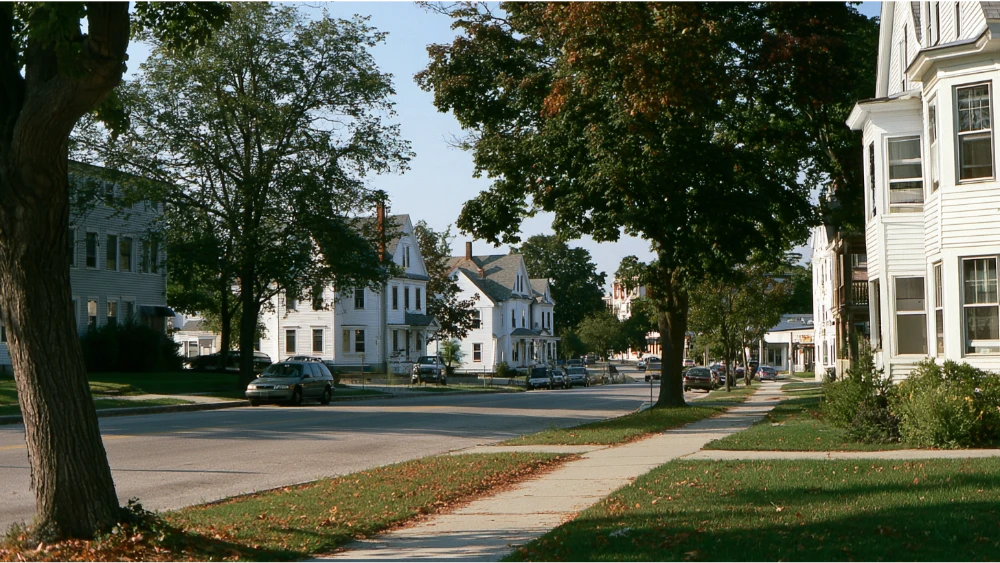
Moving to Concord, NH means small-city New England living in central New Hampshire with the services that come from being a state capital: a government and healthcare employment base that doesn’t swing much with the economy, a 23-minute mean commute, and direct daily coach service to Boston South Station and Logan Airport. The tradeoffs are real. The rental market has been extremely tight, property taxes are substantial, and winter brings roughly 65 inches of snow along with city parking bans that will get your car towed if you ignore them.
This guide is for someone comparing cities and actually planning the move. You’ll get dated figures from primary sources, honest neighborhood context, the school-district rule most guides miss, and a first-30-days checklist. KT Rents is a broker-owned, full-service property management company operating nationwide since 2009. We don’t have a Concord office. We do have the tools and the experience to help you decide whether living in Concord fits the life you’re trying to build.
Moving to Concord, NH: The Short Answer
Concord may suit you if you want a compact New England city where you can park once in downtown Concord and walk to lunch, a show, and the New Hampshire State House, without giving up access to a major hospital or a direct bus to Boston. Families, retirees, and young professionals moving to Concord, New Hampshire tend to weigh the same three benefits against the same three tradeoffs.
The three biggest benefits:
- A stable employment base anchored in state government, healthcare, and education. New Hampshire’s seasonally adjusted unemployment rate was 2.8% in August 2026, below the national average, though that’s a statewide figure and not Concord’s city rate.
- Short commutes plus Concord Coach Lines service straight to Boston and Logan, which gives you convenient access to a major international airport without the airport-parking problem.
- A walkable downtown core along Main Street and a city trail network, with the Lakes Region and the mountains inside weekend range. Third-party cost-of-living indexes have placed Concord near 95.8, slightly under the national average of 100, though those indexes use proprietary methods.
The three biggest tradeoffs:
- Rental availability has been exceptionally tight, and the city’s own reporting backs that up.
- Property taxes are high and they feed into rent whether you own or not.
- Snow, and the winter parking bans that come with it.
If you need a January move-in and a budget that doesn’t flex, read the renting section first.
Concord, NH at a Glance: Population, Income, and City Limits
| Metric | Figure | Source and date |
|---|---|---|
| Population | 44,597 | Census estimate, July 1, 2025 |
| Households | 18,346 | ACS 2020-2024 |
| Median household income | $84,902 | ACS 2020-2024, in 2024 dollars |
| Median gross rent | $1,441 | ACS 2020-2024 |
| Owner-occupied housing rate | 56.8% | ACS 2020-2024 |
| Mean travel time to work | 23 minutes | ACS 2020-2024 |
| Land area | Nearly 64 square miles | U.S. Census Bureau |
That land-area number matters more than it looks. Nearly 64 square miles inside one set of city limits means Concord holds a dense downtown and genuinely rural edges in the same municipality. Your day-to-day experience depends on the exact address, not on the word “Concord” in the listing.
New England Character in a Working State Capital
The Merrimack River runs through the city, and the broader Merrimack River Valley has shaped where development sits for two centuries. Downtown Concord is anchored by the New Hampshire State House, and Concord remains a working seat of government rather than a ceremonial one, so legislative sessions, court business, and state agency traffic are part of the weekday rhythm here. The granite, the brick storefronts, and the church steeples give the core a small town charm that sits right alongside city amenities most towns this size never get: a trauma center, a theater district, daily coach service to Boston. The Main Street streetscape was rebuilt in the last decade with wider sidewalks and better crossings, so it functions like a modern downtown rather than a museum piece. Median age sits right around 40, and the household mix runs from students at the community college to retirees who have been Concord residents for decades.
How Much Does It Cost to Live in Concord, NH?
Concord’s affordability is a trade, and understanding it early will save you from a budgeting mistake. You keep more of your paycheck because New Hampshire has no general sales tax and no state income tax on wages. You give a chunk of it back through property taxes, and increasingly through housing cost itself.
You’ll see Concord assigned a cost-of-living index around 95.8 by third-party trackers. Read that as: 100 equals the national average, so a number slightly under 100 suggests costs just below the national average overall. Those indexes are proprietary and they average categories differently, so treat them as a rough bearing, not a budget. Housing is also where New Hampshire pulls hardest against that number, since the statewide housing market has run well above the national average for price growth in recent years.
What You’ll Spend on Housing
Housing is your biggest line item and the one most likely to blow up an otherwise careful plan. The Census median gross rent of $1,441 comes from ACS 2020-2024 data, which means it’s a five-year average that includes leases signed years ago. It is not what a vacant unit lists for today. The renting section below separates the three different “rent” numbers you’ll run into, and the rent-versus-buy section covers median home prices. Build your housing budget from current advertised rents for the specific size and area you want, then sanity-check it against the benchmarks.
Utilities, Heat, and Winter Energy Costs
New England heating is a real budget category, not a rounding error. Before you sign anything, ask what the heat source is (natural gas, oil, propane, electric, heat pump), whether heat is included in rent, and whether the owner can share historical usage for the unit. Third-party estimates have put monthly electricity in the $110 to $175 range, but that varies enormously by heat source and building age, and regional electricity rates across New England have historically sat above the national average.
Water and sewer are billed by the city. If you’re renting and want the bill in your own name, Concord requires the property owner’s signature, and the owner remains ultimately responsible for the municipal charges. Confirm with your landlord who is handling that before move-in day.
Transportation and Everyday Costs
Plan on a car. Most households living in Concord need one, which means insurance, registration, fuel, and winter tires belong in the budget. Fare-free weekday transit offsets some of that if your trips line up with the schedule, and the absence of a general sales tax quietly lowers what you spend at grocery stores, on clothing, and on anything else you buy at a register.
Before you lock in a number, run it through our Cost of Living Calculator and Rent Calculator. Comparing your current city to Concord on paper takes ten minutes and tends to change what people think they can afford.
Renting in Concord, NH: What the Rent Numbers Actually Mean
Most relocation guides quote a single rent figure and move on. That’s how people end up shocked at their first showing. There are three different numbers in circulation and they measure three different things.
Census Median Rent vs. HUD Fair Market Rent vs. Advertised Rent
| Benchmark | Figure | What it is |
|---|---|---|
| ACS median gross rent | $1,441 | Five-year average (2020-2024) of what Concord renters were paying, including long-standing leases. Not a current asking price. |
| City-reported median rent, all units | $1,525 | Reported in a December 2024 city presentation. A 2024 snapshot, now dated. |
| HUD FY 2026 FMR, studio | $1,361 | Countywide program benchmark for Merrimack County, used for housing assistance calculations. |
| HUD FY 2026 FMR, 1 bedroom | $1,504 | Countywide benchmark, not an advertised Concord rent. |
| HUD FY 2026 FMR, 2 bedrooms | $1,974 | Countywide benchmark. |
| HUD FY 2026 FMR, 3 bedrooms | $2,604 | Countywide benchmark. |
| HUD FY 2026 FMR, 4 bedrooms | $2,614 | Countywide benchmark. |
None of these are KT Rents pricing, and none of them is a quote on any specific unit. Advertised rent on a particular apartment depends on its condition, parking, whether heat is included, and how recently it was renovated. Use the benchmarks to know when a listing is unusually high or low, then verify the actual number with the landlord.
How Tight Is the Concord Rental Market?
City documents cited a rental vacancy rate in the range of 0.4% to 0.6% for 2023. Those figures are dated and the two city sources didn’t agree exactly, so don’t read them as today’s rate. What they do establish is that Concord’s rental market has been about as constrained as a market can get, which is true across much of New Hampshire and not unique to the capital.
Practically, that means showing up prepared. Have your application documents, proof of income, references, and deposit funds ready before you tour anything. Good units move fast in a competitive market like this one, and the applicant who can decide and submit the same day usually wins.
Security Deposits and Your First Five Days
Under New Hampshire’s currently codified statute (RSA 540-A), a residential security deposit generally cannot exceed one month’s rent or $100, whichever is greater. Within five days of occupancy, give your landlord a written list of existing conditions that need repair. After the tenancy ends, the deposit plus any required interest generally must be returned within 30 days, minus properly documented deductions. Housing law changes, so read the current statute yourself. This is information, not legal advice.
Ask these six questions before you sign:
- What’s the heat source, and who pays for heat?
- Is there off-street parking, and is it assigned?
- Who is responsible for shoveling and plowing?
- What’s the pet policy, including size and breed restrictions and any additional rent?
- How are utilities split in a multi-unit building?
- Is this a short-term or long-term lease, and what happens at renewal?
Concord Neighborhoods and Planning Areas
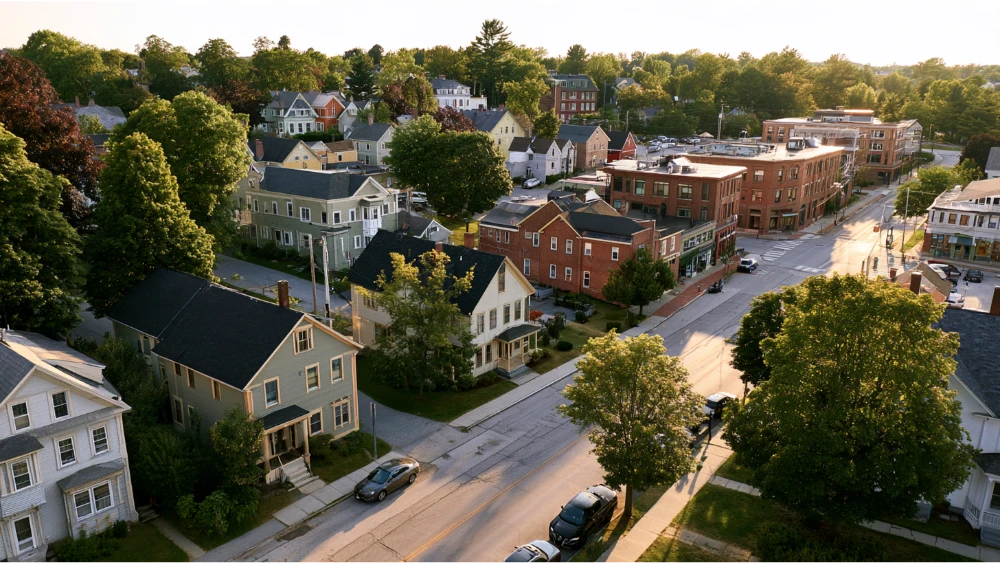
We’re not going to name a “best” neighborhood. That kind of ranking is subjective at best and tips into steering at worst. Instead, compare areas on criteria you can verify: housing type and availability, distance to downtown, the hospital, and everyday local services, which school district the address falls in, fixed-route transit access, off-street parking, trail and park access, water and sewer availability, highway access, and the walkability of the specific address.
The city’s planning framework identifies six broad areas. Concord’s 2050 master-plan process is still underway and expected to run through roughly 2028, so development patterns in any of these areas may shift.
Downtown Concord and the West End
Main Street, the New Hampshire State House, the Capitol Center for the Arts, and the densest concentration of restaurants, specialty shops, and local businesses in the city. Housing is mixed, including upper-floor apartments and older multi-unit buildings. Downtown Main Street is the most walkable part of the city and the easiest place to live without starting the car every day. Parking is the question to ask on every single listing, and it gets sharper in winter.
South End
An established residential area in south Concord, close to the Pleasant Street hospital corridor. Housing skews toward single-family homes on smaller urban lots with some multi-unit properties mixed in. Short drives to both downtown Concord and Concord Hospital.
Concord Heights
The eastern commercial corridor, with shopping centers, chain retail, and convenient access to I-93. Housing includes apartment complexes and single-family neighborhoods set back from the commercial strip. Practical if your routine involves a lot of errands or a highway commute.
East Concord
Lower density, generally larger lots, and proximity to Merrimack River recreation and river access. More of the housing stock here is single-family. Confirm water and sewer availability, since service varies as you move toward the outer edges of the city limits.
West Concord
A mix of residential neighborhoods on the NHTI side of the city, with neighborhood parks and convenient access to downtown and the I-89 corridor. Housing ranges from older homes to newer development depending on the street.
Penacook Village
Roughly six miles north of downtown, Penacook is part of the City of Concord but functions with its own commercial center and a strong neighborhood identity. It has a separate ZIP code, it’s served by the Merrimack Valley School District rather than Concord School District, and its final 2025 property tax rate was $30.74 per $1,000 compared to $29.11 in the rest of the city.
| Area | Typical housing mix | Orientation to downtown | School district | Notes |
|---|---|---|---|---|
| Downtown / West End | Mixed, including apartments above Main Street | At the center | Concord | Most walkable; verify parking |
| South End | Single-family and some multi-unit | Just south | Concord | Near the hospital corridor |
| Concord Heights | Apartment complexes and single-family | East side | Concord | Retail corridor, highway access |
| East Concord | Mostly single-family, larger lots | Northeast | Concord | River and recreation access; check utilities |
| West Concord | Mixed residential | West | Concord | Near NHTI; neighborhood parks |
| Penacook Village | Mixed residential, village core | About 6 miles north | Merrimack Valley | Separate ZIP; higher 2025 tax rate |
Jobs and the Concord Area Economy
Concord’s economy rests on government, healthcare, and education. That’s not glamorous, but it’s why the local job base holds steadier than cities built on one private industry.
A 2025 statewide principal-employer schedule listed the State of New Hampshire with 14,818 employees and Concord Hospital with 4,841. Read those carefully: they’re organization-wide totals, not counts of people working at Concord locations. The state employs people in every county, and Concord Hospital’s system includes facilities outside the city. Plenty of guides quote those numbers as if they were Concord headcounts. They aren’t.
Beyond state and local government and healthcare, the sectors that matter here are education and higher education, legal and professional services (the state’s only law school and the court system are both in Concord), and the retail, hospitality, and locally owned downtown businesses that serve a weekday workforce. Education and health services rank among New Hampshire’s largest employment sectors statewide. New Hampshire’s seasonally adjusted unemployment rate was 2.8% in August 2026, a statewide figure that ran below the national average.
Working Remotely from Concord
Verify internet service at the exact address before you sign. Availability and speed vary across nearly 64 square miles of city, and “Concord has fiber” is not the same as “this building does.” What Concord offers remote professionals is a crossroads location at I-89 and I-93, a 23-minute mean commute if you go hybrid, and a downtown where a coffee shop meeting is a five-minute walk rather than a 40-minute drive. We place remote professionals in rentals across the U.S., and the internet question is the one that trips people up most.
Public Schools: Concord School District, Merrimack Valley, and Higher Education
Here’s the fact most relocation guides skip: Concord’s public schools are split across two districts, and which one serves you depends on your exact address.
Concord School District operates five elementary schools, Rundlett Middle School, Concord High School, and the Concord Regional Technical Center. As of Fall 2023 the district served roughly 3,950 students, with Concord High at about 1,450, though enrollment shifts year to year. Merrimack Valley School District serves Penacook along with several surrounding towns, with schools including Penacook Elementary, Merrimack Valley Middle School, and Merrimack Valley High School.
Penacook is inside Concord city limits and outside Concord School District. If you’re relying on a listing’s neighborhood label to predict your child’s school, verify it with the district using the precise street address before you commit to a lease or an offer. Districts confirm assignment by address, and that’s the only answer that counts. This is the single most common mistake families make when moving to Concord, NH. Concord residents on the Penacook side will tell you the same thing.
For the 2026-2027 school year, Concord School District states that children turning five on or before September 30, 2026 are eligible for kindergarten. Registration is online and includes address verification. Independent and private schools also operate in the area, including St. Paul’s School and Bishop Brady High School.
Higher Education in Concord
NHTI, Concord’s Community College, offers associate degrees and certificate programs. The University of New Hampshire Franklin Pierce School of Law is here too, and it’s the state’s only law school. New England College has maintained a Concord presence as well. For renters, this matters in a practical way: student, faculty, and staff demand adds another layer of pressure to an already tight rental market, particularly around the start of the academic year.
Healthcare Facilities: Concord Hospital and Local Providers
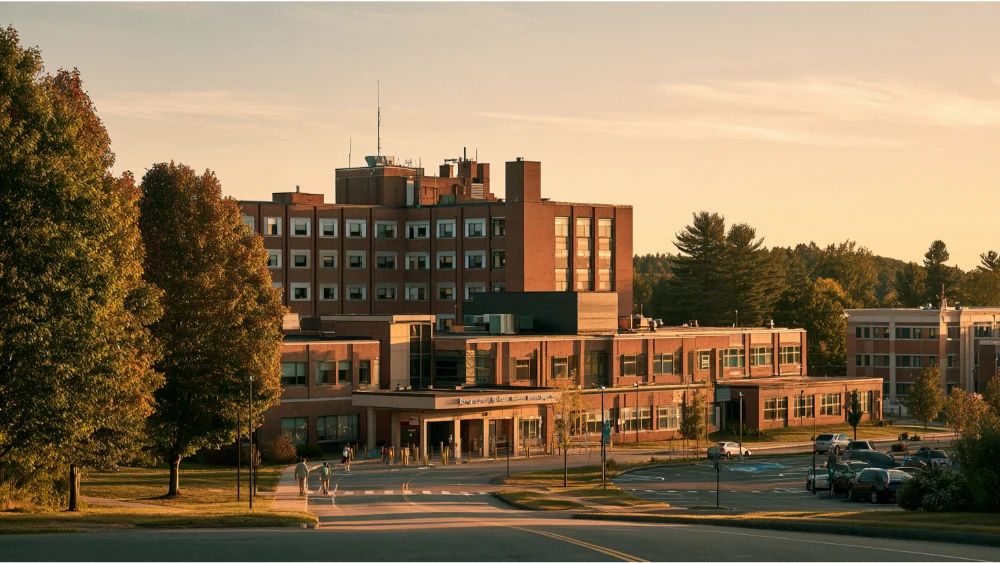
Concord Hospital’s city campus has 295 licensed acute-care beds and is a verified Level II Trauma Center, one of only three in New Hampshire, and it draws patients from Concord and the surrounding area. For a city of roughly 44,600 people, that’s a genuine quality-of-life factor, especially if you’re relocating from a rural area where the nearest trauma center is an hour away.
The main campus sits at 250 Pleasant Street and includes a 24-hour Emergency Department. Service lines cover cancer, cardiovascular, orthopaedic, urologic, and women’s health care, alongside urgent care and primary care. The broader health system also operates hospitals in Franklin and Laconia, which are separate communities, not Concord locations. Independent healthcare facilities, dental practices, and specialty clinics cluster along the Pleasant Street corridor, which gives most of the city convenient access to routine care without a highway trip.
What to Line Up Before You Move
Request your medical records transfer early. Confirm which healthcare providers are in your insurance network after the move, since plan networks change across state lines. Then find the urgent care and pharmacy closest to your new address and establish a primary care provider as soon as you can, because new-patient waits are a common relocation headache.
Getting Around the Concord Area
Concord sits at the crossroads of I-89 and I-93, which is a large part of why the state capital ended up here. The mean travel time to work is 23 minutes, short by national standards and well under the national average commute.
Concord Area Transit runs accessible fixed-route buses Monday through Friday, 6:00 a.m. to 6:30 p.m., plus demand-response service. CAT states that all of its bus services are currently fare-free. There’s no regular weekend fixed-route service, which is the honest limitation.
Concord Coach Lines provides direct daily service from Concord to Boston South Station and Logan International Airport, with multiple trips a day under a timetable that took effect May 21, 2026. We’re not publishing drive or ride times to Boston, because traffic and weather swing them badly. Check the current coach timetable before you plan a trip or an airport run.
Do You Need a Car in Concord?
For most households, yes. The exceptions are real but narrow: a downtown Concord address, a weekday-only travel pattern that matches CAT’s hours, or fully remote work with groceries and errands inside walking distance. Everyone else will want a vehicle. Which brings parking back into the picture… ask about off-street parking on every lease, because the answer stops being a convenience question in January and starts being a towing question.
Winter in Concord: Snow, Heat, and Parking Bans
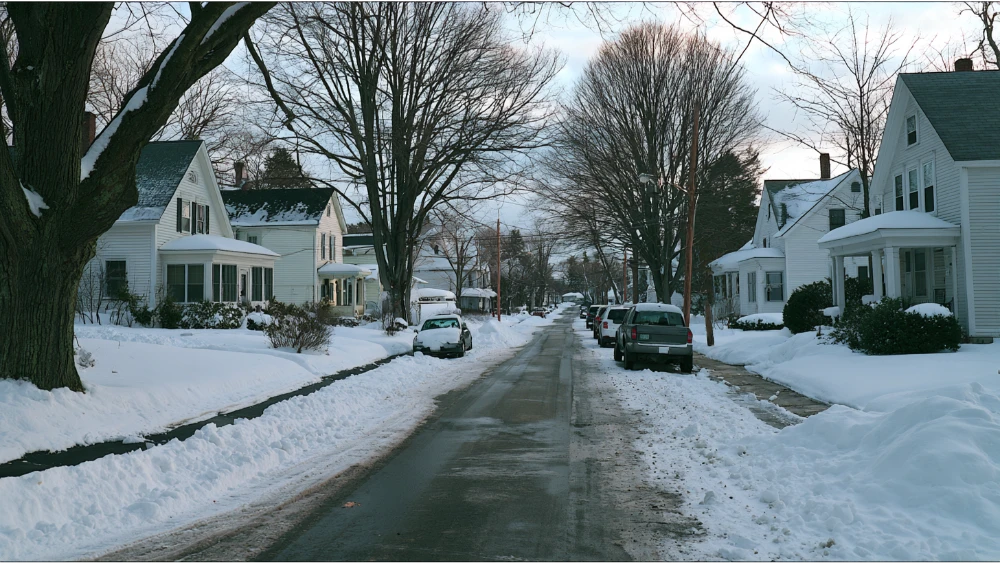
NOAA climatology puts Concord’s mean annual snowfall at about 65.1 inches, with wide year-to-year swings. Some winters are mild. Some are not. Plan for the ones that aren’t, because that figure sits far above the national average for a reason.
When the city issues a Winter Storm Event Parking Ban, parking is prohibited on all city streets from midnight to 7:00 a.m. The city may also issue downtown-only maintenance bans so crews can finish clearing. Vehicles parked in violation can be ticketed and towed. If you’re moving from somewhere that treats snow as an occasional novelty, this is the single rule most likely to cost you money in your first winter.
Winter Questions to Settle Before You Sign a Lease
- Who is responsible for shoveling walkways and plowing the driveway under the lease: you, the owner, or a contracted service?
- Is parking off-street, and does that spot actually get plowed?
- What is the heat source, and is heat included in rent?
- Can the owner share historical utility usage for the unit?
- Do you have snow tires and a winter emergency kit for the car?
- Have you signed up for city alerts so you never have to guess whether a parking ban is active?
- If you commute beyond the city, how much extra time do you build in on storm days?
Things to Do in Concord: Family Friendly Arts, Trails, and Farmers Markets

Arts, History, and Downtown Life
The Capitol Center for the Arts brings touring Broadway productions and concerts to Main Street, and the Concord City Auditorium hosts smaller performances. Red River Theatres runs independent and documentary film. On the museum side, there’s the McAuliffe-Shepard Discovery Center with its planetarium, the New Hampshire Historical Society, and The Pierce Manse, the Concord home of President Franklin Pierce. Seasonal farmers markets and downtown community events fill the Main Street calendar through the warm months, and the weekend farmers markets double as the easiest way to meet people when you’re new. Everything on that list is open to everyone.
Outdoors on the Merrimack and Beyond
The city reports 31 hiking trails, many of them open year-round, with designated spots for snowshoeing and cross-country skiing once the snow sets in. Commonly cited figures put the area’s conservation land around 7,200 acres with roughly 80 miles of trail, though that depends on how you count. The Merrimack River Greenway Trail serves cycling and walking, and the river itself supports paddling and fishing. The city arena offers public skating and hockey, and the parks system runs playgrounds, pools, and family friendly seasonal recreation programming. The Lakes Region and the White Mountains are both within weekend reach, making Concord a sensible base if you plan your calendar around outdoor activities and still want a small city at the doorstep of the whole state.
Taxes and Becoming a New Hampshire Resident
New Hampshire has no general sales tax, no use tax, no state income tax on earned wages, and no capital-gains tax. For households arriving from a state that collects both, paying no income or sales tax changes the monthly math right away. The state’s former Interest and Dividends Tax was repealed for tax periods beginning on or after January 1, 2025. Households relocating from higher-tax states sometimes report annual savings in the $4,000 to $6,000 range, but those are third-party estimates tied to specific income profiles, not a promise about yours.
The other half of the trade is property tax. Concord’s final 2025 rate was $29.11 per $1,000 of assessed value, and Penacook’s was $30.74. Effective rates in New Hampshire are commonly cited somewhere around 1.8% to 2.6% depending on the town and the assessment, which is well above the national average. Rates change annually, and Concord is conducting a citywide revaluation for the 2026 tax year, so don’t estimate a future bill by multiplying a new preliminary assessment by the old rate. If you’re renting, you still feel this: property taxes are an owner cost, and owner costs show up in rent.
The 60-Day Residency Deadline
If you drive or own a vehicle, you generally have 60 days after establishing New Hampshire residency to get a New Hampshire driver’s license and register the vehicle. Pair that errand with voter registration and your utility transfers so you’re not making three separate trips.
Your First 30 Days After Moving to Concord, NH
- Transfer electric service and whatever account covers your heat before move-in day, not after.
- Sort out municipal water and sewer billing with your landlord. A tenant-name bill requires the owner’s signature, and the owner stays ultimately responsible.
- Photograph and video every room, including appliances and existing damage, on day one.
- Submit your written list of existing conditions needing repair within five days of occupancy, and keep a dated copy.
- Enroll children using your exact address and confirm which district serves it, Concord or Merrimack Valley.
- Get your New Hampshire license and vehicle registration inside the 60-day window.
- Register to vote.
- Sign up for city alerts, including winter parking-ban notifications.
- Learn your trash and recycling day, plus how collection changes during storms.
- Establish a primary care provider and save your management company’s maintenance-request contact where you can find it at 11 p.m.
That last one matters more than people expect. Handing off a resident properly, with maintenance intake, rent payment, and real support after the lease is signed, is exactly what our full-service management covers for residents nationwide.
Should You Rent or Buy in Concord, NH?
Market trackers in 2026 placed typical median home prices in Concord somewhere in the $360,000 to $445,000 range, with homes reported moving at a median of roughly 19 days. Those are estimates from commercial data providers, not official figures. For state context, New Hampshire Housing’s 2026 report found a record $575,000 median single-family price statewide, with only 15% of New Hampshire households earning enough to afford that benchmark home. Measured against the rest of New England, Concord’s median home prices look moderate, and against the national average they look high. Concord’s owner-occupancy rate was 56.8% in the 2020-2024 ACS.
The decision comes down to four things: how long you plan to stay, whether you have down payment cash or just deposit cash, your tolerance for property-tax exposure during a revaluation year, and whether you need to land inside a specific school district. Run your own numbers through our Rent vs. Buy Calculator, Mortgage Calculator, and Rent Calculator before you talk to anyone.
Frequently Asked Questions
Is Concord, NH a good place to live?
Living in Concord suits people who want stable government and healthcare employment, a short commute (23-minute mean, per the 2020-2024 ACS), a Level II Trauma Center inside city limits, and trails plus a walkable arts district downtown. The tradeoffs are tight rental supply, substantial property taxes, and roughly 65 inches of snow a year.
How much does it cost to rent in Concord, NH?
Three different numbers get quoted. The Census ACS median gross rent was $1,441 for 2020-2024, a five-year average of what people were already paying. HUD’s FY 2026 Fair Market Rents for Merrimack County are $1,504 for a one-bedroom and $1,974 for a two-bedroom, which are program benchmarks. Current advertised rents vary by address, condition, parking, and whether heat is included.
What is the downfall of living in New Hampshire?
Property taxes largely offset the savings from having no sales tax and no state income tax. Housing is record-tight and expensive statewide, with New Hampshire Housing’s 2026 report citing a $575,000 median single-family price and only 15% of households able to afford it. Winters are long, and smaller cities have limited or no weekend fixed-route transit.
Does New Hampshire have a sales tax or income tax?
No general sales tax, no use tax, no broad-based individual income tax on wages, and no capital-gains tax. The Interest and Dividends Tax was repealed for tax periods beginning on or after January 1, 2025. Local property taxes are the primary funding mechanism, which is why rates like Concord’s final 2025 figure of $29.11 per $1,000 run high.
Is it better to live in New Hampshire or Maine?
We won’t call it for you, but compare on four things: tax structure (Maine has an income tax and a sales tax; New Hampshire has neither but leans harder on property tax), housing cost in your target towns, commute distance to Boston if that matters, and winter severity. Then put your own numbers into our Cost of Living Calculator and see what comes out.
What does Concord offer newcomers who don’t know anyone yet?
Concord offers an unusually compact social geography for a state capital. The farmers markets, the trail system, the library, the city arena, and the Main Street festival calendar all put people in the same few blocks, and the locally owned restaurants and shops downtown are where regulars get recognized fast. For families, the parks and recreation programming is the usual entry point.
Ready to Make the Move? Here’s Your Next Step
If you’re renting: browse rental properties across the U.S. on our national marketplace, run the Rent Calculator and Rent vs. Buy Calculator, and submit a rental application when you find the right fit. Your Rental. Your Way.
If you’re a property owner leaving a property behind: KT Rents has been a broker-owned, full-service property management company since 2009. Tenant placement, tenant screening, rent collection, property maintenance, rental permits, 1099s, city ordinance compliance, property inspections, court evictions… all without the owner having to lift a finger, for about the price of a cup of coffee and a donut a day. As of March 2025 we managed 683 units, with $187M in assets under management and operations in 34 states as of January 2025, and we report a 98% occupancy rate.
Call (800) 716-4950, text (608) 207-0657, or email info@ktrents.com and we’ll respond within 24 hours. We don’t maintain an office in Concord, NH. Concord is one of many markets people ask us about, so reach out and we’ll tell you straight where we can help and where we can’t.