

How Do Snowbird Rentals Work in Florida?


Key Takeaway
Snowbird rentals in Florida are furnished homes, condos, or apartments rented by the month for one to six winter months. How snowbird rentals work in Florida depends on your exact stay length: occupancies under 30 days trigger different licensing rules, while only leases longer than six months qualify for the state transient rental tax exemption. Expect to budget beyond the base rent for taxes, deposits, utilities, and community approval fees.
Florida snowbird rentals are furnished homes, condos, townhouses, or apartments rented by the month for one or more winter months. You pick your dates, verify the property and the manager, submit an application, clear the condo or community approval process if there is one, sign a fixed-term agreement, pay the rent plus any deposit, taxes, and fees, and occupy the place until your agreed checkout date.
That is how snowbird rentals work in Florida at the highest level. The part most guides skip is that the rules attached to your stay shift depending on how long you’re renting, what kind of property it is, which county it sits in, and whether your occupancy is treated as transient. A 60-day stay in a Gulf Coast condo and a seven-month stay in an inland single-family home are not the same transaction on paper, even though they feel identical when you’re unpacking the car.
We’ve been placing residents in short-term and long-term rentals across the U.S. since 2009, and extended stays come with their own rhythm. Below is the full process, from first search to deposit return, with the Florida-specific rules that actually matter.
What exactly are Florida snowbird rentals?

“Snowbird rental” is a market term, not a legal category. Florida law doesn’t define it anywhere. What it describes is a seasonal rental booked for a chunk of the winter season, usually somewhere between one and six months, in a property that comes furnished and ready to live in. Think of it as sitting between annual long term leases and nightly vacation rentals, borrowing paperwork from the first and furnishings from the second.
The inventory itself is ordinary Florida housing stock. Condos in Sarasota. Single-family vacation homes with private pools in Southwest Florida. Townhouses near the beach in Fort Lauderdale. Apartments in Central Florida. What makes them snowbird rentals is the term and the furnishing, not the building type.
Furnished versus unfurnished
Nearly all seasonal inventory is furnished, and that’s the whole point. You’re flying in with suitcases, not a moving truck. Furnished should mean beds, seating, a stocked kitchen, linens, and towels, but “furnished” is not a standardized term. Ask for a written furniture and housewares inventory before you sign. We’ll come back to that.
Fixed-term versus month-to-month
Most winter rentals are fixed-term: a start date, an end date, and a total amount. Some property owners will do month-to-month, which gives you flexible booking terms but leaves you exposed if the property gets booked out from under you for the peak weeks. If your dates are firm, lock them in writing. If they’re loose, say so early so nobody’s guessing.
How snowbird rentals work in Florida, step by step
Here’s the actual sequence. Most articles jump from “start early” straight to “book it,” which leaves out about eight steps where money and headaches live.
- Pick your dates and your region first. Arrival and departure dates drive price, availability, and in some cases the tax treatment. Region drives everything else.
- Search monthly and seasonal inventory. Filter for extended stays and monthly rentals rather than nightly vacation rentals. The pricing model is different.
- Verify the listing and the manager. Before you send a dollar. Details in the scam section below.
- Submit a rental application. Professionally managed properties run tenant screening. That’s a feature, not an obstacle.
- Clear condo or community approval if required. This is the step that surprises people. Build in time for it.
- Review the itemized total. Base rent, taxes, deposit, cleaning, application fees, utility caps, parking, pet charges. All of it, in writing.
- Sign the agreement. Read the cancellation, storm, and holdover language before you sign, not after.
- Pay through the approved channel. An online rent payment portal or a documented method tied to the management company. Never a wire to a personal account.
- Document move-in condition. Photos and video, timestamped, on day one. Every room. Note anything already damaged and send it to your manager in writing.
- Use the designated maintenance process. One channel, one record, one point of accountability.
- Check out and settle the deposit. Follow the checkout instructions, take closing photos, and confirm the forwarding address for your deposit.
Snowbird destinations: Gulf Coast, Atlantic Coast, and inland Florida

Where you land changes the inventory, the price, and the daily routine. The most popular destinations fall into three broad buckets, and each one attracts a different kind of winter visitor.
Fort Myers, Siesta Key, and the Gulf Coast
Gulf Coast markets like Sarasota, Naples, and Fort Myers draw snowbirds seeking calm water, sunset beaches, and a heavy concentration of golf courses. Siesta Key is the name you’ll hear most often when people talk about sand quality in this part of the state. Life here runs at a slower pace than the east coast, which is exactly why a lot of people keep coming back. When you’re comparing listings, confirm what beach access actually means: a private walkover, a community boardwalk, or a ten-minute drive and a paid parking lot.
Fort Lauderdale, the Florida Keys, and South Florida
The Atlantic Coast side, from Fort Lauderdale south, trades some of that quiet for larger cities, more local attractions, and easy access to international airports. South Florida runs warmer through the winter season, which matters if you’re chasing pool weather in January. The Florida Keys sit at the end of that run and price accordingly during peak season. If warmer winter weather is the whole reason you’re going, the southern half of the state delivers it more reliably than the northern half.
Inland and Central Florida
Inland Central Florida is generally the more affordable option, with more single-family vacation homes per dollar and a drive of an hour or so to either coast. It’s also where you’ll find the theme park corridor, so if grandkids visit and Universal Studios is on the list, a rental in the surrounding area saves you a long haul. Premium properties with private pools, water views, or frontage on golf courses book earliest everywhere, and they hold their rates. A heated pool is worth asking about specifically, because an unheated Florida pool in January is a lovely thing to look at and nothing more.
Medical centers, groceries, and the rest of the surrounding area
Before you fall in love with a listing, check two practical things: how far you are from the medical centers and pharmacies you may need, and whether groceries, hardware, and everyday errands sit within a reasonable drive. A gorgeous property forty minutes from anything gets old by week three. Convenient locations with a market and a pharmacy inside walking distance tend to be worth a slightly higher monthly figure, and they hold their appeal for the entire winter.
When should you start searching?
Six to twelve months ahead is the guidance you’ll see most often for desirable winter inventory, especially along the Gulf Coast and in South Florida. Treat that as market observation, not law. Nothing stops you from finding something in October for a January arrival. It’s just that the best-located, best-equipped properties tend to go early.
Part of the reason is renewals. Many seasonal properties get rebooked by the same residents year after year, sometimes before the current stay ends. That inventory never reaches the open market. What’s left over is what you’re competing for. Snowbirds traveling by car from the Northeast or Midwest usually build in a stop somewhere along the way, often in Virginia or South Carolina, so factor a night or two of road time into your arrival date.
Why a short stay can be harder to place
If you want six weeks in February and March, you’re asking an owner to break up their season. An owner who can fill January through April in one agreement usually will. Shorter stays often mean higher monthly rates, fewer choices, or both. Booking earlier helps more if your window is narrow.
Monthly rentals, extended stays, and how long snowbird rentals typically last
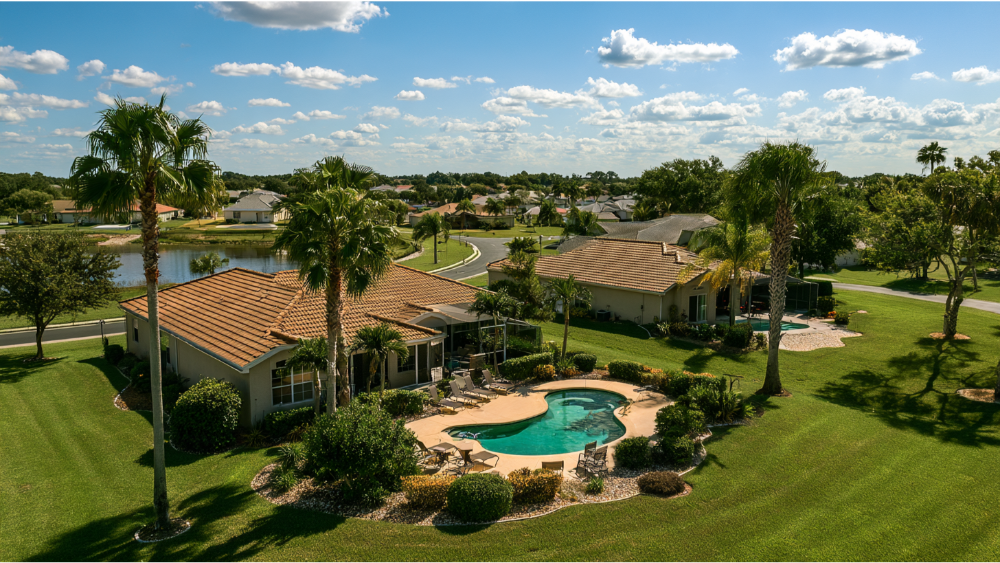
Monthly and multi-month blocks are the norm. You’ll see one-month minimums, three-month seasonal packages, and full-winter arrangements. Unlike weekly vacation rentals, these are priced as a block rather than per night, which is why the math looks so different when you compare listings side by side. What you won’t see is one universal answer, because “snowbird season” itself gets described as November through March, October through April, or January through April depending on who’s writing and which part of the state they’re in.
Two numbers matter more than the marketing labels: 30 days and longer than six months. They come from different parts of Florida law and they do different things. Mixing them up is the single most common error in snowbird content.
| Threshold | What it governs | Source |
|---|---|---|
| Less than 30 days or one calendar month, whichever is less (rented more than three times a year, or advertised as regularly available for such periods) | Part of Florida’s licensing trigger for vacation rentals when an entire unit is rented | Florida DBPR |
| A bona fide written lease for continuous residence longer than six months | Statutory exemption from the state transient rental tax. Exactly six months does not qualify | Florida Statute §212.03 |
So a property offered only in 30-day-or-longer blocks may not trip that particular licensing rule, though other lodging classifications or local requirements can still apply. And a five-month stay is still taxable even though it’s nowhere near short-term. Your exact arrival and departure dates can move you across one of these lines. Get them right in the agreement.
What’s included, and what costs extra
The advertised monthly rate is rarely the number that leaves your bank account. Ask for a written, itemized quote covering every line below before you commit to anything.
- Base rent for your exact dates, not a generic monthly rate
- Furniture and housewares, ideally with a written inventory
- Electricity, and whether there’s a monthly cap you pay over
- Water, sewer, and trash
- Internet and television, including actual speeds if you work remotely
- State transient rental tax and any local transient tax or discretionary surtax
- Security deposit or damage deposit
- Advance rent, and when each installment is due
- Cleaning, both mid-stay and departure
- Condo or community application and approval fees
- Parking, including vehicle limits, covered parking availability, guest parking, and trailer or RV restrictions
- Pet charges and any weight or breed conditions the association imposes
- Optional amenity access such as a club membership, tennis courts, a marina slip, or a beach badge
If you’re booking through one of the large booking platforms rather than directly with a management company, add guest service fees to that list. They’re calculated on top of rent and they scale with the length of the stay, which is why a three-month reservation can land thousands above the headline number. Hidden costs aren’t usually hidden on purpose. They’re just spread across four screens. Ask for one document with the total cost on it.
Understanding monthly rates versus nightly pricing
Nightly pricing rewards the owner for turnover. Monthly rates reward the owner for a filled calendar with one set of keys and one cleaning. That’s why rental rates per night drop sharply once you cross into monthly territory, and why a seasonal stay can be the more affordable option than the same property booked in two-week chunks. In many seasonal agreements you’ll find utilities typically included up to a stated cap, with the resident covering any overage. Confirm the cap in writing rather than assuming.
Pet friendly options for snowbirds traveling with animals

Pet friendly snowbird rentals exist in every market, but the pet policies come from two places: the owner and the association. An owner can say yes and the community rules can still say no, or cap the number of animals, or restrict access to certain areas. Get both approvals in writing before you drive south with the dog in the back seat. Ask about the deposit or fee structure, whether it’s refundable, and whether there’s a designated relief area. Communities near the water frequently have leash rules on the boardwalk and separate rules on the sand.
Condo and community approval, and other rules that catch people
Many condo and homeowner associations require their own application, their own fee, and their own approval before a seasonal resident can move in. Some require an in-person or video interview with a board or committee before they’ll sign off. Either way, the association’s timeline is not your timeline, and a board that meets once a month can stall a move-in by weeks if you send paperwork a day late. Ask the manager upfront how the approval works, what it costs, how long it takes, and what documents the association wants. Then submit everything with margin to spare.
A few other rules tend to catch snowbirds off guard. Associations often cap the number of occupants, limit how many vehicles you can keep on the property, and restrict guest stays. Some ban commercial vehicles, trailers, and RVs outright. Pet rules, as noted above, can be stricter than the owner’s own policy. And holdover language in the agreement matters: staying past your checkout date without written consent can trigger penalties that dwarf a normal night’s rent. Read the move-in rules, the parking rules, and the checkout terms before you sign, confirm them in writing, and you’ll skip the headaches that turn a quiet winter stay into a running argument with a board.