

Large Group Vacation Rentals for Family Reunions: How to Choose the Right One

Key Takeaway
Large group vacation rentals for family reunions work best when you match comfortable capacity to your actual rooming plan, not just the advertised sleeps count. A home sleeping 20 still needs enough bathrooms, dining seats, and parking for everyone. Confirm whether hosting daytime visitors requires separate host approval, and book 9 to 12 months ahead for the best selection and pricing on properties that accommodate the most guests.
The right large group vacation rental for a family reunion isn’t the one with the biggest “sleeps” number on the listing. It’s the property (or cluster of nearby vacation homes) that fits your actual room assignments, permits the gathering you’re planning, and gives your guests enough bathrooms, dining seats, parking, and step-free space for everyone who’s coming. A rental can sleep 20 and still be completely wrong for a family of 20.
If you’re the relative who got volunteered to organize this thing, this guide is for you. We’ll walk you through a rooming-first way to search large vacation rentals, a verification checklist you can actually use on a call with a property manager, and a booking timeline that keeps families from scrambling in month two.
What makes large vacation rentals right for a large family reunion?
Two ideas run through every good decision you’ll make here. Get these straight and the rest of the property search gets a lot faster.
Comfortable capacity vs. advertised capacity
Advertised capacity counts sleeping spots, and that count often leans on sofa beds, air mattresses, and bunk rooms. Comfortable capacity counts everything else: bathrooms, seats at a dining table, refrigerator shelves, parking spaces, and quiet corners where someone can read while eight kids are in the pool. Large vacation homes with multiple bedrooms usually include several bathrooms and full kitchens with a real dining space, but “usually” isn’t “yours.” Audit both numbers before you fall in love with the photos and the marquee features.
Overnight occupancy vs. permission to gather
Sleeping 20 people under one roof is a separate question from being allowed to host a reunion there. Daytime visitors, a catered dinner, amplified music, and a driveway full of extra cars may fall under different rules for large groups, and sometimes under local ordinances too. We cover exactly what to ask below, but start assuming these are two approvals, not one.
Start with a real headcount and rooming plan for your large family
Build this before you filter by “sleeps X.” It takes an afternoon of planning and it eliminates half the listings you’d otherwise waste time on.
- List households, not people. A group of 22 might be six families with very different needs.
- Note who genuinely shares a room. Couples, single adults, siblings who’ll bunk together, and the ones who absolutely will not.
- Count daytime-only relatives separately. They affect parking and house rules, not bedrooms.
- Flag mobility, sleep, and privacy needs. Main-floor bedroom, no stairs from parking, early bedtimes, a quiet room for a napping toddler.
- Collect exact arrival and departure dates per household. Half your group may want four nights and half want seven.
| Household | Adults | Kids | Beds needed | Must-have |
|---|---|---|---|---|
| Grandparents | 2 | 0 | 1 king | Main floor, walk-in shower |
| Sister + family | 2 | 3 | 1 queen, 3 twins | Bunk room near parents |
| Cousin (solo) | 1 | 0 | 1 twin or sofa bed | Wi-Fi, works remotely 2 days |
That example is illustrative, but the format is the point. It also surfaces the diverse needs inside one guest list, which is what separates a smooth week from a tense one. You’re not alone in this: the 2025 U.S. Family Travel Survey from the Family Travel Association and NYU’s Jonathan M. Tisch Center of Hospitality (1,596 respondents) found 57% of parents planned a multigenerational trip in the next 12 months and 48% planned travel with extended family.
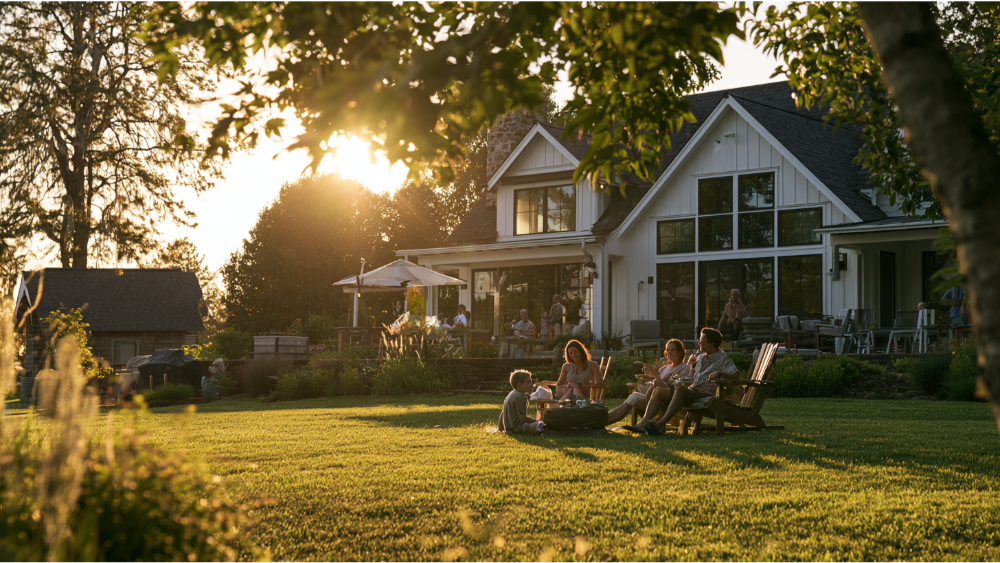
One large vacation home or a cluster of nearby vacation homes?
| Factor | One large home | Cluster of nearby rentals |
|---|---|---|
| Shared experience | Strongest: everyone in one kitchen | Weaker unless you designate a gathering house |
| Privacy | Limited, especially at full capacity | Each household gets its own door |
| Cost splitting | One invoice, one person exposed | Each household books and pays its own |
| Flexible dates | Everyone locked to the same nights | Households can arrive and leave separately |
| Bedtime separation | Hard: sound travels | Easy |
| Coordination effort | Lower | Higher: multiple check-ins, addresses, rules |
| Cancellation exposure | One household drops, the rest cover it | Contained to that household |
A single large private home or villa can cost less than multiple hotel rooms booked across three floors, but that depends entirely on the market, the season, and the property, so don’t promise families savings you haven’t priced out. Reunions built around hotels also tend to scatter your family members at exactly the hours they’d otherwise be together. If you go the cluster route, pick one rental as the official gathering house and confirm in writing that it allows visitors who aren’t registered guests. Otherwise you’ve booked four vacation rentals and have nowhere legal to eat dinner together.
Beach houses, villas, and other spacious homes
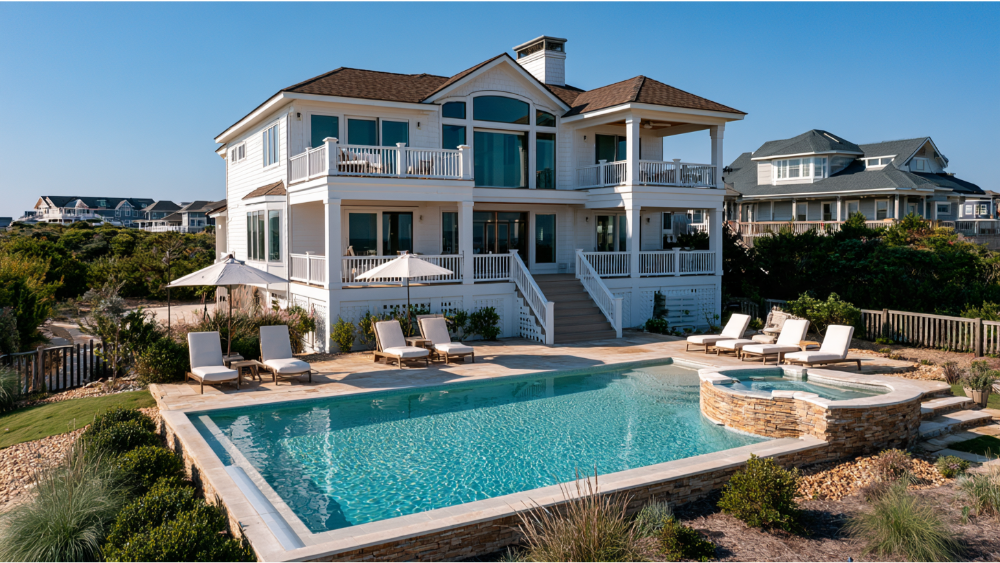
Large group inventory isn’t one thing, and properties range from simple lake cabins to full-staffed estates. Beach houses along the coast put everyone a short walk from the sand and tend to come with outdoor showers, a covered deck, and a driveway that fills up faster than you’d expect. Villas in warm-weather destinations lead with private pools and open-air living, which is glorious in February and very loud at 7 a.m. Mountain and lake properties, the kind most people picture when someone says Lake Tahoe, lean on game rooms, bunk rooms, and one big hearth space for the evenings. Condominiums and townhouses can work beautifully for big groups that want several units on the same floor with shared amenities downstairs, though building rules on visitors, parking, and pool hours are usually stricter than a standalone property’s.
Whatever the type, the features that carry a reunion are the unglamorous ones: parking, bathrooms, laundry, and a kitchen that can feed everybody at once. A luxury finish package is nice. A second dishwasher is nicer.
Check the layout, not just the count of multiple bedrooms and bathrooms
This is the comfortable capacity audit. Ask for it in writing before you book, because two properties with identical bedroom counts can behave completely differently with 18 guests inside.
Beds, bathrooms, and quiet bedrooms
- Bed type by room: king, queen, full, twin, bunk, or sofa bed. How many of the advertised sleeping spots are sofa beds?
- Which bedrooms are on which floor, and how many stairs to reach each one.
- Which bathrooms are en-suite and which are shared, plus how many are full baths versus half baths.
- Which bedrooms sit away from the main living space for early sleepers and nappers.
- Whether any bedroom has a door that locks, if that matters to your group.
Kitchens, dining seats, and laundry at full capacity
- Actual dining seats compared to your headcount, indoors and out. Twelve chairs and 22 guests means two shifts, and shared meals are usually the whole reason people came.
- Refrigerator and freezer capacity. One standard fridge does not hold a week of groceries for a large group.
- Cookware, dishware, and glassware counts. Ask for numbers, not “fully equipped.”
- Dishwasher, laundry, and hot water recovery. Fifteen showers on one water heater is a real constraint.
- Trash capacity, pickup day, and whether the high-speed Wi-Fi holds up with 20 devices on it.
Kitchens matter more than most listings assume. In the same 2025 survey, 30% of parents rated kitchen space as important in choosing accommodations, and 50% said they book lodging with a kitchen specifically to control travel costs. That makes a well-equipped rental one of the more budget-friendly moves available to you.
Does a family reunion count as an event at a vacation rental?
Often, yes. Many properties treat any gathering that brings in people who aren’t registered overnight guests as an event, which can trigger separate approval, an added fee, or a flat no. Marketplace guidance for event bookings tells travelers to search specifically for properties that allow events, read the house rules, and get the host or manager’s approval before booking, not after.
Ask these before you pay anything:
- Maximum overnight occupancy, and whether infants count.
- Whether non-registered daytime visitors are permitted, and how many.
- Quiet hours and any noise ordinance that applies to the address.
- Parking: how many vehicles on the property, and where overflow legally goes.
- Catering, outside vendors, decorations, tents, and amplified music.
- Pet policy, including whether it changes for a large group.
Get the answers in an email or the rental agreement. A verbal yes from someone you spoke to once is not a policy.
Pick a location the whole group can actually use
The best-reviewed home in the wrong spot still means an hour in the car every morning. Look for private homes strategically located near the things your group already wants to do, with easy access from the airport your out-of-town relatives are flying into. Check proximity to a real grocery store, a pharmacy, and a hospital before you check proximity to the beach.
Then map the nearby attractions against your actual ages. Hiking trails and water sports keep teenagers occupied and give the adults a reason to nap in peace. Explore what’s within a 20-minute drive, because that radius is where most of your quality time will happen.
Amenities that create memorable family reunions across generations

A reunion usually spans an 80-year age range, and the property has to work at both ends of it. Multi-generational groups almost never share one set of priorities.
- Access: ask about exterior steps, the route from parking to the door, doorway widths, whether a bedroom and full bathroom sit on the entry level, and whether showers are step-in or over a tub. “Accessible” as a listing label tells you almost nothing.
- Kids: ask about stair gates, balcony railings, cribs, and high chairs rather than assuming.
- Remote workers: if a couple of relatives are stretching the trip into a work week, confirm upload speed and whether there’s a room with a door and a desk.
- Zones: the best reunion rentals have one loud space and one quiet space that aren’t the same room.
Private pools, game rooms, and shared spaces
Pools sell more large vacation rentals than any other amenity, and they carry the most risk. The Consumer Product Safety Commission recommends residential pool barriers at least four feet high with self-closing, self-latching gates. Verify the barrier and the latch yourself instead of trusting a “family friendly” tag on a listing. If the property has private pools, hot tubs, or lake access, agree on a watch rotation before day one so nobody assumes someone else is watching.
Game rooms earn their keep on rainy afternoons and after dinner, when teenagers need entertainment options somewhere that isn’t one of the living rooms. Ask what’s actually in there, since “game room” can mean a pool table and a projector or a folding table and a dartboard. The same goes for other shared amenities: confirm whether the fire pits can legally be used, whether the grill has propane on arrival, and whether the outdoor spaces seat your whole crew at once.
Private chefs, concierge services, and other add-ons worth pricing
Some properties offer private amenities and extras that quietly solve your hardest logistics. A private chef for one night takes the pressure off whoever always ends up cooking. Concierge services can handle grocery pre-stocking, airport transfers, or a mid-stay clean that resets the towels. Ask what’s included in the nightly rate, what’s arranged through the manager, and what you’d be booking yourself, because the answer changes what your budget really looks like.
Understand the full cost before anyone commits
The nightly rate is the smallest part of the conversation. Build the family’s number from lodging, taxes, cleaning and pet fees, the refundable deposit, groceries, transportation, and any group activities. Then decide how you’re splitting it: per person, per household, or by room quality (the family with the primary suite pays more than the cousin on the pull-out).
Set payment deadlines that sit ahead of the cancellation cutoff, so you learn about a drop-out while you can still get money back. Booking 9 to 12 months ahead usually gets you both better deals and better availability on the homes that sleep the most people, since those book first for summer and holiday weeks. Decide in advance what happens if one household cancels: does the group absorb it, or does that household forfeit its share? Put it in the group email before anyone sends you a dollar.
Read the rental agreement and cancellation terms

When you’re the one on the hook for the booking, the fine print is your protection, so read the whole agreement before you sign anything. Pin down the cancellation policy in exact terms: the refund deadline, how much you get back at each stage, and whether the deposit is refundable at all. A “flexible” label on a listing isn’t a contract, so confirm the actual dates and dollar amounts in the agreement itself.
Then check the parts that bite large groups specifically: the maximum occupancy clause and what happens if you exceed it, the damage deposit and how it’s returned, any event or extra-guest fees, and the check-in and check-out times that dictate your travel plans. Note what the agreement says about things outside anyone’s control, too, since a weather closure or a flight cancellation can affect a reunion spread across several households.
Finally, keep every promise in writing. If the manager agreed on the phone that daytime visitors are fine or that a crib is included, get it added to the agreement or confirmed by email before you pay. When you’re collecting money from relatives, you want a document you can point to if anything goes sideways, not a memory of a friendly conversation.