

Maryland
Rental and for-sale inventory across cities we serve in this state.
Moving to Maryland? The Ultimate 2026 Guide
Explore
Cities in this state
Maryland’s economy in 2026 is projected to see job growth with a focus on tech and healthcare sectors. The cost of living is slightly above the national average, with property taxes varying by region. Popular areas like Baltimore, Montgomery County, and the Chesapeake Bay offer diverse living environments for new residents.
Moving to Maryland: Navigating Opportunities and Challenges in the Old Line State
Maryland’s 2026 Economic Outlook: What New Residents Need to Know

Job Market Predictions
Maryland’s job market in 2026 is expected to grow by 1.8%, driven by technology and healthcare sectors, including world-renowned hospitals like Johns Hopkins University and the Maryland Medical Center. Employment opportunities in these fields are projected to increase by 2.5%, providing new residents with a robust job market. The healthcare sector, in particular, is expanding with telehealth services and advanced medical research, especially in Baltimore City. This growth is supported by Maryland’s strategic initiatives to attract tech startups and biotech firms, leveraging its proximity to the nation’s capital and a strong educational system that includes institutions like the Naval Academy and the University of Maryland.
Cost of Living Updates
The cost of living in Maryland is anticipated to be 7% higher than the national average in 2026. Housing costs are a significant factor, with median home prices reaching $430,000 in regions like Anne Arundel County and Baltimore County. Renters can expect average monthly rents of $1,600. These costs are influenced by Maryland’s diverse geography, from the bustling cities along the East Coast to the rolling hills and rural areas of Western Maryland. The state’s appeal, with its natural beauty and cultural richness, drives housing demand, particularly in urban areas like Silver Spring and Ellicott City, where amenities and local services are abundant.
Economic Growth Indicators
Maryland’s GDP is projected to grow by 2.3% annually, supported by sectors like biotechnology and tourism. With attractions such as the Chesapeake Bay and Fort McHenry, tourism contributes over $18 billion to the state’s economy, providing additional growth opportunities. The state’s investment in infrastructure and sustainability, including initiatives to protect the Chesapeake Bay and promote green energy, plays a crucial role in economic growth. The Blue Ridge Mountains and state parks like Antietam National Battlefield also attract visitors, enhancing the tourism sector’s impact on the local economy and supporting small businesses across Southern Maryland and the Eastern Shore.
Financial Considerations for New Maryland Residents
Understanding Maryland Taxes
Maryland has a progressive state income tax system ranging from 2% to 5.75% depending on income levels. Property taxes average 1.1% of assessed home value, with variations across counties. Sales tax remains at 6%, competitive compared to neighboring states. New residents should be aware of the Mason Dixon Line’s historical significance, which influences some tax regulations. Understanding these nuances can help when planning for property investments or considering business opportunities in diverse areas like Montgomery County or Ocean City, where tourism boosts economic activity.
Budgeting for Everyday Expenses
Residents should budget about $3,800 monthly for basic expenses, including housing, transportation, and groceries. Transportation costs are around $150 monthly, while utilities average $120. These figures are slightly above the national average, reflecting Maryland’s higher cost of living. However, the state’s robust public transportation network, particularly in urban areas like Baltimore City, offers cost-effective commuting options. Additionally, Maryland’s proximity to the nation’s capital provides access to a broader job market, which can offset higher living expenses through enhanced career opportunities.
Investment Opportunities in Maryland
Maryland offers diverse investment opportunities, with real estate seeing steady appreciation rates of 3% annually. The state’s strategic location near the nation’s capital and its robust infrastructure make it appealing for business investments, particularly in technology and logistics sectors. Areas like College Park and Silver Spring are hotspots for tech startups, benefiting from a skilled workforce and proximity to major research institutions. Maryland’s commitment to innovation and sustainability also attracts investors looking to capitalize on emerging markets in renewable energy and environmental conservation.
Exploring Maryland’s Diverse Regions: Where to Live
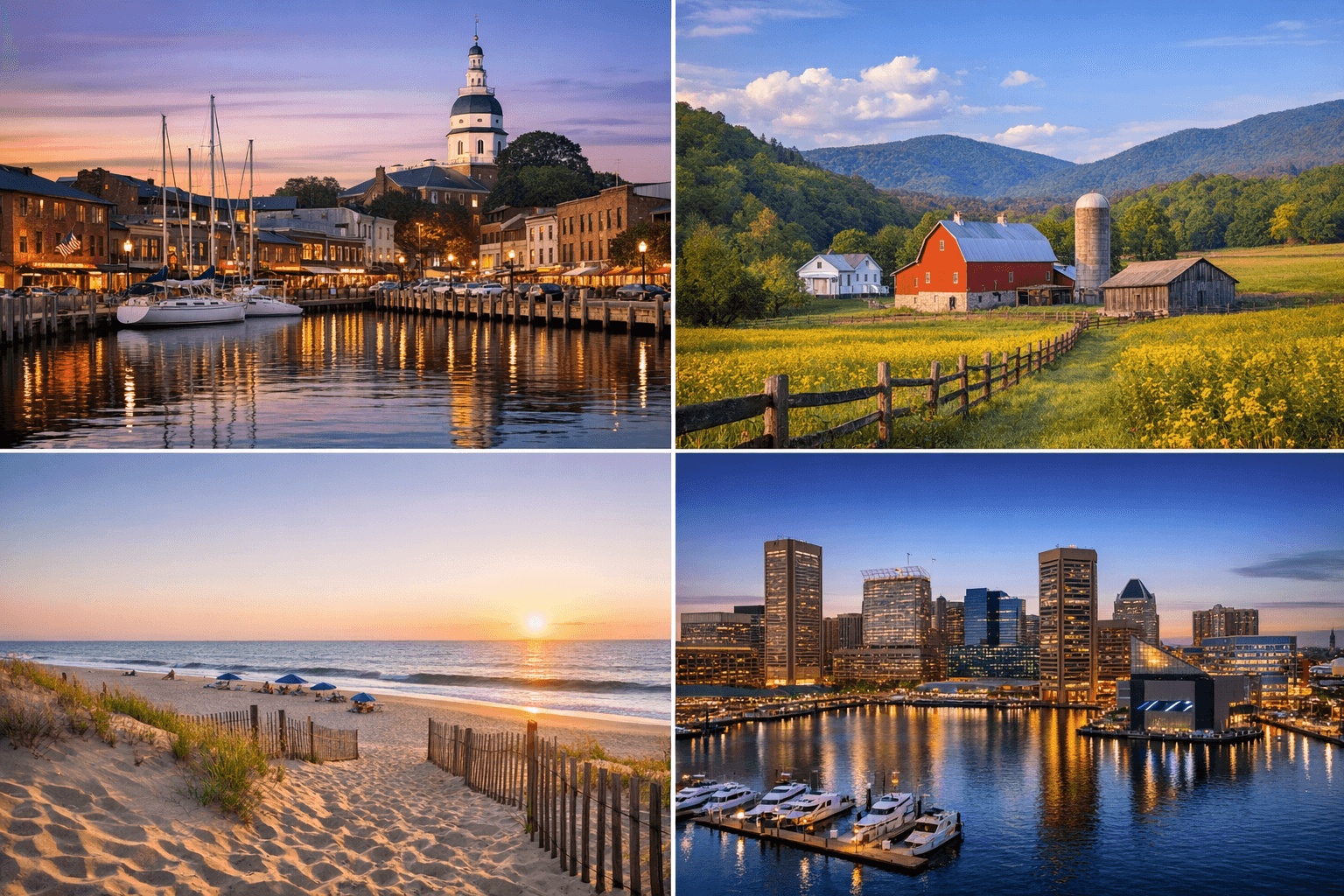
Urban Living in Baltimore
Baltimore, known as Charm City, is Maryland’s largest city, offering urban amenities with a median rent of $1,500. The city is home to cultural landmarks like the Inner Harbor and sports venues, providing a vibrant lifestyle. The job market is strong, with a focus on healthcare and education. Baltimore’s food scene, renowned for Maryland crab cakes and diverse culinary offerings, attracts foodies from across the East Coast. The city’s historic neighborhoods, such as Federal Hill and Fell’s Point, offer a blend of small town charm and metropolitan convenience, making Baltimore a desirable destination for new residents.
The Charm of the Chesapeake Bay
The Chesapeake Bay area offers a unique lifestyle with access to water activities and natural beauty. Housing options range from $300,000 in rural areas to $600,000 in more developed regions. The area supports a tourism economy, contributing over $1 billion annually. The bay’s ecological significance requires ongoing conservation efforts, which create opportunities for careers in environmental science and marine biology. Residents enjoy recreational activities such as sailing and fishing, while local seafood, particularly the famous Maryland crab cakes, enhances the region’s cultural appeal.
Suburban Life in Montgomery County
Montgomery County provides a suburban atmosphere with excellent schools and public services. Median home prices are around $500,000, reflecting the area’s desirability. The county’s proximity to Washington D.C. attracts professionals and families seeking quality of life and commuting options. Known for its diverse population and cultural inclusivity, Montgomery County offers a range of community events and programs that foster a sense of belonging. The county’s commitment to education and innovation makes it a top choice for families investing in their children’s future.
Navigating the Moving Process to Maryland
Finding the Right Moving Services
Hiring a reliable moving company is crucial, with costs averaging $1,200 for interstate moves. Services like packing and storage can add $300 to $500 to the total cost. Early booking is recommended to secure availability and better rates. Understanding the logistics of Maryland’s road networks, especially in densely populated areas like Baltimore County and Montgomery County, can help streamline the moving process. Additionally, considering the state’s four distinct seasons, planning a move during cooler months may offer cost savings and reduced stress.
Understanding Maryland’s Rental Market
Maryland’s rental market is competitive, with vacancy rates around 5%. Popular areas like Silver Spring and College Park see higher demand, with average rents of $1,800. Prospective tenants should prepare for a thorough application process, including credit checks and references. Understanding local market trends, such as rising demand in areas with strong job markets and educational institutions, can provide an advantage. Engaging with local real estate agents who have firsthand knowledge of neighborhoods can also simplify the search for ideal rental properties.
Settling Into Your New Community
Maryland communities offer diverse amenities, from local services to recreational facilities. Establishing connections through local events and neighbor introductions can ease the transition. Access to quality education and healthcare is a strong point, with Maryland consistently ranking high in national surveys. Engaging with community groups and participating in local activities can help new residents integrate and form lasting relationships. The state’s rich history, highlighted by landmarks such as Fort McHenry and the Star Spangled Banner, offers endless opportunities for exploration and cultural enrichment.