

Minnesota
Rental and for-sale inventory across cities we serve in this state.
Moving to Minnesota? The Ultimate 2026 Guide
Explore
Cities in this state
Minnesota’s 2026 economic outlook predicts a strong job market with a 3.5% unemployment rate. Housing costs remain competitive, with median home prices around $350,000. Minnesota offers a balanced lifestyle, emphasizing outdoor activities and community engagement.
Moving to Minnesota: An Expert’s Guide to Navigating the North Star State in 2026
2026 Economic and Lifestyle Outlook for Minnesota

Projected Economic Trends and Job Market
By 2026, Minnesota is expected to have a strong job market with an unemployment rate of approximately 3.5%. The state is home to major corporations like General Mills, offering opportunities in sectors such as food processing, healthcare, and technology. Job growth is projected at 2.1% annually, slightly above the national average of 1.9%. This robust job market is further bolstered by Minnesota’s thriving economy, which is anchored by a diverse range of industries that are continually evolving. For instance, the technology sector is seeing a surge in startups, thanks to supportive state policies and a strong talent pool emanating from the state’s high-quality education system. This not only attracts local talent but also draws professionals from across the nation looking to capitalize on the countless opportunities available.
Evolving Lifestyle and Cultural Shifts
Minnesota’s population is projected to grow to 6 million by 2026, with the Twin Cities metro area accounting for 60% of this growth. The cultural landscape is expected to diversify, with increased emphasis on arts, as evidenced by venues like the Walker Art Center. Approximately 25% of residents will participate in community events, reflecting Minnesota’s reputation for community engagement. This vibrant arts and cultural scene is complemented by a rich tapestry of community events that celebrate the state’s diversity and history, from the renowned Minnesota State Fair to local arts festivals. These events not only foster a sense of community but also offer economic benefits by attracting tourism and boosting local businesses.
Impact of Climate Change on Daily Life
Climate change is impacting Minnesota’s weather patterns, with average winter temperatures rising by 2°F over the past decade. This has affected outdoor activities and winter sports, which are a significant part of Minnesota’s identity. By 2026, the state is investing $500 million in sustainability initiatives to mitigate these impacts. These initiatives include enhancing the state’s renewable energy infrastructure and promoting the use of eco-friendly technologies in everyday life. The Minnesota Department of Natural Resources is actively involved in these efforts, focusing on preserving the state’s natural beauty and ensuring that outdoor enthusiasts can continue to enjoy the pristine lakes and lush forests Minnesota offers.
Financial Considerations: Budgeting for Your Move
Cost of Living Comparisons Across Minnesota
The cost of living in Minnesota varies, with the Twin Cities being 5% higher than the national average, while areas like Rochester are 3% below. A family of four can expect to spend approximately $70,000 annually, with housing, transportation, and healthcare being significant expenses. However, Minnesota’s high quality of life, characterized by its quality education and healthcare systems, often justifies the higher living costs. For those considering moving to Minnesota, understanding these cost dynamics is crucial for effective budgeting and ensuring a smooth relocation experience.
Housing Market Predictions and Opportunities
In 2026, the median home price in Minnesota is projected to be $350,000. The Twin Cities offer a competitive housing market with a 2.5% yearly increase in home values. In contrast, rural areas like South Dakota border towns offer more affordable options, with prices around $250,000. For potential homeowners, this means there’s a range of options depending on their preferences for urban or rural living. The state’s economic hubs continue to see development, providing endless opportunities for investment and growth in the housing market.
Understanding State Taxes and Incentives
Minnesota has a high tax burden, with state income tax rates ranging from 5.35% to 9.85%. However, the state offers incentives for new residents, including tax credits for first-time homebuyers and renewable energy investments. Property taxes average 1.1%, aligning closely with the national average. These tax incentives are designed to offset the high tax burden and encourage new residents to contribute to the state’s thriving economy. By strategically leveraging these incentives, new residents can maximize their return on investment when settling in Minnesota.
Exploring Minnesota’s Diverse Regions: Finding Your Fit
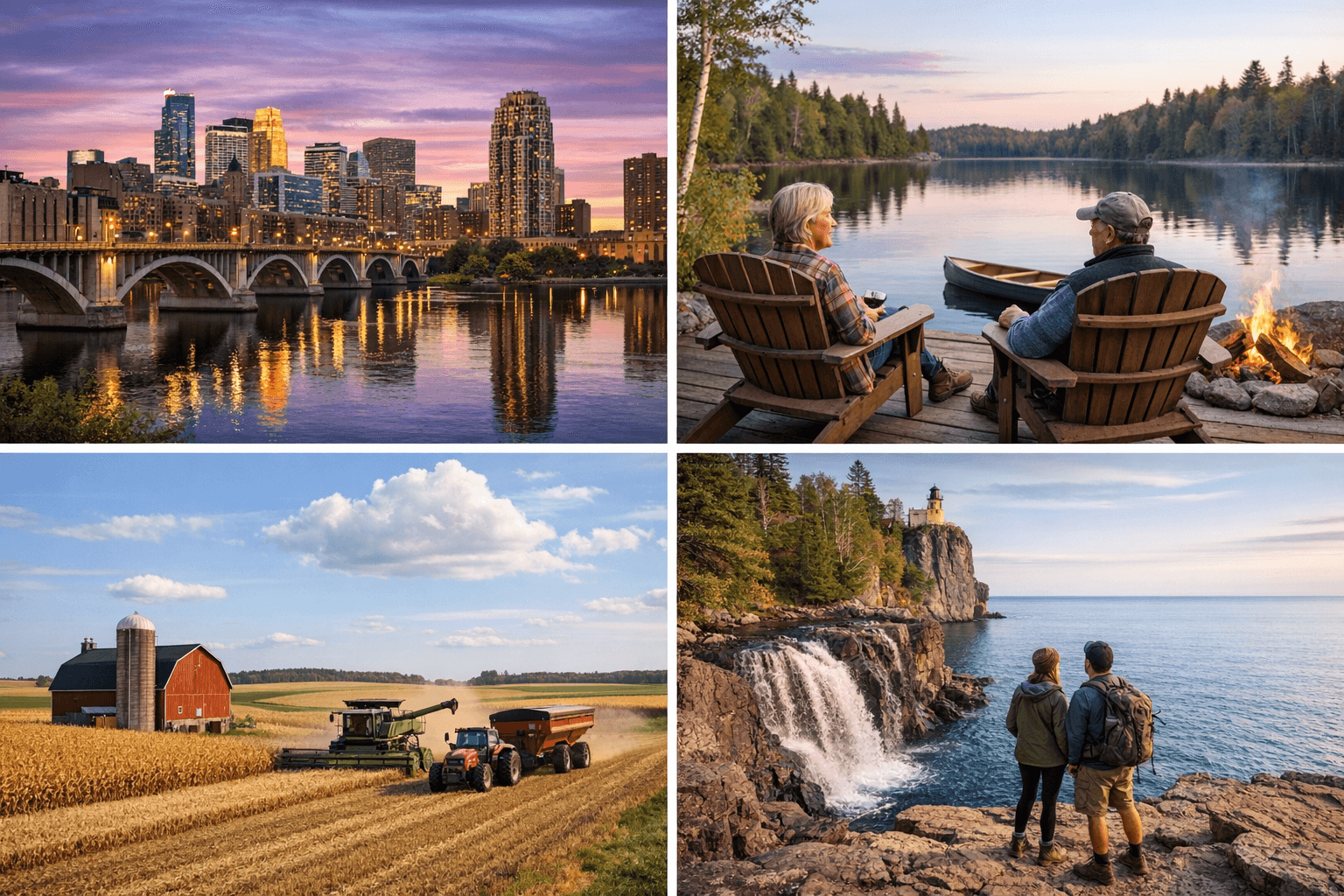
Urban vs. Rural: Pros and Cons
Urban areas like Minneapolis offer a bustling city life with professional sports teams and a thriving arts scene. Conversely, rural regions provide natural beauty and outdoor recreation opportunities. While urban living may come with higher costs, rural areas offer affordable housing and a slower pace of life. Each region in Minnesota has its own charm, from the vibrant arts and cultural events in the cities to the serene cabin weekends and ice fishing in the countryside. Understanding these differences is key to finding an ideal living situation that aligns with one’s lifestyle preferences.
Community Resources and Local Amenities
Minnesota is known for its ‘Minnesota Nice’ culture, with abundant community resources. Libraries, parks, and local organizations are prevalent, with over 500 community centers state-wide. Programs for newcomers, especially in the Twin Cities metro, help integrate residents into the community. These resources are crucial for building a new life in Minnesota, providing support networks and opportunities to engage with the local community. From accessing high-quality education to participating in community events, these amenities enhance the quality of life for all residents.
Regional Lifestyle Differences and Preferences
The Twin Cities are characterized by a fast-paced lifestyle and diverse cultural offerings. In contrast, northern regions near Lake Superior emphasize outdoor activities and a close-knit community feel. Understanding these lifestyle differences can help new residents find their ideal environment. Whether one is drawn to the city’s growth and economic opportunities or the tranquility of rural areas, Minnesota’s distinct seasons and varied landscapes offer something for everyone.
Step-by-Step Guide to a Smooth Move to Minnesota
Preparing for Your Move: Essential Checklists
Start planning at least six months before your move to Minnesota. Budget for moving costs, typically ranging from $2,000 to $5,000 depending on distance. Ensure you have essential documents, including driver’s license transfers and school registrations, ready for a seamless transition. Additionally, familiarize yourself with Minnesota’s distinct seasons and prepare for the climate, particularly the brutally cold and harsh winters. Proper preparation can significantly ease the transition and help you settle into your new community with confidence.
Navigating Moving Services and Costs
Professional moving services in Minnesota cost an average of $2,500 for interstate moves. It’s advisable to get quotes from at least three companies. Consider additional insurance for valuable items, as the basic coverage may only include $0.60 per pound per item. To ensure a cost-effective move, consider the potential ROI of using professional services versus a DIY approach. Weighing these options can help you make informed decisions that align with your budget and moving needs.
Settling In: Connecting with Your New Community
Participate in local events such as the Minnesota State Fair, which attracts over 2 million visitors annually. Join local clubs or volunteer organizations to meet new people and learn more about Minnesota’s community values. Access to community resources is crucial for easing the transition into everyday life. Embracing the state’s traditions, such as enjoying winter sports or exploring pristine lakes, can enrich your living in Minnesota experience and help you fully integrate into your new environment.