

Are New York Vacation Rentals Legal? What NYC Guests Should Know

Key Takeaway
New York vacation rentals under 30 nights are legal inside NYC only under strict conditions: the host must remain present, no more than two guests are allowed, and renting an entire apartment is generally prohibited unless the building is an approved Class B multiple dwelling. A 30-night or longer stay sidesteps most of these restrictions and opens up far more entire-unit options across Manhattan and Brooklyn.
Updated October 2026.
Yes, but New York vacation rentals under 30 nights are tightly limited inside New York City. For a short stay in an ordinary home or apartment, the registered permanent occupant generally has to stay in the same unit, guests must have full access to the dwelling, and the rental is capped at two guests, not counting children under four. Renting an entire house or apartment for fewer than 30 nights is generally illegal unless the building is an approved Class B multiple dwelling.
One detail trips up a lot of travelers: a 29-night reservation is still a short-term rental, while a 30-night reservation is treated as permanent occupancy. That line changes everything. If you’re planning a trip to New York, United States from anywhere in the country and you want to book without worrying about a last-minute cancellation or being asked to leave, this guide walks you through exactly what to check and why.
NYC Vacation Rental Legality at a Glance
Here’s the whole thing in one table. Figure out which row your stay falls into before you book, and most of your questions answer themselves.
| Stay type | Usually legal? | What must be true |
|---|---|---|
| Private or shared space, under 30 nights | Yes, under narrow conditions | Registered permanent host present, two-guest limit, full access to the unit |
| Entire ordinary apartment or house, under 30 nights | Generally no | Only if the building is approved for Class B transient occupancy |
| Ordinary apartment or house, 30 nights or more | Not covered by Local Law 18 registration | Lease, sublet, and building rules may still apply |
What Local Law 18 Actually Changed
Local Law 18 gets blamed for “banning” vacation rentals in New York City. That’s not what it did. The law created a registration system for hosts and a verification requirement for booking platforms. Platforms now have to confirm a transaction is tied to a valid registration or an eligible Class B building before they process it.
The restriction people actually run into, that most unhosted stays under 30 nights aren’t allowed, is older than the law. According to the NYC Office of Special Enforcement, those rules had been on the books for decades. Local Law 18 made them enforceable in a practical way by pulling non-compliant listings off the booking services. Platform-verification enforcement began on September 5, 2023.
So no, it isn’t a blanket ban. Legal short-term rentals still exist in New York City. They just have to follow specific conditions, and the listing has to be registered and verified. That’s a meaningful difference if you’re trying to book one safely.
What Makes a Stay Under 30 Nights Legal in NYC?
For a short stay in an ordinary home or apartment, a handful of things all have to be true at once:
- The host is the permanent occupant of the unit.
- The host remains in the same unit during your stay.
- No more than two guests, not counting children under four.
- You get full access to the dwelling and all required exits.
- Only legal sleeping spaces are used. No cellars, garages, or attics.
- The listing has a valid OSE registration.
The “full access” part is stricter than it sounds. This is a common-household rule, meaning you and the host share the home. That means the kitchen, the living room, the bathroom, and the exits all stay open to you. A guest room that can be locked off as a separate internal suite after you leave can violate it. Privacy locks are fine, though, the kind you’d use while you’re inside a bedroom or bathroom.
And yes, to answer the question directly: for an ordinary under-30-night stay, the host has to be present. If a listing promises you the place to yourself for a long weekend, that’s a signal the stay doesn’t meet the rules. A legal shared-household stay usually looks like a spare bedroom with a real comfy bed in a home where the host actually lives, not a sleek standalone apartment marketed as a private hideaway.
Can You Rent an Entire NYC Apartment or House?
For fewer than 30 nights in an ordinary apartment, single-family house, or two-family house, the answer is generally no. The whole-place-to-yourself short-term stay that works in most of the country doesn’t work the same way inside New York City.
There’s one exception. Buildings legally approved for transient occupancy as Class B multiple dwellings can offer entire-unit stays under 30 nights. These are a specific category of property, not ordinary apartments that happen to allow short visits. If you want the entire place and you’re staying fewer than 30 nights, the building needs to qualify as Class B, or your stay needs to be 30 nights or longer.
For short visits where you’d rather not share space, aparthotels and licensed lodging properties are the clean, legal alternatives. They’re built for exactly this kind of stay, and many offer the same modern comforts you’d want in a full apartment, from a fully equipped kitchen to a quiet living room and a dedicated bed of your own.
What Is a Class B Multiple Dwelling?
A Class B multiple dwelling is a building legally approved for transient, short-stay occupancy. OSE publishes a list of these buildings, and the most recent version referenced during research was updated September 24, 2026. One caution worth holding onto: being on that list confirms the building’s occupancy classification only. It does not guarantee every other legal or operational requirement has been met, so treat it as one check rather than a full green light. Cross-check the specific address and unit, because a single property on the list may contain units that are set up differently from one another.
The 29-Night vs. 30-Night Rule Explained

This is the single most useful thing to understand before booking. New York City counts your check-in date as day zero. That means 29 nights is a short-term rental and lands under all the restrictions above, while 30 nights is treated as permanent occupancy and falls outside the short-term rental definition entirely.
Cross that 30-night line and renting an entire ordinary apartment becomes fully legal. No host-present requirement, no two-guest cap from Local Law 18. For travelers who can flex their dates, this is often the simplest path to an entire place of your own in the city, whether that’s a one-bed studio in Manhattan or a larger apartment in Brooklyn with room to spread out.
One honest caveat: a 30-night stay can create separate tenancy or subletting considerations. The building’s lease and house rules may still have something to say. So book the longer stay with confidence, but read the listing’s terms and ask about sublet policies if anything is unclear. Longer bookings also tend to unlock better nightly prices, which is a nice bonus.
How to Check an NYC Vacation Rental Before You Book
You can vet most listings in about a minute. Work through these in order:
- Confirm the exact number of nights. Is it 29 or fewer, or 30 or more?
- For an under-30-night residential stay, confirm the listing says the host will remain onsite.
- Check the total guest count against the two-guest limit.
- Find the registration number in the listing.
- Match that number, its status, the street address and unit, and the listing URL against the OSE public dataset.
- If it’s an entire-unit stay under 30 nights, check whether the building appears on the Class B list.
- Save the listing, your confirmation, all host messages, and payment records.
- Re-check shortly before you travel.
The OSE dataset shows the registration number, the status (registered, expired, or terminated), the street address and unit number, the borough and ZIP, and the associated booking service and listing URL. Match the specifics, not just the number. A registration applies to one unit, not every unit in a building. When you scroll through a listing’s gallery, the previous image and next image buttons let you study every room, so if photos of a stunning apartment don’t line up with the registered address, that mismatch is your cue to slow down.
And here’s the part most guides skip: a registration number alone is not enough. OSE estimated that, as of early June 2025, roughly 20% of registered listings were still offering illegal occupancy, like an unhosted stay or too many guests. The dataset itself is point-in-time too, with the latest file linked by OSE dated January 7, 2026 at the time of research. Registrations expire and get revoked, so always pull the newest file and re-check close to your trip.
Red Flags That a Listing May Be Illegal

None of these guarantees a problem on their own, but any of them is worth a pause. They’re the patterns the city flags most often:
- An entire ordinary apartment or house offered for fewer than 30 nights.
- A host who says they’ll be out of town during your stay.
- A listing that accepts three or more guests for an ordinary short-term stay.
- A missing registration number, or one that doesn’t match the address.
- A host who changes the address after you book.
- A guest area locked off as a separate internal suite.
- A sleeping space in a cellar, garage, attic, or other nonresidential area.
- A request to move communication or payment off the booking platform.
Spotting one of these before you pay protects your trip and your money. A photo gallery that leans hard on a great view or a glossy living room while staying vague on the registration is not automatically a scam, but it should prompt you to verify the basics. Trust your gut, verify, and keep the conversation inside the booking system where there’s a record.
What to Do If the Rental Is Illegal, Unsafe, or Not as Advertised
First, good news: guests are not held responsible simply for unknowingly booking a rental that turns out to be illegal. The liability sits with the host, not the traveler. That said, you’ll want to act quickly if something’s wrong.
Start by contacting the booking service. Then preserve your evidence: the listing, your confirmation, every message, and your payment records. If the property is unsafe or clearly not what was advertised, you can call 311 or submit a complaint to OSE online. The city specifically flags bait-and-switch addresses, unavailable hosts, missing amenities, unsafe conditions, and properties already occupied by someone else as known risks.
Be realistic about outcomes, though. If inspectors find hazardous or unsafe conditions, you may be required to vacate the property. And the city won’t guarantee you a refund or a replacement place to stay. That depends on your booking agreement and your payment provider, which is exactly why keeping your records and paying through the platform matters so much.
Taxes and Fees NYC Guests Should Expect

Effective March 1, 2025, New York State and local sales tax applies to short-term rental occupancy when the rental rate is more than $2 per unit per day. New York City adds a $1.50 per-unit, per-day fee on top, and other local occupancy taxes may apply depending on the property. Your invoice has to display the applicable taxes and the NYC unit fee separately.
Here’s the practical takeaway: a lower advertised nightly rate isn’t always the cheaper booking. Once cleaning fees, taxes, and that per-day unit fee get added in, the ranking can flip. Filter for and review the full total before you confirm, not just the headline number. Comparing final prices side by side is the only honest way to see which stay actually lets you save. Tax rules shift more often than the core 30-day rule, so double-check current rates near your travel dates.
Where to Stay: Neighborhoods With a Great Location Near Times Square and Prospect Park
Once the legal homework is done, the fun part starts. A good stay in this vibrant city can feel-like-a-local instead of boxed into a tiny room, and the right neighborhood sets the whole tone for your trip. The goal is a great location that matches how you actually want to spend your days.
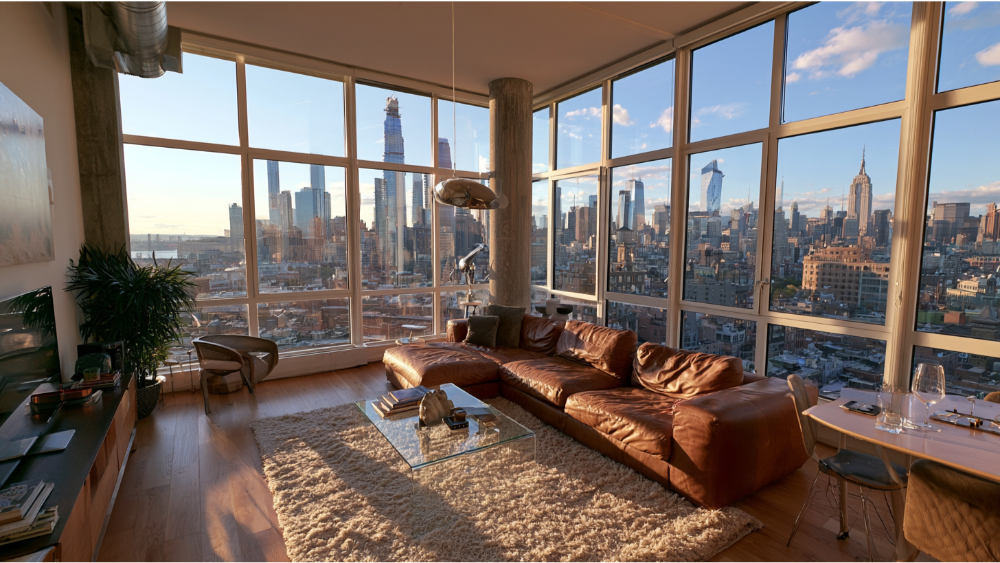
In Manhattan, you get the city’s urban energy at full volume, with scenic parks and cultural attractions never far off. Soho is the trendiest district if you want boutiques, shops, and restaurants out your door. The East Village brings the nightlife. Gramercy Park is a longtime favorite for rentals, quieter but still central. Downtown, the World Trade Center area puts memorials and transit hubs within easy reach. If you want to be steps from the lights and the crowds, a place near Times Square keeps the big attractions within a short walk. Lofts and studios are popular here, and the better ones come with a modern kitchen, a comfortable living room, air conditioning you’ll want in summer, and great amenities like fast Wi-Fi and in-building laundry facilities.
Brooklyn is where families often land for more room, and it is one of the most family friendly parts of the city. There are around 68 vacation rentals on the Brooklyn side, and many include kitchens, extra bedrooms, and in-unit laundry, with a short walk to Prospect Park, restaurants, and shops. Culture lovers get easy access to the Brooklyn Museum, a concert at Barclays Center Brooklyn, or a stroll across the Brooklyn Bridge back toward Manhattan. A Brooklyn apartment or townhouse tends to give you more square footage than a comparable Manhattan room, so you trade a little subway time for noticeably more space. Many Brooklyn properties also offer a great view of the skyline, the park, or a nearby lake, which is hard to beat at breakfast. Push a bit further into the outer boroughs, or across the river to Jersey City or Hoboken, and you’ll often find lower prices and larger apartments while staying an easy ride from Manhattan.
Whatever neighborhood pulls you in, let the amenities and layout suit your style, and lean toward entire-unit stays of 30 nights or more, or verified legal options, so the great location you picked is one you can actually keep. Whether you want a wonderful studio near Times Square, a peaceful retreat where you can truly relax, or a roomy house in Brooklyn, the smart move is to match the property to your trip and confirm it’s legal before you pay. When you browse and search listings, filter by what matters most so every option genuinely fits you.
When Is the Best Time to Book an NYC Vacation Rental?
Off-peak runs January through March, and January and February usually deliver the lowest prices on short-term stays. If your dates can flex, you’ll find better deals, and booking a longer stay tends to unlock bigger savings on the nightly rate. Before you commit, check the property’s current prices and the weather for your window. New York in February is a different trip than New York in May, and the price difference reflects it.
Do the Same Rules Apply Across New York State?

No. New York City runs its own registration system, and the state’s county-based short-term rental registration law specifically excludes any city with a population of one million or more, which lets NYC keep its own regime. So everything above applies to the five boroughs, including Manhattan and Brooklyn, not the whole state.
Outside the city, it varies a lot. Counties may operate their own registries or opt out under the statute, and counties, cities, towns, and villages can further restrict or prohibit vacation rentals on their own. Where a county registry applies, registration is generally valid for two years. If your trip is upstate, in the Hudson Valley, or out on Long Island, the rules will look different from the NYC ones, and a separate New York State guide is the better place to sort that out.
Are NYC’s Vacation Rental Rules About to Change?
You may see articles hinting that the rules are loosening. There’s a bill behind that talk: Int. 0879-2026, introduced April 30, 2026, which would ease some restrictions for owner-occupied one- and two-family homes, including allowing up to four guests and letting the owner-occupant be absent.
As of October 29, 2026, that bill remained in committee. It is not current law. The existing two-guest limit and the host-present requirement are still the rules you have to book around today. Don’t let a headline about proposed changes talk you into a listing that wouldn’t pass under the rules that actually apply right now.
Book Your NYC Stay With Confidence

KT Rents is a full-service, broker-owned rental resource and vacation destination connector that’s been at this across the U.S. since 2009, with 16+ years of experience helping travelers and owners alike. We’re not an NYC law office and we don’t issue legal approvals. What we do is help you find a stay you’ll actually enjoy, anywhere in the United States of America, and give you the know-how to book it the right way.
Browse New York City vacation destination options, use filters to sort by price and location, and verify the listing’s stay type and registration before you commit. Whether you’re after a modern apartment near Times Square, a family friendly house in Brooklyn a short walk from Prospect Park, or a loft with a great view of Manhattan, lean toward verified, legal options so your trip stays smooth from check-in to checkout. When you’re ready, Book Your Travel and Search Now to start planning a feel-like-a-local stay you can book with confidence.
Is it cheaper to do a vacation rental or a hotel in NYC?
It depends, and the lower advertised nightly rate doesn’t always win. Add cleaning fees and taxes and the ranking can change, so compare final prices. For legal under-30-night stays the rental options are narrower, which is why aparthotels and licensed lodging are worth pricing out too. A rental with a full kitchen and a living room can still come out ahead of a cramped hotel room for a family, especially once you factor in meals you can cook yourself.
Where can I find short-term rentals in NYC?
Through registered hosts and verified, legal platforms. Always match the listing’s registration in the OSE public dataset before booking. If you want an entire unit, remember that stays of 30 nights or more are fully legal and give you more to choose from, whether that’s an apartment in Manhattan or a house in Brooklyn.
Can I rent an entire NYC apartment for a week?
Generally no. An entire ordinary apartment for fewer than 30 nights isn’t allowed unless the building is an approved Class B property. Stretch the booking to 30 nights or more and renting the whole place becomes legal, which opens up far more options with the space, bed count, and amenities most travelers actually want.
Does the host have to stay in the unit?
For an ordinary stay under 30 nights, yes. The registered permanent occupant generally has to be present during your stay, and you share full access to the home under the common-household rule, including the kitchen and living room.
Are vacation rentals banned in New York City?
No. They’re not banned, they’re tightly limited. A short-term rental is legal when the registration, host-presence, and two-guest rules are all met, and stays of 30 nights or more fall outside those restrictions entirely. Guests who have booked legal stays often describe them with reviews like “super clean,” “extremely clean,” a “clean place” with “friendly staff,” “great communication,” and “helpful” hosts, rating a “great stay” or even a “great place” 9.6 out of 10 or a “10 exceptional” or 9.8 out of 10 for a fantastic, exceptional visit where they felt safe. That’s great news if you want an exceptional entire-unit stay with a great location, see the best of this corner of the world and all America has to offer, and are willing to book 30 nights or longer. For verified listings across the globe, KT Rents connects travelers to standout stays, with previous property themes and next property themes to explore as you plan your perfect trip.