

Troy, Michigan
Homes for rent and for sale — search the map or open the full city SEO catch-all page.
Troy, Michigan
Moving to Troy, Michigan puts you in an 88,733-resident Oakland County suburb roughly 20 miles north of Detroit, with about 125,000 jobs, a 542-bed hospital, and a median household income of $120,045. Troy School District posted a 98.3% graduation rate in 2024-25, among Michigan’s highest. The cost of living runs above the national average and property taxes rank among the state’s highest, so run your budget carefully before committing.
Moving to Troy, Michigan
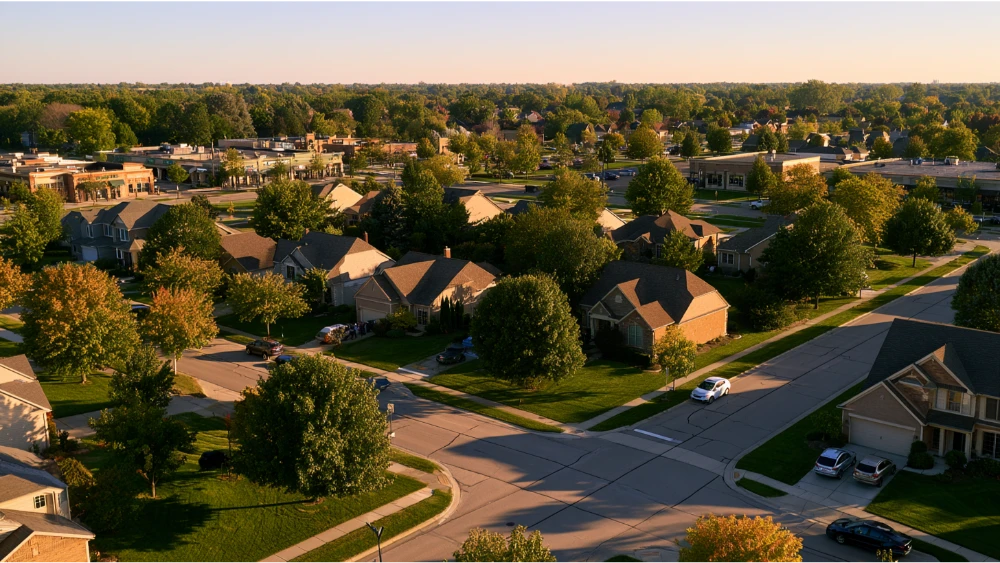
Troy is a large Oakland County suburb about 20 miles north of downtown Detroit, home to roughly 88,733 residents as of July 1, 2025. Troy, MI is an employment center in its own right, with established residential streets, a 542-bed hospital, major shopping corridors, and public schools that post some of Michigan’s strongest graduation numbers. Two things to know before you commit: the cost of living runs above the national average, and you need to verify the school district for your exact address, not just the city.
This guide is for you if you’ve got a job offer in Metro Detroit, you’re comparing Troy against neighboring suburbs, or you’re trying to decide whether to rent first. We’ll cover neighborhoods, living costs, schools, jobs, hospitals, food, safety, weather, and a moving checklist. We’re KT Rents, a full-service, broker-owned property management company operating nationwide since 2009, and we help residents find rentals across the U.S.
Is living in Troy, Michigan worth it? (Short answer)
For most people relocating for work in Oakland County, yes. You get employment density, a 24-hour hospital, deep retail and dining, a real parks system, and reported school performance that holds up under official state data. Troy offers a suburban lifestyle with genuine services attached to it. Third-party Michigan rankings have also placed Troy as the safest city in the state, though those are rankings, not verified safety statistics.
The tradeoffs are straightforward. The cost of living sits above the national average, Michigan property taxes here are among the state’s highest, you’ll drive for nearly every errand, and I-75 and Big Beaver Road get slow at peak hours.
Before you sign a lease or make an offer, confirm in writing which school district and attendance area your exact address falls into. A Troy mailing address does not guarantee Troy School District enrollment, and families learn that the hard way every single year.
Troy MI at a glance: population, median household income, and housing snapshot
Troy, Michigan sits in southeastern Oakland County, bordered by Rochester Hills to the north and Royal Oak and Clawson to the south. It’s one of the larger suburbs in the Detroit metro by both land area and workforce, and its location on the I-75 corridor is a big reason why.
| Metric | Latest figure |
|---|---|
| Population | 88,733 (Census estimate, July 1, 2025) |
| Land area | 33.45 square miles |
| Households | 33,372, averaging 2.63 people |
| Median household income | $120,045 in 2024 dollars (2020-2024) |
| Median home value | $420,300 (2020-2024) |
| Median gross rent | $1,602 (2020-2024) |
| Owner-occupied housing | 73.3% |
| Mean commute | 23.7 minutes |
| Bachelor’s degree or higher (age 25+) | 64.8% |
| Households with broadband | 95.9% |
Most of these come from Census QuickFacts five-year estimates covering 2020 through 2024. That median household income of $120,045 sits well above the national figure, which matters when you compare living costs against a city you’re leaving. Third-party marketplace sites report different numbers (population near 90,584, median rent closer to $1,287, unemployment around 3.86%) because they use different methodology and survey years. Treat any of these as a baseline, not a current quote.
What daily life in Troy MI is really like
Day-to-day living runs on Metro Detroit’s mile-road grid, not around a single walkable downtown. The east-west arteries run in order: 14 Mile, Maple (15 Mile), Big Beaver (16 Mile), Wattles (17 Mile), Long Lake (18 Mile), and Square Lake (19 Mile). Rochester Road, Livernois, Crooks, Coolidge, and Dequindre carry north-south traffic.
Between those corridors sit quiet subdivisions with curved interior streets. Along the corridors sit office parks, strip retail, and big-box shopping. Your address decides how much traffic noise you hear and how long your grocery run takes, so location matters more here than the city line does. Community life organizes itself around schools, parks, and the recreation calendar rather than a main street.
Understanding Troy’s neighborhoods and housing options
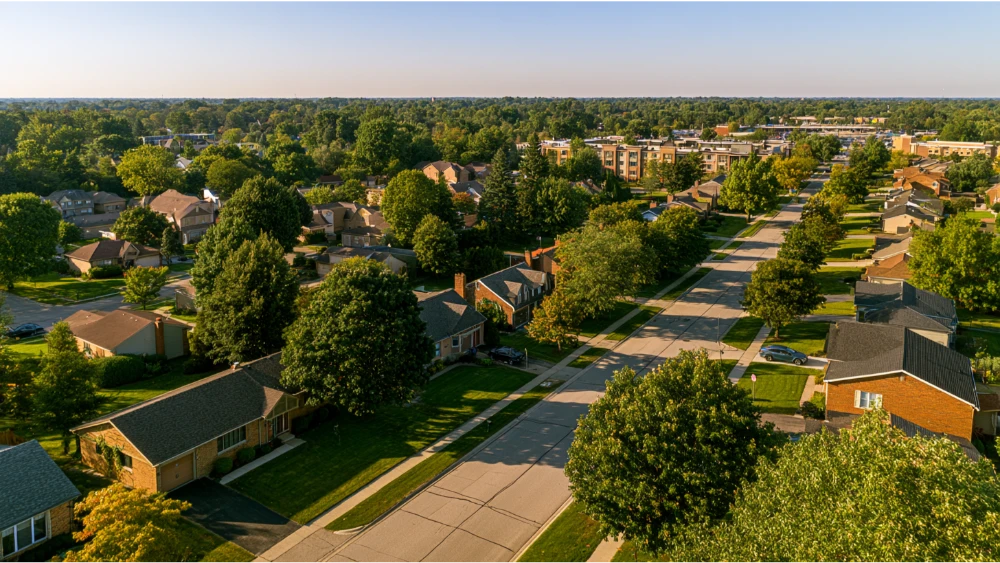
These are practical search areas, not official neighborhood boundaries. Compare housing in Troy, MI by type, build era, and access, then verify specifics address by address.
Somerset and west Troy
Anchored by Somerset Collection at Big Beaver and Coolidge. Dense with condos, apartment communities, and mid-century to 1990s single-family homes. Closest to the city’s biggest lifestyle draw, with corridor traffic to match.
Big Beaver Road and central Troy
Troy’s office and commercial spine, with direct I-75 access. Housing skews toward apartments, condos, and older postwar homes on the side streets. Shortest errand loops in the city, heaviest peak-hour congestion.
North Troy (Long Lake and Square Lake area)
Generally newer subdivisions, larger lots, more colonials, and more living space per dollar. Farther from I-75 interchanges, which usually means quieter streets and a longer drive to the corridor.
East Troy along Rochester Road and Dequindre
A mix of ranches, split-levels, and condo developments, with plenty of retail and independent restaurants along Rochester Road. Dequindre is the county line, so verifying your schools matters especially here.
South Troy near Maple and 14 Mile
Older, smaller housing stock overall, including ranches and bungalows from Troy’s earlier growth decades. Quick access to Royal Oak, Clawson, and Oakland Mall.
Across all of these you’ll find apartment communities, condos, townhouses, ranches, colonials, and newer builds. Quality tracks building age and upkeep far more than it tracks any one area, so tour before you decide.
How much is rent in Troy, Michigan?
Census puts median gross rent at $1,602 for 2020-2024. Marketplace sites often show something closer to $1,287. Both can be defensible: gross rent includes some utilities and reflects leases already signed, while a marketplace median reflects today’s asking listings and whatever mix of units happens to be available.
What actually moves your monthly number:
- Unit type and square footage
- Building age, condition, and finish quality
- Which utilities are included
- Parking (surface, carport, or garage) and pet fees
- Whether snow removal and lawn care are yours or the landlord’s
- Corridor proximity and school boundary
Skip the generic “salary needed” estimates and figure out what living here actually costs with our Rent Calculator and Cost of Living Calculator. One more thing worth knowing: with full-service management, tenant screening is handled up front, rent collection happens online, and maintenance requests go through a real intake process instead of a text message you hope someone reads.
Renting vs. buying in Troy: median home value and property taxes
Census lists the median owner-occupied home value at $420,300 for 2020-2024. Third-party estimates land near $396,774 for the median and around $441,647 for the average sale price, with reported year-over-year growth near 3.0% and homes going pending in roughly 26 days.
Ownership math is more than the mortgage. Census reports median monthly owner cost with a mortgage at $2,208, and Troy’s property taxes rank among Michigan’s highest. Add insurance, condo or HOA dues, and repairs.
You’ll see claims that you need $100,000 to live comfortably here. That’s too generalized to be useful, since household size, debt, and housing type change everything. Renting for a year lets you learn the corridors, test the commute, and confirm the school boundary before you buy. That first year of living in Troy is the cheapest research you’ll ever do. Start with our Rent vs. Buy Calculator and Mortgage Calculator.
Troy schools: why families must verify the exact address
Schools are the first question most people ask about Troy, MI, and the answer is more complicated than the city name suggests. Six school districts fall within Troy’s city boundary lines. The Troy School District says so directly, and enrollment is based on residency and address, not city name. The district specifically advises confirming the assigned district and attendance area for the exact property rather than relying on a shaded online map.
Troy School District itself lists 12 elementary schools, 4 middle schools, and 2 comprehensive high schools, plus International Academy and Troy College & Career High School, per its schools directory. The Michigan Department of Education reported a 98.3% four-year graduation rate for 2024-25, the highest among Michigan’s 20 largest districts. Third-party sites assign the district an A-plus grade and a top statewide ranking, and have recognized Troy High School nationally. Those are opinions, but the graduation data underneath the school quality reputation is official.
How to verify:
- Check the district’s boundary tool with the full street address
- Call or email the district to confirm the exact property
- Get the answer in writing before you sign a lease or submit an offer
Troy also has nearly a dozen private schools plus preschool, specialty, career, and continuing-education programs, so families relocating mid-year usually have workable options either way.
Jobs and the local economy in Troy MI: Troy remains an employment hub
Plenty of people move here to shorten a commute to a job already in the city. The City of Troy reports roughly 6,000 businesses employing about 125,000 people, along with 41 of Michigan’s 330 automotive R&D facilities. Those are recent city-published figures, so treat them as a claim rather than a live count.
The dominant sectors are automotive engineering and R&D, technology, health care, financial and professional services, and retail and hospitality. Kelly Services and Magna International are among the corporate names anchoring the base, and most of the office inventory clusters along Big Beaver near I-75. Reported unemployment sits around 3.86%, and the high median household income tracks with that employment mix.
Commuting from Troy: I-75, downtown Detroit, and Ann Arbor
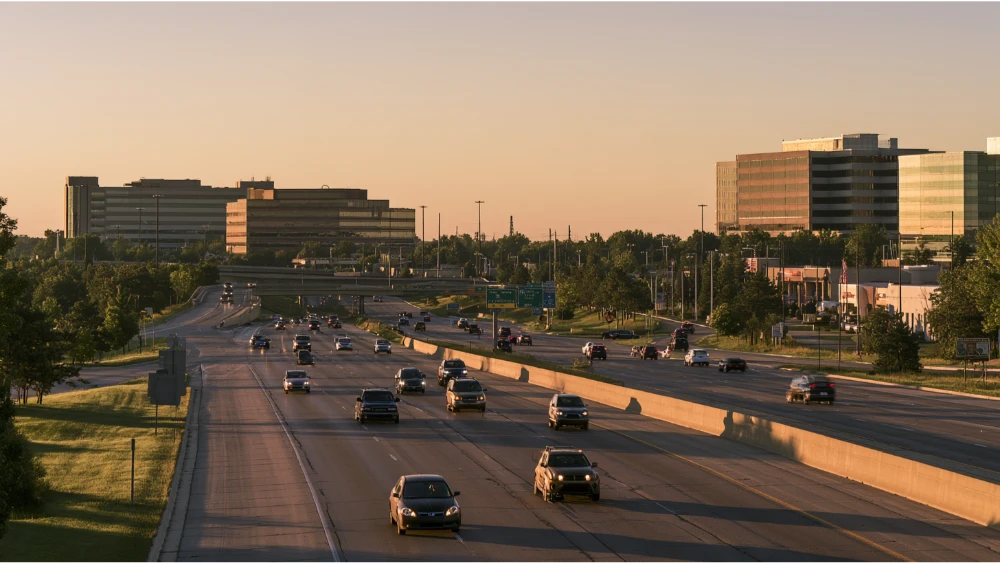
Downtown Detroit is roughly 20 miles south via I-75. Ann Arbor and Detroit Metro Airport are both realistic trips west and southwest. We won’t quote fixed drive times, because traffic swings them badly. Census pegs the mean commute at 23.7 minutes, which is an average across all Troy workers, not a promise. Living in Troy, MI means driving for most of what you do.
The Troy Transit Center combines Amtrak Wolverine service, SMART bus, and taxi access, and recorded 38,231 station passengers in FY2025. That makes it genuinely useful for Chicago, Ann Arbor, and Detroit corridor trips. For daily transit, check SMART route schedules live, since coverage depends entirely on your origin and destination.
One tip that saves regret: drive your actual commute at your actual departure time before you sign.
Hospitals and health care in Troy, MI
- 24-hour hospital and ER: Corewell Health Beaumont Troy Hospital, 542 licensed beds, listed by Michigan DHHS as a Level II adult trauma facility (designations change, so recheck)
- Outpatient care: Henry Ford Medical Center Troy, with primary care plus behavioral health, dermatology, orthopedics, and more
- Urgent and same-day clinics along the main corridors
- Regional hospitals in Royal Oak, Rochester Hills, and Detroit
Request your medical records and line up a primary care provider before the move, not after.
Food and dining in Troy
Dining follows the corridors rather than one restaurant district. Big Beaver, Rochester Road, Maple, the Somerset area, and the blocks around Oakland Mall carry the density. You’ll find independent restaurants, bakeries and cafés, international grocers and specialty markets, casual spots, and special-occasion places. Citywide, Census reports 30.9% of residents are foreign-born and 34.4% of people living here speak a language other than English at home, which shows up directly in the range of food available.
Lifestyle amenities in Troy MI: Troy offers parks, shopping, and recreation

Shopping: Somerset Collection at Big Beaver and Coolidge carries more than 180 stores and restaurants across its skywalk-connected buildings. Oakland Mall anchors the south end.
Outdoors and recreation: The city’s economic development materials count 20 parks and recreation facilities totaling about 900 acres, a category that includes golf courses and natural areas rather than 900 acres of playgrounds (some third-party sources cite over 1,000). Stage Nature Center covers roughly 100 acres with about 2 miles of trails. There’s also the Troy Family Aquatic Center for summer, a skate park, disc golf, and soccer and baseball fields. Living within a short walk of a park is realistic in most subdivisions. The 2026-2030 Parks and Recreation Master Plan has the full inventory and upcoming projects.
Culture and community: Troy Historic Village and the Troy Community Center run year-round community programming and events. Regionally, you’re within reach of Detroit’s museums, professional sports, concert venues, and the Detroit Zoo.
Safety in Troy, MI: what the Michigan rankings actually say
Troy has appeared in third-party rankings as the safest city in Michigan and among the nation’s 25 safest, with reported assault, robbery, and burglary rates below national benchmarks. Those come from outside organizations, not official findings, so treat the safety story as encouraging rather than settled. For the current picture, check the Troy Police Department’s own reporting and FBI crime data directly. Either way, perceived safety is a real part of the quality of life people cite when they talk about this city.
Troy weather and preparing for your first Michigan winter
Using NWS Detroit/Pontiac 1991-2020 normals as the regional benchmark: January averages about 32.3°F for the high and 19.2°F for the low, July about 83.7°F and 64.4°F. December through February normally brings around 35.4 inches of snow, with more possible in November, March, and April. These are regional normals, not a Troy forecast.
Questions to ask before signing:
- Who handles snow removal and lawn care, and is it in the lease?
- What are the parking rules during a snow event?
- What’s the heating system, and what does a typical winter bill look like?
- In older units, what shape are the windows and insulation in?
Your Troy, MI moving checklist
Before you sign the lease
- Verify the schools assigned to your exact address, in writing
- Confirm which utilities you pay and which are included
- Get pet rules, parking assignments, and fees in writing
- Do a documented move-in inspection with photos
- Learn the maintenance-request process
- Line up renter’s insurance
Your first two weeks as a Michigan resident
- Michigan gives new residents no grace period for a driver’s license, vehicle title, and registration once residency is established, despite the “30 days” figure repeated on many moving sites. Book a Secretary of State appointment right away and bring ownership documents plus proof of Michigan no-fault insurance.
- Register to vote. You must have lived in your city or township 30 days by Election Day to vote there, and Michigan allows in-person registration through Election Day.
- File your USPS address change and update your bank, employer, and insurers
- Enroll students in their assigned schools with proof of residency
- Transfer medical and pet records; winterize your vehicle
Frequently Asked Questions
Is Troy, Michigan a good place to live?
For people working in Oakland County, it stacks up well: dense employment, a 542-bed hospital, strong reported school outcomes, and major retail. The tradeoffs are an above-average cost of living, high property taxes, and near-total car dependence.
What is the downfall of living in Michigan?
Winter is the honest answer. The Detroit region normally sees about 35.4 inches of snow from December through February, with January lows averaging 19.2°F. Budget for heating and clarify snow-removal responsibility in your lease.
What is the #1 best place to live in Michigan?
That title comes from subjective rankings that change yearly. A better test is your own commute time, monthly budget, preferred housing type, and the schools your exact address is assigned to.
What is the cleanest part of Troy to live in?
There’s no official measure of this, and rankings that claim one are opinion. Compare specific properties instead: building age, condition, maintenance responsibility, and how close the address sits to a busy corridor.
Conclusion: Troy offers plenty, and here’s your next step
Ready to find your place in Troy, MI? Troy rewards people who run the numbers before they pack. Start with our Rent Calculator, Rent vs. Buy Calculator, Cost of Living Calculator, and Mortgage Calculator. Then browse rental properties near you on our nationwide marketplace and submit a rental application when you find a fit. Search now, and let the math tell you what you can carry.
We’re full-service and broker-owned, operating nationwide since 2009: 683 units across 34 states and $187M in assets under management as of early 2025, with a reported 98% occupancy rate. Own a rental in Troy, Michigan? Call (800) 716-4950 to get started. We handle tenant placement, tenant screening, rent collection, property inspections, and court evictions without you lifting a finger. You can also text (608) 207-0657 or email info@ktrents.com, and we respond to form submissions within 24 hours.