

How Do You Determine Depreciation on a Rental Property? A Comprehensive Guide for Owners in 2026 and Beyond

Introduction: Why Depreciation Matters for Rental Property Owners

The financial impact of accurate depreciation
Rental property depreciation isn’t just a line on your tax return—it’s a strategic lever for maximizing rental income and building long-term wealth. By understanding and claiming the right depreciation deductions, property owners can turn ordinary rental expenses into valuable tax benefits and lower their taxable rental income every year. This crucial annual deduction is one of the most valuable tax benefits available to rental property owners because it directly reduces taxable income, often resulting in thousands saved over the years on investment property.
How depreciation can maximize your rental income
Rental property depreciation directly reduces your taxable income, creating powerful tax savings and expanding your cash flow. Ignoring it means leaving money on the table. When calculated accurately, depreciation enhances your return on investment (ROI), whether you own a single residential rental property or a large portfolio of rental real estate. Claiming your depreciation deductions maximizes your net rental income and helps lower your overall tax liability by reducing your taxable rental income.
Common misconceptions about property depreciation
Many rental property owners mistakenly believe depreciation is optional, applies to land (which it does not), or is “too complicated” to bother with. In reality, proper depreciation is required for full compliance—and can significantly impact your bottom line by creating substantial tax savings and a more accurate tax return each year.
Quick Tips: Depreciation is NOT optional or only for large owners; whether you have one property or dozens, claiming depreciation is a legal right and financial necessity that can unlock thousands in tax savings yearly. Depreciation deductions are a key tax benefit that shouldn’t be overlooked by any investment property owner.
Understanding Depreciation: The Basics
What is depreciation and why does it exist?
Depreciation is a tax deduction that recognizes the gradual wear and tear of your rental real estate. The IRS allows you to recover the cost of your investment property (excluding land) over a set number of years, reflecting its productive use in generating rental income. This cost recovery system acknowledges the property’s limited useful life and incentivizes real estate investors by offering significant tax benefits over time.
Key terms every property owner should know
- Rental Property Depreciation: The process of deducting the cost of your rental building over its useful life each year as an annual deduction.
- Cost Basis: The total amount invested in eligible real estate, including the purchase price and certain qualified closing costs such as legal fees and improvements.
- Placed in Service: The date the property is ready and available to produce income, which triggers eligibility to start calculating rental property depreciation.
- Modified Accelerated Cost Recovery System (MACRS): The IRS’s standard method for calculating rental property depreciation on a tax return.
- Depreciation Recapture: The process of paying taxes on accumulated depreciation (depreciation recapture tax) when you sell the property, which can impact your capital gains and taxable income.
- General Depreciation System (GDS): The primary component of MACRS used for most residential rental property.
- Alternative Depreciation System (ADS): An alternative to GDS required for certain types of rental property or if you opt out of accelerated cost recovery system options.
Difference between depreciation, repair, and improvement expenses
Depreciation applies to your rental property’s structure and capital improvements (not routine repairs). Routine repairs are immediate rental expenses and can be deducted fully in the year incurred. In contrast, major upgrades—like a new roof, HVAC, or additions—are considered capital improvements, must be added to your cost basis, and depreciated under the cost recovery system MACRS or alternative depreciation system depending on eligibility.
Quick Tips: Routine repairs are deducted in the year incurred, while improvements are depreciated over time. Don’t mix the two—accurate records are essential for IRS compliance! Understanding rental property depreciation means knowing how to distinguish each expense type to avoid confusion on your tax return.
Federal Rules: How the IRS Defines Rental Property Depreciation

Depreciation period for residential vs. commercial properties
Residential rental property is depreciated over a 27.5-year recovery period. Commercial property uses a 39-year schedule. This “recovery period” reflects the expected useful life per IRS guidelines and is central to understanding rental property depreciation.
IRS guidelines: MACRS and the 27.5-year schedule
Nearly all rental property acquired after 1986 uses the modified accelerated cost recovery system (MACRS). Under MACRS, you depreciate the building’s value—not the land—starting from the date the property is placed in service. Most properties follow the General Depreciation System (GDS); the alternative depreciation system (ADS) is required for certain unique scenarios, foreign properties, or if you opt out of accelerated cost recovery. Tax savings from following MACRS help rental property owners reduce taxable rental income annually.
How policy changes might affect future calculations
Periodic congressional or IRS updates may affect the length of recovery periods, eligible bonus deductions, or accelerated cost recovery system options. For example, bonus depreciation rules are frequently adjusted. Always verify IRS guidance for the current year and consider working with a qualified tax accountant or property management specialist to stay compliant.
Quick Tips: Check every year for updates to MACRS tables and state bonus depreciation programs—IRS rules can change and state-level depreciation may differ from federal guidelines. To maximize your annual deduction and valuable tax benefits, stay informed through reliable resources.
How To Determine the Cost Basis of Your Rental Property
Calculating the initial cost: Purchase price, closing costs, and adjustments
Your cost basis is the total amount invested in the property, including the purchase price, eligible closing costs (such as legal fees, title charges, and certain qualified closing costs), and capital improvements made before the property is placed in service. Add only the costs directly tied to acquiring and readying the property for rental real estate purposes.
- Purchase price
- Eligible closing costs (legal fees, abstract fees, certain qualified closing costs, recording fees)
- Major capital improvements made before placing the property in service
Some closing costs—like title insurance, pre-paid property taxes, or appraisal fees—may be deducted as rental expenses in the year paid rather than added to cost basis. Understanding which eligible closing costs are capitalized vs. immediately deducted is essential for proper calculation.
Excluding land value: Why land cannot be depreciated
The IRS does not allow you to depreciate land, as it does not wear out. To calculate depreciation, determine the fair market value or appraisal value of the land and subtract it from your total cost basis. Only the building and improvements are eligible for rental property depreciation. It is important not to depreciate land when preparing your tax return or annual depreciation schedule.
Examples of common eligible and ineligible costs
Eligible for depreciation: Building value, qualifying improvements, certain legal and closing fees.
Not eligible: Land, pre-paid interest (points), escrows, and personal property such as furniture (unless separately allocated and depreciated under other schedules). Always validate which costs are classified as eligible closing costs and properly included in your cost basis for accurate annual deduction.
Quick Tips: To calculate depreciation, always subtract the land value from the purchase price—only the building and depreciable improvements qualify for annual deduction. A precise understanding of cost basis protects you from IRS scrutiny and ensures you capture all allowable tax benefits.
Step-by-Step: Calculating Depreciation With MACRS
Step 1: Separate the cost of land and buildings
Review your appraisal report, property tax records, or purchase documents to allocate your total investment between land value and the building. IRS guidance allows you to use a reasonable allocation method, such as the proportion from your municipal tax assessment.
Step 2: Identify the property’s placed-in-service date
The placed in service date is when the property is ready and available to produce rental income—not necessarily the closing date or date you take possession. This date establishes when you can begin to calculate depreciation and is required for all depreciation schedules on your tax return.
Step 3: Apply the correct recovery period and convention
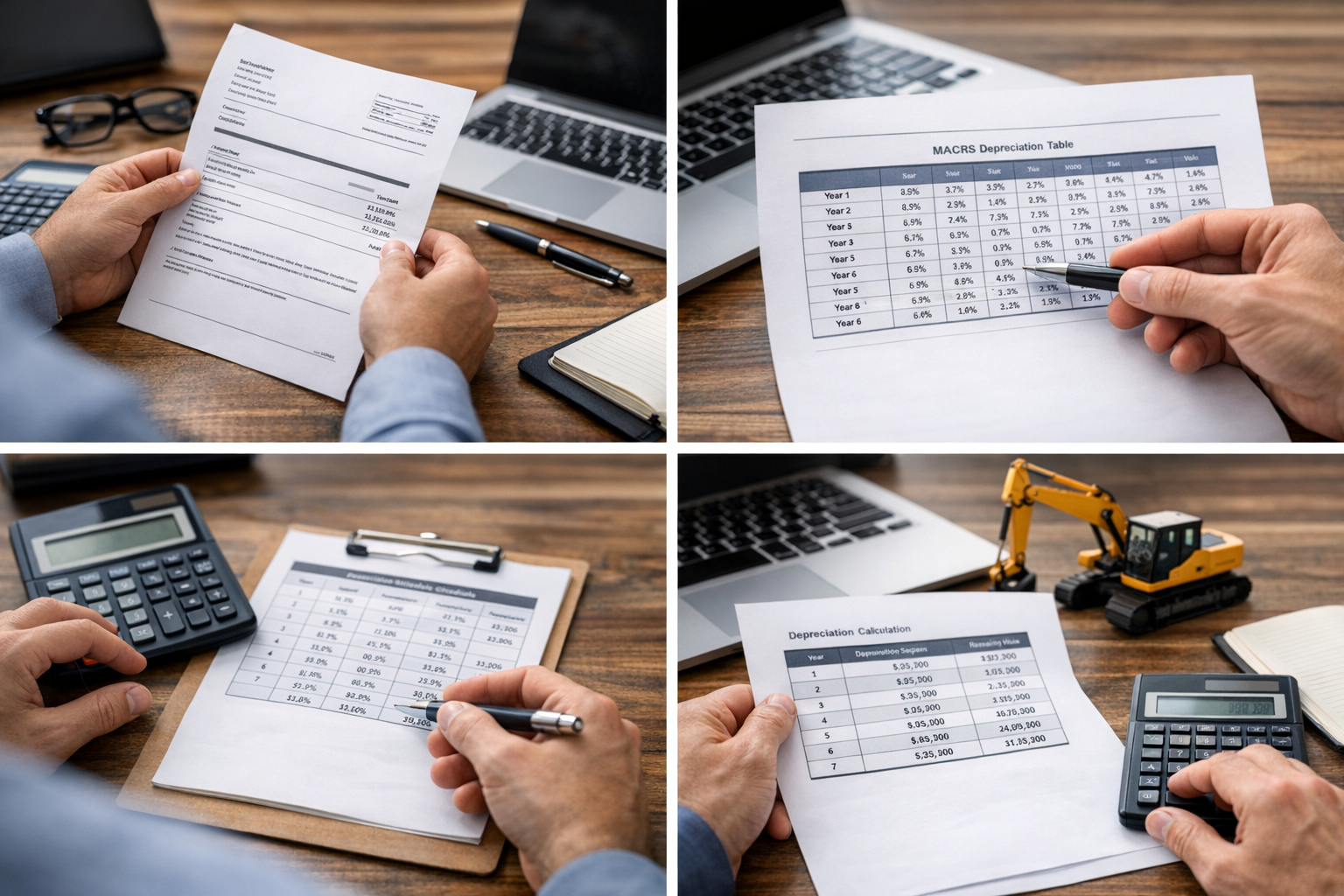
For most residential rental property placed in service after 1986, use the 27.5-year recovery period under the modified accelerated cost recovery system (MACRS). Apply the mid-month convention: depreciation begins in the month the property is placed in service, regardless of the exact day. This approach ensures accuracy for your annual deduction calculations.
Sample depreciation calculation using real numbers
Example:
Purchase price: $280,000
Appraised land value: $60,000
Eligible closing costs (added to basis): $5,000
Cost basis for depreciation = $280,000 + $5,000 – $60,000 = $225,000
Annual depreciation deduction = $225,000 / 27.5 = $8,182 per year.
This depreciation deduction will directly offset rental income on your tax return, lowering your taxable rental income and creating valuable tax savings each year.
Quick Tips: Want more precision? Use IRS Form 4562 to calculate and report rental property depreciation on your tax return, or leverage professional tools from KT Rents for streamlined compliance. Accurate calculation is essential for every rental property owner—missteps could reduce your annual deduction and increase your risk of audit.
Improvements, Upgrades, and Special Cases
How renovations and capital improvements affect depreciation
Any capital improvement—such as a new roof, windows, or HVAC system—must be added to your adjusted cost basis and depreciated over its own schedule, based on the improvement’s placed in service date. Routine repairs are deducted as rental expenses but improvements are captured through depreciation deductions, potentially increasing your annual deduction and long-term tax benefit.
Short-term rentals and mixed-use property depreciation rules
If your residential rental property is used for both personal and rental purposes, only the portion used to produce income is eligible for depreciation. Short-term rental properties (like Airbnb) are also subject to occupancy and local law limitations. Precise tracking of rental versus personal use days is crucial for compliant calculating rental property depreciation and for ensuring your depreciation claim matches IRS rules for taxable rental income.
Handling partial asset disposals
If you dispose of a significant part of your property (like demolishing an old garage), you must stop claiming depreciation on that component and adjust your total cost basis. Proper documentation supports your calculation if reviewed during an IRS audit or when calculating depreciation recapture at sale.
The role of Section 179 and eligible energy-efficient upgrades
Certain improvements—specifically some equipment and energy-efficient upgrades—may qualify for immediate expensing under Section 179 or bonus depreciation. Recent federal and state tax law changes offer boosted tax savings for qualifying energy improvements. When eligible, these can accelerate your cost recovery and deliver greater up-front tax benefit. Consult a qualified tax professional before investing in upgrades to maximize your returns through the accelerated cost recovery system.
Quick Tips: Track all property improvements with receipts and dates; this ensures you can claim depreciation, secure potential bonus deductions, and confidently defend every tax benefit if audited. Accurate documentation also helps with future depreciation recapture and capital gains tax calculations at sale.
State-Level Depreciation: Bonus Programs & Regional Considerations

Noteworthy state bonus depreciation programs
Several states offer additional depreciation or cost recovery incentives that can accelerate tax savings for rental property owners. For example, a handful of states conform to federal bonus depreciation or provide their own state-level accelerated cost recovery system. Rental property depreciation FAQs often highlight these incentives as a major source of additional tax benefit, so research your state to make the most of your property’s potential.
Regional quirks and how to research your local rules
State regulations may alter allowable cost basis, recovery period, or eligibility of certain qualified closing costs. Some states adjust the schedule for residential rental property or disallow accelerated depreciation. Always check with your state’s Department of Revenue, local CPA, or specialized property management company, as rental income, property taxes, and eligible deduction rules can vary widely.
Where to find up-to-date state-level resources
KT Rents offers comprehensive state-by-state investor guides covering regional incentives, rules, and bonus programs for rental real estate owners. Stay informed to maximize state and federal tax benefit on every qualified rental property depreciation deduction.
Digital Tools and Compliance: Keeping Your Depreciation Records Audit-Ready
Recommended software and apps for property owners
Maintaining a detailed cost recovery system for rental property depreciation is easiest with professional accounting software such as QuickBooks, Stessa, Buildium, or dedicated property management tools. These platforms automate calculations of annual depreciation, manage digital records of eligible closing costs and capital improvements, and help integrate depreciation deductions into your yearly tax return.
Best practices for digital receipts and audit trails
Scan and store all receipts for legal fees, invoices, closing statements, and property improvement documentation in cloud storage. A robust digital audit trail makes it easier to defend your depreciation deduction or bonus depreciation claim and supports your tax savings in case of an IRS audit. Proper digital recordkeeping is increasingly part of compliance standards for rental property owners.
IRS scrutiny and recent auditing trends
The IRS is focusing on real estate investors who aggressively pursue bonus depreciation or accelerated cost recovery, especially for those claiming rental property depreciation across large portfolios. Maintaining a clear schedule for every property, separating land value, and annually updating your records for improvements reduces audit risk and supports accurate calculation of annual deduction and depreciation recapture when you sell.
Staying ahead: New digital compliance requirements
Recent IRS policy shifts are pushing for electronic recordkeeping and stricter standards on all rental property depreciation calculations. Proactive and organized compliance not only prevents costly errors but also positions you for smooth IRS interactions and maximum tax benefit on each tax return.
Quick Tips: Always keep digital backups of contracts, improvements, and cost schedules—cloud-based systems offer easy access and meet the IRS’s latest audit standards. Relying on digital accounting tools makes it easier to produce documentation if you ever need to defend a depreciation claim or rental expense deduction.
Maximizing Depreciation Deductions With Professional Help

When (and why) to consult a CPA or property management expert
Complex renovations, multi-unit properties, or significant state-level variations make consulting a qualified tax accountant or experienced property management team essential. Property tax professionals help ensure you capture all eligible rental property depreciation deductions, avoid common pitfalls, and accurately calculate cost basis, annual deduction, and tax savings. Consulting a qualified tax professional is especially valuable if you are unsure how to calculate depreciation, need to claim depreciation recapture, or want guidance on optimizing your tax return with the latest accelerated cost recovery system.
How KT Rents helps clients optimize depreciation and compliance
The KT Rents team helps owners maximize their depreciation deductions, manage compliance, and leverage every available tax benefit. Our experts stay ahead of new IRS and state-level trends, providing prompt, local support for homes for rent, sale, and the latest investment property regulations. We offer help in calculating rental property depreciation, tracking improvements, and navigating complicated rules on taxable income, depreciation recapture tax, and capital gains tax.
IRS penalties for incorrect or missed depreciation
Failing to properly claim depreciation or making calculation errors can lead to IRS penalties, tax return amendments, loss of valuable annual deductions, or missed tax benefits that reduce long-term investment property returns. Proactive planning with a property tax professional or CPA minimizes these risks and supports sustained tax savings—even in the event of cost recovery system audits or depreciation recapture scrutiny when you sell.
Quick Tips: If you’ve made an error, you can generally fix it with an amended return or Form 3115. Discovering issues early protects you from more serious IRS penalties later and preserves your right to claim missed rental property depreciation for prior years.
Common Mistakes to Avoid When Calculating Rental Property Depreciation
Mixing land and building values
Avoid depreciating land or misallocating costs between land and structure. Depreciating land is a major audit red flag and can cause the IRS to disqualify the entire depreciation deduction. Always use credible data or appraisals to properly separate property value for your rental property depreciation schedules.
Missing eligible improvements and bonus programs
Failing to include recent capital improvements in your cost basis or not leveraging available bonus depreciation or state-level programs causes you to miss out on allowable tax savings and large depreciation deductions. Stay on top of regional rules and accelerated cost recovery system options to increase each year’s annual deduction.
Overlooking local and state adjustments
Local and state rules may affect which rental expenses, eligible costs, or recovery period you can use, as well as the timing for accelerated cost recovery system benefits. Use property-specific resources and a qualified tax accountant to ensure you don’t overstate or understate depreciation on your tax return—especially if you’re operating in multiple markets.
Proactive tips to avoid headaches at tax time
Keep a detailed, year-by-year depreciation schedule, update your records as you make improvements, and use cloud-based accounting tools to stay organized. If you’re uncertain how do you determine depreciation on a rental property, reach out to a qualified tax professional or property management expert for a personalized review of your rental property depreciation plan, cost basis, and potential tax benefit before filing your tax return.
Quick Tips: Never guess at your cost basis or recovery period. If you’re uncertain, it’s worth hiring a professional to review your calculations and verify compliance before submitting your tax return to claim depreciation and fully enjoy your property’s valuable tax benefits.
Conclusion: Getting the Most from Your Rental Property Depreciation—Expert Takeaways

Summary of best practices
- Understand what can and cannot be depreciated, including the difference between land, improvements, and repairs, and how these impact rental property depreciation calculations.
- Consistently track your cost basis, capital improvements, and annual depreciation schedule—digitally whenever possible—to ensure every annual deduction and depreciation recapture event is accounted for.
- Claim all local and state-level bonus programs or accelerated cost recovery system options you’re eligible for to maximize tax savings and your property’s full tax benefit.
- Engage a qualified tax accountant or property management specialist from KT Rents when properties, improvements, or compliance requirements get complicated, for help with calculating rental property depreciation or managing tax return obligations.
Next steps: How to stay updated as rules and tech evolve
Depreciation rules, digital audit requirements, and federal or state incentives change frequently. Subscribe to the KT Rents property owner newsletter for the latest insights, compliance tips, and opportunities to maximize your rental property ROI, as well as rental property depreciation FAQs and state-by-state updates on eligible closing costs, tax deduction opportunities, and new tax law changes.
Interested in more actionable landlord strategies, rental property depreciation FAQs, and local insights? Sign up for our free newsletter on KT Rents.