

College Town Rental Markets in 2026: How to Find Real Demand and Protect Your Cash Flow

Key Takeaway
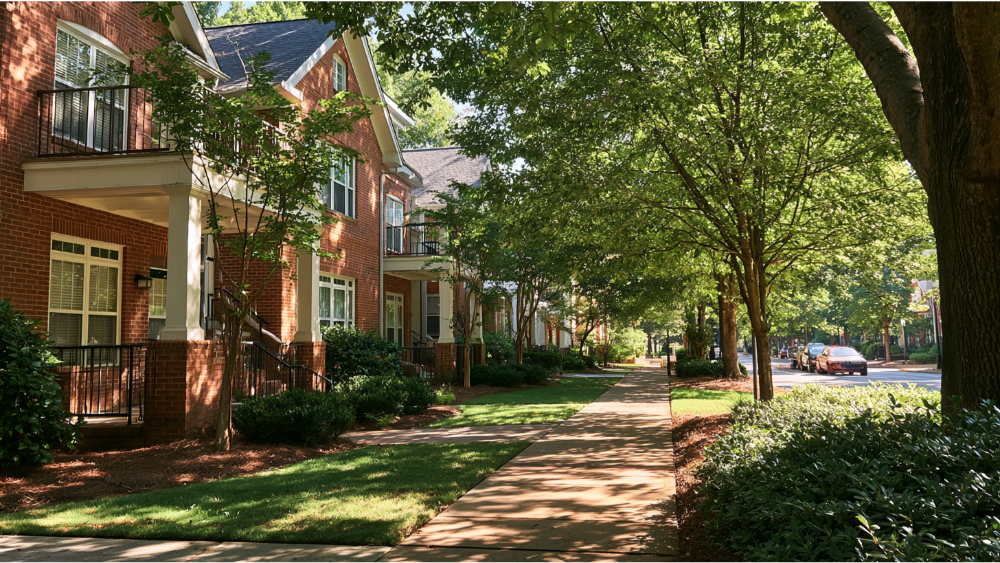
College town rental markets offer consistent annual demand backed by 19.4 million U.S. postsecondary students, but performance varies sharply by campus: the strongest 50 tracked markets averaged 6.7% rent growth while the weakest 50 averaged a 4.1% decline in 2026. Occupancy, local supply, and enrollment trends matter far more than a university’s reputation. Verify five-year enrollment data, incoming bed supply, and local occupancy ordinances before committing to any campus-area property.
College town rentals can produce dependable demand and strong cash flow, but only when enrollment is stable, off-campus supply is constrained, and the property complies with local occupancy and rental rules. The university’s name alone does not create cash flow. Rental markets near campuses run on a different rhythm than standard urban markets, with fixed lease dates, annual turnover, and vacancy risk that concentrates into a few weeks each year.
This one is for property owners and real estate investors sizing up a rental near a campus. You’ll get a repeatable way to underwrite three things: the campus, the supply, and the operation.
Are college town rentals a good investment in 2026?
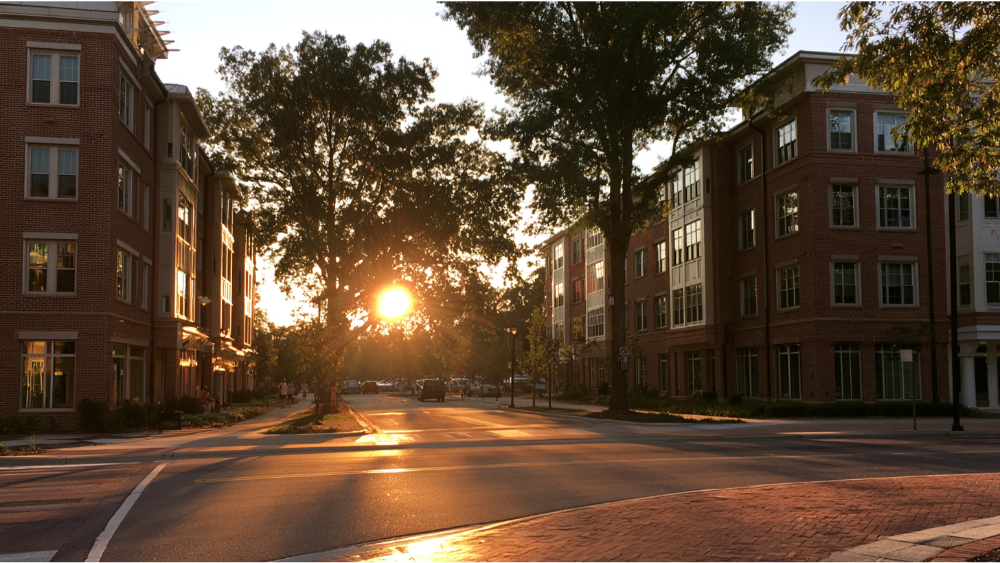
Yes, with conditions. Aggregate demand is healthy. Fall 2025 postsecondary enrollment topped 19.4 million students, up 1.0% year over year, according to the National Student Clearinghouse Research Center. College towns tend to hand you a large applicant pool every single year, and many student renters have family support or financial aid backing the rent.
What’s cooled is pricing power. Rent growth for the 2026 to 2027 leasing season has been thin, and performance swings hard from one campus to the next. So underwrite the school and the submarket, not the label. A property two blocks from a growing public university and a property two blocks from a school losing 400 students a year are not the same investment, even if the listing photos look identical.
What is a college town rental market?
Operationally, it’s any market where one or more colleges materially influence rental demand, pricing, and leasing timing. Enrollment moves the size of the off-campus renter pool. Investor ownership concentration changes how that inventory gets managed and priced.
These properties do not behave as one asset class:
- Single-family student houses often leased by the bedroom, with the heaviest turnover workload
- Small multi-family properties near campus, usually mixing student and non-student residents
- Condominiums and townhouses, frequently parent-owned, with association rules layered on top
- Conventional apartments that compete on amenities and location rather than bedroom count
- Purpose-built student housing, professionally operated and leased per bed
- Units serving graduate students, faculty, staff, and non-student renters, which often follow a normal 12-month cycle
Different economics, different operating workload. Underwrite the one you’re actually buying.
The 2026 college town rental market: what the numbers actually say

Every figure below carries its scope and date, because that’s the only way to use it honestly.
| Metric | Figure | Source and date |
|---|---|---|
| Total U.S. postsecondary enrollment | 19.4M (16.2M undergraduate), +1.0% YoY | NSC Research Center, fall 2025 |
| Spring enrollment | 18.6M, +1.0%; international graduate enrollment down 4.3% | National Student Clearinghouse, spring 2026 |
| Occupancy, tracked Yardi 200 student housing markets | 95.1% | Yardi Matrix, fall 2025 |
| Preleasing for 2026 to 2027 | 78%, 140 bps ahead of May 2025, below the 79.8% 2022 to 2024 May average | Yardi Matrix, May 2026 |
| Average advertised rent per bed | $933, +1.7% YoY | Yardi Matrix, May 2026 |
| Leasing-season rent growth | 0.9%, versus 2.6%, 5.9%, and 7.0% in the three prior seasons | Yardi Matrix, May 2026 |
| New bed supply forecast | ~27% more beds for 2026 to 2027, another ~33% for 2027 to 2028 | Yardi Matrix forecast, May 2026 |
| U.S. rental vacancy rate | 7.3% | U.S. Census Bureau, Q2 2026 |
| Rent of primary residence, CPI | +2.9% YoY | BLS, July 2026 |
One caution before you build a model on any of this. Purpose-built per-bed data measures professionally tracked student housing, not the duplex you’re considering on a side street. And the Census vacancy rate uses an entirely different methodology than preleasing percentages. Don’t compare them one to one.
Why averages hide the real spread between college towns
In May 2026, the 50 highest-preleased tracked markets averaged 92.1% preleased. The 50 lowest averaged 54%. On rent, the strongest 50 markets averaged 6.7% annual growth while the weakest 50 averaged a 4.1% decline. Eleven tracked universities with more than 1,000 new beds delivering in 2026 ran roughly 4.5% behind their prior-year preleasing pace. Supply and municipal restrictions on multi-room houses shape those gaps as much as demand does. The national number will never tell you what your block will do.
Why demand in college towns can be durable, and why it is never guaranteed
The durable side is real. A new class arrives every year whether the economy is good or bad. On-campus beds are usually capped, which pushes the overflow into the surrounding neighborhoods. And the renter pool runs deeper than undergraduates: graduate students, postdocs, faculty, staff, and workers at the hospitals and employers that cluster around a university.
The fragile side is just as real. Enrollment can slide. Online and hybrid program growth can move students out of the local housing market entirely. A university can open a new residence hall, or a private developer can drop several hundred beds four blocks from your door. Institutional financial stress is its own risk category.
Here’s where we land: occupancy quality beats a good story about a market. A stabilized, well-screened, fully occupied property in an average town outperforms a half-empty one in a famous college town every time.
10 things to check before buying an investment property near a local university
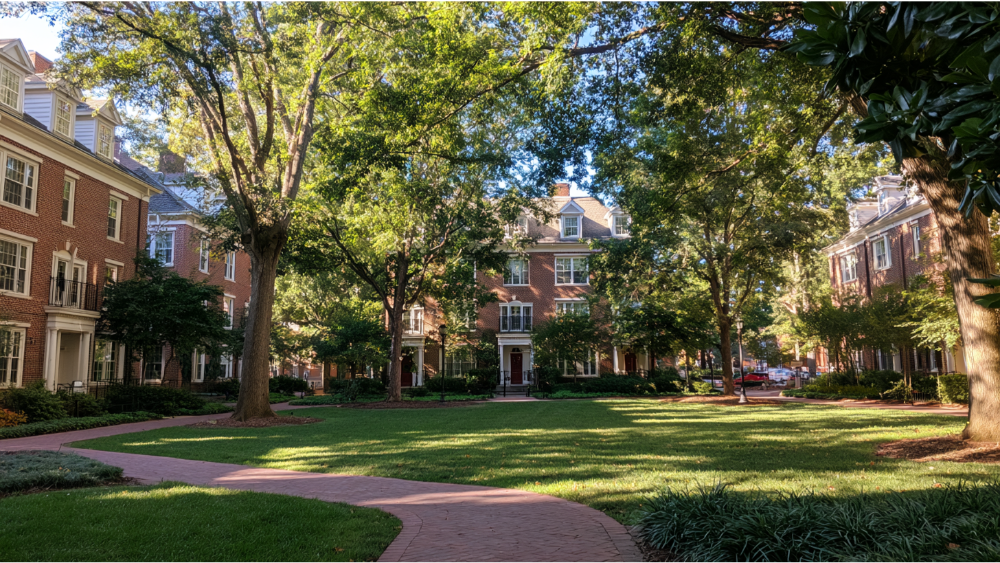
- Five-year in-person enrollment trend, verified at the institution level through NCES IPEDS rather than a headline or a seller’s pitch.
- Freshman intake, retention, and graduation rates, which tell you whether the pipeline refills itself.
- University financial condition and accreditation status, both matters of public record worth an hour of your time.
- On-campus bed capacity and whether first-year students are required to live on campus.
- Existing and proposed off-campus bed supply, including private developments already through planning review.
- Walk, bike, and transit time to campus, since proximity carries a clear price premium and most students want to be within roughly a mile of campus.
- Alternative non-student demand from graduate students, staff, hospital and employer workforce, and families.
- Legal bedroom count, zoning, unrelated-occupant limits, rental permits, inspections, and parking requirements.
- Comparable rent per bedroom and per unit, pulled from signed leases and rent rolls, not asking prices.
- Resale demand beyond the student-investor buyer pool, because your exit shouldn’t depend on one type of buyer.
Number eight deserves extra attention. Unrelated-occupant caps vary widely between municipalities, and some cap a single unit at three unrelated tenants while others allow more. That one ordinance can make or break the math on a five-bedroom house. HUD treats two occupants per bedroom as a generally reasonable starting point for an occupancy policy, but that is not an automatic national cap, and local code governs. Verify the specific rule in writing with the city before you close.
How the academic calendar controls your leasing year
The entire market revolves around the school calendar. Preleasing for the next academic year often opens many months ahead of move-in, and leases start and end on fixed summer dates almost universally. Students lock in housing early, in groups, and they rarely revisit the decision.
Miss the primary leasing window and you may not get a second one until next year. That’s why concessions start appearing as August closes in: owners with unleased units are competing for a demand pool that has already mostly signed. Mid-year vacancies are the hardest to fill, because both inventory and demand thin out at the same time.
Nine-month leases and 12-month leases both exist, and neither is a national standard. A 12-month lease covers the summer months but may price below what a nine-month lease commands per month. Model both. Then build your calendar backward from the local preleasing window: renewal deadlines first, then move-out, inspection, repairs, cleaning, and move-in, all compressed into a window that can be a matter of days. That compression is exactly where owners lose money.
Rent by the bedroom or lease the whole unit?
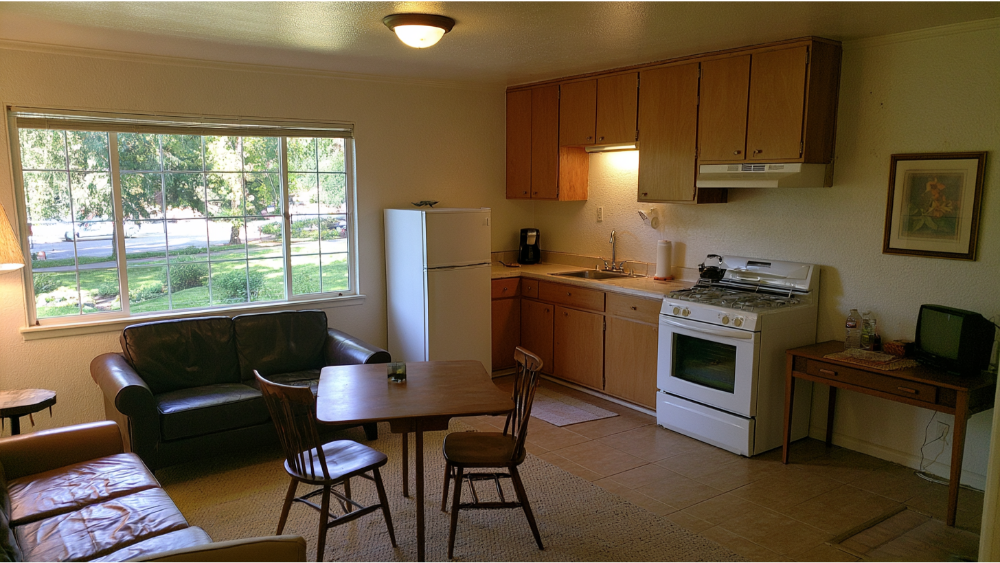
Per-bedroom leasing usually produces higher gross rent and spreads vacancy risk across several rooms, so one empty bedroom doesn’t zero out your income. The tradeoff is workload: separate applications, separate screening, roommate replacement mid-year, utility administration, and shared-space damage that no single resident claims.
Whole-unit leasing to one household is simpler to administer and cheaper to turn, but a single vacancy takes the entire rent with it. Lease structure matters legally too. Under an individual lease, a resident is generally responsible for their assigned room and applicable common areas. Under a joint lease, liability can extend across the full unit. Enforceability depends on the lease language and applicable state law, so have a real attorney draft it.
Screening, guarantors, and Fair Housing
Write your screening criteria down before you advertise, and apply them identically to every applicant. Where lawful, screen guarantors on the same written standard you use for residents.
If you pull a consumer report and then deny an applicant, raise the deposit or rent, or require a co-signer because of it, the Fair Credit Reporting Act requires an adverse-action notice. The applicant can request a free copy of that screening report within 60 days. Guarantors are common in student housing, which makes this rule easy to trip over.
Fair Housing applies with no exceptions. Federal law prohibits discrimination based on race, color, national origin, religion, sex, familial status, or disability. Skip the stereotypes about “types” of students entirely and stay on objective, documented criteria: income, credit, rental history, and consistent lease terms.
Red flags worth walking away from
- Declining in-person enrollment over multiple years
- A large dorm or private bed pipeline already under construction nearby
- Heavy dependence on one student segment, such as international graduate students
- Online enrollment counted as local housing demand
- Restrictive unrelated-occupant rules that shrink your legal bedroom count
- Nonconforming bedrooms, or no rental permit on file
- A property that only breaks even at 100% occupancy
- No alternative tenant pool if students go elsewhere
- A leasing calendar already missed for the coming year
- Seller income claims unsupported by actual leases and rent rolls
Why full-service management matters more in college markets
Annual turnover, permit renewals, inspections, and a leasing window you cannot miss add up to a real operating job. That’s what we do. KT Rents is a broker-owned, full service property management company that’s been at this since 2009, and we handle tenant placement, tenant screening, rent collection, property maintenance, rental permits, city ordinance compliance, property inspections, 1099 preparation, and court evictions without the owner having to lift a finger. For roughly the price of a cup of coffee and a donut per day, as we put it.
As of March 2025 we managed 683 units, across 34 states as of January 2025, representing $187 million under management as of January 2025. KT Rents reports a 98% occupancy rate across that portfolio. That’s our own portfolio figure and a different measurement than any national student housing statistic, so treat it as what it is: proof that we care more about keeping units filled than about counting doors.
Frequently asked questions
How close to campus should a college rental be?
Close enough to walk, bike, or catch reliable transit. Proximity carries a price premium for a reason, and most students want to be within about a mile.
Do student rentals need 12-month leases?
No. Nine-month and 12-month leases both exist and neither is a national standard. Model both against your local preleasing calendar and summer demand.
Can a college rental be leased to non-students?
Yes, and a property that works for graduate students, staff, or families gives you a second demand pool if enrollment softens.
How does new campus housing affect off-campus rents?
It competes directly. Campuses with more than 1,000 new beds delivering in 2026 ran about 4.5% behind their prior-year preleasing pace.
Do college rentals require full-service property management?
Not legally, but the compressed turnover window, permit and inspection cycle, and per-bedroom leasing workload are hard to run remotely and part time.
Have the campus market evaluated before you assume the demand is there
The university is not your business plan. Enrollment trend, bed supply, local ordinances, and a leasing calendar you actually hit are your business plan. If you own a rental near a campus or you’re about to buy one, let us look at the property and the market with you.
GET STARTED WITH US TODAY. Call us at (800) 716-4950, text (608) 207-0657, or email info@ktrents.com. Form submissions get a response within 24 hours. Your Rental. Your Way.