

Short-Term Rental Regulations by City: What Property Owners Need to Know


Key Takeaway
Short term rental regulations by city vary dramatically across the U.S., with most major cities requiring a permit or registration, primary-residence status, and lodging-tax compliance before you can legally list. New York City bans unhosted whole-home rentals under 30 days entirely, San Francisco caps unhosted stays at 90 nights annually, and Denver restricts licenses to primary residences only. Clearing city requirements is only the first step since HOA rules, condo declarations, and state law each add an independent layer of compliance.
Short term rental regulations vary significantly by city, and most regulated cities require some combination of a license or permit, primary-residence status, zoning approval, safety inspections, lodging-tax registration, a local emergency contact, and a hard cap on how many nights you can rent the whole home without being there. Citywide legality is only the first question. You have to verify the exact property address, because two homes a mile apart can land in different jurisdictions, different zoning districts, and different sets of private restrictions.
This guide is for property owners and investors deciding whether a property you already own, or one you’re thinking about buying, can legally operate short-term. You’ll get a comparison of major U.S. cities plus an address-level checklist you can run before you ever post a listing. Verified as of August 2026. This is general information, not legal or tax advice. Confirm current rules with the city and, where money is on the line, a qualified attorney or CPA.
What Are Short Term Rental Regulations, and Why Do They Vary by City?
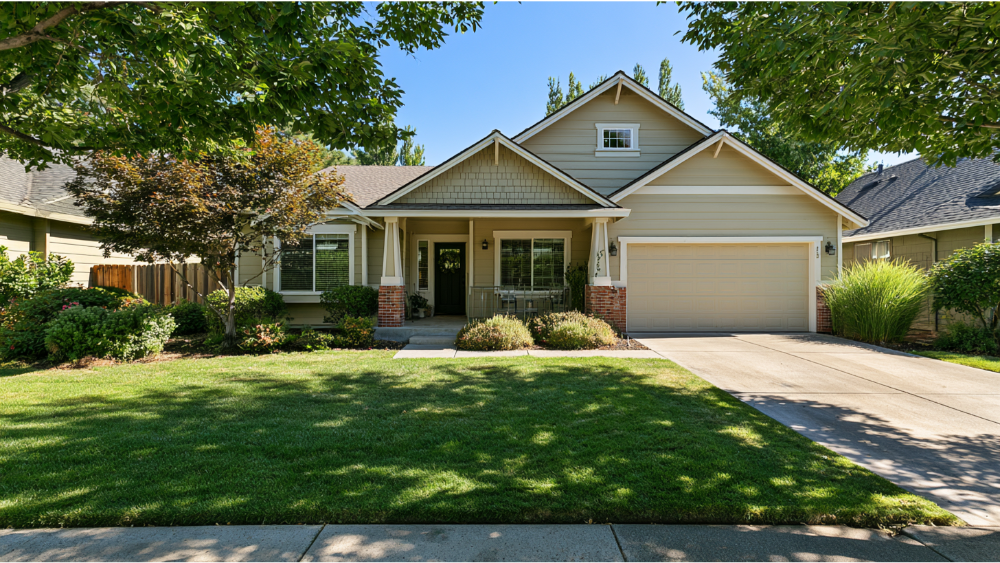
Short term rental regulations are the rules a city sets governing who may rent a dwelling unit for short stays, under what license, in which zoning districts, and for how many nights per year. There is no national short term rental law. Regulation happens at the municipal level, sometimes shaped or limited by state legislation.
Across the country, local governments regulate through the same recurring categories:
- How the city defines a short stay
- License, permit, or registration requirements
- Primary-residence or owner-occupancy rules
- Hosted (you’re there) versus unhosted (whole home) stays
- Annual night caps and minimum stay lengths
- Zoning districts and property-type eligibility
- Occupancy and bedroom limits
- Safety equipment, inspections, and liability insurance
- Lodging and occupancy tax registration
- Local contact and neighbor notification requirements
- Fines, suspension, and revocation
Cities use zoning codes heavily here. Many ban unhosted whole-home rentals in residential neighborhoods entirely while allowing a homeowner to rent a spare room. Primary-residence requirements have become one of the most common tools cities use to separate resident hosts from investor-owned inventory.
State Level, City, County, and Private Rules: The Four Layers That Decide Legality
Legality stacks. State law sits on top, then the city ordinance, then county or unincorporated rules if the property isn’t inside city limits, then the zoning district and parcel itself, and finally private agreements like a condominium declaration or a lease. Every layer can shut you down independently. Clearing one does not clear the rest.
Does State Law Ever Override a City Short Term Rental Ordinance?
Sometimes, yes. Several states have passed preemption laws that limit how far a city can go. Phoenix is the clearest example: the city’s own short-term rental registry page explains that Arizona legislation authorized cities to run a limited permit process while constraining broader local regulation. That’s Arizona, not a national rule. Preemption cuts both directions depending on the state, and it changes with each legislative session. Check your state before assuming the city ordinance is the last word.
Are You Actually Inside City Limits?
A mailing address with a city’s name in it does not mean the property sits inside that city’s jurisdiction. Postal boundaries and municipal boundaries are different things, and unincorporated county pockets often carry entirely different rules (sometimes looser, sometimes stricter). The authoritative check is the county assessor or county GIS parcel lookup for the exact address, not a mapping app and not the seller’s word. Get the parcel number, confirm the taxing and zoning jurisdiction, then go to that jurisdiction’s ordinance.
How Does a City Define a “Short Term” Stay? (It Isn’t Always 30 Days)

“Under 30 days” gets repeated everywhere as if it were the national standard. It isn’t. The threshold decides whether a booking triggers licensing, taxes, and enforcement at all, so getting it wrong is expensive.
- Boston: fewer than 28 consecutive days (City of Boston)
- Seattle: 29 nights or fewer (City of Seattle)
- New York City, San Francisco, Denver, Austin, Portland, Washington, D.C.: generally fewer than 30 days or nights
- Chicago: current shared-housing guidance refers to stays of 31 days or fewer
- San Diego: “less than one month,” with the ordinance defining what a month means
A 29-night booking is a short-term rental in Seattle and in Boston, but a 28-night booking is short-term in Seattle and not in Boston. That’s the level of precision these ordinances demand.
What to Check Before You List: A Property-Level Compliance Checklist
Run this on the specific address before you spend a dollar on furniture or photography.
- 1. Confirm the governing municipality and county using the county assessor or GIS parcel record.
- 2. Check the city’s short-term rental definition and the exact day threshold.
- 3. Confirm parcel zoning and permitted use, including whether short-term rental is allowed outright, as an accessory use, or only by conditional approval.
- 4. Determine whether primary residence is required, and what proof the city demands.
- 5. Determine whether whole-home stays are allowed or only hosted stays with you present.
- 6. Check annual night caps and any minimum stay requirement.
- 7. Check property-type exclusions: ADUs, rent-regulated units, income-restricted units, and properties with open code violations are frequently ineligible.
- 8. Review the lease, condominium declaration, HOA rules, and deed restrictions.
- 9. Obtain the license, inspections, liability insurance, tax accounts, and a local contact who can respond to emergencies.
- 10. Put the registration or permit number in every advertisement where the city requires it, because platforms increasingly verify it before your listing goes live.
Short Term Rental Regulations by Major U.S. City

This is a comparison of major cities, not an exhaustive list of every U.S. jurisdiction. All entries verified August 2026. Rules, fees, and license availability change fast, so treat this as a starting point and confirm with the official source before you act.
| City | Stay threshold | Permit | Primary residence | Whole-home use | Annual cap | Official source |
|---|---|---|---|---|---|---|
| New York City | Under 30 days | Required | Yes, host must stay present | Not permitted | Host must be present | nyc.gov |
| Los Angeles | Under 30 days | Required | Yes, 6+ months | Within limits | 120 days standard | lacity.gov |
| San Francisco | Under 30 nights | Required | Yes, 275 nights | Limited | 90 unhosted nights | sfplanning.org |
| San Diego | Less than one month | Required, 4 tiers | Tiers 1 and 2 only | Tiers 3 and 4 | Varies by tier | sandiego.gov |
| Chicago | 31 days or fewer | Registration required | Generally yes | Limited by building size | No night cap | Chicago Code |
| Boston | Fewer than 28 days | Registration required | Yes, 9 of 12 months | Owner-adjacent only | No night cap | boston.gov |
| Washington, D.C. | 30 nights or fewer | License required | Yes | Yes, capped | 90 unhosted nights | dlcp.dc.gov |
| Seattle | 29 nights or fewer | Business + regulatory license | One unit must be | Yes, second unit | Two units per operator | seattle.gov |
| Portland | Under 30 days | Type A or B permit | Yes, 270 days | Up to 95 days absent | 95 days | portland.gov |
| Denver | Under 30 days | License required | Yes, strictly | Primary residence only | No night cap | Denver Code |
| Austin | Under 30 days | Operating license | No | Yes, with limits | No night cap | austintexas.gov |
| Phoenix | Per state definition | Permit required | No | Yes | No night cap | phoenix.gov |
| Nashville | Under 30 days | Permit, two types | Depends on permit type | Zoning-restricted | No night cap | nashville.gov |
City Summaries: The Details That Actually Disqualify Properties
New York City. Rentals under 30 days require registration, the host must permanently occupy the unit and remain there during the stay, and no more than two paying guests are allowed. Entire-home stays under 30 days are not permitted in permanent residential buildings. Rent-regulated units, public housing, and buildings on the prohibited-buildings list are ineligible. Platforms must verify registration before processing a transaction. The registration application fee is currently $145.
Los Angeles. Home-sharing is limited to the host’s primary residence, occupied more than six months of the year. Standard registration allows up to 120 days annually, with Extended Home-Sharing available to eligible hosts beyond that. Units under the Rent Stabilization Ordinance and properties with unresolved violations don’t qualify. Registration numbers must appear in listings, and the city has announced administrative and portal changes that weren’t yet effective at last check.
San Francisco. Primary residence required, occupied at least 275 nights a year. Unhosted rentals cap at 90 nights annually while hosted stays have no annual cap. You must have occupied the unit for 60 consecutive nights before applying, register as a business, carry at least $500,000 in liability coverage or equivalent platform coverage, and file quarterly reports after approval. ADUs and several protected property types are ineligible. Application fee currently $925, valid two years. Violations carry a stated minimum penalty of $484 per day after notice.
San Diego. Four license tiers. Tier 1 allows no more than 20 rental days per year. Tier 2 covers home-sharing beyond 20 days with the host occupying at least 275 days and whole-home absences capped at 90 days. Tier 3 covers whole-home rentals outside Mission Beach, capped at 1% of city housing units. Tier 4 covers Mission Beach, capped at 30% of that planning area. Tiers 3 and 4 require a two-night minimum stay and at least 90 days of annual use. As of mid-August 2026, Tier 4 applications were closed and Tier 3 still showed availability. That can flip quickly.
Chicago. Registration required for stays of 31 days or fewer. Single-family properties generally must be the host’s primary residence, defined as living there at least 245 days in the calendar year. In two- to four-unit buildings, the registered unit generally must be the host’s primary residence and the only short-term or vacation rental in the building. In buildings of five or more units, no more than six units or 25% of the building, whichever is less.
Boston. Eligible units are limited to owner-occupied condominiums and owner-occupied one-, two-, or three-family properties, and owners of two- and three-family buildings must own all units. Primary residence means living there at least nine of 12 months. Limited-share units allow three guest bedrooms or six guests, whichever is fewer; home-share units allow five bedrooms or ten guests. A local contact must respond in person within two hours, and residents within 300 feet must be notified within 30 days of registration.
Washington, D.C. Primary residence and a license are required. Hosted stays of 30 nights or fewer have no annual frequency limit while you remain present. Unhosted whole-home vacation rentals cap at 90 nights per calendar year. Condominium and association restrictions still apply on top. A 2026 amendment proposal was pending at last check.
Seattle. You need both a city business license and a short-term rental regulatory license, currently $75 per unit per year. Most operators may run two units: their primary residence plus one additional owned unit. A dedicated unit that isn’t your primary residence must also comply with Seattle’s rental registration and inspection program. Operating unlicensed can bring a $500 first penalty and $1,000 for later violations.
Portland. Only resident-occupied homes qualify in residential zones. The resident must occupy the dwelling at least 270 days a year and may be absent while renting for no more than 95 days. Type A permits allow two bedrooms and five guests; Type B conditional uses can reach five bedrooms and ten guests. In multifamily structures, eligible units are limited to one or 25% of the total, whichever is greater. Inspections cover legal bedrooms, smoke and carbon-monoxide alarms, and immediate safety hazards.
Denver. A license is required and the property must be your primary residence, meaning your fixed and usual place of return. You can only have one primary residence, which effectively rules out a separate investor-owned property operating as a Denver short-term rental.
Austin. Rentals under 30 consecutive days require an operating license. Rules adopted in 2025 made short-term rental use an accessory use in residential zoning districts when properly licensed. Since October 2025 licenses run two years, tenants may operate with landlord permission, and single-family, mixed-use, and multifamily sites carry different unit and spacing limits. Platform requirements took effect July 1, 2026, including a license-number field and removal of unlicensed listings on city request.
Phoenix. Every short-term rental needs a permit, and the city must issue or deny a complete application within seven days. Owners provide tax-license information, notify neighbors and associations within 600 feet, supply safety information, and display the permit number in advertisements. Fee is currently $250 initial and renewal. Court-adjudicated violations carry stated minimums of $500, $1,000, and $3,500, or one, two, and three nights’ rent. Effective April 4, 2026, certain newer ADUs used as short-term rentals require the owner to reside on the same property.
Nashville. Owner-occupied and non-owner-occupied permits both cap at four sleeping rooms rented to one party. New non-owner-occupied permits are limited to specified commercial, office, mixed-use, and downtown zones, and are not issued in AR2A, R, RS, or RM zones. Applications require current taxes, a floor plan, safety certification for one- and two-family homes, at least $1 million per occurrence in liability coverage, and notice to adjacent owners. Permit fee listed at $313, with a new online process effective March 11, 2026.
Hosted Versus Unhosted: The Distinction That Decides Everything
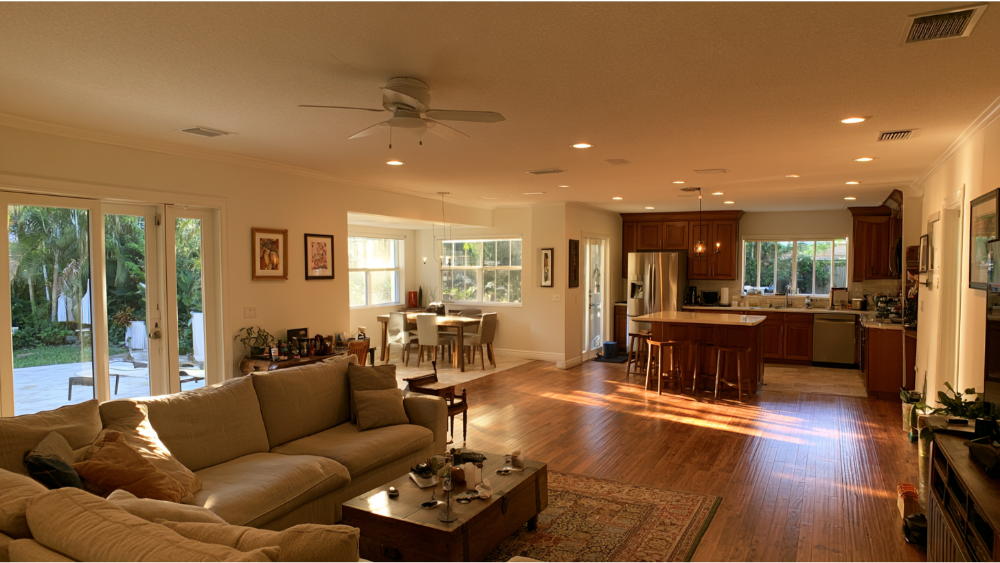
A hosted stay means you live in the unit and stay there while the guest is present. Unhosted means the guest has the whole place to themselves. Cities treat these as completely different activities, because unhosted whole-home rentals are what pull housing off the long-term market.
That single distinction determines legality in New York City, drives the 90-night caps in San Francisco and Washington, D.C., and sets tier eligibility in San Diego. If your investment model depends on renting an entire home you don’t live in, hosted-only cities are a dead end no matter how strong the nightly rate looks.
City Permission Doesn’t Override Private Restrictions
A city permit is not a permission slip from your condo board. Plenty of owners get licensed, list the property, and then get shut down by rules the city has nothing to do with:
- Condominium declarations and bylaws with minimum lease terms
- HOA covenants that prohibit transient occupancy outright
- Deed restrictions recorded against the parcel
- Lease terms, if you’re a tenant subletting (Austin now allows tenant operators with landlord permission, but that’s Austin)
- Standard landlord or homeowner insurance policies that exclude short-term rental activity, leaving you uncovered on a claim
Read the governing documents before you apply for anything. Amendments happen, and boards have gotten aggressive about enforcement.
Permits, Inspections, Taxes, and Listing Requirements
Expect four buckets of ongoing obligation once you’re approved. Licensing: initial application, renewal cycles, and re-verification of residency. Safety: smoke and carbon-monoxide alarms, egress, legal bedroom verification, and in many cities a physical inspection. Insurance: liability minimums that can run from $500,000 in San Francisco to $1 million per occurrence in Nashville. Taxes: state, county, and city lodging or occupancy taxes, plus a business tax account.
Don’t assume a booking platform collecting some taxes means you’re compliant. New York City states plainly that tax obligations are independent of short-term rental registration. Platform collection covers a slice, not the whole stack, and it never covers your permit.
What If the Property Doesn’t Qualify?
Plenty of good properties can’t legally run short-term. That doesn’t mean the deal is dead, it means the leasing model changes.
Long-term leasing is the obvious path, and in most markets it produces steadier cash flow with far less regulatory exposure. Mid-term leasing of 30-plus days is another option, but don’t assume crossing the 30-day line makes rules disappear. San Francisco specifically warns that stays longer than 30 nights can trigger tenant protections and separate intermediate-length occupancy requirements. Longer stays can also pull you into landlord-tenant law, rent control, and eviction procedure you weren’t planning for.
Rerun the numbers under the compliant model before you buy. A property that only pencils as an illegal short-term rental isn’t a property that pencils.
How Full-Service Management Takes the Compliance Load Off You

This is where KT Rents earns its keep. We’re a broker-owned, full-service property management company operating nationwide since 2009, with 683 units under management across 34 states and $187M in assets under management as of early 2025. We report a 98% occupancy rate, which matters more than raw unit count. A manager with thousands of units and hundreds sitting empty isn’t producing cash flow for anyone.
We handle rental permits, city ordinance compliance, property inspections, tenant placement, tenant screening, rent collection, property maintenance, 1099 preparation, and court evictions when it comes to that, all without the owner having to lift a finger, for the equivalence to the price of a cup of coffee and a donut per day. We work both short-term and long-term leasing, so when a city’s rules rule out one model, we build the other. Your owner portal handles funds and maintenance requests in one place.
GET STARTED WITH US TODAY. Call (800) 716-4950, text (608) 207-0657, or email info@ktrents.com. Form submissions get a response within 24 hours. Run the numbers first with our Rent Calculator to see what your property should produce under each model.
Are short-term rentals legal in every U.S. city?
No. Some cities allow them broadly with a permit, some restrict them to hosted stays in a primary residence, and some effectively prohibit unhosted whole-home rentals. Always check the specific municipality that governs the parcel.
Does a short-term rental have to be my primary residence?
In many major cities, yes. Denver, Los Angeles, San Francisco, Portland, Boston, and Washington, D.C. all tie eligibility to primary residence, with residency thresholds ranging from six months in Los Angeles to 275 nights in San Francisco.
Can my HOA or landlord prohibit short-term rentals even if the city allows them?
Yes. Condominium declarations, HOA covenants, deed restrictions, and lease terms operate independently of city law and can prohibit short-term use even with a valid permit in hand.
Are 30-day rentals exempt from short-term rental laws?
Not automatically. Boston’s threshold is 28 days and Chicago’s guidance reaches 31 days, so a 30-day stay may still be regulated. Longer stays can also trigger tenant protection and intermediate-occupancy rules.
How often should I check whether the rules changed?
At least quarterly for active markets, and immediately before purchasing, advertising, or accepting a reservation. Fees, license availability, platform enforcement dates, and state preemption laws all move fast.
All city information above was verified as of August 2026 against the official municipal sources linked. Confirm current requirements directly with the city before you list.