

First Apartment Essentials: What to Buy Now, Verify, and Add Later

Key Takeaway
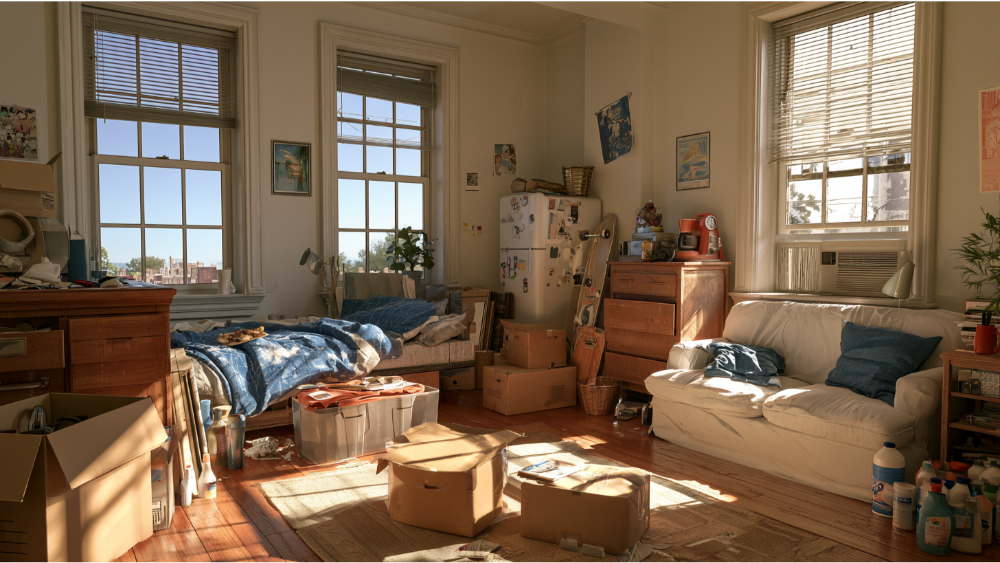
First apartment essentials cover six core needs: sleep, shower, eating, cleaning, safety, and lease management. Buy these items first, verify what your apartment already provides before spending, and save décor and specialty gadgets for later. Furnishing a first apartment averages around $1,750, but staged and secondhand buying can bring key categories like kitchen basics under $100.
For your first apartment, start with what lets you sleep, shower, eat, clean, stay safe, and manage the lease. Buy those apartment essentials first, verify what the apartment already provides, and wait on décor and specialty gadgets until you’ve actually lived in the space. If you just signed (or you’re about to sign) your first lease, this first apartment checklist is how to prioritize instead of panic-buying. Furnishing a place can run around $1,750, but that number swings widely, so there’s no reason to spend it all at once.
Every item below falls into one of three labels: Buy now, Verify the apartment provides it, or Add later.
- Sleep
- Shower
- Eat
- Clean
- Stay safe
- Manage the lease
Before You Buy Anything, Check the Apartment and Lease

Before a single purchase, find out what’s already there. Confirm whether the unit is furnished or unfurnished, and which appliances come with it. A stove, refrigerator, and microwave are often provided, so don’t buy them on assumption. Check window coverings and lighting, whether laundry is in-unit or shared, and which utilities you’re responsible for. Read the rules on wall-mounting, painting, and other alterations before you drill anything.
Measure rooms, doorways, elevators, and stairs before ordering large furniture. A couch that won’t fit through the door is an expensive lesson. As a full-service, broker-owned manager, we tell every resident to document move-in condition: take dated photos or video and keep a copy of the condition report. HUD publishes a model move-in inspection form that covers floors, walls, locks, appliances, and alarms, which is a solid apartment checklist even where it isn’t legally required. Tenant rights vary by state, so check your lease and local resources. If the unit wasn’t cleaned before handoff, plan an initial clean.
What Goes in a First-Night Apartment Box?
Pack one box you can live out of before anything else is unpacked:
- Bedding and a pillow
- Toilet paper and shower supplies
- Medications and a first aid kit
- Phone charger and a power bank
- Flashlight and batteries (one of the most forgotten items)
- Water and simple food
- A plate, cup, and utensil per person
- Dish soap and a sponge
- Garbage bags and paper towels
- A change of clothes
- Box cutter or scissors
- A basic tool kit for minor repairs
- Pet supplies, if you have a pet
Safety Essentials to Verify Before You Sleep There
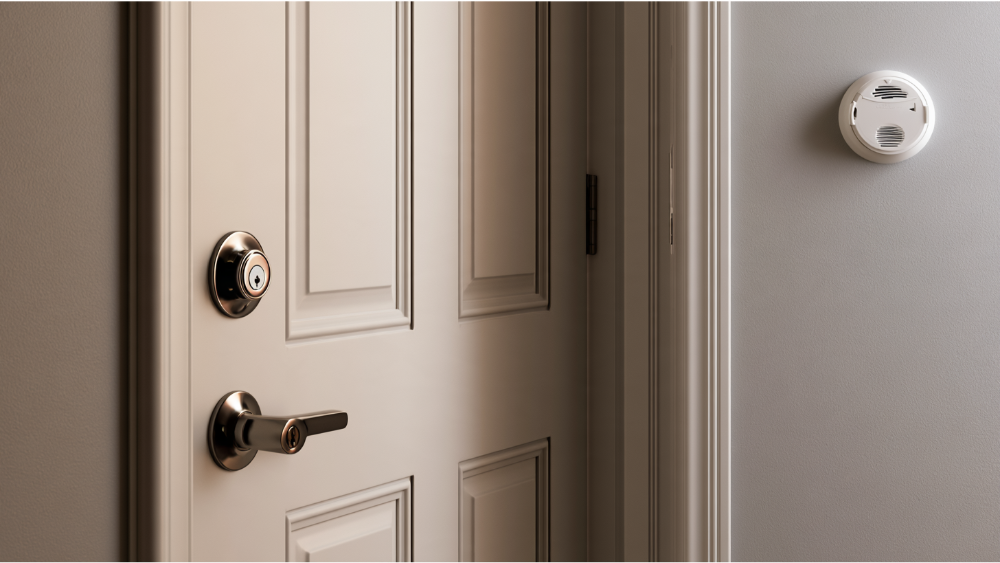
Don’t sleep there until the safety basics check out. The CPSC recommends smoke alarms on every level, inside each bedroom, and outside sleeping areas, with carbon monoxide alarms on each level and outside sleeping areas. Test alarms monthly. Replace ordinary batteries at least yearly unless the unit has a sealed 10-year battery, and replace any smoke alarm more than 10 years old. If a building-provided alarm is missing or malfunctioning, report it to management rather than modifying it yourself.
For a fire extinguisher, the U.S. Fire Administration recommends a multipurpose A-B-C model with a UL or ULC Listed label. Verify whether the property supplies one before buying. Walk your two ways out and locate building fire exits. Check that doors and windows lock. Anchor tall furniture or a TV where it’s needed and permitted. Keep a basic emergency kit on hand: Ready.gov suggests one gallon of water per person per day and a three-day food supply. And treat extension cords as short-term use, not permanent wiring, which the CPSC flags as a fire risk.
Bedroom Essentials: Bed, Mattress, and Bedding
| Buy now | Verify first | Add later |
|---|---|---|
| Mattress, bedding, pillows, hamper | Closet dimensions, window covering, outlets | Headboard, extra dresser, bedside table, throw blankets, decorative pillows |
A bed-in-a-box mattress usually runs a few hundred dollars and ships compressed, which makes it easy to get through a doorway. If your budget’s tight the first month, a futon or air mattress is a fine bridge. Throw pillows and a bedside table are style, not sleep, so they can wait. A dresser and a little extra closet storage, like hanging organizers or under-bed bins, is worth adding once you see how much space you actually have and where your clothes will go.
Bathroom Essentials for Your First Apartment
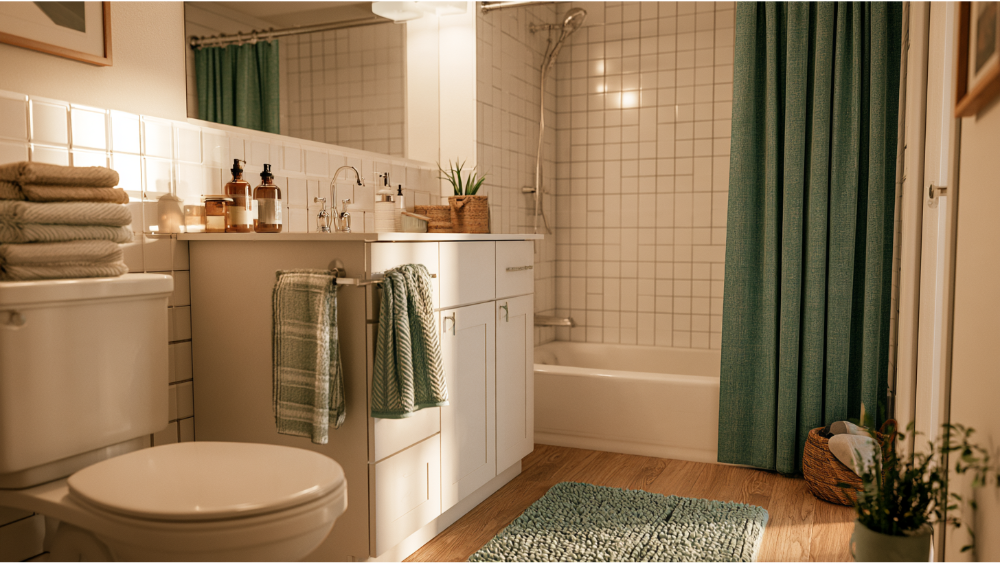
Prioritize the pieces you’ll reach for day one:
- Toilet paper and hand soap
- Bath towels, washcloths, and a bath mat
- Shower curtain, liner, and rings if not supplied
- Plunger and toilet brush
- Small trash cans
- Toiletries: toothbrush, toothpaste, shampoo
- Basic cleaning products and a small caddy to organize
Verify whether a curtain rod and rings are already there, and buy a couple of sets of towels so you always have a dry one while the others wash. A full bathroom setup often lands around $125, but treat that as a rough range, not a rule.
Kitchen Essentials and Must-Have Kitchen Items
You can cook real meals with a short list of kitchen items:
- One skillet and one saucepan with a lid, plus any other pots and pans you’ll use
- A sheet pan if you use the oven
- One chef’s knife, a paring knife, and a cutting board
- Cooking utensils like a spatula and large spoon, plus a can opener
- Oven mitts
- Plates, bowls, cups, dishes, and utensils
- Food containers for storage
- Dish soap, sponge, and a drying mat for washing dishes
- Trash cans and bags
- Refrigerator thermometer
- A few pantry staples you actually use
Keep your fridge at 40°F or below and the freezer at 0°F, per the FDA, and refrigerate perishables within two hours (one hour if it’s over 90°F outside). A thermometer confirms your appliance is holding temperature. A new basic kitchen runs about $375, or under $100 if you shop thrift stores and garage sales. Push mixers, specialty pans, knife blocks, duplicate appliances, a toaster oven, and the coffee maker to “add later,” and consider smaller appliances if counter space and storage are limited.
Cleaning Supplies, Laundry Supplies, and Area Rugs
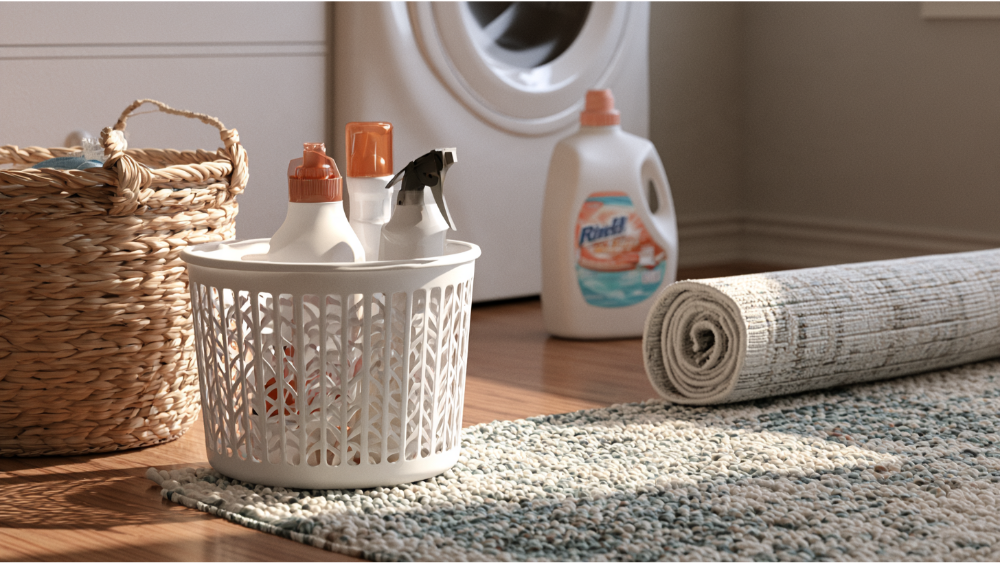
Match your tools to the flooring you actually have: a vacuum for carpet and area rugs, a broom or mop for hard floors, plus a dustpan. Beyond that, keep your laundry supplies and cleaning gear lean:
- Microfiber cloths
- A mild all-purpose cleaner
- White vinegar for simple, low-cost cleaning jobs
- A bathroom cleaner suited to your surfaces
- Laundry detergent and a hamper or laundry bag
- A drying rack if you need one
- Gloves
Cleaning supplies often run around $175 new, and most should be bought new rather than secondhand. One safety rule that matters: never mix bleach or disinfectants with other cleaners, which the CDC warns can release dangerous vapors. Use products with ventilation. You don’t need a separate chemical for every surface.
Living Room and Work-From-Home Essentials
Function first. You need seating, additional lighting, internet equipment, and a work surface if you’re remote. A couple of chairs, a small table, and a lamp can cover both relaxing and working without crowding the living room. Use surge protection instead of leaning on extension cords long-term. A couch, coffee table, TV stand, area rug, a coat rack by the door, and a few throw blankets add warmth and help you create a space that feels like home, but most of that can wait. Order large pieces only after you’ve measured, so you don’t end up with a sectional that eats the whole room.
Important Documents and Digital Setup People Forget

This is the part most checklists skip, and it protects your money. Keep these organized from day one so you stay organized when something comes up:
- A copy of your lease and the move-in condition report
- Dated move-in photos and videos
- Renters insurance documents
- A home inventory (photos of your belongings) for claims
- Your rent-payment login and maintenance portal login
- Property management and after-hours emergency contacts
- Utility account info
- Mail forwarding and address updates
- A roommate bill-split plan, if you’re sharing
The NAIC notes that the owner’s policy doesn’t cover your belongings. Renters insurance covers personal property, liability, and sometimes living expenses if a covered loss makes the unit uninhabitable, and it’s usually affordable. Our resident portal handles rent payments and maintenance requests for a more seamless experience, so learn how to submit a request from your phone and what counts as maintenance versus something you fix yourself.
How to Save Money Without Buying Unsafe Stuff
Write a detailed budget before you shop. Secondhand furniture and kitchenware stretch it a long way, and a thrift-store, garage sales, or Facebook Marketplace kitchen can come in under $100, which is a real way to save on pans, dishes, and chairs. One caution: inspect used items and check the CPSC recall database before buying, since recalled products still turn up in resale. Plan meals to cut food waste. Avoid going into debt for décor or specialty appliances. Wait 30 days before any nonessential purchase. Living in the space first tells you what you actually need, and it helps you save for the pieces that matter so you don’t buy all the things at once.
What Not to Buy for Your New Apartment Yet
- Oversized furniture
- Large décor collections
- Duplicate kitchen appliances
- Bulk storage containers before measuring cabinets
- Specialty cookware
- Guest furniture
- Wall-mounted items before checking the lease
- Organizers before you learn where clutter actually collects
How to Customize Your First Apartment Checklist
- Furnished apartment: skip the big furniture and focus on linens, kitchen basics, and cleaning supplies.
- Studio or small space: choose smaller appliances and multipurpose furniture, and lean on vertical storage.
- Roommates: share kitchen items and cleaning gear, buy bedding, towels, and toiletries separately.
- Remote workers: prioritize a work surface, good lighting, and reliable internet.
- Pets or children: add their supplies to the first-night box.
- Accessibility or medical needs: plan layout and equipment around daily routines.
- Shared laundry: keep quarters or a payment card and a laundry bag ready.
- Short-term lease: lean toward portable, secondhand pieces you can move easily.
What is the 30% rule for apartments?
HUD classifies spending more than 30% of income on housing as cost-burdened, and more than 50% as severely cost-burdened. That’s a statistical threshold, not a personal spending mandate. For context, the 2025 American Community Survey put national median gross rent at ,557.
Is $5,000 enough to furnish an apartment?
For most first apartments, yes, especially with staged and secondhand buying. Estimates commonly land near ,750, but the rest of your total can vary widely depending on what’s provided and how you shop, so don’t treat any single number as universal.
Is $2,000 a month enough for an apartment?
It depends on local rent, utilities, and your income. Use the 30% guideline as a reference point and run the numbers for your situation rather than relying on a flat yes or no.
What should I know before getting my first apartment for the first time?
Read the lease, document move-in condition with photos, and confirm what’s provided so you don’t forget anything that affects your deposit. Set up rent payment and maintenance requests, get renters insurance, and prioritize essentials over décor. Keep a handy apartment essentials list so every purchase has a reason.
Find Your Perfect Home With KT Rents
Before you spend on furniture, run the numbers with the KT Rents Rent Calculator so household cost doesn’t crowd out rent. Comparing cities? The Cost of Living Calculator helps you weigh the move. And if you’re still searching, browse rental properties near you. We’re a full-service, broker-owned property manager operating nationwide since 2009, and we want you to feel at home, not pressured to furnish every corner of your new apartment at once. Find Your Perfect Home Near You. Your Rental. Your Way. Questions? Call us at (800) 716-4950.