

Alpharetta, Georgia
Homes for rent and for sale — search the map or open the full city SEO catch-all page.
Alpharetta, Georgia
Alpharetta, GA, is a premier North Atlanta suburb known as a major technology hub with a polished, family-oriented lifestyle and robust job market. As of mid-2026, while the city remains highly desirable for professionals and families, it is also one of Georgia’s more expensive markets, with housing costs significantly outpacing the national average. Because Alpharetta is heavily car-dependent and prone to heavy rush-hour traffic on GA 400, prospective residents should prioritize a “rent-first” strategy to test commute times and verify exact school assignments via the Fulton County School District before making a purchase. Success in this market requires precise budgeting—accounting for both the premium housing costs and the flat state income tax—to ensure the move aligns with your long-term financial goals.
If you’re a renter, a relocating household, or a remote professional weighing a move to Alpharetta, here’s the short version: living in Alpharetta works well as a North Atlanta suburban base with strong job access, high incomes, established parks and trails, and a polished dining scene, as long as you budget for above-average housing and check your commute, school zone, and rent-vs-buy math before you commit. Alpharetta is sometimes called the “Technology City of the South,” and it carries a distinctly suburban, well-kept feel. It’s also considered expensive by Georgia standards, so the two questions that matter most early on are how much housing will cost you and whether renting or buying makes more sense for your situation.
Should You Move to Alpharetta? The Quick Answer

Yes, if you want a family-friendly North Atlanta suburb with a steady, booming job market, frequent community events, and easy access to parks. Just go in clear-eyed about the tradeoffs. Over 40% of households in this city have children, and reported crime rates run low compared to national averages, which is part of why so many families treat this as a safe place and put Alpharetta GA on their shortlist. The pull is real: jobs, amenities, and a community-driven atmosphere with events year round. The friction is just as real: a higher cost of housing above the national average, a car-dependent lifestyle, and GA 400 traffic at rush hour. Weigh those against each other, then verify the specifics for the exact address you’re considering, because Alpharetta is not one uniform place.
Alpharetta Life: Population, Income, and Community at a Glance
Alpharetta is an established, affluent, family-heavy suburb, and Alpharetta life centers on a well-off, well-educated base of residents. Here are the anchor numbers on population and income, with sources kept separate so you know what you’re reading:
- Alpharetta population: 66,921 residents as of July 1, 2025 (U.S. Census estimate), up from 65,818 in the 2020 Census.
- Daytime population: 122,395 (City of Alpharetta economic-development data, May 2026), nearly double the resident count because so many people commute in for work.
- Median household income: $147,612 in 2024 dollars for 2020 to 2024 (Census QuickFacts), or $160,154 in the city’s May 2026 Esri/Lightcast snapshot. Different methodologies, so don’t treat them as interchangeable.
- Median age: around the late 30s, reflecting a mix of young families and established professionals.
The workforce skews heavily white-collar and highly skilled, and the resident profile is higher-income than most of the metro. That shapes everything from the housing market to the kinds of amenities you’ll find nearby. For families comparing north metro suburbs, that combination of income and community stability is a big part of the draw.
Cost of Living in Alpharetta vs. the National Average

The cost of living in Alpharetta runs meaningfully above the national average, and housing is the main reason. Most cost-of-living estimates put the city roughly 23% above the national baseline, with home and rent costs the biggest driver of that gap. Taxes are more moderate. Georgia moved to a flat income tax rate of 4.99% for 2026 (Georgia Department of Revenue), and Alpharetta’s economic-development page lists a 7.75% local sales tax, though Georgia sales tax charts update quarterly, so confirm the current figure before you finalize a budget.
Groceries, utilities, and everyday expenses sit closer to typical metro levels, which means your monthly picture will hinge almost entirely on what you pay for housing. Before you lock in a budget, run your real numbers through our Cost of Living Calculator so you’re comparing your actual income against local costs instead of a vague “it’s expensive” impression.
Renting in Alpharetta: What to Expect
You’ll find condos, townhouses, and single-family homes across a range of price points, and the rental market stays active partly because high home prices keep more people renting. Census reports a median gross rent of $1,948 for 2020 to 2024, and various market estimates land somewhere in the $1,736 to $1,950 range depending on methodology and property mix. Those are historical or averaged figures, so treat them as a starting point and check current listings.
HUD’s FY2026 Small Area Fair Market Rents give a useful benchmark by ZIP code (again, benchmarks, not live asking rents):
| ZIP | 1BR | 2BR | 3BR |
|---|---|---|---|
| 30009 | $2,150 | $2,360 | $2,830 |
| 30005 | $2,070 | $2,270 | $2,720 |
| 30004 | $1,920 | $2,110 | $2,530 |
Georgia renter basics before you sign
A few rules from the Georgia Landlord-Tenant Handbook are worth knowing. Landlords who own more than 10 rental units (or use a management agent) must provide a written list of existing damage before accepting your security deposit, and both parties should sign it. Security deposits must be returned within 30 days after the lease ends or you leave, whichever is later. For a tenancy-at-will, a landlord gives 60 days’ notice and a tenant gives 30. And for nonpayment, a landlord must give written notice to pay at least three business days before filing. This is general information, not legal advice. When you’re ready, browse rentals, submit a rental application, or run the numbers with our Rent Calculator.
Rent vs. Buy in Alpharetta

You’ll see a wide spread of home values quoted for Alpharetta, and that confuses a lot of movers. Census QuickFacts reports a median home value (owner-occupied) of $649,000 for 2020 to 2024. Market estimates land around $614,096, while some templated data sources show a median home figure as low as $344,100, which almost certainly reflects a different geography or property set. Most homes sell in the $300k to $750k range, with a handful of luxury neighborhoods, including country club communities, reaching into the millions. Typical homes run four to five bedrooms with three to four baths, which is why so many families settle here.
The takeaway: with home values this high, renting first is a smart move for many people relocating here, giving you time to learn neighborhoods before a large purchase. We won’t decide for you. Run the comparison with our Rent vs. Buy Calculator and Mortgage Calculator to see how the math lands for your budget.
Commuting From Alpharetta and Public Transportation
Alpharetta is car-dependent, and GA 400 is the backbone of most commutes. The city has five direct GA 400 interchanges: Mansell Road, Haynes Bridge Road, Old Milton Parkway, Windward Parkway, and McFarland Parkway. Average commute times run about 23 minutes by city data and 26.3 minutes per Census, but GA 400 congests heavily at rush hour, so your real experience depends on timing.
Public transportation is limited here. Five MARTA bus routes serve Alpharetta and connect to North Springs Station, the region’s northernmost rail terminal. From North Springs, rail runs south roughly 10 minutes to Buckhead, 20 to Midtown, 25 to Downtown Atlanta, and 45 to Hartsfield-Jackson, which sits 34 miles away. If you plan to lean on public transportation rather than a car, map that bus-to-rail connection carefully, because it shapes daily life more than commute averages suggest.
Test your commute before you sign
- Drive the route at the exact time you’ll actually travel, both directions.
- Check GA 400 traffic on a Tuesday through Thursday, not just a quiet weekend.
- If you’ll rely on public transportation, map the MARTA bus-to-rail connection south and time it.
Jobs, the Tech Scene, and Remote Work in Alpharetta GA
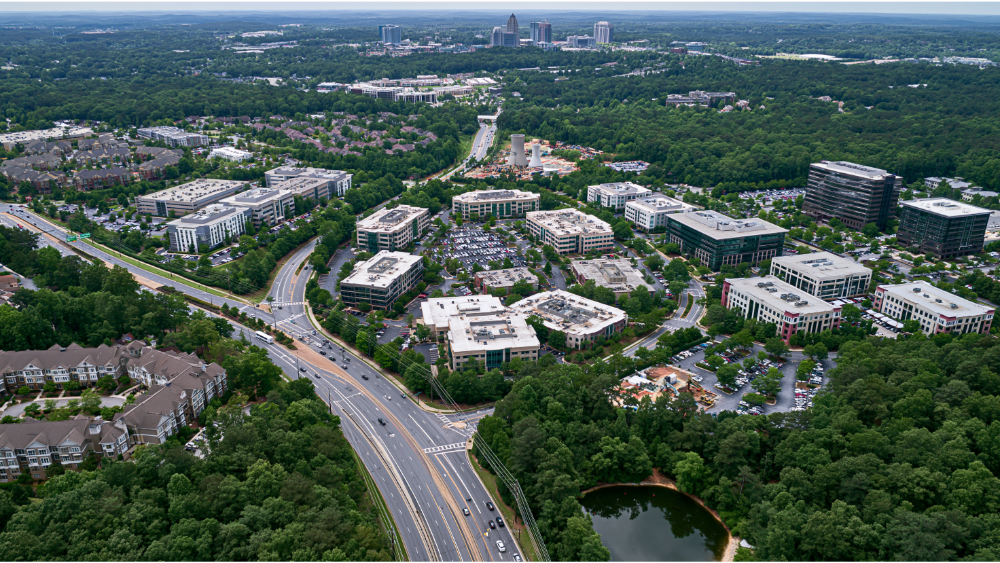
The job base is a big part of Alpharetta’s appeal. City economic-development data points to a strong daytime inflow of 122,395 and a heavily white-collar, highly skilled workforce, with hundreds of technology companies and major corporate employers, including household names like Coca Cola in the wider metro, anchored in mixed-use hubs. That’s how a city of about 67,000 residents nearly doubles in population during the workday.
If you work remotely, Alpharetta suits you well. Reliable broadband, walkable mixed-use districts, plenty of cafes, and miles of trails make it easy to build a routine around a home office. When you’re picking a rental, prioritize a dedicated workspace and the connectivity you need. Your Rental. Your Way.
Great Schools: Public Schools, Nine High Schools, and Address-Level Research
Alpharetta is served primarily by the Fulton County School District, with both public schools and private schools in the area, plus recognized programs such as an International Baccalaureate World School designation. Families often research options like Fulton Science Academy and campuses such as Alpharetta High School, and the surrounding area is served by roughly nine high schools depending on how you draw the boundary. The key thing to understand is that Alpharetta spans different Fulton learning zones, so attendance is assigned by address, not by city name. That matters for families choosing among elementary schools and high schools alike.
Before you sign anything, verify your specific address using the Fulton County School District attendance-zone map and address locator. The district notes that zones can change, so confirm directly and contact the Fulton County School District if you have questions. Do your own research on any public or private schools, including their programs and performance, rather than relying on general reputation. Access to great schools is a major reason families choose this area.
Wills Park, Big Creek Greenway, and Daily City Life in Alpharetta

Daily life here leans outdoors and social, and that community rhythm is a big reason people enjoy living in Alpharetta. The city lists 34 public parks, and it’s working toward getting 77% of residents within a 10-minute walk of one by 2029. Wills Park anchors much of the outdoor recreation with green spaces, tennis courts, sports fields, and a Family Skate Center that keep the calendar busy through summer. The city’s Cultural Services Department programs many of these amenities, alongside a recreation center and event spaces. The Big Creek Greenway runs 12 miles within Alpharetta, tracing Big Creek itself, and the Alpha Loop stretches more than 6 miles, linking Downtown Alpharetta, Avalon, North Point, and NorthWinds within walking distance of shops and restaurants.
The calendar stays full with 150+ special events a year, from farmers markets and concerts to the Alpharetta Christmas Market, which keeps city life active for families and singles alike. With 300+ food and drink establishments, from fine dining to spots serving fresh seafood, and 250+ shops, the city offers plenty to do close to home. Attractions in Alpharetta range from North Point Mall to the Ameris Bank Amphitheatre to the Downtown Alpharetta Historic District, all within reach. Downtown Alpharetta gives you a walkable core with restaurants, the historic Dodd Hotel among its landmarks, and a rich history that shapes the area’s character, making Alpharetta a genuinely welcoming place to settle. The Chattahoochee River and North Georgia mountains are an easy drive for weekends, and quality healthcare is conveniently located across the north metro. For many movers, this mix makes Alpharetta a perfect place to land.
Weather and Seasonal Considerations
Expect hot, humid summers and mild winters. Using NOAA’s 1991 to 2020 normals for the Atlanta metro (a regional benchmark, not a hyperlocal reading), the annual mean temperature is 63.6°F, July highs average 90.1°F, January lows average 35.6°F, with about 50.43 inches of rain and just 2.2 inches of snow a year. Before move-in, check the HVAC, plan for pest control in the warm months, and know your storm-prep basics for summer downpours.
Pros and Cons of Moving to Alpharetta Georgia
Pros:
- Strong job access and a deep, highly skilled white-collar market
- Polished amenities, dining, and shopping
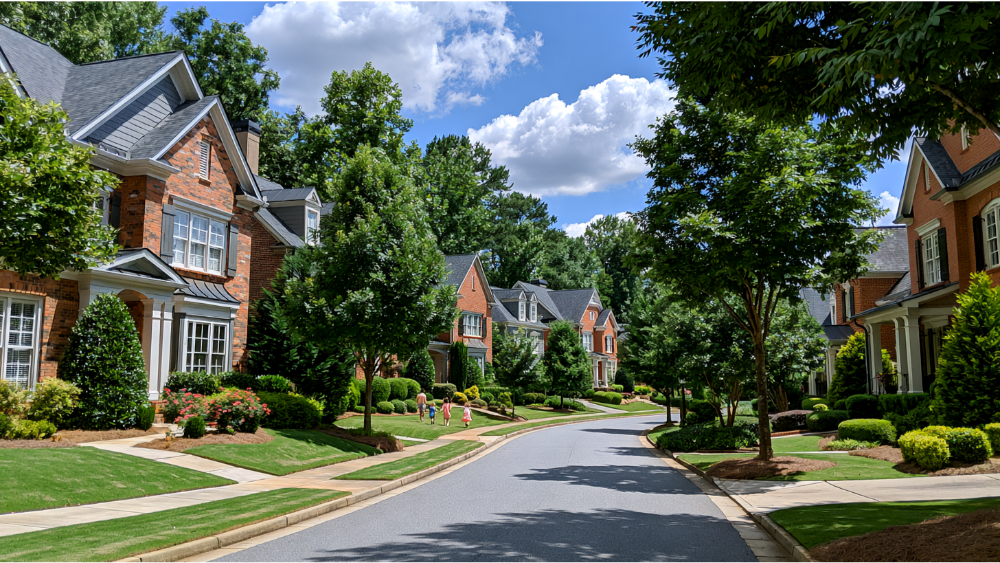
- Extensive parks and trails, family-friendly feel for families
- High household incomes and low crime versus national averages
Cons:
- Housing costs above the national average
- Car-dependence and GA 400 rush-hour traffic
- Limited public transportation and direct rail inside Alpharetta
- You’ll need to verify school zones and the full tax burden yourself
Your Before-You-Move Checklist for Alpharetta
- Run your rent-vs-buy numbers with real income and price data.
- Test your commute at your actual travel time.
- Verify the school zone by exact address with the Fulton County School District.
- Read the full lease, including renewal and fee terms.
- Confirm pet policies and any HOA rules.
- Photograph and document move-in condition.
- Budget for deposits, utilities, insurance, and moving costs.
How KT Rents Helps You Move to Alpharetta
KT Rents is a broker-owned, full-service rental and property management platform operating across the U.S. since 2009, with 16+ years of experience, 683 units across 34 states and $187M in assets under management as of early 2025, and a reported 98% occupancy rate. For renters and families, you can browse listings, run the calculators, submit rental applications, pay rent online, and send maintenance requests through the owner and resident tools.
If you’re relocating and keeping a property as a rental, we handle it all: tenant placement, tenant screening, rent collection, property maintenance, rental permits, 1099 preparation, city ordinance compliance, property inspections, and court evictions, without you lifting a finger, for about the price of a cup of coffee and a donut per day. Ready to start? “Find Your Perfect Home Near You,” or call (800) 716-4950 if management services fit your move. Se Habla Español.
Frequently Asked Questions
Is Alpharetta, Georgia a good place to live?
For many people, yes. Living in Alpharetta offers strong job access, polished amenities, a family-friendly community, and low crime relative to national averages. The main caveat is housing cost, which runs above the national baseline.
Is Alpharetta, GA expensive?
It’s expensive by Georgia standards, roughly 23% above the national cost-of-living average, with housing as the main driver. Taxes are more moderate, including a flat 4.99% Georgia income tax for 2026.
What is a good salary in Alpharetta, GA?
Median household income sits around $147,612 (Census, 2020 to 2024) or $160,154 (city data, May 2026), which signals a high-income city. Affordability depends on your household, so run your figures through our Cost of Living Calculator.
How long is the commute from Alpharetta to Atlanta?
Average commutes run about 23 to 26 minutes, but GA 400 congests at rush hour and can add real time. Test your specific route at the hour you’ll actually drive it, and check public transportation options if you’d rather not drive.
Is Alpharetta better for renting or buying?
High home values make renting a smart first step for many movers and families, giving you time to learn the area. Use our Rent vs. Buy Calculator to see which fits your budget.