

Lexington, Kentucky
Homes for rent and for sale — search the map or open the full city SEO catch-all page.
Lexington, Kentucky
Moving to Lexington, Kentucky puts you in a city of 329,437 people with a 20.9-minute average commute, major hospital and university anchors, and a median household income of $69,479. Housing costs are moderate, with HUD FY2026 Fair Market Rents ranging from $883 for a studio to $1,272 for a two-bedroom. Budget carefully: Kentucky’s 3.5% state income tax stacks on top of Lexington’s 2.25% occupational license fee on earned income.
Moving to Lexington, Kentucky
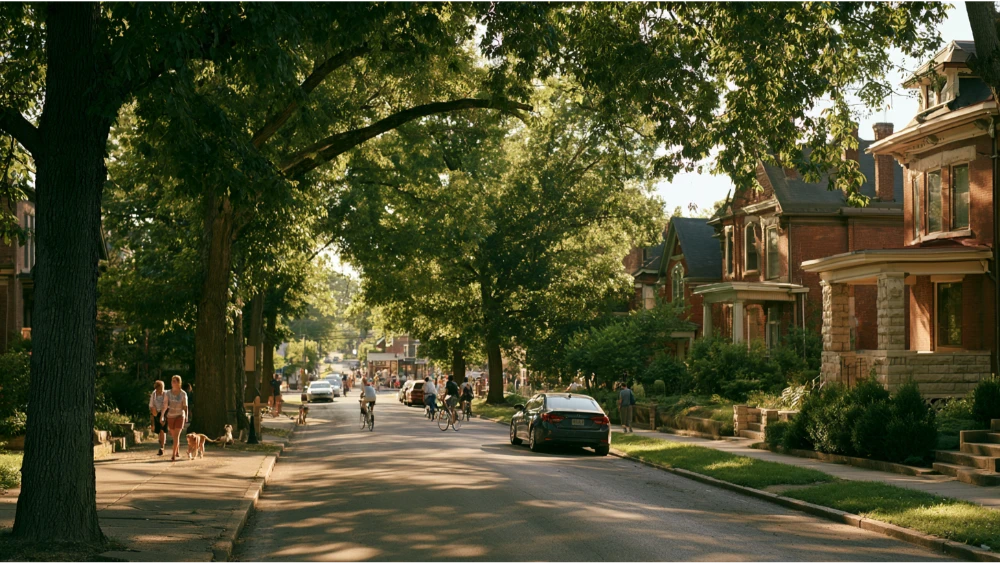
Lexington works well if you want mid-sized-city jobs, major hospital and university anchors, and a short drive to work. The U.S. Census Bureau estimated the Lexington-Fayette population at 329,437 as of July 1, 2025, with a mean commute of 20.9 minutes (2020 to 2024). The catch: outside the core you’ll need a car, and Lexington-Fayette charges a 2.25% occupational license fee on your compensation on top of Kentucky’s 3.5% state income tax for 2026.
Whether you’re relocating for a job offer, a school move, or remote work, this guide covers neighborhoods, schools, hospitals, jobs, food, culture, horses, and the move-in paperwork. In Lexington KY, your address drives your school zone, your commute, your monthly budget, and where you play on a Saturday. Pick the address first. The aesthetic second.
Lexington KY at a Glance: Population, Income, and Cost Basics
- Population (city-county): 329,437, July 2025 estimate
- Households: about 139,715, averaging 2.23 people
- Median household income: $69,479 in 2024 dollars (2020 to 2024)
- Adults 25+ with a bachelor’s degree or higher: 48.3%
- Households with broadband: 92.5%
- Owner-occupied housing: 53.8%, so nearly half of Lexington KY residents rent
One geography note trips up most relocation guides. Lexington and Fayette County are a merged city-county government, so “city” figures cover Fayette County only, while federal labor data covers the six-county Lexington MSA: Bourbon, Clark, Fayette, Jessamine, Scott, and Woodford. This is the second largest city in the Bluegrass State, planted in the middle of the Bluegrass region, and the University of Kentucky gives it a college town rhythm at a scale where residents still get big city amenities without big city gridlock. That broadband number matters if you work remotely.
How Much Does It Cost to Live in Lexington?
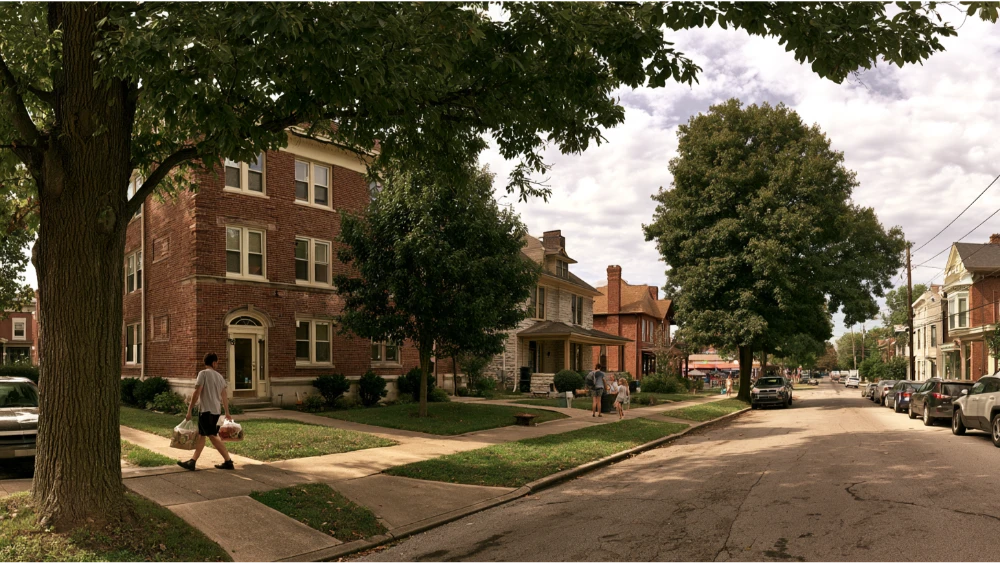
HUD’s Fair Market Rents for fiscal year 2026 cover the six-county Lexington MSA:
| Unit size | FY2026 Fair Market Rent |
|---|---|
| Studio | $883 |
| One bedroom | $1,079 |
| Two bedrooms | $1,272 |
| Three bedrooms | $1,743 |
| Four bedrooms | $1,940 |
Three “rent” numbers circulate here and they measure different things. Census median gross rent was $1,164 for 2020 to 2024, backward-looking and inclusive of tenant-paid utilities. HUD Fair Market Rent is a federal program benchmark, generally a 40th-percentile estimate. The asking rent on a live listing is the only one you’ll actually write a check for. Census put median owner-occupied home value at $293,500, owner-reported rather than a sale price.
Now the line most guides skip: that 2.25% occupational license fee comes out of your paycheck on top of Kentucky’s 3.5% individual income tax rate for tax years beginning on or after January 1, 2026. Budget on net pay, not gross. Families relocating from a higher-cost metro should run real figures through our Rent Calculator and Cost of Living Calculator on ktrents.com, and our Rent vs. Buy Calculator shows the tradeoff of renting for a year while you learn the neighborhoods.
Lexington Neighborhoods: How to Choose by Daily Routine
The list of options can feel overwhelming, so compare by housing type, commute corridor, walkability, transit access, parks, and dining, then verify the exact address. Lexington changes block by block, and lifestyle shifts street to street.
Downtown Lexington
Apartments and condominiums, arts venues, restaurants, and nightlife, plus Rupp Arena for Kentucky basketball and touring concerts. The most walkable neighborhood in the city and the hub of the bus network, which is why it draws students and young professionals.
Chevy Chase and Ashland Park
Historic tree lined streets just east of the university with a compact walkable shopping and dining district. Ashland, the Henry Clay Estate, is located here and gives the surrounding neighborhood its name. Older housing stock, short trip downtown, steady demand from families and university staff.
Distillery District and the Warehouse Block
Adaptive-reuse industrial buildings west of downtown and along National Avenue. In recent years these blocks have filled with live music, galleries, restaurants, and craft beer taprooms including Ethereal Brewing, with housing nearby that appeals to young professionals.
Southland Drive, Fritz Farm, and South Lexington
An established local retail corridor plus newer mixed-use shopping and dining in a more suburban setting. Commuting here means Nicholasville Road or Tates Creek Road.
Hamburg and East Lexington
A large suburban retail and housing area, much of it new construction, oriented to Man o’ War Boulevard and I-75. Popular with families who want newer floor plans and an attached garage.
New Construction Pockets Like Whispering Woods
Listings often use subdivision names such as Whispering Woods instead of broad neighborhood labels. Those outer-ring pockets usually mean quiet cul-de-sac streets and HOA dues, and one can sit in a different school zone than the subdivision next door. Confirm the school assignment and the dues on the exact address, not the marketing name. If you’re weighing northwest or southwest commutes, compare Masterson Station, Meadowthorpe, and Beaumont, which put parks and trails close by.
The city maintains a directory of more than 250 registered neighborhood and homeowner associations plus an address-based lookup tool, the fastest way to find the community group for a block you’re considering. Use it, then drive your actual commute at your actual hour.
Schools and Educational Opportunities in Lexington
The school your child attends is set by the address on your lease, not the neighborhood name. Fayette County Public Schools assigns by residential address, so families should run the official SchoolSite Locator before signing anything.
- Look up the exact address in the FCPS locator and confirm the assigned schools.
- Gather two proofs of residence for a change of address. A mid-year zone change may require an out-of-area request if you want your child to finish the year at the prior school.
- Kentucky requires attendance from ages 6 through 18, and kindergarten eligibility is age 5 on or before August 1.
- Check magnet, gifted-and-talented, and specialized programs separately, since applications and deadlines differ across the 30-plus options.
FCPS opened a new middle school and a technical learning facility for 2025 to 2026 and is running a multi-year facility and boundary review, so don’t trust a neighborhood blog post from three years ago. Beyond K-12, the University of Kentucky, Transylvania University, and Bluegrass Community and Technical College shape the job market and rental demand.
Hospitals and Health Care in Lexington
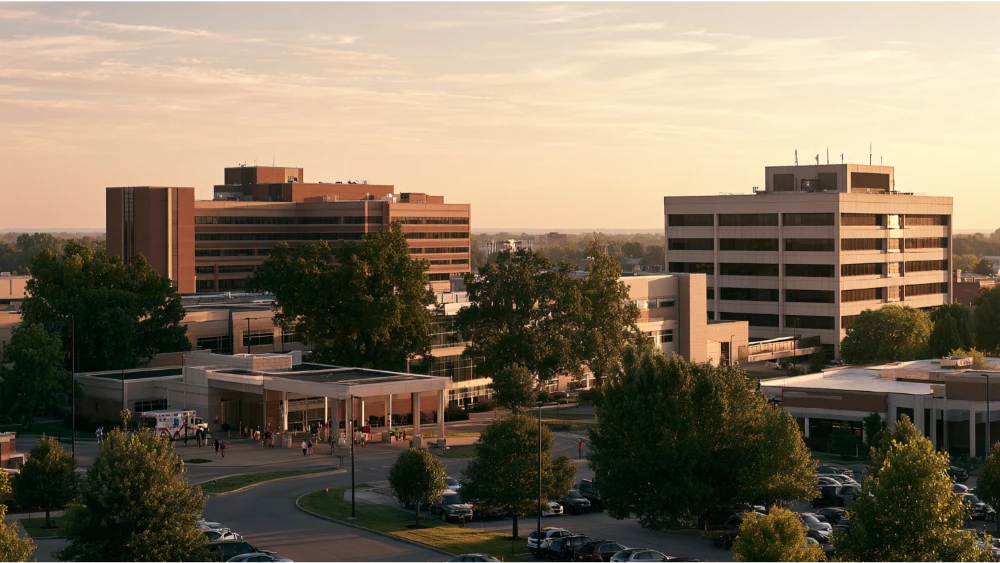
An April 2026 state hospital directory lists UK Hospital, UK HealthCare Good Samaritan, Baptist Health Lexington, Saint Joseph Hospital, Saint Joseph East, Eastern State Hospital, Cardinal Hill Rehabilitation Hospital, and The Ridge Behavioral Health System. UK Albert B. Chandler Hospital runs Central and Eastern Kentucky’s only Level I trauma center, with adult critical care and pediatric emergency capability. Baptist Health Lexington describes itself as a 434-bed tertiary care facility, and Saint Joseph East serves residents on the east side.
Verify three things: whether your insurance network includes the systems near you, whether primary care is accepting new patients, and the honest drive time from your address to the nearest emergency department.
Jobs and the Lexington Economy
The Lexington MSA had roughly 303,600 nonfarm jobs in July 2026, up 1.1% year over year, with a preliminary unemployment rate of 4.4%. Sector employment that month:
- Government: 58,700
- Trade, transportation, and utilities: 52,300
- Education and health services: 41,300
- Professional and business services: 40,400
- Leisure and hospitality: 34,000
- Manufacturing: 31,000
No single sector dominates, which gives Lexington a more diverse economy than a one-employer town. Tempur Sealy International is headquartered here, and the university anchors the government and education numbers. Direction matters as much as size: education and health services grew 4.3% year over year, while manufacturing and professional/business services each slipped 1.9%. MSA workers averaged $29.91 per hour in May 2025 against $33.54 nationally, which is exactly why the cost math above matters. The equine economy adds veterinary, farm, and sales work that doesn’t sort neatly into those categories.
Getting Around: Traffic, Transit, and Blue Grass Airport
Lexington is built on radial arteries feeding New Circle Road and Man o’ War Boulevard, so the corridor you live on largely decides your commute. The city runs live traffic cameras for New Circle, Nicholasville Road, Man o’ War, Hamburg, downtown, and the university area. Watch them at 5 p.m. before you commit.
Lextran fixed-route buses serve Nicholasville Road, Tates Creek, Georgetown Road, Newtown Pike, Richmond Road, Leestown Road, the university area, hospitals, shopping centers, and downtown. Fares run $1 for an adult single ride, $3 for a day pass, and $30 for a 30-day pass, with free transfers valid 90 minutes. Car-free living works for some downtown and transit-corridor residents. Most of the city assumes a car. Blue Grass Airport, a short drive west of downtown, advertises nonstop service to 18 destinations and handled 1,614,053 passengers in 2025. I-75 and I-64 give easy access to Louisville, Cincinnati, and Knoxville, which matters if work or family keeps pulling you toward other cities.
Weather in Lexington: What Each Season Feels Like
NOAA’s 1991 to 2020 normals at Blue Grass Airport put the annual mean at 56.3°F, with 49.84 inches of precipitation and 14.5 inches of snow.
- Summer: July normal high 86.9°F, low 66.5°F, roughly 25 days a year at 90°F or above. Move in the early morning.
- Winter: January normal high 42.3°F, low 25.4°F. Ask who handles snow and ice removal in your lease.
- Spring: storms and fast swings. Know where you’d shelter.
- Fall: the easy season, though you’ll pay for heating and cooling across the year.
Things to Do in the Horse Capital: Bourbon, Trails, and Food
Horse Farms, Keeneland, and Horseback Riding
Lexington calls itself the horse capital of the world, and it isn’t marketing fluff. Thoroughbred horse farms ring the city, and fifteen minutes in almost any direction puts you beside plank fences with horses grazing behind them. The Kentucky Horse Park runs competitions, shows, and educational programs year-round and draws riders from around the world. Keeneland’s spring and fall race meets work like citywide social events, and The Red Mile keeps harness racing on the calendar.
If you ride, boarding barns, lesson programs, and horseback riding trails sit inside and just past the county line. For plenty of people moving here, the horses are the whole point, and few places make a lifestyle built around them feel this ordinary.
Bourbon Distilleries and the Kentucky Bourbon Trail
Lexington makes a practical base for the Kentucky Bourbon Trail, with distilleries scattered across the surrounding counties, and the Distillery District keeps the theme close to home.
Parks, Trails, and Outdoor Activities

The Arboretum, McConnell Springs, Masterson Station Park, and the Brighton Rail Trail all appear in the city’s address-by-address trail directory, the fastest way to see what’s walkable from a place you’re considering. Jacobson Park, with its lake, loop trail, and dog park, is one of the busiest gathering spots on the east side. Raven Run Nature Sanctuary adds miles of hiking near the Kentucky River palisades, and the Legacy Trail carries runners and cyclists from downtown toward the Kentucky Horse Park.
Food, Entertainment, and History
The food scene is district-based. Chevy Chase, Southland Drive, Greyline Station, Fritz Farm, the Warehouse Block, and downtown each carry their own mix, per the local destination authority: Kentucky classics, farm-to-table kitchens, international restaurants, independent coffee shops, and bakeries. Downtown holds the arts calendar, concerts at Rupp Arena, and university sporting events. The culture here is southern hospitality without the cliché, and most people live within a short drive of a district worth walking on a Friday night. The Mary Todd Lincoln House sits a few blocks off Main.
Your Moving to Lexington KY Checklist
- Before you sign: run the FCPS school locator on the exact address, drive the commute at rush hour, time the trip to the nearest hospital, confirm the waste collection day, and ask how maintenance requests get submitted and how fast they’re handled.
- Two weeks out: schedule water service, book movers, and file your USPS change of address.
- First week: set up utilities. Most Lexington water customers get separate water and LEXserv bills, and the first LEXserv bill can trail the water bill by two to three weeks. Confirm trash, recycling, and yard waste carts.
- First 30 days: get a Kentucky driver’s license, required within 30 days of establishing residency, then handle title and registration. State pages give conflicting timing, so confirm with the county clerk. Register kids with two proofs of residence, establish primary care, and bind renters insurance.
For address vetting, Lexington Police publish NIBRS data and a Community Crime Map updated daily. Check several date ranges and visit at different hours instead of relying on broad neighborhood labels.
We’ve been broker-owned and full service since 2009, handling tenant placement, tenant screening, rent collection, property inspections, maintenance, and court evictions across 34 states (as of January 2025). That’s why we push so hard on lease and maintenance questions. They separate a good rental from a year of headaches.
Is Moving to Lexington KY Right for You?
Lexington offers a 20.9-minute average commute, serious health care and university anchors, four real seasons, horses and trails minutes from most neighborhoods, and big city amenities in a college town footprint. Against that: wages below the national average, the 2.25% occupational fee, and car dependence once you leave the core. National rankings like U.S. News & World Report best-places lists make a fine starting point, but they can’t tell you what Nicholasville Road looks like at 5 p.m.
Run the numbers with our Rent Calculator, Cost of Living Calculator, and Rent vs. Buy Calculator on ktrents.com, then browse rental and for-sale listings on our nationwide marketplace. Own property here and want tenant placement, rent collection, and inspections handled without lifting a finger? Call (800) 716-4950, text (608) 207-0657, or email info@ktrents.com. We respond within 24 hours.
Frequently Asked Questions
What salary do you need to live comfortably in Lexington KY?
Using the 30% rule against HUD’s FY2026 benchmarks, a $1,079 one bedroom points to roughly $43,000 gross and a $1,272 two bedroom to about $51,000, before the 3.5% state tax and 2.25% occupational fee. Median household income was $69,479 (2020 to 2024).
Is Lexington, Kentucky a good city to live in?
It suits people who want mid-sized-city employment, major hospitals, a university anchor, and a short commute. It fits less well if you need car-free living citywide or wages above the national average, since the MSA mean was $29.91 per hour in May 2025 versus $33.54 nationally.
Is moving to Lexington Kentucky a good idea?
That depends on your job, budget, and commute. Check net pay after the 3.5% state tax and 2.25% local fee, then whether your industry is growing here. Education and health services rose 4.3% year over year in July 2026 while manufacturing and professional/business services fell 1.9%. Remote workers have an easier call: 92.5% of households have broadband.
Do you need a car to live in Lexington?
Mostly yes, outside downtown, the university area, and the main Lextran corridors, where bus service is genuinely usable at $1 per single ride or $30 for a 30-day pass.