

Louisville, Kentucky
Homes for rent and for sale — search the map or open the full city SEO catch-all page.
Louisville, Kentucky
Moving to Louisville, Kentucky means entering a metro of nearly 800,000 people where housing costs run about 19% below the national average and median gross rent sits at $1,149. The job market leans on healthcare, logistics and manufacturing, with a mean commute of just 22.3 minutes. Louisville offers real city amenities and distinct historic neighborhoods, but most residents need a car, wages trail the national mean, and older housing stock requires careful inspection before signing.
Moving to Louisville, Kentucky

Louisville is a mid-sized river city where housing costs sit below the national average, the job base leans on healthcare, logistics, manufacturing and food and beverage, and neighborhoods swing from walkable historic districts to car-dependent suburbs. Jefferson County’s population was an estimated 795,222 as of July 1, 2025, the metro area population runs well past a million once you count southern Indiana, median gross rent was $1,149 in the 2020 to 2024 Census period, and the metro’s overall price level ran about 6% below the U.S. average in 2023. Whether the city fits you comes down to your commute, your budget and your school needs.
Maybe you’re still comparing cities. Maybe you already have a move date on the calendar. Either way, this guide to moving to Louisville walks through cost, neighborhoods, schools, hospitals, jobs, food and the paperwork nobody warns you about. We’re KT Rents, a full-service, broker-owned property management company that has helped people relocate nationwide since 2009, and we’d rather give you the real numbers than a sales pitch.
Is Moving to Louisville Kentucky Worth It? (Louisville at a Glance)
Louisville is a strong fit if you want lower housing costs, four real seasons, big-city amenities and a short drive to work. Living in Louisville is a harder fit if you need car-free living in every part of the city or brand-new housing stock on every block.
| Metric | Figure | As of / source |
|---|---|---|
| Population (Jefferson County) | 795,222 | July 1, 2025, U.S. Census |
| Median gross rent | $1,149 | 2020 to 2024 ACS |
| Median owner-occupied home value | $248,400 | 2020 to 2024 ACS |
| Mean commute time | 22.3 minutes | 2019 to 2023 ACS |
| Metro unemployment | 4.8% (preliminary) | July 2026, BLS |
| Kentucky income tax | 3.5% | Tax year 2026 |
| Louisville occupational tax | 2.2% resident / 1.45% nonresident | Current city forms |
| Price level vs. U.S. | 94.0 all items, 81.1 housing | 2023 BEA, U.S. = 100 |
Louisville, Jefferson County, or the Metro Area: Which One Are You Moving To?

These three terms get used interchangeably, and it muddles everything about cost, schools and taxes. The city and the county share one merged government covering roughly 380.8 square miles. But some places people casually call Louisville neighborhoods, including St. Matthews and Jeffersontown, are separately incorporated home-rule cities with their own city halls and services. And metro-area statistics often reach across the Ohio River into southern Indiana. When you read a rent or wage figure, check which geography it describes. Knowing which line your address falls on makes all the difference to your tax withholding and your trash pickup.
How Much Does Living in Louisville Cost?
Three rent numbers get quoted, and they mean different things. ACS median gross rent of $1,149 reflects what current renters actually pay, including many long-term leases. HUD’s FY 2026 Fair Market Rents for the Louisville KY-IN area run from $966 for a studio to $1,891 for a four-bedroom, but that’s a federal program benchmark, not an average asking rent. What you’ll see on a listing today is a third number, and it moves fast. HUD called the metro rental market balanced as of January 1, 2025, with a 7.8% rental vacancy rate, 8.1% apartment vacancy in Q4 2024, and apartment rent growth slowing to roughly 3% year over year.
If you’re weighing a purchase instead, the median home value for owner-occupied units was $248,400 in the same ACS period, which is why first time homebuyers often shortlist the Bluegrass State after pricing out of larger markets. Run a median home number against a real mortgage estimate before you decide.
Build your day-to-day living budget around these categories:
- Rent or mortgage, plus renters or homeowners insurance
- Utilities: Louisville Water, LG&E for gas and electric, and Louisville MSD for wastewater and stormwater
- Transportation, weighted heavily toward a car in most areas
- Kentucky income tax at 3.5% plus the local occupational tax the city collects
- Groceries, childcare and healthcare premiums
One caution: housing prices are lower here, but so are wages. The metro mean wage was $29.96 per hour in May 2025 against $33.54 nationally, and more than a quarter of Louisville Metro households spend over 30% of income on housing. Our Cost of Living Calculator and Rent Calculator will show you how your current income translates before you commit.
Louisville Neighborhoods to Compare: From Old Louisville to the East End
Compare areas by housing form, commute, parking, transit and what’s within walking distance. Louisville Tourism’s official neighborhood set gives you a workable map of the city:
- Downtown and NuLu: Apartments and lofts, Whiskey Row, Museum Row, restaurants and the downtown medical district. Expect garage parking arrangements, street noise and heavy event traffic near the city center.
- Old Louisville: Victorian historic buildings on tree lined streets in the university district next to the University of Louisville. Older mechanical systems, stairs and street parking come with the architecture.
- The Highlands: Bardstown Road and Baxter Avenue dining and nightlife, historic housing, and quick access to Cherokee and Seneca parks. Corridor noise and competitive street parking are real trade-offs.
- Germantown and Schnitzelburg: Shotgun-style homes, neighborhood bars and restaurants, a central location. Budget for a thorough older-home inspection.
- Clifton and Crescent Hill: Frankfort Avenue restaurants and shops, mixed housing, decent access both downtown and east.
- Butchertown: Near-downtown blocks that grew up around the city’s meatpacking district, now mixing residential property with former industrial uses, restaurants and nightlife.
- Shelby Park and Smoketown: Central, historic housing stock, arts activity and active redevelopment.
- East Louisville: Subdivisions, apartment communities, shopping centers and medical offices. Car-oriented by design.
- South Louisville: Housing near Iroquois Park and Churchill Downs, major employment corridors, and a deep bench of international markets and food businesses.
- West Louisville, including Portland, Russell, Shawnee and Park DuValle: Historic districts, Shawnee Park and ongoing public and private investment.
Plenty of these neighborhoods carry a small town rhythm inside a metro of nearly 800,000, with corner groceries and neighborhood parks doing the work a downtown does elsewhere. Remember too that a few addresses you’ll tour are technically in their own municipalities, which changes who picks up your trash and who answers a code complaint.
How Do You Pick a Louisville Neighborhood Without Relying on Rankings?
Run this on any address you’re serious about:
- Drive the commute at your actual hours, both directions. The 22.3-minute mean commute hides wide variation across bridges and interstate work zones.
- Look up school assignment by that exact address with JCPS tools, not by neighborhood reputation.
- Map the nearest grocery, pharmacy and emergency room.
- Confirm where you’ll park and where the current bus stop actually is.
- Check the FEMA Flood Map Service Center and ask directly about basement water history.
- Listen for airport, rail, interstate and event noise at different times of day.
- Use MyLouisville, the city’s address lookup, for districts, trash, recycling and yard-waste schedules.
What Should Renters Verify Before Signing a Louisville Lease?
The city maintains a searchable long-term rental registry, so you can check whether the property you’re touring appears in it. Kentucky’s Attorney General recommends getting the lease in writing, confirming who handles repairs, documenting move-in condition and keeping copies of every notice. Under KRS 383.580, residential security deposits must be held in a separate account, with initial and final damage listings required under stated conditions. Louisville’s phased lead-safe rules apply to pre-1978 rentals: registration for units built 1940 to 1965 is due November 30, 2026, and 1966 to 1977 by November 30, 2027. Also read the lease closely to see which utilities go in your name.
This is precisely the paperwork a full-service, broker-owned manager absorbs. Tenant placement, tenant screening, rent collection, property inspections, maintenance requests and rental permits all get handled so nobody is guessing. When we manage a unit, we handle all the details in writing and on schedule.
Jobs and Major Industries in Louisville
Louisville Metro names five industry clusters: advanced manufacturing, business services, food and beverage, health and aging innovation, and logistics. Healthcare is the leading employment sector, with manufacturing, transportation and warehousing, and retail trade close behind. Spirits and food companies with local roots, Brown-Forman among them, keep that food and beverage cluster visible well beyond the tourist blocks. The occupational mix tells the story clearly. Transportation and material-moving jobs made up 13.2% of metro employment in May 2025 against 8.8% nationally. Production occupations were 8.8%, and healthcare practitioner and technical roles 7.1%. Nonfarm payrolls averaged 717,700 during 2024, up 1.1% from 2023, and preliminary metro unemployment was 4.8% in July 2026 at a mean wage of $29.96 per hour.
If you work remotely for an out-of-state employer, that gap between local wages and local housing costs works in your favor. It’s one of the main reasons younger professionals leave the coastal major cities for a river town where their paycheck stretches further.
Getting Around Louisville: How Most People Commute, TARC, Biking, and the Airport
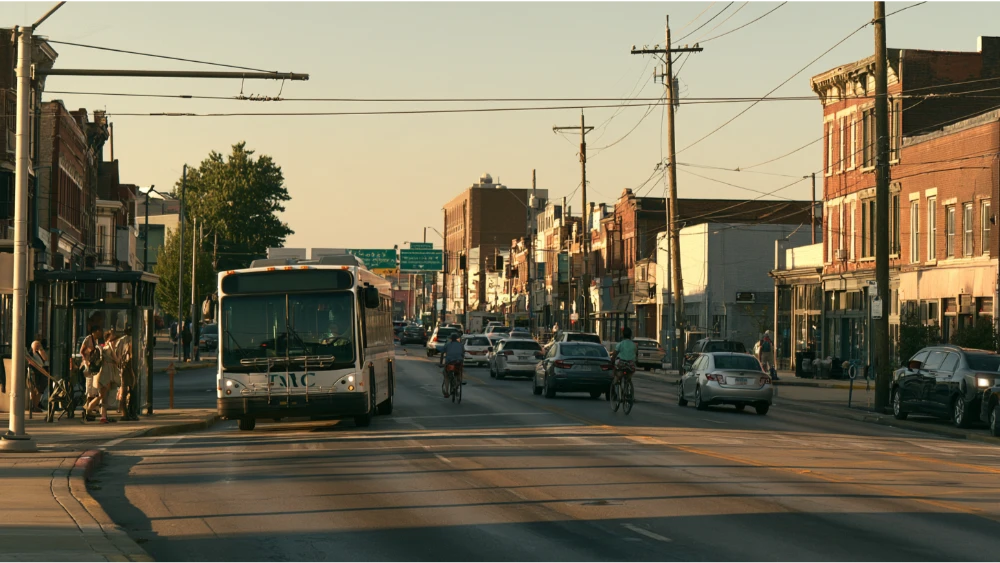
Most people here drive, and the 22.3-minute mean commute reflects that. Ohio River bridge crossings toward the Indiana border are the wild card if your job is on the other side.
TARC launched a fully redesigned bus network on August 2, 2026, so any route map published before that date is obsolete. The new network runs 15-minute weekday service on several principal corridors, 30-minute service on others and 60-minute or limited service elsewhere. Some areas lost direct service, including the airport terminal. A single local fare is $2.25, with transfers included for two hours on card or mobile fare but not cash. Passes run $5 for 24 hours, $25 for seven days and $75 for 30 days. Car-free or one-car living can work along selected corridors of the city, but test your exact home-to-work, school, grocery and hospital trips in the current TARC planner first. For riding and walking, the Louisville Loop is planned at more than 100 miles. Louisville Muhammad Ali International Airport reported a record 41 nonstop destinations as of May 28, 2026.
Schools and Universities in Jefferson County
Jefferson County Public Schools enrolled 94,861 students including pre-K as of October 1, 2025, and describes itself as the 30th-largest U.S. school system with 6,818 certified teachers. The nearest school is not automatic. JCPS runs assignment, choice, transfer and magnet processes, so verify placement with the official student assignment address lookup before you sign anything. For the 2027 to 2028 school year, the elementary, middle, high school and magnet application window runs November 2 through December 18, 2026, which matters a lot if you’re arriving in late 2026. For performance data, use the Kentucky School Report Card, updated each fall.
On the higher education side, the University of Louisville anchors the university district just south of downtown, with additional colleges and technical programs spread across the city.
Hospitals and Healthcare in Louisville
Advanced emergency and specialty care concentrates in the downtown medical district, with large hospitals east of the city center as well.
- UofL Health, UofL Hospital: Downtown academic hospital and the region’s only ACS-verified Level I adult trauma center, with burn, stroke and emergency psychiatric services.
- Norton Hospital: 605 beds downtown under Norton Healthcare, a regional referral center tied to pediatric and high-risk maternity care.
- Norton Children’s Hospital: 300 beds and Louisville’s only Level I pediatric trauma center.
- Baptist Health Louisville: 490 beds covering emergency, heart, stroke, cancer, orthopedic, maternity, behavioral health and rehabilitation.
- Robley Rex VA Medical Center: Currently on Zorn Avenue with area clinics. Its replacement facility on Brownsboro Road is scheduled for construction completion in April 2027.
Confirm insurance networks and provider availability directly before you assume your plan travels with you.
Things to Do in Louisville: Kentucky Derby, Parks, and Outdoor Recreation

Louisville Tourism lists more than 120 attractions, but that’s the visitor version. As a resident, your ordinary weeknight looks more like a walk in Cherokee Park, a game or a show, or dinner on a corridor near your house. Weekends open up: Waterfront Park and the Big Four Bridge, the Louisville Zoo, the Kentucky Science Center, the Speed Museum next to the University of Louisville campus, or Iroquois Park and Shawnee Park for green spaces with real hills and old trees. Several of the city’s signature parks came from the Olmsted firm, which is why the older neighborhoods around them feel so deliberately laid out. The Louisville Loop, planned at over 100 miles, keeps stitching those parks together with shared-use trail.
Then there’s the calendar. Churchill Downs and Derby-season racing dominate spring, and Derby Day fills the infield for what locals will tell you is the most exciting two minutes in sports. The Kentucky Derby Museum at the track keeps that rich history available year-round. The Kentucky State Fair lands in August, the St. James Court Art Show fills Old Louisville’s streets in the fall, and Louisville Cardinals athletics carry the winter. Museum Row, Whiskey Row, the Muhammad Ali Center, the Frazier History Museum and the Louisville Slugger Museum & Factory anchor the cultural amenities downtown. Your access to all of it shifts by neighborhood, so factor that in.
Entertainment and Local Events Worth Building a Year Around
The Louisville Orchestra performs downtown at the Kentucky Center, and touring productions land within the same few blocks. Fourth Street Live concentrates bars, restaurants and concerts in a single downtown block, and Louisville Slugger Field hosts minor league baseball a short walk from Waterfront Park. The two weeks before the Kentucky Derby belong to the Kentucky Derby Festival, when Thunder Over Louisville takes over the riverfront and the Pegasus Parade closes downtown streets. Between those, neighborhoods run their own street festivals, farmers markets and porch concerts, and that everyday local culture is usually what turns a new city into home.
Where Do You Eat? Louisville Restaurants and Southern Staples
Bardstown Road and Baxter Avenue give you the longest run of restaurants, bars and music rooms in the city. Frankfort Avenue is the quieter counterpart, with dining and shopping in a walkable stretch. NuLu concentrates newer restaurants near downtown. Order a Hot Brown once because you should, the open faced sandwich the Brown Hotel invented, then work through the bourbon history and distillery experiences at your own pace. Southern comfort cooking shows up on menus all over town. South Louisville’s international markets and family-run kitchens, many of them run by neighbors who own businesses a few blocks from home, are where you stop feeling like a visitor.
What Is Louisville Weather Like, Including Severe Weather?
Four true seasons. Use NOAA’s 1991 to 2020 climate normals for Louisville Muhammad Ali International Airport as your baseline rather than any single unusual year. Summers are hot and humid, winters bring cold snaps with occasional snow and ice, and spring and summer carry thunderstorm and severe weather risk.
What matters more is the property. Check FEMA flood maps, ask about drainage and sewer history, look for basement moisture, note tree condition near the roof, and ask how the HVAC performs in July and January.
New-Resident Paperwork: Driver’s License, Taxes, and Utilities
If you’re moving cross country, stack these tasks into your first month rather than letting them pile up. You don’t need a personal move coordinator for any of it, just a checklist and a calendar.
- Week one: Start Louisville Water service (the current page lists a $30 activation fee, with a $100 deposit possible based on utility score) and set up LG&E for gas and electric. Renters, check the lease first for which accounts are yours.
- Week one: Confirm Louisville MSD wastewater and stormwater billing. A 3.9% Jefferson County residential rate increase took effect September 1, 2026.
- Week two: Register your out-of-state vehicle. State regulation provides a 15-day window, though summary pages have shown conflicting language, so verify current requirements.
- Weeks two to four: Get a Kentucky driver’s license within 30 days of establishing residency.
- Before your first paycheck: Understand Kentucky’s 3.5% individual income tax for 2026, the 6% state sales tax with no local sales tax, and the city occupational tax at 2.2% for residents and 1.45% for nonresidents. Ask your employer or a tax professional how withholding applies to you.
- Anytime: Look up trash, recycling and yard-waste schedules for your address in MyLouisville.
Rates and deadlines change. Verify each one against the official page before you rely on it.
Pros and Cons of Living in Louisville
What works:
- Housing costs well below the national average (housing price parity of 81.1 in 2023)
- A short 22.3-minute mean commute
- Deep healthcare and logistics employment
- Neighborhoods with a small town feel inside a city of nearly 800,000, which is what people usually mean when they call Louisville friendly
What to weigh:
- Wages below the national mean, $29.96 versus $33.54 per hour in May 2025
- Car dependence outside selected corridors, especially after the August 2026 TARC redesign
- Older housing stock and lead-safe registration requirements
- State income tax plus a local occupational tax
- Derby and event traffic, humid summers and severe weather season
Frequently Asked Questions
Is Louisville, Kentucky a good city to live in?
It suits people who want lower housing costs, a short commute and city amenities without coastal pricing. Overall metro prices ran about 6% below the U.S. average in 2023, with housing about 19% below. If you need extensive transit or newer construction, look closely at specific corridors first.
How much do you need to make to live comfortably in Louisville, Kentucky?
Use the 30%-of-income guideline against real rent. At a median gross rent of $1,149, you’d want roughly $46,000 a year in gross income for housing alone to stay under that threshold, more for a larger unit. Run your own figures through our Rent Calculator.
Is Louisville liberal or conservative?
Jefferson County’s voting patterns have generally differed from much of the rest of Kentucky, and the broader metro includes a wide mix of political views. Check recent county-level election results from official sources if this factors into your decision.
What are the pros and cons of living in Louisville, KY?
Pros: affordable housing, a 22.3-minute mean commute, healthcare and logistics jobs, strong parks and food. Cons: below-average wages, car dependence in most areas, older housing that needs inspection, and a 3.5% state income tax plus a 2.2% resident occupational tax.
Your Next Step Before Moving to Louisville
Run the numbers first. Our Rent Calculator, Cost of Living Calculator, Rent vs. Buy Calculator and Mortgage Calculator will tell you more in ten minutes than another week of browsing. Then browse rentals across the U.S. and start comparing real properties in the neighborhoods you’ve shortlisted.
Own property anywhere in the country? We’ve been broker-owned and full service since 2009, with 683 units and $187M in assets under management across 34 states as of early 2025 and a stated 98% occupancy rate. Tenant placement, tenant screening, rent collection, property inspections, rental permits, 1099s and court evictions, handled without you lifting a finger. Call (800) 716-4950, text (608) 207-0657 or email info@ktrents.com and we’ll respond within 24 hours. YOUR RENTAL. YOUR WAY.