

Missouri
Rental and for-sale inventory across cities we serve in this state.
Moving to Missouri? The Ultimate 2026 Guide
Explore
Cities in this state
As of 2026, moving to Missouri offers a stable economic outlook with job growth projected at 2.5%. The cost of living remains below the national average, and housing costs are competitive. Missouri’s diverse regions offer various lifestyle options, from urban centers to rural areas, supporting a dynamic living experience.
The Ultimate Guide to Moving to Missouri: Insights and Essential Information for 2026
What to Expect in Missouri by 2026: Economic and Lifestyle Projections

Economic Growth and Job Market
By 2026, Missouri’s economy is expected to grow at a rate of 2.5% annually, aligning closely with the national average. Job opportunities are set to increase, with key sectors like healthcare and technology expanding by 3%. This growth signifies a promising environment for new residents seeking employment. In particular, Kansas City and Jefferson City are anticipated to be hotspots for tech startups and healthcare innovations, offering lucrative job prospects and the potential for career advancement. Companies in these regions are focusing on enhancing work-life balance and offering competitive salaries, which could make moving to Missouri an attractive proposition for professionals nationwide.
Cost of Living Adjustments
Missouri offers a cost of living that is approximately 10% lower than the national average. In 2026, the median household income is projected to be $60,000, supporting affordability. Housing costs, particularly in rural areas, remain competitive, making Missouri an attractive option for cost-conscious movers. The state’s geography, with its rolling hills and proximity to the Mississippi River, also provides homeowners with scenic views at a fraction of the cost compared to other states. Additionally, affordable utilities complemented by a low property and sales tax make living in Missouri economically favorable for both young families and retirees.
Lifestyle and Community Developments
Community developments in Missouri are focused on enhancing quality of life. By 2026, urban areas like Kansas City and St. Louis will see a 5% increase in amenities such as parks and cultural institutions, including the Saint Louis Art Museum. These improvements contribute to Missouri’s thriving arts scene and family-friendly environments. Moreover, recreational opportunities in state and national parks like Katy Trail State Park and Mark Twain National Forest are being expanded to include more facilities for hiking, mountain biking, and outdoor recreation. These enhancements not only bolster Missouri’s appeal but also foster a sense of community and active lifestyle for residents.
Financial Considerations for New Residents: Budgeting for Your Move
Understanding Missouri’s Tax Structure
Missouri utilizes a progressive income tax system with rates ranging from 1.5% to 5.4% in 2026, based on income levels. Property taxes in Missouri are also relatively low, averaging 0.93% of home value, which is below the national average, easing the financial burden on homeowners. Additionally, the state’s low cost of living extends to affordable housing and utilities, making it an economically viable choice for families and individuals alike. The potential for rural poverty is mitigated by these factors, as even the rural areas offer economic stability through low taxes and cost-efficient living.
Housing Market Trends
The housing market in Missouri is stable, with a projected increase in home values of 3% annually through 2026. The median home price in Missouri is estimated to be $220,000, offering affordable housing options compared to larger cities nationwide. This makes Missouri appealing for both buyers and renters. Whether settling in the heart of Kansas City or opting for the quieter rural Missouri, potential homeowners can benefit from favorable mortgage rates and a wide array of housing styles, including the iconic brick homes and modern suburban developments.
Managing Moving Expenses
Relocating to Missouri involves several key expenses, with average moving costs ranging from $1,000 to $5,000, depending on distance and household size. Planning a budget that includes moving services and initial living expenses is crucial for a smooth transition. To economize, it’s advisable to seek quotes from multiple moving companies and negotiate for the best rates. Additionally, scheduling your move during early summer months can help avoid peak moving season price hikes, ensuring a cost-effective and efficient relocation process.
Exploring Missouri’s Diverse Regions: Finding Your Ideal Community
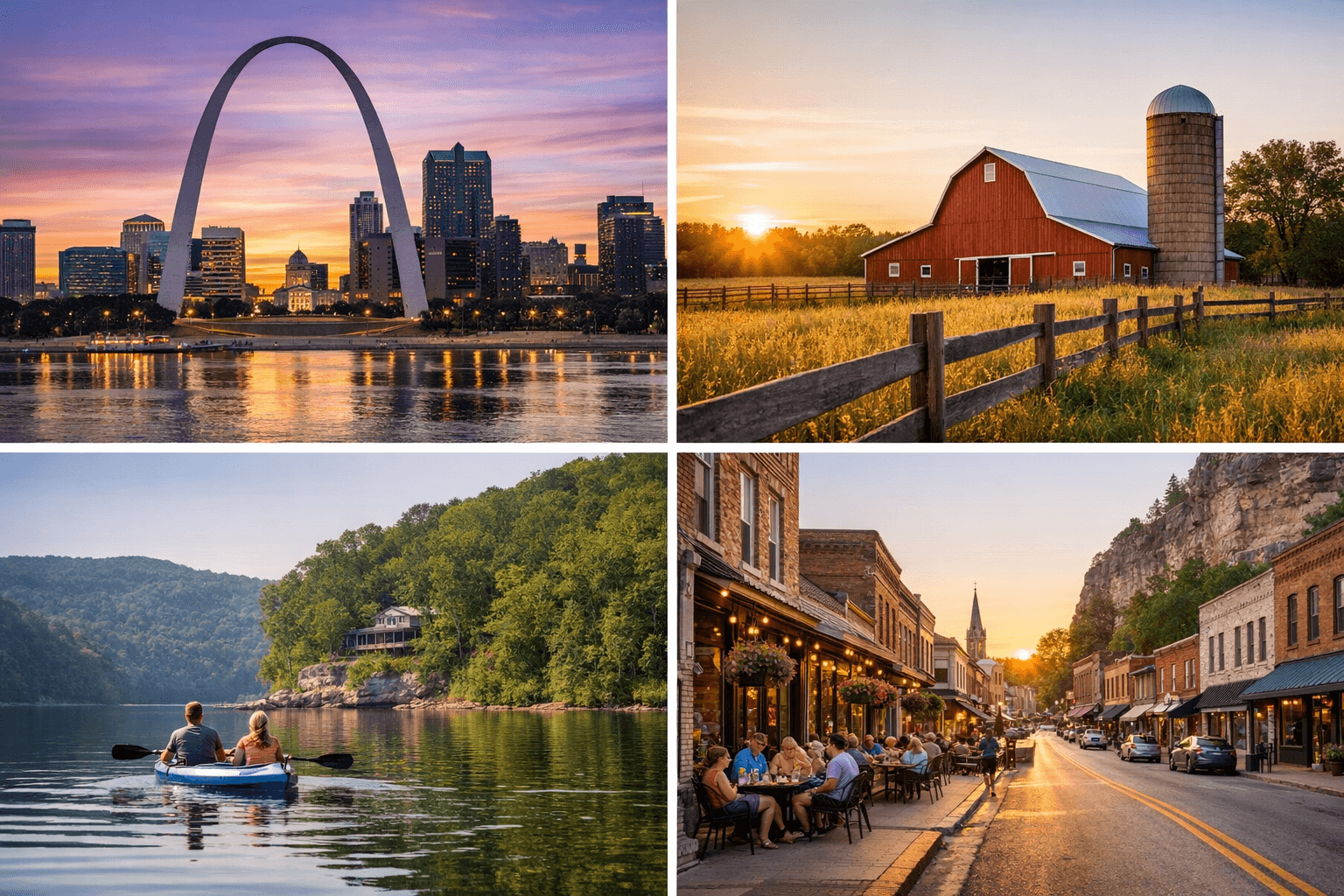
Urban vs. Rural Living: Pros and Cons
Urban areas like Kansas City and St. Louis offer vibrant cultural scenes and job opportunities, attracting 60% of new residents. Conversely, rural Missouri provides a slower pace of life with lower living costs, appealing to those seeking tranquility and proximity to natural attractions like the Ozark Mountains. For those inclined towards outdoor recreation, regions near Table Rock Lake and Elephant Rocks State Park provide ample opportunities for hiking, fishing, and camping, making rural Missouri an ideal choice for nature enthusiasts.
Regional Climate and Geography
Missouri’s climate is characterized by hot summers and cold winters, with average temperatures ranging from 30°F in January to 90°F in July. The state’s geography includes diverse landscapes such as the Mississippi River and Mark Twain National Forest, offering varied outdoor recreation options. Residents should prepare for humid summers, which, while offering plenty of sunshine for outdoor activities, can also lead to indoor air quality issues like mold growth. It’s essential to invest in dehumidifiers and conduct regular home inspections to mitigate health problems associated with humidity.
Local Culture and Amenities
Missouri’s cultural offerings include the Gateway Arch National Park and the Kansas City Chiefs, contributing to its appeal. In 2026, local amenities are expected to grow by 4%, enhancing quality of life. This includes increased access to arts, entertainment, and dining options like the famous Louis style pizza. The culinary scene is further enriched by German fare and other delicious food options, reflecting the diverse heritage of the state. Residents can also enjoy events at the Nelson Atkins Museum and the thriving arts scene in urban areas, ensuring a well-rounded lifestyle.
Navigating the Moving Process: From Preparation to Settling In
Creating a Moving Timeline
Establishing a moving timeline is essential, with a recommended planning period of 3-6 months. This timeframe allows for arranging logistics, securing housing, and packing efficiently. Early preparation helps mitigate stress and ensures a seamless relocation experience. Creating a detailed checklist, prioritizing tasks such as notifying utility companies and updating address information, can streamline the process and prevent last-minute hurdles. Utilizing online platforms for reminders and organizational tools can further aid in maintaining a structured approach to your move.
Finding Reliable Moving Services
Identifying reliable moving services is critical, with an average cost of $25 per hour for labor. Researching companies with high customer ratings and obtaining multiple quotes is advised. In 2026, online platforms facilitate easy comparison of services and prices. It’s also beneficial to look for movers who offer insurance coverage for your belongings, providing peace of mind during transit. Reading reviews and seeking recommendations from locals or online communities can help identify trustworthy service providers.
Registering and Settling Into Your New Home
Upon arrival, new residents should prioritize registering vehicles and obtaining a Missouri driver’s license within 30 days. Establishing utility services and familiarizing oneself with local resources like the Columbia College and healthcare facilities are vital steps in settling into the community. Engaging with local clubs or community groups can foster social connections, making the transition smoother and more enjoyable. Additionally, exploring local attractions like the Gateway Arch and participating in community events can provide a deeper understanding and appreciation of your new surroundings.