

Reno, Nevada
Homes for rent and for sale — search the map or open the full city SEO catch-all page.
Reno, Nevada
Moving to Reno, Nevada offers no state income tax, a diversified job market with 3.5% unemployment, and Lake Tahoe roughly 45 minutes away, but the cost of living runs about 18.6% above the national average with average apartment rents near $1,769. Reno is a strong move for outdoor-oriented households or remote professionals leaving high-tax coastal states. It is not a budget relocation compared to the national average.
Moving to Reno, Nevada
Moving to Reno makes sense if you want Sierra recreation, a job market that has diversified well beyond gambling and tourism, no state income tax, and you’ve budgeted honestly for housing. It stops making sense if you’re expecting a cheap desert town. Reno’s cost of living runs above the U.S. average, and housing is the reason. Lake Tahoe sits about 45 minutes away, which is part of the appeal and part of the price.
This guide is written for renters, relocating households, and remote professionals doing real homework. We’ve placed residents across 34 states (as of January 2025), and we write these guides the way we’d want one written for us: cost, jobs, schools, neighborhoods, hospitals, weather, and what you’ll actually do on a Saturday.
Quick Answer: Is Moving to Reno Nevada a Good Idea in 2026?
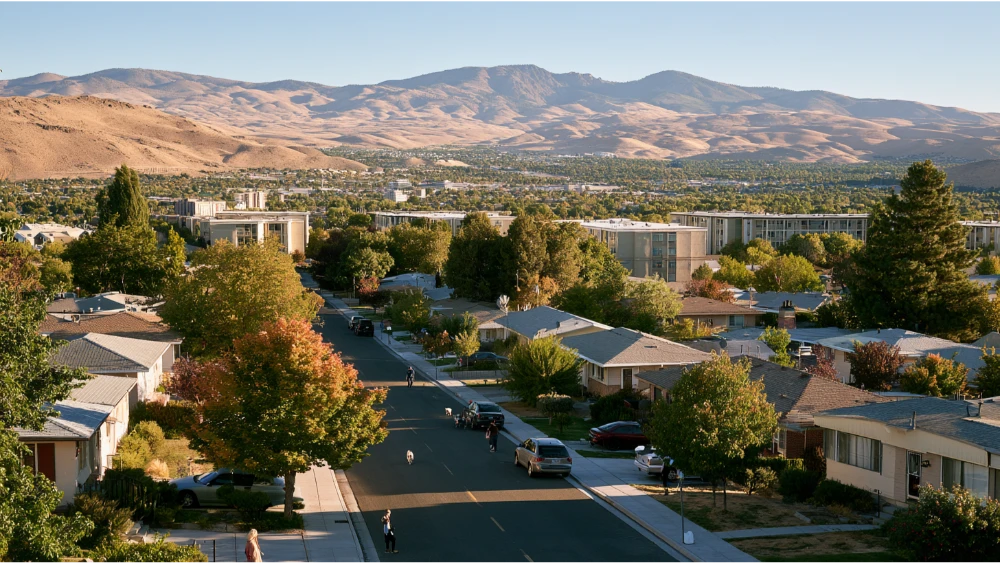
Look harder at Reno if you’re outdoor-oriented, work remotely, are leaving a higher-tax state, or want a midsized city with mountain views in the windshield. The high-desert climate delivers four distinct seasons and a reputation for well over 300 sunny days a year, and the city is a mix of longtime residents and newcomers arriving from California, Oregon, and beyond.
Think twice if you need a car-free life everywhere you go, if your housing budget is tight, or if freezing nights and elevation wear on you. One distinction to carry through this whole article: Reno city and the Reno-Sparks metro area (Washoe, Storey, and Lyon counties) are different geographies with different numbers, and the advice changes depending on which one you’re reading. Honest summary: relocating here is a great idea if the Sierra lifestyle is the point. Reno is a good deal relative to coastal California. It is not a good deal relative to the national average.
Reno at a Glance: The Biggest Little City by the Numbers
Here’s the baseline before we get into tradeoffs.
| Measure | Figure | Geography and date |
|---|---|---|
| Population | 283,621 (+7.4% since 2020) | Reno city, July 1, 2025 (Census) |
| Median household income | $80,760 | Reno city, 2020–2024, 2024 dollars |
| Median gross rent | $1,556 | Reno city, 2020–2024 (Census) |
| Average apartment rent | $1,769 | Reno MSA, February 2026 (City of Reno) |
| Median owner-occupied value | $548,300 | Reno city, 2020–2024 (Census) |
| Average single-family value | $566,802 | Reno MSA, February 2026 |
| Owner-occupied rate | 49.8% | Reno city, 2020–2024 |
| Mean commute | 20.3 minutes | Reno city, 2020–2024 |
| Elevation | ~4,410 ft (airport climate station) | Reno |
| Unemployment | 3.5% (preliminary) | Reno MSA, August 2026 (BLS) |
Census figures are five-year averages, not what a unit lists for today. Market figures like the February 2026 rent and home values above move fast. Verify current numbers through Census QuickFacts and BLS before you commit.
What Does It Really Cost to Live in Reno, NV?
Reno’s cost of living runs meaningfully above the national average, commonly cited around 18.6% higher, and housing drives nearly all of that gap. One-bedroom asking rents have hovered near $1,725, and roughly half of Reno city households rent, so you’re competing in a deep but active market.
Build your monthly stack honestly. Rent is the headline. Then utilities, which spike in both directions here because summers run hot and winter nights run cold. Then a vehicle: fuel, insurance, registration, and tires that can handle a mountain pass. Then 8.265% combined sales and use tax in Washoe County on everyday purchases, renter’s insurance, and move-in deposits that can be substantial.
Run your actual numbers with our Cost of Living Calculator and Rent Calculator before you commit to a city. A number on a listing page is not a budget.
How Nevada Taxes Change the Math (and Where They Don’t)
Nevada doesn’t impose an individual state income tax on wages or salary, Social Security isn’t taxed at the state level, and there’s no state inheritance tax. Property tax rates generally land under 1% of assessed value. But low taxes on income don’t erase everything: you still owe federal income tax, you still pay 8.265% at the register in Washoe County, and higher rent can quietly cancel out the savings. Confirm current rates at tax.nv.gov.
Is Reno Cheaper Than Las Vegas or California?
Reno typically runs about 7% above Vegas, mostly on housing. Whether it beats your California origin city depends entirely on which city, your housing type, household size, and commute. Someone leaving the Bay Area and someone leaving Bakersfield will reach opposite conclusions.
Should You Rent First or Buy After Moving to Reno?
Rent first. Not because buying is wrong, but because a 6 to 12 month lease lets you test the commute in January, confirm the zoned school, and find out whether you actually use the trails you moved for. It also beats living out of hotels while you scout neighborhoods. The Reno MSA showed roughly two months of supply and 72 median days to contract as of February 2026, with median single-family sale prices in the neighborhood of $490,000. Home prices like that are worth entering with local knowledge, not relocation adrenaline.
Short-term leasing works when your job start date is firm but your neighborhood choice isn’t. Long-term leasing works when you’ve picked your corner of the valley and want stability and a better rate. With about half of Reno city households renting, this is a real market with real inventory, not a holding pattern.
Run our Rent vs. Buy Calculator and Mortgage Calculator side by side. If you own property anywhere in the country, our full-service model covers tenant placement, tenant screening, rent collection, and property inspections.
A Deep Dive Into Reno Neighborhoods and the Reno vs. Sparks Question
Reno has more than twenty distinct areas, and they differ in housing stock, road access, and daily rhythm. Compare them by your routine, not by reputation.
| Area | Typical housing | Setting | Commute / road access | Nearby amenities |
|---|---|---|---|---|
| Downtown, Riverwalk, University | Apartments, condos, older homes | City core | Central, transit corridors | Truckee River, walkable blocks, UNR |
| Midtown and Old Southwest | Older single-family, small multi-family | Urban, established | Short hop to downtown | Local restaurants, galleries, arts corridor |
| Northwest and West Reno | Single-family, mixed ages | Foothills, suburban | McCarran and I-80 access | Trailheads, open space |
| South Reno, South Meadows, Double Diamond, Damonte Ranch | Newer single-family, townhomes | Suburban | I-580 corridor | Retail centers; higher price band (South Reno medians have run above $870,000) |
| North Valleys, Stead, Lemmon Valley, Cold Springs | Single-family, newer tracts | Outlying | US-395, longer drive to the core | More affordable band (Panther Valley medians near $414,000) |
| Sparks | Full mix | Adjacent city | I-80, industrial corridor access | Separate municipal and school boundaries |
The rule that matters: verify the school zone, work route, internet availability, and winter road grade at the exact address. Neighborhood names tell you very little once you’re on a specific block.
The Reno Job Market: Logistics, Tech, Healthcare, and Yes, Casinos
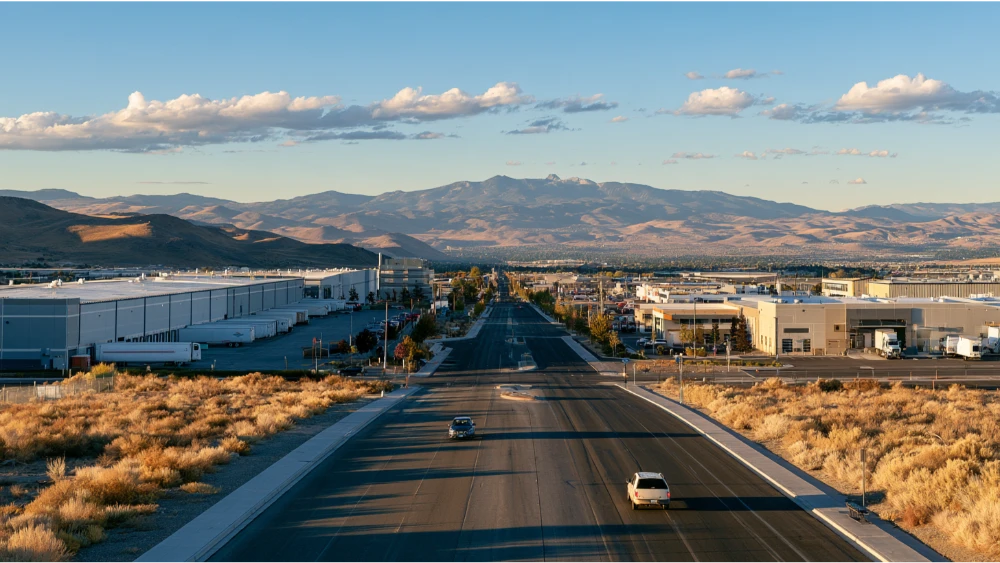
As of August 2026, the Reno MSA reported a preliminary 3.5% unemployment rate and roughly 284,900 nonfarm jobs, up 0.8% year over year. The region has transformed into a logistics and manufacturing hub, with the Tahoe Reno Industrial Center drawing billions in investment, and healthcare and tech employment continuing to expand.
- Trade, transportation, and utilities: 61,300
- Leisure and hospitality: 41,500
- Professional and business services: 35,700
- Education and health services: 34,200
- Manufacturing: 32,000
- Government: 30,100
- Construction: 25,700
Education and health services grew 2.7% year over year, construction 2.4%, manufacturing 2.2%. Leisure and hospitality declined 1.4%, which tells you something about where the economy is heading. Wage context matters: the average hourly wage across Reno-area occupations was $31.02 in May 2025 versus $33.54 nationally. Transportation and material-moving roles make up 11.9% of local employment compared with 8.8% nationally.
For remote professionals, Reno works as a base: a real airport, easy access to Tahoe within an hour, and housing stock that supports long-term leases. We place remote workers in long-term rentals nationwide.
Schools and the University of Nevada, Reno
Washoe County School District serves Reno, and assignment is address-based. Verify the zoned school before you sign the lease, not after. New-student registration generally requires online enrollment, an original birth certificate, immunization records, and proof of residence such as a utility bill or a signed lease.
Washoe County’s extended five-year graduation rate was 83.0% for the 2024–2025 cohort, compared with 84.5% statewide. That’s a five-year rate, not the standard four-year figure. Pull individual school report cards at Nevada Report Card rather than judging an area by reputation. Magnet, charter, and specialized programs exist and run on separate application timelines.
The University of Nevada, Reno reported record enrollment of 24,061 students in fall 2025, which shapes rental demand and the seasonal rhythm of the University district.
Hospitals and Healthcare Access in Northern Nevada
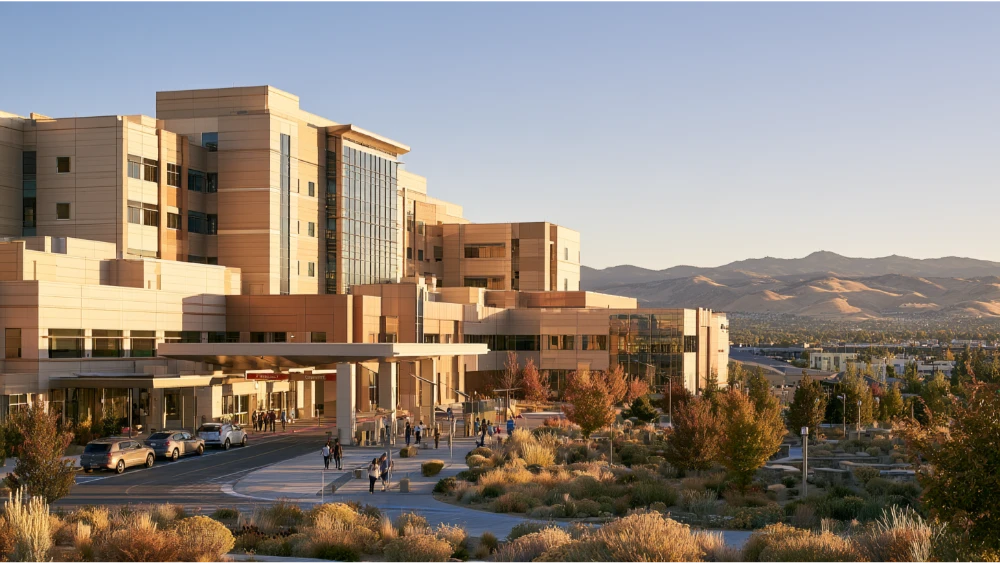
Renown Regional Medical Center identifies itself as the region’s only Level II Trauma Center between Sacramento and Salt Lake City and runs a 24/7 emergency department in Reno. Northern Nevada Medical Center in neighboring Sparks offers emergency, cardiovascular, and surgical services. The VA Sierra Nevada Healthcare System covers northern Nevada and northeastern California through its Reno medical center and nine community-based clinics.
- Confirm insurance-network participation before you move, not after.
- Confirm new-patient availability with any specialist you depend on.
- Measure drive time from the specific address you’re considering.
- Compare Medicare-certified hospitals through the federal Care Compare tool instead of unsourced “best hospital” lists.
Getting Around Reno: Commutes, Public Transportation, and the Airport
The mean commute for Reno city workers was 20.3 minutes (2020–2024 Census). That’s an average, and it doesn’t capture trips out to the industrial corridors or over the hill toward Tahoe. RTC RIDE reports 70 buses and 26 routes across Reno, Sparks, and parts of Washoe County, while RTC planning documents describe 18 local routes plus two RAPID routes with 10, 30, or 60-minute headways and a $2 one-way fare. FlexRIDE provides on-demand service in Somersett, Verdi, South Meadows, North Valleys, Spanish Springs, and parts of Sparks.
Reno-Tahoe International Airport reports 10 airlines, 20-plus nonstop destinations, and more than 130 daily arrivals and departures, though routes shift seasonally. Car-free living is workable along central corridors. Everywhere else, it’s a route-by-route question, not a citywide answer.
Reno Weather: Four Seasons, Cold Winters, and 300 Days of Sun
Under the 1991–2020 normals, Reno averages about 65.1 days a year at or above 90°F and 121.9 nights at or below freezing, with an annual mean near 55°F at a climate station sitting around 4,410 feet. Annual snowfall averages roughly 22 inches, which arrives in distinct events rather than a constant blanket. If you’ve been living somewhere without real seasonal changes, that contrast is part of the draw.
What that means day to day: large swings between afternoon and night, very dry air, wind, and mountain-pass conditions on the Tahoe routes in winter. Altitude adjustment is real if you’re coming from sea level. Wildfire smoke can affect air quality during parts of the year. Check wildfire exposure, current air-quality resources, and FEMA flood maps for the specific property you’re considering. No neighborhood is “safe from” fire or flooding, and anyone who tells you otherwise is selling something.
Fun Things to Do in Reno: Lake Tahoe, Ski Resorts, and the Truckee River
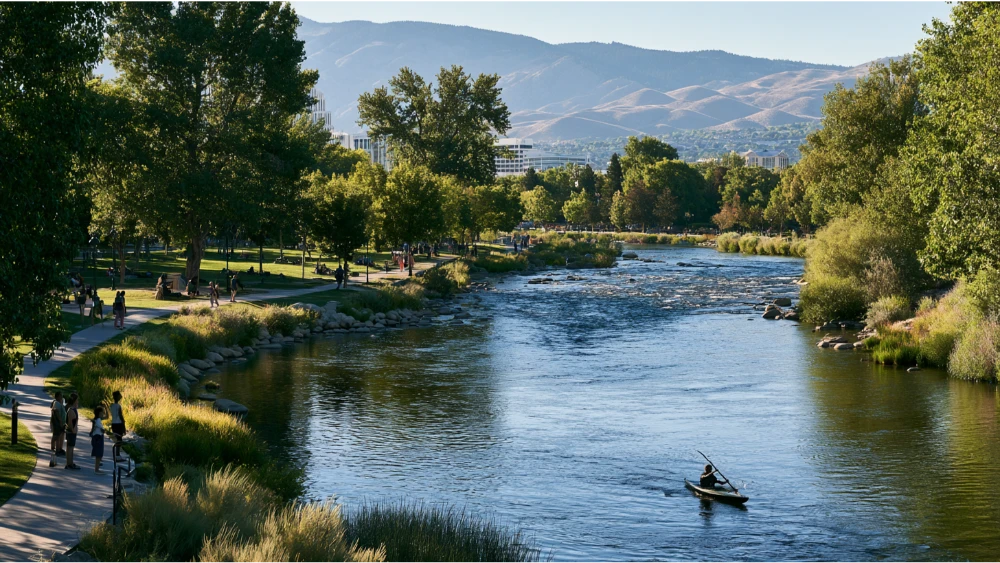
The Truckee River runs straight through the city core, with Wingfield Park and the Truckee River Whitewater Park in the downtown area for kayaking, whitewater rafting, tubing, and fishing. The City reports 87 park facilities and more than 140 miles of trails in the Reno area. Lake Tahoe, the largest alpine lake in North America and one of the most beautiful lakes in the world, is roughly a short drive of 45 minutes, with close to twenty ski resorts in the broader region and hundreds of miles of Tahoe National Forest trails for summer hiking and mountain biking. Winter sports here run from downhill skiing to ice skating, and the outdoor activities don’t stop when the snow melts.
Culture has grown with the city. Midtown carries local restaurants, galleries, and an independent business scene with a laid back feel that Reno locals guard closely. Downtown Reno is where visitors line up under the famous Reno arch for a photo, and the Nevada Museum of Art anchors the arts side of what Reno offers. Museums, live music, and the downtown casino and entertainment district are one option among many here, not the whole identity anymore.
- Artown, a month-long summer arts festival
- Reno Rodeo
- Hot August Nights classic car festival
- Great Reno Balloon Race each September, which locals tell friends not to miss
- Reno Air Races at Stead Airport
- Reno River Festival on the Truckee
Day Trips: Virginia City, Carson City, and Beyond
Virginia City is a small town built on mining-era history, and Carson City gives you the state capital in under an hour. Explore enough of them and you’ll understand why so many people call this a fantastic place for a life built around weekends outdoors. That’s the feel-like-a-local payoff of living in Reno year round instead of visiting once.
Your Reno Relocation Timeline: DMV, Leases, and the First 30 Days
- 60 to 90 days out: Confirm your job location and drive the commute route. Compare rents by ZIP code. Verify the zoned school. Check specialist access. Build a full monthly budget with our Cost of Living Calculator.
- 30 days out: Sign the lease. Gather DMV documents. Transfer medical and school records. Set up utilities and internet, and line up renter’s insurance.
- First week: Photograph and document the rental’s condition before you unpack. Test the commute at rush hour. Locate urgent care, the hospital, groceries, and a pharmacy.
- First 30 days: Nevada generally requires a Nevada driver’s license and vehicle registration within 30 days of establishing residency. Bring proof of identity, your existing license, vehicle documents, Nevada insurance, a smog check where required, and your current odometer reading.
Nevada renter basics (general information, not legal advice, per NRS 118A): deposits including last month’s rent are generally capped at three months’ rent. Landlords generally have 30 days after tenancy ends to provide an itemized accounting and return what’s owed. Rent increases generally require 60 days’ written notice (30 days for periodic tenancies under one month). Late fees generally can’t be imposed before the third calendar day after rent is due.
Frequently Asked Questions
Is the Reno area a good place to retire?
It can be. No state income tax, Social Security exempt at the state level, no inheritance tax, property tax rates generally under 1% of assessed value, and Level II trauma care in the region. Offsetting that: housing costs and winter driving on mountain routes.
Is Reno very dry?
Yes. It’s a high-desert climate at roughly 4,400 to 4,500 feet with low humidity and well over 300 sunny days a year, plus about 22 inches of snow annually. Expect dry skin, more water than you’re used to drinking, and occasional wildfire smoke.
Is Reno a fast growing city?
Reno city’s population reached an estimated 283,621 as of July 1, 2025, up 7.4% from the 2020 base. Growth has been driven by logistics, manufacturing, and tech investment, including the Tahoe Reno Industrial Center, and the community has absorbed newcomers steadily.
What is the cost of living in Reno, NV?
Roughly 18.6% above the U.S. average and about 7% above Las Vegas, driven mostly by housing: average apartment rent of $1,769 and average single-family value of $566,802 (both Reno MSA, February 2026).
Your Rental. Your Way. Next Steps With KT Rents
If you’re renting: run the Rent Calculator, Rent vs. Buy Calculator, Mortgage Calculator, and Cost of Living Calculator before you sign anything. Then browse rental listings and submit an application.
If you own property, in Reno or anywhere else: we’re a full-service, broker-owned property management company operating nationwide since 2009, managing 683 units across 34 states with $187M in assets under management (as of early 2025) and a reported 98% occupancy rate. Tenant placement, tenant screening, rent collection, property maintenance, rental permits, 1099s, property inspections, court evictions… all without the owner lifting a finger, for about the price of a cup of coffee and a donut per day. Call (800) 716-4950, text (608) 207-0657, or email info@ktrents.com. We respond within 24 hours.