

Akron, Ohio
Homes for rent and for sale — search the map or open the full city SEO catch-all page.
Akron, Ohio
Moving to Akron, Ohio means settling into a midsize city with a cost-of-living index around 93.9, a median home value of $122,000, and an average commute of just 22 minutes. The city offers strong healthcare and education employers, over 125 miles of trails in nearby Cuyahoga Valley National Park, and neighborhoods that suit a range of budgets. The right fit depends on your commute, school needs, and housing priorities.
Moving to Akron, Ohio
Moving to Akron, Ohio means landing in a midsize Northeast Ohio city with affordable housing, a short average commute (about 22 minutes), and strong healthcare and education employers. You also get unusual access to parks and trails for a city this size, with Cuyahoga Valley National Park sitting right between Akron and Cleveland. We work with people relocating across the country, and our advice here is simple: there is no single “best” Akron neighborhood. The right address depends on your commute, budget, schools, healthcare needs, and daily routine. This guide walks you through the numbers, the many neighborhoods, and the paperwork so you can decide with your eyes open.
Akron, Ohio at a Glance: Population, Cost, and Lifestyle
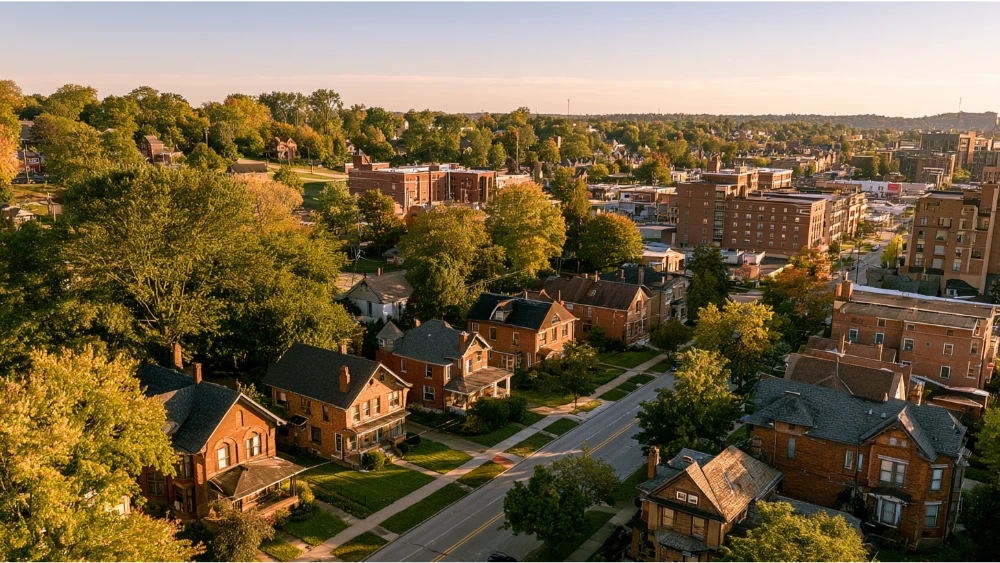
Akron is an established midsize city, not a Cleveland suburb and not a small town. Still, it keeps a certain small town charm thanks to friendly neighbors and walkable districts. Here are the core figures to anchor your planning before moving to Akron.
- Population: 189,691 residents (July 2025 Census estimate), down 0.4% from the April 2020 base.
- Households: 84,734, averaging 2.18 people (2020-2024 ACS).
- Median household income: $48,076 in 2024 dollars (2020-2024 ACS).
- Mean commute: 22.2 minutes (2020-2024 ACS).
- Climate: humid continental, with four distinct seasons.
- Cost of living: below the national average, with an index around 93.9.
One distinction matters throughout this article: Akron city data and Akron metro data are different. The metro figures include Summit and Portage counties, so metro job counts are not all within city limits. We’ll flag which is which as we go. Akron’s diverse housing and steady sense of community are a big part of what draws people here, and the rolling hills and scenic views of the surrounding Northeast Ohio landscape add to the appeal.
How Much Does It Cost to Live in Akron?
Housing in Akron is affordable compared to national norms, but you need to understand what the different rent figures actually mean before you budget. These three numbers get blurred together constantly.
| Figure | Amount | What it is |
|---|---|---|
| Median gross rent | $955 | Historical survey median (2020-2024 ACS), not today’s asking rent |
| HUD 2-bedroom FMR | $1,268 | FY2026 program benchmark for housing assistance, not an average |
| Typical asking rent | ~$1,059/month | Varies widely by neighborhood, size, condition, and utilities |
Median owner-occupied home value was $122,000 (2020-2024 ACS), with recent listings running higher. About 36% of Akron’s housing stock was built in 1939 or earlier, which affects heating costs, insulation, and utility bills in older rentals. You’ll also find modern apartments mixed in, so affordable housing comes in more than one form here. Plan for Akron’s 2.5% municipal income tax too, and verify the current rate with the city tax office before you finalize your budget. For many families, the low cost of living here is the main reason moving to Akron Ohio makes financial sense, especially compared with more expensive city markets.
Run your numbers through the KT Rents Cost of Living Calculator and Rent Calculator. They’ll help you build a realistic monthly figure that includes utilities and winter heating, not just base rent.
Renting vs. Buying When You First Move to Akron
Akron is nearly evenly split between owners and renters, with an owner-occupied rate of 50.7% (2020-2024 ACS). That balance makes renting first a reasonable move for most newcomers. You get time to learn how neighborhoods feel at rush hour, in winter, and on weekends before you commit a down payment. It’s also a low cost way to test which part of the city fits your routine.
Older housing is another reason to rent while you look. A lot of Akron’s stock predates 1940, so when you do shop to buy, you’ll want to inspect heating systems, windows, insulation, and the basement for moisture. Renting first lets you explore which streets and housing types fit you. When you’re ready to compare, our Rent vs. Buy Calculator and Mortgage Calculator lay out the numbers side by side.
Best Places to Live: Family Friendly Neighborhoods and How to Choose One
Skip the “best and worst” lists. Choose based on factors you can measure: commute, housing type, transit access, trail and park access, school assignment, healthcare proximity, and budget. Here’s a factual snapshot of some of the best places and many neighborhoods worth investigating across the city.
| Area | What to know |
|---|---|
| Downtown Akron | Lofts and apartments near arts venues, dining, government offices, hospitals, and university facilities. Downtown Akron puts live music venues, international cuisine, and nightlife within walking distance for people who want real city life. |
| Highland Square | Older housing (much of it pre-1940) with walkable, family friendly neighborhood businesses, local shops, and cultural activity. Highland Square is one of the city’s most social districts. |
| Merriman Valley | Strongest trail access, including Cascade Valley Metro Park and the Towpath Trail, ideal for outdoor activities. |
| Ellet | Akron’s largest neighborhood at 6+ square miles, with traditional and mid-century housing. |
| Firestone Park | Established residential area with substantial mid-century development and nearby parks. |
| University Park | Close to campus; verify parking, noise, and lease terms before signing. |
| North Hill, Kenmore, Goodyear Heights, Wallhaven, West Akron | Compare on housing style, business districts, parks, transit, and commute. |
Evaluating a Family Friendly Area the Right Way
For families, look at objective facts: housing type, nearby park access, and the assigned school for the exact address (use the district’s locator, covered below). For safety, pull the recent, address-level crime rate and other public data yourself rather than trusting a single citywide crime score. Visit the street at different times of day and week. The feel of a block at 8 a.m. on a Tuesday tells you more than any ranking, and it’s the best way to judge whether a community fits your family.
Jobs and the Local Economy in Akron Ohio
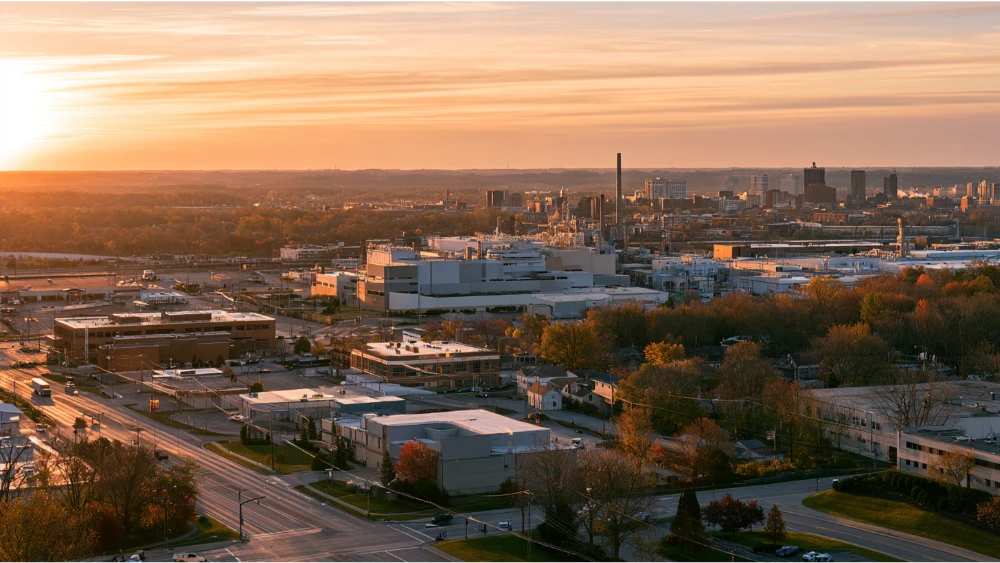
Akron’s economy leans on healthcare, education, manufacturing, and logistics. Known historically as the rubber capital of the world, the city built its name on the rubber industry, and that legacy still shapes the region today. Summa Health and Cleveland Clinic Akron General are major healthcare employers, Goodyear anchors the region’s manufacturing and polymer base, and the University of Akron (200+ degree programs) serves as both an educational and economic hub. These many industries give the local job market more stability than many comparable Ohio cities.
The metro numbers (Summit and Portage counties combined) show a preliminary unemployment rate of 3.7% and roughly 338,400 nonfarm jobs in August 2026. The largest sectors are trade, transportation and utilities (67,500), education and health services (61,800), and professional and business services (47,700). The mean hourly wage was $30.49 in May 2025, below the national $33.54. Remember that these are metro figures, so not every one of those jobs is inside Akron city limits.
Getting Around: Commutes, Transit, and the Airport
Most Akron residents drive. Public transportation exists but is limited, so plan on a car for cross-city, suburban, and regional trips. The average commute runs about 22 minutes. METRO Regional Transit Authority provides bus service in Summit County, with a general fixed-route fare around $1.25 (recheck current fares before you rely on them).
Akron-Canton Airport currently lists four airlines and 24 nonstop destinations, though routes are seasonal and change. Columbus, Cleveland, and their employment centers are a reasonable regional drive to the south and north. Going car-free is possible, but check your exact home-to-work route and the evening and weekend bus schedule before you sign a lease.
Schools, Private Schools, and Higher Education
Akron Public Schools serves more than 19,000 students across 48 buildings. School assignment is address-based, so if a specific school matters, enter the home address in the district’s school locator before you sign a lease. Don’t assume a nearby school is your assigned one.
New-student registration generally requires a birth certificate, current immunization record, a parent or guardian photo ID, and two proofs of residency (a lease counts). Specialty programs include arts, STEM, International Baccalaureate, and early-college options, and open enrollment for 2027-2028 runs October 1 through December 15, 2026 (the window changes annually and admission isn’t guaranteed). Private schools and charter schools have separate requirements, so research those directly if they’re part of your plan. For quality data, use the official Ohio School Report Cards rather than one commercial rating. The University of Akron rounds out the picture with 200+ degree programs for families with college-bound students.
Weather, Green Spaces, Outdoor Activities, and the Akron Ohio Food Scene

Akron gets all four seasons. Summers are warm and humid, with July averaging about 74°F. Winters are cold and snowy: January averages near 28°F, and normal annual snowfall at Akron-Canton is 47.2 inches (a climate normal, not a single-year forecast). That matters for renting. Ask who handles snow removal, how the unit is heated, whether heating is included in rent, and whether off-street parking comes with the lease.
The payoff for the winters is the outdoors. Cuyahoga Valley National Park covers about 32,950 acres with more than 125 miles of trails, no entrance fee, and over 3 million visits in FY2025. Summit Metro Parks adds around 150 miles of trails and plenty of green spaces, including Goodyear Heights (about 400 acres) and Firestone Metro Park, so outdoor activities are easy to find year-round. Winter brings ice skating, and summer brings festivals and farmers markets. For an arts and music night, there’s the Akron Civic Theatre, BLU Jazz+, and Musica, where concerts run all year. The calendar includes the Akron Pride Festival, a minor league baseball team, the zoo, and art museums, all part of the city’s community life and fun for all ages. The food scene is genuinely diverse: neighborhood restaurants, breweries, coffee shops, international cooking, and seasonal markets give newcomers plenty to explore, whether you’re seeking comfort food or something more adventurous.
Your First 30 Days: New-Resident Checklist and Before You Sign a Lease
Before you sign an Akron lease:
- Confirm the total monthly cost, including which utilities are included.
- Verify the assigned school for the exact address if you have kids.
- Test the commute at rush hour, not midday.
- Visit the property and block at different times of day.
- Review maintenance procedures and who you call when something breaks.
- In older homes, inspect heating, windows, the basement for moisture, and parking.
- Confirm pet rules and who handles snow removal.
- Never send money before verifying the listing and lease are real.
Your first 30 days: Ohio gives new residents about 30 days to transfer an out-of-state license, vehicle title, and registration. Summit County is an E-Check county, so qualifying vehicles may need emissions testing. Set up utilities, register kids for school, forward your mail, update voter registration, and line up healthcare providers. Community centers around town are a good way to meet people and settle into a new city quickly. Flag the 2.5% municipal income tax and E-Check rules, and confirm both before you file or register.
Find Your Next Rental and Plan Your Move to Akron
KT Rents is a full-service, broker-owned property management company operating nationwide since 2009, with 683 units across 34 states and $187M in assets under management as of early 2025. We bring that relocation experience to your move even when you’re heading somewhere new to us. Start with the tools: the Rent Calculator, Cost of Living Calculator, and Rent vs. Buy Calculator will tell you what you can actually afford. From there, Browse Rental Properties Near You and submit a rental application when you find a fit. And we don’t disappear after move-in: residents get housewarming gifts and discounts on home goods. Questions? Call us at (800) 716-4950.
Frequently Asked Questions
Is Akron, Ohio a good city to live in?
Yes, if you want affordable midsize-city living with strong park access and steady healthcare and education jobs. The tradeoffs are older housing stock, snowy winters, and limited public transit, so plan for a car and factor in heating costs. For families who value a diverse, affordable community, moving to Akron is an easy case to make, and if that idea fits your life, you may be looking at the right place and the perfect place to land.
What is a good salary in Akron, Ohio?
Average salaries run around $66,000 a year, and a family of four needs roughly $75,353 annually to live comfortably. Against a cost-of-living index near 93.9 (below the national average), those figures stretch further in this town than in many larger cities, which makes Akron a great place for budget-conscious households.
What are some areas to avoid in Akron?
Rather than labeling neighborhoods, evaluate any specific address yourself. Check the recent crime rate and other public safety data for that location, inspect the property condition, test the commute, and visit at different times of day before you decide.
Do I need a car in Akron?
Mostly yes. Public transportation is limited and most residents drive. If you’re considering car-free living, check your exact home-to-work route and the evening and weekend bus schedules before committing to a lease.