

Cleveland, Ohio
Homes for rent and for sale — search the map or open the full city SEO catch-all page.
Cleveland, Ohio
Moving to Cleveland, Ohio gives you more housing for your money than most U.S. cities, with a Census median rent of $894 and a median home value of $94,100, plus nationally ranked hospitals, free museum admission, and over 25,000 acres of Metroparks. Budget for a 2.5% city income tax and real lake-effect winters averaging 63.8 inches of annual snowfall. Rent first, learn the city block by block, and evaluate every address individually before committing.
Moving to Cleveland, Ohio
Cleveland can be a practical move if you want varied housing, major health care, world-class cultural amenities, extensive park access, and neighborhoods with distinct lifestyles. Before you sign anything, pick your rental by the exact address: check the commute, nearby schools, transit, property condition, and local taxes, and be ready for real lake-effect winters. This guide is for someone relocating from elsewhere in the U.S. who’s weighing Cleveland against the alternatives and wants decisions, not a tourism pitch.
Here’s the quick picture:
- Upsides: more square footage for your money than coastal cities, a deep cultural scene, nationally known hospitals, and over 25,000 acres of Metroparks.
- Tradeoffs: four distinct seasons including heavy winters, a 2.5% city income tax, and conditions that change block by block, so citywide averages can mislead you.
One distinction underpins everything below: Cleveland proper is not Greater Cleveland. Population, rent, and wage figures differ by geography and by date, so we’ll label both. A note on us: KT Rents is a nationwide, broker-owned, full-service property platform. We don’t keep a Cleveland office, but we can help you search a confirmed Cleveland rental market and run the numbers before you commit.
Cleveland at a Glance: City, Metro, and Lake Erie Setting

Cleveland sits on the southern shore of Lake Erie in Northeast Ohio. The city proper had an estimated population of 365,379 as of July 1, 2024, down about 1.9% from the 2020 Census base (U.S. Census QuickFacts). That number is the city only, not the metro area, which stretches across several counties and holds many more people.
Why does this matter to you? Because almost every statistic you’ll read online quietly switches between three geographies: Cleveland proper, Cuyahoga County, and the broader metro. A rent figure for the metro can look very different from a rent figure for a single city neighborhood. We’ll tell you which is which.
Locals frame the city by its east side and west side, split roughly by the Cuyahoga River and downtown Cleveland. Ohio City and Tremont sit on the near west side. University Circle and Little Italy anchor the east. Each neighborhood carries its own housing stock and street form, so the city reads less like one place and more like a collection of distinct districts. Lake Erie is a constant presence on the north edge, shaping the lakefront neighborhoods, the summer lifestyle, and the winter weather all at once. If you’re coming from a larger, pricier market like Chicago, the biggest adjustment is usually how much living space the same budget buys here, and how different two Cleveland addresses a few miles apart can feel. Plenty of people moving to Cleveland from Chicago are surprised that the same rent stretches into a full extra bedroom or a private yard.
How Much Does the Cost of Living in Cleveland Really Cost?
Cleveland is often cited as one of the more affordable major U.S. cities, with housing costs well below the national average. That reputation is earned, but don’t reduce the city to “cheap housing.” The honest version of this affordable living story requires dated numbers and a few recurring costs newcomers overlook.
From the Census 2019 to 2023 estimates, Cleveland’s median gross rent was $894 and the median owner-occupied home value was $94,100, against a median household income of $39,187 (Census QuickFacts). Read those as backward-looking Census medians, not current 2026 asking rents or sale prices. Widely shared affordability signals like “rent around $850” and “housing roughly 76% below the national average” point in the right direction, but current listings vary a lot by neighborhood, condition, utilities, and parking. A renovated unit with off-street parking in a walkable corridor isn’t priced like an older walk-up two miles away. The low cost of housing is the headline most people repeat, but the smarter move is to compare specific addresses rather than citywide slogans.
Compared with larger cities on either coast, the cost of living in Cleveland leaves more room in a monthly budget for food, entertainment, and savings. That gap is the main reason people frame Cleveland as affordable living rather than just low cost. Cleveland’s draft 2026 to 2030 housing plan notes that housing costs have been rising faster than many incomes, affordable supply is tight, and much of the older housing stock needs repairs and lead-safe work (City of Cleveland). Condition matters as much as the sticker rent. Stacked against other cities of comparable size, Cleveland tends to hold up well on that monthly math.
Taxes and Recurring Costs Newcomers Miss
Three recurring costs catch people off guard:
- Cleveland municipal income tax: 2.5% in 2026, on top of state and federal (CCA).
- Cuyahoga County sales tax: 8.00% in 2026 (Ohio Department of Taxation).
- Property tax is parcel- and district-specific, often cited around 1.6% but genuinely variable. Use the county’s own estimator rather than one citywide percentage (Cuyahoga County Fiscal Officer).
Before you commit to any address, run the Cost of Living Calculator and Rent Calculator on our site so your budget reflects your actual rent, utilities, parking, and that 2.5% city tax, not a citywide guess. Factoring the city income tax into your cost of living early keeps that monthly number honest.
Renting vs. Buying After Moving to Cleveland Ohio
For most people relocating here, renting first is the smart call. You learn the city block by block before you sink money into a house, and you keep the flexibility to move if your commute or neighborhood fit isn’t what you expected. Renting first is especially sensible for anyone moving to Cleveland Ohio from out of state who hasn’t lived through a local winter yet.
Cleveland’s older housing stock is part of the appeal and part of the risk. The city has many historic homes with character you won’t find in newer suburbs, but age shows up in heating systems, insulation, window condition, and ongoing repairs. Four distinct seasons put that older stock through real stress every year. Renting lets you live with a property through a Cleveland winter before deciding whether to buy one like it.
Keep the historical Census median home value ($94,100 for 2019 to 2023) separate from active listing prices, which move quickly and vary by neighborhood and condition. If buying is on your horizon, model it honestly first. Run our Rent vs. Buy Calculator and Mortgage Calculator to compare scenarios with real inputs. We believe residents deserve to feel at home, not simply housed, and that starts with not rushing into the wrong purchase.
How Do You Choose Among Cleveland Neighborhoods?
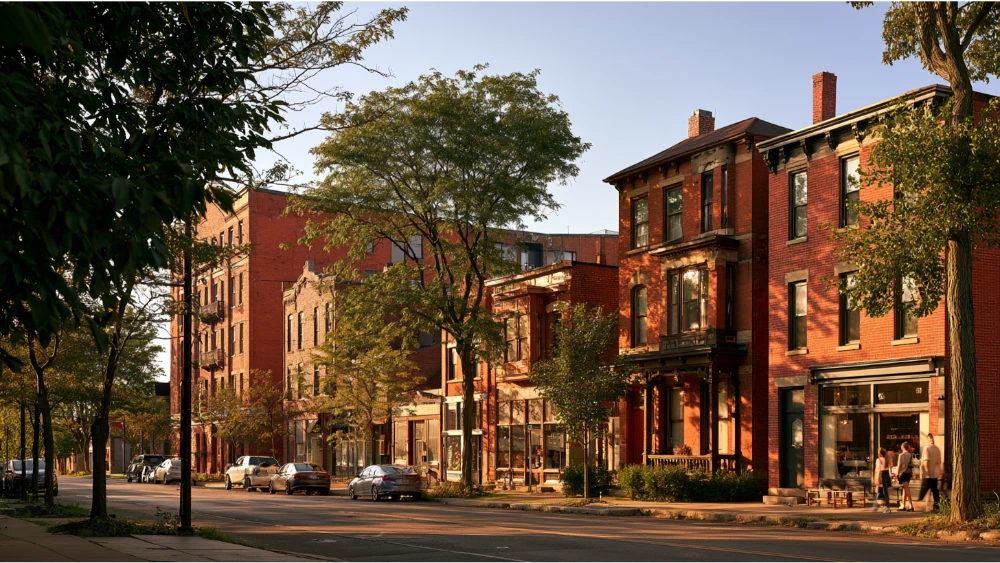
Cleveland neighborhoods vary significantly in character, architecture, and amenities, so skip the “best neighborhood” lists. They don’t help you evaluate a single address, and they can steer you away from places that would actually fit your life. Instead, compare on objective factors:
- Commute anchors: where you’ll actually go most days, whether that’s downtown, University Circle, or a suburban office.
- Transit access: proximity to the Red Line, bus rapid transit, or frequent bus corridors.
- Housing form: apartments, historic doubles, townhouses, or single-family homes.
- Parking: off-street, permit, or street-only, which matters a lot in winter.
- Everyday shopping and restaurants: groceries and dining within a reasonable distance.
- Parks and green spaces: Metroparks reservations and lakefront access nearby.
- Proximity to schools and health care that match your household’s needs.
Build a shortlist from those factors, then verify the rest at the address level. Because Cleveland neighborhoods can shift in feel within a few blocks, the right unit for you may sit just outside the area a ranking would have pointed you toward. Suburbs like Cleveland Heights and Shaker Heights to the east, Parma Heights to the south, and Rocky River out west each carry their own feel and price range, while historic city pockets like Slavic Village add still more variety. For official boundaries, Cleveland maps its neighborhoods as Statistical Planning Areas with an interactive tool that also shows zoning and transit (City Planning GIS Maps). Match a neighborhood to your individual needs rather than a generic label, and you’ll make a better call.
Cleveland Neighborhoods Compared: Ohio City, Tremont, and Beyond
Here’s a neutral, side-by-side look at Cleveland neighborhoods worth researching. Treat it as a starting point for your own address-level checks, not a ranking.
| Neighborhood | Typical housing | Transit access | Everyday character | Verify before leasing |
|---|---|---|---|---|
| Downtown | Apartments, lofts, converted buildings | Strong; rail and bus hub | Dense, walkable core | Parking cost, nighttime quiet, grocery access |
| Ohio City (near west) | Historic doubles, newer apartments | Red Line nearby | Walkable corridor, West Side Market | Unit condition, parking, exact commute |
| Tremont | Historic homes, smaller apartments | Bus; near downtown | Hilly, dense, dining-heavy | Street parking, older-home systems |
| Detroit-Shoreway & Edgewater | Mixed historic and new builds | Bus corridors | Near lakefront parks | Winter wind exposure, parking |
| University Circle & Little Italy | Apartments, historic homes | Red Line station | Cultural, medical, and university core | Student density, parking, rent vs. space |
| Old Brooklyn | Single-family, bungalows | Bus; car-friendly | Residential, lower-density | Commute distance, transit frequency |
| West Park / Kamm’s Corners | Single-family homes | Red Line terminus area | Suburban-feel within city | Commute, airport flight paths |
| North Collinwood / Waterloo | Historic homes, apartments | Bus; near lakefront | Arts corridor, lake access | Condition, parking, commute anchors |
University Circle stands out as the cultural, medical, and higher-education anchor on the east side, with museums, two major hospital campuses, and universities clustered together. That concentration drives rent, parking, and transit patterns, so weigh it against your daily routine. The Waterloo stretch of North Collinwood is also a working arts corridor, with art galleries and music venues that give those neighborhoods a creative pulse near Lake Erie.
The Cleveland Job Market, Advanced Manufacturing, and Major Employers
The Cleveland job market leans heavily on health care and advanced manufacturing. The region’s major medical systems, including the Cleveland Clinic, University Hospitals, and MetroHealth, are among the largest employers in Northeast Ohio, and health care accounts for a larger share of local employment than it does nationally. Advanced manufacturing remains a backbone of the regional economy too, with production work still a meaningful slice of the metro’s jobs. Beyond health care, major employers like Sherwin Williams keep a large corporate footprint in the region, adding to the mix of white-collar and industrial work.
On pay, the Cleveland metro area averaged $31.88 per hour in May 2025, below the national $33.54 (BLS). The occupational mix skews toward office and administrative support (11.4%), food preparation and serving (8.8%), transportation and material moving (8.5%), health care practitioners and technical roles (8.2%), and production (8.0%). Higher-paying groups as of May 2025 included health care practitioners and technical occupations at an average $52.35 per hour, computer and mathematical roles at $48.38, and architecture and engineering at $46.79. Those are group averages, not entry-level salaries, so treat them as ceilings for established workers rather than starting points.
Employment totals, unemployment, and wages shift, so verify current figures on the BLS Cleveland page before you make a decision. Because Cleveland wages sit below the national average while housing costs run well under it too, many households find the math works out in their favor compared with larger cities.
Remote Work and the Municipal Income Tax
If you work remotely or live and work in different municipalities, don’t assume withholding sorts itself out. Cleveland’s 2.5% city income tax and the patchwork of local rates across the metro mean your paycheck and your residence may be taxed differently than you expect. Check the Central Collection Agency’s guidance rather than guessing (CCA). For digital workers choosing a home base, Cleveland’s space-per-dollar can be attractive, but model the tax before you sign.
Getting Around: Can You Live in Cleveland Without a Car?

It depends almost entirely on location. Car-free living is workable near rail, bus rapid transit, and frequent bus corridors, and harder elsewhere. The region’s average commute runs under 25 minutes, which is one of Cleveland’s underrated perks and a real quality-of-life upgrade over the long slogs common in larger cities.
Greater Cleveland Regional Transit Authority runs the rail and bus public transportation network. Standard fares are $2.50 for a single ride, $5 all-day, $25 for seven days, and $95 monthly (GCRTA). The Red Line is the backbone for transit-first renters: 18 stations across roughly 19 miles, connecting Cleveland Hopkins International Airport to downtown and continuing east through Ohio City, the Campus District, University Circle, and Little Italy before reaching East Cleveland (GCRTA Red Line).
So the decision tree is simple. If your daily anchors sit near a Red Line station or a frequent corridor, you can likely skip or downsize a car. If you’re commuting to a suburban office or an area with thin transit, a vehicle makes life easier. If you do bring a car, note that Ohio’s license and registration deadlines and Cuyahoga County’s E-Check requirement apply. Those live in the checklist section below.
How Does School Enrollment Work in Cleveland?
Cleveland Metropolitan School District uses a school-choice, open-enrollment system, so your street address doesn’t automatically assign one school. The district’s School Finder lets you compare schools by location, grade level, programs, career pathways, sports, and distance from your home (CMSD Enrollment). Placement depends on available space and required educational services, and proof of address can include a lease, utility bill, payroll document, or recent tax statement.
For context only, CMSD reports a 2.5-star overall rating and a 79.6% graduation rate on the 2025 to 2026 state report card (CMSD Fast Facts). Districtwide numbers don’t replace school-level research for your child’s needs. The district also went through significant mergers for 2026 to 2027 under its Building Brighter Futures plan, so verify any specific school or boundary at your publication date. Compare options yourself using the School Finder and Ohio report cards.
Higher Education and Graduate Studies
Cleveland’s universities double as employment anchors and cultural presence. Case Western Reserve University and Cleveland State University draw students, faculty, and research dollars, with much of that activity concentrated near University Circle. Case Western Reserve University in particular anchors a dense research corridor alongside the hospitals and museums, which shapes the rental market and foot traffic in that part of the city. Specialized schools like the Cleveland Institute of Art and the Cleveland Institute of Music add to that mix. For families weighing graduate studies or jobs tied to higher education, that corridor is where a lot of it sits, and national outlets like U.S. News and World Report rank several of these programs.
Hospitals and Health Care Access in Cleveland

Cleveland’s health care reputation is real, but what matters for your move is where the campuses are and whether they offer 24/7 emergency care.
- Cleveland Clinic main campus operates a 24-hour emergency department near the University Circle and Fairfax area on the east side (Cleveland Clinic).
- University Hospitals Cleveland Medical Center sits in University Circle with more than 1,000 registered beds, including major pediatric, women’s health, and cancer facilities (UH).
- MetroHealth main campus is on the near west side, a Level I Adult Trauma Center and Level II Pediatric Trauma Center with a 24/7 emergency department (MetroHealth).
- Louis Stokes Cleveland VA Medical Center serves eligible veterans with 24/7 emergency care (VA Northeast Ohio).
If you have recurring medical needs or want a short drive to a specific system, let that shape your rental search. Choosing a home near the campus that matches your care can save you real time, and it’s one of the quiet reasons people rate Cleveland a great city for anyone managing an ongoing condition.
Cleveland’s Bustling Food Scene, Arts, and Entertainment Options
The lifestyle payoff in Cleveland is substantial, and it’s grounded in real institutions rather than hype. The West Side Market, open since 1912, anchors the bustling food scene with roughly 60 small businesses selling produce, meat, seafood, baked goods, and prepared food (West Side Market). Neighborhood dining corridors in Ohio City, Tremont, and Little Italy fill in the rest, from pierogi and fresh pasta to a growing wave of chef-driven kitchens, several led by nationally known names like Michael Symon. For a city this size, the bustling food scene punches well above its weight.
On the culture side, the Cleveland Museum of Art offers free general admission across more than 40 galleries, with special exhibitions ticketed separately (CMA). The Cleveland Museum of Art sits among the world class museums you’d expect in a much larger city, and its free admission makes it an easy habit rather than a once-a-year splurge. The Cleveland Museum of Natural History and the Great Lakes Science Center round out the museum district, the latter sitting right on the lakefront downtown. The Rock and Roll Hall of Fame, open since 1995, holds more than 30,000 artifacts, and Cleveland residents can qualify for free admission to the Rock Hall through its local resident program (Rock Hall). That resident perk alone makes the Rock Hall of Fame worth a repeat visit, and few other cities can say rock and roll was practically named here. Playhouse Square runs 12 performance spaces and draws more than a million visitors a year, making it the largest theater district outside New York (Playhouse Square). The Cleveland Orchestra performs at Severance Hall near University Circle, giving the city one of the most acclaimed ensembles in the country. Karamu House, the oldest Black performing arts theater in the country, adds depth to the arts scene you won’t find in most cities this size. Beyond the big institutions, independent art galleries in Waterloo, Tremont, and Ohio City round out a cultural calendar that rivals much larger cities. It’s little wonder the phrase “Cleveland rocks” stuck.
Sports culture runs hot here. The Cleveland Browns fill fall Sundays, the Cleveland Cavaliers own the winter at the downtown arena, and the Guardians play summer baseball at Progressive Field, giving the city its weekend rhythm. And Lake Erie puts a genuine lakefront within reach of the whole metro, with summer days on the water that many larger cities simply can’t offer their residents.
Parks, Green Spaces, and Outdoor Life
The Cleveland Metroparks system is the outdoor headline: 18 reservations, more than 25,000 acres, and over 325 miles of trails, plus eight lakefront parks and the Cleveland Metroparks Zoo (Cleveland Metroparks). Several of those lakefront parks put Lake Erie beaches, marinas, and trails within easy reach of city neighborhoods. Quirky spots like Squire’s Castle, a century-old stone gatehouse in the North Chagrin Reservation, give weekend walks a bit of history. Cuyahoga Valley National Park sits just south of the city for bigger day trips, where you can walk stretches of the historic Erie Canal towpath. If green space ranks high on your list, few Midwest cities deliver this much of it, and that outdoor access is a big part of what makes everyday living here feel less crowded than in larger cities.
What Is Cleveland Weather Really Like?
Cleveland has four distinct seasons, and winter is the one to plan for. NOAA’s 1991 to 2020 climate normals show about 63.8 inches of normal annual snowfall (NWS Cleveland). You’ll also see a popular figure around 47.6 inches circulating; the NOAA normal is the measured 30-year baseline, so treat 63.8 as the honest planning number. January normals run a high of 35.8°F and a low of 22.3°F, July normals a high of 83.7°F and a low of 65.3°F, with roughly 41 inches of annual precipitation. Lake Erie drives the lake-effect snow that makes some winters heavier than averages suggest, so Cleveland’s climate asks a little planning, and snowfall totals can swing a lot depending on which side of the city you live on.
Questions to Ask Before You Sign a Winter Lease
Before you commit, ask who handles what when the snow comes:
- Is heat included, and how efficient is the system in an older building?
- What’s the insulation and window condition?
- Is there off-street parking?
- Who’s responsible for snow removal on sidewalks and driveways?
A full-service manager handling maintenance means these answers come with follow-through, not just promises.
Safety Research and Property Due Diligence Before You Lease
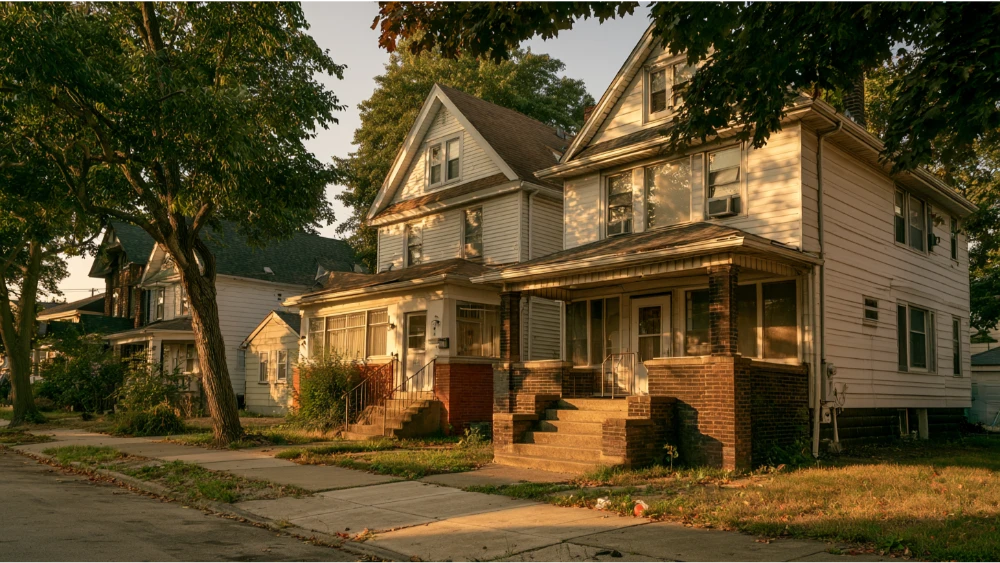
Skip the citywide crime scores and the neighborhood rankings. They don’t tell you what living on a specific block is actually like, and conditions vary street by street. Do your own address-level homework instead. Start with Cleveland Police district information and official open data (Cleveland Police Districts), then visit the blocks around a potential home at different times of day. Look at lighting, secure entry, parking, and how packages get handled.
Pair that with rental-condition due diligence. Cleveland’s older stock means you should inspect carefully and ask about maintenance history and lead-safe improvements, which the city’s housing plan flags as ongoing needs. This is where our full-service model earns its keep: tenant screening, property inspections, and maintenance-request intake mean problems get addressed. One of our residents noted repairs handled within a few days by respectful contractors. That’s the standard you want from whoever manages your place.
Your 30-Day Cleveland Moving Checklist
Work through this in phases so nothing slips.
- Before signing: inspect the unit and older-home systems, verify your commute and transit, confirm the 2.5% city tax and any parking costs, and check school options through the CMSD School Finder if you have kids.
- Two weeks before moving: schedule movers, set up utilities, and arrange mail forwarding.
- Moving day: document the unit’s condition with photos, confirm keys and access, and note any issues in writing.
- First 30 days: handle residency requirements, register to vote, and update your address everywhere.
Two Ohio-specific items catch newcomers:
- Ohio BMV: taking a job, signing a lease, buying a home, or enrolling children generally makes you an Ohio resident. You must transfer your out-of-state license or ID, vehicle title, and registration within 30 days of establishing residency (Ohio BMV).
- Cuyahoga County E-Check: gasoline and diesel vehicles generally begin testing at six years old, non-plug-in hybrids at seven, with covered vehicles tested every two years through age 25. Certificates are valid 365 days, and requirements depend on model year, weight, and exemptions (Ohio EPA).
Find Your Cleveland Rental Through KT Rents
KT Rents is a nationwide, broker-owned, full-service platform. We’ve been at this since 2009, 16-plus years, and as of early 2025 we manage 683 units across 34 states with $187M in assets under management, while reporting a 98% occupancy rate. We don’t keep a Cleveland office, but our platform can help you search a confirmed Cleveland rental market from anywhere.
If you’re renting, browse Cleveland listings, run the Cost of Living, Rent vs. Buy, Mortgage, and Rent calculators, and submit a rental application online. After you move in, online rent payment and maintenance-request intake keep things simple, and tenant perks like housewarming gifts and discounts mean we care once the lease is signed. Browse Rental Properties Near You and find your perfect home.
If you own Cleveland property, we do it all: tenant placement, tenant screening, rent collection, property inspections, court evictions, 1099s, and rental permits, without the owner lifting a finger, for the equivalence of a cup of coffee and a donut per day. GET STARTED WITH US TODAY. Call (800) 716-4950, text (608) 207-0657, or email info@ktrents.com, and we’ll respond within 24 hours. Your Rental. Your Way. Se Habla Español.
Frequently Asked Questions
Is it a good idea to move to Cleveland, Ohio?
It’s a strong option if you value affordable and varied housing, major health care, world class museums, and heavy park access. By most everyday measures it’s a great city for the money, with a cost of living well under larger coastal markets. The real tradeoffs are genuine winters and conditions that vary block by block, so make the decision by the specific address rather than a citywide reputation.
What salary is needed to live comfortably in Cleveland, Ohio?
There’s no honest single number, because it depends on your rent, neighborhood, and lifestyle. For reference, the Census 2019 to 2023 median household income was $39,187, and the metro mean wage was $31.88 per hour in May 2025, which sits below the national average. Model your own budget with our Cost of Living Calculator, including the 2.5% city income tax.
Can you live in Cleveland without a car?
Yes, if you base yourself near the Red Line or a frequent bus corridor. The Red Line links the airport, downtown, and University Circle across 18 stations, and RTA passes run $2.50 single or $95 monthly. In areas with thin transit, a car is easier. Car-free living works best in walkable neighborhoods like downtown, Ohio City, and University Circle.
What must a new Ohio resident complete within 30 days?
Transfer your out-of-state driver’s license or ID, vehicle title, and registration within 30 days of establishing residency, which a job, lease, home purchase, or enrolling children can trigger. Also check whether your vehicle is due for Cuyahoga County’s E-Check emissions test.