

Florida
Rental and for-sale inventory across cities we serve in this state.
Moving to Florida? The Ultimate 2026 Guide
Explore
Cities in this state
By 2026, moving to Florida offers significant tax advantages, with no state income tax and a sales tax of 6%. The housing market shows a median home price of $320,000. Florida’s economy is projected to grow by 3% annually, providing numerous job opportunities.
Moving to Florida: Your Ultimate Guide to a Sunshine State Transition
Florida in 2026: Economic and Lifestyle Outlook

Projected Economic Growth and Opportunities
Florida’s economy is expected to grow at an annual rate of 3% in 2026, driven by sectors such as tourism, healthcare, and technology. With a GDP projected to reach $1.2 trillion, the job market will expand, offering more opportunities for both skilled and unskilled workers. The unemployment rate is anticipated to remain low, around 3.5%. This robust economic growth is further supported by the influx of people moving to the state, attracted by the absence of state income tax and the promise of a sunny, vibrant lifestyle. The booming tech sector in cities like Tampa and Miami is particularly noteworthy, offering high-paying jobs and fostering a culture of innovation.
Lifestyle Trends and Cultural Shifts
In 2026, Florida will continue to attract new residents due to its appealing lifestyle. The state is home to over 21 million people, with an expected population growth rate of 1.5% annually. The cultural landscape is becoming increasingly diverse, with more than 30% of residents identifying as Hispanic or Latino. This diversity is reflected in the state’s culinary scene and cultural events. As the Sunshine State evolves, there’s a significant focus on sustainable living, with an increase in solar power adoption among Florida residents. This shift not only contributes to climate change mitigation efforts but also offers long-term residents substantial savings on energy costs.
Impact of Climate and Weather on Daily Life
Florida’s climate is characterized by warm weather year-round, with average temperatures ranging from 60°F in the winter to 90°F in the summer. The state experiences approximately 240 sunny days annually. While the climate is appealing to many, residents must prepare for hurricane season, which runs from June to November, potentially impacting daily life and property insurance rates. For those considering moving to Florida, investing in hurricane-resistant infrastructure and adequate insurance is crucial. Additionally, the early morning heat in summer months requires planning for outdoor activities to avoid the hottest parts of the day.
Financial Planning for a Move to Florida
Cost of Living: What to Expect
The cost of living in Florida varies by region, but overall, it is slightly above the national average by 1.2%. Major expenses include housing, healthcare, and transportation. In 2026, the average monthly cost for utilities is expected to be $150, while groceries for a family of four will average $800 per month. Transportation costs, including gas and insurance, average $400 monthly. It’s essential for potential residents to factor in the cost of living adjustments, particularly in tourist areas like Orlando, where prices can soar, impacting the overall financial plan. However, the absence of a state income tax can offset these costs, making Florida a net positive choice financially.
Housing Market Analysis: Buying vs. Renting
The Florida housing market is competitive, with a median home price of $320,000 in 2026. Renting remains a viable option, with average monthly rents for a two-bedroom apartment around $1,500. While long-term residents may prefer buying to capitalize on home equity, short-term residents often choose renting due to flexibility. The state offers a homestead exemption, reducing property taxes for homeowners. An ROI analysis reveals that buying a house in inland areas like Jacksonville can yield significant equity growth in the long run, while renting in high-demand cities like Miami offers flexibility without the commitment of ownership.
Tax Benefits and Considerations
Florida’s tax policies are favorable, with no state income tax, resulting in a lower tax burden compared to other states. The sales tax is 6%, with some counties adding additional local taxes. Property taxes average 0.83% of the property’s assessed value. These financial benefits make Florida an attractive destination for retirees and those seeking to maximize their income. For individuals planning to leave Florida eventually, understanding the tax implications of different states can be crucial in financial planning. The homestead exemption is particularly beneficial for those looking to establish long-term residency, offering significant savings on property taxes.
Exploring Florida’s Diverse Regions: Where Should You Live?
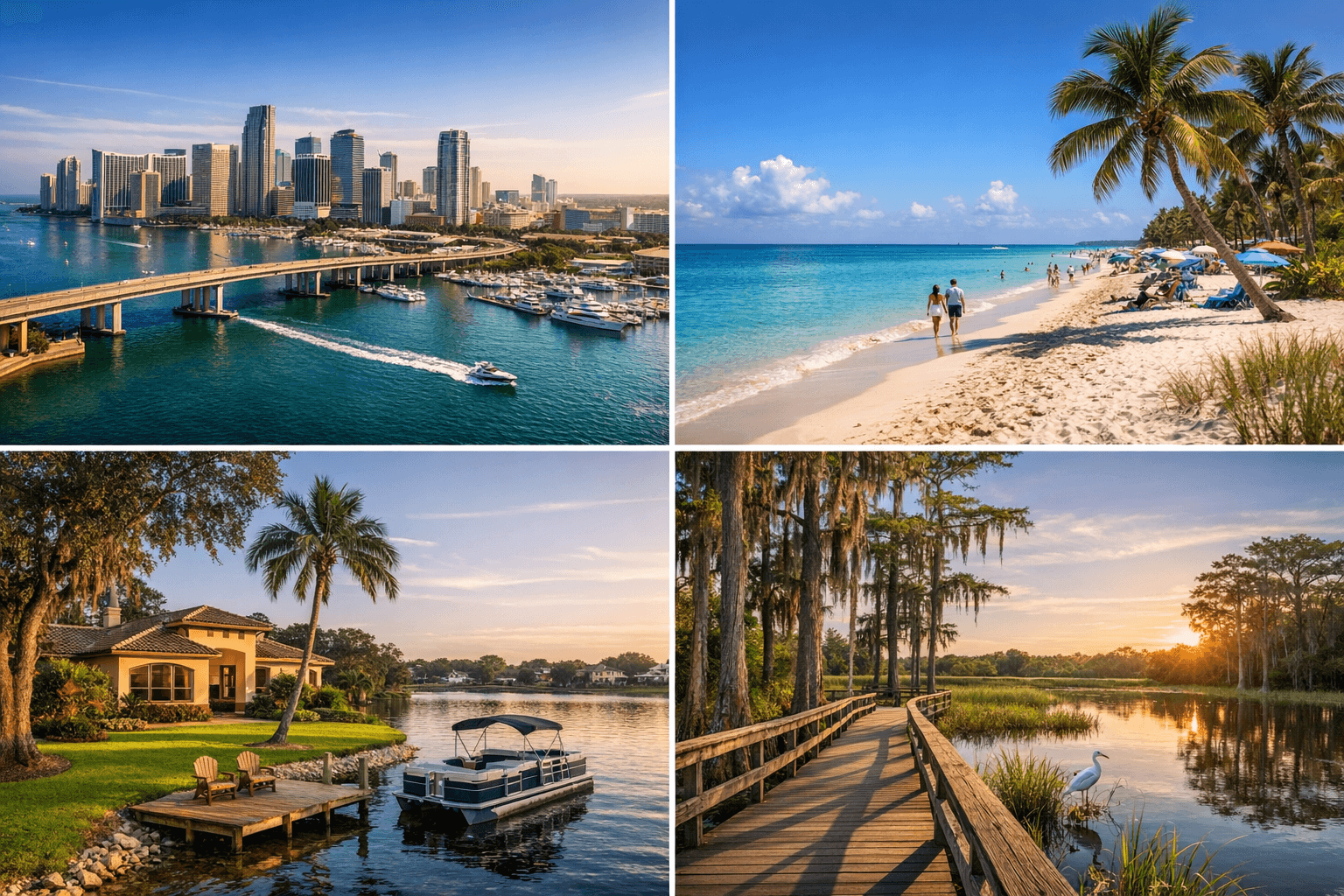
Urban vs. Suburban: Choosing the Right Environment
Florida offers diverse living environments, from bustling urban areas like Miami, with a population of 454,000, to suburban areas such as Winter Park, home to 30,000 residents. Urban areas are known for their vibrant nightlife and cultural offerings, while suburban regions provide a quieter lifestyle with access to quality public schools and parks, important for families. For those seeking a balance between city life and community, areas like Tampa offer a blend of urban amenities and suburban comfort. The choice between urban and suburban living is often influenced by personal lifestyle preferences and the importance of factors like commute times and school quality.
Regional Amenities and Lifestyle Offerings
South Florida is renowned for its beaches and warm weather, attracting millions of tourists annually. Central Florida, home to Orlando and Disney World, offers family-friendly attractions. The Gulf Coast boasts natural beauty and outdoor activities, while North Florida provides a slower pace and historic sites. Each region offers unique amenities catering to different lifestyles. For instance, the vibrant culinary scene in Miami, featuring some of the best restaurants in the world, contrasts with the serene coastal life in small communities along the Gulf. Choosing the right region involves weighing the importance of lifestyle amenities against cost considerations.
Hidden Gems: Underrated Neighborhoods to Consider
In 2026, potential residents should explore neighborhoods like St. Petersburg’s Crescent Lake, known for its affordable housing, with median home prices at $250,000. Gainesville, a small community with a population of 141,000, offers a blend of college-town energy and natural beauty. These areas provide a net positive experience with lower living costs and strong community ties. Investing in these hidden gems can offer great returns, as these neighborhoods often see appreciation in property values as more people discover their appeal. Additionally, the community-focused lifestyle in these areas fosters a sense of belonging and stability, beneficial for families and individuals alike.
Streamlining Your Move: A Step-by-Step Process
Preparing for the Move: What You Need to Know
Start planning your move at least three months in advance. Create a budget, research moving companies, and declutter your belongings. Florida requires vehicle registration within 30 days of becoming a resident. Early planning ensures a smooth transition and helps avoid unexpected expenses, such as temporary housing or storage fees. For a seamless relocation, consider using a project management approach, breaking down tasks into weekly goals and tracking progress. This systematic planning can significantly reduce stress and ensure all necessary steps are completed in a timely manner.
Finding and Securing Your New Home
Begin house hunting 60 days before your move. Use online platforms to explore listings and schedule virtual or in-person tours. Secure your new home by signing a lease or purchase agreement 30 days before moving. Consider factors such as commute times, schools, and local amenities to ensure the area meets your needs. Engaging with local real estate agents can provide insights into market trends and opportunities, ensuring you make an informed decision. Additionally, understanding neighborhood dynamics can help you choose a location that aligns with your lifestyle preferences and long-term plans.
Settling In: Utilities, Licenses, and More
After moving, establish utility services within the first week. Set up accounts for electricity, water, and internet, which typically cost $150 monthly. Apply for a Florida driver’s license within 30 days of residency. Register to vote and familiarize yourself with local regulations. These steps solidify your transition and help you integrate into the community. Joining local community groups and participating in neighborhood events can also aid in building connections and settling into your new environment, enhancing your overall life experience in Florida.