

Orlando, Florida
Homes for rent and for sale — search the map or open the full city SEO catch-all page.
Orlando, Florida
Orlando, FL, remains a top-tier destination for remote workers and families drawn to its permanent vacation atmosphere, vibrant job market, and the significant financial benefit of no state personal income tax. As of July 2026, while the overall cost of living remains competitive near the national average, prospective residents must navigate a highly car-dependent metro and a rental market where prices fluctuate significantly by neighborhood. Movers should prioritize a “rent-first” strategy to test commute routes—particularly the congestion-prone I-4 corridor—and verify address-level flood risks before committing. When budgeting, factor in Florida’s higher-than-average property insurance premiums and the long, humid summer months that drive up utility costs.
Is Moving to Orlando, Florida Worth It? The Quick Answer
Yes, moving to Orlando can be a smart move if you plan around a few realities: rent, local wages, car dependence, summer heat, and hurricane season. Get those right and Orlando gives you pleasant weather, a large metro economy, and travel access that few U.S. cities match. As the most visited city in the country, with roughly 74 million visitors a year drawn by its theme parks and world class entertainment, Orlando is built for movement, and the everyday cost of living sits right around 1% below the national average.
This guide is for renters, remote workers, and relocating households who want a confident first move, not a leap of faith. Florida has no state income tax, which helps, but the real question is whether your budget and job fit the market you’re actually moving into. Our advice is simple: rent smart first. Test Orlando before you buy, compare short-term and long-term leases, and use the numbers below to decide. Your Rental. Your Way.
Orlando at a Glance: City vs. County vs. Metro
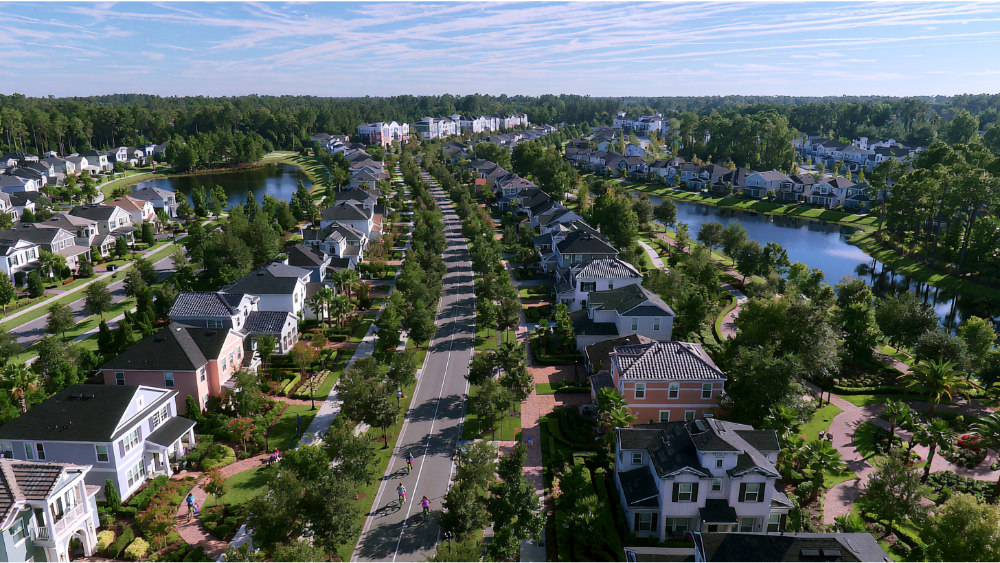
Before you read a single rent or wage figure, know which “Orlando” the data refers to. This one distinction explains why sources seem to disagree.
- City of Orlando had an estimated population of 333,888 as of July 1, 2025 (U.S. Census QuickFacts). This is the “City Beautiful” itself, and most city-level Census figures below use this geography.
- Orange County is the surrounding county that includes Orlando and sets local tax rates and living-wage estimates.
- Orlando-Kissimmee-Sanford metro area (MSA) covers four counties: Lake, Orange, Osceola, and Seminole. This is the geography used for most federal jobs and housing data, and it sits at the heart of Central Florida.
The metro is far larger than the city. HUD estimated the Orlando housing market area population at about 2,874,000 as of July 1, 2024, and forecast roughly 3,034,000 by July 1, 2027 (a forecast, not a current count). So when a rent number looks off, check the label first. City medians, metro averages, and county figures tell different stories, and mixing them is how people miscalculate a move.
What Is the Cost of Living in Orlando?
Overall, living in Orlando runs about 1% below the national average, with utilities roughly 4% lower, though year-round air conditioning can push your electric bill higher than that headline suggests. The city’s median household income was $72,336 in 2024 dollars for the 2020 to 2024 period (Census). That’s a workable income here, but “comfortable” depends heavily on your specific setup. Part of the appeal of living in Orlando is that your dollar stretches a little further while you still get big-city amenities, professional sports, and easy weekend access to the Gulf Coast beaches a couple of hours away.
What actually drives an Orlando budget:
- Lease type and size: a studio versus a three-bedroom, short-term versus long-term.
- Car costs: fuel, insurance, tolls, and maintenance, since most of the metro is car-first.
- Insurance: renters or homeowners premiums, which run higher in Florida.
- Childcare and school-related costs if you have kids.
- Debt payments that eat into whatever the rent leaves behind.
Florida has no state income tax, so you keep more of your paycheck, but you still owe federal income tax, and property taxes apply if you buy. Want a clearer picture before you commit? Run your own numbers through our Cost of Living Calculator so the estimate matches your life, not a generic average. Keep in mind that total housing costs in orlando vary widely depending on neighborhood, unit size, and whether you rent or own.
What Salary Do You Need to Live in Orlando?
For a single adult with no children in Orange County, MIT’s Living Wage Calculator estimates you need $25.25 an hour, or about $52,527 a year before taxes, to cover basic needs. That model puts annual housing at roughly $20,305 for one adult. This is a basic-needs budget, not a lifestyle one, so it doesn’t include savings, travel, or much room for extras. Against that baseline, the city’s $72,336 median household income leaves breathing space for a single earner but tightens fast once you add kids, a car payment, or a bigger unit. Households with two incomes tend to feel the most comfortable here, especially if one earner works in a higher-paying professional or technology role rather than the hospitality jobs that dominate the local job market. Finding affordable housing is very doable when you match your income to the right neighborhood.
How Much Is Rent in Orlando?

The honest answer: it depends which rent number you’re looking at, and most guides never tell you. There are four common figures, and they measure different things.
- Census median gross rent was $1,747 for the City of Orlando, 2020 to 2024. This includes utilities and reflects existing renters, not just new leases.
- HUD Fair Market Rent is a policy benchmark for the metro, useful for comparison but not a live price.
- Average apartment rent tracks large complexes. HUD reported the metro average at $1,786 in Q2 2024 (dated, verify before relying on it).
- Live listing prices are what you’ll actually pay today, which is why browsing current rentals beats any average.
Here are HUD’s FY2026 Fair Market Rents for the Orlando-Kissimmee-Sanford MSA:
| Unit size | FY2026 HUD Fair Market Rent |
|---|---|
| Studio | $1,650 |
| 1-bedroom | $1,731 |
| 2-bedroom | $1,972 |
| 3-bedroom | $2,476 |
| 4-bedroom | $2,924 |
A one-bedroom typically runs near $1,600 in practice. Rents also vary by pocket of the metro. Newer master-planned areas like Lake Nona in southeast Orlando tend to price above the metro average, while more established neighborhoods can come in lower. Winter Park, just north of downtown Orlando, is another spot where charm and walkability push rents up. Orlando is a renter-heavy city, with an owner-occupied rate of just 39.5% (2020 to 2024), and HUD described the metro rental market as “slightly soft” with a 9.9% apartment vacancy rate in Q2 2024. Softer markets can mean more choice and negotiating room. You can lease short-term to test the city or lock in a long-term rental once you’re sure. Browse rental properties near you and run the Rent Calculator before you sign anything.
Should You Rent First Before Buying in Orlando?
For most out-of-state movers, yes, rent first. Buying before you know the city is how people end up stuck with the wrong commute or a house in a flood zone they didn’t research. The City’s median owner-occupied home value was $394,100 for 2020 to 2024 (Census), and the metro median home price sits around $380,000, so a purchase here is a serious commitment.
Renting first buys you information. You learn real commute patterns before you’re locked to an address. You adjust to the heat and storm season for a full cycle. You see actual insurance quotes, which run high in Florida because of hurricane risk. You verify school assignments where that matters, and you confirm your job actually fits before tying up a down payment. Testing an area like Lake Nona or Winter Park as a renter first also tells you whether the neighborhood really matches your day-to-day life. When you’re ready to compare, our Rent vs. Buy Calculator and Mortgage Calculator lay the math out side by side. And if the numbers say keep renting for now, that flexibility is the point.
Orlando’s Job Market, Major Employers, and Income Fit

Orlando’s job market is large and active. The metro had about 1,518,700 total nonfarm jobs in May 2026 (preliminary), with an unemployment rate of 4.4% that same month. The market posted strong job growth of 9.2% from 2021 to 2022, and hiring is spread across several big sectors. That kind of job growth is one reason so many people keep moving to Orlando Florida each year, including a steady stream of young professionals chasing opportunity in the sun.
The largest local sectors include leisure and hospitality, professional and business services, trade, transportation and utilities, and education and health services. Tourism, hospitality, aviation, and a growing technology base anchor much of the economy. The theme parks are the obvious engine, with the Walt Disney World Resort and Universal Orlando Resort employing tens of thousands between them, but medical and research employment around the Lake Nona area has become a genuine second pillar, with major hospitals and clinics drawing healthcare professionals to the region. There are plenty of major employers across those industries, so opportunity is real.
Here’s the honest part. Local pay tends to trail the national average. BLS reported an Orlando metro mean hourly wage of $29.76 in May 2025, compared with $33.54 nationally. Food preparation and serving jobs alone made up 11.5% of metro employment, higher than the 8.8% national share, which pulls the average down. So the growth story is genuine, but so is the wage pressure. Line up your specific offer or income against Orlando rent before you move, not after.
Living in Orlando: Disney World, Kennedy Space Center, and Things to Do

Living in Orlando means the vacation is permanent, or at least it’s always down the road. The theme parks are the headline. The Walt Disney World Resort spans four parks, including Disney’s Magic Kingdom, plus Disney Springs, a walkable shopping and dining district that locals visit year-round, not just tourists. Universal Studios and the wider Universal Orlando Resort add more world class entertainment, and many orlando residents keep annual passes to make the visits worth it. Even the Orlando Eye observation wheel gives you a fresh view of the whole area.
But there’s more to living in Orlando than Disney World. Orlando offers a real arts and dining scene downtown, with art galleries, trendy restaurants, and a great food scene that keeps expanding. Central Florida’s cultural diversity shows up in its international cuisine, and space enthusiasts can make an easy day trip to Kennedy Space Center on the coast. Winter Park adds a slower, tree lined streets pace with boutiques, museums, and lakeside strolls just minutes from downtown Orlando, and the region’s numerous lakes make outdoor recreation part of everyday life. Whether you love theme parks or would rather ignore them entirely, living in Orlando gives you options most cities can’t match.
Orlando Demographics and Who Lives Here
Orlando demographics reflect a young, growing, and diverse population, shaped by decades of newcomers arriving for jobs, school, and the year round sunshine. Over the past few years the metro has added residents faster than many peer cities, which keeps the housing market and the culture in constant motion.
Performing Arts, Sporting Events, and the Amway Center
Orlando’s performing arts scene centers on the Dr. Phillips Center for the Performing Arts, often called the Phillips Center, which hosts touring shows and concerts throughout the year. Sports fans have plenty to cheer at the Amway Center, home to the Orlando Magic in the NBA, and Orlando City SC in Major League Soccer keeps sporting events on the calendar in every season.
Annual Events: Orlando Heritage Festival, Wine Festival, and Film Festival
Annual events give the city its rhythm. The Orlando Heritage Festival celebrates the region’s history and diversity, the Orlando Film Festival draws creators and cinephiles each fall, and food-focused gatherings like the Epcot International Food and Wine Festival turn watching culinary masters into a season-long treat. There are also plenty of kid friendly Halloween celebrations across the metro when autumn rolls in.
Choosing Where to Live in Orlando: A Fair Housing-Safe Framework
Skip the “best area for X type of person” advice you’ll find elsewhere. That framing is unhelpful and can steer people unfairly. A better approach compares areas against your own needs. Orlando has a lot of planned communities across the metro, including newer developments like Lake Nona, along with established suburbs like Oviedo, which has a community-focused feel, and smaller places like Hunter’s Creek (population just under 20,000) and Heathrow (under 6,000). Instead of ranking them, score each option against what actually shapes your day.
- Commute time to your workplace or clients.
- Lease budget and whether you want short-term or long-term.
- Property type: apartment, condo, townhouse, or single-family home.
- Pet policies and any breed or size limits.
- Parking availability and cost.
- Transit access if you’d rather not drive everywhere.
- School-zone verification directly with the district, not a listing description. Orange County Public Schools and Seminole County Public Schools cover much of the metro, and boundaries matter.
- Flood-risk review using FEMA maps before you sign.
- Convenient access to work, healthcare, and shopping you’ll use regularly.
Run every area you’re considering through the same checklist. The right fit is the one that scores best for you, not for a stereotype.
Downtown Orlando, Winter Park, Thornton Park, and Lake Eola Heights
Downtown Orlando leans walkable, with tree-lined streets, a historic district character in pockets, and a food scene that keeps growing. Thornton Park, just east of downtown Orlando, is known for its historic homes and fine dining. Lake Eola Heights sits nearby and is recognized for its picturesque lake views and older architecture. Winter Park, a short drive north, layers on brick streets, the Charles Hosmer Morse Museum, and a lakefront that draws people out on weekends. These areas trade more square footage and parking ease for proximity and walkability, which is a fair tradeoff for some renters and a dealbreaker for others. Run each one through the same checklist above: commute, budget, property type, parking, and pet rules. The character is real; whether it fits comes down to your priorities, not anyone else’s.
Getting Around Orlando: Cars, Commutes, SunRail, and the Airport
Plan on car ownership. Most of the Orlando metro is built for driving, and while the mean travel time to work in the city was a reasonable 26.2 minutes for 2020 to 2024 (Census), that average hides the reality of rush hour. Traffic has gotten heavier, and I-4 in particular can crawl during peak periods, especially near the theme parks where visitor traffic stacks up. Budget for car insurance too, since Florida premiums run on the higher side.
SunRail commuter rail service is an option along a north-south corridor, running through Volusia, Seminole, Orange, and Osceola counties, from DeLand at the north end to Poinciana at the south, with stops near Winter Park and downtown Orlando. It’s genuinely useful if your home and work both sit near a station, but it won’t replace a car for most daily errands, so don’t move here counting on transit alone.
The one transportation perk that’s hard to overstate is air access. Orlando International Airport handled 57,669,226 passengers in 2025. For remote workers and anyone who travels often, easy flights almost anywhere is a real quality-of-life win.
Weather, Hot Summers, Hurricane Season, and Flood Risk

The sunshine is the draw, and the numbers back it up. NOAA climate normals for Orlando International Airport show an average daily high of 83.2°F, an average low of 62.7°F, and an annual mean of 73.0°F. The flip side: about 110 days a year hit 90°F or higher, humidity averages around 74%, and hot summers run long and sticky. That’s why air conditioning runs nearly year-round.
Hurricane season runs June 1 through November 30, and Florida insurers charge higher premiums because of that risk. You don’t have to be scared off, but you do need to prepare like a resident. Before and after you move:
- Ask the landlord or manager whether the property sits in a FEMA flood hazard area.
- Check for storm shutters or impact windows where relevant.
- Get renters insurance, and confirm what it covers for storm damage.
- Learn the maintenance-request process so repairs move fast when weather hits.
- Keep emergency supplies: water, batteries, chargers, and a few days of food.
Do the flood-risk homework once, up front, and it stops being a worry.
Taxes and the Financial Case for Moving to Orlando Florida
The headline draw is real: Florida has no state personal income tax, which is a meaningful saving and a big reason retirees and remote earners keep moving to Orlando Florida. You’ll still owe federal income tax, and property taxes apply if you own.
Sales tax is where people get tripped up. Florida’s state sales tax rate is 6%, and groceries are exempt, but each county adds its own discretionary surtax on top. Orange County’s 2026 surtax is 0.5%, so most purchases there combine to 6.5%. Surrounding counties differ: Lake is 1%, Osceola is 1.5%, and Seminole is 1%. So there’s no single metro-wide rate; it shifts depending on which county you’re shopping in. The no-income-tax advantage is genuine, just weigh it against higher insurance costs and property taxes before you assume Florida is automatically cheaper. For many people moving to Orlando, the tax savings offset the insurance premiums, but the math is personal, so run it against your own income.
Your First 30 Days: A Moving-to-Orlando-Florida Checklist
Most relocation guides skip the part that actually stresses people out: the paperwork. Here’s a clean order of operations once you arrive.
- Get a Florida driver license within 30 days of establishing residency if you’ll drive on Florida roads (FLHSMV).
- Register your vehicle and review insurance. Certain new employees and students must register and get a plate within 10 days, and you’ll need proof of Florida PIP/PDL coverage from a Florida-licensed insurer.
- Set up utilities (electric, water, internet) before or on move-in day.
- Buy renters insurance and keep a digital copy handy.
- Update your address with USPS, banks, employer, and the DMV.
- Verify school registration directly with the district if you have kids.
- Gather pet documentation (vaccination records, any required registration).
- Review your lease terms and confirm exactly how to submit a maintenance request.
Knock these out in the first month and the rest of moving to Orlando takes care of itself.
Pros and Cons of Moving to Orlando
A fair look at both sides before you decide.
| Pros | Cons |
|---|---|
| Year-round sunshine and warm winters | Long, humid summers with ~110 days at 90°F+ |
| World-class entertainment nearby: Disney World, Universal Studios, Disney Springs, and Kennedy Space Center within reach | Hurricane season June through November |
| Strong food scene, art galleries, and events like the Orlando Heritage Festival | Traffic, especially on I-4, plus real car costs and tolls |
| Major travel access through Orlando International Airport | Local wages that trail the national average |
| Wide rental variety with short-term and long-term options | Tourist congestion in some corridors near the theme parks |
| No Florida personal income tax | Higher insurance premiums and flood-risk due diligence |
The wins are lifestyle and taxes. The costs are climate, congestion, and the wage-to-rent squeeze. Plan for the cons and the pros of living in Orlando are yours to enjoy. Add in the major attractions and easy access to Gulf Coast beaches, and the case gets stronger.
How KT Rents Helps You Move Your Way
You don’t have to sort Orlando out alone. KT Rents is a broker-owned, full-service company that’s operated across the U.S. since 2009, with Orlando among our confirmed rental markets. That means real accountability behind your search, not a random listing site.
Here’s what you get:
- Browse Orlando rentals and compare short-term and long-term leasing so you can test the city before committing, whether you’re eyeing downtown Orlando, Winter Park, or the Lake Nona area.
- Run our Rent Calculator, Rent vs. Buy Calculator, Mortgage Calculator, and Cost of Living Calculator before you decide.
- Submit rental applications and, where available, pay rent online.
- Report issues through our maintenance-request system so repairs actually get handled.
- Tap into tenant perks and discounts that make settling in easier.
Ready to start? Find your perfect home near you and browse rental properties now, or call us at (800) 716-4950.