

Sarasota, Florida
Homes for rent and for sale — search the map or open the full city SEO catch-all page.
Sarasota, Florida
Sarasota, FL, remains a premium Gulf Coast destination in 2026, prized for its award-winning beaches, vibrant arts scene, and the financial benefit of no state income tax. However, the market is highly competitive, with median rents for single-family homes reaching approximately $2,950 per month. Prospective residents must balance these lifestyle perks against higher-than-average housing costs, rising property insurance premiums, and significant seasonal traffic congestion. Because the area is susceptible to hurricane and flood risks, conducting address-level due diligence regarding flood zones and evacuation status is an essential, non-negotiable step before signing any lease or purchase agreement.
Should you move to Sarasota? Yes, if you want Gulf Coast living, walkable beautiful beaches, a serious arts scene, and Florida’s no-state-income-tax structure. But only if the numbers work. Sarasota rewards people who plan for higher housing costs, hot humid summers, hurricane and flood risk, expensive property insurance, and the traffic that comes with the winter tourist season. Skip the planning and Sarasota FL can feel like a beautiful place that quietly drained your budget.
This guide is built to be a decision process, not a postcard. We’ll walk through real rent benchmarks, cost-of-living data, flood and evacuation checks, Florida’s new-resident deadlines, and a clear way to weigh renting against buying. Every figure here is sourced and dated so you can trust it. Whether you’re eyeing the downtown area, a barrier island like Siesta Key, or a master-planned community in Lakewood Ranch, the same disciplined approach applies.
We’re KT Rents, a nationwide, broker-owned, full-service rental and property management company that’s been at this since 2009, and Sarasota is one of our confirmed rental markets. Our advice to almost every newcomer is the same: rent smart before you plant roots. Learn the area, test your commute, check the flood zone, then decide where you belong. Your Rental. Your Way.
Sarasota at a Glance: What You’re Actually Moving Into
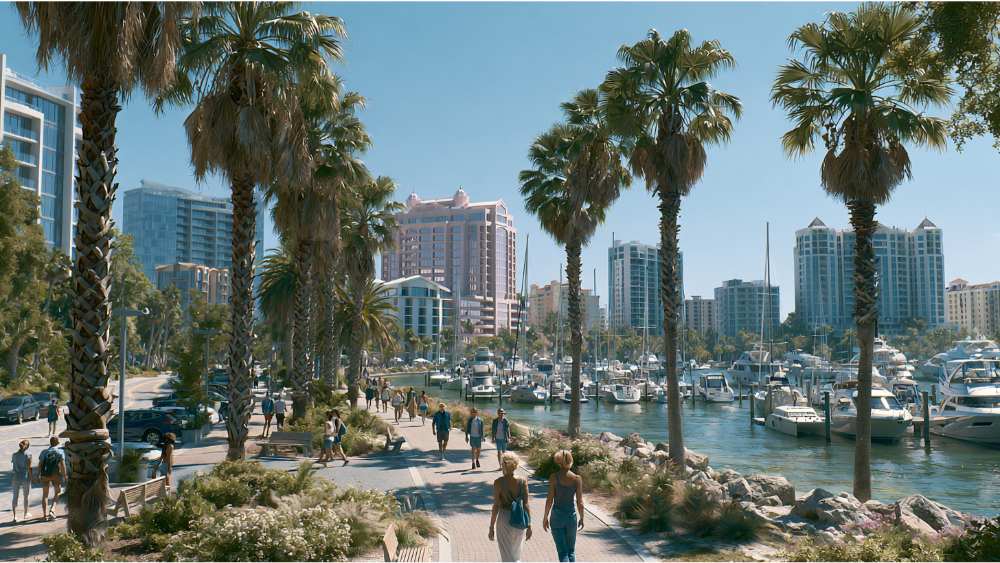
Before anything else, get clear on what “Sarasota” means, because the data changes depending on which Sarasota you’re talking about. There’s the City of Sarasota, or Sarasota proper, the larger Sarasota County around it, and the wider North Port-Bradenton-Sarasota metro that government agencies use for rent and job figures. That metro spans both Sarasota County and Manatee County, so a listing marketed as Sarasota may actually sit north in Manatee County. Then there are the barrier islands strung along Sarasota Bay, like Siesta Key, Lido Key, Casey Key, Bird Key, and Longboat Key, which feel like their own worlds.
The city itself had an estimated population of 58,458 as of July 1, 2025, up 6.6% since the April 2020 base, according to Census QuickFacts. Sarasota County came in at 479,958 over the same period, a faster 10.6% jump, per Census QuickFacts. That growth is a big part of why rents and home prices along Florida’s Gulf Coast have climbed, and it’s why so many new residents are moving to Sarasota Florida faster than the housing supply can keep up.
Here’s the quick picture:
- Roughly 35 miles of gulf coast beaches across the county’s barrier islands.
- An average year-round temperature near 73°F, with hot, humid summers and plenty of warm weather.
- A strong seasonal rhythm, with snowbird and tourist traffic peaking November through April.
Census demographic snapshots show an older median age than the national average, which is worth knowing as context. The Sarasota area has long drawn retirees and seasonal residents who come down each winter, but the growth in Lakewood Ranch and other newer communities has also pulled in young families and working professionals. That mix shapes healthcare access and community life, but it isn’t a reason to move or stay away. What matters is whether the practical pieces fit your life.
Cost of Living, Income Tax, and Value in the Sunshine State
Sarasota costs a little more than the typical American city, but not dramatically so. The best way to see this without trusting a mystery ranking is the Regional Price Parity from the Bureau of Economic Analysis, which measures a metro’s overall price level as a percentage of the national average. For the North Port-Sarasota-Bradenton metro, the all-items RPP was 102.417 in 2024, meaning prices ran about 2.4% above the national average, according to FRED/BEA data.
That modest gap hides a real trade-off. Florida charges no personal income tax, per the Florida Department of Revenue, which keeps more of your paycheck. For anyone relocating from a state with a heavy income tax bite, that alone can offset a chunk of the higher housing cost. The absence of a state income tax is one of the most cited reasons people choose Florida Sarasota over comparable coastal markets elsewhere, and it’s a draw shared across many Florida cities in the Sunshine State. The statewide sales tax is 6% before local surtaxes, under Florida statute. But housing and property insurance run high, and insurance in particular can be a budget shock for newcomers.
To gauge whether your income fits, look at local benchmarks:
- City median household income: $72,105 in 2024 dollars (2020-2024), per Census QuickFacts.
- County median household income: $83,416 in 2024 dollars (2020-2024), per Census QuickFacts.
- MIT living wage for a single adult with no children in Sarasota County: $24.05 per hour, updated February 15, 2026, per the MIT Living Wage Calculator.
When you compare Sarasota to high-tax states, the no-state-income-tax structure matters more than a raw cost-of-living index suggests. A dollar earned in Sarasota FL stretches differently than the same dollar earned where income tax takes a bite off the top before you ever see it. The point isn’t to talk you out of Sarasota. It’s to make sure your numbers work before you commit. Run your own figures through the KT Rents Cost of Living Calculator so you’re planning with real math, not a hunch.
How Much Is Rent in Sarasota, Florida?
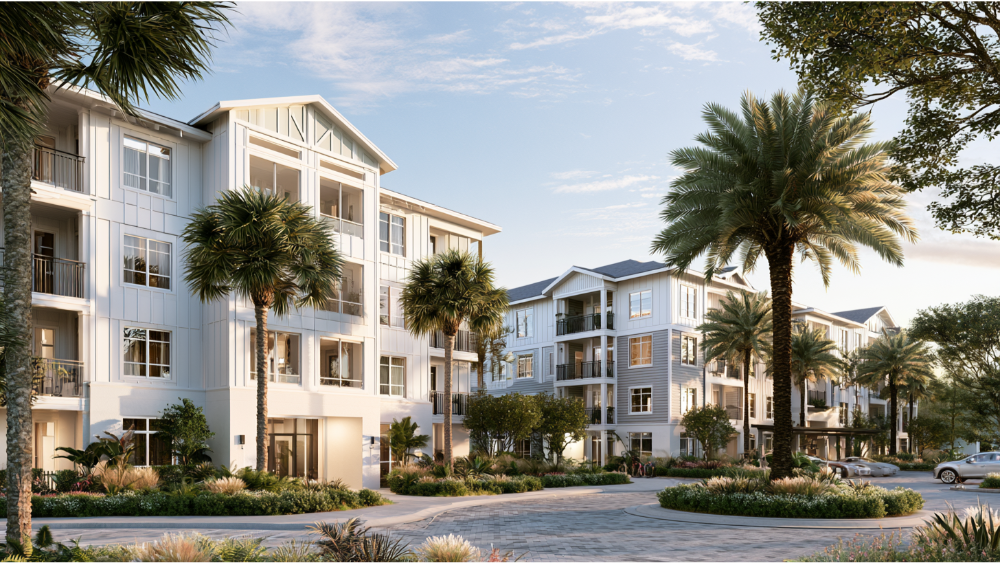
Rent is the single biggest line in most relocation budgets, so start with official benchmarks and then adjust for what’s actually listed. Census data puts the City of Sarasota median gross rent at $1,684 and the county at $1,818 for 2020-2024, per Census QuickFacts and county QuickFacts.
For a forward-looking view, HUD publishes Fair Market Rents used in federal programs. Here are the FY2026 figures for the North Port-Bradenton-Sarasota metro, which covers Manatee County and Sarasota counties, from HUD:
| Unit size | HUD FY2026 Fair Market Rent |
|---|---|
| Studio | $1,418 |
| 1-bedroom | $1,686 |
| 2-bedroom | $1,958 |
| 3-bedroom | $2,537 |
| 4-bedroom | $3,027 |
Now the honest part. Live listing rents often run higher than these benchmarks, and in the current market some private sources cite averages near $3,000 a month for popular property types and locations. Location drives a lot of that spread. A condo walking distance to the downtown area, a single-family home in Lakewood Ranch, or anything on Siesta Key or Lido Key will command a premium over an equivalent unit a few miles inland. Census figures reflect 2020-2024, HUD figures are program benchmarks, and real listings change every month. Treat the official numbers as a floor for planning, not a guarantee of what you’ll pay.
The smart move is to compare current listings against these benchmarks so you can spot a fair deal. Browse Sarasota rental properties on KT Rents and use our Rent Calculator to size a monthly payment to your income before you tour a single unit. If a listing sits well above the metro benchmark, ask what the extra buys you: beach access, new construction, one of the area’s golf courses at your doorstep, or simply a prime address in the Sarasota area.
Housing Due Diligence Before You Sign a Lease in Florida
Once you’ve found a rental you like, slow down and check the details. A little diligence up front prevents most move-in regrets. This is general information for Florida renters, not legal advice, and Florida’s rules are their own, not national ones.
Work through this before you sign:
- Confirm the lease terms and length. Short-term and long-term leases carry different expectations. Know exactly what you’re agreeing to.
- Ask how maintenance requests work. You want a clear process and a fast response when something breaks, not a phone number that goes nowhere.
- Review renters insurance and flood coverage. Florida’s insurance consumer guidance from the state CFO notes that renters insurance can cover personal property from covered perils, and flood coverage may be added by endorsement. Check your policy so you know what’s actually covered, especially ahead of hurricane season.
- Check the flood zone and evacuation zone by address. These are property-specific, and we’ll cover the tools below.
- Confirm parking, pet policy, utilities, and any HOA or condo rules. These small items shape daily life and your budget, and in a community with golf courses or gated amenities the HOA rules can be substantial.
- Understand Florida’s security deposit timeline. Under Florida statute, a landlord generally must return the deposit within 15 days if no claim is made, or give written notice within 30 days if they intend to keep part of it.
Florida’s Residential Landlord and Tenant Act governs residential tenancies statewide and supersedes many local rules on screening, deposits, fees, and notices, according to The Florida Bar. Renting through a broker-owned, full-service manager like KT Rents means your lease terms, maintenance requests, and rent payments all run through one accountable system. Our owner portal and maintenance-request intake exist so a broken water heater gets logged and handled, not lost. That accountability matters in a market where seasonal demand and out-of-state landlords can leave renters chasing answers.
Renting vs. Buying When You Move to Sarasota

For most people relocating from out of state, renting first is the smarter opening move. You don’t yet know Sarasota’s traffic patterns, which streets flood, how long your commute really takes, or how the barrier-island crowds shift with the season. Renting for a year turns all of those unknowns into lived experience before you tie up hundreds of thousands of dollars in a purchase.
The market backs up the case for patience. Census data lists the City of Sarasota median owner-occupied home value at $463,000 and the county at $411,800 for 2020-2024, per Census QuickFacts and county QuickFacts. Recent market reports point to a stabilizing market with inventory around 4.4 months and homes taking roughly 70 to 89 days to sell. New construction demand stays high, especially in master-planned areas like Lakewood Ranch, which has ranked among the best-selling master-planned communities in the country. If you eventually buy and make the home your primary residence, Florida’s homestead exemption can reduce your taxable value, another reason many buyers wait until they’re sure of the address. A slower market means less pressure to rush and more room to get your decision right.
Think of renting first as due diligence you get to live in. You learn the flood zones, the school zones if that matters to you, the drive to work, and the property types that actually suit you. A young family who thinks they want a Siesta Key bungalow may discover after a rental year that a Lakewood Ranch home closer to work and schools fits their life better. Then buying becomes a confident choice instead of a gamble.
Run the comparison honestly with the KT Rents Rent vs. Buy Calculator and our Mortgage Calculator. When the math tips toward buying, you’ll know. Until then, renting keeps your options open and your cash flow intact.
How to Choose Where to Live in Sarasota, Without Guesswork
Sarasota has a lot of distinct areas, and the fastest way to get overwhelmed is to compare them by vibe. Compare them by criteria instead. That keeps your search practical and grounded in what your daily life actually needs.
Neutral criteria to weigh
- Commute time to your workplace or the places you visit most.
- Beach and downtown access based on how often you’ll actually use them.
- Flood zone and evacuation zone for the specific address.
- Rent budget against the benchmarks earlier in this guide.
- Property type, from apartments and condos to single-family homes and townhouses.
- Transit access if you’ll use the bus, trolley, or on-demand zones.
- School-zone lookup if that applies to your household.
- Pet needs, parking, and storage.
Downtown Sarasota, Lakewood Ranch, Laurel Park, and the barrier islands defined
A few places you’ll hear about often, described by what they physically are. These are among the many neighborhoods newcomers weigh:
- Downtown Sarasota is the urban core near Sarasota Bay, dense with dining options, galleries, and walkable blocks. If you want to skip a long commute and live where the events are, downtown Sarasota keeps most of the calendar within walking distance and ranks among the most walkable neighborhoods in the region.
- Laurel Park is a small historic district just southeast of downtown, one of the city’s established neighborhoods known for older cottages and bungalows. It offers a quieter residential feel while keeping downtown Sarasota within an easy walk.
- Lakewood Ranch is a large master-planned community east of the city, spanning parts of both Manatee County and Sarasota County, with newer construction and its own town centers. Lakewood Ranch has consistently ranked among the best-selling master-planned communities in the U.S., and its mix of homes, schools, and amenities draws a lot of young families and remote professionals moving to Sarasota Florida.
- Palmer Ranch spans more than 10,000 acres with around 90 communities and plenty of golf courses, making it a common landing spot for people who want an active lifestyle without island congestion.
- Siesta Key, Lido Key, Longboat Key, Bird Key, and Casey Key are barrier islands with beach access and a quieter, island pace, though bridge access shapes your commute. Siesta Key draws the biggest crowds thanks to Siesta Key Beach, while Casey Key and Lido Key trade some amenities for a calmer pace.
Filter by these facts, not by who “belongs” somewhere, and you’ll land in a place that fits how you actually live.
Sarasota’s Beautiful Beaches, Barrier Islands, and Gulf Coast Lifestyle
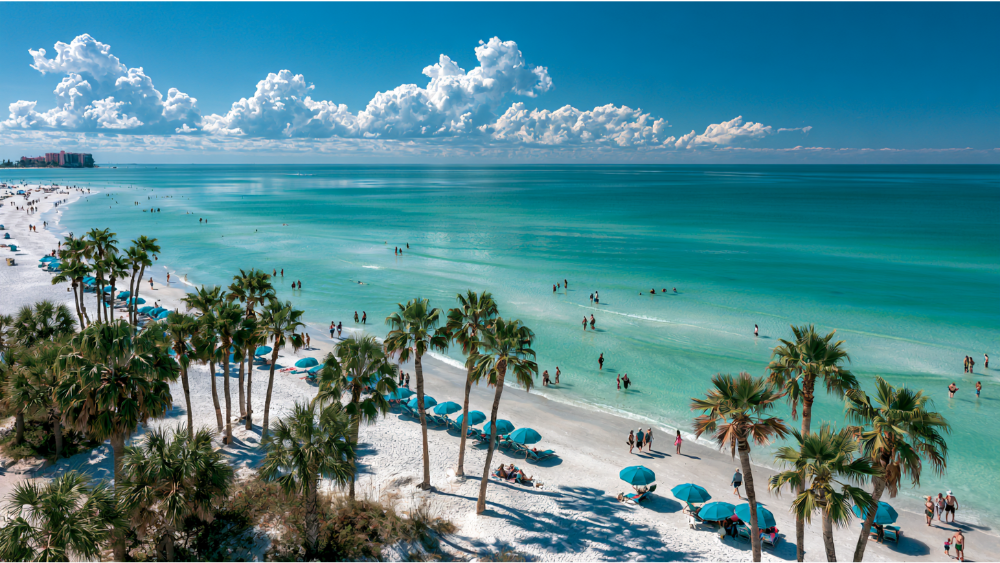
The stunning beaches are the reason a lot of people look at Sarasota in the first place, and they hold up. The barrier islands give the county roughly 35 miles of Gulf Coast shoreline, each beach with its own character. In fact, Sarasota covers more award winning beaches per mile than almost anywhere else on Florida’s gulf coast.
Siesta Key Beach is the headliner, repeatedly named the number one beach in America, famous for quartz sand that stays cool underfoot even in summer. The sand at Siesta Key Beach is nearly pure quartz, which is why it feels soft and cool even on the hottest Florida afternoon, and its firm packed stretches are a favorite for beach volleyball. Lido Beach on Lido Key sits closer to downtown Sarasota and pairs an easy stretch of sand with nearby dining. Turtle Beach, on the south end of Siesta Key, is smaller and calmer, with picnic areas and a boat ramp, and the county’s shorelines are important nesting grounds for sea turtles each summer. Head south toward Venice Beach and Casey Key and you enter shark-tooth country, where beachcombers sift the sand for fossilized shark teeth. Blind Pass Beach, also called Manasota Beach by many locals, and Crescent Beach add more public access and quieter shorelines, and Crescent Beach even offers a dog friendly beach stretch for pet owners. The calmer flats around the islands are also prime spots for bird watching at dawn.
The practical side matters too. Beach proximity affects rent, and the same islands that draw you in also draw crowds from November through April. Parking fills early on weekends in season, especially near Siesta Key Beach. If beach access is a top priority, weigh it against commute time and the reality of seasonal traffic across the bridges. A rental a few minutes inland can still put you on the sand quickly without island-season congestion at your front door, which is why many newcomers to Florida’s Gulf Coast rent inland first and visit the beaches on their own schedule.
Arts, Culture, and Community Events in Sarasota
Sarasota punches far above its size culturally, largely thanks to circus magnate John Ringling, who made the city his winter home and left behind a legacy that still shapes it. The Ringling Museum houses an art collection alongside its circus memorabilia and sits on a bayfront estate that’s a destination in itself, and it serves as the official state art museum of Florida.
The performing arts run deep. The Van Wezel Performing Arts Hall anchors the bayfront calendar, and the Sarasota Orchestra performs more than 100 concerts a year. The Sarasota Jazz Festival brings 110-plus musicians to town, and every April the Sarasota Film Festival screens hundreds of films. Ringling College of Art and Design adds a steady creative energy, feeding galleries and studios across the city. Downtown Sarasota fills in the gaps with art galleries, dining options, and community events that give the area a genuine social rhythm. Nearby Laurel Park adds its own neighborhood character just steps from all of it.
This is the part of relocation that’s easy to overlook when you’re focused on rent and flood maps, but it’s what makes a place feel like home rather than just a roof. A city with this much going on gives you somewhere to be on a Friday night and reasons to meet your neighbors. For young families, the mix of festivals, parks, and museums means there’s always something to do that doesn’t cost a fortune. When you rent through KT Rents, that sense of settling in matters to us too, which is why our residents get perks like housewarming gifts and discounts on home goods after move-in.
Jobs and the Sarasota Job Market, Commute, and Getting Around

The metro labor market has been steady. The North Port-Bradenton-Sarasota MSA posted a 4.7% unemployment rate in May 2026, preliminary, per BLS. Major nonfarm sectors visible in the data include construction, manufacturing, trade, transportation and utilities, and information. The Sarasota job market leans heavily on construction and the trades that support the region’s steady growth, along with healthcare, hospitality, and tourism tied to the beaches and the winter season. That’s context, not a promise, so line up your work situation before you move.
Commutes are manageable by big-city standards. The city mean commute was 20.7 minutes and the county 24.5 minutes for 2020-2024, per Census QuickFacts. Seasonal traffic adds friction from November through April, so test your route in season if you can. A commute from Lakewood Ranch into downtown Sarasota that flows easily in July can stretch noticeably once the winter crowds arrive.
For getting around without a car, Sarasota County’s Breeze Transit network runs buses and trolleys, on-demand rideshare zones, and paratransit service, per Sarasota County. For air travel, your main options are:
- Sarasota Bradenton International (SRQ), described by Visit Sarasota as offering 65-plus nonstop destinations across 11 airlines. Routes change often, so verify current service.
- Tampa International Airport to the north, for broader route options.
- Southwest Florida International Airport to the south, as another regional alternate.
The manageable commutes and airport access also make Sarasota a workable base for remote professionals who want Gulf Coast living without giving up connectivity. Combine that with no state income tax and access to beautiful beaches, and the appeal for anyone who can work from anywhere is easy to see. If that’s