

Toms River, New Jersey
Homes for rent and for sale — search the map or open the full city SEO catch-all page.
Toms River, New Jersey
Moving to Toms River, New Jersey means settling into a 40-square-mile coastal township of nearly 101,000 residents with ocean and bay access, a 617-bed hospital, and NJ Transit bus service to New York City roughly 70 miles away. Median home sale prices run around $484,750 and the 2025 effective property tax rate is 1.523%. Your actual cost, flood exposure, and school assignment all depend on the exact address you choose.
Moving to Toms River, New Jersey
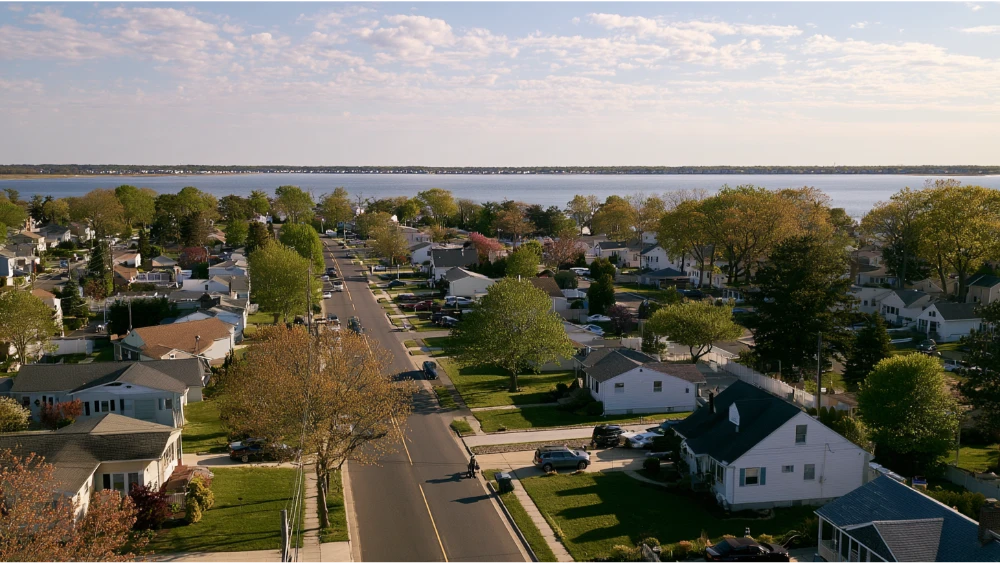
Toms River is a large, mostly suburban township in Ocean County on the Jersey Shore, home to an estimated 100,899 people as of July 1, 2025 (U.S. Census Bureau), spread across roughly 41 square miles of land. It is also the Ocean County seat, which means the courts, the county clerk, and a stack of county agencies all sit inside the same township you’d be moving to. You get ocean and bay access, a major hospital in town, a big regional school district, and NJ Transit bus service to New York, with the township sitting roughly 70 miles from both Manhattan and Philadelphia at about 75 to 90 minutes of drive time to each. What you don’t get is one uniform experience. Your cost, your commute, your flood exposure, and your assigned school all change depending on the exact address you pick.
If you’re a renter comparing New Jersey towns from out of state, a buyer weighing the shore against northern NJ, or a remote worker who wants bay access and a home office, this guide is built for you. It’s diligence, not a highlight reel. We’ve managed rentals nationwide since 2009, so we wrote this the way we’d brief an owner or a resident: specifics, dated sources, and the questions that actually matter before you sign anything.
Toms River, NJ at a Glance: Population, Size, Median Income, and Housing Snapshot
Toms River Township grew to an estimated 100,899 residents as of July 1, 2025, up 5.7% from the April 2020 estimates base, when the decennial count came in at 95,438. That’s meaningful growth for a township that already covers 40.54 square miles of land, and a lot of it comes from people moving in from elsewhere in New Jersey and from out of state. The median income for a household here, per the most recent five-year American Community Survey, sits just under the six-figure mark. The numbers below give you a baseline for the rest of this guide.
| Metric | Figure | Source & date |
|---|---|---|
| Population (estimate) | 100,899 | Census QuickFacts, July 1, 2025 |
| Growth since 2020 base | 5.7% | Census QuickFacts, 2025 |
| Land area | 40.54 sq. mi. | 2020 Census geography |
| Total households | 38,047 | 2020-2024 ACS |
| Median household income | $99,547 | 2020-2024 ACS (2024 dollars) |
| Owner-occupied housing rate | 82.1% | 2020-2024 ACS |
| Median owner-occupied home value | $416,700 | 2020-2024 ACS |
| Median monthly owner cost with mortgage | $2,372 | 2020-2024 ACS |
| Median gross rent | $1,726 | 2020-2024 ACS |
| Mean travel time to work | 30.2 minutes | 2020-2024 ACS |
| Households with broadband | 91.3% | 2020-2024 ACS |
Read the table with this qualifier: the median value, median income, and median gross rent figures come from the 2020-2024 American Community Survey and describe existing households, including people living under older leases and mortgages. They are not current asking rents or current list prices. Live market figures appear in the cost section below.
Full data: U.S. Census Bureau QuickFacts, Toms River Township.
Where Is Toms River, NJ, and What Actually Counts as “Toms River Township”?
Three different things share this name, and confusing them costs people money.
Toms River Township is the municipality: 40.54 square miles with its own mayor and council, tax rate, police, and services. It is the Ocean County seat, so the county courthouse, administration buildings, and the county clerk’s office sit downtown. The Toms River census-designated place is a smaller statistical area inside the township that many online data tools actually report when you search “Toms River.” If a cost-of-living site shows you figures that don’t match the Census township page, that’s often why. South Toms River Borough is a completely separate municipality with its own government, its own tax rate, and its own services, despite the nearly identical name.
Geographically, the township splits into mainland and barrier island. The mainland runs from inland neighborhoods west of the Garden State Parkway, through the historic downtown core along the Toms River itself, east toward Barnegat Bay and the lagoon communities that line it. The river is not decoration here. It shapes the street grid downtown, it feeds the bay, and it shows up in flood mapping for the blocks closest to it. Across the bay sits a thin barrier island strip with the Atlantic Ocean on one side and the bay on the other. Ortley Beach is part of Toms River Township. Ocean Beach, Normandy Beach, Silver Beach, and Monterey Beach are neighboring barrier island communities that listings frequently lump in with “Toms River, NJ” because of mailing addresses and shared ZIP codes, even though municipal lines differ. Seaside Heights, the boardwalk borough just south of Ortley, is its own municipality entirely.
Here’s the practical point. In this part of New Jersey, your ZIP code, your mailing address, and your municipality are three separate things. The ZIP tells the post office where to go. The municipality determines your property tax bill, your trash and recycling pickup, your local ordinances, and who you call about a pothole. Before you sign a lease or go under contract, confirm the municipality in writing. Don’t infer it from a listing headline.
What Does It Cost to Live in Toms River, NJ?
Home prices and days on market
Recent market data puts the median home sale price in Toms River around $484,750, with a median list price near $440,000. Compare that to the 2020-2024 ACS median owner-occupied value of $416,700 and you can see the gap between what existing owners’ homes are valued at and what buyers are paying right now. Homes have been selling in roughly 38 to 46 days, with inventory up about 11.5% year over year, which gives buyers slightly more room than a tighter market would.
The barrier island plays by different rules. Ortley Beach has shown a median closer to $785,000. That premium reflects ocean and bay access, lot scarcity, and in many cases elevated or rebuilt construction. Market figures move constantly, so treat every number here as a starting point and pull live listings before you build a budget around them.
Rents in Toms River
The $1,726 median gross rent from the 2020-2024 ACS is historical data on occupied units. It includes households that signed leases years ago. It is not what you will pay for an available unit today, and treating it as a budget is the single most common mistake out-of-state renters make in Toms River, NJ.
What actually moves asking rent in this township: housing form (a detached single-family rental prices differently than a condo or a garden apartment), square footage and bedroom count, water access (lagoon frontage with a dock or bulkhead carries a premium), lease term (year-round long-term leases price differently than short-term summer rentals on and near the barrier island), and parking. Seasonal rental dynamics matter more here than in most inland towns. A shore-adjacent unit that rents weekly in July may not be available as a 12-month lease at all.
Property taxes
For tax year 2025, the New Jersey Division of Taxation listed a general tax rate of 1.902 per $100 of assessed value and an effective rate of 1.523% for Toms River. Those two numbers do different jobs. The general rate applies to the property’s official assessed value. The effective rate is a comparison tool that helps you line up one municipality against another across differing assessment practices.
Do not take a home’s online market estimate and multiply it by either rate. That math will mislead you. Pull the actual tax record and current assessment for the specific address, and check whether any recent reassessment or appeal has changed it. Rates are set annually and can move. Source: New Jersey 2025 General Tax Rates.
The other line items
Insurance is the big one, and it deserves its own section later in this guide. Homeowners or renters coverage is the baseline, and flood coverage is a separate policy with separate pricing driven by the exact address. Beyond that: utilities (humid summers mean real cooling costs), HOA or condo dues if you’re looking at townhouse, condominium, or age-restricted stock, beach badges for the township beaches in season, and the general summer uptick in everything from groceries to waits at the busier restaurants.
Across the board, housing here tends to run more budget-friendly than northern New Jersey shore communities. NJ property taxes are a permanent, recurring cost that belongs in your monthly math from day one, not a footnote you discover at closing.
Before you commit to a number, run it. Our Cost of Living Calculator and Rent Calculator are free to use and will tell you more than a listing headline will.
Renting vs. Buying in Toms River Township: Which Makes Sense for You?
Start with the structural reality. As of the 2020-2024 ACS, 82.1% of occupied homes in Toms River Township were owner-occupied. That’s a high rate, and it has a direct consequence for renters: selection is thinner than in renter-heavy cities. You won’t find block after block of large apartment complexes. You’ll find condos, townhouses, single-family rentals, and a limited supply of purpose-built apartment inventory scattered across different neighborhoods. Plan to search harder and move faster when something fits.
Renting tends to make sense if you’re:
- Testing the area before committing to a 30-year decision
- Still unsure how a specific commute or flood situation will feel in practice
- On a defined work assignment or a flexible timeline
- Waiting out rates or saving for a larger down payment
Buying tends to make sense if you’re:
- Planning to stay five years or longer
- Targeting waterfront, dock access, or a specific verified school assignment
- Comfortable carrying taxes, insurance, and maintenance on a coastal property
- Able to absorb a flood insurance premium without it breaking the budget
Here’s something we believe after 16-plus years of managing rentals across the U.S.: a well-managed rental is a legitimate test drive of a town, not a consolation prize. A year in a lagoon-adjacent rental teaches you more about summer traffic, flood anxiety, and whether you actually use the beach than any amount of weekend visiting will.
Run both scenarios with our Rent vs. Buy Calculator and Mortgage Calculator before you decide.
Toms River NJ Neighborhoods: North Dover, West Dover, East Dover, Silverton, Bay Shore, Cedar Grove, and the Barrier Island
These are housing-area groupings, not rankings. There is no “best” neighborhood in a 40-square-mile township, and under Fair Housing principles we won’t pretend otherwise. What matters is the specific address and whether it clears your commute, cost, flood, and school checks.
| Area | Typical housing form | Road / Parkway access | Water or downtown proximity | What to verify |
|---|---|---|---|---|
| Downtown & Old Toms River | Older housing stock, smaller lots, some mixed-use blocks | Routes 166 and 37, quick Parkway access | Walkable blocks near Huddy Park and the river | Age of systems, parking rules, river-adjacent flood mapping |
| North Dover | Largely single-family subdivisions, newer construction in parts | Route 9, northern Parkway exits, Lakewood direction | Inland, farther from the bay | School assignment, HOA rules, commute at real departure time |
| West Dover | Mainland single-family neighborhoods, varied vintages | Parkway and Route 37 west, Route 571 corridor | Inland, away from the barrier island | Drainage near creeks, school assignment, well or public water |
| East Dover | Mix of single-family and some multi-family stock | Route 37 corridor east of downtown | Trends toward the bay | Flood map, drainage history, Route 37 summer traffic |
| Silverton | Single-family, lagoon and boat-access properties | Hooper Avenue and local connectors | Bay-adjacent, many water-access lots | Bulkhead condition, dock permits, flood elevation |
| Bay Shore, Green Island, Snug Harbor, Shelter Cove | Waterfront and lagoon housing, varied vintages | Local roads off the main corridors | Directly on or near the water | Prior flooding disclosure, insurance quote, utility placement |
| Cedar Grove and nearby inland pockets | Single-family homes, some newer subdivisions | Cedar Grove Road, Route 9, Parkway access | Inland, closer to the Lakewood side | School assignment, traffic at peak hours, lot drainage |
| Ortley Beach and the barrier island strip | Beach houses, duplexes, condos, some rebuilt and elevated | Route 37 bridge, seasonal bottlenecks | Ocean and bay on both sides | Strictest flood diligence, elevation certificate, seasonal rules |
| Condo, townhouse, and age-restricted communities | Attached units, shared amenities | Scattered throughout the township | Varies widely by community | Dues, reserves, pet and parking rules, rental restrictions |
A few notes the table can’t carry. Downtown and Old Toms River is the historic core, and it’s the one neighborhood where you can realistically walk to a meal, a county courthouse errand, and a park along the river in the same trip. North Dover sits inland and north, oriented toward Route 9 and the Lakewood direction, which matters if your job sits that way. West Dover covers the mainland sections west of the downtown core, where lots tend to be larger and the Parkway is a short hop. Cedar Grove reads as a quieter inland pocket with easy access to Route 9. Silverton, Bay Shore, and the lagoon communities put a boat in your backyard, and they also put your HVAC, your electrical panel, and your crawlspace in a conversation with Barnegat Bay.
You’ll also see smaller named pockets in listings and local conversation. Gilford Park sits toward the bay side on the mainland, and Pleasant Plains is one of the inland areas people reference by road name as much as by boundary. These names rarely line up with any official map, so use them as search shorthand and verify the municipality, the tax record, and the school assignment by street address.
Ortley Beach and the barrier island run on a different calendar entirely. The strip fills in summer, the bridge backs up, and the price points sit at the top of the township range. The Route 37 crossing takes you over Pelican Island before you reach the oceanfront strip, and that bottleneck is the whole story on a summer weekend. Confirm which municipality you’re actually buying or renting in.
Before you commit to any address in any of these neighborhoods: confirm the municipality, confirm the assigned school with the district in writing, pull the flood map, price insurance for that exact address, and drive the route at your real commute time.
Jobs and the Local Economy: Who’s Hiring In and Around Toms River, NJ?
Ocean County’s covered employment grew 1.9% from March 2024 to March 2025, the largest year-over-year gain among New Jersey’s 15 large counties in that federal release (U.S. Bureau of Labor Statistics). That’s a countywide figure, not a Toms River-specific job growth rate. Civilian labor force participation in the township sat at 63.3% in the 2020-2024 ACS.
The local employment base clusters in a handful of sectors:
- Healthcare and social assistance. The largest anchor by a wide margin. Community Medical Center is the biggest hospital in town, reporting roughly 2,680 employees in its 2024 fact sheet. Census data put township healthcare and social assistance revenue near $1.65 billion in 2022.
- Education. Toms River Regional operates 18 schools, and Ocean County College sits in the township alongside private and parochial schools in the area.
- Government. As the Ocean County seat, Toms River hosts county administration, the courts, and county agencies, plus township offices and municipal departments.
- Retail and consumer services. The Route 37 and Hooper Avenue corridor carries the bulk of it. Retail sales in the township ran about $3.38 billion in 2022 (Census).
- Hospitality and seasonal shore employment. Restaurants, marinas, beach operations, and summer recreation, with staffing that swells and contracts with the season.
- Construction and property services. Steady work in a township with aging housing stock, coastal rebuilding on and near the barrier island, and continued residential growth.
Living in Toms River and working in Toms River are not the same thing. The mean commute of 30.2 minutes (2020-2024 ACS) tells you a lot of people leave the township for work, often toward Lakewood, the Parkway corridor, or farther north in NJ. Test your exact commute at your actual departure time before you sign.
Remote work in Toms River
As of the 2020-2024 ACS, 91.3% of township households had a broadband subscription and 95.1% had a computer. Good township-level numbers. They are not a guarantee about your specific unit. Service type, available speeds, and upload capacity vary by street and by building, and upload is what breaks video calls. Before you sign, call the provider with the exact address and ask what wired service is actually available there, not what’s marketed to the ZIP code. If you work from home and the answer is vague, that’s a reason to keep looking. Remote professionals who want bay access out the back door and a reliable connection at the desk should treat internet diligence as seriously as flood diligence.
Commuting and Getting Around Toms River: Can You Get to New York City or Philadelphia?
First, the misconception that trips up almost every out-of-state searcher: there is no commuter rail station in Toms River, NJ. Regional public transit here is bus service. Plan accordingly.
Bus access to New York
NJ Transit Route 137 runs between Toms River and New York. Route 319 also serves New York and continues south toward Atlantic City. Published schedules show some direct trips at roughly 95 minutes, though Parkway and Lincoln Tunnel conditions can change that substantially in either direction. Other NJ Transit service connects Toms River with Newark, Lakewood, Ocean County College, and shore communities.
The Toms River Park & Ride is the main commuter lot. NJ Transit currently lists 552 standard spaces and 12 accessible spaces, with daily and permit parking at a listed $2 per day or $360 per year. Fares, schedules, service patterns, and parking prices all change. Check njtransit.com for current information before you build a commute plan around any of these figures.
Driving and highway access
The Garden State Parkway is the spine. Route 37 is the main east-west corridor, carrying traffic from the Parkway through the township and across the bridge to the barrier island. Route 9 and Route 166 handle north-south movement on the mainland, with Route 9 feeding toward Lakewood, and Route 571 serving the West Dover side. Both New York City and Philadelphia sit about 70 miles out, generally 75 to 90 minutes without heavy traffic.
Summer shore traffic is not a footnote. From roughly Memorial Day through Labor Day, Route 37 and the bridge approaches back up on weekends, and the Parkway’s southbound exits carry beach-bound volume. If you’re choosing between a mainland address and a barrier island one, this single variable changes daily life for three months a year.
Do you need a car?
Honest answer: almost certainly yes. A few downtown blocks are genuinely walkable, and you can run errands on foot in that pocket. But this is a 40-square-mile township built around suburban subdivisions, strip-corridor shopping, and a highway spine. School runs, groceries, the hospital, and most jobs assume a vehicle.
Before you commit, drive your commute twice: once on a regular weekday at your real departure time, and once on a July Saturday. The second drive is the one people regret skipping.
Schools in Toms River, NJ: How the Toms River Regional School District Works
District size and structure
Toms River Regional School District operates 18 schools: 12 elementary schools, 3 intermediate schools, and 3 high schools. Average daily enrollment was approximately 14,090 students in 2024-2025 according to the district’s annual financial report, and the 2025-2026 user-friendly budget estimated an on-roll subtotal of 14,224. The student-teacher ratio runs around 13.6 to 1. Toms River High School North, one of the three high schools, enrolls roughly 1,962 students, and the district’s other two high schools, East and South, draw from different sections of the township.
The word “regional” matters. The district serves Toms River Township plus nearby areas, which means some students attend from outside the township’s borders and some addresses within reach of a Toms River mailing address may not feed into these schools at all.
How school assignment works
Students are assigned to a home school based on address. The district advises families to plan around the assigned home school unless notified otherwise, and registration runs through its Central Registration system (trschools.com/registration).
Never take a listing’s school claim at face value. Real estate listings and third-party data feeds get attendance boundaries wrong constantly, and boundaries shift. Email the district with the exact address, get the assignment confirmed in writing, and do it before you sign a lease or go under contract. This costs you one email and saves people real heartache every year. The same goes for comments you read online about which schools serve which neighborhood. Those comments are often years old and were accurate for a boundary map that no longer exists.
What’s changing in 2027-2028
The district has published a planned reconfiguration for the 2027-2028 school year. Under the current plan, elementary schools would serve grades K through 6, Intermediate East and Intermediate South would serve the middle grades of 7 and 8, and a specialized public school called the Dolphin Academy would occupy the current Intermediate North campus. High school placements are not currently planned to change.
If you have a child who’ll be in the intermediate grades around that window, read the district’s transition page directly and ask about building assignments for your address.
Beyond the district: county magnet, private, and college options
Ocean County operates magnet programs, including MATES (the Marine Academy of Technology and Environmental Science), which draws students countywide through a separate application process. The Ocean County Vocational Technical School system runs career and technical programs at multiple campuses. Private and parochial schools operate in and around the township as well, each with its own admissions timeline, so start those applications earlier than you think you need to.
Ocean County College sits in Toms River and offers associate degrees, transfer pathways, continuing education, and performing-arts programming open to the public through the Jay and Linda Grunin Center for the Arts on campus. For many families, that campus is both a cost-saving college option and a community venue.
For school-specific data, go to the source. The New Jersey Department of Education publishes School Performance Reports for every school in the state, with the 2024-2025 reports released May 21, 2026. Those reports carry enrollment, performance, climate, and staffing data that third-party star ratings compress into a single misleading number.
Hospitals and Healthcare Access in Toms River Township
Community Medical Center, part of RWJBarnabas Health, is the largest hospital in Toms River, NJ. It’s a 617-bed teaching hospital offering emergency, cardiac, neurological, surgical, oncology, and maternal services. Its emergency department operates around the clock with 82 treatment areas across approximately 50,000 square feet, serving both adult and pediatric emergency patients (RWJBarnabas Health).
Practical diligence for your specific address: map the drive time from the home you’re considering, and do it twice if you’re looking at the barrier island, because a July Saturday crossing is a different trip than a February Tuesday. Confirm that your insurance network includes local hospital-affiliated physicians and specialists, especially if you’re relocating from out of state and will need to rebuild your care team. Locate the nearest urgent care for the non-emergency stuff, and note that urgent care access along the Route 37 and Hooper Avenue corridor is generally easier than from the far edges of the township.
Emergencies go to 911. No drive-time calculation replaces that.
Beaches, Parks, Restaurants, and Things to Do in Toms River, NJ
This is the part people move here for. You can be on sand in minutes, in a boat on Barnegat Bay by late morning, and back downtown for dinner at one of the river-adjacent restaurants. That rhythm is real, and it’s the reason the township’s population keeps climbing.
Beaches and water access
Toms River Township operates Ortley Beach on the ocean side of the barrier island and Shelter Cove on the bay. The township beaches located on the oceanfront front the Atlantic directly, and with many beaches up and down the barrier island within a short drive, residents tend to pick a favorite and stick with it. Barnegat Bay is the center of gravity for boating, fishing, paddling, and the lagoon living that defines several waterfront neighborhoods. Marinas and private docks are common on lagoon properties, and launch access for trailered boats is something to confirm by location rather than assume. Beach badge requirements, swimming hours, lifeguard schedules, and pool fees are seasonal and get set each year, so check the township’s Recreation Department page rather than assuming last year’s rules carried over.
Parks and year-round recreation
The township maintains 13 parks along with Winding River Ice Rink, Snug Harbor Pool, and Bey Lea Golf Course. The Recreation Department runs summer camps, youth and adult leagues, and permitted use of fields and facilities. Cultural Affairs handles concerts and community programming. Ocean County’s park system adds more options nearby, including waterfront and nature areas within a short drive. If you have kids or you’re the type who signs up for a rec league the week you unpack, this system is one of the township’s genuine strengths and one of the fastest ways into the community.
Downtown, shopping, and restaurants
Downtown Toms River centers on the historic core and Huddy Park, with restaurants and small shops in walkable blocks near the county buildings. You’ll find independent restaurants, coffee shops, and bars within a few blocks of each other, and the area hosts street events through the warmer months. Most of the township’s larger-scale shopping and chain restaurants sit along the Route 37 and Hooper Avenue corridor. Ocean County Mall, located in Toms River, is the county’s only enclosed mall, which makes it a navigational landmark as much as a shopping destination. Seafood restaurants cluster closer to the water, and the ones on the barrier island side run seasonal hours, so call before you drive the bridge in February.
Events
The Toms River Halloween Parade is billed as the second largest Halloween parade in the world and draws enormous crowds downtown each fall. For a township of roughly 100,000 people, it’s a genuinely outsized community tradition, and newcomers tend to hear about it before they finish unpacking. Ocean County College’s performing-arts programming adds theater, music, and lecture events through the school year, and summer brings concerts, farmers markets, and waterfront events.
One honest line about all of it: summer brings the crowds and the traffic along with the fun. Residents learn the back roads and the off-hours fast.
What’s the Weather Like? Four Seasons on the Jersey Shore
Toms River has a humid continental climate with four distinct seasons and ocean moderation that softens the extremes a bit compared to inland NJ.
- Summer: warm to hot and humid, with the heaviest beach traffic and real air conditioning costs.
- Fall: generally the most comfortable stretch, and the season when coastal storm systems get the most attention.
- Winter: cool to cold, with roughly 14 inches of annual snowfall, less than much of northern New Jersey.
- Spring: wet and variable, with the shore economy ramping back up toward Memorial Day.
The township averages around 48 inches of rain annually. Heavy rainfall, nor’easters, and coastal storm surge all feed into one topic that deserves far more attention than most relocation guides give it.
Flood Risk, Storms, and Insurance: What NJ Law Requires You to Be Told
New Jersey has one of the stronger flood disclosure laws in the country, and it works in your favor if you know to use it.
As of March 20, 2024, landlords must tell prospective tenants in writing whether a rental is located in a FEMA Special Flood Hazard Area or Moderate Risk Flood Hazard Area. Landlords must also disclose actual knowledge of prior flooding that affected the premises, including related areas such as tenant parking. Sellers must provide specified flood-risk information before a buyer becomes obligated under a purchase contract. The state’s overview lives at NJDEP’s flood disclosure page.
NJDEP also warns plainly that flooding happens outside mapped FEMA zones, and it publishes a climate-adjusted flood risk tool at Know Your Flood Risk. An “X zone” designation is not a promise that water won’t reach your driveway.
Ask these before you sign or close:
- Is the building, driveway, parking area, or access road in a mapped flood area?
- Has any part of the premises flooded before, and when?
- Will a lender require flood insurance on this property?
- What does a flood insurance quote for this exact address actually cost?
- Is the structure elevated, and is there an elevation certificate?
- Are HVAC equipment, electrical panels, utilities, or storage below the expected flood level?
- Can residents get in and out during a flood event, or does the access road close?
- Has the property had storm or water damage, and what repairs were done?
Waterfront, lagoon, river-adjacent, and barrier island addresses warrant the most diligence by a wide margin. Inland neighborhoods are not automatically risk-free, particularly near creeks and drainage corridors on the West Dover side. We’re not giving legal or insurance advice here. Take these questions to NJDEP, FEMA, your insurance agent, and a licensed local professional who knows the specific block.
What Online Comments About Toms River, NJ Get Right and Wrong
Search “moving to Toms River New Jersey” and you’ll find thousands of comments across forums, neighborhood groups, and video threads. Some of it is useful. A lot of it is stale. Here’s how we’d read it.
- Comments about taxes are usually directionally right and numerically wrong. Rates are set annually. Pull the current rate and the actual assessment.
- Comments about schools are frequently out of date, especially with a 2027-2028 reconfiguration coming. Confirm with the district, in writing, by address.
- Comments about flooding tend to describe one storm on one street. Useful as a lead, not as a map. Pull the FEMA map and the required NJ disclosure.
- Comments about summer traffic are the most reliable category in the whole pile. If a dozen residents say Route 37 is miserable on a July Saturday, believe them, then drive it yourself.
- Comments about restaurants, parks, and community events age better than anything financial, and they’re a decent way to get a feel for a neighborhood before you visit.
The rule we’d give any renter or buyer: treat comments as questions to verify, never as facts to act on. Every one of them has an official source behind it somewhere.
Your Toms River NJ Moving Checklist: What to Verify Before You Sign
- Confirm the municipality (Toms River Township versus South Toms River Borough) and the ZIP code in writing.
- Confirm the assigned school with the district’s Central Registration office, in writing, for the exact address.
- Pull the FEMA flood map and request the required New Jersey flood disclosure from the landlord or seller.
- Get insurance quotes, hazard and flood, for the exact address before you commit to a rent or mortgage number.
- Pull the property’s actual tax record and current assessment from the township, not an online estimate.
- Drive the commute at your real departure time, once on a weekday and once on a summer weekend.
- Confirm parking: driveway capacity, street parking rules, and Park & Ride permit availability if you’ll bus to New York.
- Verify water, sewer, trash, and recycling service by address with the township.
- Verify the wired internet provider, available speeds, and upload capacity at the specific unit.
- Read the lease, HOA, condo, or beach-community rules closely: pets, parking, short-term rental restrictions, seasonal occupancy limits.
- Update vehicle registration, driver’s license, voter registration, and school records after the move.
Renters, add one more: ask who handles maintenance and how fast repairs actually get made. Get the answer before you sign, not after the water heater fails. At KT, we treat response speed as a service standard, not a courtesy, and you should expect the same from whoever manages your building.
Pros and Cons of Moving to Toms River, New Jersey
Pros
- Ocean and bay access, with township-operated beaches at Ortley Beach and Shelter Cove
- A 13-park recreation system with a golf course, ice rink, pool, camps, and leagues
- A 617-bed hospital with a 24-hour emergency department inside the township
- Housing that generally runs more budget-friendly than northern New Jersey shore communities
- NJ Transit bus service to New York with a dedicated Park & Ride
- Roughly 70 miles from both New York City and Philadelphia
- County seat access: courts, clerk’s office, and county services without leaving town
- Strong household broadband penetration at 91.3% (2020-2024 ACS)
Cons
- Car dependent living across a 40-square-mile suburban township
- No commuter rail station, bus only for regional transit
- Significant summer traffic on Route 37 and the barrier island approaches
- NJ property taxes (2025 effective rate of 1.523%) as a permanent monthly cost
- Flood and insurance diligence required on water-adjacent and barrier island addresses
- Thinner rental inventory in a market where 82.1% of occupied homes are owner-occupied
Is Toms River, NJ Right for You? Run the Numbers Before You Move
Three questions settle most of it. Does the commute work at your real schedule, tested on a weekday and a July Saturday? Does the specific address clear flood and insurance diligence at a premium you can live with? Does the total monthly cost, rent or mortgage plus taxes, insurance, and utilities, fit your actual budget rather than your optimistic one?
Our free tools will answer the money half of that: the Rent Calculator, Cost of Living Calculator, Rent vs. Buy Calculator, and Mortgage Calculator. You can also browse rental and for-sale listings nationwide on ktrents.com.
And if you already own property in Toms River or anywhere else in the U.S., that’s our other side of the house. KT Rents is a full-service, broker-owned property management company operating nationwide since 2009: tenant placement, tenant screening, rent collection, property maintenance, property inspections, rental permits, 1099s, city ordinance compliance, and court evictions, without the owner having to lift a finger. As of early 2025 we managed 683 units across 34 states with $187M in assets under management, and we report a 98% occupancy rate. Call (800) 716-4950, text (608) 207-0657, or email info@ktrents.com. We respond within 24 hours.
Frequently Asked Questions
Is Toms River, NJ a good place to live?
It suits people who want a suburban shore lifestyle with beach and bay access, a major hospital in town, a large regional school district, and bus service to New York. Whether it’s a great place for you comes down to the tradeoffs, and they’re real: car dependence, summer traffic, New Jersey property taxes, and flood exposure that varies sharply by address.
Is Toms River the county seat of Ocean County?
Yes. Toms River Township is the Ocean County seat, which puts the county courthouse, administration offices, and the county clerk downtown. That concentration of county government is also part of why the local employment base leans toward public sector, healthcare, and professional services.
Why is Toms River so cheap to live?
It isn’t cheap. It’s comparatively more budget-friendly than northern New Jersey shore communities, largely because of its distance from the New York City core and the absence of commuter rail. The 2025 effective property tax rate of 1.523% offsets part of that gap, so run the full monthly math against the local median income rather than a national average.
What are the best neighborhoods to live in Toms River, NJ?
There’s no single best neighborhood. Choose by what actually affects your life: commute to your job, housing form you want (single-family, condo, townhouse), flood map status for the exact address, and school assignment confirmed with the district. Downtown, North Dover, West Dover, East Dover, Silverton, Bay Shore, Cedar Grove, and the barrier island all live very differently.
How are the schools in Toms River, NJ?
Toms River Regional runs 18 schools serving roughly 14,000 students, with a student-teacher ratio near 13.6 to 1, plus county magnet programs, vocational schools, and Ocean County College in town. Rather than relying on star ratings or forum comments, pull the New Jersey Department of Education School Performance Report for the specific school your address feeds into.
Does Toms River have a train to New York City?
No. There’s no commuter rail station in Toms River. NJ Transit bus Routes 137 and 319 serve New York, with the Toms River Park & Ride as the main commuter lot. Typical travel runs 75 to 95 minutes depending on traffic. Verify current schedules, fares, and parking rates at njtransit.com.
Is Toms River Republican or Democrat?
Toms River Township operates under a mayor-and-council form of government. For current officials, voter registration figures, and election results, check the Ocean County Clerk’s office and the New Jersey Division of Elections, which publish that information officially and keep it current.