

Greensboro, North Carolina
Homes for rent and for sale — search the map or open the full city SEO catch-all page.
Greensboro, North Carolina
Moving to Greensboro, North Carolina puts you in a city of about 308,667 people where housing runs roughly 19% below the national average and the mean commute is just 21.7 minutes. The metro unemployment rate stood at 4.0% in August 2026, with healthcare, education, and logistics anchoring the job market. The tradeoff is real: regional wages average $27.10 per hour against a national mean of $32.66, so run your own income-to-rent numbers before committing.
Moving to Greensboro North Carolina
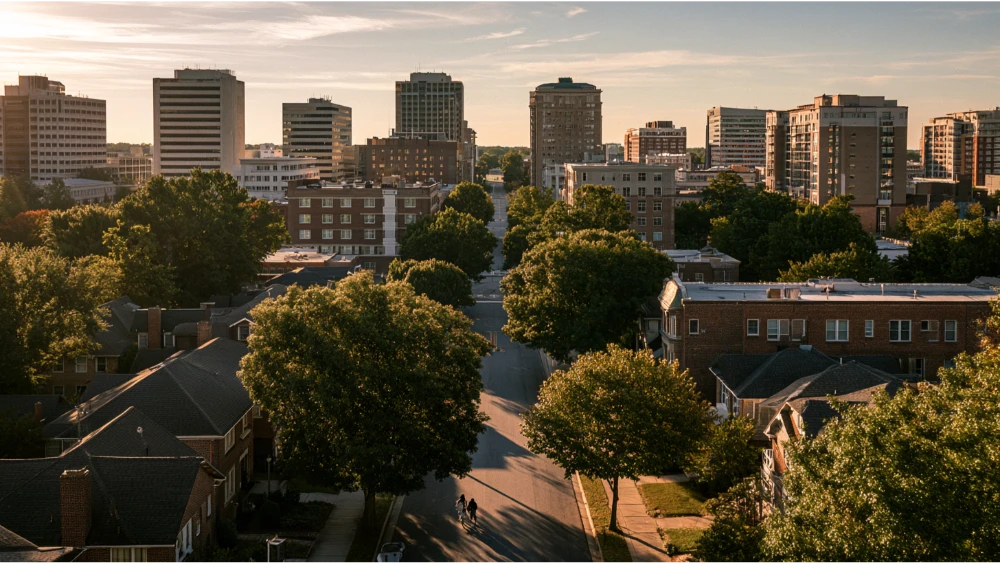
Greensboro NC is worth a serious look if you want a mid sized city with a short commute, big healthcare and university anchors, and a housing baseline below the national average. North Carolina’s third-largest city has a population of about 308,667 (U.S. Census Bureau, July 1, 2025 estimate), sitting between the Blue Ridge Mountains and the coast. Before you decide, verify your actual commute, your assigned school by address, and current asking rents for the specific property. This guide covers cost of living, jobs, neighborhoods, schools, hospitals, recreational activities, and a first-60-days checklist so you can judge the Greensboro area on numbers instead of vibes.
Greensboro NC at a Glance: Population, Income, and Taxes
Here’s the baseline, with dates attached so you can tell what’s current and what’s a survey average.
| Figure | As of |
|---|---|
| Population: 308,667 (up 3.2% from 2020) | July 1, 2025 (Census) |
| Land area: 129.58 square miles | 2020 Census |
| Median household income: $61,515 | 2020-2024, in 2024 dollars |
| Median gross rent: $1,172 | 2020-2024 (Census) |
| Median owner-occupied value: $244,800 | 2020-2024 (Census) |
| Mean commute: 21.7 minutes | 2020-2024 (Census) |
| NC individual income tax: 3.99% | Tax years after 2025 |
| Guilford County sales tax: 6.75% | Current |
The same Census profile lists median age and household composition if demographics factor into your decision. On rent, three numbers float around online and they measure different things. Census median gross rent is what existing renters already pay. HUD Fair Market Rent is a federal benchmark used for housing programs. Current asking rent is what’s advertised today.
Is Greensboro a Good Place to Live? Big City Access, Small City Pace
Living in Greensboro works well if you want established neighborhoods, a commute that averages under 22 minutes, a lower housing baseline than most comparable metros, and heavy trail access. Traffic is light next to bigger metros, weekend drives reach the mountains or the coast, and there’s real green space inside the Greensboro city limits. For plenty of households, that mix makes it a great place to land.
Look elsewhere if you need car-free living, want wages that track the national average, or expect a big city transit network. Most people here drive, and at nearly 130 square miles, daily life spreads out once you’re past the central neighborhoods.
Cost of Living in Greensboro NC
You’ll see the local cost of living quoted at about 83.9% of the national average, with housing roughly 19% below it. Those composites blend methods that aren’t always transparent. The components are more useful:
- Housing: the largest variable, worth checking by address rather than by citywide average.
- Taxes: NC’s flat 3.99% income tax, 6.75% sales tax in Guilford County, and a combined city/county property tax rate of $1.588 per $100 of assessed value for FY 2026-2027, before special-district charges.
- Transportation: budget for a car in most households.
- Utilities: the city bills water, sewer, stormwater, and solid waste through its portal. Renters should confirm which utilities go in their name before signing.
Why “below the national average” isn’t affordable for everyone
Median household income here is $61,515 (2020-2024, 2024 dollars), and the poverty rate is 17.0%. A low index doesn’t automatically make a city affordable for every household. What matters is your own income-to-rent ratio. Run your numbers through our Cost of Living Calculator before you start touring.
How Much Is Rent in Greensboro NC?
| Measure | Studio | 1BR | 2BR | 3BR |
|---|---|---|---|---|
| Census median gross rent (2020-2024, all sizes) | $1,172 | |||
| HUD FY 2026 Fair Market Rent (Greensboro-High Point) | $1,159 | $1,213 | $1,330 | $1,703 |
| Marketplace asking-rent average (October 2026) | ~$1,017 | ~$1,165 | ~$1,309 | ~$1,612 |
Asking rents move monthly, so treat that last row as a snapshot and check live listings in your target part of town. About 50.5% of occupied homes are owner-occupied, a near-even renter/owner split and a reasonably deep rental market. Our Rent Calculator will tell you what monthly number your income can carry.
Should You Rent or Buy First?
Rent first if your job location isn’t locked in, you haven’t driven the commute at your real departure time, or you want to compare neighborhoods on the ground. Buying may make sense with a stable work location and a verified budget. Census put median owner-occupied value at $244,800 (2020-2024, not a current sale price), with median monthly owner costs of $1,447 with a mortgage and $542 without. We’ve been broker-owned and full service since 2009, so here’s the honest advice: run both sides through our Rent vs. Buy Calculator and Mortgage Calculator.
Jobs, Wages, and Large Employers Across Greensboro and High Point

The metro unemployment rate was 4.0% in August 2026 (BLS, preliminary), with roughly 374,600 nonfarm jobs, up 0.9% year over year. Sector totals that month:
- Trade, transportation, and utilities: 83,600
- Education and health services: 57,600 (up 3.2%)
- Professional and business services: 49,500 (up 3.1%)
- Manufacturing: 47,300 (down 3.1%)
- Government: 43,400
- Leisure and hospitality: 39,700
The city’s stated clusters are aviation, innovative manufacturing, life sciences, specialized business services, and supply-chain logistics. Piedmont Triad International Airport is a 4,000-acre campus with more than 50 organizations and about 8,600 workers. Moses H. Cone Memorial Hospital and Guilford County Schools rank among the largest employers, and the area’s universities anchor the education and health services sector. Greensboro shares a labor market with Winston-Salem and High Point, which widens your search radius.
Be clear-eyed on pay: the metro mean hourly wage was $27.10 in May 2024 against a national average of $32.66, and transportation and material moving made up about 12% of local employment. That gap is part of the affordability trade. For remote professionals the math flips, since a lower housing baseline plus a 21.7-minute commute when you do go in makes the city practical. Treat announced projects as announcements, not as jobs you can apply for today.
Best Places to Live: Neighborhoods to Compare
We’re not ranking these. It’s a comparison grid, and the right fit depends on your commute and budget.
| Area | Housing stock / proximity | What to verify |
|---|---|---|
| Downtown Greensboro | Apartments and historic lofts, walkable restaurants and venues popular with young professionals | Parking, event traffic, noise |
| Fisher Park | Historic district near downtown; 12-acre park with 1.2 miles of trails | Historic approval for exterior changes |
| College Hill | Historic district with an adopted plan, central location | District boundaries and review rules |
| Dunleath | One of three locally zoned historic districts | Historic review affects renovations |
| Lindley Park | Adopted plan, neighborhood recreation access | Inventory, commute, school assignment |
| Southside | Traditional-neighborhood district close to downtown | Rental availability and parking |
| Westridge / West Friendly | Neighborhood-conservation overlays | Overlay lines don’t match informal names |
| Oak Ridge | Small-town setting in northwest Guilford County, larger lots | Longer commute, different school assignment |
How to vet a neighborhood before you sign
Visit on a weekday, on a weekend, and once at night. Drive the real commute at your real departure time. Verify the school assignment by exact address, review the Greensboro Police Department’s latest annual report plus address-level incident data rather than a citywide label, and pull FEMA flood maps for the specific property.
Schools and Colleges in Guilford County
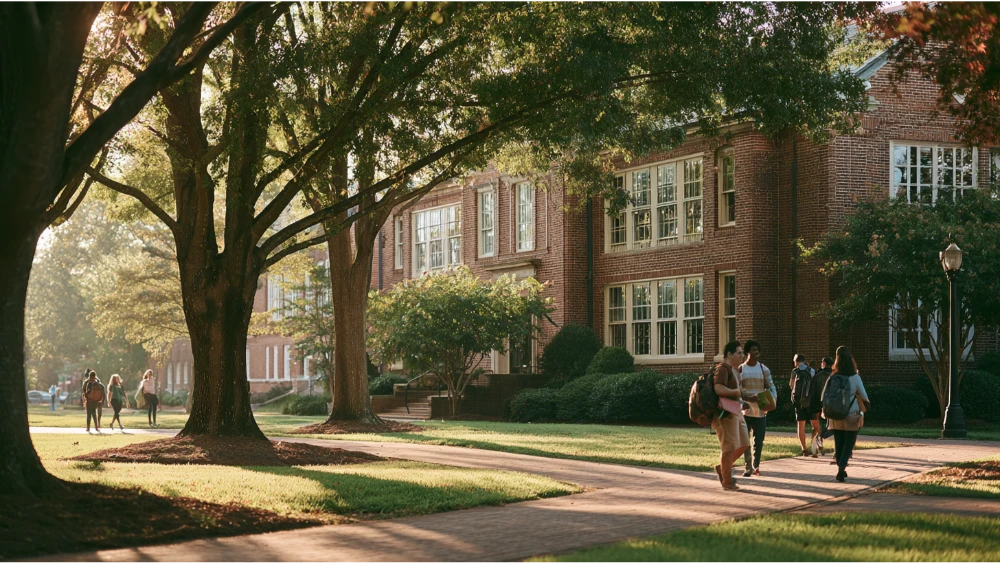
Guilford County Schools runs 121 schools serving about 68,000 students, with 9,000 employees and 121 languages spoken across the district. The Class of 2026 hit a record 93% four-year graduation rate, up from 92.1% in 2025. Performance varies substantially campus to campus, so families with kids should use North Carolina’s official 2025 School Report Cards for school-level grades and growth instead of one district-wide rating. Choice programs include magnet, early and middle colleges, Montessori, STEM, performing arts, and language options.
Higher education is a genuine anchor. The University of North Carolina at Greensboro enrolled 18,682 students in fall 2025. North Carolina A&T State University estimated about 15,700 students in fall 2026, including a record 3,214-student first-year class. Guilford Technical Community College serves more than 30,000 students annually across 80-plus areas of study, and Greensboro College adds a small private campus near downtown. Residents get a steady calendar of lectures, athletics, and performances out of it.
Verify your assigned school by exact address
The school board adopted boundary changes affecting some schools for 2026-2027 and 2027-2028. Confirm the assignment with the district for that specific property before you sign a lease or a purchase contract. Choice-program eligibility varies by program.
Hospitals and Healthcare
Moses H. Cone Memorial Hospital is a 628-bed teaching and referral hospital with a children’s emergency department, maternity services, a Level II trauma center, and heart, stroke, vascular, and neuroscience care. Wesley Long Hospital has 175 private beds covering oncology, orthopedics, bariatrics, urology, emergency, sleep, wound, and hyperbaric services. If anyone in your household has ongoing care needs, confirm provider networks before you pick a neighborhood.
Getting Around: Commute Times and Transit
The Census mean commute is 21.7 minutes (2020-2024). Some marketplace pages list around 18 minutes; the Census figure is the official one. I-40, I-85, and I-73/US 220 carry most of the traffic, Winston-Salem and High Point are short hops, and the mountains or the coast are a few hours either direction. That location is one of the most practical arguments for the move.
Greensboro Transit Agency charges $1.50 per standard ride with a $4 daily cap and a $58 31-day cap, plus discounted fares for eligible riders. Fixed routes generally run about 5 a.m. to 11:30 p.m. weekdays and 6 a.m. to 10 p.m. weekends, though verify by route. PTI handled 169,240 passengers in August 2026 with nonstop service to major hubs, and the downtown Amtrak station covers intercity rail. A car is still easiest for most households, so test your actual trip first.
What’s the Weather Like in Greensboro NC?
Four seasons, clearly separated. Summers reach the 90s with humidity, and winters are short by northern standards, with highs commonly in the 50s. The city averages roughly 217 sunny days. NOAA’s 1991-2020 normals put annual precipitation at about 43.95 inches and snowfall at about 7.1 inches, though snow totals swing hard year to year. Budget for summer air conditioning, expect a heavy spring pollen season, and ask about drainage on the property.
Things to Do: Outdoor Recreation, Culture, and Sports
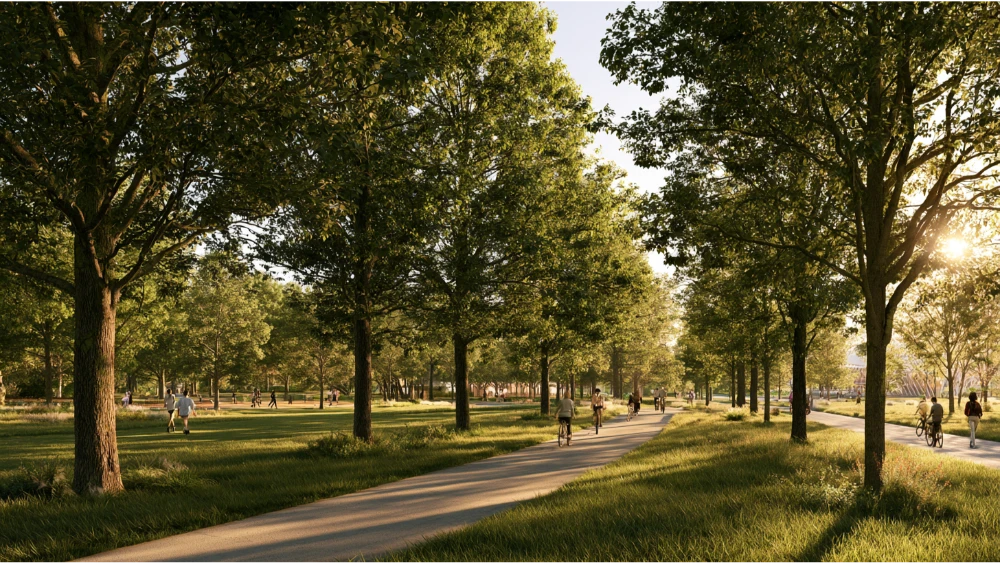
Outdoors. Greensboro offers more than 100 miles of trails and greenways, including 30-plus miles of hiking trails and 30-plus miles of shared-use mountain-bike trails, across roughly 8,677 acres of parks and open space. The 400-acre Battleground Parks District links historical and recreational points with 13-plus miles of connected trails. Hanging Rock State Park and its 20 miles of trails makes an easy day trip.
Arts and culture. The International Civil Rights Center & Museum sits downtown on the site where the 1960 sit-ins began, and the Greensboro History Museum is free. The Greensboro Science Center packs a 22-acre zoo, aquarium, museum, and carousel into one fun campus. The 3,000-seat Steven Tanger Center hosts Broadway tours, concerts, and symphony performances, and the free three-day North Carolina Folk Festival gives you a taste of the region’s music with 40-plus performers.
Sports and events. The Greensboro Coliseum Complex hosts ACC tournaments and year-round events, with college sports, downtown dining, and farmers markets filling out the calendar.
Pros and Cons
- Pro: Housing costs run roughly 19% below the national average.
- Pro: 21.7-minute mean commute, with drivable mountain and coastal access.
- Pro: 100-plus miles of trails and greenways inside the city.
- Con: Metro mean hourly wage of $27.10 (May 2024) trails the $32.66 national average.
- Con: Car dependence across nearly 130 square miles.
- Con: Manufacturing employment was down 3.1% year over year as of August 2026, and school performance varies campus to campus.
Your First 60 Days: A Checklist
- Confirm lease terms and which utilities are in your name.
- Set up city utilities through the portal, plus power and internet.
- Get your North Carolina driver license and register your vehicles within 60 days of establishing residence. Registration may be required sooner if you accept employment.
- Update voter registration and set USPS forwarding.
- Enroll children and verify the assigned school for your exact address.
- Transfer medical records and confirm in-network providers.
- Test your commute, and your bus route if you’ll use one.
- Line up renters insurance before move-in day.
Is This Move Right for You?
Four questions settle it. Can your budget absorb current asking rent plus utilities and transportation? Is your work location fixed? Can you live with car dependence? Does the trade of lower costs against lower regional wages net out in your favor? If you’re weighing cities in NC, Greensboro deserves a visit, not just a browse.
Frequently Asked Questions
Is Greensboro a growing city?
Yes. The Census Bureau estimated 308,667 residents as of July 1, 2025, up 3.2% from the 2020 base.
What is a livable wage here?
A commonly cited figure is around $43,000 a year for a single adult. Compare that against the metro mean hourly wage of $27.10 (May 2024) and current asking rents.
What are the downsides?
Car dependence, summer heat and humidity, a rough pollen season, regional wages below the national average, and school quality that varies by campus.
What are the best places to live in North Carolina?
There isn’t one answer for North Carolina. Greensboro’s draw is a shorter-than-typical commute and a lower housing baseline than most state metros, with the tradeoff showing up in wages.
Ready to Make the Move?
Renters: run the Rent Calculator and Rent vs. Buy Calculator, then browse available listings on our nationwide marketplace and submit a rental application.
Property owners with a local property or a portfolio anywhere in the U.S.: we’re a full-service, broker-owned property management company operating since 2009. Tenant placement, tenant screening, rent collection, property maintenance, rental permits, 1099s, property inspections, court evictions… all without the owner lifting a finger. As of early 2025, KT Rents managed 683 units and $187M in assets under management across 34 states, and reports a 98% occupancy rate.
Call (800) 716-4950, text (608) 207-0657, or email info@ktrents.com. Forms are answered within 24 hours. Your Rental. Your Way.