
Raleigh, North Carolina
Homes for rent and for sale — search the map or open the full city SEO catch-all page.
Raleigh, North Carolina
Moving to Raleigh, North Carolina offers a diversified job market with metro unemployment at 3.1% as of August 2026, three major hospital systems, NC State University, and more than 10,000 acres of parkland. Typical rents run $1,595 to $1,669 and the median home value sits near $428,000, meaning costs have risen but remain well below most large coastal metros. Rent first to learn the city before committing to a purchase.
Moving to Raleigh, North Carolina
Moving to Raleigh, North Carolina works well if you want a diversified job market, major universities and hospital systems, an unusual amount of accessible green space, and housing costs below most large coastal metros. It is not uniformly cheap, and it is not uniformly walkable. Your budget, your workplace location, your commute, and your exact street address will shape your experience here far more than Raleigh’s reputation will.
This Raleigh guide is written first for renters and relocating professionals, and second for buyers and households enrolling kids in school. You’ll get current dated numbers, a selection framework for picking a neighborhood, how Wake County actually assigns students, hospital and commute reality, weather, a move checklist you can work through step by step, and the insider tips that usually only surface after you’ve already signed something. We’re KT Rents, a broker-owned, full service property management company managing rentals nationwide since 2009, and Raleigh is one of our confirmed rental markets.
Moving to Raleigh, North Carolina: Is It a Good Place to Live?
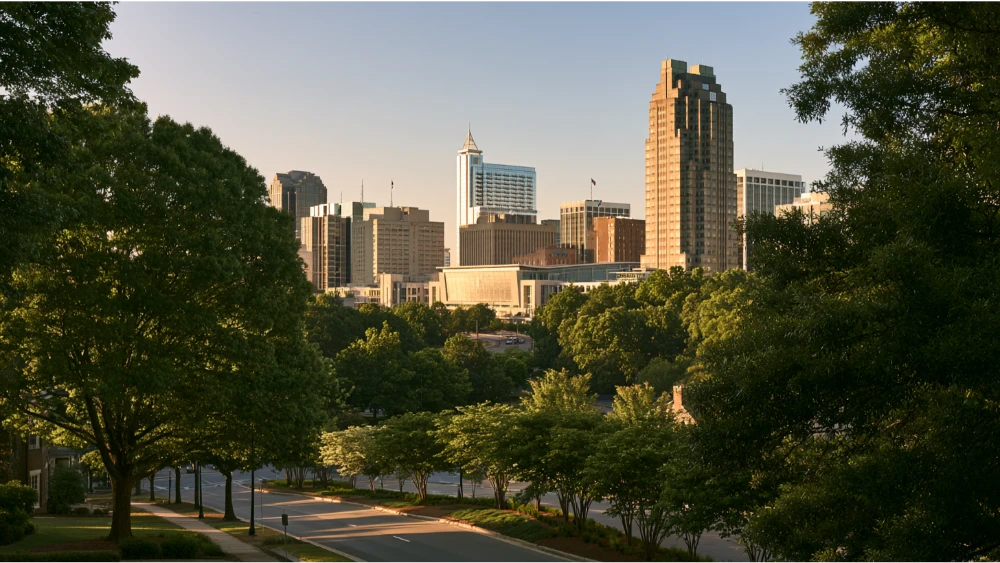
Yes, for most people who are moving here for work. Raleigh offers a strong job market with unemployment rates below the national average, and the city offers three major hospital systems, North Carolina State University plus regional access to other research universities, more than 10,000 acres of parkland, and tree-lined streets that make the outdoor recreational spaces usable through four distinct seasons. The housing stock is varied: downtown apartments, close-in historic bungalows, Midtown mixed-use buildings, and single-family subdivisions on the edges.
It’s harder if you need car-free living, or if you arrived expecting 2015 prices. Rents and home values have climbed with the population. Here’s the snapshot, with every figure labeled and dated.
| Measure | Figure (geography and date) |
|---|---|
| City population | 506,306 (Raleigh city, July 1, 2025, U.S. Census Bureau) |
| Growth since 2020 | +8.2% (city, Census) |
| Median household income | $85,395 (city, 2020–2024, in 2024 dollars, Census) |
| Typical rent | $1,669 (metro, Sept 2026, Zillow); $1,595 median asking rent (city, Sept 2026, Realtor.com) |
| Census median gross rent | $1,572 (city, 2020–2024) |
| Typical home value | $427,969 (metro, Sept 2026, Zillow); $449,900 median listing price (city, Sept 2026) |
| Nonfarm jobs | 787,200 (Raleigh–Cary metro, Aug 2026, BLS, preliminary) |
| Unemployment | 3.1% (metro, Aug 2026, BLS) |
| NC individual income tax | 3.99% (tax years after 2025, NCDOR) |
| Mean commute | 23 minutes (city, 2020–2024, Census) |
| Public schools | Wake County Public School System: 204 schools, 161,461 projected students (2026–27) |
Raleigh City vs. Wake County vs. the Research Triangle: Know Which Map You’re Reading
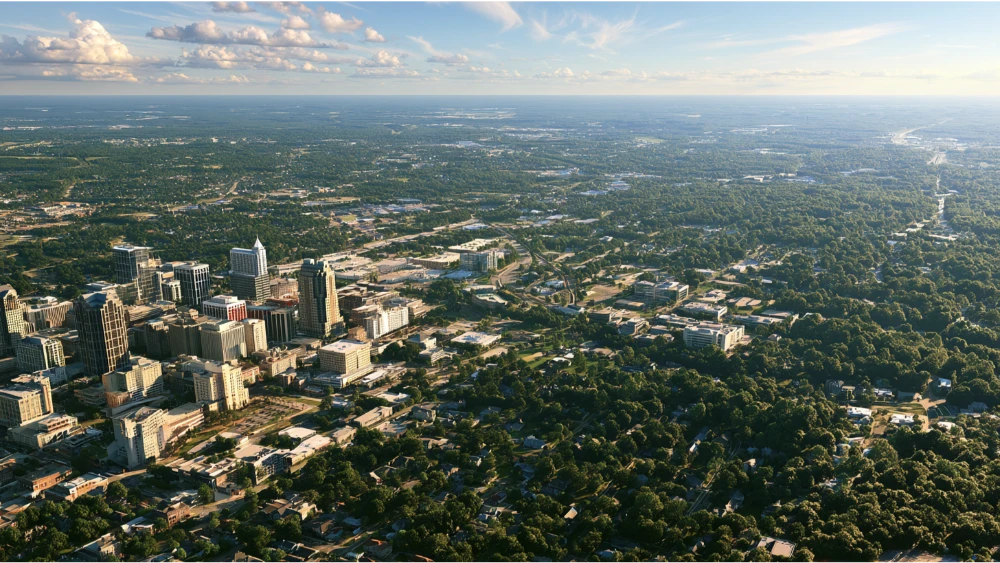
Most relocation guides mix four different maps and never tell you. Keep these straight:
- Raleigh city: population, city parks, utilities, neighborhoods, city services, police data.
- Raleigh–Cary metro: jobs, wages, and most housing market indexes.
- Wake County: the public school system and countywide employment clusters.
- The Research Triangle: Raleigh, Durham, Chapel Hill, Research Triangle Park, and the surrounding towns. The broadest frame, and the one job seekers actually live in.
Why it matters: a page that quotes metro rent next to city population is comparing two different maps and calling it one city. Every number in this article is labeled with its geography and its date. When you read other sources, ask the same question.
Housing Costs in Raleigh: What Renters and Buyers Actually Pay
Start with rent, because that’s where most newcomers land first. Three legitimate measures exist, and they disagree for good reasons:
- $1,572, the Census Bureau’s median gross rent for Raleigh city, 2020–2024. This is a multi-year historical average and includes certain utility costs. It is not what you’ll pay next month.
- $1,669, Zillow’s typical rent for the Raleigh metro in September 2026, up 1.4% year over year. Zillow’s index represents the broader rental stock, not just what’s listed today.
- $1,595, the median asking rent for Raleigh city in September 2026 per Realtor.com. Active listings only.
In practice, a one-bedroom commonly runs somewhere between $1,400 and $1,700 depending on district, building age, and whether parking is bundled. New construction in Midtown or Glenwood South sits at the top of that band. Older stock farther from the core sits below it.
On the ownership side, Raleigh was 50.7% owner-occupied with a median owner-occupied home value of $415,800 for 2020–2024 (Census). As of September 2026, Zillow put the metro typical home value at $427,969 while the city median listing price was $449,900. Those are not the same thing: a listing price is what sellers are asking, not what buyers paid. Treat the gap as negotiating room that may or may not exist in your price band.
The Raleigh housing market moves monthly, so re-check current figures before you budget, especially if you’re reading this more than a quarter after publication. Honest framing: housing prices have risen with demand, and Raleigh costs less than most major cities on either coast while having moved well past bargain territory. The spread inside the city is sharp, and that’s the part you can control.
Is Raleigh’s Cost of Living Really Below the National Average?
Usually yes on a blended index, often no on the line item that matters most to you. Published cost of living indexes weight housing, groceries, healthcare, and transportation differently, and some run on metro geography while others use the city. That’s why one guide says Raleigh sits around 3% below the national average while another says it’s above. Both can be technically defensible. Break it into components instead.
Where Raleigh Is a Moderate Cost Market
Groceries, healthcare, and day-to-day services tend to land near national norms rather than above them, which is what makes Raleigh a moderate cost metro on most blended indexes. State income tax is 3.99% for tax years after 2025 per NCDOR, with further reductions tied to statutory revenue triggers, so don’t budget around rates that haven’t happened yet. People relocating from the Northeast or the West Coast are frequently pleasantly surprised by the affordable cost of a night out, a gym membership, or a weekend away.
Where Raleigh Carries a High Cost
Housing is the biggest swing and the one you choose, and newer buildings in the core carry a high cost per square foot compared with the rest of the city. Transportation is close behind, because car ownership is effectively mandatory at most addresses, which means insurance, fuel, and parking. Utilities can bundle water, wastewater, stormwater, garbage, recycling, and yard waste through city billing, so ask what’s included before you compare two rents.
Compared to San Francisco or similarly priced coastal markets, your housing dollars stretch meaningfully further here. That gap is the single most common reason people relocate from larger cities to Raleigh, and it’s real. It’s also narrower than it was five years ago.
Should You Rent or Buy When Moving to Raleigh?
Rent first unless you have a specific reason not to. You don’t yet know whether a daily drive from North Raleigh to Research Triangle Park is tolerable in February traffic. You don’t know whether your base school assignment will hold or get capped. You don’t know whether you’d rather have a centrally located mixed-use address or a yard twenty minutes out. A year of renting buys you all of that information at a known monthly cost, and it’s the simplest way to learn a new city without betting a down payment on it.
Three factors decide it: how long you’ll realistically stay, how certain your job location is, and whether buying at a median home price in the $440,000 range would stretch you thin. If any of the three is shaky, rent.
Run the numbers before you decide. Our Rent Calculator, Rent vs. Buy Calculator, Mortgage Calculator, and Cost of Living Calculator are free to use on ktrents.com and will give you a real monthly comparison instead of a gut feeling. When you’re ready to look at actual inventory, browse rental properties near you and filter by what you need.
Raleigh’s Job Market: Industries, Major Employers, and Job Opportunities
The Raleigh–Cary metro held roughly 787,200 nonfarm payroll jobs in August 2026, up 2.2% over August 2025, with unemployment around 3.1% (BLS, preliminary and subject to revision). The mean wage across Raleigh–Cary occupations was $34.01 per hour in May 2025, against $33.54 nationally.
Here’s the nuance most relocation guides skip: growth is uneven. As of August 2026, construction employment was up 7.6% year over year, leisure and hospitality up 5%, education and health services up 3.6%, and professional and business services up 3%. Information employment declined over the same period. So no, “tech” is not one monolithic booming sector here. Check your specific function and industry, not the headline.
Job opportunities are also spread across Wake County and the wider Triangle rather than concentrated downtown. Where you work determines where you should live far more than any neighborhood ranking does.
Technology, Software, and Research Triangle Park
The metro counted about 43,780 computer and mathematical jobs in May 2025, including 12,580 software developers. That’s 5.9% of local employment versus 3.4% nationally, which is the clearest signal of Raleigh’s technology concentration. Wake County economic development data counted 73,800 technology jobs in its 2024 cluster estimates. Research Triangle Park, sitting between Raleigh, Durham, and Chapel Hill, anchors the region with more than 250 companies and is just a short drive from much of the western half of the city. Commonly cited major employers across the area include IBM, Cisco, and GlaxoSmithKline. This density is why so many young professionals relocate here for the job market alone.
Life Sciences, Healthcare, Education, and State Government
Wake County cluster estimates put life sciences near 49,000 jobs in 2024, covering pharmaceuticals, biotech, contract research, and manufacturing. Healthcare employment is anchored by the three hospital systems covered below. Education runs through North Carolina State University locally, with Duke University and UNC Chapel Hill within the region. And because Raleigh is the state capital, government employment acts as a stabilizer that most comparable metros don’t have. Professional services, finance, and advanced manufacturing round out the mix.
How to Choose a Raleigh Neighborhood (Without Guessing)
Skip the “best neighborhoods” lists. They’re written from vibes. Use these five criteria against a specific street address instead:
- Total monthly housing cost, not base rent. Add utilities not included, parking, pet rent, and renters insurance.
- Tested commute to your actual workplace, driven at peak hours in both directions.
- Base school assignment looked up by exact street address, not neighborhood name.
- Daily access: groceries, your healthcare system, a greenway entrance, and parking supply.
- Official crime data from the Raleigh Police Department for the specific blocks around the property.
Everything below describes areas by built form, housing type, and access. That’s the only honest way to do it, and it’s the only way that complies with Fair Housing.
Downtown Raleigh and Its Destination Districts
Downtown Raleigh is organized into six destination districts: the Capital District, Fayetteville Street, Glenwood South, Moore Square, the Warehouse District, and Seaboard + Person Street. This is the most walkable part of the city by a wide margin, dominated by apartments and condos, with the heaviest concentration of restaurants and nightlife. It also carries the highest price per square foot and the thinnest parking supply. If you want to live without a car in Raleigh, this is where it’s most plausible.
North Hills, Midtown, and Cameron Village
North Hills and the broader Midtown area is mixed-use development: apartments stacked over retail, offices, a movie theater, and quick Beltline access. Centrally located for getting almost anywhere in the city. The Cameron Village area sits closer to NC State, pairing established shopping with older close-in housing stock. Both are among Raleigh’s pricier rental submarkets, and both reward you with short drives.
North Raleigh, West Raleigh, and East/Southeast Raleigh
North Raleigh mixes established neighborhoods with newer subdivisions and holds more single-family and townhouse inventory than the core. Drives are longer, especially southbound in the morning. Wakefield sits at the northern edge. West Raleigh runs around NC State and Lake Johnson, where student and faculty demand tightens supply near campus, and I-40 puts Research Triangle Park within easy reach. East and Southeast Raleigh have strong greenway access and are seeing significant change, including the New Bern Avenue bus rapid transit corridor that was under construction in 2026. Check construction impacts on your specific block before you sign.
Nearby Triangle Towns to Compare: Cary, Apex, Holly Springs, Wake Forest, and Durham
Cary is known for its parks system and school reputation. Holly Springs and Apex sit in southwestern Wake County with a lot of newer construction. Wake Forest, to the north, has a historic downtown and the small town feel people usually mean when they say southern charm. Nearby Durham and Chapel Hill offer university-adjacent living with their own rental markets. All of these sit outside Raleigh city limits, which means different municipal services, potentially different tax jurisdictions, and in Durham’s case a different school district entirely. Verify by address.
Schools: How the Wake County Public School System Actually Assigns Students
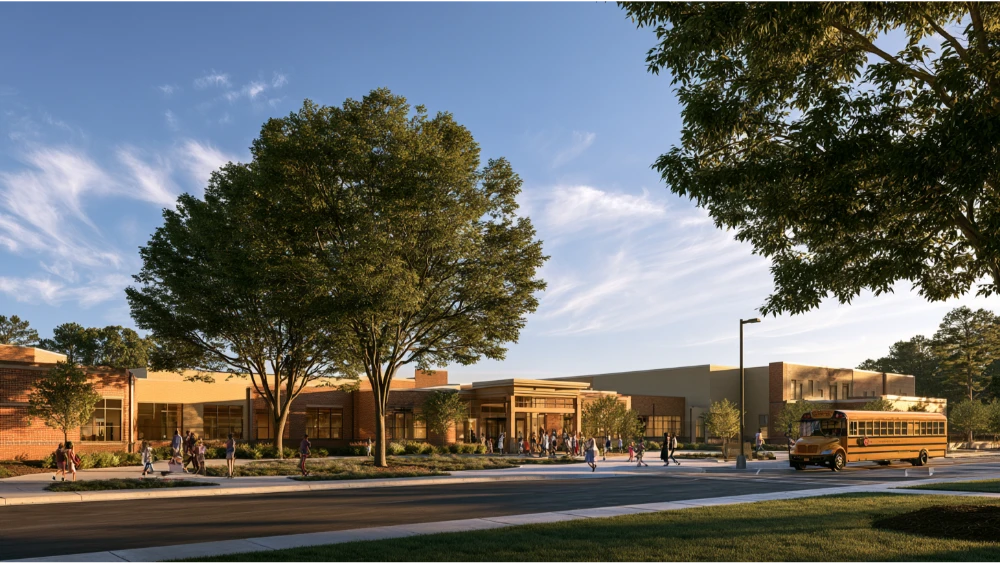
Most Raleigh addresses are served by the Wake County Public School System, the largest district in North Carolina, with 204 schools and 161,461 projected students for 2026–27. The district reports a 91.3% four-year graduation rate and says 60% of its schools received an A or B School Performance Grade for 2025–26. Those are district-reported figures, and they’re worth knowing, but they won’t tell you anything about your specific school.
Families relocating here almost always ask which parts of town have excellent schools. The honest answer is that assignment is based on your exact residential address, not the neighborhood name, not the ZIP code, and not what a real estate agent told you. Two houses on the same street can feed different schools. Use the district’s address assignment lookup tool on wcpss.net, which returns your base elementary, middle, and high school along with the calendar, transportation eligibility, and whether the school is capped. Do this before you sign a lease, not after.
For kindergarten, a child must be five years old on or before August 31. Application windows for choice programs change every year: the 2027–28 window was set to open October 15, 2026, so verify current dates directly with the district. Private schools are an alternative across the Raleigh area, and we won’t rank them for you.
Traditional vs. Year-Round Calendars, Magnets, and Choice Programs
Some WCPSS schools run a traditional August-to-June calendar and others run year-round, where students attend on staggered tracks with breaks spread through the year. That difference reshapes your childcare planning, your vacation timing, and sometimes your lease timing. Magnet schools, career academies, and early college programs are available through application, but admission to a requested choice school isn’t guaranteed. Plan around your base assignment and treat a choice seat as upside.
For higher education, Raleigh itself has North Carolina State University with roughly 25,000 undergraduates, plus Meredith College, Shaw University, Saint Augustine’s University, William Peace University, and Wake Technical Community College. Regionally, Duke University in Durham and UNC Chapel Hill, established in 1795 as the nation’s first public university, sit within a half hour or so. Together they feed the research, healthcare, and technology workforce that drives Raleigh’s economy.
Hospitals and Healthcare in Raleigh
Three major systems serve the city. WakeMed operates its Raleigh Campus, which WakeMed identifies as a Level I Trauma Center, along with WakeMed North and additional emergency and outpatient facilities around the region. UNC Health Rex Hospital sits on Lake Boone Trail with specialty and outpatient locations across Wake County. Duke Raleigh Hospital is a 204-bed facility with emergency care plus cardiology, cancer care, neuroscience, orthopaedics, gastroenterology, and surgery.
Rather than asking which is best, do two practical checks before you commit to an address: confirm which systems and individual providers participate in your insurance plan, and measure the drive to the nearest emergency department and urgent care from the property. Those two answers will matter more than any ranking.
Getting Around Raleigh: Commutes, the Beltline, Transit, and RDU
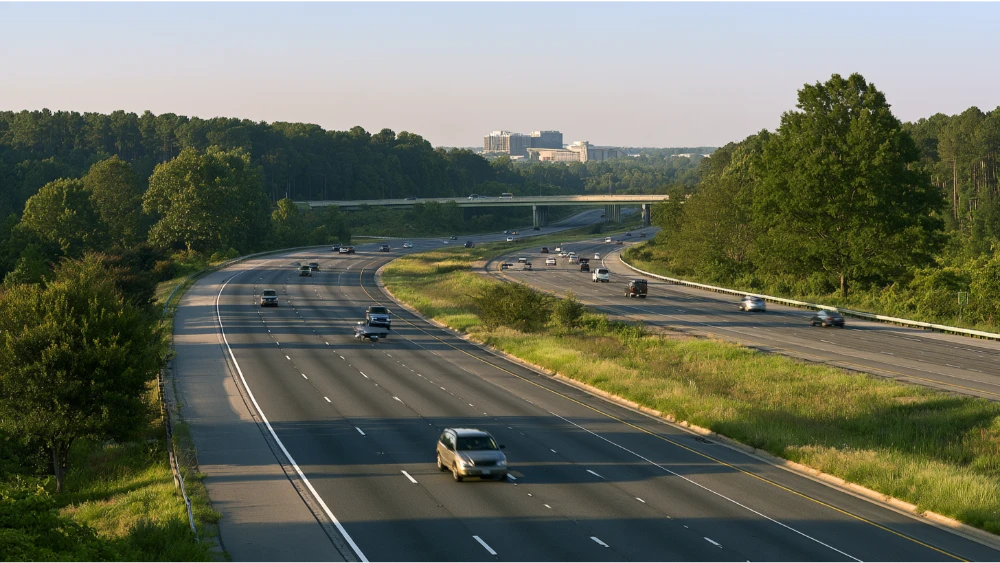
Most residents rely on a car, and most Raleigh addresses make that unavoidable. Start there. The Census mean commute for Raleigh city was 23 minutes for 2020–2024, and commonly cited regional averages run 25 to 30 minutes, but cross-region trips to RTP, Durham, or Chapel Hill can run well past that at peak. Among the major highways, I-440 loops the central city as the Beltline and I-40 carries the RTP and airport traffic, while Capital Boulevard and Wake Forest Road handle a lot of north-side movement.
GoRaleigh runs daily bus routes plus express service, and coverage is genuinely useful along certain corridors and thin elsewhere. The New Bern Avenue bus rapid transit corridor was under construction in 2026, and other proposed corridors remain in planning or design. Don’t plan a commute around service that isn’t running yet. The Capital Area Greenway system doubles as a bike commuting network for some close-in addresses.
Raleigh-Durham International Airport served 15,644,658 passengers in 2025 and reached 80 announced nonstop destinations as of July 2025, though individual routes change. It’s roughly 20 minutes from downtown outside of rush hour. Amtrak provides daily service toward Charlotte.
The single most useful thing in this section: drive your actual commute, both directions, at the hours you’d actually drive it, before you sign anything.
Raleigh Weather: Four Distinct Seasons, Hot Summers, Mild Winters
Raleigh experiences a humid subtropical climate with four distinct seasons. Using the 1991–2020 climate normals for RDU: early January normals sit near 52°F for the high and 32°F for the low. Mid-July normals run near 91°F for the high and 70 to 71°F for the low. July tends to be the wettest month, with rainfall totals that can approach 4.5 inches.
Spring and fall are the long comfortable stretches, and they’re why the greenway trails and green spaces get used nine or ten months a year instead of four. Summer is genuinely hot and humid, so budget for air conditioning and expect your August power bill to look nothing like your April one. Winters are mild, mostly in the 40s and 50s, with occasional ice or light snow that will close schools for a day.
Raleigh is inland, but inland does not mean immune. Hurricanes and tropical systems can deliver heavy remnant rainfall here. Check flood information for the specific property and get renters or homeowners insurance quotes before move-in. Spring and fall are the easiest months to move, and rental supply peaks in summer, particularly near NC State.
Things to Do in Raleigh: Green Spaces, Food Scene, and Entertainment
The thing that defines daily life here is how much usable outdoor space sits inside a city of half a million people, and how many of the streets are shaded.
Parks, Greenway Trails, and Outdoor Activities
Raleigh has more than 10,000 acres of parkland, which is what makes an active lifestyle easy to maintain here without planning around it. The city documents its Capital Area Greenway system as more than 100 miles across 28 named trails, while broader regional counts that include connected systems run past 180 miles. The Neuse River Greenway Trail alone covers 27.5 miles of pavement from Falls Lake Dam to the Wake–Johnston county line. Lake Johnson Park spans roughly 500 acres including a 150-acre lake with paved and natural-surface trails.
Dorothea Dix Park sits just south of downtown on former hospital grounds. Pullen Park is North Carolina’s first public park. Shelley Lake and the Walnut Creek trails round out the in-city options. Just outside, William B. Umstead State Park offers 22 miles of hiking trails, and Falls Lake State Recreation Area has 14 miles of mountain biking trails. For weekends, the Blue Ridge Mountains and the Atlantic Ocean are both drivable from here in opposite directions, and either one makes a reasonable day trip if you leave early.
Raleigh’s Food Scene, Breweries, and Markets
The city counts more than 1,200 restaurants, running from food halls and barbecue counters to fine dining downtown, and the craft brewery culture supports somewhere between 25 and 30-plus local operations. The Downtown Food Truck Rodeo draws up to 50 trucks when it runs. Triangle Restaurant Week puts fixed-price menus across the region on the calendar. Farmers markets operate year-round. Raleigh chefs have earned James Beard recognition, and a Raleigh restaurant has landed on a national best-new-restaurant list, which tells you the food scene here is not an afterthought.
Museums, Music, and Sports
The city promotes more than 40 free attractions, including the North Carolina Museum of Natural Sciences, the North Carolina Museum of Art, the City of Raleigh Museum, and Marbles Kids Museum. Check current admission policies and renovation status before you go. Downtown’s six destination districts carry the live music calendar, and the Duke Energy Center for the Performing Arts hosts touring productions, symphony, opera, and ballet. For sporting events, professional hockey plays at the Lenovo Center with a capacity around 19,700, and NC State football fills Carter-Finley Stadium at 56,919. The southern hospitality is real enough that you’ll notice it, without being the reason you move.
The Honest Pros and Cons of Moving to Raleigh
Pros:
- Diversified job market with metro unemployment at 3.1% (Aug 2026), below the national average.
- Three major hospital systems inside the city.
- NC State plus regional access to Duke and UNC Chapel Hill.
- More than 10,000 acres of parkland and 100+ miles of city greenway trails.
- RDU with 80 announced nonstop destinations (July 2025).
- Wide range of housing types and price points, from downtown condos to outer-ring single-family.
- 3.99% state income tax (tax years after 2025).
- Long, mild spring and fall.
Cons:
- Most addresses require a car, and public transportation coverage is limited outside select corridors.
- Rents and home prices have risen with demand and are no longer a bargain.
- Summer heat and humidity, with July highs normalizing near 91°F.
- Traffic congestion growing alongside 8.2% population growth since 2020.
- School assignment complexity: caps, year-round calendars, and periodic reassignment.
- Active construction, including the New Bern Avenue BRT corridor.
Raleigh continues to grow quickly, and the trade-offs are real. Your job is to pick the address that minimizes the ones you actually care about.
Your Raleigh Moving Checklist
- Set a commute radius from your actual workplace, then drive the edges of it at peak hours.
- Run the Rent vs. Buy and Cost of Living calculators on ktrents.com before you commit to a housing type.
- Look up the base school assignment and calendar by exact street address using the WCPSS tool.
- Check the Raleigh Police Department crime mapping tool and its annual and quarterly reports for the specific blocks around the property.
- Submit your rental application.
- Ask the property owner or manager which utilities are already included, then contact Raleigh Water at least five business days ahead. As of September 2026 the city listed a $50 initiation fee and a $90 deposit for new accounts. Verify current charges.
- Get your North Carolina driver’s license within 60 days of establishing residency, and handle vehicle registration per the current NCDMV new-resident checklist.
- Confirm your insurance network covers your preferred hospital system and providers.
- Complete a documented move-in inspection with photos, then set up your maintenance request and online rent payment accounts.
How KT Rents Helps You Land in Raleigh
If you’re renting: Raleigh is one of our confirmed rental markets. You can browse listings, submit a rental application online, pay rent online, and send maintenance requests through the portal without chasing anyone down. Residents also get perks after the lease is signed: housewarming gifts and discounts on home goods, appliances, insurance, and lawn and garden products. We handle both short-term and long-term leasing, which matters if you’re renting a year to learn the city before you buy. Start with the Rent Calculator and Rent vs. Buy Calculator, then search listings.
If you’re an owner, whether you’re relocating out of Raleigh and keeping the property or buying here as an investment: we’re a broker-owned, full service property management company operating nationwide since 2009. Tenant placement, tenant screening, rent collection, property maintenance, rental permits, 1099s, city ordinance compliance, property inspections, and court evictions, without the owner having to lift a finger, for roughly what we describe as the price of a cup of coffee and a donut per day. As of March 2025 we managed 683 units, across 34 states as of January 2025, with $187M as of January 2025, and we report a 98% occupancy rate. Unit count is easy to brag about. Keeping them occupied is the part that pays you.
Call (800) 716-4950, text (608) 207-0657, or email info@ktrents.com. We respond within 24 hours.
Frequently Asked Questions
What salary do I need to live in Raleigh, NC?
Using the common 30%-of-gross-income rent benchmark against a typical rent of roughly $1,669 metro or $1,595 city asking (Sept 2026), a single renter wanting comfortable margin is looking at roughly $64,000 to $67,000 gross. One-bedrooms commonly run $1,400 to $1,700, and a single person’s all-in monthly cost is often cited near $3,500. Household size, debt, childcare, transportation, and healthcare all move that number. Raleigh’s median household income was $85,395 for 2020–2024.
What is the downfall of living in North Carolina?What is the downfall of living in North Carolina?
The most commonly cited trade-offs are hot, humid summers, exposure to hurricane and tropical system rainfall even at inland addresses, limited public transportation outside a few corridors in most cities, and housing costs that have risen faster than newcomers expect in the fastest-growing metros.
What are some reasons why people might not move to Raleigh, NC?
Car dependence at most addresses. Rising housing costs, with the metro typical home value at $427,969 as of September 2026. Traffic tied to 8.2% population growth since 2020. School assignment complexity including caps and year-round calendars. Active BRT construction on New Bern Avenue. And the reality that information-sector employment declined year over year as of August 2026, so not every technology role is in demand here.
Is Raleigh a Democrat or Republican city?
Raleigh is North Carolina’s capital and the seat of state government, so state political activity is concentrated here. For current, verifiable party registration figures and precinct-level results, check the Wake County Board of Elections and the state’s official voter registration data rather than relying on a characterization.