

Bismarck, North Dakota
Homes for rent and for sale — search the map or open the full city SEO catch-all page.
Bismarck, North Dakota
Moving to Bismarck, North Dakota means settling in a state capital of about 77,963 people where cost of living runs roughly 7 to 13 percent below the national average and metro unemployment sits at just 2.0%. The median home value is $300,300 and median gross rent is $999 per month. Expect short 15.6-minute average commutes and strong healthcare and government employment, balanced against serious winters with around 50 sub-zero days per year.
Moving to Bismarck, North Dakota
Bismarck works for people who want a smaller state capital city with short commutes, very low unemployment, and real access to parks, trails and the Missouri River. The tradeoffs are a serious northern Plains winter, limited fixed-route transit, and a smaller entertainment scale than a big metro. Cost of living is commonly cited as running roughly 7 to 13 percent below the national average, though that’s a general estimate and not an official figure. You’re probably weighing a job offer, a more affordable move, or a slower pace of life, so we’ll walk through housing, jobs, schools, weather and the best places to start your search.
Two things to keep straight. City versus metro: Bismarck city numbers and metro numbers (Burleigh, Morton and Oliver counties) are different, and we label every stat. Census median rent versus today’s advertised rent: two measurements from two different time periods. Don’t swap one for the other when you budget.
Bismarck at a glance: life in North Dakota’s capital city
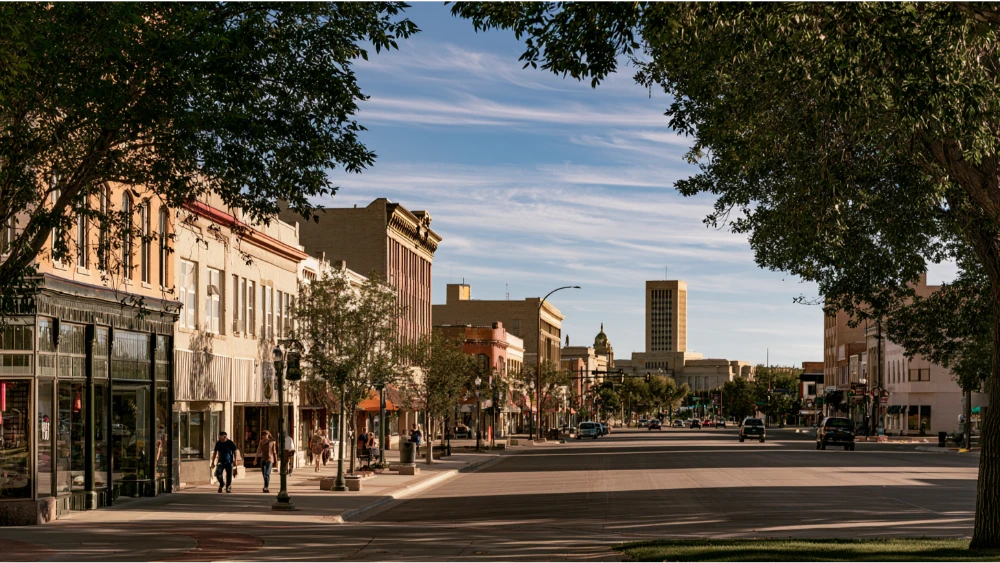
Bismarck is the capital city of North Dakota and a regional hub for a wide stretch of rural country, not a small town. It sits on the east bank of the Missouri River in west-central North Dakota, with the separate city of Mandan directly across the water. The metro runs somewhere near 135,000 people. North Dakotans call the local temperament “North Dakota Nice,” and the community feel is neighborly, practical and unhurried.
- Population: 77,963 (city, July 1, 2025 Census estimate). Older guides still cite about 75,556.
- Growth: +5.9% from the April 2020 base through July 2025, close to 13,000 added residents over the last decade.
- Median household income: $78,387 (city, 2020 to 2024 ACS, in 2024 dollars).
- Mean commute: 15.6 minutes (city, 2020 to 2024 ACS).
- Setting: Missouri River, west-central North Dakota, Mandan across the bridge.
Moving to Bismarck North Dakota: the honest pros and cons
Pros:
- Short commutes and a diversified economy that softens the boom-and-bust cycles the region is known for.
- One of the lowest metro unemployment rates in the country, with a large public-sector and healthcare employment base.
- Parks, trails and river recreation built into daily life.
- Regional healthcare depth, unusual for a city this size.
- Strong local traditions, including downtown street fairs and seasonal community programming.
Tradeoffs:
- Roughly 50 days below zero in a typical year. That’s a logistics challenge, not a talking point.
- Limited public transportation, so most households plan around a vehicle.
- Smaller entertainment scale than a major metro.
- Geographic isolation: several hours of driving to any large metro area.
On safety, we won’t hand you a label. Pull the Bismarck Police Department’s most recent annual report from the city’s reports and statistics page and read the numbers yourself.
Cost of living in Bismarck: rent, median home value and taxes
| Measure | Figure | Source and period |
|---|---|---|
| Median gross rent | $999/mo | City, 2020 to 2024 ACS (includes tenant-paid utilities) |
| Median home value (owner-occupied) | $300,300 | City, 2020 to 2024 ACS |
| Median monthly owner cost with mortgage | $1,847 | City, 2020 to 2024 ACS |
| Median household income | $78,387 | City, 2020 to 2024 ACS |
| Homeownership rate | 65.5% | City, 2020 to 2024 ACS |
Taxes: the general combined sales tax in Bismarck is 8% (5% state, 2% city, 1% county), effective April 1, 2025. And let’s kill a myth that keeps showing up in relocation articles. North Dakota did not eliminate its individual income tax. The North Dakota tax commissioner lists 2025 tax-year rates of 0%, 1.95% and 2.50%, with thresholds that vary by filing status. Low, yes. Zero, no.
Budget winter heating separately from the rest of your utilities. It’s the line item newcomers from warmer states underestimate, and it can raise a cold-month bill well past what you paid down south. Run your current city against Bismarck in our Cost of Living Calculator, then set a housing ceiling with the Rent Calculator.
Renting in Bismarck: what to check before you sign
That $999 median gross rent is a 2020 to 2024 survey measure that already includes tenant-paid utilities. Current advertised rents for apartments, townhouses and single-family homes will be different numbers. Price from active listings, always.
Before you sign a North Dakota lease, confirm:
- Which utilities are included and which are yours.
- Heating type, age of the system, and who pays for it.
- Garage, covered parking, or an outlet for a block heater.
- Who clears snow and ice from walks, steps and the driveway.
- How emergency maintenance is reported, and how fast a frozen pipe or dead furnace gets answered.
- Pet policy, guest parking and winter street-parking rules.
This is where a broker-owned, full-service manager earns the fee. Tenant placement, tenant screening, rent collection, property maintenance and property inspections handled by one accountable company beats calling a landlord at 11 p.m. in January and hoping. Ready to look? Browse available rentals and submit a rental application.
Should you rent first or buy?
About 65.5% of residents own their homes, and tight supply has pushed the median home value up to $300,300. That doesn’t mean you should buy in month one.
Rent first if you’re relocating sight unseen, haven’t lived through a winter here, aren’t sure which side of the river your commute favors, or want to verify school boundaries before you commit a family to an address.
Buy sooner if your employment is locked in, you know the area, and your down payment and reserves are ready.
Questions to answer first: how does that commute drive in snow, how much snow-removal workload does the lot create, is the property in a floodplain, and what’s your realistic resale timeline? Run the Rent vs. Buy Calculator and the Mortgage Calculator before you decide. Your Rental. Your Way.
Jobs and job opportunities in the capital city
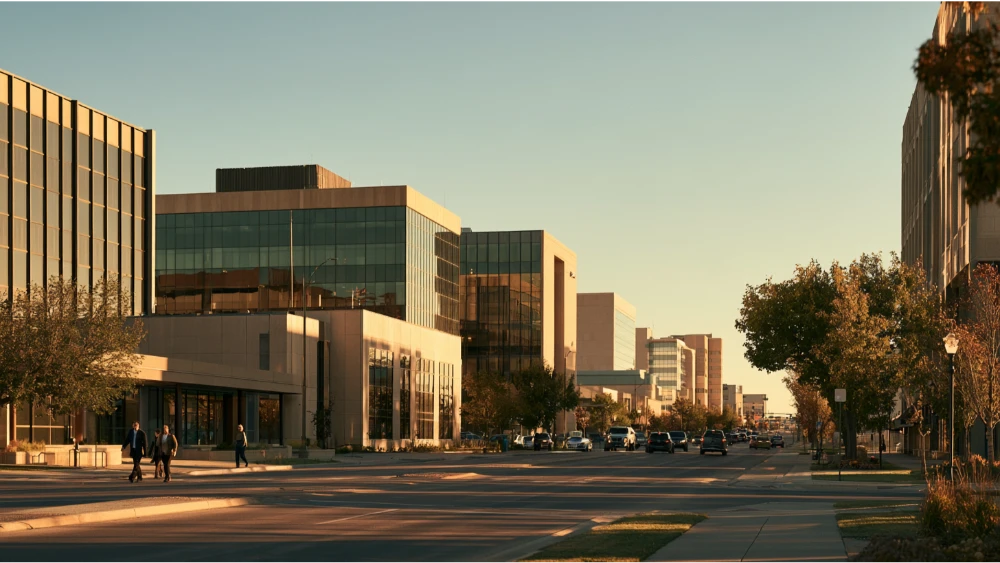
All figures below are metro (Burleigh, Morton and Oliver counties), not city.
- Unemployment: 2.0%, August 2026, preliminary and not seasonally adjusted.
- Total nonfarm employment: 73,600 jobs (August 2026, preliminary).
- Education and health services: 15,500.
- Trade, transportation and utilities: 14,000.
- Government: 12,500. The capital role matters here.
- Professional and business services: 8,600.
Government, healthcare and education anchor the payrolls, making North Dakota’s capital city steadier than the energy towns farther west. Wages: the metro average across all occupations was $31.07 per hour in May 2025, against $33.54 nationally, and healthcare practitioners averaged $51.25. Average weekly wage was $1,314 in the first quarter of 2026 versus $1,654 nationally. Low unemployment does not mean job opportunities exist in your specific field, so check live openings before you commit. Remote workers: 88.0% of city households reported a broadband subscription (2020 to 2024 ACS).
Best places to research: Bismarck neighborhoods and Mandan
We compare areas by housing stock, price point, commute and amenity access only. Unranked:
- Downtown and the historic core: events, dining, government offices, older housing stock.
- Cathedral Area: a city-recognized historic district.
- Highland Acres: mid-century, post-WWII housing, added to the National Register of Historic Places in 2022.
- North Bismarck: the main growth and commercial corridor.
- South and river-adjacent areas: park and Missouri River access.
- Mandan: a separate community across the river, worth comparing on housing and commute.
The layout is car-oriented. Start with the city’s Together 2045 comprehensive plan neighborhood map, layer in school boundary, floodplain and zoning tools, and make your own call.
Schools and colleges: raising a family here
Bismarck Public Schools counted 13,782 students on the first day of the 2025 to 2026 year across 18 elementary schools, three middle schools, three senior high schools, one alternative high school, three Career and Technical Education sites and an early childhood program. The district reports an 87% four-year graduation rate against 84% statewide across North Dakota, and 94% average daily attendance in 2024 to 2025. Boundaries change, so verify your address with the district’s Find Your School tool before you choose housing if you plan to raise kids here.
Higher education: Bismarck State College reported a record 4,668 students in fall 2026, up 3% from fall 2025. University of Mary is a private Catholic university with roughly 4,000 students as of fall 2025. United Tribes Technical College is a tribal college about four miles south of the city. Citywide, 39.2% of residents 25 and older hold a bachelor’s degree or higher (2020 to 2024 ACS).
Hospitals and healthcare access

Bismarck is a regional healthcare hub for a large rural area, which is a real quality-of-life factor if you’re coming from a market with deep hospital coverage. Sanford Bismarck Medical Center identifies itself as a Level II trauma and stroke center with emergency, intensive care, obstetrics, oncology, pediatrics and surgical services. CHI St. Alexius Health Bismarck offers inpatient and outpatient care, primary and specialty clinics, home health and hospice, with Level II Trauma Center emergency services.
What are North Dakota winters really like?
NOAA’s 1991 to 2020 normals: January average high 23.2°F and average low 2.4°F, July average high 84.7°F and low 57.9°F, 19.05 inches of annual precipitation, and 50.5 inches of normal annual snowfall. The January average temperature sits well under freezing for weeks at a stretch.
Normals understate the daily experience. Wind chill, multi-day cold snaps and roughly 50 days of sub-zero temperatures a year shape how you park, dress and plan errands. What that means for housing:
- Heating responsibility, system efficiency and window quality.
- Garage or plug-in parking for block heaters.
- Written clarity on who removes snow.
- A frozen-pipe plan and a maintenance number that answers.
- A vehicle kit: blankets, boots, shovel, traction aid, charged phone backup.
One mild winter or one brutal one tells you nothing. Judge by the normals.
Getting around: do you need a car?
Most residents will want one, but this isn’t a transit-free city. The mean commute is 15.6 minutes (city, 2020 to 2024 Census). The CAT system runs six fixed routes across Bismarck and Mandan, Monday through Friday 6 a.m. to 10 p.m. and Saturday 7 a.m. to 10 p.m., with no regular fixed-route Sunday service. ADA paratransit covers Bismarck, Mandan and Lincoln, or locations within three-quarters of a mile of a fixed route. Bismarck Airport currently lists nonstop service to Minneapolis-St. Paul, Denver, Chicago O’Hare, Dallas/Fort Worth, Phoenix/Mesa and Las Vegas, seasonal routes subject to change.
Things to do: parks, trails, historic sites and the river

Bismarck Parks and Recreation reported more than 2,700 acres of parkland, almost 100 parks and facilities, and more than 80 miles of trails for 2026. That’s the backbone of life here, and joining a rec league is how a lot of newcomers meet people.
- Missouri River boating and fishing.
- Sertoma Park and the riverfront trail system.
- Dakota Zoo.
- North Dakota State Capitol grounds.
- North Dakota Heritage Center & State Museum, free admission, four major galleries.
- Belle Mehus Auditorium and the Bismarck Event Center, two of the best places to catch concerts, rodeos and sports, with arena setups up to 10,000.
- Downtown dining and community street fairs.
- Fort Abraham Lincoln State Park near Mandan, one of the region’s best-known historic sites, including the reconstructed On-A-Slant Village earthlodges.
Theodore Roosevelt National Park and the state’s bigger attractions are a drive, not a quick errand. That’s the isolation tradeoff in practice.
Your moving checklist, and how KT Rents helps from anywhere
- Confirm employment and income in writing.
- Set a housing ceiling with the Rent Calculator.
- Compare your current city with the Cost of Living Calculator.
- Shortlist areas by commute and housing type.
- Verify school assignment with the district’s boundary tool.
- Inspect heating and snow-removal lease terms before signing.
- Arrange utilities and confirm transfer dates.
- Winter-prep the vehicle.
- Update your North Dakota license, registration and insurance.
- Book movers and keep a rent-first option open.
We’ve been a full-service, broker-owned property management company since 2009. As of January 2025 we operated in 34 states, and as of early 2025 we managed 683 units representing $187M in assets under management. We report a 98% occupancy rate, because occupancy quality beats unit count every time. For owners, we do it all from tenant placement, tenant screening, rent collection and property maintenance to rental permits, 1099’s, property inspections and court evictions, for what we describe as the equivalence to the price of a cup of coffee and donut per day.
Renters: browse available rentals and submit a rental application. Owners keeping a property behind when you relocate: call (800) 716-4950, text (608) 207-0657, or email info@ktrents.com. Form submissions get a response within 24 hours.
Frequently Asked Questions
How affordable is living in Bismarck, ND?
Median gross rent was $999 and the median home value was $300,300 (city, 2020 to 2024 ACS), against a median household income of $78,387. Combined sales tax is 8%. Cost of living is commonly cited as 7 to 13 percent below the national average, but price current listings yourself.
Is Bismarck or Fargo bigger?
Fargo is North Dakota’s largest city. Bismarck is the capital and second largest, with an estimated 77,963 residents as of July 1, 2025.
Is Bismarck, North Dakota worth visiting?
Yes, for river recreation, the free Heritage Center, the Capitol grounds, the Dakota Zoo, 80-plus miles of trails and Fort Abraham Lincoln State Park. If you’re considering a move, make one visit a winter one.
What are winters like in Bismarck, North Dakota?
January normals are a 23.2°F average high and a 2.4°F average low, with 50.5 inches of normal annual snowfall (NOAA 1991 to 2020). Expect roughly 50 days of sub-zero temperatures, serious gear, and a lease that spells out heating, snow removal and emergency maintenance.