

Dickinson, North Dakota
Homes for rent and for sale — search the map or open the full city SEO catch-all page.
Dickinson, North Dakota
Moving to Dickinson, North Dakota puts you in a compact western ND city of roughly 25,900 people with a 16.4-minute mean commute, a hospital with a 24/7 emergency department, and Theodore Roosevelt National Park 35 miles west. The employment base spans healthcare, education, manufacturing, energy services, and trades, with a jobs-to-household ratio around 1.16. Winters are severe, a car is essential, and some specialty healthcare requires regional travel.
Moving to Dickinson, North Dakota
Dickinson is a western North Dakota regional hub of roughly 25,900 people, located along Interstate 94 in the southwestern corner of the state, and for most people moving here the decision comes down to four things: short commutes (16.4 minutes on average, per 2020-2024 ACS data), a job market that reaches well beyond oil, a hospital plus multiple clinics in town, and the North Dakota Badlands sitting about 35 miles west. The tradeoffs are real too. Winters are severe, you’ll need a car, and specialty shopping or higher-acuity medical services sometimes mean a longer drive.
This guide is for the person weighing a job offer, taking a transfer, or chasing cheaper housing from a more expensive state. You’re getting dated numbers, not vibes. Two ideas carry the whole article, so let’s define them now. First, government baseline housing data and current listing-market data are two different animals: Census medians cover the entire housing stock over multiple years, while listing figures reflect whatever happened to be on the market that month. Second, a “Bakken-influenced economy” means energy still matters here, but it no longer defines the whole job market.
We’ll go through the cost of living, the rent-versus-buy math, jobs and the local business base, schools, hospitals and clinics, senior living and accessibility, winter, getting around, and what there is to do when you’re not working. A long-distance move raises dozens of small questions that a generic checklist never touches. If you’re wondering whether a town this size can cover your daily life without constant road trips, that’s exactly the question the next few thousand words answer.
Is moving to Dickinson, North Dakota a good deal in 2026?
Yes, if you want a short drive to work, a jobs picture that outnumbers households, and weekends you can spend outside. No, if you need to live without a car, you want mild winters, or you expect big-metro amenities within fifteen minutes.
Here’s the context that makes the case. North Dakota’s preliminary statewide unemployment rate was 2.2% in July 2026. That’s a state figure, not Dickinson’s city-level rate, so don’t treat it as a local guarantee. Local economic reporting puts the jobs-to-household ratio in the area around 1.16, which in plain terms means there’s more work available than there are households to fill it. North Dakota also carries comparatively low individual income and property tax rates, which quietly changes your take-home math if you’re coming from a high-tax state.
One warning before you read another relocation page. Third-party cost-of-living scores for Dickinson contradict each other badly. We found current pages claiming anything from 19% below the U.S. average to 7.8% below to 3% above. Those can’t all be right, and the reason they disagree has nothing to do with Dickinson and everything to do with methodology. Same problem with income: the Census Bureau’s 2020-2024 ACS puts median household income at $82,696 in 2024 dollars, while one current local estimate lands near $91,200. Different vintages, different geographies, different samples.
So this guide builds from line items instead of index scores. You’ll get the source and the date attached to every number, and you can determine for yourself what it means for your household.
Who tends to land well here: trades workers, healthcare staff, drivers, teachers, and remote professionals who want more square footage and a shorter commute. Who tends to struggle: anyone who was counting on walkable, car-free living, and anyone whose social life depended on a dense calendar of big-city options. Dickinson gives you a community you can actually get your arms around. That’s the whole trade.
Dickinson at a glance
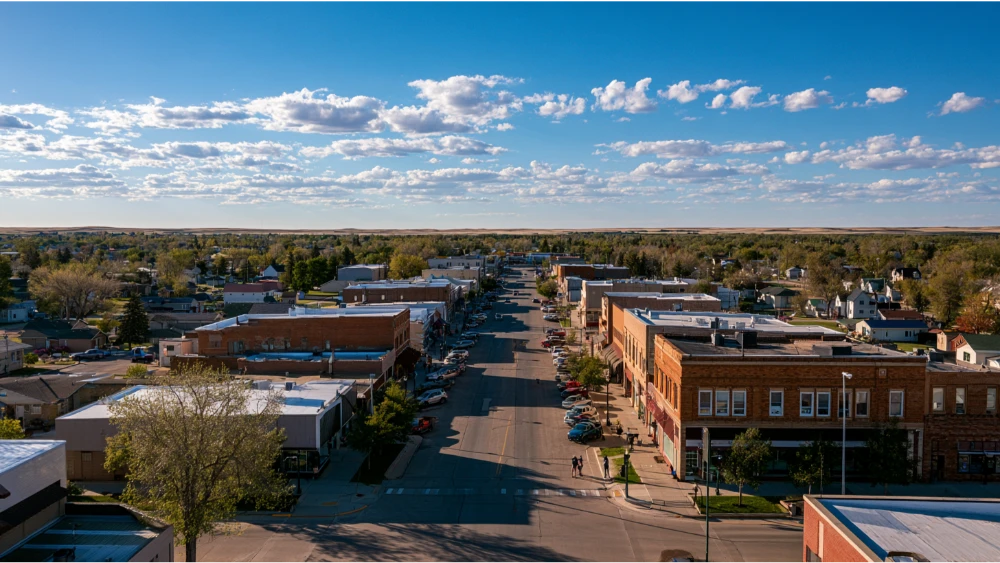
Dickinson is located in Stark County in the western part of the state, inside the Bakken region, and it functions as the service center for a wide rural area. It’s small enough to cross in a few minutes and large enough to have a hospital, a university, and a real retail corridor.
| Item | Figure | Source / date |
|---|---|---|
| Population | 25,870 (+0.8% from 2020 base) | Census estimate, July 1, 2025 |
| Households | 10,486 | 2020-2024 ACS |
| Land area | 14.14 square miles | 2020 Census geography |
| Mean commute | 16.4 minutes | 2020-2024 ACS |
| Median household income | $82,696 (2024 dollars) | 2020-2024 ACS |
| Broadband subscription rate | 89.4% of households | 2020-2024 ACS |
| Time zone | Mountain | |
| County | Stark | |
| To Theodore Roosevelt National Park (South Unit) | ~35 miles west | National Park Service |
One note on that broadband number: it measures how many households subscribe, not what’s available or how fast it is at a specific address. If you work remotely, that distinction matters a lot, and we’ll come back to it.
Put the table together and you get a compact city where a 14-square-mile footprint and a 16-minute average commute mean most of your daily life happens within a few minutes of wherever you land. That geography is also why so much of the local community calendar overlaps. People run into each other at the grocery store, the rec center, and the high school gym, which is either the best or the worst part of small-city living depending on your personality.
What does it cost to live in Dickinson? A line-item estimate
Forget the index scores for a minute and build your budget from the pieces you can actually verify.
Housing. The biggest line, and the one with the widest spread depending on which data set you use. We break that apart in detail in the next section, because the government baseline and the August 2026 listing market tell noticeably different stories.
Transportation. Treat a vehicle as a fixed cost, not an option. Budget fuel, insurance, and a winter maintenance line most people moving from warmer states forget: a good set of winter tires, a battery check every fall, and the occasional tow or jump when the temperature drops hard. If you’re moving from a city where you sold the car and took the train, this is a new expense category.
Utilities. This is where seasonal honesty pays off. Your January heating bill and your July heating bill are not the same number, and averaging them into one monthly figure will mislead you. Ask the landlord or the seller for actual winter bills for that specific property. A drafty older house and a newer, tighter build can differ by a meaningful amount over a heating season.
Groceries and everyday goods. Dickinson has full grocery and big-box retail. Specialty items sometimes mean an online order with shipping or a longer regional drive, which is a small but real line in a household budget.
Childcare. If your plans include young children, treat this as a major line and begin calling providers the week you accept the offer. Small cities tend to run tight on licensed capacity, and waitlists don’t care about your start date.
Healthcare. Premiums, deductibles, and the occasional drive to a larger regional center for specialty services all belong in the same column. More on that in the healthcare section below.
Sales tax. North Dakota charges 5% on most retail sales, and Dickinson adds a 1.5% local tax. Before you treat any combined rate as permanent, run the address through the state’s current local-tax lookup. Local rates and maximum-tax rules change.
Before you commit to a lease amount or a mortgage payment, put your own numbers into our Cost of Living Calculator and Rent Calculator. Create two monthly versions: a December through February version and a June through August version. If the winter version still works, you’re fine.
Why do cost-of-living scores for Dickinson disagree so much?
Four reasons, mostly boring. Weighting: one index may give housing 30% of the score, another 40%, and that alone can flip a city from “below average” to “above average.” Data vintage: a page using 2021 figures and a page using August 2026 listings will never agree. Geography: some tools score the city, some the county, some a broader micropolitan area, and housing costs vary across those boundaries. Sample type: listing-based rent data reflects what’s currently advertised, while Census data reflects what everyone is actually paying, including long-term residents with older leases.
The habit worth building: check the “as of” date on every number you read. Including ours.
Should you rent or buy a house in Dickinson?
Look at both data sets side by side and the question answers itself for most newcomers.
| Measure | Government baseline (2020-2024 ACS) | Listing market (August 2026) |
|---|---|---|
| Rent | $957 median gross rent | $1,138 median rent among active listings |
| Home value / price | $263,700 median owner-occupied value | $381,725 median list price; $330,000 median sold price |
| Ownership rate | 61.0% owner-occupied | |
| Monthly owner cost with a mortgage | $1,818 median | |
| Inventory / pace | 359 for-sale properties, 48 rentals, 61 days median time on market |
Why the gap? Active listings skew toward newer and larger properties, and they capture a single month. The Census medians cover the entire housing stock across four years, including older homes that would never show up in an August listing feed and long-standing leases that never hit the market. Both are accurate. They’re measuring different things. Anyone who quotes you one number as “the” price of housing in Dickinson is flattening that distinction.
One detail worth sitting with: 48 active rentals in August 2026 against 359 for-sale properties. Rental inventory here can run thin, and the source characterized that month as a buyer’s market. If you’re arriving on a specific start date, begin your rental search weeks earlier than you would in a larger market, and be ready to move on something quickly. Have your application materials, pay documentation, and references assembled before you begin touring, because in a thin market the prepared applicant wins.
The local rental mix includes apartments, townhouses, single-family rentals, and properties on the rural edge of town with more land and more responsibility attached. Floor plans vary more than you’d expect for a city this size, from compact one-bedroom units near the center to four-bedroom houses with attached garages in the newer growth areas. If you have pets, ask about pet policies and deposits in the first phone call rather than the fourth, since that single answer eliminates a chunk of the inventory quickly.
Rent first or buy now? How to determine what fits
Rent first if your assignment is temporary, if your down payment isn’t fully ready, or if you’ve never lived through a North Dakota winter. That last one isn’t a joke. A winter test run tells you things about a street, a driveway, and a commute that no listing photo will. Buying makes more sense if you’re settled on a long-term role, you know the part of town you want, and you’ve thought about resale timing in a market that still feels energy cycles.
Run both scenarios through our Rent vs. Buy Calculator and Mortgage Calculator before you decide. Change one variable at a time, especially how long you plan to stay, because that single input moves the answer more than almost anything else.
And if you’re relocating out of a home you still own somewhere else, that house doesn’t have to become a second job. Full-service, broker-owned management covers tenant placement, tenant screening, rent collection, property maintenance, rental permits, 1099s, property inspections, and court evictions, which is how owners keep cash flow coming in from two states away without lifting a finger.
Jobs, business, and the Dickinson economy: who’s hiring in the Bakken region?
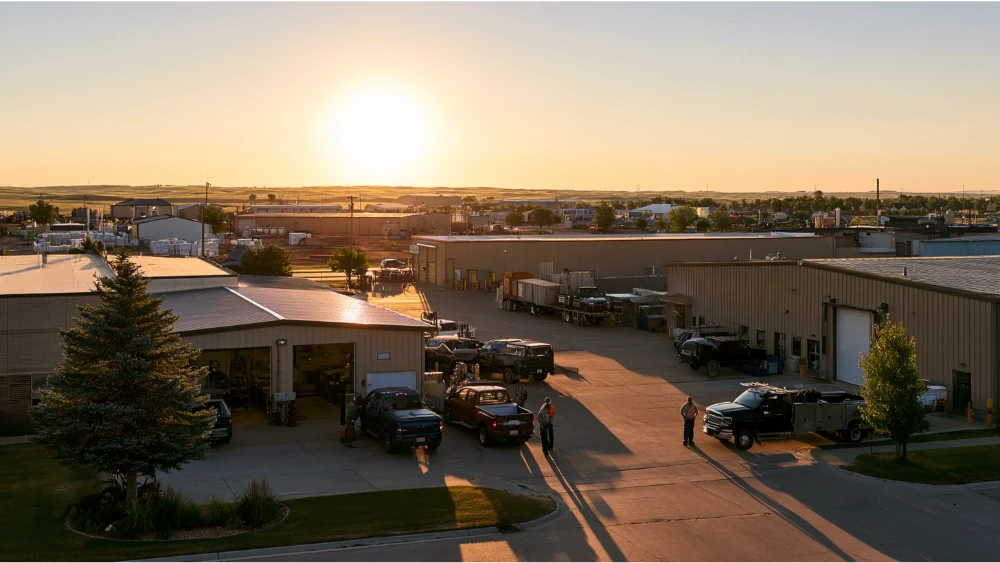
Most relocation pages get this wrong in the same way: they describe Dickinson as an oil town and stop. Energy matters here, and when drilling activity shifts you feel it in housing demand and in certain trades. But the Stark County employer report dated August 2024 shows the largest employment concentrated across public education, energy services, advanced manufacturing, healthcare, local government, higher education, and food manufacturing and distribution. Add agriculture and construction to that picture and you’ve got a regional economy, not a single-industry camp.
For a read on demand breadth, a 2026 multi-industry job fair held in Dickinson advertised openings across caregiving, nursing, electrical work, construction, equipment operation, mechanics, trucking, concrete work, and general labor. Those specific postings are expired examples, not current vacancies. What they show is the shape of local hiring: skilled trades, healthcare support, and transportation all pulling at once.
State occupational projections for 2023 to 2033 point the same direction, with notable expected growth in construction and extraction, transportation and material moving, and healthcare support occupations. If your background sits in any of those, Dickinson deserves a serious look.
Where to actually search. Go to Job Service North Dakota to begin your search of the live statewide database, with saved searches, resume tools, and in-person workforce services. A static job list in a blog post goes stale in a month, so we’d rather send you to the source. Then work the direct channels: employer career pages for the larger manufacturers and energy service firms, the hospital and clinic systems for healthcare roles, Dickinson Public Schools and Dickinson State University for education and support positions, and the City of Dickinson for local government openings.
If you work remotely, that 89.4% household broadband subscription rate (2020-2024 ACS) is a useful signal but not a guarantee. Subscription rates tell you what households buy, not what’s available at the specific address you’re considering. Before you sign anything, check service and speeds at that exact street address with the providers directly, and ask the landlord or seller what’s already wired in. A property on the edge of town and a property two blocks off Villard can have different answers. Remote workers should also plan a backup: a mobile hotspot that actually works at your desk is cheap insurance when a storm takes a line down. The payoff for trading a metro address for this one is a quieter work environment and a spare bedroom you can afford to turn into an office.
Starting or relocating a business in Dickinson
If part of your plan is to bring a business with you or start one here, a few local realities are worth knowing before you sign a commercial lease. Dickinson serves a trade area far larger than its population, which is why a small city supports the retail and professional services it does. Customers drive in from surrounding rural communities for groceries, healthcare, equipment, and anything else they can’t get closer to home. That regional pull is the single most important number in your business plan, and it isn’t the city population.
Practical steps: confirm zoning for your intended use through the city’s planning department before you commit to a building, talk with the local economic development and chamber organizations about workforce and site availability, and get a realistic read on hiring. In a labor market where jobs outnumber households, staffing is usually the constraint, not demand. Business owners who also own property should look hard at whether managing those buildings themselves is the best use of their week. It usually isn’t.
Areas of Dickinson to compare before you pick a street
We compare parts of town by commute, housing stock, and proximity to services. Never by who lives there. That’s both a legal line and a practical one: the “best neighborhood” lists you’ll find elsewhere are opinions dressed up as data, and they don’t know your drive to work.
Downtown overlay and central Dickinson. Older housing stock, a walkable core, and the shortest trips to downtown shopping, dining, and community events at Legacy Square. Lot sizes tend to be smaller, alleys and street parking are more common, and some homes will have the maintenance profile you’d expect from an older build. If you want to be able to walk somewhere on a summer evening, this is the part of town where that’s realistic.
The West Villard corridor. This is the main commercial spine, with retail, restaurants, and everyday services clustered along it. Housing near a corridor like this trades convenience for traffic noise and more turning movements at peak hours. Great if you want a two-minute grocery run.
West Dickinson’s newer residential growth areas. Newer construction, newer streets and utilities, and typically closer to the retail corridor than to downtown. Drive times are still short by national standards, but you’ll add a few minutes to anything downtown. Floor plans here skew larger, with attached garages that matter more in February than they do when you tour in June. If the home you want is still being finished, get the completion date in writing, because a delayed build against a fixed start date makes for a rough couple of weeks.
Near Dickinson State University. A mix of rental and owner-occupied properties, with campus athletics and cultural events within walking distance for some addresses. Expect more activity during the academic year.
Edge-of-town and Patterson Lake area options. Larger lots, more peace and quiet, more drive time. Also different realities around snow removal, private drives, water and septic arrangements, and internet availability. Nothing wrong with any of that, but it’s a different maintenance commitment than a city lot, and worth being honest with yourself about before you fall in love with the view.
Verify these six things at the exact address before you commit:
- School attendance boundaries, confirmed through Dickinson Public Schools rather than a listing description
- The commute, drive-tested at the hour you’d actually drive it, in winter if possible
- Internet service and speed at that address, confirmed with providers
- Who clears the driveway, sidewalk, and steps, and get it in writing
- Garage or off-street parking, and how snow-emergency parking rules apply on that block
- Zoning and parcel details through the city’s GIS and land information portal
Spend an afternoon driving the city before you choose. In a place this compact, you can explore every quadrant in a couple of hours, and the feel of a street tells you things a map can’t. If anyone’s outside, talk to the neighbors for two minutes. They’ll tell you about plowing, flooding, and street noise faster than any disclosure form.
Schools and higher education in Dickinson
Dickinson Public Schools operates an early childhood program; Berg, Heart River, Jefferson, Lincoln, Prairie Rose, and Roosevelt elementary schools; Dickinson Middle School; Dickinson High School; a virtual academy; the Southwest Area Career and Technical Education Academy; and alternative and adult-learning programs. The latest indexed local economic report lists 3,977 DPS students in 2023-2024. Private-school and home-education options also operate in the area, and the same report tracks that enrollment separately.
The CTE academy deserves a mention of its own. In a region where trades, equipment operation, and healthcare support drive a lot of hiring, a career and technical pathway attached to the high school is a genuine asset for a student who doesn’t want a four-year track. It also means a teenager can begin building a credential while still in school, which in this labor market translates into real offers.
If you’re wondering which school serves a specific address, the district’s own boundary maps are the only reliable way to confirm it, and boundaries can be adjusted. For comparing individual schools, skip the third-party ranking sites. Use North Dakota’s current accountability portal and the ND A+ statewide assessment system, which began in spring 2025 and replaced the test used in past years. Ranking sites lag, mix methodologies, and in a state that recently changed its assessment framework they’re likely to be built on outdated inputs.
Two things worth asking the district directly when you call: how special education services and individualized plans transfer from your current state, and what the activity calendar looks like. Sports, music, and clubs are a big part of how students and parents meet people after moving to a new town, and in a city this size those schedules double as the community social calendar.
Dickinson State University is a public institution offering certificate, associate, bachelor’s, and master’s programs. Its spring 2026 headcount was 1,359, including 801 full-time students. For people moving here, DSU matters in three ways: it’s a significant local employer, it feeds the regional workforce pipeline alongside the CTE academy, and it puts athletics, theater, lectures, and other public events on the calendar in a town this size. That’s not nothing when you’re new and looking for something to do on a Thursday night. Adults returning for a degree or a certificate also have a campus within a ten-minute drive, which is rarer than it should be in rural America.
Hospitals, clinics, and healthcare services
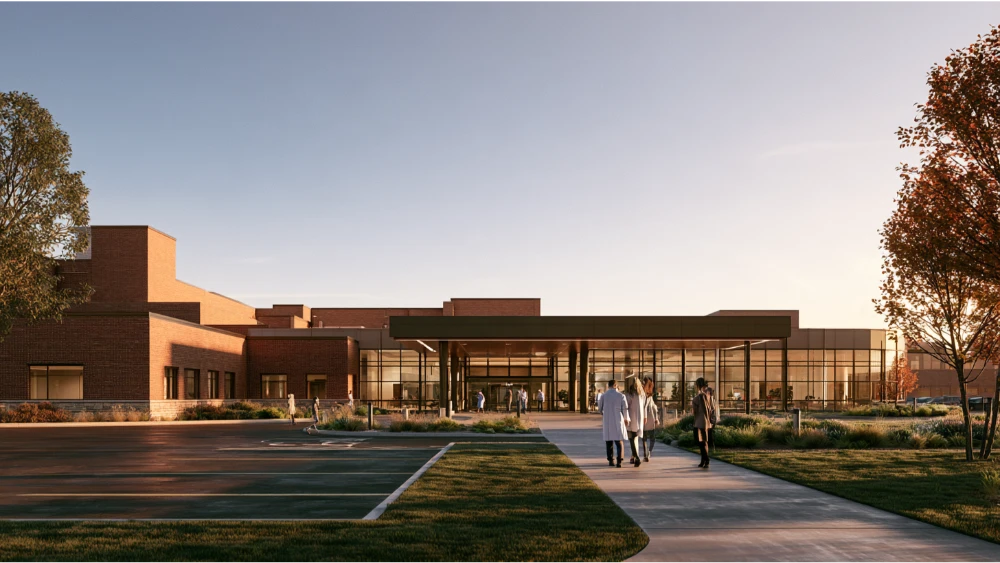
Here’s the directory most relocation pages skip, organized by what you’d actually need and when.
Emergency and hospital care. CHI St. Alexius Health Dickinson operates a critical access hospital and clinic complex with a 24/7 emergency department, identified as a Level IV Trauma Center. Level IV means the facility provides initial evaluation, stabilization, and transfer arrangements to a higher-level trauma center when a case requires it. That’s standard for a city this size and worth understanding before you need it.
Clinic services. Sanford West Dickinson Clinic covers primary care, pediatrics, OB/GYN, cardiology, orthopedics, oncology, outpatient surgery, rehabilitation, and imaging, with visiting specialty care and a same-day surgery center on site. Sanford East Dickinson Clinic handles family and internal medicine, pediatrics, cardiology, behavioral health counseling, diabetes services, laboratory work, and pharmacy services.
Walk-in care. The Sanford walk-in clinic reports daily service, including weekends and holidays. Confirm the hours before you drive over, because walk-in schedules change more often than any other listing in this article.
The honest limit. Some specialty and higher-acuity care means traveling to a larger regional center, and some specialists rotate into Dickinson on a schedule rather than practicing here full time. If you or a family member manages a condition that requires a specific subspecialist, call that practice directly and ask how care would be coordinated from Dickinson. Do that before you accept the job, not after. The same goes for anyone moving with elderly parents or a household member who has ongoing therapy appointments: map the care first, then pick the house.
Action step for everyone moving here: request medical, dental, and prescription record transfers and establish a primary care provider before you arrive. New-patient availability is the thing most people underestimate.
Senior living, disabilities, accessibility, and support services in Dickinson
Dickinson has roughly nine senior living communities, spanning independent living, assisted living, and memory-care style settings. Amenity levels vary widely, from basic and practical to upscale options advertising gourmet or chef-prepared dining. We’ll describe what exists and how to evaluate it. What fits is a personal decision, and nobody writing a blog post should be telling you where you belong.
One feature worth flagging: many of these communities offer scheduled transportation services to medical appointments, shopping, and community events. In a car-oriented town where winter driving is a genuine barrier, that service changes what independence looks like day to day for elderly residents. Confirm the schedule directly with the community, including how it operates during storms.
If you’re helping an elderly parent relocate, build the comparison around services rather than finishes. Ask what’s included in the base rate and what’s billed separately, how care levels are assessed and re-assessed, what the staffing pattern looks like overnight, how medications are managed, and what happens when someone’s needs change. A tour that only shows you the dining room and the activity calendar isn’t a tour.
Accessibility deserves its own checklist whether you’re looking at senior living or an ordinary rental. Individuals with disabilities and households planning for aging in place should check all of this on the walkthrough:
- Step-free entry, or whether a ramp could be added
- Door and hallway widths
- Bathroom layout and whether walls are ready for grab bars
- Single-level floor plans versus split-level or multi-story
- Elevator access and backup arrangements in multi-story buildings
- Accessible parking and the distance from the parking spot to the door
- Who clears snow and ice from walkways, entries, and steps, and how fast
That last point carries more weight here than it would in a warmer market. A beautifully accessible unit with an uncleared walkway in February isn’t accessible. For residents with mobility disabilities in particular, snow and ice management is the difference between a home that works nine months a year and one that works twelve.
Under federal fair housing law, people with disabilities may request reasonable accommodations and reasonable modifications. Ask any landlord or community how they handle those requests, and get the answer in writing. KT Rents is committed to Fair Housing in every market we serve, and that commitment covers every protected class without exception.
For broader support services, contact the county social services office and the state’s aging and disability programs to ask what’s available locally, including in-home supports, meal programs, and transportation assistance. Availability in rural regions can differ from what you had in a metro area, so verify before you move rather than after. Tour in person. Tour in winter if you can swing it. And confirm transportation schedules with the community directly rather than relying on a brochure.
What winter is really like in Dickinson (and how to prepare)
This is the single most consequential factor in whether you’ll be happy here, so we’re not going to soften it.
Dickinson has a humid continental climate. A city planning document describes typical annual temperatures ranging from roughly 6°F to 84°F, rarely dropping below -16°F or climbing above 95°F. NOAA’s current climate-normals period is 1991 to 2020, so any “average” you see should be referenced against that window. What those numbers mean in practice: multi-day cold snaps, wind that makes the thermometer reading optimistic, and a heating season that runs long.
Before your first storm, not after:
- Tires. Winter tires, or at minimum high-quality all-seasons with real tread left, installed before the first hard freeze. Worn tires are the most common avoidable problem for transplants.
- Vehicle check. Battery tested, coolant at the right concentration, wipers and washer fluid rated for cold.
- Emergency kit in the car. Blankets, food, water, a shovel, traction aid (sand or kitty litter works), a charged phone and a backup power bank.
- Heating bills. Ask the landlord or seller for actual winter bills for that property. Not an estimate. The real statements.
- Snow responsibility. Get it in writing: who shovels the driveway, the sidewalk, the steps, and by when.
- Parking rules. Learn the city’s snow-emergency parking rules for your block before the first declaration, because that’s when cars get moved for you.
- Clothing. Layers, a real insulated coat, and footwear with grip. A fashion coat from a milder climate will not carry you through January.
- Road conditions. Check the state road report before any regional drive. Highways close out here, and “it’s only an hour away” stops being true in a blowing-snow event.
A scheduling note for the move itself: a January move and a July move are not the same job. Winter means cleared walkways before the truck arrives, limited truck access on narrow or unplowed streets, shorter daylight, and the possibility of a weather delay that pushes your whole timeline. If you have any flexibility on the start date, that flexibility is worth money.
The part nobody tells you: winter here has a social life of its own. The rec center fills up, the high school gym fills up, and people make plans indoors instead of canceling them. Residents who struggle are usually the ones who stop leaving the house. Residents who thrive pick something to do between November and March and stick with it.
Getting around: cars, commutes, transit, and flights
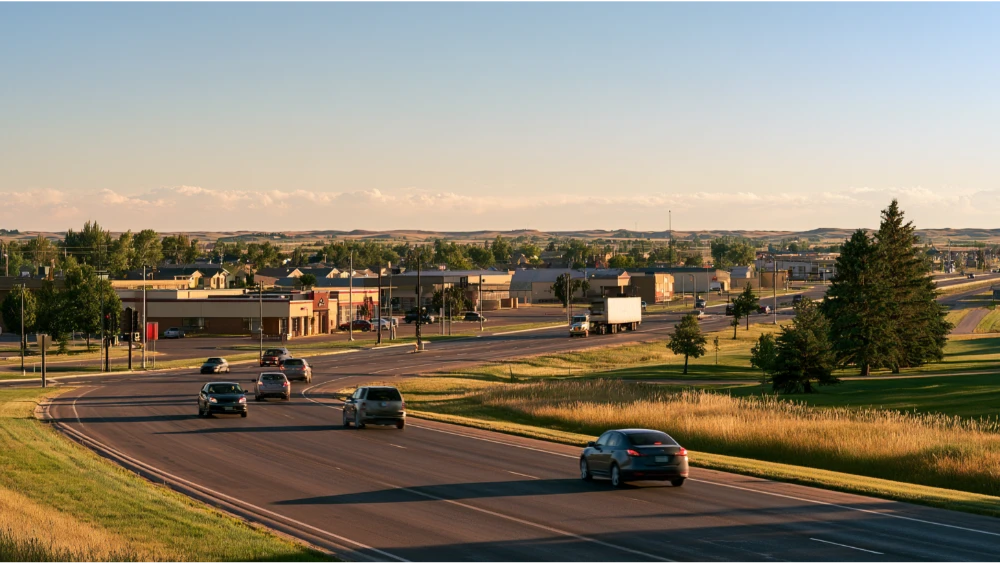
Plan on owning a vehicle. Dickinson is car-oriented, and most residents drive for work, groceries, school runs, and everything else.
The upside is that driving here is painless by national standards. A 16.4-minute mean commute (2020-2024 ACS) across a 14.14-square-mile city means you’re rarely more than a few minutes from anywhere in town. If you’re coming from a metro where a 45-minute each-way commute is normal, you’re getting back the better part of an hour every day, and that hour is a real quality-of-life upgrade, not a rounding error.
Public transit. Dickinson Public Transit runs both scheduled and on-demand services. Published hours are Monday through Saturday, 6 a.m. to 6 p.m., and Sunday, 9 a.m. to 6 p.m., with a listed in-town fare of $4 for the first passenger and different rules for additional passengers and out-of-town trips. Fares and hours are subject to change, so verify both before you rely on them. It’s a real service and useful for appointments and errands, but the hours mean it won’t cover an evening shift or a late flight. If a household member has mobility disabilities, call and ask specifically about accessible vehicles, door-to-door service, and how far ahead rides need to be booked.
Flying. Theodore Roosevelt Regional Airport currently advertises daily nonstop service to Denver, operated with 50-passenger regional jets. Denver as a connecting hub gets you most places in two legs. Airline routes and frequencies change often, so recheck the schedule before you book anything or build a job around frequent travel.
Two last practical notes. Dickinson is on Mountain Time, which catches out anyone moving from the eastern half of the state or scheduling calls with Central Time colleagues. And regional drives are long: distances out here are measured in hours, and winter weather can double them or close the route entirely.
Things to do: parks, trails, museums, and the North Dakota Badlands
This is the part that sells people on Dickinson, and it holds up.
In town. The Dickinson Museum Center anchors the local museum scene, with the Badlands Dinosaur Museum and its fossil collections on the same campus. Legacy Square hosts concerts and community programming through the warm months. Downtown has shopping and dining within a walkable few blocks. Dickinson State University puts athletics and cultural events on the calendar. The Ukrainian Cultural Institute reflects a piece of the region’s settlement history that most visitors don’t expect to find here. Add Heart River Golf Course, the West River Community Center for indoor recreation through the winter, and a network of city parks and trails. Roughrider Days and the seasonal festival calendar give the summer a rhythm.
Patterson Lake Recreation Area is the outdoor centerpiece inside city reach: 26 miles of shoreline, 1,438 acres of land, and 819 acres of water. Boating, fishing, swimming, camping, disc golf, hiking, biking, and picnicking all happen here. Seasonal fees, camping dates, and water advisories change year to year, so check with Dickinson Parks and Recreation before you plan around it.
The Badlands. Theodore Roosevelt National Park’s South Unit is located about 35 miles west. The National Park Service identifies Dickinson as the largest nearby community for groceries, healthcare, lodging, dining, and auto service, which is a useful way to understand the town’s regional role. For a resident, 35 miles means the park is an after-work drive, not a vacation. You can explore the scenic loop, watch wildlife, and hike a short trail all within a normal evening, then be home before dark through most of the year.
Medora. The Theodore Roosevelt Presidential Library opened in Medora on July 4, 2026, adding a major regional attraction well within day-trip range and giving you something to do with out-of-town visitors beyond the drive-through loop.
Beyond the formal attractions, hunting and mountain biking are part of the year-round rhythm out here, and the Badlands terrain is the reason. If your idea of a good weekend involves being outside and moving, this town makes that easy in a way most cities its size don’t.
Community life and how to meet people after moving here
Newcomers consistently say the hardest part of moving to a smaller city isn’t logistics, it’s the first three months of knowing nobody. Making friends here takes repetition more than charisma, and Dickinson gives you more handles than most places its size. The West River Community Center runs leagues and classes through the winter. Public libraries, church groups, service clubs, and volunteer organizations are active and generally short on helping hands, which means showing up once usually gets you invited back. Youth sports pull parents into the same bleachers week after week. DSU events are open to the public and cheap. Roughrider Days and the summer festival calendar put the whole community in the same few blocks.
The practical advice is boring and it works: pick two recurring things, engage with both for a month, and you’ll meet more people than you did in a year of your old city. In a community of 25,000, familiar faces accumulate fast, and eventually you stop being the new person at the counter.
Everyday services, shopping, taxes, utilities, and internet
The routine stuff you’ll actually deal with. Grocery and big-box retail cluster along the main commercial corridors, so a full weekly shop is a short trip. Auto service, trades, contractors, and banking are all covered locally, which matters more than it sounds like when you’re a new homeowner and need a plumber on a Tuesday. Specialized shopping, meaning niche hobby gear, specific furniture, certain brands, often means an online order or a bit of a drive, and that’s the honest limit of a city this size.
Taxes. North Dakota applies a 5% state sales tax to most retail sales, and Dickinson adds a 1.5% local tax. Check the state’s current local-tax refund and maximum-tax tables rather than trusting a static combined rate you found somewhere, because local rates and caps get adjusted. More broadly, North Dakota carries comparatively low individual income and property tax rates, which is general context for your relocation math, not tax advice. Talk to a professional about your actual situation.
Utilities. The City of Dickinson handles municipal utility accounts and offers a water-usage portal so you can track consumption. The city purchases water from Southwest Water Authority and distributes roughly 2.2 million gallons per day through its system.
Before you sign a lease or close, verify all six of these:
- Which utilities are included in the rent and which you set up yourself
- Heating fuel type and typical winter bills for that specific property
- Internet availability and speed at that exact address, confirmed with the provider
- Trash and recycling pickup schedules
- Snow removal and lawn care responsibility, in writing
- Parking or garage access, including any assigned spots
Planning your move: moving costs, timing, and a before-you-go checklist
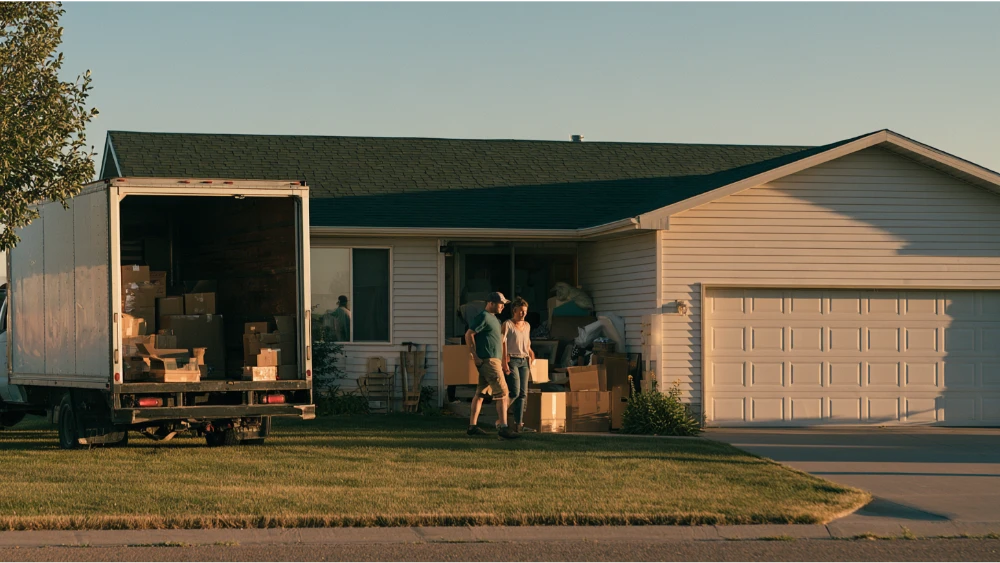
Start with how moving companies price the work, because the quotes you get will look wildly different until you understand what you’re comparing.
Full-service movers handle packing, loading, transport, and unloading, and they typically quote by home size and distance for a long-haul move. You pay more and do almost nothing. Self-service options provide the truck and the driver while you handle packing and loading, which cuts the cost and adds a weekend of labor. For in-town moving within Dickinson, hourly rates are common, usually billed by crew size plus travel time.
Get at least three written estimates. Ask each one whether the quote is binding, non-binding, or binding-not-to-exceed, because that single answer will explain most of the horror stories people tell about moving day billing. And confirm what happens if weather delays the delivery window.
Then work the admin list in order:
- Confirm the job offer and start date in writing, including any relocation assistance.
- Secure housing. Rent first if the assignment is temporary or if you haven’t seen the town in person. Start early given thin rental inventory.
- Enroll students and request record transfers through Dickinson Public Schools, after confirming the attendance boundary for your exact address. Ask how existing education plans carry over.
- Transfer medical, dental, and prescription records, and get a primary care appointment on the calendar.
- Transfer your driver’s license. North Dakota allows use of an out-of-state noncommercial license for 60 days after you become a resident. Transfers require an appointment plus proof of identity and residency.
- Register your vehicle. State guidance says registration is required immediately once you become a resident or are gainfully employed in the state. Don’t assume the 60-day license window applies to your plates. It doesn’t.
- Set up city utilities and internet with service start dates that land before your move-in, not on it.
- Buy winter gear and winterize the vehicle before the first storm. Everyone who waits regrets it.
Dickinson has local driver’s license and motor-vehicle offices, but schedules and appointment requirements change. Confirm hours and book ahead before you drive over with a folder of documents.
Your first 30 days living in Dickinson
Week one: utilities confirmed, internet working, mailing address updated, and a grocery run that teaches you which store you’ll default to. Week two: register the vehicle, get the license transfer completed, and drive your commute at the real hour. Week three: establish primary care, pharmacy, and a dentist, and get the kids into whatever activity is in season. Week four: pick your two recurring community things and start showing up.
Do all of that and by day 30 you’re a resident instead of a visitor with boxes. The people who struggle after moving to a new city usually postpone the social part until spring, and spring takes a while to arrive out here.
Pros and cons of moving to Dickinson, North Dakota
Pros:
- A 16.4-minute mean commute across a compact city (2020-2024 ACS)
- An employment base spanning education, healthcare, manufacturing, government, energy services, agriculture, and construction
- A hospital with a 24/7 emergency department plus multiple clinics and daily walk-in services
- Theodore Roosevelt National Park 35 miles west and Patterson Lake inside city reach
- A real community events calendar: Roughrider Days, Legacy Square programming, DSU athletics and cultural events
- Comparatively low state individual income and property tax rates
- A listing market described as buyer-leaning in August 2026, with 61 days median time on market
Cons:
- Severe winters, with temperatures that can drop below -16°F
- Car dependence, with transit hours that don’t cover evenings
- Fewer big-metro amenities and limited specialty retail
- Some specialty and higher-acuity healthcare requires regional travel
- An economy still partly tied to energy cycles
- Thin rental inventory at times (48 active rental listings in August 2026)
If the winter and the driving don’t scare you off, the math here works for a lot of people.
Frequently Asked Questions
Is Dickinson, ND a good place to live?
For short commutes, varied employment, essential services, and outdoor access, yes. The Census Bureau estimated the population at 25,870 as of July 1, 2025, and the mean commute at 16.4 minutes (2020-2024 ACS), which gives you a small city where daily logistics are easy. It’s a weaker fit if you need to live without a car, want mild winters, or expect big-metro amenities and specialty retail nearby.
Is it cheaper to live in Minnesota or North Dakota?
North Dakota generally carries lower individual income and property tax rates, but a blanket verdict would be misleading. The honest answer depends on which specific cities you’re comparing, what housing type you need, and how the heating costs stack up for the actual properties in play. Run both scenarios through our Cost of Living Calculator with real addresses instead of relying on a state-level generalization.
What is the average rent in Dickinson?
Two numbers, two meanings. Median gross rent was $957 per month in the 2020-2024 ACS, which covers the whole rental stock including long-standing leases. Median rent among active listings was $1,138 in August 2026, reflecting only what was advertised that month and skewing toward newer or larger units. Expect your actual options to sit nearer the listing figure.
How cold does Dickinson get?
A city planning document describes typical annual temperatures ranging from roughly 6°F to 84°F, rarely falling below -16°F or rising above 95°F. The practical consequences are a long heating season, winter driving conditions that demand proper tires and an emergency kit, and utility bills that look very different in January than in July.
Do I really need a car in Dickinson?
In practice, yes. Dickinson Public Transit runs scheduled and on-demand services, but published hours end at 6 p.m., which doesn’t cover evening shifts, late arrivals, or most social plans. If a household member can’t drive, build your housing decision around walking distance to the things they use and around transportation services offered by senior living communities or support programs.
Is Dickinson a good place for retirement or for elderly parents?
It can be. There’s a hospital with a 24/7 emergency department, multiple clinics, daily walk-in care, and roughly nine senior living communities with varying care levels and amenities. The limits are winter mobility and the fact that some specialty care means regional travel. Tour in person, confirm transportation schedules, and ask directly how care levels are assessed before anyone signs anything.
What is there to do in Dickinson year-round?
Summer is Patterson Lake, the trail network, Legacy Square programming, Roughrider Days, and evening drives into the Badlands. Winter shifts indoors to the West River Community Center, DSU athletics and performances, the Dickinson Museum Center, and the Badlands Dinosaur Museum. Day trips to Medora, including the presidential library that opened in July 2026, work in both seasons.
Planning a move, or renting out the home you’re leaving behind?
If you’re the one moving: browse rental listings on our nationwide marketplace, then run the Rent Calculator and the Rent vs. Buy Calculator before you sign anything. Get the numbers settled first. The lease will still be there in an hour.
If you own a property you’re relocating out of: KT Rents is a full-service, broker-owned property management company operating nationwide since 2009, with 683 units across 34 states and $187M under management as of early 2025, and a reported 98% occupancy rate. We handle tenant placement, tenant screening, rent collection, property maintenance, rental permits, 1099s, city ordinance compliance, property inspections, and court evictions without the owner lifting a finger… for roughly the price of a cup of coffee and a donut per day, as we like to put it.
Call (800) 716-4950, text (608) 207-0657, or email info@ktrents.com. Form submissions get answered within 24 hours.
Last verified: housing figures reflect August 2026 listing data and 2020-2024 ACS estimates, with the population estimate dated July 1, 2025. Employment sector data comes from a Stark County report dated August 2024, with statewide unemployment as of July 2026. Flight schedules, transit fares and hours, school enrollment, senior living options, and local sales tax rates were checked as of October 2026. All of these change. Recheck them against the original sources before you make a decision based on any single number, including ours.