

Wahpeton, North Dakota
Homes for rent and for sale — search the map or open the full city SEO catch-all page.
Wahpeton, North Dakota
Moving to Wahpeton North Dakota means settling into a compact city of about 8,100 people where a two-bedroom rental runs roughly $840 per month and the median home value sits at $171,300, well below the national average. The mean commute is just 17.6 minutes, and major employers include a 332-employee manufacturer, North Dakota State College of Science, and the public school district. Flood risk, school assignment, and utility costs all vary by exact address, so check each before you sign.
Moving to Wahpeton, North Dakota
Wahpeton is a compact city of about 8,100 people sitting right on the North Dakota and Minnesota border, roughly 54 miles south of Fargo on I-29. Housing costs here land well below the national average, the mean commute runs under 20 minutes, and the local economy rests on manufacturing, North Dakota State College of Science, the public school district, and healthcare. If you’re weighing a job offer, a company transfer, a term at NDSCS, a remote-work relocation, or just a cheaper monthly nut, this guide gives you real numbers with dates attached and a checklist you can run on a specific address. Moving to Wahpeton North Dakota comes down to a handful of address-level facts, and we’ll walk through each one.
Three things shape almost every decision you’ll make here. First, there are three different “rent numbers” for Wahpeton and they don’t mean the same thing: Census median gross rent, HUD Fair Market Rent, and what a landlord actually quotes you this week. Second, Wahpeton and Breckenridge, Minnesota function as twin communities, so part of your daily life may happen across a state line with different taxes, schools, and laws. Third, flood risk, school assignment, and utility responsibility are all address-specific, not citywide. Every figure below is an estimate valid as of its stated date. Verify before you sign anything.
What Is Wahpeton, North Dakota Actually Like? (A Quick Snapshot)
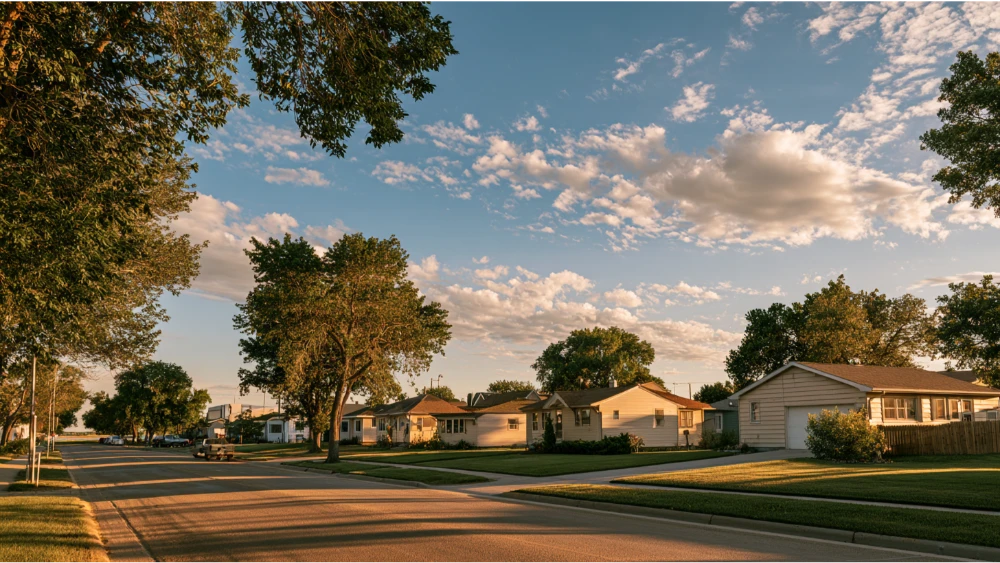
The Census Bureau estimated Wahpeton’s population at 8,141 as of July 1, 2025, up about 1.6% from the April 2020 estimate base. The 2020 decennial count was 8,007. So this is a city that’s holding steady and growing slowly, which matters more than it sounds: slow growth usually means a rental market that doesn’t swing wildly, but also one where inventory stays thin.
The whole city covers 5.22 square miles of land. You can drive end to end in a few minutes. The 2020 population density worked out to about 1,535 residents per square mile, so it’s built like a town, not spread out like a township.
Households tell you more about daily life than raw population does. The 2020 to 2024 American Community Survey estimated 3,459 households averaging 1.91 people each. Median household income came in at $62,750 in 2024 inflation-adjusted dollars, with per-capita income of $34,490 and an estimated poverty rate of 15.6%. That’s a working city with a real income range in it.
For anyone planning to work from home: 93.1% of households reported a broadband internet subscription in that same ACS period. That’s a solid base, though you’ll still want to confirm what’s actually available at the specific address, since service varies block to block in small markets.
Now the geography piece people get wrong. Wahpeton sits directly across the river from Breckenridge, Minnesota. The two cities function as connected twin communities, and residents routinely cross for work, healthcare, shopping, or recreation. But Breckenridge is a separate city in a different state. It has its own school district, its own tax rules, its own tenant laws, and its own vehicle requirements. Do not think of it as a Wahpeton neighborhood. Fargo is about 54 miles north on I-29, roughly an hour in decent weather.
Wahpeton at a Glance
| Measure | Figure | Data year |
|---|---|---|
| Population | 8,141 | July 1, 2025 estimate |
| Land area | 5.22 square miles | 2020 |
| Households | 3,459 | 2020 to 2024 ACS |
| Median household income | $62,750 | 2020 to 2024, in 2024 dollars |
| Median owner-occupied home value | $171,300 | 2020 to 2024 ACS |
| Median gross rent | $751 per month | 2020 to 2024 ACS |
| Mean commute time | 17.6 minutes | 2020 to 2024 ACS |
| Distance to Fargo | ~54 miles south on I-29 | 2026 state document |
Here’s the honest summary: Wahpeton is a regional employment and education hub. It isn’t a sleepy bedroom town, and it isn’t a metro. It’s a place with real jobs, a college campus, a hospital a bridge away, and a Saturday-trip relationship with a mid-sized city.
Housing Costs in Wahpeton: What You’ll Actually Pay to Rent or Buy
This is the section most relocation guides get wrong, usually by quoting one rent figure and calling it the answer. There are three legitimate rent numbers for Wahpeton, they measure different things, and using the wrong one will either blow your budget or make you think you’re being gouged when you aren’t.
Rent in Wahpeton: three numbers that don’t mean the same thing
Census median gross rent was $751 per month for the 2020 to 2024 ACS period. “Gross rent” includes contract rent plus utilities the tenant pays. It’s a five-year average, which means it looks backward and smooths out recent movement. Useful for context. Useless for budgeting a lease you’d sign next month.
HUD Fair Market Rent is a program benchmark HUD publishes for each county, used mainly for housing assistance payment standards. The FY 2026 figures for Richland County are below. No landlord is required to advertise at these prices, and plenty don’t.
| Unit size | Richland County FY2026 Fair Market Rent |
|---|---|
| Efficiency | $661 |
| One bedroom | $665 |
| Two bedrooms | $873 |
| Three bedrooms | $1,214 |
| Four bedrooms | $1,464 |
Live asking rent is what you’ll actually be quoted on an available unit. At the time of writing, a two-bedroom in Wahpeton commonly runs somewhere around $840 per month, but that’s a snapshot, not a rule, and it can shift week to week depending on what’s listed. In a market with roughly 3,459 total households, a handful of new listings can move the apparent “average” noticeably.
Which number do you use? For budgeting, use live listings and nothing else. For sanity-checking a quote that feels high, compare against HUD’s two-bedroom figure of $873 and the Census median of $751. If a landlord is asking $1,400 for a two-bedroom with no premium features, you now have the context to ask why.
Buying: home values and what’s actually on the market
The Census Bureau put median value of owner-occupied housing at $171,300 for the 2020 to 2024 period, with median monthly owner costs for households with a mortgage at $1,348. That’s far below the national median home price, which is a large part of Wahpeton’s appeal for buyers coming from more expensive markets. By national standards this reads as affordable housing, though affordable and available are two different things in a town this size.
The number that surprises people is the owner-occupancy rate: 45.4%. That means more than half of Wahpeton’s occupied housing is renter-occupied, which is unusually renter-heavy for a city this size. NDSCS explains a good chunk of it. For buyers, that means a meaningful share of the housing stock is held as rental property. For renters, it means there is a functioning rental market here rather than a few scattered units.
One caution on the median value figure. Inventory in a market this small is thin. In any given month, there may be a few dozen homes for sale, and the mix of what’s listed swings the apparent average far more than any underlying trend. The “average” matters less than what’s actually available the month you’re searching. Look at active listings, not aggregate statistics, when you’re setting a target price, and keep your future resale pool in mind, because thin inventory cuts both ways.
Utilities, heat, and the costs that don’t show up in the rent number
City-published utility rates, which you should verify immediately before you move since these change:
- Water minimum, first 2,000 gallons: $33.10
- Additional water: $4.46 per 1,000 gallons
- Sewer minimum, first 2,000 gallons: $23.22
- Additional sewer: $3.76 per 1,000 gallons
- Residential street-light charge: $5.15 per account
Water and sewer are predictable. Heat is not. Winter heating is the swing cost in a North Dakota budget, and the difference between a well-insulated 2015 build and a drafty 1948 house can be hundreds of dollars a month from December through February. Ask for 12 months of actual utility history on the specific property before you sign. A landlord or seller who won’t produce it is telling you something.
Buyers pay property taxes directly. Renters pay them indirectly, because they’re baked into the rent. Either way, pull the actual parcel’s tax bill rather than relying on a county or state average.
One more line item that gets skipped: if you’re relocating with an older parent, independent living in North Dakota averages roughly $3,192 per month statewide. A multigenerational move needs that as its own budget line, not a rounding error inside the housing number.
Before you commit to a monthly figure, run it. Our Cost of Living Calculator and Rent Calculator will tell you what a Wahpeton budget looks like against whatever you’re paying now, and that comparison is usually more clarifying than any single statistic in this section.
Jobs, Major Employers, and Commuting in Wahpeton
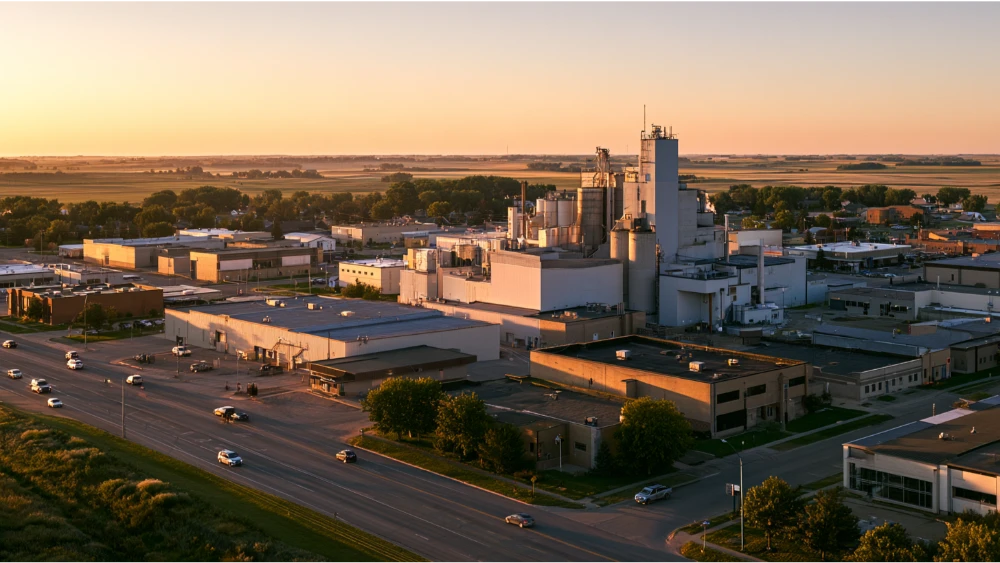
During the 2020 to 2024 ACS period, 65.3% of Wahpeton residents age 16 and older were in the civilian labor force. That’s a participating workforce, not a retirement community.
A February 2026 North Dakota Industrial Commission document identified three of the area’s largest employers:
- Com-Del Innovation (manufacturing): 332 employees
- North Dakota State College of Science: 305 employees
- Wahpeton Public Schools: 250 employees
Read that mix and you’ve got the local economy in one glance. Manufacturing and education are the twin pillars, with healthcare and social assistance, food processing, retail, government, and agricultural support filling in around them. It’s a diversified-enough base that a single plant closure wouldn’t flatten the town, but it’s also not a market with hundreds of employers in any one sector.
If you’re job hunting, the city’s own relocation page points people to Job Service North Dakota rather than maintaining a static vacancy list, which is the right call since openings turn over constantly. Pull the current Richland County unemployment rate from Job Service North Dakota or BLS yourself before you make a decision. Local unemployment figures move monthly, and a number from six months ago isn’t worth much.
Commuting, I-29, and the Fargo question
The mean commute for Wahpeton workers was 17.6 minutes in the 2020 to 2024 period. That’s one of the genuine quality-of-life wins here. If you’re coming from a metro where you’ve been giving up 50 minutes each way, you’re buying back more than two hours a week.
Fargo is roughly 54 miles north on I-29, about an hour under good conditions. That’s a realistic day trip for shopping, concerts, specialty medical care, and the airport. It is a rough everyday winter commute. People do it, but plan for mornings when you don’t, and be honest with yourself about whether your job tolerates that.
Some residents work across the river in Breckenridge. That’s normal here, but it carries state-line consequences worth understanding before you accept an offer: income tax withholding, where your vehicle gets registered, and which state issues your license. Sort that out with your employer and a tax professional rather than guessing.
Locally, Wahpeton is a car-dependent city. North Dakota supports rural demand-response and dial-a-ride transportation, which is genuinely useful but is not the same as big-city fixed-route transit. If you’d be relying on it, call and confirm current hours, fares, eligibility, and advance-reservation rules before you move, not after.
Harry Stern Airport serves Wahpeton as a general-aviation field with a primary paved runway of 5,100 feet. For scheduled commercial flights, you’re driving to a regional airport.
Remote work from Wahpeton
With 93.1% of households on broadband, a sub-20-minute errand radius, and housing costs well under the national average, Wahpeton holds up as a remote-work base. The math is straightforward: you keep a metro-area salary and swap a metro-area housing payment for a $171,300 median home value or an $840-ish two-bedroom. Fargo an hour north gives you an airport and a larger city when you need one.
We work with remote professionals all over the country who make exactly this trade, and the ones who are happiest did two things first: confirmed the actual internet service available at their specific address, and spent a winter week here before committing. Both are cheap compared to a lease you regret.
Where to Live in Wahpeton, North Dakota: Areas to Consider
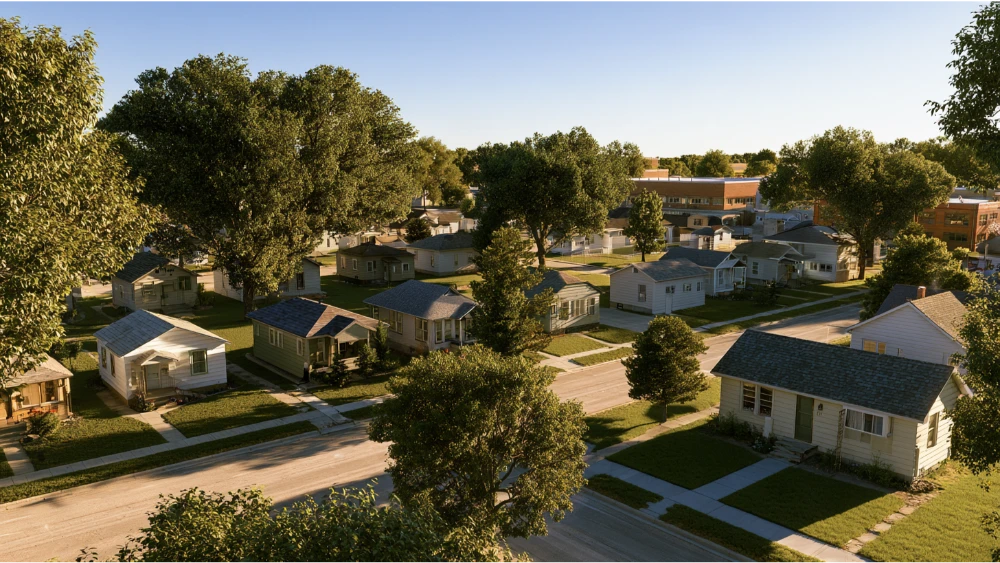
Here’s something most relocation articles won’t tell you. Wahpeton does not have a widely recognized set of consumer-facing neighborhoods the way a big city does. The city’s own mapping is largely subdivisions and plats, not named districts that locals navigate by. So any article handing you a ranked “best neighborhoods” list for a 5.22-square-mile city is making it up.
A more useful approach is to organize by what you’re optimizing for. The descriptions below cover physical and practical attributes only: housing stock age, commute, access, noise, flood mapping, and utility status. That’s the only basis anyone should use, and we’re committed to holding ourselves to it under the Fair Housing Act.
- Central Wahpeton and the NDSCS area. Walkable to central services and campus. Older housing stock, generally, and the highest concentration of rental turnover because it tracks the academic calendar. If you want to be able to leave the car parked, this is the part of town where that’s realistic.
- West-side school campus area. Proximity to the elementary, middle, and high school campus. Confirm attendance boundaries by exact address with the district rather than assuming proximity equals assignment.
- North and northwest subdivisions. Newer construction in places. Ask specifically about road access, utility hookups, and any special assessments attached to the parcel, which are common in developing areas and easy to miss at closing.
- Chahinkapa Park and river-adjacent areas. Recreation out the back door, a river view from some lots, and some of the prettiest settings in town. Flood-map review here is mandatory, not optional. See the flood section below.
- Southern and industrial-access areas. Shortest commutes to major employers. Evaluate truck traffic patterns, rail proximity, and airport noise at different times of day before deciding.
- Breckenridge, Minnesota. A separate city across the river with a different state’s taxes, tenant laws, school district, and vehicle registration rules. Worth considering as an alternative, but treat it as moving to a different state, because it is.
Your address-level checklist
Before you sign on any specific property in Wahpeton, run these five:
- Pull the FEMA flood map record and the North Dakota Risk Assessment Map Service record for the exact address.
- Confirm the school attendance assignment with the district by address, in writing.
- Ask who is responsible for snow removal and lawn care, and get it in the lease.
- Verify which utilities go in the tenant’s name and which the owner covers.
- Ask directly about sump pumps and any history of water intrusion.
Schools, NDSCS, and Childcare
Wahpeton Public School District operates four schools: Zimmerman Elementary, Wahpeton Elementary, Wahpeton Middle School, and Wahpeton High School.
State-reported enrollment for the 2025 to 2026 school year:
| School | Enrollment (2025-2026) |
|---|---|
| Zimmerman Elementary | 104 |
| Wahpeton Elementary | 472 |
| Wahpeton Middle School | 287 |
| Wahpeton High School | 356 |
One thing to flag: the reported grade bands shifted from the previous school year. That means grade configuration, attendance boundaries, and busing routes all need to be confirmed directly with the district rather than pulled from a third-party page that may be a year behind. Speak to them directly. It takes ten minutes.
For performance data, use North Dakota’s official Insights school performance portal rather than commercial letter-grade sites and crowd-sourced reviews. The reasons are practical: the state portal shows its methodology, updates on a known schedule, and reports data without attaching lifestyle labels to schools or the areas around them. Commercial grades often blend years, bury their formulas, and encourage conclusions about neighborhoods that the underlying data doesn’t support.
North Dakota State College of Science
NDSCS has its main residential campus in Wahpeton and reported a record 3,681 total students in fall 2025. Read that number carefully: it’s institution-wide and includes Wahpeton, Fargo, online, off-campus, and dual-credit students. It is not 3,681 people living in Wahpeton.
The practical housing consequence is real either way. Rental demand and turnover here follow the academic calendar. If you’re renting, the window right before a term starts is the tightest and the window right after terms end is the loosest, so timing your search can genuinely change what you pay and what’s available. Renters who seek a shorter lease around a single term should ask about it up front. If you own property in a college town, that same rhythm is why steady tenant demand exists here at all, and it’s why occupancy management matters more than unit count.
On childcare: the city’s relocation page maintains a directory, and state childcare search resources will show you licensed providers. Waitlists are common in small markets. Check availability before you accept a job offer, not after you’ve given notice at your current one.
Healthcare and Hospitals: Clinics in Wahpeton, Emergency Care Across the River
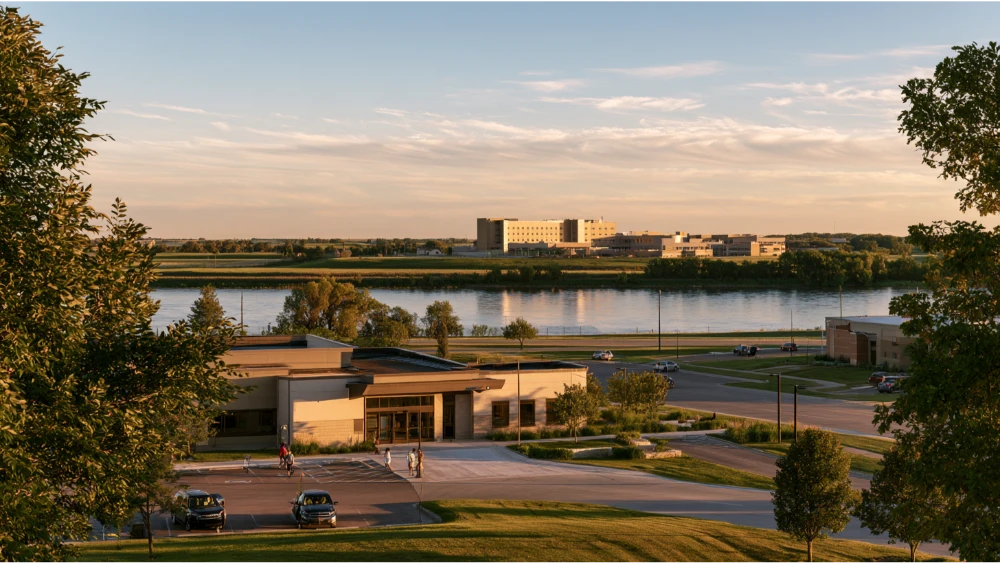
This distinction matters enough to state plainly: Wahpeton has clinics. The nearest full hospital is in another state.
In Wahpeton itself, Essentia Health and Sanford Health both operate clinics. The Sanford Wahpeton clinic lists family medicine, internal medicine, obstetrics and gynecology, dermatology, optometry, psychology, rehabilitation, lab work, imaging, and visiting specialists. That covers routine and a fair amount of non-routine care without leaving town.
For a hospital, the nearest facility identified by the city is CHI St. Francis Health in Breckenridge, Minnesota, directly across the river. It’s a 25-bed critical-access hospital with 24-hour emergency care and ambulance service, plus surgery, imaging, laboratory, rehabilitation, and skilled-nursing services.
So: for an emergency, you are crossing into Minnesota. For advanced specialty care, you are likely driving toward Fargo. Neither is a dealbreaker, and for a city of 8,100 this is better coverage than a lot of comparable towns get. But you should know it before move-in rather than at 2 a.m.
Here is the step people skip in border towns. Confirm that your insurance network covers providers in both North Dakota and Minnesota before you move. Plans sold in one state don’t automatically treat an across-the-river hospital as in-network, and finding that out on an emergency room bill is an expensive way to learn. Call your insurer, name CHI St. Francis in Breckenridge and the Wahpeton clinics specifically, and get the answer in writing.
Provider schedules, visiting specialist rotations, and service lines change. Verify directly with each clinic for anything you depend on.
Weather, Flooding, and Seasonal Reality: The Two Things New Residents Underestimate
Winters here are a real planning item
The current official U.S. climate-normal period is 1991 to 2020, and that’s the baseline to use. Plenty of Wahpeton weather tables still floating around search results are built on the older 1981 to 2010 normals, so check which period a source is quoting before you trust it. For precise station temperature and snowfall figures, go to NOAA or the North Dakota State Climate Office at NDSU.
What the data describes in plain terms: sharp seasonal swings, regular stretches of below-zero temperatures, persistent wind, snow events, and a spring freeze-thaw cycle that can be harder on buildings than the deep cold is. Wind chill, not the thermometer reading, is the number that governs how you dress and whether you start the car early.
Practical winter prep, in the order it matters:
- Get the battery and tires checked before November. Cold kills marginal batteries first.
- Find out whether your parking spot has an outlet for a block heater, and ask that question before you sign the lease, not in January.
- Keep an emergency kit in the trunk: blanket, boots, water, phone charger, shovel.
- Learn the snow-event parking restrictions. Towing during a plow operation is a real and avoidable expense.
- Pin down in writing who shovels the walk and clears the drive under your lease.
- Ask what fuel the property heats with and request the cost history for the last two winters.
- Understand frozen-pipe prevention for your specific unit, and get the emergency maintenance number programmed into your phone on day one. You want to know exactly who answers at 2 a.m.
Flooding: check the address, not the city
Wahpeton sits where the Bois de Sioux and Otter Tail rivers meet to form the Red River of the North. The community has a documented history of major flooding and is now covered by a federally authorized flood-risk-management project, which was still active enough to be under a proposed modification review as of September 2026.
The key point, and the one blanket articles get wrong: flood risk is not uniform across town. Two properties a few blocks apart can carry very different risk profiles and very different insurance costs. The only way to know is to check the specific address.
Five steps, every time:
- Enter the exact property address into FEMA’s flood map tool and North Dakota’s Risk Assessment Map Service.
- Determine whether the structure, basement, parking area, or access road falls within a mapped floodplain. The access road matters more than people expect.
- Request the property’s water-intrusion history and sump-pump details, including when the pump was last serviced.
- Get a flood-insurance quote before you sign a lease or close on a purchase, so the cost is in your budget rather than a surprise.
- Confirm what your renter’s or homeowner’s policy excludes. Standard renter’s insurance generally does not cover flood damage. Most people assume it does.
Things to Do in Wahpeton: Entertainment, Parks, and Community Life
Wahpeton does community-scale recreation genuinely well, and it has a few things no town this size has any business having.
Chahinkapa Zoo is the headline. A city visitor publication reports more than 70,000 visitors annually, which is a city-promotional figure rather than an independently audited one, but the point stands: this is a real draw, not a petting pen.
Chahinkapa Park surrounds it with green space, trails, and a swimming pool, and it anchors the summer season for a lot of households here. Inside the park, the Prairie Rose Carousel is a restored, operating carousel that people drive in to ride.
Bois de Sioux Golf Course is the one that makes out-of-towners blink. Its 18 holes cross the state line, with nine holes in North Dakota and nine in Minnesota. You can tee off in one state and putt out in another on the same round.
For culture and history, the Richland County Historical Museum covers local and regional history, the Red Door Art Gallery handles the visual arts side, and the Chahinkapa Sculpture Garden gives you an outdoor version of the same. The Kidder Recreation Area is the spot for fishing and time on the water. And then there’s the “Wahpper,” the giant catfish sculpture that is, by any reasonable standard, the town’s mascot.
NDSCS athletics and community events round out the calendar, and a college campus in a town of 8,100 means there’s usually something scheduled that’s open to the public. Give yourself a weekend to explore all of it before you decide what you’ll actually use.
The rhythm of a year here is pretty defined. Summer belongs to the park, the pool, the river, and the golf course. Fall is college sports and the last comfortable weeks outside. Winter moves indoors, with ice activities for people who lean into it and a lot of gym, library, and community-center time for everyone else. Spring is short and muddy and everyone is just glad about it.
The honest tradeoff: for large-venue concerts, pro sports, big-box variety, and a wider restaurant scene, you’re driving to Fargo, about an hour up I-29. Most residents treat that as a planned trip with a list attached, not a weekly errand. If you need a city menu of options on a Tuesday night, this isn’t the place. If you want a park you can walk to and a zoo membership that gets used, it is.
Safety, Taxes, Utilities, and the Paperwork of Moving to North Dakota
How safe is Wahpeton?
Start with the primary source: the Wahpeton Police Department publishes an annual report, and the city currently links the 2025 edition. That’s the document to read, because it reflects what the agency actually recorded rather than a repackaged estimate.
For context, North Dakota’s 2024 NIBRS crime report recorded 470 Group A offenses reported by the Wahpeton Police Department, with 224 cleared. One caution on interpreting that: “Group A offenses” is a specific NIBRS category set with its own counting rules, and it is not interchangeable with the simplified “total crime” tallies that commercial safety sites publish. Comparing the two directly produces nonsense.
We’re not going to tell you a city is categorically safe or unsafe, because that’s not a question a single number can answer for a specific household on a specific street. Read the department’s annual report, note the major categories, and pair that with your own look at the block you’re considering, ideally at a few different times of day.
Sales tax and property taxes
North Dakota’s general state sales-tax rate is 5% on most retail sales. Wahpeton’s city sales-and-use tax increased from 2% to 3% effective October 1, 2025. Use the state’s tax-rate lookup to confirm the exact combined rate for a specific transaction, since other local or special taxes can apply depending on what you’re buying.
And remember the border. Purchases made in Breckenridge fall under Minnesota’s sales tax rules, not North Dakota’s. Residents here figure out fairly quickly which side of the river is cheaper for which category.
For buyers: get the actual parcel’s tax bill from the county, not a county average. Assessments vary, special assessments exist, and budgeting based on an average tells you very little about the specific property you’re about to own.
Driver’s license, vehicle registration, and utility setup
A new resident may generally use an out-of-state noncommercial driver’s license for 60 days after becoming a North Dakota resident. For licensing purposes, a person is generally considered a resident after living in the state for 90 consecutive days, subject to stated exceptions. Check the North Dakota DOT’s current requirements for your situation, especially if you’re a student or working across the state line.
Vehicle registration works differently and is stricter. North Dakota requires a motor vehicle to be registered in the state immediately when the owner becomes a resident or becomes gainfully employed in North Dakota. “Immediately” is the operative word. Don’t assume you get the same grace period as the license.
The rest of the paperwork, roughly in order:
- Set up water and sewer with the city, and confirm the start date so you’re not paying for the prior occupant or arriving to a shut-off.
- Transfer or open electricity and natural gas accounts, and ask each provider for the property’s usage history.
- Schedule internet installation early. Lead times in smaller markets are longer than you expect.
- File mail forwarding with USPS.
- Update your address with insurance carriers, and re-quote auto coverage, since rates are state- and ZIP-specific.
- Update voter registration and any professional licenses tied to your state of residence.
One disclaimer that applies to this entire guide: every figure here is an estimate valid as of its stated date. Rates change, rules get amended, and rents move. Verify before you sign.
Renting in Wahpeton: Pros, Cons, and Your Moving Checklist
Know your renter basics
General information, not legal advice. North Dakota’s Attorney General publishes tenant rights guidance, and it’s worth reading in full before your first lease here. The high points:
- A standard security deposit is generally limited to one month’s rent, with certain legally permitted additional deposits.
- The landlord generally must return the deposit along with an itemized statement of any deductions within 30 days after move-out.
- For a month-to-month tenancy, a landlord generally gives at least 30 days’ written notice of a rent increase.
- No tenant can be removed without a court order. Lockouts and utility shut-offs are not legal eviction.
Laws change and individual lease terms matter, so read yours and ask questions before signing rather than after.
From our side of the table, this is where full-service management shows up for residents. A documented move-in condition report with photos protects you at move-out. A real maintenance request channel means your furnace problem doesn’t live in someone’s text thread. And a phone number that actually answers is the difference between a frozen pipe and a flooded unit. Those three things cost an owner very little and are worth a great deal to the person living there, which is exactly why we build them in.
Honest pros and cons
| Why Wahpeton works | What takes planning |
|---|---|
| Housing costs lower than the national average | Hard winters with sustained below-zero stretches |
| 17.6-minute mean commute | Car dependence, with limited fixed-route transit |
| Established manufacturing and education employers | Thin rental inventory with academic-calendar timing |
| NDSCS campus and the activity that comes with it | Big-city amenities require an hour’s drive |
| Local clinics plus hospital and 24-hour ER across the river | Cross-state logistics for work, insurance, and taxes |
| 93.1% household broadband | Flood due diligence required by address |
| Real parks, zoo, golf, and river recreation | Fewer housing options means less negotiating leverage |
Your Wahpeton moving checklist
30 days out: Run the flood map on your exact address. Confirm school attendance boundaries with the district in writing. Get renter’s or homeowner’s insurance quotes, including a separate flood quote. Request 12 months of utility history for the property. Read the deposit terms and ask what triggers deductions.
Moving week: Complete a written move-in condition report with timestamped photos of every room, including closets and the furnace area. Confirm utility start dates. Get keys and all entry codes. Save the emergency maintenance number in your phone. If you’re moving between October and April, stock winter supplies before the truck arrives, not after.
First 30 days: Handle vehicle registration immediately and your driver’s license within the window. Update voter registration and your address everywhere it matters. Establish a primary care provider and a dentist, and verify both are in your network. Get a library card and check what the park system offers residents.
Frequently Asked Questions
What are the top cities to live in North Dakota?
“Best” depends entirely on your job, budget, and commute tolerance, and the lists of top cities that get recycled every year rarely account for either. Fargo and West Fargo give you the most metro amenities. Grand Forks and Wahpeton offer college-town scale with campus activity built in. Bismarck and Mandan center on state government and regional services. Minot and Dickinson lean toward energy-linked employment. Pick by fit, not by ranking, and run each candidate through our Cost of Living Calculator against your current city before you shortlist.
What is the sales tax rate in Wahpeton, North Dakota?
North Dakota charges 5% state sales tax on most retail sales, and Wahpeton’s city sales-and-use tax is 3%, effective October 1, 2025, up from 2%. Other local or special taxes can apply depending on the item, so confirm the exact combined rate for a specific transaction using North Dakota’s official tax-rate lookup rather than assuming a flat total.
What are the pros and cons of moving to North Dakota?
On the plus side: housing costs sit well below the national average, commutes are short, and employment is steady across manufacturing, education, healthcare, agriculture, and energy. On the other side: winters are severe, distances between cities are long, public transit is limited outside the larger markets, and big-city amenities take a drive. For Wahpeton specifically, a two-bedroom rental commonly lands around $840 per month, and NDSCS anchors a good share of local employment.
How big is Wahpeton?
The Census Bureau estimated 8,141 residents as of July 1, 2025, spread across 5.22 square miles of land. The 2020 to 2024 ACS put the city at about 3,459 households averaging 1.91 people each. It’s compact enough to cross by car in a few minutes, which is a large part of why the mean commute is only 17.6 minutes.
Does Wahpeton have a hospital?
Wahpeton has clinics operated by Essentia Health and Sanford Health, but the nearest full hospital is CHI St. Francis Health in Breckenridge, Minnesota, directly across the river. It’s a 25-bed critical-access hospital with 24-hour emergency care and ambulance service, surgery, imaging, lab, rehabilitation, and skilled nursing. Confirm your insurance covers providers in both states before you move.
Ready to Make the Move? Start With the Numbers
Before you commit to a city, commit to the math. Run your target rent through our Rent Calculator, compare Wahpeton against whatever you’re paying now in the Cost of Living Calculator, and if you’re torn between a lease and a mortgage at a $171,300 median value, the Rent vs. Buy Calculator and Mortgage Calculator will settle it faster than another evening of browsing. Then view current rental listings and find your perfect home near you.
KT Rents has been a full-service, broker-owned property management company and national rental marketplace since 2009, which is 16-plus years of doing this. As of January 2025 we operated across 34 states, with 683 units and $187M in assets under management as of early 2025, and we report a 98% occupancy rate. That last number is the one we care about most, because a manager who racks up units and lets half of them sit vacant isn’t managing anything.
And if you own property and you’re tired of vacancies, maintenance calls, rent collection, property inspections, rental permits, 1099s, and court evictions, our full-service management covers all of it for roughly the price of a cup of coffee and a donut per day. Call (800) 716-4950, text (608) 207-0657, or email info@ktrents.com. Form submissions get an answer within 24 hours.
Your Rental. Your Way.