

Cambridge, Massachusetts
Homes for rent and for sale — search the map or open the full city SEO catch-all page.
Cambridge, Massachusetts
Moving to Cambridge, Massachusetts means joining a renter-majority city where 66.5% of households rent, median asking rents run from $2,200 for a studio to $3,900 for a three-bedroom as of Q3 2025, and Massachusetts law strictly limits move-in charges to first month, last month, a one-month security deposit, and lock costs. Five Red Line stations, over 300 restaurants, and proximity to Harvard and MIT make the high cost a deliberate tradeoff rather than a surprise.
Moving to Cambridge, Massachusetts
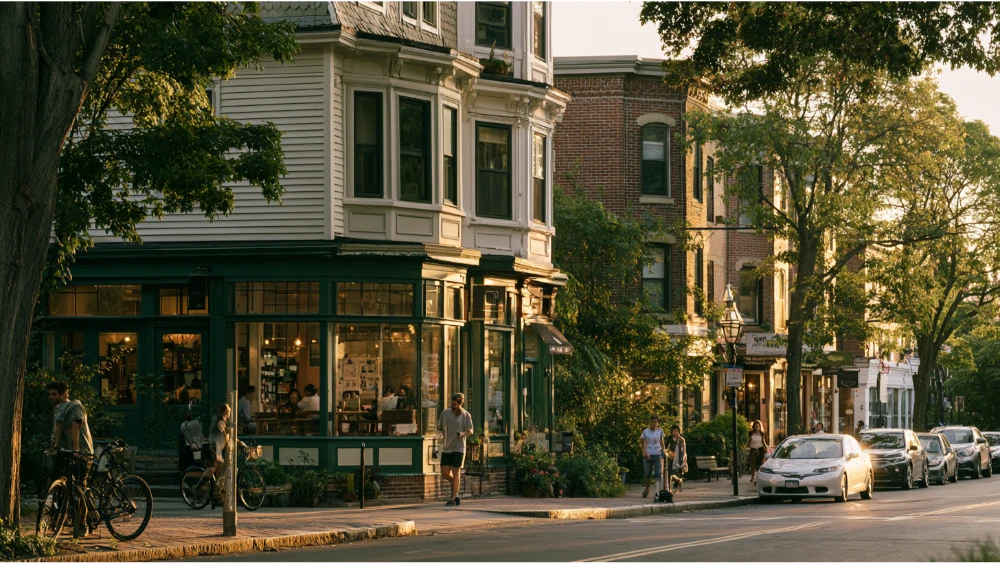
Cambridge is a compact city of about 6.43 square miles sitting across the Charles River from Boston, a few miles north of downtown, with roughly 122,588 residents as of July 1, 2025 according to the City of Cambridge. It’s home to Harvard University and the Massachusetts Institute of Technology, five Red Line stations, more than 300 restaurants, and one of the most costly housing markets in the Northeast. That last part is the tradeoff. Everything else about living in Cambridge (walkability, food, jobs, culture, transit) is exactly as good as people say.
This guide is for renters, relocating professionals, families, graduate students, and remote workers trying to make an actual decision. You’ll get a neighborhood-by-commute breakdown, real rent figures from the city itself, the Massachusetts move-in money rules that most relocation guides still get wrong, plus permits, schools, hospitals, and a 30-day checklist. We’re KT Rents, a broker-owned, full-service property management company operating nationwide since 2009, and we’ve walked a lot of people through a lot of moves. Your Rental. Your Way.
Table of Contents: Cambridge Moving Guide at a Glance
Here’s what’s ahead, in order: whether the move makes sense for you, how the city relates to Boston, real costs and home prices, what a landlord can legally charge before move-in, neighborhoods sorted by commute, transit, jobs, schools, hospitals, food and entertainment, parks, moving-day permits, winter rules, and a 30-day checklist.
Is Moving to Cambridge, Massachusetts Worth It?
For most people who can handle the housing cost, yes.
Cambridge works well if:
- You want a car-optional life. Many residents get around by walking, biking, or public transportation, and the city is built for it.
- You work in research, technology, education, or healthcare. Kendall Square has been called the most innovative square mile on the planet, and it’s a short walk from a lot of housing.
- You value dense walkable squares over square footage. The city’s commercial centers are real neighborhood hubs with a constant cultural calendar, and the campus energy gives the place a college town feel even in the residential blocks.
It’s harder if:
- You need space per dollar. Cambridge offers less of it than almost anywhere comparable.
- You need guaranteed street parking. Most residential streets are permit-only, and a permit doesn’t reserve you a spot.
Your Cambridge experience comes down to three things: whether your commute fits your address, whether you’ve budgeted against real housing numbers instead of averages you saw on a listing site, and whether you understand the city-specific move-in rules before you’re standing on the curb with a truck.
Cambridge at a Glance: Size, Population and How It Relates to Boston
Two things to get straight before anything else.
Cambridge is its own city, not a Boston neighborhood. It has its own public school district, its own parking permits, its own street occupancy rules, its own trash schedule, and its own police and fire departments. The Red Line connects you to Downtown Boston in minutes and keeps running through South Boston on the other side of the harbor, and plenty of people live in one city and work in the other, but the paperwork side of your move is Cambridge’s, not Boston’s.
There are two different neighborhood maps, and neither one is wrong. The City of Cambridge recognizes 13 official planning neighborhoods and publishes data by those boundaries. Tourism materials group the city into nine visitor-facing neighborhoods and squares. They answer different questions. Locals navigate by squares (Harvard, Central, Kendall, Inman, Porter) because that’s how the commercial life of the city is organized. City data, zoning discussions, and neighborhood demographic reports use planning neighborhoods. Once you know both systems exist, the maps stop contradicting each other.
The 2020 Census counted 118,403 residents, so the city has grown since. Within those 6.43 square miles you get diverse neighborhoods with genuinely distinct character, from riverfront lab and office development to blocks of two- and three-family New England housing stock. Across Massachusetts, Cambridge stands out for packing that much variety into so little land.
One number matters more than the rest for anyone planning a move: 66.5% of occupied housing units in Cambridge are renter-occupied, based on the 2020 to 2024 American Community Survey. Only 33.5% are owner-occupied. This is a renter-majority city. The rental market is the main market, and it moves fast.
How Much Does It Cost to Live in Cambridge?
Here are the city’s own reported median market-rate asking rents for Q3 2025:
| Unit type | Median asking rent (Q3 2025) |
|---|---|
| Studio | $2,200 |
| One bedroom | $2,785 |
| Two bedrooms | $3,400 |
| Three bedrooms | $3,900 |
Read the label carefully. These are asking rents for advertised market-rate units, which means they exclude income-restricted affordable housing and university-controlled housing. They’re what landlords listed, not necessarily what tenants signed.
On the ownership side, the city reported these 2024 median market-rate sale prices:
- Condominium: $870,000
- Single-family home: $2,315,000
- Two-family home: $1,542,500
- Three-family home: $1,822,500
You will see higher home prices quoted elsewhere. Commercial listing sites often cite average rent near $3,571 and average single-family sale prices near $2,878,000. Those aren’t lies, they’re different math. An average gets pulled upward by a handful of very expensive units, while a median sits at the middle of the distribution. Some sources report advertised prices, others report closed transactions. Pick one methodology and stick with it when you budget, rather than mixing a median rent with an average sale price and wondering why the picture doesn’t hold together.
For income context, Cambridge reports a 2020 to 2024 median income of $130,748 per household in 2024 inflation-adjusted dollars, well above the national average. That describes households already living here, many of them with two earners or multiple roommates. It is not a required salary, and treating it as a threshold will only discourage you unnecessarily.
A bit of history explains today’s pricing. Rent control ended in Massachusetts in the mid-1990s, at a point when close to 40% of Cambridge properties were regulated. Assessed property values in the city rose sharply afterward, by figures commonly cited around $7.8 billion. That’s context for why the market looks the way it does, not an argument about policy.
Before you tour a single unit, run your own numbers. Our Rent Calculator, Cost of Living Calculator, and Rent vs. Buy Calculator let you test a Cambridge budget against your actual income and current city instead of a generic rule of thumb.
What Can a Massachusetts Landlord Charge Before Move-In?
This is where relocating renters lose real money, usually because they read an out-of-date guide.
At or before the start of a tenancy in Massachusetts, a landlord or the landlord’s agent may generally require only four things:
- First month’s rent
- Last month’s rent
- A security deposit no greater than one month’s rent
- The actual cost of purchasing and installing a new lock and key
Required application fees, background-check fees, move-in fees, and landlord broker fees are not on that list.
The broker-fee rule changed on August 1, 2025. Now the party who hires the rental broker is responsible for paying that broker’s fee. If the landlord hired the broker, the landlord pays. A renter pays a broker fee only when the renter independently hires a broker to represent the renter. Older Cambridge relocation guides still tell people to budget a full month’s rent for the listing agent’s fee. That advice is stale, and it’s worth about $2,785 on a one-bedroom.
Deposit handling has its own rules. A security deposit must be held in a separate interest-bearing Massachusetts bank account. The landlord should give you a statement of condition within 10 days of the tenancy starting or of receiving the deposit, and you have 15 days to add your own corrections to it. Use that window. After the tenancy ends, the remaining deposit plus applicable interest must generally be returned within 30 days, minus lawful deductions. And a lease cannot impose late-payment interest or a penalty until rent is 30 days late.
This is general educational information, not legal advice. Check the current Massachusetts Attorney General’s Guide to Landlord and Tenant Rights and the state’s broker-fee FAQ before you sign anything.
Compliance work like this is exactly why broker-owned matters. When we manage a property, tenant placement, tenant screening, rent collection, and lawful move-in charges are handled by licensed professionals who know the local rules, so nobody is guessing at the closing table.
Cambridge Neighborhoods and Squares: Where to Live Based on Your Commute
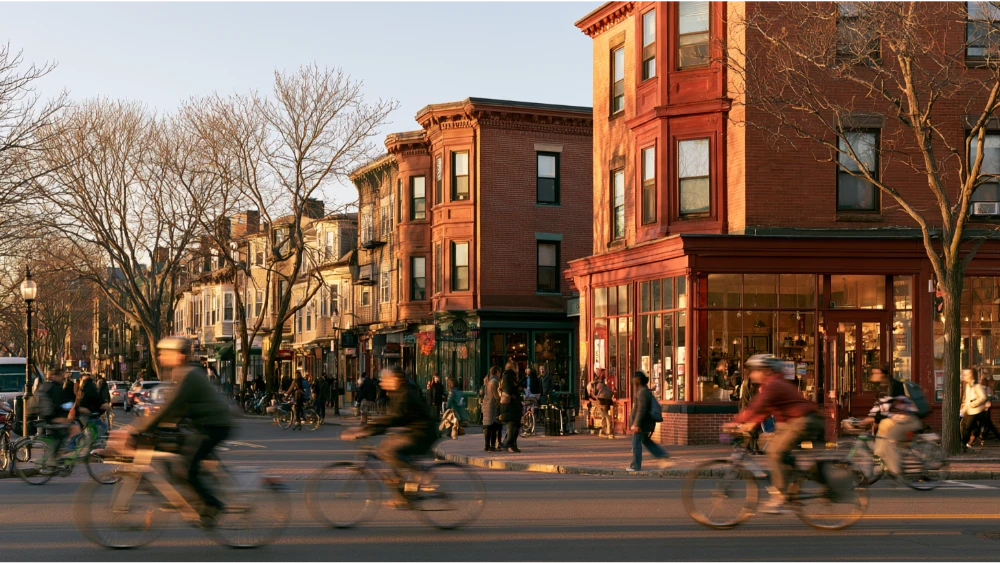
We’re sorting these by objective criteria: rail and bus access, bike routes, the nearest commercial corridor, parks, and the job or campus anchors nearby. No “best neighborhood” rankings, no safety scores, no assumptions about who belongs where. In a city this small, commute fit is the variable that actually changes your daily life. A two-mile difference can mean a transfer.
| Area | Nearest rail/transit | Commercial center | Parks/open space | Work or campus anchors |
|---|---|---|---|---|
| East Cambridge / Kendall / Area 2 | Lechmere (Green), Kendall/MIT (Red) | Cambridge St corridor, Kendall Sq | Charles River, riverfront paths | MIT, labs, offices, research firms |
| Central Sq, Cambridgeport, The Port, Riverside, Mid-Cambridge | Central (Red), heavy bus service | Central Square, Mass Ave | Charles River, neighborhood parks | MIT and Harvard both walkable |
| Inman Sq / Wellington-Harrington | Bus, bike; no rapid-transit station | Inman Square dining district | Neighborhood parks | Between East Cambridge and Central |
| Harvard Sq, Baldwin, Neighborhood Nine, West Cambridge | Harvard (Red), Porter (Red + rail) | Harvard Square | Charles River, Fresh Pond | Harvard University, Lesley University |
| Porter, North Cambridge, Alewife, Highlands, Strawberry Hill | Porter and Alewife (Red), commuter rail at Porter | Porter Square, Mass Ave | Fresh Pond, Danehy Park, Alewife Brook | Commuter access to Boston and 128 corridor |
East Cambridge, Kendall Square and the MIT Area (Area 2)
East Cambridge pairs an established residential core with the Cambridge Street commercial corridor, Lechmere Green Line access, and substantial riverfront development of apartments, offices, and research facilities. Kendall Square is the principal commercial and Red Line hub for the eastern half of the city, and it’s the address most biotech and software workers are trying to reach. Area 2 is largely MIT facilities and university housing, so open-market rentals there are limited.
Central Square, Cambridgeport, The Port, Riverside and Mid-Cambridge
This is the dense residential heart of Cambridge. Cambridgeport runs between Massachusetts Avenue and the Charles River, with Central Square’s Red Line station and a thick web of bus routes close by. Riverside carries Western Avenue and River Street across to Allston, which gives drivers and cyclists a direct link to the other side of the water. The Port sits between Central Square, Kendall Square, and Cambridge Street. From much of this grouping you can walk to MIT in one direction and Harvard in the other, which is why The Port, Mid-Cambridge, and Cambridgeport get consistently strong marks from people who live there. Housing form runs from triple-deckers to mid-rise apartment buildings.
Inman Square and Wellington-Harrington
Wellington-Harrington is predominantly residential and sits between East Cambridge and Inman Square. Inman itself is a strong dining and commercial district with no rapid-transit station of its own. That’s the thing to test. Map your bus, walking, and cycling route to work before you commit, because the walk to Central or Harvard is reasonable but not short in February.
Harvard Square, Baldwin, Neighborhood Nine and West Cambridge
Harvard Square functions as a major shopping area and a neighborhood center in its own right, with bookstores, museums, and theaters layered into a Red Line station. Neighborhood Nine extends between Harvard Square and Porter Square, putting two stations in reach. West Cambridge is lower-density residential west of Harvard Square, bounded by the Charles River, Concord Avenue, and Fresh Pond. Baldwin contains substantial university campus land and provides access toward both Harvard and Porter.
Porter Square, North Cambridge, Alewife, Cambridge Highlands and Strawberry Hill
Porter Square is the transit strong point: Red Line, commuter rail, bus connections, and Massachusetts Avenue retail in one place, roughly two miles north of the river. North Cambridge mixes single-family homes, multifamily housing, and larger apartment buildings, which usually means more variety in price and size. Alewife station anchors the western end near Cambridgepark Drive and the regional shared-use path network. Cambridge Highlands blends a residential core with commercial and light-industrial areas near Alewife Brook Parkway and Fresh Pond. Strawberry Hill is the city’s smallest planning neighborhood by land area, primarily residential at the western edge.
Getting Around Cambridge: Red Line, Commuter Rail, Buses and Bikes
Yes, you can live in Cambridge without a car, and a lot of people do.
The MBTA Red Line serves five Cambridge stations: Alewife, Porter, Harvard, Central, and Kendall/MIT. Lechmere is the city’s one Green Line station. Porter also has commuter rail service, which matters if your job sits outside the subway network. City materials cited 26 bus routes as of 2023, and the bus network fills in the gaps between squares.
As of September 2026, standard fares are $2.40 for the subway and $1.70 for a local bus. A pilot that started September 1, 2026 allows unlimited subway, bus, and ferry transfers within a two-hour window when you use the same payment method, charging the highest applicable fare. It’s a pilot, so confirm it at mbta.com/fares before you build a monthly budget around it.
Cycling is a genuine commuting option here, not a hobby. The city reports bicycle counts rose 250% from 2004 to 2024 while the calculated bike crash rate fell 41%, and in 2024, 46% of all regional bikeshare trips began or ended in Cambridge. There are over 60 miles of bike lanes and Bluebikes stations spread across the city, plus walking trails along the Charles. Short blocks and continuous sidewalks are part of what makes Cambridge highly walkable on foot as well.
Boston Logan International Airport is roughly eight miles away. You can own a car in Cambridge, but plan on permit parking and commercial parking garages rather than a driveway. More on the permits below.
Jobs in Cambridge: Biotech, Higher Education, Tech and Healthcare
Cambridge recorded an average of 151,521 covered employees per month in 2024. That figure counts people working in the city, not only people who live here, and it excludes categories like the self-employed. For a city of about 122,000 residents, that’s a lot of inbound commuting.
The 2024 employment mix:
- Professional and business services: 43.5%
- Education and health services: 29.3%
- Information: 7.1%
- Leisure and hospitality: 6.4%
- Trade, transportation, and utilities: 5.8%
- Financial services: 2.3%
The city’s official 2024 list of largest employers is led by Harvard and MIT, with higher education, biotechnology, research and development, software, healthcare, and government filling out the rest. Over a thousand biotech and tech companies operate in and around the city, and household names in life sciences and internet infrastructure, Akamai Technologies among them, sit within walking distance of the Red Line.
On unemployment, use dated figures and name the geography. The Cambridge-Newton-Framingham metropolitan division had a preliminary 4.4% unemployment rate in July 2026 per the Bureau of Labor Statistics. Lower city-level numbers circulate online (you’ll see figures in the 2% to 3% range) but those come from different estimation methods and different periods. Always check which is which.
Practical advice: before you sign a lease, ride your actual door-to-door commute at rush hour. Cambridge distances are short, but a single transfer can add twenty minutes twice a day.
Cambridge Public School District: How Controlled Choice Assignment Works
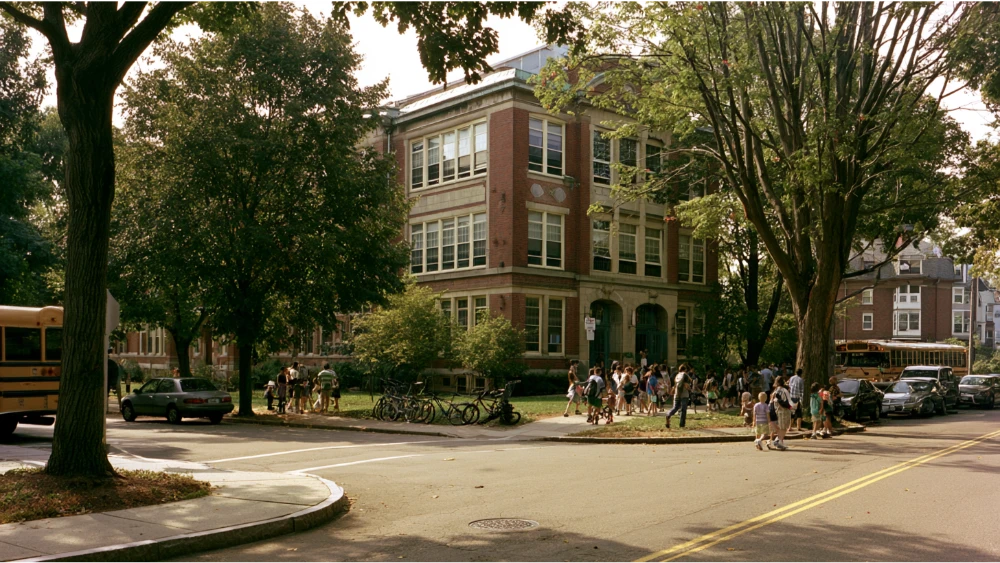
Here is the thing most relocation guides get wrong. A Cambridge address does not automatically assign your child to the school next door.
Cambridge Public Schools uses a Controlled Choice process. The district weighs family preferences alongside enrollment balance, socioeconomic categories, program requirements, and other district factors. You submit choices, and the district places students according to that framework. So if you’re picking an apartment because of a specific elementary school across the street, understand that proximity is one input, not a guarantee.
The district lists 11 elementary schools, four Upper Schools serving grades 6 through 8, and one comprehensive high school, Cambridge Rindge and Latin School, plus technical and alternative programs. Student-teacher ratios run around 10 to 1, and third-party rankings have placed these public schools among the top ranked public schools nationally, though we’d treat any single ranking cautiously. The official 2025 four-year graduation rate was 91.7%. Outcomes vary substantially by student group, and no single percentage measures a school. Private schools and parochial options also exist in and near the city.
Elementary Schools, Upper Schools and the City’s One Public High School
For current-year registration in kindergarten through grade 8, completed applications are generally processed first come, first served, and students can often begin within two to five days of a completed registration. Seats may be limited. Gather proof of Cambridge residency, your child’s birth record, immunization records, and any prior school transcripts before you start. Details and current forms live at cpsd.us.
Higher Education in Cambridge
Harvard University and the Massachusetts Institute of Technology anchor the city, and Lesley University, Cambridge College, and the Longy School of Music of Bard College add to the student population. Two of the most prestigious universities in the world sitting two Red Line stops apart is a big part of what people mean when they call this place an intellectual capital. That academic calendar shapes the rental market directly. Lease turnover clusters in spring and summer, and September 1 is the traditional move-in date across much of Massachusetts. If you can time your move outside that crunch, you’ll have more inventory, easier truck scheduling, and less competition for every viewing.
Hospitals, Emergency Care, Fire Department and City Services
Cambridge has two hospitals with 24-hour emergency departments:
- CHA Cambridge Hospital, 1493 Cambridge Street
- Mount Auburn Hospital, 330 Mount Auburn Street, a 217-bed teaching hospital with inpatient, maternity, cardiac, and cancer services
Know the difference between the three tiers of care, because most guides just list hospital names and stop. An emergency department handles life-threatening problems. Urgent care handles the stitches-and-strep tier. Neither replaces a primary care provider, and new-patient wait times in the Boston area can run long. Get on a practice’s list in your first month, not your first illness. Boston’s major medical centers are also minutes away by Red Line if you need specialized care.
Day-one city contacts worth saving: 911 for emergencies, the non-emergency lines for the Cambridge Police Department and Cambridge Fire Department, and the city’s service request channel for streetlights, potholes, and missed collections. If you’re renting in a professionally managed building, find out your maintenance request channel the same week you move in. We handle ours through an owner and resident portal nationwide, so a broken water heater is a submitted request rather than a series of unanswered voicemails.
Food, Live Music and Entertainment in Cambridge
The Cambridge Office for Tourism reported more than 300 restaurant options in 2026, with cuisines from across the world, which tracks with how international the city’s population and campuses are. We’re not going to publish a list of individual restaurants, because half of them will have changed by the time you read this. Learn the districts instead.
- Central Square: live music, nightlife, late-night food, and cultural venues. If you want to see a band on a Tuesday, this is your square.
- Harvard Square: bookstores, theater, street musicians working the brick plazas, and the density of university activity that comes with it.
- Inman Square and Porter Square: neighborhood dining and independent retail, including Porter’s long-standing Japanese food hall tradition.
- Kendall Square: science and technology talks, MIT programming, and river access.
- East Cambridge: the Cambridge Street corridor, with a mix of long-running spots and newer arrivals.
Cultural anchors include the Harvard Museum of Natural History and the other university collections, the MIT Museum, the Museum of Science just across the river, galleries, public art, and city arts programming. History runs deep too. The Longfellow House on Brattle Street was home to one of the Fireside Poets, and it’s now a national historic site open to visitors. Follow the Cambridge Arts calendar and the tourism events calendar rather than trusting any static roundup. Something is always happening, and the good stuff is often free.
Parks, the Charles River and Outdoor Life
In 6.43 square miles you’re rarely more than a short walk from green space, and that’s part of how a small apartment works here. Your living room is 700 square feet. Your backyard is the river.
The city maintains over 80 parks and playgrounds along with community gardens. Paths run along the Charles River, and Memorial Drive closes to cars on weekends for pedestrians and cyclists. Fresh Pond Reservation covers 162 acres with a 2.25-mile walking trail around the water. Alewife Brook Reservation adds about 120 acres of wetlands at the northwest edge, connecting into the regional shared-use path network that reaches out from Alewife station. Cambridge Common is the historic park near Harvard Square, and Danehy Park gives North Cambridge a large open field space. Having that many parks packed into so few square miles is a real part of making Cambridge livable at this density.
Winter doesn’t shut this down so much as change it. The river paths and Fresh Pond loop stay busy in the cold, though you’ll want to know the city’s snow rules before your first storm.
Moving Day in Cambridge: Permits, Parking and the Details People Miss
Cambridge streets are narrow and mostly permit-only. Show up with a 26-foot truck and no paperwork and your move gets expensive. These are current posted figures and subject to change, so verify at cambridgema.gov:
- Moving Van Permit: reserves curb space for loading and unloading. Issued for a maximum of two consecutive days. Containers or crates require a separate permit type, so if you’re using a drop-off pod, ask for the right one.
- 2026 resident parking permit: $25 annually, including no more than one visitor permit per household. Your vehicle generally has to be registered in Massachusetts at a Cambridge address with a Cambridge garage code.
- New-resident temporary permits: one week for $20, or two weeks for $30 if you’re moving from outside Massachusetts. A temporary visitor permit for a borrowed vehicle or a friend helping you move runs $10 and is valid up to three consecutive days.
Then the details guides skip. Check whether your street is one-way or truck-restricted before booking the movers. Confirm elevator reservations, loading-dock access, and building move-in hours with the property manager in writing. And find out now whether your building has off-street parking or whether you’ll be living on permit parking and commercial garages.
Coordinating this on an owner’s behalf is standard full-service work for us: permits, inspections, ordinance compliance, and the scheduling that keeps a move-in from turning into a citation.
Winter, Snow Emergencies, Trash Day and Flood Checks
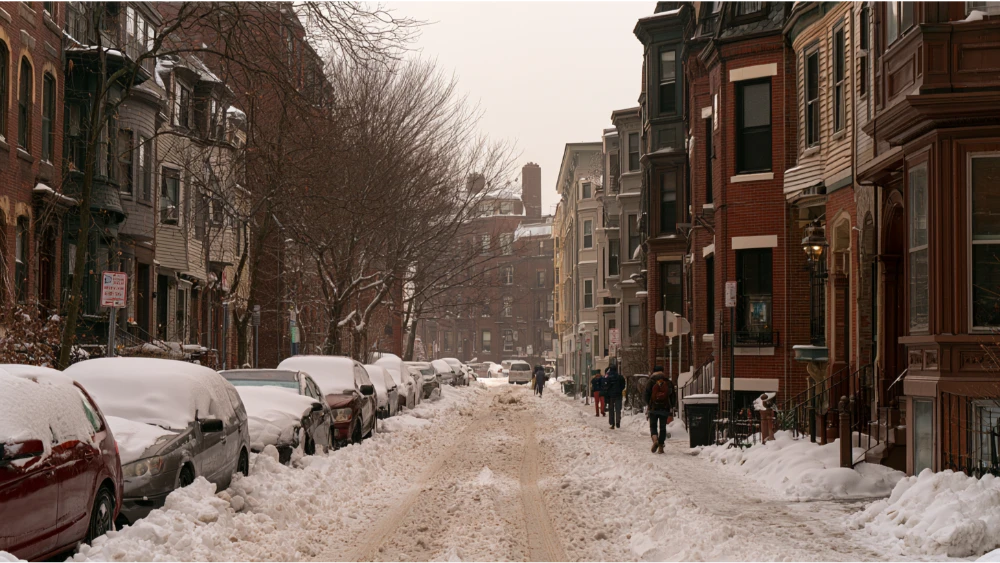
Snow. Winters in the Greater Boston area are cold and snowy, averaging over 50 inches of snowfall per year based on nearby Boston Logan climate normals (that’s the Boston station, not a Cambridge one). Expect cold stretches and occasional snowstorms heavy enough to trigger a declared snow emergency, during which vehicles must be off any street marked “No Parking During Snow Emergency.” Certain facilities provide temporary free parking for Cambridge residents with valid resident permits, and you must move your car within two hours after the ban lifts. Sidewalk clearing is a property responsibility, so get in writing whether that’s you or the owner.
Waste. Cambridge provides weekly curbside collection of trash, recycling, and food waste for most residential buildings, and recycling is mandatory. Confirm your building’s specific arrangement with the owner or manager, because larger buildings sometimes use private hauling.
Flood. Use the city’s FloodViewer tool before signing on a basement or first-floor unit. The 2025 version includes projected flood conditions and parcel-level long-term flood elevations. Check the actual address rather than guessing from the neighborhood name.
Your 30-Day Cambridge Move-In Checklist
- Confirm lease terms and verify your up-front charges match Massachusetts rules (first, last, deposit, lock and key).
- Book your Moving Van Permit and any temporary parking permits.
- Photograph the unit’s condition on day one and return the statement of condition with your corrections inside the 15-day window.
- Set up utilities and confirm in writing what the rent includes.
- Register your vehicle in Massachusetts at your Cambridge address, then apply for the resident parking permit.
- Register children for school and start the Controlled Choice process.
- Establish a primary care provider and note your nearest emergency department.
- Set up online rent payment and learn your maintenance request channel.
- Find your collection day plus your closest grocery store, transit station, and park.
How KT Rents Helps Renters and Property Owners Moving Into a Market Like Cambridge
If you’re renting: browse rental properties nationwide, submit a rental application online, and test your budget with our Rent Calculator, Rent vs. Buy Calculator, Cost of Living Calculator, and Mortgage Calculator before you commit to a city. Pay rent online, submit maintenance requests through the portal, and take advantage of resident perks like housewarming gifts and home-goods discounts. Residents deserve to feel at home, not just housed. Search Now and find your perfect home near you.
If you own property: we’re broker-owned and full service, operating nationwide since 2009. Tenant placement, tenant screening, rent collection, property maintenance, rental permits, 1099s, city ordinance compliance, property inspections and court evictions, without you lifting a finger, for what amounts to the price of a cup of coffee and a donut per day. KT Rents reports a 98% occupancy rate. Call (800) 716-4950, text (608) 207-0657, or email info@ktrents.com. We respond within 24 hours.
Frequently Asked Questions
Is Cambridge, MA a good place to live?
For car-optional, transit-served, culturally dense living next to major employers, yes. You get walkable squares, over 80 parks and playgrounds, more than 300 restaurant options, and a highly educated and diverse community in about six and a half square miles. The main tradeoff is housing cost, which runs among the highest in the Northeast.
How much do you need to live in Cambridge, MA?
Start from the city’s Q3 2025 median asking rents: $2,200 for a studio, $2,785 for a one bedroom, $3,400 for a two bedroom. Against the common guideline of keeping rent near 30% of gross income, a one bedroom points toward roughly $111,000 a year. Median household income was $130,748 (2020 to 2024, in 2024 dollars), which describes existing households rather than a required salary. Run your own figures through our Cost of Living Calculator.
What percent of Cambridge, MA is white?
For current race and ethnicity figures, go straight to the City of Cambridge demographic FAQ and U.S. Census Bureau data, both of which publish updated breakdowns. Cambridge reports a highly educated and diverse population. We cite the source rather than the number here because these figures update and the official data is the reliable place to read them.
Can you live in Cambridge without a car?
Yes. Five Red Line stations, one Green Line station at Lechmere, commuter rail at Porter, an extensive bus network, over 60 miles of bike lanes, and Bluebikes stations throughout the city. As of September 2026, subway fares are $2.40 and local bus fares are $1.70. Many residents walk, bike, or ride transit as their primary way of getting around.