

Quincy, Massachusetts
Homes for rent and for sale — search the map or open the full city SEO catch-all page.
Quincy Massachusetts
Moving to Quincy, Massachusetts means gaining access to Boston in roughly 20 to 25 minutes by Red Line while paying median rents around $2,118 per month and a median home sale price near $669,557. The city spans 17 neighborhoods with four rail stations, 27-plus miles of coastline, and sharp variation in transit, parking, and flood exposure by address. Research your exact street before committing, not just the city name.
Moving to Quincy Massachusetts
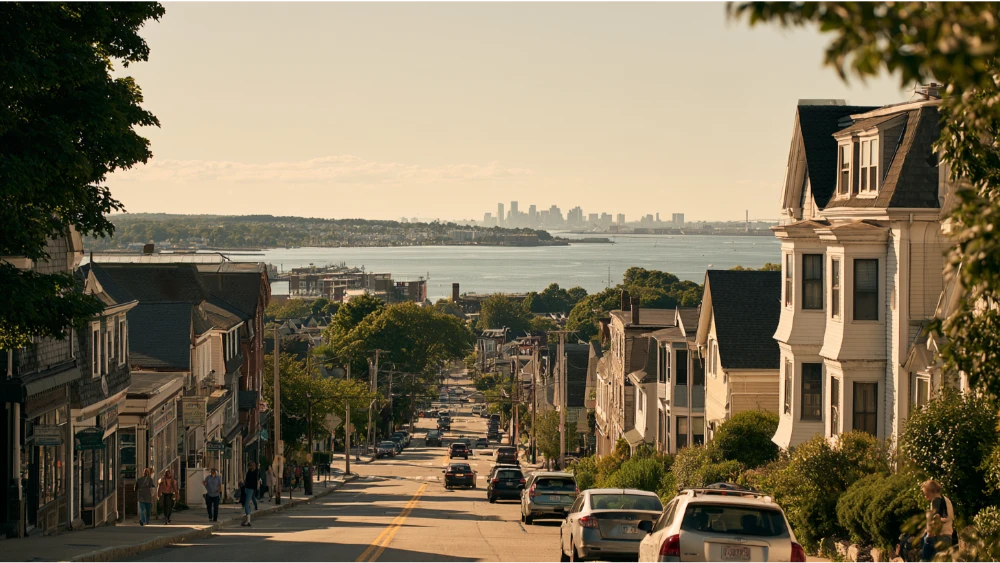
Quincy is a coastal city of roughly 103,173 residents (U.S. Census Bureau estimate, July 1, 2025) sitting about six miles south of downtown Boston, with four MBTA Red Line stations, 27-plus miles of shoreline, and 17 officially recognized neighborhoods. Living in Quincy gives you Boston access at generally lower housing cost than Boston proper, and it is the birthplace of two U.S. presidents, which is why locals call it the City of Presidents. It is not a cheap market, and nobody should pretend otherwise.
If you’re comparing Quincy listings right now, here’s the thing most relocation guides miss: the decision gets made address by address, not city by city. Two apartments a half-mile apart can land in different school assignments, different parking permit rules, a fifteen-minute difference in walk time to a Red Line platform, and completely different flood exposure. Families, young professionals, and remote workers all end up weighing the same six checks. Most people searching Quincy Massachusetts rentals start with the city and narrow down to the street. Do it the other way around.
Quincy Massachusetts at a Glance: Population, Housing, and Commute Benchmarks
Start with the baseline numbers, all dated so you know what you’re looking at.
| Metric | Figure | Source and date |
|---|---|---|
| Population | 103,173 | Census QuickFacts, July 1, 2025 estimate |
| Land area | 16.57 sq. mi. | 2020 Census geography |
| Households | 45,285 (avg. 2.22 people) | Census, 2020–2024 |
| Owner-occupied housing | 45.2% | Census, 2020–2024 |
| Median household income | $98,882 (2024 dollars) | Census, 2020–2024 |
| Median gross rent | $2,118/month | Census, 2020–2024 |
| Median owner-occupied value | $618,500 | Census, 2020–2024 |
| Mean travel time to work | 34.7 minutes | Census, 2020–2024 |
| MBTA Red Line stations | 4 | Quincy Housing Production Plan |
| Officially named neighborhoods | 17 | Quincy Housing Production Plan |
That 45.2% owner-occupied rate matters to you if you’re renting. More than half the housing stock is renter-occupied, which means apartments, condos, and units in older two- and three-family houses come to market regularly across most neighborhoods. Quincy is also a notably international city: 33% of residents are foreign-born and 38.9% of residents age five and up speak a language other than English at home, per the same Census release. Within Massachusetts, Quincy gets described as one of the more diverse cities in the state, and Asian immigrants in particular have shaped its commercial corridors over the past several decades. Immigrants have shaped the food, the shops, and the community life here for generations, and that mix is one of the first things newcomers notice. If you want a fuller picture before you visit, the same Census tables carry median age, household size, and language-at-home data. These are citywide facts about the community, not a guide to which street to pick.
How Much Does It Cost to Live in Quincy?
Housing prices here sit above the national average, and the spread from one neighborhood to the next is wider than most newcomers expect.
What renters should budget
The Census puts median gross rent at $2,118 per month for 2020–2024. Current market trackers run higher: one reported an average around $2,770 as of August 31, 2026, while others land closer to $2,304. Those numbers disagree because the methodologies disagree. Some average asking rents on active listings, some model the whole stock including long-held units, and some include utilities or heat while others don’t. Treat all of them as a range, not a quote.
What buyers should budget
Median sale price came in around $669,557 for the three months ending August 2026, against the Census median owner-occupied value of $618,500 for 2020–2024. Single-family listings and condos span a wide band, and waterfront properties in Squantum and Marina Bay can clear $1.5M. Median monthly owner costs with a mortgage were $2,963 (Census, 2020–2024).
The costs people forget when they build a Quincy budget:
- Parking, whether that’s a deeded space, a monthly garage fee, or a street permit
- Heat and utilities, which in older New England housing stock can swing hard in January
- Renters or homeowners insurance, plus separate flood coverage where applicable
- MBTA passes for everyone in the household who uses public transportation
- Massachusetts motor vehicle excise tax at $25 per $1,000 of state-determined vehicle value
Before you fall for a listing, run your actual numbers through the Rent Calculator and Cost of Living Calculator on our site. A monthly figure you can live with beats a rent you can technically qualify for.
Renting vs. Buying in Quincy: Which Makes Sense First?
We’d make the case for renting first, and not because we manage rentals. Renting for a year lets you learn the neighborhoods, test your real commute in February, compare Quincy honestly against other places on the South Shore, and watch how your street handles a nor’easter before you commit $600,000-plus to it. Quincy’s geography is unforgiving of assumptions.
If you’re buying, be ready. Homes sold in roughly 21 days as of August 2026, so pre-approval isn’t optional and hesitation costs you the house. Compare total monthly cost rather than purchase price against rent: median monthly owner costs with a mortgage were $2,963 versus median gross rent of $2,118 (Census, 2020–2024), and neither figure includes your specific taxes, insurance, or condo fees.
Run both scenarios through the Rent vs. Buy Calculator and Mortgage Calculator at ktrents.com. We’re giving you tools and benchmarks here, not individualized financial advice, so talk to a lender and a tax professional about your own situation.
Quincy Neighborhoods: An Address-First Comparison for Families and Young Professionals
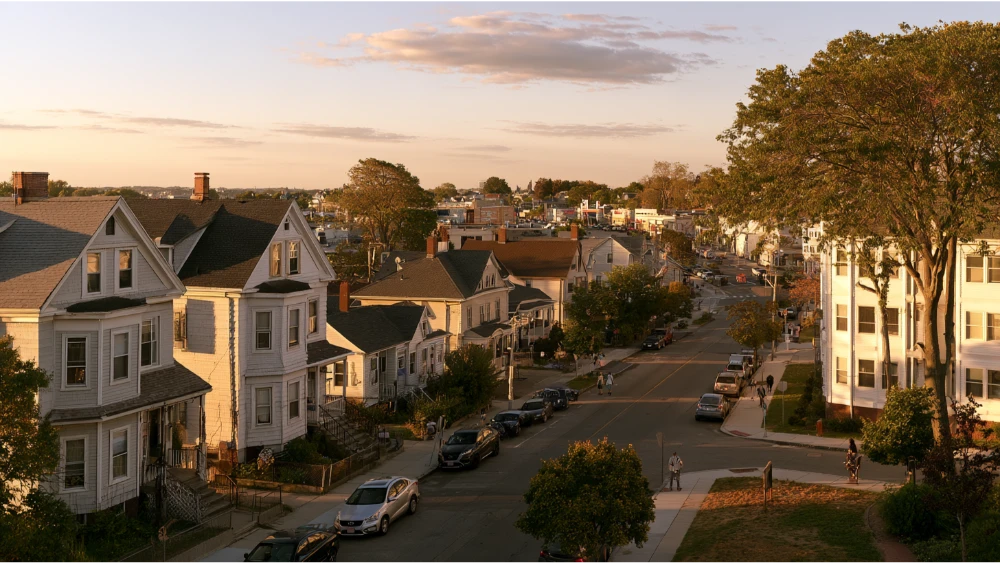
The official Quincy Housing Production Plan lists 17 neighborhoods: Adams Shore, Cranch Hill, Crown Colony, Germantown, Hough’s Neck, Marina Bay, Merrymount, Montclair, Norfolk Downs, North Quincy, Quincy Center, Quincy Point, South Quincy, Squantum, West Quincy, Wollaston, and Wollaston Hill. Most relocation guides cover six or eight of those neighborhoods and stop. Boundaries blur, everyday labels overlap, and people who live here thirty years will argue about where one ends and the next begins. What follows describes housing form, transit, and geography only.
Quincy Center and Downtown Quincy
The civic and transit core, and the most realistic car-light address in the city. Red Line and Commuter Rail leave from the same station, so public transportation here is genuinely easy access rather than a stretch. Hancock Adams Common anchors the square, city buildings sit within a few blocks, and this is the densest concentration of apartments and condos anywhere in Quincy. Downtown Quincy has added 19 new restaurants along with nightlife and street-level shops, and plenty of young professionals land here for exactly that reason. This is where you get urban convenience without Boston rents. You can live without a car, walk to dinner with friends, and be at South Station before your coffee cools.
North Quincy, Wollaston, and Wollaston Hill
Direct Red Line access from two stations, with a mix of triple-deckers, condo conversions, and single family homes. Wollaston puts you near Wollaston Beach and a corridor of markets, bakeries, and small shops. Wollaston Hill runs quieter, with older housing stock and steeper streets. North Quincy neighborhoods within walking range of the platform stay in steady demand with families and commuters for the same reason, which is that the train is a walk instead of a drive. North Quincy is frequently cited for its public schools, but assignment is by address, so verify rather than assume.
Marina Bay and Squantum
Peninsula waterfront living on Quincy Bay. Marina Bay is condo-heavy with a boardwalk, seasonal ferry service from Squantum Point, and a warm-weather social life that revolves around the water. Squantum holds higher-value waterfront homes on quiet streets. The official housing plan flags less direct bus access out here than in much of the city, so these are not the strongest neighborhoods for public transportation. Check live routes on the MBTA trip planner before you assume you can reach a station without a car.
Quincy Adams, South Quincy, and West Quincy
The southern Red Line station sits at Quincy Adams with a large garage, and you get easy access to I-93 and Route 3, which is the trade people make when they’d rather drive than wait. West Quincy carries the city’s granite quarry history and backs toward the Blue Hills side, with parks and trailheads close by. Walkability varies sharply from block to block in these neighborhoods, more than anywhere else in the city, and traffic near the highway ramps reshapes an entire morning.
Merrymount, Adams Shore, Hough’s Neck, Germantown, and Quincy Point
Coastal and peninsula territory with more single family homes, bigger yards, and more space per dollar, generally bus-dependent for transit. Hough’s Neck and Adams Shore sit out on the water and feel like small town shoreline pockets tucked inside a city, with a tight knit community feel and neighbors who notice when your recycling bin blows over. Merrymount Park is close for families who want a playground within stroller distance. Quincy Point carries the shipbuilding heritage. Flood exposure in these neighborhoods has to be checked address by address, and that goes for Hough’s Neck and Adams Shore as much as anywhere on the coast.
Montclair, Norfolk Downs, Cranch Hill, and Crown Colony
Norfolk Downs sits along the Wollaston and North Quincy corridor toward the Dorchester line, with shops and takeout counters mixed into residential blocks. Crown Colony is an office and condo district off Route 93. Montclair and Cranch Hill are primarily residential neighborhoods of quiet streets where people live for twenty years and know who owns which dog.
Whatever address you’re considering, run it through these six checks:
- Walk or bus time to the nearest station you’d actually use
- Full monthly housing cost including parking, heat, and utilities
- Official school assignment for that exact street address
- Resident parking permit eligibility for that street and that building
- FEMA flood exposure at the specific address
- Walking distance to groceries, healthcare, parks, and daily services
Commuting from Quincy to Boston: Red Line, Commuter Rail, Bus, and Ferry
Red Line. Four stations serve the city: North Quincy, Wollaston, Quincy Center, and Quincy Adams. The line runs north through Dorchester into South Station and downtown.
Commuter Rail. Quincy Center doubles as a Commuter Rail stop, which is convenient if your office sits outside the Red Line’s reach.
Bus. Official planning material identifies roughly a dozen bus routes serving Quincy. Routes and schedules change, so verify yours on the MBTA site rather than trusting any guide, including this one.
Ferry. Seasonal service connects the Squantum Point and Marina Bay area with Boston and Winthrop. Schedules are seasonal and worth confirming before you build a commute around them.
Driving. I-93, Route 3, Route 3A, and the Southeast Expressway. Expressway traffic at rush hour is exactly what its reputation suggests. Logan Airport is commonly cited at 20 to 30 minutes by car, which holds outside peak traffic and not during it.
You’ll see a lot of pages promise a 20 to 25 minute commute from Quincy Center to South Station. That’s a rail-segment estimate, not a door-to-door time. Add your walk to the platform, any transfer, and the occasional service disruption, and you get closer to the citywide mean travel time to work of 34.7 minutes (Census, 2020–2024). Test your real trip, from your real address, at your real commute hour, before you sign anything. Contactless payment now works on bus, subway, and ferry.
Can You Live in Quincy Without a Car? Public Transportation and Parking Permits
Yes, realistically, if you’re near one of the four Red Line stations or in Quincy Center. It gets considerably harder in the peninsula neighborhoods and parts of West Quincy, where public transportation thins out and walking distances start working against you.
If you are bringing a car, here’s how resident parking works, per the City of Quincy parking page as updated August 17, 2026:
- Residential permits are free
- They’re required only on streets that appear on the permit-required list
- Your vehicle must be registered in Quincy
- You’ll need the registration plus a second residency proof, such as a lease or utility bill
- A permit covers parking within a two-block radius of the registered address
- Some transit-oriented buildings with off-street parking are not eligible
- Ordinary visitor passes may be issued for up to 14 days
- A permit does not reserve or guarantee you a space
Ask about permit eligibility before you sign the lease, especially in newer transit-oriented buildings. Finding out afterward that your building is excluded is a genuinely bad week.
Jobs and the Local Economy: Working in Quincy or Commuting to Boston
The city’s economic development office points to financial services, healthcare, biotechnology, and robotics, alongside office, manufacturing, retail, and commercial activity. Census figures for 2020–2024 show 70.8% of residents 16 and older in the civilian labor force and 50.3% of adults 25 and up holding a bachelor’s degree or higher.
Be honest with yourself about what you’re buying, though. For a lot of households the real employment pool is all of Greater Boston, reachable by rail. That’s the actual value proposition of living in Quincy.
Working remotely changes your priorities. Look for a unit with space for a dedicated workspace, confirm which internet providers actually serve that address (not the ZIP code, the address), and keep a station within reach for hybrid days. Local labor-market data gets updated monthly by the state Department of Economic Research, so check it live rather than quoting a stale rate.
Quincy Public Schools: Elementary Schools, High Schools, and How Students Are Assigned
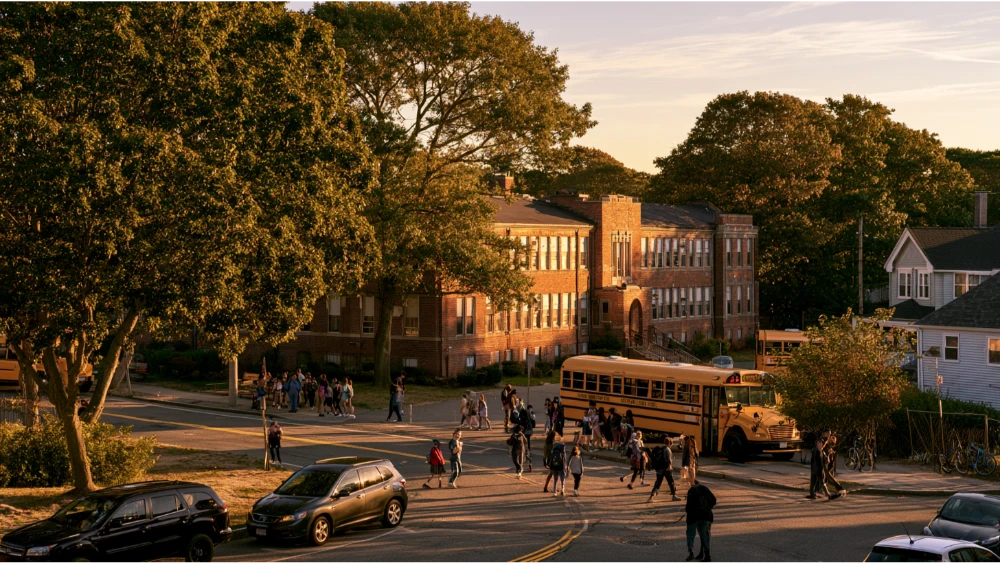
Quincy Public Schools reports serving roughly 9,700 students across 19 schools for 2026–2027: 11 elementary schools, five middle schools, two high schools, and the Dr. Rick DeCristofaro Learning Center. The district says more than 60 languages and cultures are represented across its schools, which tracks with the city’s population.
Assignment mechanics matter more than any ranking you’ll read. Students generally attend the school assigned to their home address. QPS does not participate in interdistrict school choice, and families must provide proof of Quincy residency at enrollment. For the 2026–2027 year, kindergarten students must have turned five on or before August 31, 2026, and first graders must have turned six by that date.
Never assume a specific elementary or one of the high schools from a neighborhood name. Run the exact street address through the district’s street directory, confirm the assignment directly with QPS, and read the official Massachusetts school report cards rather than third-party letter grades. Registration windows and required documents change year to year, so check the student registration page before you plan around a date.
For higher education, Quincy College operates locally, and the Red Line puts a large share of Greater Boston’s colleges and universities within a reasonable trip.
Hospitals, Urgent Care, and Emergency Rooms Near Quincy
Here’s the distinction most guides blur. Quincy Center has urgent care, primary care, lab, radiology, and outpatient specialty services. Our research did not identify an acute-care hospital with a 24-hour emergency department inside Quincy’s city limits.
The nearest 24-hour emergency departments we identified are Beth Israel Deaconess Hospital–Milton and South Shore Hospital in South Weymouth, both a short distance from most Quincy addresses by car. Boston’s Level I trauma centers are accessible from the region as well.
In a genuine emergency, call 911 and let dispatch route you. Before move-in, confirm which nearby facilities are in your insurance network, map the drive from your actual address at a realistic hour, and save those addresses in your phone. Families with young kids should do this in week one, not week ten. Facilities open, close, and change service lines, so verify current offerings rather than trusting a guide published months earlier.
Food, Shops, and New Restaurants in Downtown Quincy
Quincy Center is the dining and nightlife core, with 19 new restaurants and a restaurant scene you can cover on foot. Wollaston and North Quincy carry markets, bakeries, small grocers, and the kind of everyday restaurants you end up eating at on a Tuesday. Marina Bay does waterfront dining and seasonal events on the boardwalk. Along Wollaston Beach you’ll find casual seafood and clam-shack fare, which is a genuine New England summer ritual, not a tourist gimmick. Local food tours connect the downtown and waterfront scenes if you want a fast orientation.
The international dining here is one of the best things about the city, full stop. Immigrants built much of it, it belongs to the whole community, and we’d tell anyone to eat their way around it.
On daily logistics: grocery access and everyday convenience vary by neighborhood more than you’d expect, so measure the walk from any address you’re considering. The Thomas Crane Public Library system, community programs, and municipal assistance resources are worth knowing about before you need them, and families lean on them more than they expect to.
Entertainment, History, and Parks: Living in Quincy Year-Round
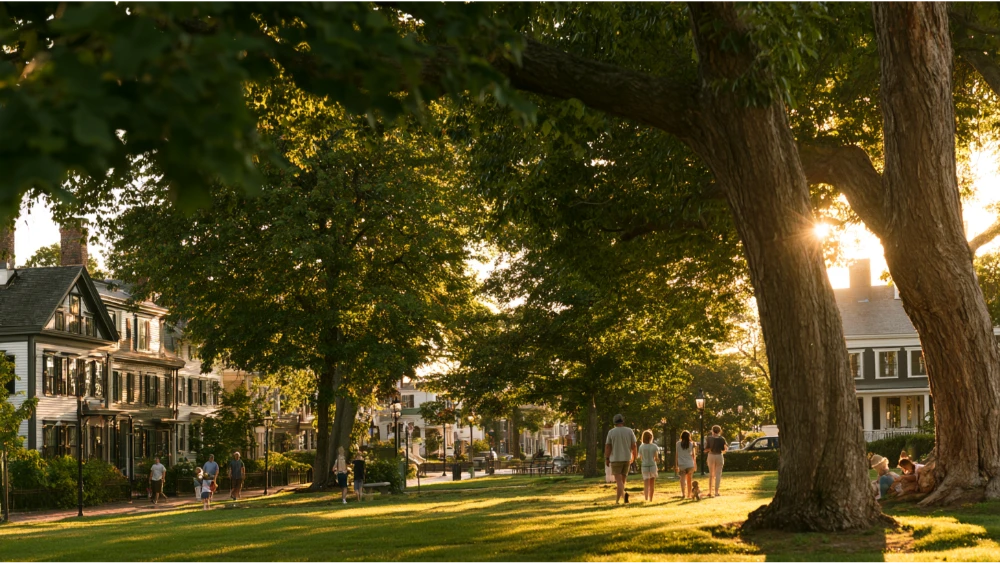
Two U.S. presidents were born here, President John Adams and his son John Quincy Adams, which is where the City of Presidents name comes from. Adams National Historical Park preserves the birthplaces and the Old House, and the Presidents Trail links the historic sites downtown. Hancock Adams Common anchors the whole thing in the middle of Quincy Center. The settlement that grew into the city was first known as Mount Wollaston, which is why the Wollaston name still turns up on beaches, streets, and neighborhoods.
Then there’s the water. Quincy has more than 27 miles of coastline. Wollaston Beach along Quincy Shore Drive at Quincy Shores Reservation runs roughly 2.3 miles and is the largest beach on Boston Harbor. The Quincy RiverWalk and Squantum Point Park give you shoreline walking away from the sand, Merrymount Park handles the classic city-park duties, and local parks resources count 52 municipal park locations. Neighborhood parks and playgrounds are scattered through nearly every residential pocket, so ask which ones are walkable from your block. Quincy Point carries the shipbuilding and maritime heritage, and Blue Hills Reservation sits just inland for actual hiking.
Seasons here are real. Winters bring snow and coastal storms, summers bring the beach, and fall is the reason people put up with February. Quincy has run a Flag Day parade every year since 1952, the longest-running in the country. That’s a community with traditions and a civic life of its own, not a bedroom community that empties out at 8 a.m.
Coastal Flooding, Weather, and Insurance: What to Check Before You Sign
Flood exposure is property-specific. Two homes on the same street can carry different risk depending on elevation, drainage, and where the parking sits. Never assign flood risk from a neighborhood name, in either direction. FEMA’s Norfolk County study covers storm surge, wave height, erosion, and overland wave analysis along Quincy’s coast.
- Search the exact address in FEMA’s flood map
- Ask the owner or agent for prior flooding and water-intrusion disclosures
- Confirm whether the unit, parking area, basement, or access road sits in a mapped hazard area
- Get renters or homeowners insurance quotes before committing, and ask whether flood coverage is separate
- Read the lease for who handles snow and ice removal from walks and streets
For regional weather planning, NOAA’s Boston Logan climate normals are the closest major reference station. Label that in your head as regional, not a Quincy-specific reading.
Evaluate safety the same way, at the address level. Visit in daylight and again after dark, look at lighting and building access, and review current Quincy Police and state crime data rather than relying on a letter grade from a site that has never walked the block.
Your Move-In Checklist for Moving to Quincy Massachusetts
- Confirm which utilities the lease includes, particularly heat
- Photograph and date the unit’s condition on day one, every room
- Buy renters insurance before the truck arrives
- Transfer your out-of-state license, registration, and title through the Massachusetts RMV
- Expect a prorated motor vehicle excise bill months later, assessed at $25 per $1,000 of state-determined vehicle value
- Apply for a resident parking permit if your street and building qualify
- Confirm trash and recycling: the city program does not cover buildings with more than eight units, so larger apartment buildings use private haulers. Furniture is collected curbside without a call, mattresses must be scheduled, and appliance, TV, or monitor pickup needs at least one full business day’s notice
- Register students with QPS using proof of residency
- Run the FEMA flood check on your exact address
- Test your commute at your real hour, both directions
- Save nearby urgent care and emergency department addresses in your phone
Advantages and Tradeoffs of Living in Quincy, MA
Advantages:
- Six miles to downtown Boston with four Red Line stations and Commuter Rail service
- Housing that generally costs less than comparable space in Boston proper
- 27-plus miles of coastline and 52 municipal park locations
- A deep international dining scene, everyday shops, and a revitalized downtown
- Real housing variety, from triple-deckers to waterfront condos to single family homes
- Genuine history and community traditions
Tradeoffs:
- Housing and overall cost of living sit well above the national average
- Public transportation quality varies sharply between neighborhoods
- Street parking is tight in the dense areas, and permits guarantee nothing
- Coastal flood exposure along the shoreline neighborhoods
- Southeast Expressway traffic at rush hour
- No in-city 24-hour emergency department identified in our research
Find Your Next Home Before You Move to Quincy Massachusetts
Start with the math. Run your numbers through the Rent Calculator, the Cost of Living Calculator, and the Rent vs. Buy Calculator at ktrents.com, then browse rental listings and submit a rental application online when you find a fit.
KT Rents is a full-service, broker-owned property management company and national rental marketplace operating across the U.S. since 2009. That’s 16-plus years of tenant placement, tenant screening, rent collection, property maintenance, and property inspections, with 683 units under management across 34 states and $187M in managed assets as of early 2025, and a reported 98% occupancy rate. Own a property in the Quincy area and want it handled without lifting a finger? Call (800) 716-4950 or text (608) 207-0657. We respond within 24 hours.
Your Rental. Your Way.
Frequently Asked Questions
Is Quincy Massachusetts a good place to live?
It works well if you want Boston access with coastal amenities and a real downtown. The tradeoffs are cost, which runs above the national average, and neighborhood variation in transit and parking. Whether it fits depends on which address you choose, not on the city as a whole.
How expensive is it to live in Quincy, MA?
Above the national average. Census puts median gross rent at $2,118 (2020–2024), while 2026 trackers report benchmarks roughly between $2,304 and $2,770. The median sale price was about $669,557 for the three months ending August 2026, against a median household income of $98,882. Run your own figures through the Cost of Living Calculator.
What is the nicest part of Quincy?
There’s no single answer, and “nicest” depends on what you need. Quincy Center gives you walkability, shops, and two rail options. Wollaston and North Quincy pair Red Line access with beach proximity. Marina Bay and Squantum are the waterfront picks. Hough’s Neck and Adams Shore trade transit for space and shoreline. West Quincy and South Quincy lean toward easy access to the highways.
How long is the commute from Quincy to Boston?
Quincy is six miles from downtown, and the Quincy Center to South Station rail segment is commonly cited at 20 to 25 minutes. Door-to-door runs longer once you add walking and transfers. The citywide mean travel time to work is 34.7 minutes (Census, 2020–2024), so test your actual trip at your actual commute hour.
Does Quincy have a hospital or emergency room?
Quincy Center offers urgent care, primary care, lab, radiology, and outpatient specialty services. The nearest 24-hour emergency departments we identified are Beth Israel Deaconess Hospital–Milton and South Shore Hospital in South Weymouth. In an emergency, call 911.