

Worcester, Massachusetts
Homes for rent and for sale — search the map or open the full city SEO catch-all page.
Worcester, Massachusetts
Moving to Worcester, Massachusetts puts you in New England’s second-largest city, where median household income is $70,102 and current asking rents run roughly $1,800 to $2,100 depending on unit type. Housing costs well below Boston but above the national average, with about 50% of city jobs anchored in health care and education. Commuter rail from Union Station connects you to Boston, and the city offers real neighborhood variety across 37 square miles.
Moving to Worcester, Massachusetts
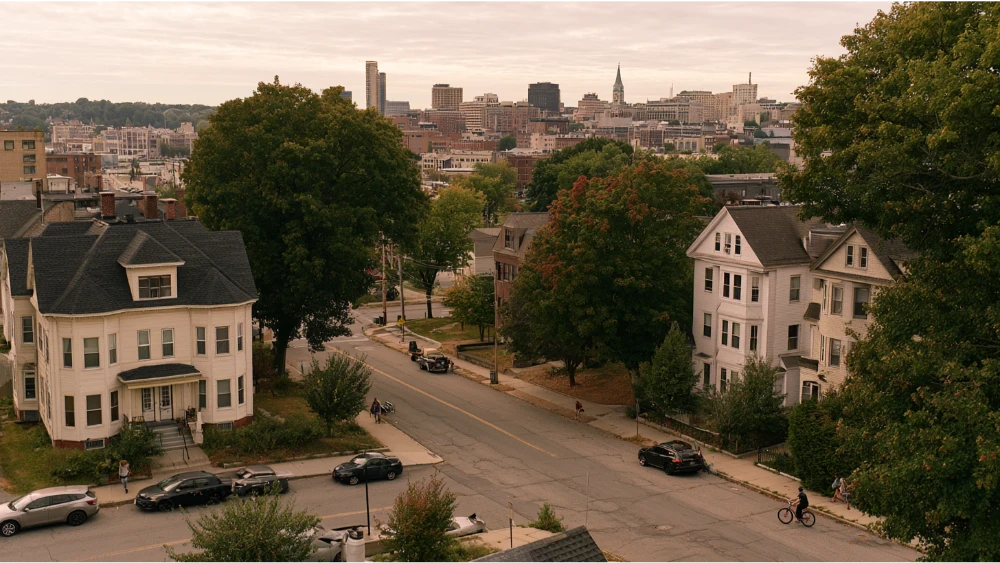
Published and last verified: September 2026. Rents, rail schedules, winter parking declarations, school boundaries, and WRTA fare policy change often. Verify anything time-sensitive against the official sources linked below before you sign anything.
Is Moving to Worcester, Massachusetts a Good Idea? The Short Answer
For a lot of movers, yes. Worcester is New England’s second-largest city and the commercial anchor of Central Massachusetts, and it pairs a health-care-and-education economy with genuinely distinct neighborhoods and commuter rail access to Boston, all with more housing options than the Boston market offers. Housing here costs less than Boston but sits above the national average, so the honest framing is “more attainable,” not “cheap.” Whether the move works for you comes down to four specifics: your neighborhood, your parking situation, your commute, and your exact street address for school assignment.
First, the pronunciation, because it will out you immediately. Locals say WUH-ster. The stress lands on the first syllable and the middle of the word more or less vanishes. You will also see Worcester called the second largest metro in New England in various places online; the city-level ranking is the defensible one, so that is the one we use here.
This guide is written for someone moving to Worcester, Massachusetts from elsewhere in the U.S. who needs to pick a part of the city, build a real budget, and understand Massachusetts rental rules before signing. We manage rentals nationwide, and we’ve watched plenty of relocations go sideways over details nobody checked. That’s what this fixes.
Worcester at a Glance: The Numbers That Actually Matter
Every figure below carries its year and its geography, because mixing those up is how people end up budgeting wrong. City numbers are city. Metro numbers cover a much larger area.
| Metric | Figure | Date and geography | Source |
|---|---|---|---|
| Population | 213,862 | Worcester city, est. July 1, 2025 | Census QuickFacts |
| Growth since 2020 base | +3.6% | Worcester city, 2020–2025 | Census QuickFacts |
| Land area | 37.36 sq mi | Worcester city | Census QuickFacts |
| Households | 79,501 | Worcester city, 2020–2024 | Census QuickFacts |
| Owner-occupied rate | 42.8% | Worcester city, 2020–2024 | Census QuickFacts |
| Median household income | $70,102 | Worcester city, 2020–2024, 2024 dollars | Census QuickFacts |
| Median gross rent | $1,487 | Worcester city, 2020–2024 (not asking rent) | Census QuickFacts |
| Median owner-occupied home value | $374,400 | Worcester city, 2020–2024 | Census QuickFacts |
| Mean commute | 24.1 minutes | Worcester city, 2020–2024, all destinations | Census QuickFacts |
| Jobs located in the city | 106,000+ across 7,488 establishments | Worcester city, calendar 2024 | City auditor report |
| Metro nonfarm jobs / unemployment | 369,300 / 4.8% | Worcester metro, July 2026, preliminary | BLS |
That 42.8% owner-occupied rate is the one to sit with. Renting is the majority arrangement here, which means rental inventory is deep but competition is real.
How to Read Worcester’s Cost Numbers Without Getting Burned
Half the relocation content about this city quotes numbers that don’t measure what readers think they measure. Four distinctions matter:
- Census median gross rent is what current renters already pay, including people who signed leases years ago. It runs lower than what you’ll be quoted today.
- Asking rent is what’s listed right now. It’s a snapshot of available inventory, which skews differently than occupied units.
- One-bedroom average and median across all unit sizes are different animals. A city median that includes studios and four-bedrooms tells you almost nothing about the two-bedroom you want.
- Worcester city, Worcester County, and the Worcester metro area are three geographies. BLS employment data is metro. Census QuickFacts here is city.
The verdict, plainly: cheaper than Boston, yes. “Cheap,” no.
The Real Advantages and Tradeoffs of Living in Worcester, MA
Worcester spent a century as a manufacturing hub and has spent the last few decades rebuilding around education, health care, and a growing life sciences presence. What you get today is a dynamic community that still carries its industrial bones. Here’s the honest ledger.
What people tend to love:
- Employment stability. Roughly 50% of jobs located in the city were in health and education in 2024, per the city auditor report.
- Real housing variety, from historic three-deckers to mill conversions to single-family homes with driveways.
- Commuter rail to Boston out of Union Station, plus I-90 access.
- Arts programming at a scale most cities this size don’t sustain.
- Over 1,215 acres of city-reported parkland.
- A core that has drawn new businesses, young professionals, and a steady flow of apartment conversions over the past decade.
What catches people off guard:
- Housing pressure. The city’s 2025 State of the City projected demand for more than 12,000 new housing units by 2033.
- Car dependence outside the core districts. Third-party trackers put Worcester’s transit score around 34 (snapshot figure, verify before relying on it).
- Hills, older narrow streets, and winter parking bans.
- Off-street parking is an amenity you should be willing to pay for.
- School assignment runs off your exact address, and the boundaries are under active review.
Worcester Neighborhoods: How the City Fits Together
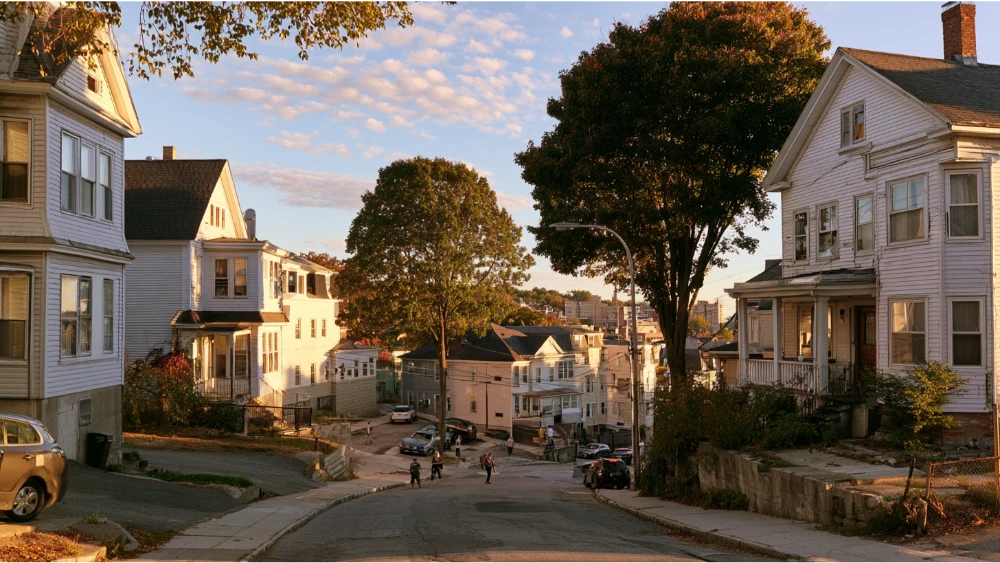
Worcester neighborhood names are informal. They don’t map cleanly to ZIP codes or city council districts, and two people will draw the line between adjacent areas in different places. Housing stock shifts block to block: a street of three-deckers can sit two blocks from single-family homes with driveways. Tour the specific block, not the neighborhood name.
Downtown Worcester, the Canal District, and Washington Square
This is the mixed-use core. Union Station sits in Washington Square with rail connections and walkable access to downtown Worcester, and Main Street runs through the civic and office center a few blocks west. The Canal District added Polar Park in 2021, home of the Worcester Red Sox, and has drawn loft and apartment conversions into former industrial buildings. Worcester’s downtown has picked up new businesses alongside those conversions, which is why walkability is the highest in the city here. Off-street parking is the scarcest, and event-night noise around the ballpark and the bars is a real factor on certain streets.
Shrewsbury Street and the East Side
Shrewsbury Street is the city’s established restaurant row, running from near downtown toward the medical campus and the eastern side. Housing nearby leans toward two- and three-family homes with newer units mixed in. Street parking tightens sharply at dinner hours, so ask specifically whether a unit includes a dedicated space before you fall in love with the location.
Elm Park, the Salisbury District, and the West Side (Including Tatnuck)
The Salisbury District and Elm Park area carry historic housing stock, park access, and proximity to museums and several colleges. Further west, Tatnuck and Newton Square shift toward single-family homes with driveways and yards, at the cost of a longer drive into the core and less walk-to dining.
Burncoat, Greendale, Indian Lake, Grafton Hill, Main South, and South Worcester
Burncoat and Greendale sit toward the north with easy access to I-190 and I-290. Indian Lake adds water access. Grafton Hill and Vernon Hill hold dense multifamily and three-decker stock. Main South and University Park sit near Clark University with significant multifamily and mill reuse, while South Worcester runs toward Route 146, the Blackstone River corridor trails, and the College of the Holy Cross.
| Area | Typical housing stock | Highway / rail access | Off-street parking likelihood | Walk to dining and groceries | Nearest major parks | Tradeoff to check |
|---|---|---|---|---|---|---|
| Downtown / Canal District / Washington Square | Lofts, mill conversions, mid-rise apartments | I-290, Union Station rail | Low | High | Small downtown greens | Event noise and parking cost |
| Shrewsbury Street / East Side | Two- and three-family, newer infill | I-290 | Moderate | High | East Park area | Dinner-hour street parking |
| Elm Park / Salisbury / West Side | Historic multifamily and single-family | Route 9 | Moderate | Moderate | Elm Park, Institute Park | Older building systems and heat costs |
| Tatnuck / Newton Square | Mostly single-family | Route 9, I-290 via surface roads | High | Low | Cascades, Tatnuck Brook area | Car required for most errands |
| Burncoat / Greendale / Indian Lake | Single-family and small multifamily | I-190, I-290 | Moderate to high | Low to moderate | Green Hill Park, Indian Lake | Longer trip to Union Station |
| Grafton Hill / Vernon Hill / Union Hill | Three-deckers, dense multifamily | I-290 | Low to moderate | Moderate | Vernon Hill Park | Steep terrain in winter |
| Main South / University Park | Multifamily, mill reuse | I-290, Route 122 | Low | Moderate to high | University Park | Academic-calendar turnover |
| South Worcester / Green Island / Quinsigamond Village | Multifamily and modest single-family | Route 146, I-290 | Moderate | Moderate | Blackstone corridor trails | Highway noise near 146 |
Set your budget before you start touring blocks. Our Rent Calculator and nationwide rental listings are free to use and will keep you from falling for a unit $400 above what your numbers support.
How Much Does It Cost to Live in Worcester in 2026?
Rent. Census puts median gross rent at $1,487 for 2020–2024, which reflects occupied units including long-held leases. Current asking-rent trackers land higher and disagree with each other: one September 2026 source reports roughly $1,823 for a one-bedroom and $2,087 for a two-bedroom, another reports an overall median near $2,025 across all unit sizes, and a third market snapshot shows about $2,050 for a one-bedroom. They differ because they pull from different inventory and use different math. Treat all of them as snapshots and verify at the moment you’re searching.
Buying. Census lists median owner-occupied home values at $374,400 for 2020–2024, and a third-party tracker shows about $380,357 as of this research (verify before relying on it). The city’s own 2025 State of the City cited a median sale price around $460,000 and median rent above $1,700. Those are dated city-reported indicators, not today’s list prices.
Upfront cash. In Massachusetts, plan on first month, last month, and a security deposit, plus the actual cost of a lock change. That’s a big check. Budget for it before you tour.
Utilities and heat. Ask what the heat source is, who pays for it, and what the last tenant’s winter bills looked like. In older Worcester housing stock, that single question can swing your real monthly cost by hundreds.
Third-party cost-of-living trackers put Worcester around 111.5 against a national baseline of 100, with Boston near 150.8 (snapshot figures, verify). Above average nationally. Well below Boston. Run the numbers yourself with our Cost of Living Calculator and Rent vs. Buy Calculator before you commit to either side of that decision.
Renting in Worcester: The Massachusetts Rules Movers Don’t Expect
These are Massachusetts rules, not national ones. If you’re coming from another state, some will surprise you.
- Broker fees. Since August 1, 2025, a residential broker fee is generally paid by the party who hired the broker. A tenant shouldn’t be required to pay the fee for a broker the landlord hired. See the state’s broker-fee FAQ.
- Lawful move-in charges. Generally first month’s rent, last month’s rent, a security deposit, and the actual cost of changing a lock. Mandatory application, selection, leasing, or pet fees are not simply add-ons.
- Security deposit cap. No more than one month’s rent, held in a separate interest-bearing Massachusetts bank account (mass.gov).
- Deposit return. The deposit or lawful remaining balance generally must come back within 30 days after the tenancy ends, with documented deductions.
- Your lease copy. A landlord must provide an executed copy within 30 days of signing.
- Contacts in writing. The agreement should identify ownership, maintenance, repair, and legal-notice contacts.
This is exactly where a broker-owned, full service manager separates from an unlicensed landlord operating on a handshake. Tenant screening that follows a written standard. A condition record documented at move-in. A maintenance contact that answers. When something breaks at 9pm in February, the difference between those two setups is the whole experience.
On the owner side: Worcester launched a rental registry in March 2024 requiring owners to register rented units. If you own property here, that’s a compliance item worth its own deep dive.
Jobs and Industries: Who’s Hiring in Worcester?
At the city level (calendar 2024, city auditor report): more than 106,000 jobs across 7,488 establishments, generating over $8 billion in wages. Roughly 50% of that employment sits in health and education. Professional and business services accounted for about 12%, trade/transportation/utilities about 10%, leisure and hospitality about 8%, and financial activities about 5%.
At the metro level (July 2026, BLS, preliminary): approximately 369,300 nonfarm jobs, up 1.4% year over year, with unemployment at 4.8% unadjusted. Education and health services was the largest metro sector at roughly 91,100 jobs. The BLS area summary reported a mean hourly wage of $34.13 across all occupations in May 2024, against $32.66 nationally. Occupational wage data lags, so look up your specific job on BLS rather than trusting an average.
The anchors are recognizable: UMass Memorial Medical Center, Saint Vincent Hospital, eight colleges and universities employing roughly 14,000 people, the school district, and city government. Outside health and education, Hanover Insurance Group has long been headquartered in the city, and Polar Beverages has operated here for generations, with its name on the Canal District ballpark. Life sciences and medical research have been building alongside the medical campus.
If you work remotely or hybrid, the math is straightforward. You get more square footage than Boston pricing buys, and rail access on the days you have to show up in person.
Getting Around: Commuter Rail, Public Transportation, and Whether You Need a Car
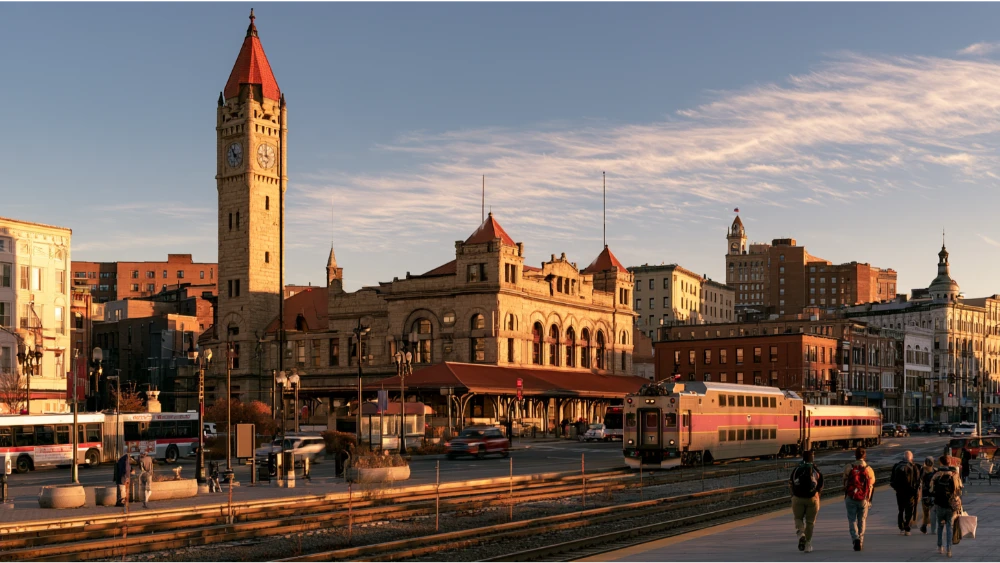
Worcester sits at a highway crossroads: I-290 cuts through the center, I-190 runs north, Route 146 heads south toward Providence, Route 9 runs east-west, and I-90 (the Mass Pike) is right there. Your commute time depends enormously on which interchange you’re near, not on your distance from downtown as the crow flies.
Union Station is the rail hub, with MBTA Commuter Rail service toward Boston. Check the live timetable rather than a blog’s quoted number, because express patterns and construction change run times season to season.
For local public transportation, the WRTA runs the bus system connecting Worcester with surrounding communities. Fixed-route and demand-response service has been fare-free since April 2020, and the agency currently states fare-free service through June 30, 2027. Verify that, especially if you’re reading this near or after that date.
The Census mean commute of 24.1 minutes (2020–2024) covers all destinations and modes. It is not a Worcester-to-Boston figure. Worcester Regional Airport is a short drive from downtown, roughly three to five miles depending on the source, with scheduled nonstop service through a few airlines.
Honest verdict: the core districts work without a car. Most of the rest of the city assumes one. Before you sign, ask four questions. Is there a deeded space? A driveway? Is it a resident-permit street? Is it a winter parking ban street?
Worcester Schools and Higher Education: Colleges and Universities
How Worcester Public Schools Work (and Why You Must Verify by Address)
Worcester Public Schools enrolled 24,677 students in 2025–2026 across 47 schools, per Massachusetts DESE. The district’s 2025 accountability classification was “not requiring assistance or intervention,” with moderate progress toward targets. Use DESE report cards rather than third-party star ratings, which compress a lot of nuance into a number.
Assignment generally runs off your residential address, with magnet and specialized options available including Worcester Technical High School and the Massachusetts Academy of Math and Science. Here’s the warning that most relocation guides miss entirely: the district released initial boundary and feeder-pattern scenarios in August 2026, with final recommendations expected in December 2026 and potential implementation across 2027–2028. Never sign a lease based on an assumed school. Check the district street list and confirm directly with WPS.
Colleges and Universities in Worcester
The City of Worcester names eight institutions: Worcester Polytechnic Institute, Clark University, the College of the Holy Cross, Worcester State University, Assumption University, Quinsigamond Community College, MCPHS, and UMass Chan Medical School. The city auditor report estimates roughly 25,000 full-time college students and about 14,000 higher education employees. Some third-party sources cite 12 institutions and 35,000-plus students, counting differently; the city’s own numbers are the ones to lean on.
Practical effect: Worcester colleges keep late summer the tightest rental window of the year. If you can time your move outside August, do it.
UMass Chan Medical School and the City’s Medical School Pipeline
UMass Chan Medical School, the public Massachusetts medical school that plenty of residents still call UMass Medical School, sits on the University Campus alongside the hospital system. It is a major reason the city’s job base tilts so heavily toward health care, and a major reason the research and clinical labor market here behaves more like a much larger city’s.
Hospitals and Health Care: UMass Memorial Medical Center and Saint Vincent Hospital
Worcester hospitals are led by two systems. UMass Memorial operates locations including the University, Memorial, and Hahnemann campuses. The University Campus has a 24/7 emergency department and appears on the Massachusetts DPH trauma-center list (updated 2026) as a Level I adult and Level II pediatric trauma center. The Memorial Campus also runs a 24/7 emergency department. Saint Vincent Hospital is open 24 hours with emergency, cardiovascular, obstetric, orthopedic, and diagnostic services.
Three questions to answer before you sign a lease: which emergency department is actually closest to that exact address, is it in your insurance network, and can you get a primary care appointment scheduled before you move?
Worcester’s Food Scene: Shrewsbury Street, the Public Market, and More
Shrewsbury Street is the established restaurant corridor, a dense run of Italian-rooted institutions alongside newer openings, connecting downtown toward the medical campus. The Canal District pairs food with market-style uses and nightlife, anchored by the Worcester Public Market and its local vendors, international counters, and baked goods. Downtown carries the weekday lunch density you’d expect from an office and hospital population. Craft beer has its own following here, with breweries that draw regulars rather than tourists, and a Saturday morning farmers market during the season that is a local favorite.
The range of cuisines available is directly tied to who lives here. Census data for 2020–2024 shows 25.1% of residents were foreign-born and 39.5% of people age five and older spoke a language other than English at home. That gives the food scene a genuinely wide vocabulary, with restaurants spread across the whole map rather than confined to any one corridor.
Arts, Live Music, and Cultural Events: Fun Things to Do in Worcester
Worcester punches well above its population on arts, and the reason is structural: a large college and hospital population sustains audiences that a city this size wouldn’t otherwise support.
The Hanover Theatre brings Broadway touring productions and nationally recognized performers. Mechanics Hall is known for its acoustics and draws classical concerts, recording sessions, and other performances that larger venues can’t match. The DCU Center handles arena concerts, family shows, and a hockey game when you want one. The historic Memorial Auditorium at Lincoln Square is part of the same civic fabric and has been the subject of long-running reuse planning. For art lovers, the Worcester Art Museum holds a collection spanning roughly 5,000 years, which is a genuinely serious holding for a mid-sized city, and smaller art galleries and studio spaces fill in around it. The Worcester Symphony Orchestra has been performing since 1974. Polar Park anchors Canal District summers, and live music turns up in bars and breweries year-round. One piece of trivia worth keeping in your pocket: the smiley face was drawn here in 1963 by a local commercial artist.
Practical upside: many of the same touring acts that play Boston come through Worcester, and you’re not paying Boston ticket prices or Boston parking to see them. Free and low-cost community cultural events run throughout the year.
Green Hill Park, Lake Quinsigamond, and Easy Day Trips from Worcester
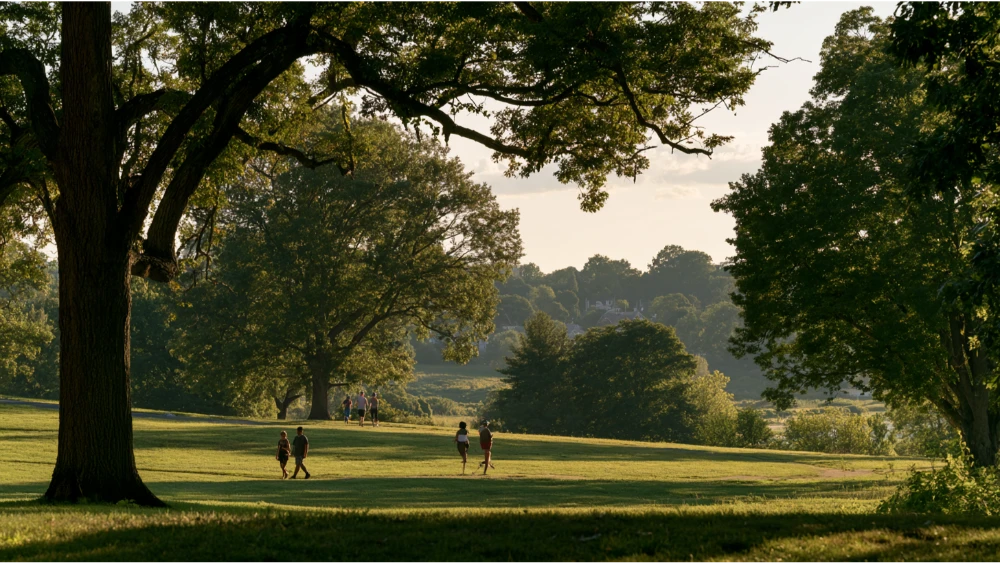
Elm Park carries a claim as one of the oldest public parks in the country, and its Victorian bridges and pond are the image most people associate with the West Side. Green Hill Park is the largest park in the city at roughly 500 acres, with open space, trails, and a farm. The Blackstone River corridor adds trail mileage and historic sites to the south. Lake Quinsigamond is the big draw for boating and hosts crew regattas on the water separating Worcester from Shrewsbury. Between the parks, the lake, and the trails, staying connected to the natural world here does not require leaving the city.
City-reported figures list more than 1,215 acres of parkland, roughly 60 parks and playgrounds, and five beaches. Those totals come from a city economic-development guide that predates this research, so recheck them if precision matters.
Worcester’s central position in New England makes weekend range wide. Boston and Providence are both comfortable day trips by car or rail, Wachusett Mountain is close enough for a ski afternoon, the coast is reachable in a morning’s drive, and the mountains north and west are a realistic weekend without planning a whole vacation around it.
What Worcester Winters Are Really Like (and the Parking Rules to Learn First)
Worcester is hilly, and many of its streets are old and narrow. That combination is why off-street parking is worth real money here and why a driveway changes your winter.
Permanent winter parking restrictions generally run December 1 through April 30 on emergency arteries, bus routes, and other designated streets, commonly restricting parking from 2:00 to 6:00 a.m. Declared bans can affect additional streets when accumulating snow is forecast. Resident-only permits are location-specific, generally renew by July 1, and do not override a winter ban. Check your exact street through Worcester 311 and the city’s winter-weather page, every season.
Before you sign, ask who shovels the walk and who clears the driveway. In a full service managed property, that answer should be in writing.
Your First 30 Days in Worcester: A Move-In Checklist
- Convert your out-of-state driver’s license upon becoming a Massachusetts resident. The RMV instructs you to convert on becoming a resident. The widely repeated “30-day grace period” claim isn’t supported by official materials.
- Register your vehicle in Massachusetts and complete the required state inspection within seven days of registration.
- Buy yellow pay-as-you-throw trash bags. Worcester uses a pay-as-you-throw system.
- Confirm collection. City curbside trash and recycling serves buildings with six or fewer units, so larger buildings need a management arrangement.
- Set trash and recycling at the curb between 6:00 and 7:30 a.m. on collection day.
- Set up utilities and confirm in writing who pays for heat.
- Check resident-parking and winter-ban status for your exact street.
- Register children by exact address and confirm the assignment directly with WPS.
- Locate your nearest 24/7 emergency department and check network status.
- Photograph and date every room at move-in, including closets and appliances.
- Save the maintenance contact and the legal-notice contact from your lease somewhere you’ll find them at 9pm on a Sunday.
Frequently Asked Questions
Is Worcester, MA a good city to live in?
For many movers, yes. You get steady health-care, education, and life-sciences employment, New England’s second-largest city, real neighborhood variety, and arts programming at big-city scale. The tradeoffs are rising housing costs, car dependence outside the core, and winter parking routines you’ll need to learn.
How much do I need to make to live in Worcester, MA?
Census puts median household income at $70,102 and median gross rent at $1,487 (both 2020–2024, city). Current asking rents run roughly $1,800 to $2,100 depending on unit type and source. There’s no single magic salary, so run your own numbers through our Rent Calculator and Cost of Living Calculator.
Is Worcester more affordable than Boston?
Yes on housing and overall cost of living. Third-party trackers put Worcester around 111.5 against Boston’s 150.8. But Worcester still sits above the national average, and the city itself cited a median sale price near $460,000 in its 2025 State of the City.
Can I commute from Worcester to Boston every day?
Many residents do, via MBTA Commuter Rail from Union Station or by driving I-90. Check the live timetable and factor in parking plus the trip to and from each station. The 24.1-minute Census mean commute covers all destinations, not Boston specifically.
Who pays the rental broker fee in Massachusetts?
Since August 1, 2025, the party who hired the broker generally pays. A tenant shouldn’t be required to cover the fee for a broker the landlord hired. See the mass.gov broker-fee FAQ before you hand over any check.
Ready to Make the Move? Start With the Numbers, Then the Lease
If you’re renting: run your budget through our Rent Calculator, compare renting against buying with the Rent vs. Buy Calculator, check the Cost of Living Calculator, then browse rental properties on ktrents.com. Your Rental. Your Way.
If you’re an owner or investor: KT Rents has been broker-owned and full service since 2009, managing 683 units across 34 states with $187M in managed assets as of early 2025 and a reported 98% occupancy rate. Tenant placement, tenant screening, rent collection, property maintenance, rental permits, 1099s, property inspections, and court evictions, all handled without the owner lifting a finger. Call (800) 716-4950, text (608) 207-0657, or email info@ktrents.com. We respond within 24 hours.