

Newton, Massachusetts
Homes for rent and for sale — search the map or open the full city SEO catch-all page.
Newton, Massachusetts
Moving to Newton, Massachusetts means choosing one of 13 distinct villages about seven miles west of downtown Boston, each with different transit access, school assignments, and walkability. The city’s median home value is $1,264,900 and median gross rent is $2,370, though current asking prices run considerably higher. Seven Green Line D stations and three Commuter Rail stops make car-free commuting realistic in the rail villages, but transit access varies sharply by address.
Moving to Newton, Massachusetts
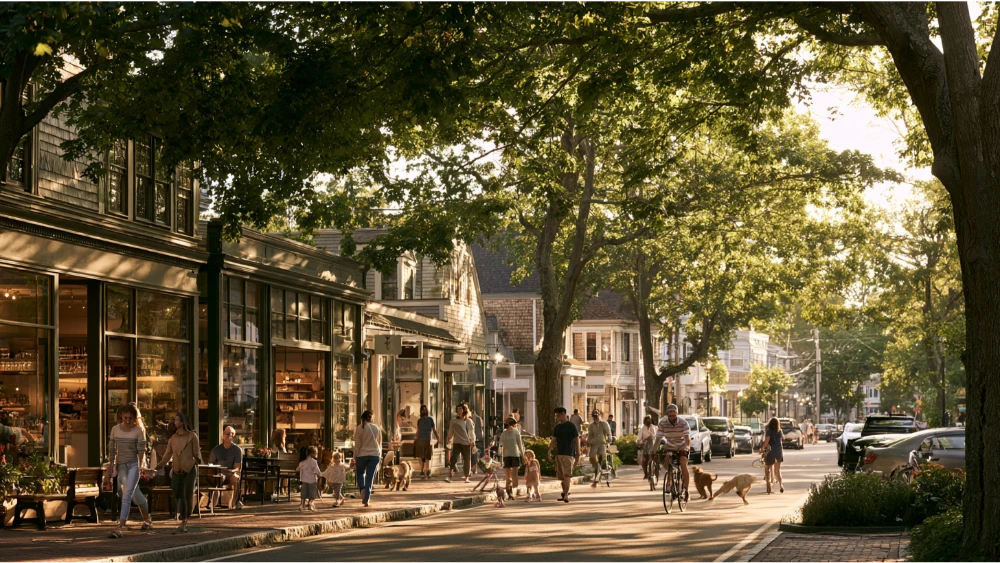
Newton is a city of roughly 90,741 residents (U.S. Census Bureau estimate, July 1, 2025) in Middlesex County, sitting about seven miles west of downtown Boston according to the City of Newton. It’s built around thirteen separate villages rather than one central downtown, which means moving to Newton Massachusetts isn’t really a decision about a city. It’s a decision about a village, and then about an exact street address. Transit access, school assignment, parking rules, and walkability all shift block to block.
This guide is for renters, buyers, remote professionals, and anyone comparing Boston-area commutes. We’ll walk the villages, the housing numbers, the schools, the transit, the jobs, the hospitals, and a move-in checklist most relocation pages skip entirely. KT Rents is a broker-owned, full-service property management company operating nationwide since 2009, and we’ve watched a lot of people sign leases before they checked the details that actually mattered. Let’s fix that.
Newton, MA at a Glance
| Item | Figure |
|---|---|
| Population | 90,741 (Census estimate, July 1, 2025) |
| Land area | 17.83 square miles |
| County | Middlesex |
| Distance from downtown Boston | About 7 miles west (City of Newton) |
| Villages | 13 |
| Owner-occupied housing rate | 70% (2020–2024 ACS) |
| Median owner-occupied home value | $1,264,900 (2020–2024 ACS) |
| Median gross rent | $2,370 (2020–2024 ACS) |
| Mean commute to work | 26.6 minutes (2020–2024 ACS) |
| MBTA Green Line D stations | 7 |
| Commuter Rail stations | 3 (West Newton, Newtonville, Auburndale) |
| Public school enrollment | 11,461 (2025–26, Massachusetts DESE) |
| Largest job sectors | Healthcare/social assistance and education (nearly 40% of jobs, City of Newton) |
| Parkland and municipal open space | About 1,200 acres (City of Newton) |
One caution before you budget anything: the Census medians above describe a five-year survey period ending in 2024. They are not today’s asking prices. Third-party estimates put overall living expenses in Newton roughly 91% above the U.S. average, but those figures vary by methodology and publication date, so treat them as directional rather than precise.
Is Living in Newton the Right Middle Ground for You?
Newton sits in the middle ground between city living and a far-flung suburb. You get residential streets, yards, and many parks, plus Green Line service that drops you downtown without a car. Living in Newton essentially means suburban living with a subway pass, and that combination is the honest pitch. The honest tension is that you pay a premium for that position, and the quality of the trade depends heavily on which village you land in. This is a suburban community first, so if you want one dense downtown with nightlife on every block, you’re looking in the wrong direction.
What Newton Gets Right
- Multiple transit options: seven Green Line D stations, three Commuter Rail stops, and MBTA bus connections, per the City of Newton, which makes car-free commuting realistic for young professionals in the rail villages.
- About 1,200 acres of city-maintained parkland, playgrounds, school grounds, and municipal open space.
- Newton-Wellesley Hospital operates a 24-hour adult and pediatric emergency department right in the city.
- Strong school completion outcomes: a 95.5% four-year graduation rate for the 2025 cohort per Massachusetts DESE (some third-party sources cite figures near 97%, so use the state number).
- Village centers with everyday amenities, so groceries, coffee, a pharmacy, and dinner are often within walking distance depending on your street.
- The Newton Free Library functions as a genuine community gathering space, with community events and programming year-round.
The Trade-Offs Nobody Puts in the Brochure
- Housing costs run far above the national average, and property taxes on a $2 million home can exceed $20,000 a year.
- Transit access is uneven. Some villages have a Green Line stop within a short walk. Others have neither subway nor Commuter Rail.
- There’s no single city center, so your daily errands depend on which village center you’re near.
- Walkability varies sharply street to street, even inside the same village.
- Route 9 backs up at rush hour, and the Mass Pike is no picnic either.
- Overnight winter parking is restricted December 1 through March 31, from 2 to 6 a.m.
- School assignment is tied to your exact address, not the village name on your mail.
- That 26.6-minute mean commute is a citywide average across every destination. It is not a promised trip to downtown Boston.
Understanding Newton’s 13 Villages
The 13 Newton villages are Auburndale, Chestnut Hill, Newton Centre, Newton Corner, Newton Highlands, Newton Lower Falls, Newton Upper Falls, Newtonville, Nonantum, Oak Hill, Thompsonville, Waban, and West Newton. Here’s the editorial caution that matters most: mailing addresses and village boundaries don’t always line up. Some Newton addresses carry a village name, others simply say “Newton,” and an address can sit closer to a neighboring village’s center than its own. Verify at the parcel level before you assume anything, either through the city’s own records or with a local real estate agent who works the Newton area every week.
| Village | Rail access | Major road access | Commercial center | Typical housing forms | Nearby anchors |
|---|---|---|---|---|---|
| Auburndale | Commuter Rail | I-90, Route 30 | Smaller neighborhood center | Single family, two-family, some condos | Charles River |
| Chestnut Hill | Green Line D | Route 9 | Larger retail/medical corridor | Single family, condos, apartments | Boston College, Route 9 retail |
| Newton Centre | Green Line D | Route 9, Beacon St | Largest village center (50–100 storefronts) | Single family, condos, apartments | Crystal Lake, Newton Centre Common |
| Newton Corner | Bus connections | I-90 gateway, Route 16 | Professional/medical offices, services | Multifamily, condos, single family | Eastern gateway to Boston |
| Newton Highlands | Green Line D | Route 9, Needham St | Neighborhood-scale center | Single family, two-family, condos | Needham Street corridor |
| Newton Lower Falls | Near Woodland (verify) | I-95/Route 128, Route 16 | Small | Single family | Charles River, Route 128 corridor |
| Newton Upper Falls | Green Line D at Eliot (address dependent) | Route 9, Needham St | Neighborhood-scale, historic mill area | Single family, converted mill housing, condos | Needham Street employment corridor |
| Newtonville | Commuter Rail | I-90, Washington St | Larger village center | Single family, two-family, apartments | Newton North area, Walnut Street shops |
| Nonantum | Bus | I-90, Watertown St | Compact business district | Multifamily, two- and three-family | Most densely populated village |
| Oak Hill | None in village | Route 9, Wells Ave, I-95 | Minimal | Single family | Wells Avenue office park |
| Thompsonville | Near Newton Highlands (verify) | Route 9 | Minimal | Single family | Adjacent to Newton Centre/Highlands |
| Waban | Green Line D | Route 9, Beacon St | Small convenience-oriented center | Single family | Quiet residential streets, Charles River access |
| West Newton | Commuter Rail | I-90, Washington St, Route 16 | Larger historic village center | Single family, two-family, condos, apartments | West Newton Hill, Charles River |
Which Villages Have MBTA Green Line Access?
The City of Newton lists seven Green Line D branch stations inside the city: Riverside, Woodland, Waban, Eliot, Newton Highlands, Newton Centre, and Chestnut Hill. Worth correcting a mistake that shows up in competing relocation guides: only the D branch has stations in Newton. The B and C branches do not, despite what some pages claim. And “near a station” needs to be checked property by property. A ten-minute walk and a twenty-five-minute walk are very different mornings in February. If you plan to drive to a station, confirm parking availability at that specific stop with the MBTA.
Which Villages Have Commuter Rail?
Three villages sit on the Framingham/Worcester Line: Auburndale, West Newton, and Newtonville. These are the Mass Pike corridor villages, strung along I-90 on Newton’s north side. Commuter Rail gets you to South Station faster than the Green Line does, but the trains run far less frequently than subway service. Pull the actual weekday timetable and check whether trains exist at the hours you’d travel, both directions. That detail decides whether the line is useful or decorative for your schedule.
Village Centers: Newton Centre, Newtonville, West Newton, and Nonantum
The city itself tiers its commercial districts. Newton Centre, Newtonville, West Newton, and Nonantum are classified as larger village centers, each with roughly 50 to 100 storefronts covering dining, shopping, services, and entertainment. Newton Centre has the biggest commercial district of the group, with storefronts spreading out from Centre Street and Beacon Street. Newtonville and West Newton both sit along Washington Street on the Pike side of the city. Nonantum is the most densely populated village, with a compact business district, a cluster of prepared-food businesses, and a continuing Italian-American cultural presence.
The smaller neighborhood centers (Newton Highlands, Waban, Auburndale, Newton Lower Falls, Newton Upper Falls) carry restaurants, small shops, and everyday services at a more modest scale. Newton Corner works as the eastern gateway near I-90, with professional and medical offices plus bus connections. Oak Hill and Thompsonville are primarily residential, with Oak Hill close to the Wells Avenue office park and I-95.
Boston College, Chestnut Hill, and the Route 9 Corridor
Chestnut Hill spans municipal lines, and the Newton portion carries the city’s heaviest concentration of retail, dining, and medical office space along Route 9. Upscale shops and larger-format stores sit a short drive from quiet residential streets, which is an odd pairing that works better than it sounds. Boston College and Boston College Law School are here, along with Green Line D service at the Chestnut Hill station. Hammond Pond Reservation gives the area a wooded buffer with trails directly behind the Route 9 shopping district. Traffic is the tax you pay for all that convenience.
Newton Lower Falls and the Quieter Western Villages
Newton Lower Falls sits at the far western edge against the Charles River and the Route 128 corridor, with easy access to I-95 and a small commercial footprint. Waban, Auburndale, and Lower Falls all read quieter and greener than the Pike corridor villages, with more single family homes and fewer storefronts. Verify the walk to Woodland station property by property out here, because “near Woodland” on a listing can mean very different things depending on the street.
Housing and Cost of Living in Newton MA
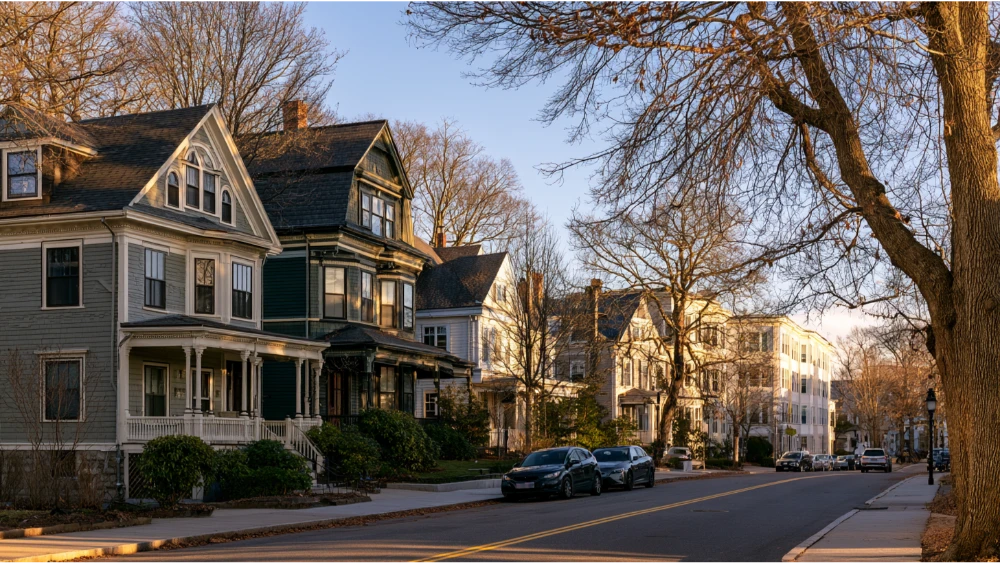
Two numbers confuse nearly every relocation reader comparing Newton MA to its neighbors, so let’s separate them. The Census median gross rent of $2,370 (2020–2024 ACS) describes what current occupants pay, including people who signed leases years ago. Current asking rent, meaning what a newly listed unit costs today, runs considerably higher. Third-party listing sources have reported averages around $3,520 for an apartment of roughly 1,008 square feet, and a median sale price near $1,355,000. Those are private estimates with varying methodologies and publication dates. Check them against live listings before you build a budget around them.
Housing stock varies by village. You’ll find historic homes including Victorians, Colonials, and shingle-style houses alongside two- and three-family properties, townhouses, condominiums, and apartment buildings. A great deal of it went up before World War II, which is where the New England charm comes from and also where the maintenance surprises hide. The northern villages along the Mass Pike carry more multifamily than other Newton villages do. Waban and Oak Hill skew toward single family homes. Chestnut Hill mixes larger historic properties with condo and apartment product along Route 9. Newton Upper Falls has converted mill-era architecture. The market is competitive, driven largely by Newton’s proximity to Boston and the district’s reputation.
What Are Property Taxes Like in Newton?
Newton’s residential property tax rate in the latest city material we found is $9.69 per $1,000 of assessed value for FY2026. Because local rates are set through a classification process each fiscal year, verify the current rate with the city before you budget. On a $2 million home, annual property taxes can run north of $20,000, which is a real monthly line item, not a rounding error. Assessments track property values, so ask for the current assessed value on any parcel you’re considering rather than working from the asking price.
Massachusetts charges a 5% personal income tax rate for tax year 2026, with an additional 4% surtax on taxable income above $1,107,750. Newton also bills tiered water and sewer rates by usage. That matters to owners and to renters who are contractually responsible for utilities, so ask who pays what before signing.
Should You Rent or Buy in Newton?
Start with expected length of stay. Newton is 70% owner-occupied, which tells you the market leans toward buyers, but that doesn’t make buying the right call for a two-year stint. Renting first lets you test a village and a commute without committing seven figures and closing costs to a street you haven’t lived on through a winter. Buying makes more sense when you’re confident about the village, the school assignment, and the timeline.
Run the numbers before you fall in love with a listing. Our Rent Calculator, Rent vs. Buy Calculator, Cost of Living Calculator, and Mortgage Calculator are free to use, and fifteen minutes with them will tell you more than a month of browsing photos.
Newton Public Schools: 15 Elementary Schools, Four Middle Schools, and Two High Schools

Newton Public Schools operates 15 elementary schools, four middle schools, two comprehensive high schools, two alternative high school programs, and an integrated preschool. Massachusetts DESE reported 11,461 students enrolled for 2025–26. The state’s four-year graduation rate for the 2025 cohort was 95.5%, which is a primary-source outcome number and more useful than vague “top-ranked” claims. A third-party ranking placed Newton South High School 24th in Massachusetts, though rankings shift year to year and methodologies differ. If educational equity factors into your evaluation, read the district’s own published policies and school-level data instead of relying on aggregate scores.
The broader education landscape adds weight. Families who want private education have options in and around the city, including Newton Country Day School. On the higher-ed side, Newton hosts Boston College and Boston College Law School, Lasell University, William James College, and the UMass Amherst Mount Ida campus. Those institutions are also major employers, which we’ll get to shortly.
How Do I Find the School Assigned to a Newton Address?
Check the district’s school assignment tool using the exact street address, not the village name. Some addresses fall in buffer zones where either of two schools may serve the property, with the district making the final placement call. Confirm the student will live in Newton with a parent or legal guardian, and gather residency documents: a lease or purchase agreement, mortgage statement, and utility bills. For kindergarten, a child must be five years old on or before August 31 of the enrollment year. Do all of this before you sign a lease or purchase agreement. Attendance boundaries change, and an assumption is not an assignment.
Commuting From Newton to Downtown Boston
Newton sits about seven miles west of downtown Boston, but the trip length depends entirely on your mode and your village.
- Green Line D: Frequent service, slower ride. Typical door-to-downtown trips run roughly 35 to 45 minutes depending on your station and destination.
- Commuter Rail (Framingham/Worcester): Faster to South Station from Auburndale, West Newton, or Newtonville, but with far fewer trains per day.
- Driving via the Mass Pike/I-90: Around 20 minutes off-peak. Rush hour is a different story entirely, and parking downtown adds cost.
- Route 9 and Route 16: Surface alternatives that congest badly during peak periods, particularly Route 9.
- I-95/Route 128: Your route if the job is in a suburban corridor rather than the city.
- MBTA buses: Connections available, with Newton Corner serving as a notable bus hub.
The Census mean commute of 26.6 minutes covers every Newton worker traveling to every destination, including people who work in Newton. It is not a downtown Boston guarantee. Here’s the practical instruction: test your exact door-to-door trip at the hour you’d actually travel, and do it twice, before you sign anything. Transit schedules and construction detours change, so confirm current service with the MBTA.
Jobs and Working in Newton
You don’t have to commute to Boston to work. The City of Newton reports more than 4,000 private, public, and nonprofit enterprises and roughly 54,000 people working in its offices, clinics, labs, classrooms, stores, and restaurants. Nearly 40% of those jobs sit in healthcare and social assistance or educational services.
Beyond those two anchors, the city’s economic development materials describe clusters in professional and medical offices, finance and real estate, scientific and technical work, life sciences, robotics, logistics and e-commerce, retail and food service, and small-batch manufacturing. Employment concentrates around Newton Corner, Wells Avenue, Needham Street, Chestnut Hill, and Riverside, plus the university and hospital campuses. Newton’s industrial history runs deep here too: the Stanley Motor Carriage Company built steam cars in the city.
If you work remotely, evaluate the property, not the city. Check broadband service at that specific address, whether there’s room for a dedicated workspace, where visitors park, and whether the nearest village center supports your daily errands on foot. Those four answers determine whether a Newton address works for a remote schedule.
Hospitals and Healthcare in Newton
Newton-Wellesley Hospital is located in Newton and operates a 24-hour adult and pediatric emergency department. That’s a meaningful detail when you’re comparing suburbs, because not every community west of Boston has a full-service emergency room inside city limits.
Beyond the hospital, medical and professional office clusters concentrate at Newton Corner and along the Route 9 corridor through Chestnut Hill. Healthcare is also one of Newton’s largest employment sectors, which is why medical offices show up in so many village commercial districts. Residents have regional access to major Boston-area medical centers as well, though travel time to any specific facility depends on your village and the time of day. Map the drive from the address you’re considering to the facility you’d actually use.
Food, Shopping, and Entertainment by Village Center
Newton’s dining and retail life is organized by district, so think in neighborhoods rather than a restaurant list that goes stale in six months.
- Newton Centre: The densest restaurant and café cluster in the city, anchored by the Newton Centre Common and a short walk from Crystal Lake.
- Newtonville and West Newton: Mixed dining, shopping, and services set among historic village architecture, with a long-running local cinema presence in the area (confirm current operations before planning a night out).
- Nonantum: Prepared-food businesses, small shops, and a well-established Italian-American culinary presence in a compact district.
- Newton Highlands and Auburndale: Smaller neighborhood clusters of restaurants and everyday services.
- Chestnut Hill and Route 9: The largest concentration of retail, dining, and entertainment, with plenty of parking and plenty of traffic.
The city also runs seasonal farmers markets, with Saturday and Tuesday programs published for 2026. Dates and locations shift by season, so check the city’s parks and recreation pages before you go.
Parks, Recreation, and Culture in the Garden City
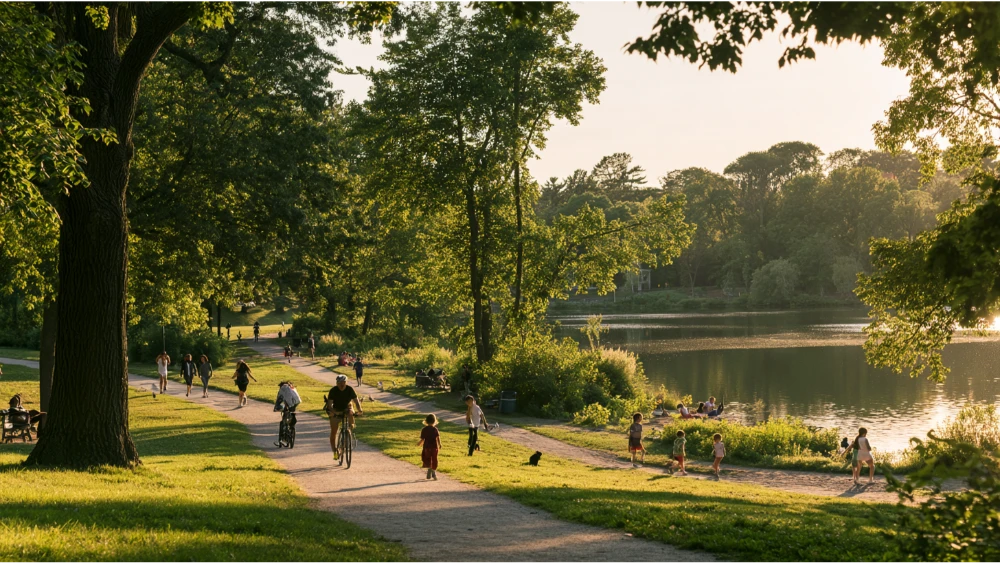
Newton earned the “Garden City” nickname from its tree-lined residential streets and its many parks, and the city reports maintaining about 1,200 acres of parkland, playgrounds, school grounds, burial grounds, and other municipal land. Crystal Lake is a 24-acre lake with a seasonal designated swimming area, a sandy beach, docks, and lawn space. The Charles River wraps the northern and western edges of the city, with walking paths and boating access along the way.
The city publishes an arts calendar covering galleries, public art, and park performances. Historic Newton maintains local history resources tied to the villages, including the Jackson Homestead, which has a documented connection to the Underground Railroad. The Newton Free Library anchors community programming, and the city runs camps, sports clinics, swim facilities, after-school programs, senior activities, and therapeutic recreation. Newton Community Farm offers volunteer opportunities for people who want to get their hands dirty.
One more thing to put on your calendar: the Boston Marathon route runs through Newton along Commonwealth Avenue, including the Newton hills and Heartbreak Hill. It’s a genuine spring ritual and also a serious road-closure day. Plan around it.
Your Practical Moving Checklist for Newton
This is the part most relocation guides skip. The following is general educational information rather than legal advice, and you can confirm the Massachusetts rules directly at Mass.gov.
Before You Sign the Lease or Purchase Agreement
- Confirm the school assignment for that exact address, including whether it sits in a buffer zone.
- Test the commute at peak hour, both directions.
- Confirm off-street parking and where the vehicle goes during winter overnight hours.
- Ask which utilities are included and who pays water and sewer.
- Confirm laundry, storage, pet policy, and how maintenance requests are submitted and tracked.
- Review move-in charges. In Massachusetts a landlord may generally request first month’s rent, last month’s rent, a security deposit of no more than one month’s rent, and the actual cost of a new lock and key.
- Know the broker fee rule. Since August 1, 2025, the party who hired the broker pays the fee. A tenant can hire and pay their own representative, but cannot be forced to pay for the landlord’s broker.
- A landlord cannot impose a late penalty until rent is 30 days overdue.
- Within 10 days of collecting a security deposit, the landlord must provide a signed statement of the unit’s condition.
Before Moving Day
- Massachusetts provides no registration grace period. Transfer an out-of-state vehicle registration as soon as residency is established.
- Get the state vehicle inspection within seven days of registering, then annually after that.
- Convert an out-of-state driver’s license to a Massachusetts license.
- Arrange Massachusetts auto insurance and renters insurance.
- Book the mover and check whether a street-occupancy permit is required for the truck.
- Photograph and document the unit’s condition before you unpack a single box.
- Plan separate disposal for move-in and move-out debris. Newton states that move-outs and clean-outs are not included in municipal trash collection. Regular carts go curbside by 7 a.m. on collection day or after 4 p.m. the day before.
Before Your First New England Winter
- Overnight parking is restricted December 1 through March 31. Vehicles generally cannot sit on a public way more than one hour between 2 and 6 a.m.
- The stated fine is $25, and towing is possible during declared snow emergencies.
- Resident stickers and visitor placards were listed at $25 each for 2026, with household limits. Verify annually with the city.
- Confirm in writing who handles snow and ice removal at the property.
- Sign up for the city’s emergency alerts so you hear about snow emergencies before your car gets towed.
How to Find a Newton-Area Rental, and What to Do Next
Search actual listings instead of trusting citywide averages, because a citywide average has never signed anyone’s lease. Compare short-term and long-term leasing depending on how long you want to test a village before committing. Run the Rent Calculator and Cost of Living Calculator against the specific property, then submit a rental application when the right listing appears. Our nationwide marketplace lets you compare across markets, which helps if Newton is one of several cities on your list.
If you’re a property owner reading this, here’s our side of the business. KT Rents is a full-service, broker-owned property management company operating across the U.S. since 2009. We handle tenant placement, tenant screening, rent collection, property maintenance, property inspections, rental permits, 1099s, city ordinance compliance, and court evictions without the owner lifting a finger. KT Rents reports a 98% occupancy rate. As the company puts it, the cost works out to about the price of a cup of coffee and a donut per day. Call (800) 716-4950, text (608) 207-0657, or email info@ktrents.com. We respond to form submissions within 24 hours.
Frequently Asked Questions
Is Newton, MA a Good Place to Live?
It depends on your budget and your village. Newton offers seven Green Line D stations, three Commuter Rail stops, a 95.5% four-year graduation rate for the 2025 cohort (DESE), about 1,200 acres of parkland, and a hospital with a 24-hour emergency department. People who love Newton usually name the same things: the village texture, the trees, and the option to reach downtown without a car. Weigh that against housing costs far above the U.S. average and transit access that varies meaningfully by address.
Is Newton, Massachusetts a Wealthy Suburb?
The Census figures speak plainly: median household income of $190,304 (2020–2024, in 2024 dollars), a median owner-occupied home value of $1,264,900 (2020–2024), and 70% owner-occupancy. Housing stock and price points still vary widely by village and property type, from two-family homes in the Pike corridor villages to larger single-family properties elsewhere.
Why Are People Moving Out of Massachusetts?
Housing cost is the factor cited most often, along with overall cost of living. For some households, remote work has turned geography into a choice rather than a constraint. Newton itself has grown, though: the Census estimate for July 1, 2025 puts the population at 90,741, up about 2% from the 2020 base.
What Famous People Live in Newton, MA?
We don’t publish lists of current private residents, and plenty of celebrity roundups online aren’t verified. Newton has produced and hosted notable figures in academia, business, sports, and the arts, and it’s home to institutions like Boston College. For documented local history, including the Jackson Homestead and its Underground Railroad connection, Historic Newton is the reliable source.
Your Newton Moving Decision Checklist
- Can the household afford the specific property plus utilities, transportation, and (for buyers) property taxes?
- Does the exact address serve the school you expect, buffer zones included?
- Is the peak-hour commute acceptable after you actually tested it?
- Is winter parking workable from December through March?
- Are daily errands reachable from that village center?
- Does the suburban feel of your chosen village match how you actually want to live?
- Does renting or buying fit your expected length of stay?
Seven yeses and you’re ready to sign. Anything short of that deserves another look before the deposit clears. Call us at (800) 716-4950 when you want a hand sorting it out. Your Rental. Your Way.