

Plymouth, Massachusetts
Homes for rent and for sale — search the map or open the full city SEO catch-all page.
Plymouth, Massachusetts
Moving to Plymouth, Massachusetts means settling into a coastal New England town of 67,846 residents spread across 96.43 square miles, about 38 miles southeast of Boston. Median home values sit at $527,400 and a cost of living index near 127.5 makes it more affordable than Boston but still above the national average. The town spans five distinct village centers, so choosing the right neighborhood determines your commute, schools, and daily routine.
Moving to Plymouth, Massachusetts
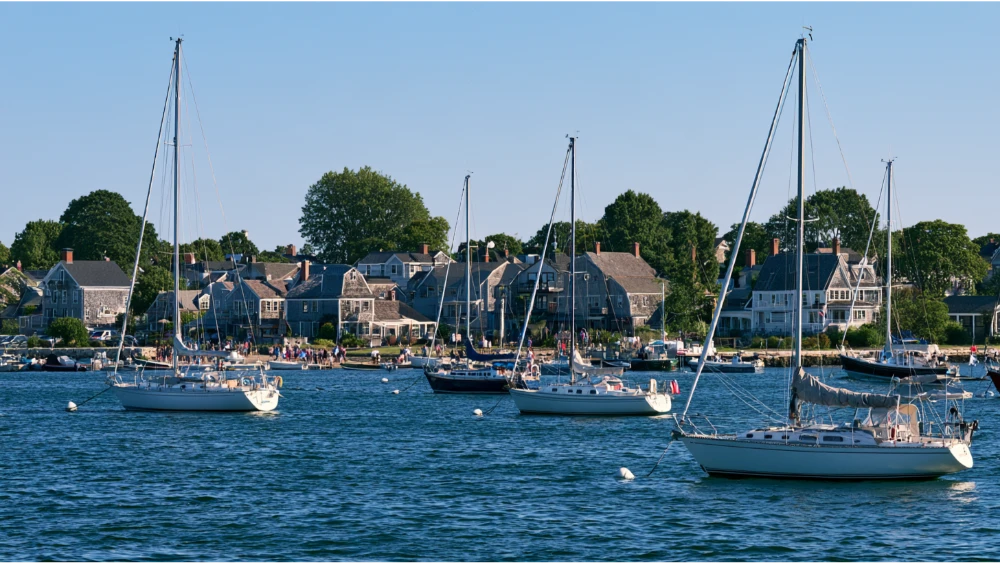
Moving to Plymouth, Massachusetts means trading city convenience for shoreline, space, and outdoor recreation. This large coastal New England town sits about 38 miles southeast of Boston, and the Census estimates 67,846 residents as of July 1, 2025 across 96.43 square miles, the largest land area of any town in the state. Housing costs run above the national average, you will need a car almost everywhere outside the center, and summer visitor traffic is real.
If you’re weighing Plymouth against other South Shore or Cape-adjacent towns, here’s the thing to understand first: the real decision isn’t whether you like Plymouth. It’s which Plymouth. A town this size holds a group of distinct village centers and neighborhoods, and the one you pick changes your commute, your utilities, your schools, and your grocery run.
Plymouth, Massachusetts at a Glance: Population, Land Area, and Its Place in Plymouth County
- Population: 67,846 residents (U.S. Census estimate, July 1, 2025), up 10.8% from the April 2020 estimate base. Figures near 61,000 elsewhere online predate the current estimate.
- Land area: 96.43 square miles (Census QuickFacts), the largest of any town in the state.
- Status: Legally a town, not a city, despite a population bigger than many Massachusetts cities. Plymouth runs on a representative Town Meeting, so citizens vote for the members who decide the budget.
- Setting: Plymouth County, on Cape Cod Bay, roughly 38 miles southeast of Boston (Town of Plymouth official statement). The town takes up a large share of the entire western shore of the bay.
- Median income (household): $116,941 in 2024 dollars (2020-2024 American Community Survey).
- Mean commute: 31.3 minutes (2020-2024 ACS), averaged across all destinations and work arrangements.
Two things shape everything below. Plymouth is one municipality that functions as five recognized village centers: North Plymouth, West Plymouth, Plymouth Center, Manomet, and Cedarville. And ACS figures are multiyear baselines, reliable for orientation but not today’s asking prices.
Is Plymouth a Good Place to Live? The Honest Pros and Cons
What works:
- Miles of coastline, town beaches, ponds, and harbor access that residents use year round.
- Genuine variety in location and housing, from a walkable historic downtown to inland suburban neighborhoods and planned communities with built-in amenities.
- Heavy outdoor recreation, including 11 public and private golf courses and a major state forest in the southwest part of town.
- A full acute-care hospital with a 24/7 emergency department inside town limits.
- A real local job base led by health care and education, not just a commuter dormitory.
The tradeoffs:
- Cost of living runs around 127.5 on common indexes, above the national average, though more affordable than Boston at 153.2.
- Near-total car dependence outside Plymouth Center.
- Summer tourism traffic and parking pressure downtown.
- Nor’easters, ice storms, and power outages every winter, with January and February usually the hardest stretch.
- Coastal flood exposure on some properties, and no commuter rail station inside Plymouth since 2021.
Which Plymouth Neighborhoods and Village Centers Fit Your Routine?
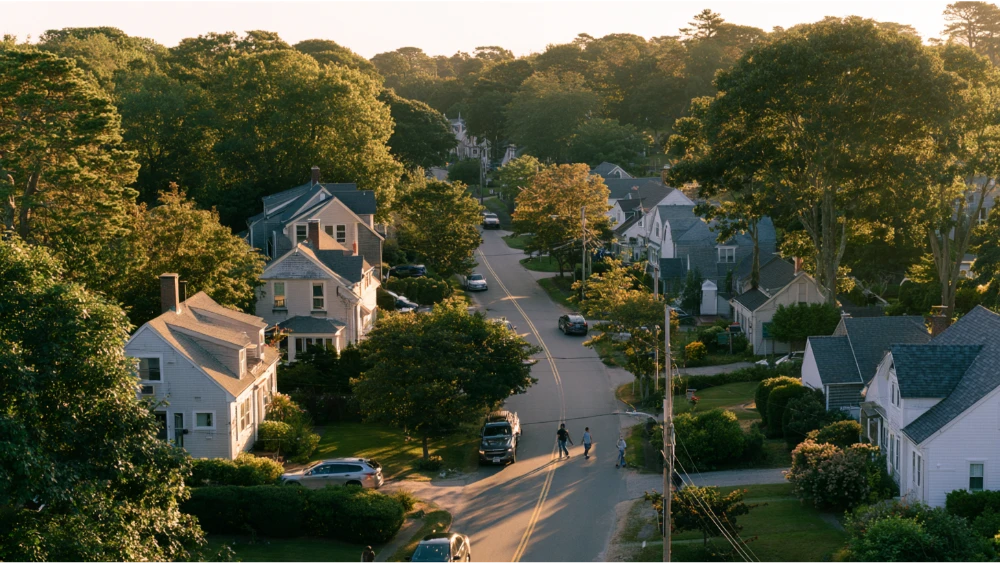
In a compact city, neighborhood choice shifts your walk to the train by a few minutes. Here it can add twenty minutes of driving to the hospital, the high school, or the highway ramp. Pick the area around your actual daily routine, not around a photo of a house you liked online.
Plymouth Center and the Waterfront
The most walkable part of town, with restaurants, shops, the harbor, and the Historic and Cultural District at your door. Expect visitor traffic and heavy parking demand during events and peak season, and know that a dedicated space rarely comes attached to an older downtown house or condo.
North Plymouth and the Cordage Park Area
Cordage Park takes its name from the Plymouth Cordage Company, once a major center of rope making and now a mixed-use property. The surrounding area has older housing stock with more small multifamily and rental properties than most suburban neighborhoods in town, per draft 2026 Town planning documents. The former Plymouth commuter rail station at Cordage Park is closed, so don’t choose here expecting train service.
West Plymouth
Inland and more spread out, running toward the southwest side of town, with good highway and retail access plus nearby ponds and parks. Measure the drive to downtown, the hospital, and Kingston Station before you commit.
Manomet and White Horse Beach
A coastal village along the Route 3A corridor with residential streets running toward the shoreline and ocean views on some of them. It’s a community that swells in summer and quiets down after September. The Town completed substantial Manomet water-main upgrades in October 2025.
Cedarville and Southern Plymouth
Its own daily living area rather than an extension of downtown, closer to the Cape gateway with Bourne and the canal to the south. Check grocery proximity and travel times to schools and work.
The Pinehills and Redbrook
Planned communities with newer construction, clubs, recreation, restaurants, and village centers built around a village green rather than a downtown grid. Amenities are a big part of the pitch here, and so are the fees. Some individual neighborhoods carry age or occupancy restrictions and others don’t, so verify the covenants, condo rules, and fees for the exact property. Median age and household mix also vary a good deal from one of these neighborhoods to the next.
| Area | Housing style | Walk vs. drive | Closest daily shopping | What to verify |
|---|---|---|---|---|
| Plymouth Center | Historic homes, condos, small multifamily | Most walkable | Downtown, walkable | Parking, flood zone, condo rules |
| North Plymouth | Older stock, more rentals | Some walkability, mostly drive | Short drive | Sewer vs. septic, trash responsibility |
| West Plymouth | Suburban single-family | Drive | Nearby retail corridors | Well vs. town water, septic |
| Manomet / White Horse Beach | Coastal homes, cottages | Drive | Local markets, drive | Flood zone, erosion, septic |
| Cedarville / southern Plymouth | Single-family, newer pockets | Drive | Drive | Water source, septic, commute time |
| Pinehills / Redbrook | Planned, newer construction | Walkable pockets, drive between | On-site village centers plus drive | HOA fees, amenities, age or occupancy restrictions |
GATRA’s Mayflower Link connects Plymouth Center with the hospital, Plimoth Patuxet, and White Horse Beach, but service is limited compared with urban transit.
How Much Does Living in Plymouth Cost?
| Item | Figure | Date / source |
|---|---|---|
| Median gross rent | $1,933 | 2020-2024 ACS, Census QuickFacts |
| Median owner-occupied home value | $527,400 | 2020-2024 ACS |
| Median monthly owner cost with a mortgage | $2,752 | 2020-2024 ACS |
| Property tax rate | $12.55 per $1,000 of assessed value | FY2026, Plymouth Assessors |
| Median single-family assessment | $554,300 (about $6,956 in tax) | FY2026 classification data |
| Massachusetts income tax | 5.00% | Tax year 2026, Mass. DOR |
| Massachusetts sales tax | 6.25% | Mass. DOR |
| Current-market estimates | ~$555,000 median home price, ~$2,666 average asking rent | Third-party market trackers |
Three different kinds of numbers get mashed together in most relocation guides, and you should keep them separate. ACS medians are multiyear averages of what households already pay. FY2026 assessed values are the Town’s tax basis, not market value. Market-tracker rents and prices are live asking figures, which is why the tracker rent sits well above the ACS median. One common budget benchmark puts a family of four around $76,184 a year before housing extras. Nothing here will read as cheap against national numbers, but it is more affordable than the Boston core for comparable space. Live prices move month to month, and inventory rarely loosens up in July, so price whatever is actually listed the week you shop.
Should You Rent First or Buy in Plymouth?
Plymouth is 79.0% owner-occupied (2020-2024 ACS), so rental inventory is thinner than in a dense city and well-priced units rarely sit long. Rent first if you haven’t settled on a village center, if your commute is untested, or if you’d like to see one Plymouth winter and one Plymouth August before signing a 30-year commitment. Buy if you’ve already lived the routine and know the neighborhood fits.
Either way, ask the same questions about the property: septic or municipal sewer, flood zone status, HOA or condo rules, and who handles the yard and the trash. Run the numbers with our Rent vs. Buy Calculator, Rent Calculator, and Cost of Living Calculator at ktrents.com before you tour anything.
Jobs and the Local Economy: Is Plymouth Just a Boston Bedroom Town?
No. Town financial reporting for 2024 counts 27,208 jobs at 2,012 establishments in Plymouth. Education and health services lead the group with 8,238 jobs, followed by trade, transportation and utilities at 5,501, leisure and hospitality at 4,794, construction at 1,834, and professional and business services at 1,810. Average weekly wage was $1,232. Third-party estimates put average pay near $21.58 an hour or about $73,000 a year, with wages up roughly 4.4% year over year. Plenty of those trade, construction, and hospitality roles start with a high school diploma and on-the-job training.
These counts measure jobs located in Plymouth, not the occupations of Plymouth residents, and many residents commute toward Boston or Providence. Tourism supports much of that hospitality employment, so some of it is seasonal. Remote workers: confirm broadband service at the exact address before signing anything.
Getting Around: Route 3, Commuter Rail, and Why Your Neighborhood Decides Your Commute
Start with the correction most guides get wrong. Plymouth Station closed in 2021. The nearest active MBTA commuter rail stop is in Kingston, so residents who ride the train drive there and park. Route 3 is the highway spine, and it carries both commuters and summer Cape traffic.
GATRA’s Plymouth Area Link, including the Mayflower Link, covers Plymouth Center, the hospital, White Horse Beach, Clements’ Marketplace, and Plimoth Patuxet. The Plymouth Park and Ride offers 200 spaces, open 24 hours, with local and intercity bus connections. The 31.3-minute mean commute averages every destination and work arrangement, so don’t read it as a Boston estimate. Drive your actual route at your actual hour, ideally once in July.
Plymouth Public Schools: Finding Great Schools Before You Sign

Families who relocate here almost always ask about great schools first. Plymouth Public Schools reported 13 schools and 6,817 students for 2025-26, serving pre-K through grade 12 across an early childhood center, eight elementary schools, two middle schools, and two high schools. The 2025 state accountability report classified the district as “not requiring assistance or intervention,” with moderate progress toward improvement targets, and the four-year graduation rate reported for the 2024 cohort was 94.0%. State-approved career and technical programs include automotive technology, carpentry, culinary arts, cosmetology, drafting, electricity, plumbing, early education, marketing, and visual communications, so a student can finish with a diploma and a trade credential behind it.
In a town spanning 96 square miles, school assignment is address-level, which makes great schools a street-by-street question rather than a town-wide one. Confirm the assigned schools with the district before you sign a lease or a purchase agreement. Charter, private, and regional vocational schools also operate in the area, and each group runs its own application timeline, usually closing months before the September start.
Hospitals and Healthcare in Plymouth
Beth Israel Deaconess Hospital-Plymouth is a not-for-profit hospital with 170 acute-care beds and an emergency department open 24 hours a day, seven days a week. Services include emergency, cancer, heart, digestive, surgical, maternity, lung and respiratory, and neurology care. Health care and social assistance rank among the town’s largest industries, so a sizable group of residents both work in and depend on that system.
If you or a family member has ongoing or specialized care needs, map the specific provider’s office and the drive time from the address you’re considering, then confirm insurance network participation.
Things to Do: Plymouth Rock, Beaches, Restaurants, and New England History
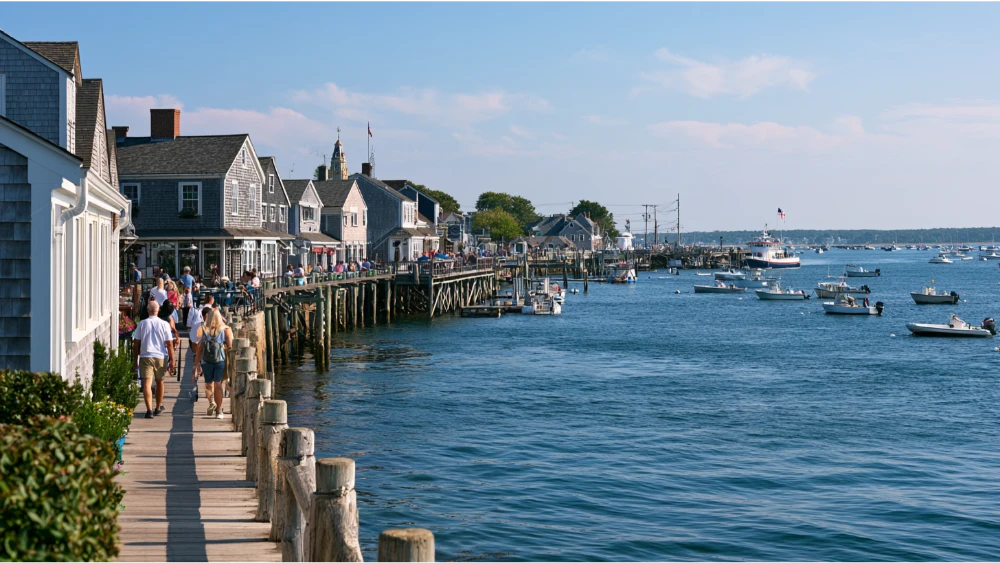
Outdoors, Beaches, and Parks
Myles Standish State Forest, the second largest state forest in Massachusetts, sits toward the southwest end of town, holds 16 freshwater lakes and ponds, and is home to Pinewoods Dance Camp. Ellisville Harbor State Park has a natural beach on Cape Cod Bay. The Town operates Plymouth Beach, Fresh Pond, Morton Park, and Hedges Pond, and resident beach and pond stickers run on a calendar year, expiring December 31 (rules and prices change annually). Add whale watching, harbor excursions, boating, fishing, trails, and 11 public and private golf courses.
History, Museums, and Notable People
Plymouth Rock, Mayflower II, Plimoth Patuxet Museums (known for decades as Plimoth Plantation), Pilgrim Hall Museum, and the Historic and Cultural District all sit within reach of downtown. Often called America’s Hometown and described as the oldest municipality in New England, Plymouth carries a story people recognize around the world. The notable people tied to this place mostly arrived from England in 1620, among them William Bradford, the colony’s long-serving governor and chronicler, and Myles Standish, whose name is still on the state forest. Running a 400-year-old story as a working tourism economy shapes the local culture, and residents feel it most between June and September, then again in November when Thanksgiving fills the waterfront.
Food and Nightlife by District
Think in districts rather than lists. The waterfront leans seafood and harbor-view restaurants. Downtown carries cafés, pubs, and dessert stops within walking distance of each other. Manomet and southern Plymouth run more toward casual neighborhood restaurants, and village centers hold bakeries, breweries, and markets. If food is a main interest, know that dining options thin out as you move inland, and from the outlying neighborhoods a full grocery run is a drive.
Is Plymouth Safe? Crime Rates and Public Safety
Third-party crime-data compilations report an overall crime rate of about 1,402 per 100,000 residents and a property crime rate near 1,114 per 100,000, with violent crime roughly 6.2% below the Massachusetts average and overall crime about 40.2% below the national average. The town has 144 dedicated police officers. These are town-wide figures and say nothing about any specific street.
Utilities, Septic, and Trash: The Details Most Plymouth Moving Guides Skip
This is where newcomers get surprised. Municipal sewer serves only about 18% of Plymouth homes across roughly 73 miles of mains, and the Town reports about 14,900 water-service connections. Many properties run on septic or small community treatment systems. There’s also no universal automatic curbside trash: apartment properties provide carts or dumpsters, house renters need to read the lease, and homeowners either contract a licensed private hauler or use the Town’s pay-as-you-throw transfer station. Electricity supply runs through a Town community-choice program while the utility still handles delivery, billing, and outages, and those rates change.
Ask these before you sign: sewer or septic, and who pumps, inspects, and pays? Town water, another regulated system, or a private well? Who arranges trash? What’s the heating type and the expected winter bill? For property owners, these are exactly the operational items a full-service, broker-owned manager handles.
Weather, Flooding, and Coastal Due Diligence
Winters here mean nor’easters, ice, and occasional multi-day power outages, and February is usually the stretch that tests a house and its heating system. The Town’s climate planning, through its Municipal Vulnerability Preparedness Program and the Priority Plymouth plan, identifies coastal flooding and sea-level rise, coastal erosion, inland flooding, severe wind and snow and ice storms, extreme heat, plus drought and wildfire risk.
For your specific address, check flood-zone status and what it means for insurance, drainage and basement water history, bluff or shoreline erosion where relevant, tree exposure and outage readiness, and storm access routes. Not every coastal property carries the same risk.
Your Checklist for Moving to Plymouth, Massachusetts
Before you sign:
- Confirm the assigned schools with the district
- Verify sewer vs. septic and the water source
- Nail down who arranges trash collection
- Check flood zone, HOA or condo rules, pet and parking terms
Two to four weeks out:
- Open electric and water/sewer accounts
- Arrange a hauler or a transfer-station sticker
- Test the commute at the hour you’d actually drive it
- Get insurance quotes, including flood if applicable
First week:
- Register your vehicle and transfer the title at the RMV. Massachusetts requires this as soon as you become a resident, with no grace period.
- Update your address everywhere, and expect a motor-vehicle excise bill from the municipality where the car is garaged, generally due within 30 days of the bill date.
- Pick up resident beach and pond stickers if you want them.
Frequently Asked Questions
Is Plymouth a good town to live in?
It suits people who want coastline, space, and outdoor recreation with a real local job base and a full hospital in town. The cost of living index around 127.5 sits above the national average, so it’s an escape from Boston prices rather than from New England prices, and you’ll drive for most errands outside the center.
What are winters like in Plymouth, Massachusetts?
Coastal New England winters: nor’easters, wind, snow and ice, and power outages some years, with January and February doing the heaviest work. Town climate planning lists severe wind, snow, and ice storms among its primary hazards, so plan for outage backup and ask about the heating system.
What is the best neighborhood to live in Plymouth, Massachusetts?
There’s no single answer, because this is a 96.43-square-mile town with five village centers plus planned communities. Match the neighborhood to your commute, school assignment, and grocery routine using the comparison table above, then verify utilities for the exact property.
Does Plymouth have commuter rail service to Boston, and do you need a car?
No station operates in Plymouth; the stop closed in 2021 and the nearest active commuter rail is Kingston. Local GATRA bus service exists but is limited, so plan on a car unless you live and work in Plymouth Center.
How KT Rents Helps You Make the Move
We’re a full-service, broker-owned property management company operating nationwide since 2009, with 16+ years behind us, 683 units across 34 states and $187M in assets under management as of early 2025, and a reported 98% occupancy rate. We don’t maintain a Plymouth office, and we won’t promise you Plymouth inventory we haven’t verified.
Ready to relocate or rent? Browse rental listings, run the Rent vs. Buy and Cost of Living calculators, and submit an application online.
Own property in the Plymouth area? We handle tenant placement, tenant screening, rent collection, property maintenance, rental permits, property inspections, 1099s, city ordinance compliance and court evictions without you lifting a finger, for the equivalence of a cup of coffee and a donut per day.
Call (800) 716-4950, text (608) 207-0657, or email info@ktrents.com. We respond within 24 hours. Your Rental. Your Way.