

Newport, Rhode Island
Homes for rent and for sale — search the map or open the full city SEO catch-all page.
Newport, Rhode Island
Moving to Newport, Rhode Island means joining a compact coastal city of about 24,251 residents where housing costs run roughly 29% above the national average, with market sale medians near $998,524. The city offers a stable year-round economy anchored by defense, healthcare, and education, plus world-class beaches, dining, and cultural events. Renters should confirm year-round leases, check flood exposure by address, and budget carefully for older-home utility costs before signing.
Moving to Newport, Rhode Island
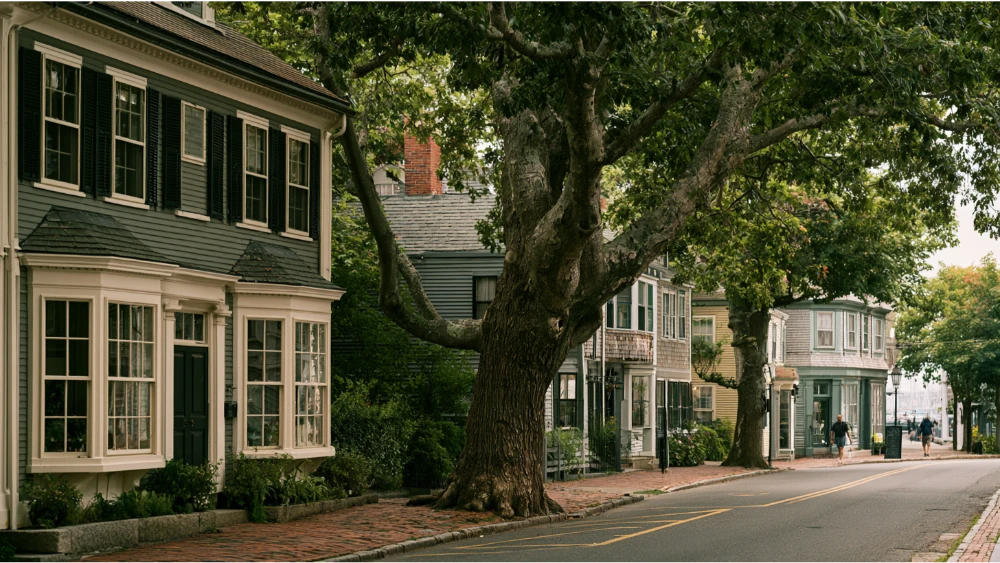
Moving to Newport, Rhode Island works well year-round if you want compact historic neighborhoods, coastal recreation, a strong dining and cultural scene, and steady work tied to defense, tourism, healthcare, and education. The tradeoffs are real: high housing costs, a seasonally tight rental market, summer traffic and parking rules, older housing stock, and flood exposure that varies address by address. Founded in 1639, Newport is one of the oldest cities in America, and that history shapes everything from its street grid to its heating systems. Its year-round population stays small but steady, anchored by military and educational institutions, and the local lifestyle leans coastal in a way few other New England cities can match.
This guide is for renters, remote professionals, families, and military-connected households weighing Newport against other places to live. We’ll walk through the stuff most relocation pages skip, the difference between postcard Newport and the city you actually live in after tourist season ends. KT Rents is a nationwide, broker-owned rental and property management company, and we’ve written this to help you ask the right questions before you sign anything.
Newport at a Glance: Population, Geography, and Who Lives Here
Newport is located at the southern tip of Aquidneck Island, the largest island in Narragansett Bay, roughly 30 miles southeast of Providence and well within reach of Boston for a day trip. The city itself covers about 7.66 square miles of land and belongs to Newport County, a term you’ll see later when we get into jobs and wages. The Census Bureau estimated the population at 24,251 as of July 1, 2025, down slightly from 25,163 in 2020. Median household income came in at $86,313 for 2020 to 2024, with a mean commute of just 18.9 minutes.
The year-round community is small, and that’s partly by design. Naval Station Newport and the city’s educational institutions keep a core population in place through every season, which steadies Newport against the swings that pure resort towns feel. You’ll find residents of all ages here, from young families to retirees drawn by the coastal lifestyle. A few quick markers of the city’s age: the White Horse Tavern, built in 1652, is considered the oldest tavern in the country, and Newport has survived dramatic population shifts before, falling from over 9,000 residents in 1774 to under 4,000 by 1783.
The Real Cost of Living in Newport
Housing is the line item that will shape your budget. Newport’s overall cost of living runs roughly 29% above the national average, and most of that gap comes from what you’ll pay for a place to live. The Census Bureau reports a median gross rent of $1,698 for 2020 to 2024, but read that number carefully. It’s a historical American Community Survey estimate across all existing leases, not the asking rent on an apartment available today. Current asking rents, especially for year-round units, typically run higher.
The gap gets wider on the ownership side. Census lists the median value of an owner-occupied house at $746,900 (2020 to 2024), with median monthly owner costs for households carrying a mortgage at $2,835. Market sale data cited elsewhere runs well above the Census figure, with overall median sale prices near $998,524, single-family homes closer to $1,397,693, and condos around $834,914. Those sale medians reflect what’s actually trading, which skews higher than the Census survey of every house on the market.
Older buildings add another cost most newcomers underestimate. Much of Newport’s housing predates modern insulation standards, so heating and utility bills can run high through a New England winter. Rhode Island ranks near the bottom nationally for retirement affordability, and the state’s utility and transportation costs reflect that. Keep these owner-cost and home-value numbers in mind, because they set up the rent-versus-buy decision we’ll return to later. Knowing where your money goes here is half the battle before you commit.
What Newport’s Rental Market Is Really Like
The biggest thing to understand is the split between year-round and seasonal leases. A city planning estimate found that roughly 19% of housing units were used seasonally or as vacation homes. That’s a dated figure, but it illustrates a pressure that hasn’t gone away: when a chunk of the housing stock is reserved for summer rentals and second homes, the inventory available for full-year residents feels much tighter than the total unit count suggests. Academic calendars and short-term rentals squeeze it further. Some reporting has put Newport County’s for-sale housing supply as low as 1.2 months, which tells you how fast available inventory moves when demand spikes.
Before you apply for anything, confirm the lease is genuinely year-round and not a stealth seasonal arrangement that ends when summer demand peaks. A few Rhode Island rules work in your favor here, and these are state-specific, not national:
- Security deposits are capped at one month’s rent, and the deposit must generally be returned with an itemized list of deductions within 20 days after you move out, return the key, provide a forwarding address, and give proper notice.
- Covered rental properties must be listed in the Rhode Island Rental Registry, with annual registration due by October 1 and new owners required to register within 30 days of acquiring or leasing a property.
- Pre-1978 properties generally need a valid lead certificate. You can check the public registry to verify a property before you sign.
As a broker-owned, full-service company, we think of tenant screening, rent collection, and property inspections as the baseline a serious manager handles. When you’re vetting a Newport lease yourself, apply that same scrutiny to the landlord.
Newport Neighborhoods, Compared
Newport’s neighborhoods differ most in housing form, centrality, parking reality, and flood exposure. We’re describing objective location characteristics only. Flood risk and parking must be checked property by property, because both vary street to street and even unit to unit.
| Neighborhood | Housing & density | Centrality | Parking reality | Flood due diligence |
|---|---|---|---|---|
| Historic Hill | Dense, historic | Immediately east of downtown | Tight; check per property | Moderate; verify by address |
| The Point | Modest-scale colonial, gridded | Near northern harbor | Limited | High near waterfront |
| Kay/Catherine | Mixed density, residential | North of Historic Hill; surrounds Newport Hospital | Varies | Lower inland; verify |
| Kerry Hill/Van Zandt | Residential | North of downtown, near off-island routes | Walkable; permits apply | Verify by address |
| Fifth Ward | Mostly residential | South side of Newport Harbor; includes King Park and the high school | Seasonal pressure | High along northern waterfront |
| Harbor/Lower Thames | Mixed commercial and multifamily | Central waterfront | Heavy summer congestion | High |
| Memorial Boulevard | Residential with institutional uses | Central, near Bellevue Avenue | Summer traffic heavy | Verify by address |
| Southern coastal / Ocean Drive | Larger lots, open space | Oceanside | Spread out; off-street common | Highest; strict checks needed |
Historic Hill and The Point reward anyone who wants central access and colonial architecture, with the caveat that older buildings and tight parking come with that character. Fifth Ward puts you near King Park along the southern side of Newport Harbor, a favorite with locals who want green space close to home, while Harbor/Lower Thames offers unmatched proximity to dining and waterfront life at the cost of seasonal congestion. The southern coastal areas, surrounded by open space and sitting right on the Atlantic Ocean, carry the highest prices and the most serious flood exposure. If you want something closer to rural living, nearby towns up-island stretch out with more land per lot. Wherever you land, pull the address-level flood map before committing.
Jobs and Working in Newport
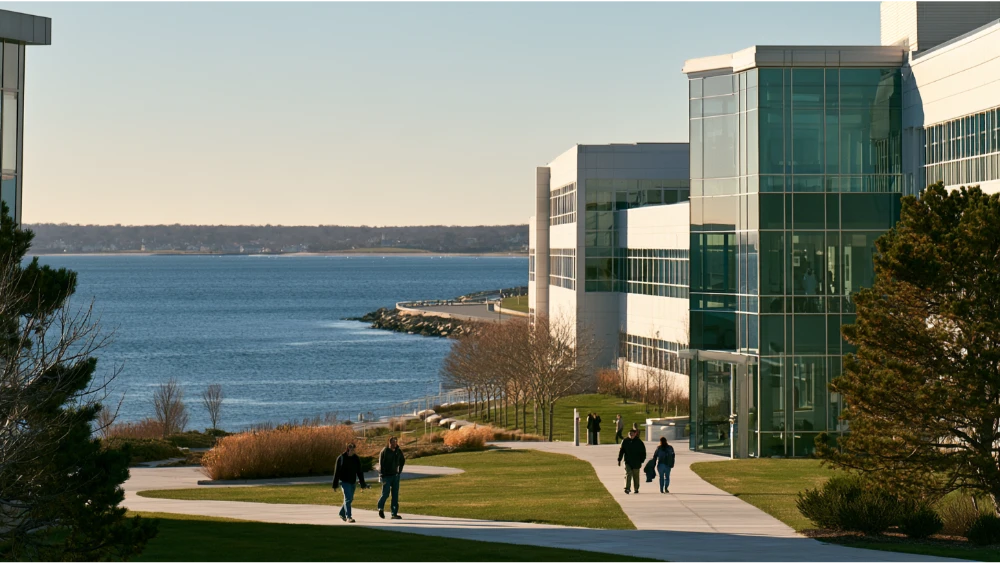
Newport is not just a tourism economy, and treating it that way leads to bad relocation decisions. The largest single employer base is defense and undersea research. The Naval Undersea Warfare Center Division Newport reported a total funded program of $2 billion in fiscal 2024, supporting roughly 3,300 regional employees in science, engineering, contracting, and support roles. Healthcare and education follow, with Newport Hospital and the public schools serving as institutional anchors. Marine trades round out the year-round base.
Tourism and hospitality employ a lot of people, but much of that work is seasonal, which is the part newcomers get burned by. For county-level context, Newport County reported 42,225 covered jobs in December 2025 and an average weekly wage of $1,420 in the fourth quarter of 2025, both preliminary BLS figures and both county-wide rather than city-only. Secure a job offer or confirm your remote-work setup before you commit to housing, and compare the wage against Newport’s housing costs rather than assuming the summer economy delivers steady year-round income. For remote professionals, the compact neighborhoods and coastal setting give you the freedom to work from a place that feels like a dream, as long as the paycheck doesn’t depend on the local season.
Newport Schools and Education
Newport Public Schools runs three main schools plus a career and technical center:
- Claiborne Pell Elementary (PK through grade 4)
- Frank E. Thompson Middle School (grades 5 through 8)
- Rogers High School (grades 9 through 12)
- Newport Area Career and Technical Center
The 2025 to 2026 state report card lists 1,746 students and a per-pupil expenditure of $32,159. A new 167,000-square-foot Rogers High School opened for the 2025 to 2026 year, its construction bringing career and technical programs, science labs, arts and technology facilities, and a commercial culinary kitchen. Rather than lean on any single ranking, check the current Rhode Island Department of Education report card and look at the individual measures that matter to you. Registration requires proof of residency, identification, and immunization and physical-exam records. The district offers registration assistance in Spanish and Portuguese, and Se Habla Español for families who need support working through the paperwork. Families with children of different ages can enroll across all three schools within the same district.
Hospitals and Healthcare in Newport

Newport Hospital is a 129-bed nonprofit community hospital offering emergency care, surgery, intensive care, rehabilitation, behavioral health, cancer-related services, diagnostic imaging, and a birthing center. The emergency department runs 24 hours a day, 365 days a year, with 29 beds (including a four-bed behavioral-health pod) and about 33,000 visits annually. It sits in the Kay/Catherine area, worth noting if proximity to a hospital ranks high on your list.
The hospital’s 2025 Community Health Needs Assessment flags access to primary care, specialty care, and behavioral health as ongoing regional priorities. If you or a family member needs a specific specialist, confirm provider availability and insurance acceptance before you move. Some specialty care may mean a trip up to Providence.
Getting Around: Parking, Transportation, and the Pell Bridge
You’ll likely want a car in Newport, though the denser central neighborhoods are genuinely walkable. The city’s 2025 Vision Zero plan reported about 13% of workers walked to work and another 5% biked or used transit. RIPTA buses serve the area, with Route 60 connecting Newport and Providence and Routes 67 and 68 covering local destinations. For public transportation, schedules and fares change, so confirm them before you rely on a route.
Parking is the detail that trips up newcomers. Here’s the shape of it:
- Residential parking restrictions generally run May 1 through December 1, with permits required on many streets. Renters without both a Newport driver’s license and Newport registration may qualify for an R2 permit if their lease runs longer than seven months.
- Metered parking downtown generally operates May 1 through October 31. Resident permit holders get up to three hours free, but you must enter your plate.
The Claiborne Pell/Newport Bridge is the main connection off Aquidneck Island, and it’s tolled, with a Rhode Island resident E-ZPass rate reported around 83 cents and strict vehicle restrictions during high winds. Toll rates change often, so verify the current amount. New residents also face hard DMV deadlines: title and register your vehicle within 30 days, get it inspected within 5 days of registration, and carry Rhode Island insurance.
Weather, Flooding, and Coastal-Home Due Diligence
Newport has four distinct seasons shaped by its maritime position. The 1991 to 2020 normals show a January high and low of 38.1°F and 24.1°F, a July high and low of 79.6°F and 64.1°F, an annual average of 51.3°F, and 42.18 inches of precipitation a year. The ocean moderates summer heat, but it also brings nor’easters, winter storms, wind, and salt air that wears on older buildings.
Flood exposure is address-level, not neighborhood-level. City hazard planning identifies concerns around the harbor waterfront, Washington and Thames Streets, parts of the Fifth Ward, areas near Almy Pond, Goat Island, and Ocean Drive, but two units on the same block can carry very different risk. Check the exact address. Historic properties also come with strict renovation and preservation rules. Before signing, ask:
- Is the unit or parking area in a mapped flood zone?
- Has the building had water intrusion before?
- What type of heat does the unit use, and are utilities separately metered?
- Who handles snow removal, and is off-street parking available during storms?
- Is renters insurance required, and does it cover flood losses?
Food, Beaches, Gilded Age Mansions, and Outdoor Activities Year-Round
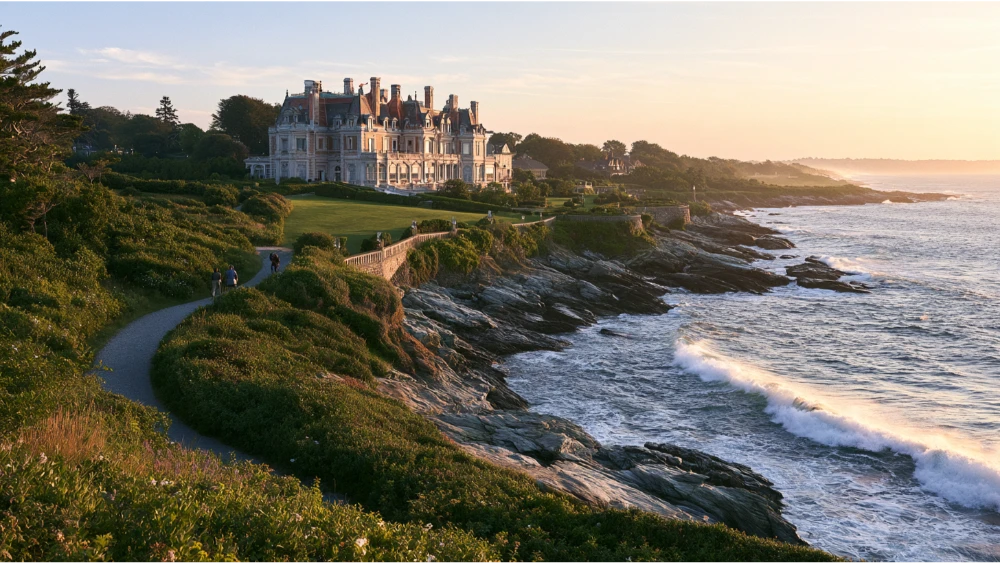
This is the part that sells Newport, and it mostly earns the hype. The dining scene concentrates around the waterfront, Thames Street, and Broadway, heavy on seafood, lobster, and chowder, with more formal harbor-side spots mixed in among year-round neighborhood restaurants. Locals tend to have a favorite handful of restaurants that stay open through the quiet months, and those are the ones worth finding early. The gilded age mansions, including The Breakers built in 1895 by the Vanderbilts, line Bellevue Avenue, and the 3.5-mile Cliff Walk runs along the shore behind them. These grand mansions are a big reason visitors come, and Cliff Walk sections close for repairs from time to time, so check its status before planning a visit.
The beaches are a defining part of the coastal lifestyle here. Easton’s Beach offers a boardwalk and carousel, and the city’s beautiful beaches draw swimmers, surfers, and walkers through the warm months. For outdoor activities, Fort Adams State Park hosts boating, sailing, and major music events, and the surrounding parks and open space along Ocean Drive give outdoor enthusiasts room to hike, bike, and take in the water. The Newport Jazz Festival dates to 1954 and the Newport Folk Festival to 1959. Add the International Tennis Hall of Fame and the kind of museums that reward repeat visits, including the Newport Art Museum and Touro Synagogue, and you have a cultural calendar that stays busy. The first U.S. Open golf tournament was held here in 1895, and sailing remains part of the city’s identity around Newport Harbor. All told, Newport offers a unique blend of culture and recreation, and the city’s Colonial architecture gives the whole thing a backdrop no planned development could fake.
Living here is different from visiting. Summer brings crowds and events; the off-season quiets down, and some tourism-focused businesses cut hours or close entirely. Plenty of residents prefer the winter version of the city, when the community feels like a small town again and the mansions and museums belong to the locals. If you want a weekend escape from the crowds, the quieter stretches of the Newport area give you that balance of lively season and restful off-season.
Your Newport Moving Checklist
Before signing a lease:
- Confirm the lease is year-round, not seasonal.
- Check the Rhode Island Rental Registry and ask for the lead certificate on pre-1978 properties.
- Verify the one-month deposit cap and the 20-day return rule.
- Pull the address-level flood map and ask about water-intrusion history.
- Confirm heat type, utility metering, snow removal, and off-street parking.
Before arrival:
- Line up utilities and renters insurance (with flood coverage where relevant).
- Gather school registration documents: residency proof, ID, immunization and physical-exam records.
Within 30 days:
- Title and register your vehicle (within 30 days), then get it inspected (within 5 days of registration), and carry Rhode Island insurance.
- Apply for your resident parking permit.
- Complete school enrollment and sign up for city emergency alerts.
Should You Rent or Buy in Newport?
The math depends on how long you’ll stay, how stable your income is, whether you’re ready for a down payment, and your appetite for older-home maintenance and flood risk. With market sale medians running near $998,524 overall, single-family homes above $1.3 million, condos around $834,914, and monthly owner costs with a mortgage near $2,835, buying a house is a serious commitment in a tight market. Renting keeps you flexible while you learn the neighborhoods and settle into the local community. For example, many newcomers rent for a year to find the right pocket of the city before they buy.
Run your own numbers with the KT Rents Rent vs. Buy Calculator, Mortgage Calculator, and Cost of Living Calculator before you decide. As a nationwide, broker-owned, full-service company, we handle tenant placement, tenant screening, rent collection, and property inspections, and we report a 98% occupancy rate across our managed portfolio. If you’re an owner or investor eyeing Newport rentals, GET STARTED WITH US TODAY at (800) 716-4950. Renters can discover listings and use our Rent Calculator to find a haven that fits. Bring the family, bring friends, and make Newport home where work and play finally meet. Your Rental. Your Way.
Frequently Asked Questions
What is the cost of living in Newport, Rhode Island?
It runs roughly 29% above the national average, with housing as the main driver. Census lists median gross rent at $1,698 and median home value at $746,900 for 2020 to 2024, though current asking rents and sale prices run higher. Plan how you’ll spend before you move.
Where is Newport located?
Newport is located at the southern end of Aquidneck Island in Newport County, Rhode Island, about 30 miles southeast of Providence on Narragansett Bay. New York is roughly a three-hour-plus drive to the southwest, so weekend trips to the city are doable.
What is the cheapest town to live in Rhode Island?
Newport is one of the pricier markets in the state. Nearby Aquidneck Island towns like Middletown and Portsmouth often run lower, and Middletown in particular puts you close to the same beaches, shopping, and jobs, which is worth a dedicated comparison before you commit to a specific address.
Is Newport, Rhode Island a nice place to live?
Yes, if you value coastal living, history, dining, and culture, backed by steady defense, healthcare, and education employment. The parks, beaches, and museums give the lifestyle depth year-round. Just plan around the high housing costs, summer parking rules, and address-level flood exposure covered above.