

Albany, New York
Homes for rent and for sale — search the map or open the full city SEO catch-all page.
Albany, New York
Moving to Albany, New York puts you in a compact state capital with a 20-minute average commute, blended asking rents of roughly $1,600 to $1,630 per month, and a metro unemployment rate of 3.8% as of August 2026. Government and healthcare anchor the job base, with about 105,000 and 89,400 metro jobs respectively. The honest tradeoffs are 59 inches of annual snowfall, address-level variation in housing quality, and transit that works well on major corridors but less so off them.
Moving to Albany, New York
Albany makes sense if you want a compact state capital with a job base built on government, healthcare, higher education and professional services, historic neighborhoods you can actually afford, and a mean commute of 20 minutes (U.S. Census, 2020–2024). The tradeoffs are real: about 59 inches of normal annual snowfall, winter street-parking rules that will tow your car if you ignore them, and housing conditions that shift from one block to the next. Blended asking rents across all rental types currently land somewhere around $1,600 to $1,630 a month, which is above what older Census figures suggest.
This guide is for you if you’ve got a new job offer, a school acceptance, or a cost-driven exit from a pricier Northeast metro. Two things to get straight before we go further. First, the City of Albany and the Capital Region (the Albany-Schenectady-Troy metro) are not the same thing, and confusing them will wreck your school and tax math. Second, Census median gross rent is a historical average across all existing leases that folds in certain tenant-paid utilities, while current asking rent is what a landlord will quote you today. They’re different numbers measuring different things.
We’re KT Rents. We’ve been running full-service property management and rental listings nationwide since 2009, and we built this guide the way we’d want one built for us: official sources, dated figures, and no brochure language.
Is Albany, New York a Good Place to Live? The Short Answer
Yes, for a specific kind of mover. If you want a mid-size historic city with steady public-sector and healthcare employment, walkable historic districts where you can hear church bells and still walk to dinner, and a commute that averages 20 minutes instead of 50, Albany delivers. The housing stock is genuinely old, which means character, and the city’s position puts New York City, Boston, the Adirondacks and the Berkshires all within day-trip range.
The honest tradeoffs:
- 59.2 inches of normal annual snowfall (1991–2020 normals, National Weather Service), with a January normal low near 16°F.
- Winter parking logistics. Declared snow emergencies come with side-of-street rules and designated off-street lots. Miss the notice, lose the car to a tow.
- Address-level variation. Conditions, parking, transit access and building quality change block by block. Remote shopping from listing photos is risky here.
The rest of this article is built as a decision process, not a sales pitch. You’ll get the numbers, the neighborhood method, the school mechanics, the transit reality, the renter-protection rules, and a checklist for your first 30 days in a new city.
Albany at a Glance: Population, Housing Costs, and Commute
| Figure | Number | As of |
|---|---|---|
| City population | 101,698 | July 1, 2025 estimate (Census) |
| Population growth | +2.6% | April 2020 base to July 2025 |
| Households | 44,357 | 2020–2024 |
| Owner-occupied housing rate | 38.2% | 2020–2024 |
| Median gross rent | $1,216 | Census 2020–2024 (not current asking rent) |
| Median owner-occupied home value | $234,700 | 2020–2024 |
| Median monthly owner cost with mortgage | $1,847 | 2020–2024 |
| Median household income | $61,986 | 2024 dollars, 2020–2024 |
| Mean travel time to work | 20.0 minutes | 2020–2024 |
| Bachelor’s degree or higher (age 25+) | 45.3% | 2020–2024 |
| Speak a language other than English at home (age 5+) | 18.5% | 2020–2024 |
| Normal annual snowfall | 59.2 inches | 1991–2020 normals (NWS) |
| July normal high / low | 83.9°F / 62.4°F | 1991–2020 normals |
| January normal high / low | 32.8°F / 15.9°F | 1991–2020 normals |
Notice the owner-occupancy rate: 38.2%. Nearly two out of three occupied homes in Albany are rentals. That’s why so much of this guide is written for renters, and why New York’s tenant-protection rules later in this article matter more here than they would in a city of mostly single-family owner housing. If you want additional population detail such as median age or household composition, the Census QuickFacts page for the city is the cleanest place to pull it.
Albany City vs. Albany County vs. the Capital Region
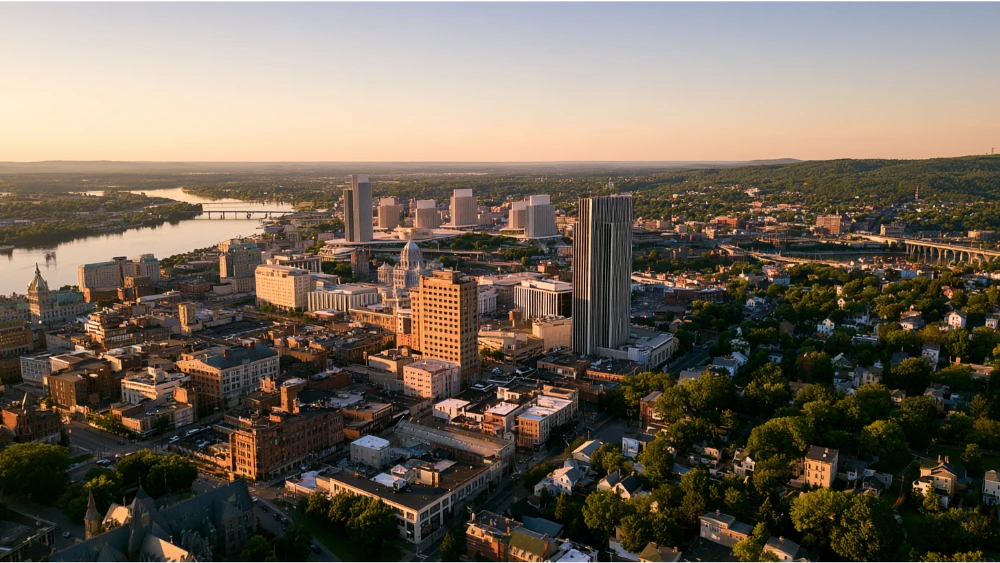
Three nested geographies, and most relocation guides blur them.
The City of Albany is roughly 101,700 people inside city limits, served by the City School District of Albany, city police and city services. Albany County wraps around it and includes a number of separate towns and villages. The Albany-Schenectady-Troy metropolitan area is the labor market, with about 478,500 nonfarm jobs as of August 2026 (BLS), and it’s the geography most employment statistics describe.
Troy, Schenectady, Saratoga Springs, Colonie, Guilderland and Bethlehem are separate municipalities. They have their own school districts, their own tax rolls, their own police and their own trash schedules. They are not Albany neighborhoods, and if you treat them that way while comparing rents, you’ll end up with a school assignment and a property tax bill you didn’t plan for. When you’re checking a specific address, use the city’s official neighborhood map rather than a real estate site’s approximation.
Geographically you’re in upstate New York at the top of the Hudson Valley, which is what makes the weekend-trip math so good. Across NY, Albany is the seat of state government, and that single fact shapes the Albany area’s employment base more than anything else. More on that later.
Pros and Cons of Moving to Albany, NY
Pros:
- Diversified employment anchored by government (about 105,000 metro jobs) and education and health services (about 89,400), both of which held up or grew year over year.
- 3.8% metro unemployment (August 2026, not seasonally adjusted).
- A 20-minute average commute in a city you can cross in 15.
- Historic districts with real 19th-century architecture, not reproductions.
- Free or low-cost culture, including a free state museum and a free spring festival.
- A Level I trauma center and multiple 24-hour emergency departments inside a compact city.
- Northeast positioning: NYC, Boston, the Adirondacks and the Berkshires are all reachable for a weekend.
Cons:
- Roughly 59 inches of snow a year and the parking choreography that comes with it.
- Transit that works well along major corridors and poorly off them.
- Old housing stock. Beautiful bones, highly variable mechanicals, and heating bills that depend entirely on the building.
- Asking rents that have outrun the Census median.
- Quality that varies address to address, which makes sight-unseen renting a gamble.
- Helderberg and similar lower-density pockets have a suburban feel with off-street parking, but you give up walkability to get it.
One warning before the cost section: you’ll find published claims that Albany is some specific percentage above or below the national average cost of living, and those claims contradict each other across sources. Different private methodologies, different conclusions. We’d rather hand you the underlying numbers.
How Much Does It Cost to Live in Albany? Rent, Housing Costs, and Moving Expenses
Census Median Rent vs. What You’ll Actually Be Quoted
Albany’s median gross rent was $1,216 for the 2020–2024 period (Census). That figure includes certain tenant-paid utilities and averages across every existing lease in the city, including ones signed years ago by residents who never moved.
What you’ll be quoted is different. As of October 2026, one large rental marketplace reported average asking rents of roughly $1,262 for a studio, $1,581 for a one bedroom, $1,865 for a two bedroom, and $1,990 for a three bedroom. Blended across all rental types, that’s about $1,600 to $1,630. These are volatile third-party asking-rent figures and they move, so treat them as a starting point rather than a promise.
The gap exists because one number is history and the other is today’s market. Against a median household income of $61,986, the common 30%-of-gross guideline puts a comfortable rent ceiling near $1,550 a month for a household at that median income. That’s a one bedroom, tightly.
Home Values, Owner Costs, and the Real Cost of the Move Itself
The median home value for owner-occupied units in Albany was $234,700, with median monthly owner costs for households carrying a mortgage at $1,847 (both 2020–2024, Census). New York property taxes vary significantly by municipality, so verify the actual tax bill at the parcel level before you fall in love with a listing price.
Then there’s the move. Long-distance moves commonly run from $2,500 to well over $7,000 depending on distance, how much you’re hauling and what time of year you book. Summer costs more. Utilities should be transferred two to three weeks before your move date, and you’ll want to confirm which ones the lease puts on you.
Run your actual numbers with our Cost of Living Calculator and Rent Calculator before you commit to a neighborhood. A $200 monthly difference between two addresses is worth more thought than the countertops.
We won’t publish a single “Albany is X% below the national average” figure, because the private methodologies behind those numbers disagree with each other. Your real cost comes down to your rent, your commute, whether you need a parking permit, and whether heat is included.
Renting vs. Buying in Albany: Which Makes Sense for You?
At 38.2% owner-occupancy, Albany is a renter-heavy city. If you’re new, that’s a feature. You get to test a neighborhood, a commute and a winter before you tie up a down payment on a new home.
Up-front renting costs here are relatively contained. In New York, a security deposit may not exceed one month’s rent, and before lease signing a landlord may generally charge no more than $20 for a credit and background check. So first month plus deposit, plus a modest screening fee, gets you in the door.
Buying is a different animal, especially with housing stock this old. Down payment, closing costs, an inspection you should not skip, property taxes that vary by municipality, snow removal, and the eventual reality of a roof and a boiler in a hundred-year-old row house. The rough heuristic: if you expect to be in Albany under two to three years, or you’re still figuring out where you’ll be working, rent first.
Our Rent vs. Buy Calculator and Mortgage Calculator will get you a defensible answer in about ten minutes.
Albany Neighborhoods and Historic Districts: How to Choose the Right Place
Compare neighborhoods by housing form, transit corridor, parking situation, walk-to-amenities and actual commute. Not by “best for” labels, which are usually somebody’s anecdote dressed up as advice. Boundaries and descriptions below come from the city’s official neighborhood pages and comprehensive plan map.
| Neighborhood | Typical housing | Relative to downtown | Transit / parking | Nearby anchors |
|---|---|---|---|---|
| Center Square / Washington Park | 19th-century brownstones, row houses, apartments | Adjacent / walkable | Strong transit, mostly street parking | Lark Street, the Capitol, Empire State Plaza |
| Mansion | Victorian row houses | Adjacent | Walkable, street parking | Empire State Plaza, downtown |
| Pine Hills | Mixed historic, owner and rental | West of downtown | CDTA Route 114 corridor | Library branch, groceries, schools |
| Park South / University Heights | Mixed housing, apartments | Near Washington Park | CDTA Route 13 | Medical campus, colleges, downtown |
| Delaware Avenue | Residential, lower density | South / southwest | Mix of street and off-street | Cinema, restaurants, Normanskill Farm, Hackett trail |
| New Scotland / Woodlawn | Tree-lined residential | Southwest | Car-friendly, sidewalks | Capital Hills, healthcare access, shops |
| Helderberg | Single-family, suburban character | Western edge | Off-street parking common | Neighborhood commercial strips |
| Downtown / Pastures | Warehouse conversions, historic housing | Core | Highest transit density | Employment center, riverfront |
| Dunes | Suburban-style | Northwest | Car-oriented | Major shopping corridors |
Center Square, Washington Park, and the Mansion District
This is the walkable core of historic Albany. Nineteenth-century brownstones and row houses, Lark Street’s restaurants and nightlife, a short walk to the Capitol and Empire State Plaza, and Washington Park essentially at your doorstep. The Mansion District adds Victorian row houses and a long-standing artist community with easy access downtown.
The tradeoff is parking. Street parking dominates, and in January that becomes a daily problem rather than an occasional one. If you own a car and you’re looking here, ask specifically about off-street options and whether the address sits in a residential permit zone.
Pine Hills, Park South, and University Heights
Pine Hills is one of Albany’s largest and most mixed neighborhoods, with homeowners and student renters sharing streets, plus elementary schools, a public library branch and grocery access. Park South sits between Washington Park, the medical and university campuses and downtown, with a housing mix that ranges from small apartment buildings to converted row houses.
Transit is a real argument for this area. CDTA Route 13 runs downtown to St. Peter’s Hospital and Albany Medical Center, and Route 114 connects UAlbany, downtown and the Albany-Rensselaer rail station. If you work in healthcare or higher education, start your search here.
Delaware Avenue, New Scotland/Woodlawn, Helderberg, and Upper Washington
The lower-density, more residential side of the city. Delaware Avenue has a cinema and a strip of neighborhood restaurants, with Normanskill Farm and the Hackett bike trail nearby. New Scotland and Woodlawn offer tree-lined streets with sidewalks, shops and quick access to Capital Hills and its open space. Helderberg reads as suburban inside city limits, with single-family stock and off-street parking more common. Upper Washington and Eagle Hill sit near recreation and commercial strips.
You trade some walkability for parking and yard space. For a household with two cars and a dog, that trade often makes sense. One thing to confirm on any tour: whether you’re looking at a true single-family, one of the many two family homes carved out of older stock, or a larger converted multi-unit, because that affects heat, noise and parking.
Downtown, Arbor Hill, West Hill, South End, North Albany, Pastures, and Dunes
Downtown Albany has the city’s highest employment density plus warehouse-district conversions and a concentration of state and private offices. The Pastures holds some of Albany’s oldest surviving housing. North Albany offers riverfront proximity. Arbor Hill, West Hill and the South End have deep history, substantial older housing stock, active redevelopment work and good transit access. Dunes has a more suburban physical character near major shopping.
We’re not going to label any of these “good” or “bad.” That kind of shorthand is both lazy and, where it functions as a proxy for who lives somewhere, a Fair Housing problem. Here’s a method instead:
- Pull the newest official Albany Police or New York State Division of Criminal Justice Services city-level data, and check what year and what geography it actually covers before you draw conclusions.
- Visit the block on a weekday morning, a weekday evening and a Saturday. Three visits, three different pictures.
- Drive or ride your real commute at your real departure time.
- Look at street lighting, parking availability and where snow would get plowed to.
- Use the city’s Neighbor Kit address lookup for trash day, fire district, property details and your elected representatives.
The Albany Job Market: Unemployment Rate, Government, Healthcare, and Tech Valley
The Albany-Schenectady-Troy metro had a civilian labor force of roughly 474,400 and employment of about 456,400 in August 2026, with the unemployment rate at 3.8% (not seasonally adjusted). Total nonfarm employment was approximately 478,500, up 0.4% year over year. These are metro numbers, not city numbers, which is the right frame since plenty of Albany residents work in Colonie or Troy and vice versa.
Which Industries Are Actually Hiring?
| Sector | Metro jobs (Aug 2026) | Year over year |
|---|---|---|
| Government | ~105,000 | +1.6% |
| Education and health services | ~89,400 | +2.5% |
| Trade, transportation and utilities | ~77,900 | — |
| Professional and business services | ~64,300 | +1.1% |
| Financial activities | — | −3.8% |
| Information | — | −6.3% |
Government and healthcare carry this local economy, and both grew. Financial activities and information both contracted, so if that’s your field, line up the offer before the lease. Albany Med Health System reports approximately 16,800 employees and describes itself as the Capital Region’s largest private employer.
State Jobs, Tech Valley, and Semiconductors
New York’s state job portal lists Albany County openings continuously, which is a meaningful advantage if you’re moving without a job in hand. The NY HELPS program allows qualifying agencies to fill certain permanent positions through a streamlined process that doesn’t always require a traditional civil-service examination, which lowers the barrier for out-of-state candidates who’ve never sat for a New York exam.
On the Tech Valley side, the Albany NanoTech Complex has been designated the first National Semiconductor Technology Center flagship facility. That anchors semiconductor and nanotech research and development hiring alongside the universities and research institutes already in the region.
One piece of practical advice: pick your neighborhood after you know your work address and your shift. Commute and parking drive day-to-day satisfaction far more than square footage does.
Schools and Education in Albany: Districts, Magnets, and Colleges
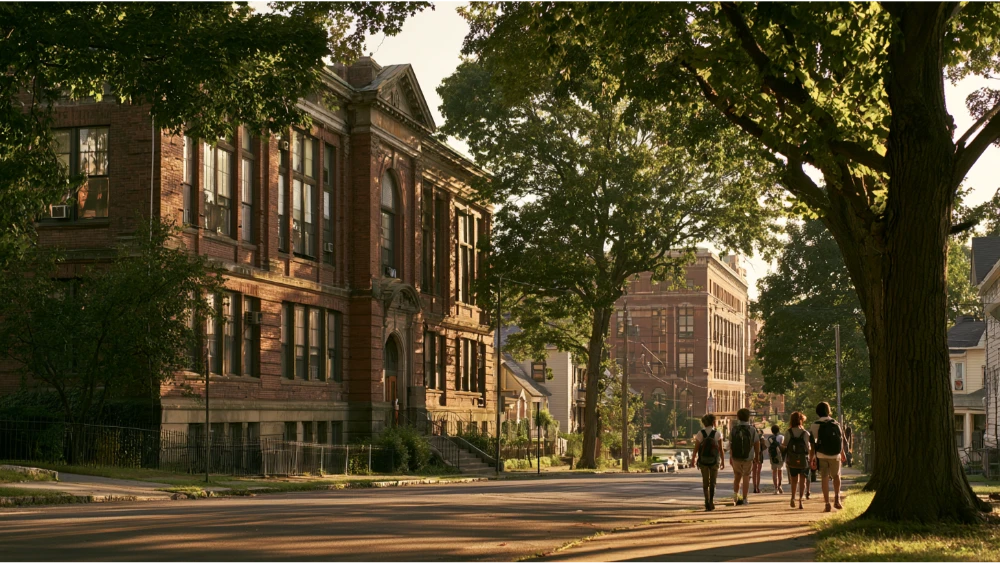
The City School District of Albany reports 9,288 students across 16 schools: 12 elementary schools, 3 middle schools and Albany High School. Pre-K is offered for three- and four-year-olds, with full-day pre-K 4 seats available through district schools, the Dual Language Program and community agencies.
How Albany School Assignment, Magnets, and Open Enrollment Work
Your home address drives your default school assignment. Verify the exact address with the district before you sign a lease or a purchase contract, because a block in either direction can change the answer.
The district offers four magnet elementary choices: the Albany School of Humanities, the Dual Language Program, the Montessori Magnet School, and the Thomas O’Brien Academy of Science and Technology. Magnet placement runs through a lottery that may weigh sibling and neighborhood preference, but applying guarantees nothing and first choices aren’t assured. Open enrollment can allow an elementary or middle placement outside your neighborhood school, subject to available space.
Charter and non-public options exist in the city as well. Whichever route you take, confirm transportation eligibility in writing. A great program 20 minutes away stops being great if you’re driving it twice a day in February.
Colleges, Graduate Programs, and Research
The University at Albany enrolled 17,426 students in fall 2025 (12,889 undergraduates and 4,537 graduate students), with more than 65 undergraduate majors, over 150 graduate programs and a 16:1 student-faculty ratio. Albany Law School, founded in 1851, describes itself as the oldest independent law school in the country, and the city also hosts institutions in medicine, pharmacy and health sciences.
For anyone evaluating Albany as a rental market, this is the engine underneath it: steady short-term and long-term leasing demand from students, medical residents, faculty, researchers and administrators, in a city where 45.3% of adults 25 and over hold at least a bachelor’s degree.
Hospitals and Healthcare in Albany
Albany Medical Center operates a 766-bed hospital and is northeastern New York’s only academic medical center. It runs the region’s only Level I trauma center, serving a 17-county area. St. Peter’s Hospital provides 24-hour hospital and emergency services along with broad specialty care, and the Albany Memorial Campus operates a full-service emergency department around the clock.
Having a Level I trauma center and multiple 24-hour emergency departments inside a compact city is a genuine quality-of-life factor. It matters most for households managing chronic conditions, families with young kids, and anyone caring for older relatives.
When you’re comparing facilities, use New York’s official hospital profile system, which publishes quality, safety, inspection, procedure and emergency-department timeliness data. That’s a better input than review sites. Confirm network participation before you pick a primary care provider, since switching later is a hassle you don’t need in your first month. For car-free households, CDTA Route 13 connects downtown with both St. Peter’s and Albany Medical Center.
Getting Around Albany: Transportation, CDTA, and Parking
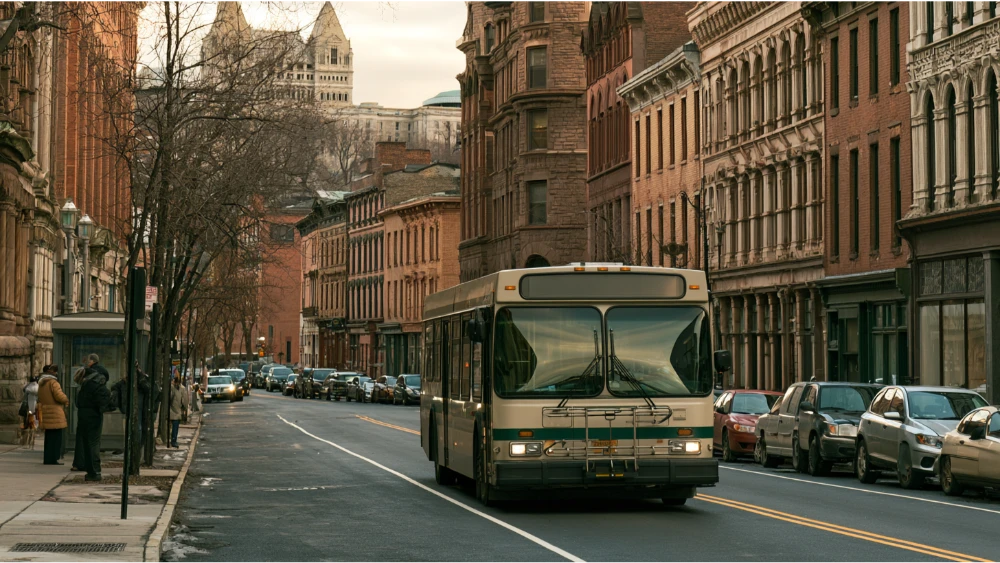
Mean travel time to work in Albany is 20.0 minutes (Census, 2020–2024). That’s one of the strongest practical arguments for the city, and it’s the number people coming from larger metros tend to appreciate most after about a week.
Can You Live in Albany Without a Car?
Yes, if your home, job, school, groceries and medical care line up along major CDTA corridors. Useful routes include 114 (Crossgates Mall to UAlbany to downtown to the Albany-Rensselaer rail station), 117 (Crossgates to Colonie Center to Albany International Airport) and 13 (downtown to St. Peter’s to Albany Medical Center).
Published BusPlus fares are $2 cash or $1.30 using the Navigator smart card or mobile app, stated as valid since April 1, 2024. Verify before you build a budget around it. CDTA also adjusted service and frequencies effective August 23, 2026, so check live schedules rather than trusting any guide’s snapshot. Off-corridor addresses are meaningfully easier with a car, and in winter that gap widens.
Beyond the bus: the Albany-Rensselaer station handles Northeast corridor rail travel, which makes car-free trips to New York City straightforward. Albany International Airport covers air travel. For walking and biking, the Hackett trail and the city’s sidewalk network in the older neighborhoods are both solid. And check whether your exact address sits in a residential parking permit zone before you sign, because that detail decides how your winter goes.
Albany Weather: Average Annual Snowfall and Surviving the First Winter
The 1991–2020 normals: 59.2 inches of average annual snowfall, a January normal high and low of 32.8°F and 15.9°F, a July normal high and low of 83.9°F and 62.4°F, and 40.68 inches of annual precipitation. Four distinct seasons, with snowy winters, warm and often humid summers, and a genuine Northeast cold stretch in the middle.
Here’s the part most relocation guides skip. During declared snow emergencies, the city designates special off-street parking locations and enforces side-of-street rules. If you depend on street parking, you have to track those declarations. People who don’t get towed, pay the fee, and learn the lesson the expensive way. Sign up for notifications in your first week.
Questions worth asking before you sign a lease in an older Albany building:
- Who pays for heat, and what’s the heating system? Radiators, forced air, baseboard electric? Ask for a recent winter bill.
- What’s the condition of the windows and insulation?
- Is there off-street or permitted parking, and is it deeded to the unit?
- Who shovels the walk and clears the driveway, and what’s the deadline?
- How fast does maintenance actually respond in January?
That last question is the one that separates a managed property from a headache. Nationwide, we handle maintenance requests through an owner portal and a resident intake system precisely because a broken boiler at 11pm on a Tuesday shouldn’t depend on whether someone checks their voicemail.
Things to Do in Downtown Albany: Historic City Landmarks and Weekend Trips
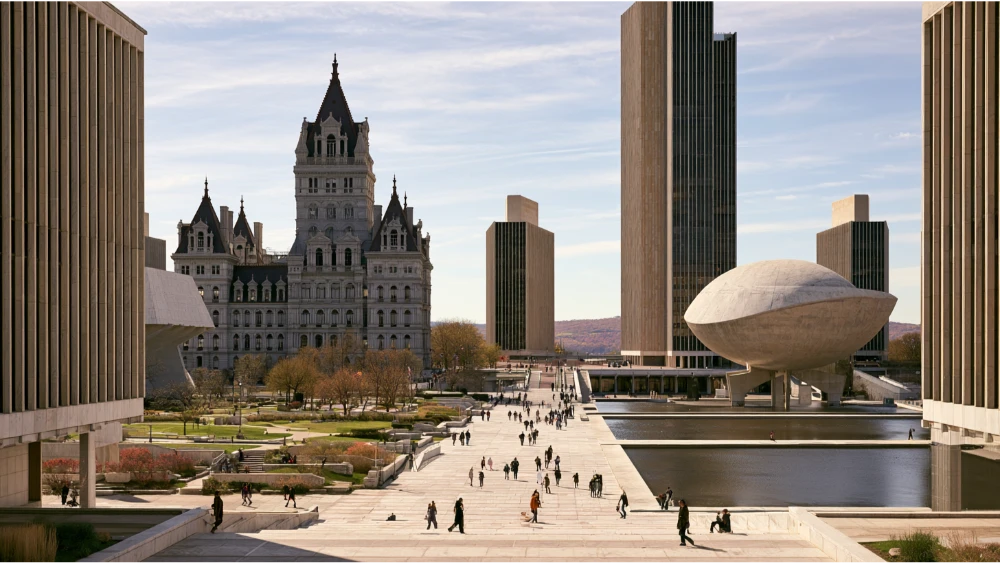
State government and history. The New York State Capitol and Empire State Plaza are the architectural centerpiece of downtown Albany, the Plaza itself a product of 1960s urban renewal, and the New York State Museum is free to enter with a suggested voluntary donation. That’s a rainy Saturday solved for the price of whatever you decide to put in the box.
Parks and festivals. Washington Park covers 81 acres and hosts recreation, performances and fairs through the year. The annual Albany Tulip Festival features more than 100,000 tulips and is free to attend. Dates change annually, so check before you plan around it.
Performing arts. The Egg and the Palace Theatre anchor the larger shows, with neighborhood live-music venues filling in the rest of the calendar.
Food and street life. Lark Street is the densest stretch of restaurants and bars, with downtown and the neighborhood commercial districts along Delaware Avenue and New Scotland offering a quieter, more local version of the same.
Outdoors. Hudson River recreation, the Albany Pine Bush with its unusual inland pine barrens ecosystem, Normanskill Farm, the Hackett bike trail and Capital Hills for golf and open space. For anyone who likes exploring on weekends, this is a great place to keep a pair of boots by the door.
Sports. Professional, collegiate and community teams, with UAlbany athletics drawing consistent local crowds.
Day trips. This might be Albany’s most underrated feature. The wider Capital Region, the Adirondacks, the Berkshires and the Hudson Valley are all within a reasonable drive, Montreal is a longer haul that still works for a long weekend, and the rail station puts New York City in play for a single day. That’s the kind of unparalleled access to the Northeast that usually costs a lot more to buy into. If you want a regional base that doesn’t carry a big-metro housing bill, this is the argument.
Signing a Lease in NY: Albany Renter Protections Worth Knowing
General education, not legal advice. Rules change, so check the New York Attorney General’s current tenants’ rights guide before you rely on any of this.
- Security deposits may not exceed one month’s rent.
- Screening fees: before lease signing, a landlord may generally charge no more than $20 for a credit and background check, and you’re entitled to a copy of the report and the invoice. A recent report you provide yourself may avoid the fee entirely.
- Late rent: rent is not legally late until it’s more than five days overdue.
- Late fees are capped at $50 or 5% of monthly rent, whichever is less.
- Good Cause Eviction took effect April 20, 2024 and covers Albany. Exemptions include certain small-landlord, owner-occupied, condominium, cooperative, newer-building and seasonal situations. In Albany, the owner-occupied exemption applies to buildings with four or fewer residential units per the AG’s current guide. Covered landlords have been required to include Good Cause notices in leases, renewals and certain legal notices since August 18, 2024.
- Residential Occupancy Permit: city landlords must maintain one, and rental properties are generally reinspected every two years. Ask to see it. A landlord who can’t produce it is telling you something.
Then read the lease for the practical stuff: which utilities are yours, whether parking is included or extra, the pet policy and any fees, the maintenance response commitment, and who is responsible for snow removal on the walk.
This compliance layer is exactly what a broker-owned, full-service manager handles. Tenant placement, tenant screening, rent collection, property inspections, rental permits, 1099 preparation, city ordinance compliance and court evictions all sit on one desk instead of yours. For residents, it means the person on the other end of the lease is licensed and accountable. For property owners, it means the paperwork that creates liability gets done correctly the first time.
Your Moving to Albany Checklist
About 8 weeks out:
- Set your real budget using the Rent Calculator and Cost of Living Calculator.
- Get moving quotes. Long-distance moves commonly run $2,500 to over $7,000 depending on distance, volume and season.
- Test the commute at your actual departure time, in person if you can.
- Verify the school assignment with the City School District of Albany by exact address, and check magnet lottery and open-enrollment deadlines.
- Confirm the Residential Occupancy Permit on the property.
- Read the full lease, not the summary.
2 to 3 weeks out:
- Transfer utilities and confirm in writing who pays heat.
- Schedule any elevator reservation or street truck permit you need on both ends.
- Forward your mail.
- Line up renters insurance.
First 30 days as a New York resident:
- Exchange an eligible out-of-state driver’s license within 30 days of becoming a New York resident (DMV).
- Register your vehicle within 30 days of establishing residency (DMV).
- Apply for a residential parking permit if your address requires one.
- Look up your trash and recycling day.
- Sign up for snow-emergency notifications. Do this before you need it.
- Register your kids for school.
- Establish a primary care provider and a pharmacy, and confirm network participation.
The city’s Neighbor Kit and address-search tools pull together garbage schedules, property details, fire district and your elected representatives in one place. Bookmark it.
Is Albany the Right Place for You? How to Make the Call
Seven questions. Answer them honestly and you’ll know whether moving to Albany, New York fits the life you’re actually trying to build.
- Can your income support current asking rents, with a one bedroom near $1,581 and a two bedroom near $1,865 as of October 2026?
- City of Albany, or a different Capital Region municipality with different schools and taxes?
- Does the neighborhood match your commute, parking and transit needs at your actual work address?
- Do the school assignment and magnet lottery timelines line up with your move date?
- Can you realistically live car-light at that specific address?
- Can you handle 59 inches of snow and the street-parking rules that come with it?
- Does the lease pass the renter-rights check, including the occupancy permit?
Albany offers a rare combination for the Northeast: a short commute, a deep public-sector and healthcare job base, and housing you can still reason about on a median income. We’ve been doing this nationwide since 2009. As of early 2025 that’s 683 units across 34 states and $187M in assets under management, with a reported 98% occupancy rate. We fill units. We don’t just count them, which is a distinction worth making given how many managers advertise portfolio size while a chunk of it sits empty.
If you’re renting: start with the Rent Calculator and the Cost of Living Calculator, then the Rent vs. Buy Calculator if you’re on the fence, then our listings search and online rental applications. Calculate first, compare second, search third.
If you own property and you’re tired of the headaches: we do it all, from tenant placement, tenant screening, rent collection and property maintenance to rental permits, 1099s, city ordinance compliance, property inspections and court evictions, without the owner having to lift a finger. Our own cost framing for that: roughly the price of a cup of coffee and a donut per day. Call (800) 716-4950, text (608) 207-0657, or email info@ktrents.com. We respond to form submissions within 24 hours.
Frequently Asked Questions
Is moving to Albany, NY worth it?
Worth it if you want stable employment in government, healthcare or education, a 20-minute average commute, genuine 19th-century architecture, and Northeast access at a lower housing cost than New York City or Boston. Less worth it if you need heavy transit coverage away from the main CDTA corridors, or if a 59-inch snow year sounds like a dealbreaker rather than a season.
What is the minimum salary needed to live comfortably in Albany, NY?
Work from the numbers instead of a single headline figure. Median household income is $61,986 (2024 dollars, 2020–2024) and a one bedroom asks around $1,581 a month as of October 2026. At the common 30%-of-gross guideline, that one bedroom points to roughly $63,000 a year, and a two bedroom at about $1,865 points to roughly $75,000, before transportation, parking and utilities. Run your own version through our Cost of Living Calculator.
Why do some people say Albany is run down?
Albany’s housing stock is old, conditions vary considerably block to block, and parts of the city have seen long-running disinvestment alongside active redevelopment downtown and in several neighborhoods. The city’s population grew 2.6% from April 2020 to July 2025. Citywide generalizations are useless here. Evaluate a specific address, inspect the building, and check the Residential Occupancy Permit.
Is Albany a good city to live in for families and students?
The district runs 16 schools with four magnet elementary options plus open enrollment subject to available space, and UAlbany enrolled 17,426 students in fall 2025 alongside specialized law, medicine and pharmacy institutions. Add 81-acre Washington Park, a free state museum, the Tulip Festival, and Level I trauma care at a 766-bed academic medical center. Verify your school assignment by exact address before signing anything.