

Saratoga Springs, New York
Homes for rent and for sale — search the map or open the full city SEO catch-all page.
Saratoga Springs, New York
Moving to Saratoga Springs, New York means settling into a walkable historic city of 28,768 people with a typical home value near $661,000 and average asking rents around $2,123 per month. The city offers strong schools with a 96% graduation rate, a county hospital, and Adirondack access. Key tradeoffs are high housing costs, 63.5 inches of annual snow, and summer racing-season congestion that tightens the rental market.
Moving to Saratoga Springs, New York
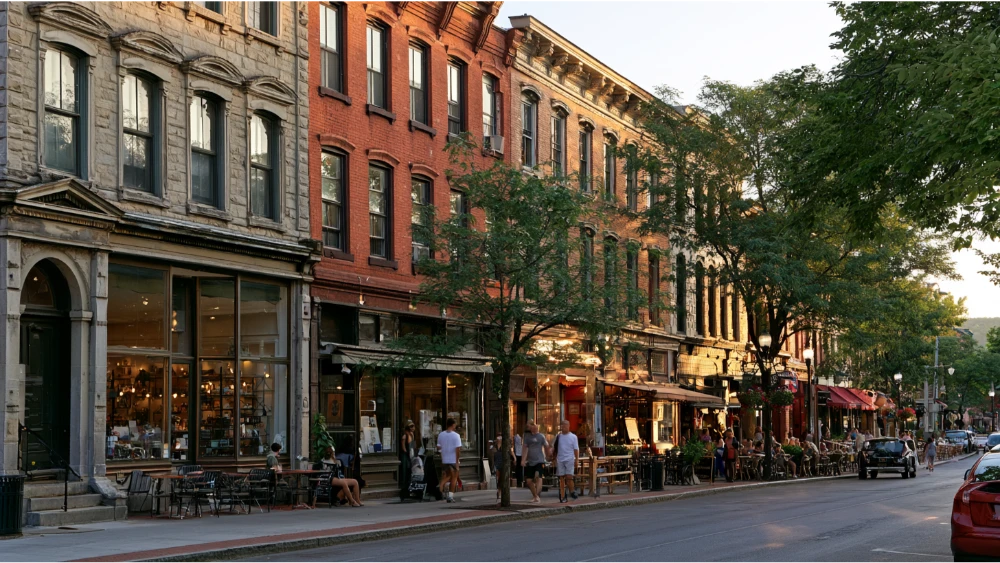
Saratoga Springs is a small, relatively affluent Upstate New York city of 28,768 people (Census estimate, July 1, 2025) sitting about half an hour north of Albany at the foothills of the Adirondacks. You get a walkable historic downtown full of independent shops and restaurants, a 2,500-acre state park, serious performing arts, a county hospital, and a well-regarded school district. The tradeoffs are real: high housing costs, snowy winters, car dependence outside the core, and a summer racing season that rearranges traffic and the rental market.
This guide is for renters, buyers, remote professionals, and households weighing a relocation. We’re KT Rents, a full-service, broker-owned property management company operating nationwide since 2009, and we spend our time reading markets like this one. Here’s what we’d want to know before signing anything.
Moving to Saratoga Springs New York: The Numbers at a Glance
Start with the benchmarks, then we’ll explain why some of them disagree with each other.
| Population | 28,768 (Census, July 2025) |
| Land area | 28.07 square miles |
| Median household income | $105,944 (2020–2024, 2024 dollars) |
| Median gross rent | $1,470 (2020–2024 Census) |
| Typical home value | $660,782 (August 2026 index) |
| Average asking rent | $2,123 (August 2026 index) |
| Mean commute | 27.2 minutes |
| Average annual snowfall | 63.5 inches (NOAA 1991–2020) |
| Owner-occupied housing | 57.8% |
| Households with broadband | 90.3% |
Is “Saratoga Springs” the City, Saratoga County, or the School District?
Three different geographies share one name, and mixing them up costs people money. The City of Saratoga Springs covers 28.07 square miles. Saratoga County is far larger. The Saratoga Springs City School District reaches beyond city limits into parts of Milton, Wilton, Malta, Greenfield, and Saratoga. A listing advertised as “Saratoga Springs” may sit in none of the three you assumed. Verify by exact address, every time.
What Does It Cost to Live in Saratoga Springs?
Housing drives the cost of living here, and published rent figures conflict because they measure different things. The Census median gross rent of $1,470 (2020–2024) reflects what current residents pay, including people years into a lease. An asking-rent index of roughly $2,123 (August 2026) measures what’s listed right now. Apartment-only marketplace averages in October 2026 ran about $1,522 for a studio, $1,988 for a one-bedroom, $2,396 for a two-bedroom, and $3,035 for a three-bedroom.
Sale prices split the same way: $478,100 median owner-occupied value in the 2020–2024 Census estimates versus a $660,782 typical value (August 2026) and a median sale price near $737,141 (July 2026), with homes reaching pending in about 16 days. Summer demand tightens year-round inventory further. Budget for a security deposit on top of first month’s rent, and run your own numbers with our Cost of Living Calculator and Rent Calculator before you fall for a listing photo.
Should You Rent First or Buy in Saratoga Springs?
We’re not giving financial advice, but we’ll say this: a one-year lease is a cheap way to test a 30-year decision. You learn what your commute actually takes in February, how a specific street parks during the meet, and whether you like the noise. In a market where homes go pending in roughly two weeks, that patience has value. Use our Rent vs. Buy Calculator and Mortgage Calculator. We run the same kind of math for owners, because occupancy and cash flow beat guesswork.
Saratoga Springs Neighborhoods and Residential Areas
Housing here mixes Victorian-era and other historic architecture with newer development, and the city’s history is visible on most blocks. Described by what they physically are, not who lives there:
| Area | Typical housing | Walkability | Parking / summer activity | Downtown proximity |
|---|---|---|---|---|
| Downtown / Broadway | Apartments, condos, mixed-use, older homes nearby | Highest in the city | Tight parking, heavy summer crowds and event noise | In it |
| East Side / Union Ave. | Older and Victorian-era houses | Moderate to high | Track traffic and parking pressure in season | Short walk or drive |
| West Side / Beekman St. / rail station | Older homes, smaller lots, rentals, arts-district businesses | Varies by block | Moderate; rail station access | Close |
| North Side / Skidmore area | Single-family homes and rentals | Moderate | Ask if leases run 12 months or an academic calendar | Short drive |
| Geyser Crest / Spa State Park area | Conventional residential | Car-oriented | Off-street parking more common | Drive |
| Saratoga Lake / eastern outskirts | Newer and lake-oriented housing | Low | Seasonal lake traffic | Longer drive |
Confirm city limits, school attendance zone, and winter road access by address, not by neighborhood name. Walk the block at night if you can. Street lighting, sidewalk condition, and a sense of security after dark are things no listing photo will tell you.
Jobs and the Saratoga County Economy
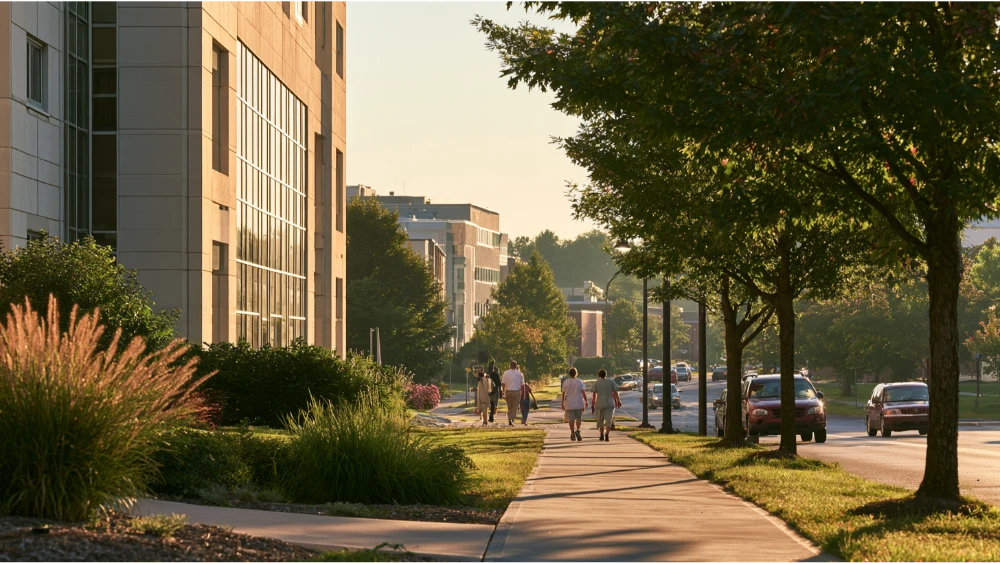
The economy runs broader than tourism: health care, education, public sector, hospitality and racing, retail, financial services, manufacturing, distribution, and construction. Anchor institutions include Saratoga Hospital, Skidmore College, the city school district, and municipal government. Downtown small business density is unusually high for a city this size, which is part of why the retail core stays active in January and not just August. At the regional level, the Albany–Schenectady–Troy metro reported 3.8% unemployment and roughly 478,500 nonfarm jobs in August 2026 (BLS, metro-wide, not city-only).
Plenty of residents commute toward Malta, Wilton, Clifton Park, and Albany, with a mean commute of 27.2 minutes. A life-sciences manufacturing investment of more than $2 billion in Saratoga County was announced in November 2025, with at least 1,000 planned permanent jobs and about 500 design and construction roles. Those are planned positions, not current openings. Remote workers: 90.3% of households have broadband, but confirm service at your exact address before you commit to a lease.
Schools: How Saratoga Springs City School District Works
The district runs six elementary schools, one middle school, and one high school, with more than 1,100 faculty, staff, and administrators plus STEM, early-college, and technology programming. It reported a 96% graduation rate in June 2025, following 94% in 2023–24.
Elementary assignment is address-based, and the district also uses flex attendance zones to balance enrollment. The closest school is not automatically your school. Check the district attendance-zone map by exact address, confirm with the registrar, and review current NYSED report-card data. Families who skip that step have found themselves zoned two buildings away from the one they toured.
Hospitals and Health Care in Saratoga Springs
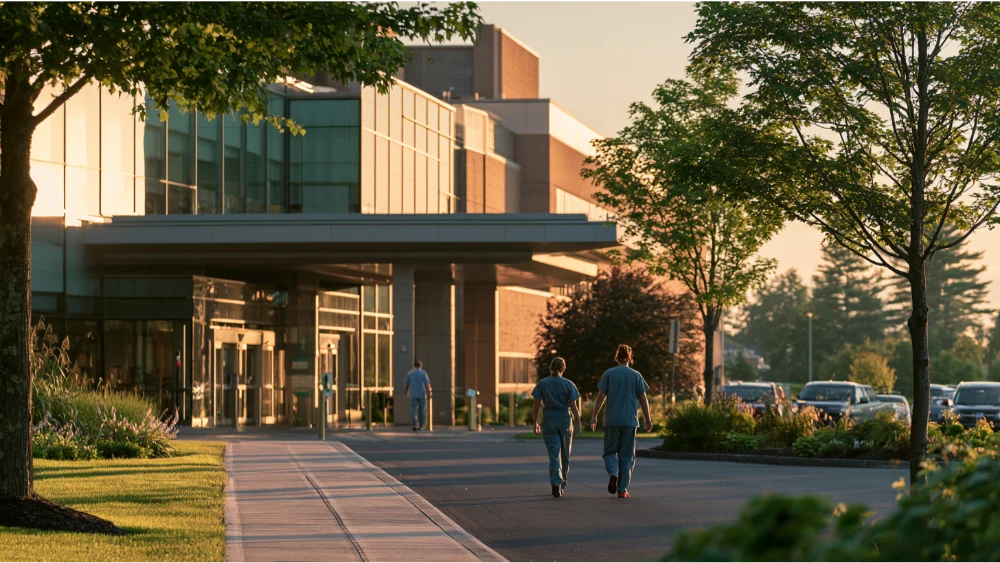
Saratoga Hospital is a 171-bed acute-care hospital and the only hospital based in Saratoga County. It’s part of the Albany Med Health System and reports more than 3,000 employees, roughly 200 physicians, and care at 30-plus locations across the region, covering emergency, primary, urgent, women’s health, surgery, and cardiology. State data recorded 31,773 emergency-department visits in 2024, a utilization count rather than a quality score. Some specialty care may mean traveling elsewhere in the Capital Region, so check your insurance network before you move. Knowing where you’d go at 2 a.m. is its own kind of security.
Getting Around: Driving, Transit, and Rail
I-87, the Northway, is the regional spine, and driving is the practical default outside downtown and the most central streets. We won’t promise a fixed number of minutes to Albany, because weather, events, and your starting address decide that. Downtown is the one genuinely walk-first part of the city.
CDTA runs local and regional service including Routes 450 and 452, the Northway Express, and a seasonal trolley, plus FLEX on-demand (as of July 2026: weekdays and Saturday 6 a.m. to 9 p.m., Sunday 8 a.m. to 7 p.m.). Service areas change over time, so check the app. The passenger rail station offers daily service south toward New York City and north, handling nearly 38,000 station passengers in FY2025, with accessibility and platform work underway in 2026.
What Are Winters Like in Saratoga Springs, NY?
NOAA 1991–2020 normals: 63.5 inches of snow and 46.38 inches of precipitation a year, with January averaging a high of 32°F and a low of 14.3°F, and July averaging 83.8°F and 60.9°F. Snow is possible October through April, with most accumulation November through March.
- Who clears snow under the lease, and who handles the lawn
- Off-street parking availability
- Heating type and a realistic winter utility estimate
- Window and insulation condition in older housing
- Winter tires and ice on exterior stairs and porches
The upside: skiing and winter trail access sit close by.
What Racing Season Does to Daily Life
Saratoga Race Course is one of the oldest continuously operating sporting venues in the country, and its history is a large part of the city’s identity. For residents the summer means heavier traffic around Union Avenue, scarce parking, longer restaurant waits, more event noise, and housing marketed as seasonal or short-term instead of year-round. The 2026 meet was unusual at 51 racing days including the Belmont Stakes Festival, with a return to the traditional 40-day summer meet expected in 2027. Check the current calendar before you pick a moving date. Many locals say early fall is an easier window, which is an observation rather than a guarantee. Reserve truck access and curb space early either way.
Things to Do Year-Round
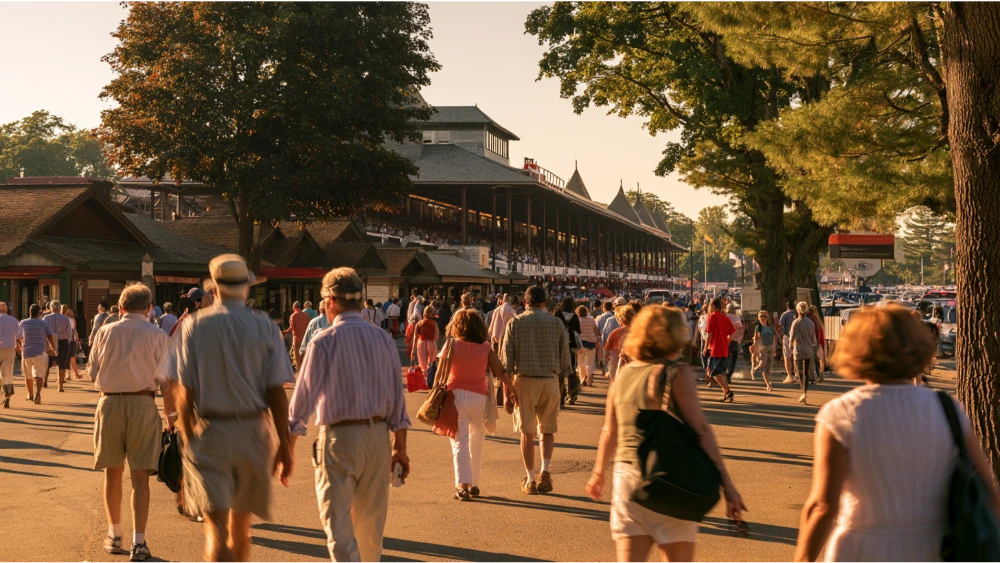
Saratoga Spa State Park covers roughly 2,500 acres of trails, mineral springs, pools, museums, and cultural venues, and it’s the amenity most residents actually use on a Tuesday. SPAC hosts New York City Ballet, The Philadelphia Orchestra, and the Chamber Music Society of Lincoln Center. Congress Park sits at the edge of downtown. Add the Beekman Street Arts District, the Tang Teaching Museum at Skidmore with its rotating exhibitions and student work, farmers’ markets, Saratoga Lake recreation, and Adirondack hiking and skiing within an easy drive. If one of these likes the look of your weekend more than the others, that tells you something about where to live.
New York Rental Rules Every New Resident Should Know
These are New York State rules, not national standards:
- Security deposit capped at one month’s rent
- Rent isn’t late until more than five days past due
- Late fee capped at $50 or 5% of monthly rent, whichever is lower
- Security deposits generally returned within 14 days with an itemized statement for non-regulated units
- Credit and background-check fees generally capped at $20, with a copy and invoice provided; applicants may supply a qualifying report from the prior 30 days
- Outside New York City, month-to-month tenants generally give one month’s notice
- Landlord nonrenewal or greater-than-5% increase notices generally run 30, 60, or 90 days depending on tenure
Good Cause Eviction participation varies by municipality and changes over time, so confirm current status before signing. The New York Attorney General’s residential tenants’ rights guide is the primary source. We stay committed to that same lease transparency everywhere we manage, and security deposit handling is one of the places we never cut corners.
Pros, Cons, and Your Saratoga Springs Moving Checklist
Pros: walkable historic downtown, major park and performing arts access, strong district-reported school outcomes, a county hospital tied to a regional system, rail and transit options, Adirondack access, and a regional job market with planned growth.
Cons: high housing cost, 63.5 inches of annual snow, car dependence outside the core, and summer congestion with seasonal rental pressure.
- Confirm city limits and school attendance zone by exact address.
- Compare live listings against the index numbers above.
- Check lease length and whether the unit is offered seasonally.
- Verify parking and who handles snow and lawn care.
- Confirm internet service at the address.
- Budget heating for November through March, plus the security deposit up front.
- Check the event calendar before locking a moving date.
- Inspect in person, and review the city’s official public-safety reporting yourself (the 2025 report logged 27,872 calls for service, 3,576 case reports, and 944 arrests, which are activity counts, not crime rates).
- Run the calculators.
Never wire a security deposit before you’ve seen a lease and verified the landlord or broker is licensed. That one habit prevents most of the trouble we hear about.
Frequently Asked Questions
Is Saratoga Springs, NY a good place to live?
It suits people who want a small walkable city with culture, parks, and regional job access. The honest tradeoffs are housing cost, roughly 63.5 inches of snow a year, and summer congestion.
Is Saratoga Springs liberal or conservative?
It’s a small city with a mix of political views. For actual data rather than impressions, look at Saratoga County Board of Elections enrollment figures and recent election results.
What are winters like in Saratoga Springs, NY?
NOAA 1991–2020 normals show 63.5 inches of average annual snowfall and January highs and lows of 32°F and 14.3°F. Most accumulation falls November through March.
What is the average income in Saratoga Springs, NY?
Median household income was $105,944 and per-capita income was $69,161 in 2024 dollars, per Census 2020–2024 estimates.
Your Next Step
Renters and buyers: run the Cost of Living Calculator, Rent Calculator, Rent vs. Buy Calculator, and Mortgage Calculator at ktrents.com, then browse our nationwide rental and for-sale listings until you’ve found the one worth touring.
Owners: we’ve been in business since 2009, and we’re committed to the same standard in every market we touch. Tenant placement, tenant screening, rent collection, security deposit handling, property maintenance, rental permits, 1099s, city ordinance compliance, property inspections, court evictions… all without the owner having to lift a finger, for what the company describes as the price of a cup of coffee and a donut per day. As of March 2025 we managed 683 units, and as of January 2025 we operated across 34 states with $187M in assets under management. KT Rents reports a 98% occupancy rate. Call (800) 716-4950, text (608) 207-0657, or email info@ktrents.com. We respond within 24 hours. Your Rental. Your Way.