

Buffalo, New York
Homes for rent and for sale — search the map or open the full city SEO catch-all page.
Buffalo, New York
Moving to Buffalo, New York offers a cost of living roughly 4.2% below the national average, with a median city rent of $1,046 and a mean commute of just 19.9 minutes. The metro’s largest job sectors are education and health services, trade and transportation, and government. The honest tradeoff is 95.4 inches of normal annual snowfall and significant block-to-block variation in neighborhood conditions.
Moving to Buffalo, New York

Buffalo, NY is a practical move if you want an affordable cost of living compared to the national average, a short commute, historic housing with real character, waterfront recreation, and a job base anchored in health care, education, government, logistics, and professional services. The Buffalo-Cheektowaga metro’s 2024 Regional Price Parity was 95.844, meaning overall prices ran about 4.2% below the U.S. level (BEA). The mean one-way commute inside the city is 19.9 minutes (Census, 2020-2024). The tradeoffs are just as real: 95.4 inches of normal annual snowfall at the airport station, neighborhood conditions that change block to block, and uneven opportunity depending on your field.
If you’re thinking about moving to Buffalo New York and weighing it against other cities, sizing up a job offer, or trying to figure out which part of town to rent in, this guide gives you dated, sourced numbers instead of recycled estimates. We’re KT Rents, a broker-owned, full-service property management company and national rental marketplace operating across the U.S. since 2009, and Buffalo is one of our confirmed rental markets. Your Rental. Your Way.
Is Buffalo, NY a good place to live, and who is it actually right for?
Buffalo earned the nickname “City of Good Neighbors,” and the local culture leans hard into community involvement, block-level pride, and a shared loyalty to the Bills and Sabres that outsiders underestimate until they live through a season. As the largest city in Western New York, it carries a century of industrial and architectural history that still shapes the streets you’d be living on. You get urban options and suburban options inside a short radius. But whether life in Buffalo, NY fits you comes down to two things most relocation guides never explain.
Buffalo city vs. the Buffalo metro: why the numbers change
When someone says “Buffalo,” they might mean the city proper (roughly 275,000 people), Erie County, or the two-county Buffalo-Cheektowaga metro area. These are not interchangeable. Jobs, wages, unemployment, snowfall normals, and HUD rent benchmarks are almost always figures for the wider Buffalo metropolitan area. Population, median gross rent, home values, owner-occupancy, and commute times in this guide are city figures unless we label them otherwise. A guide that mixes them without saying so will mislead you on both ends.
The second rule: neighborhood averages lie. Buffalo officially recognizes 35 planning neighborhoods, and housing condition, investment, street maintenance, and public transportation access can shift materially within a single neighborhood label. Address-level research beats any ranking list. Always.
Buffalo, NY is likely a strong fit if you want housing costs below the national average, a commute under half an hour, older architecture, major parks, and you work in health care, education, government, logistics, hospitality, finance, professional services, or remotely.
Research further if your profession has thin local demand, you need a fully car-free address, you’ve never managed a real winter, or you’re thinking about buying an older home sight unseen.
Buffalo, NY at a glance: population, prices, commute, and snow
Here’s the baseline. Every figure is labeled by geography and date, because that’s the part most guides skip.
| Metric | Figure | Geography | Source & date |
|---|---|---|---|
| Population | 274,613 | City | Census est. July 1, 2025 |
| Median household income | $50,041 | City | Census ACS 2020-2024 |
| Regional Price Parity | 95.844 (~4.2% below U.S.) | Metro | BEA/FRED, 2024 |
| Median gross rent | $1,046 | City | Census ACS 2020-2024 |
| Median closed sale price | ~$230,000 | City | Market data, 3 mo. ending Aug. 2026 |
| Owner-occupancy rate | 43% | City | Census ACS 2020-2024 |
| Mean one-way commute | 19.9 minutes | City | Census ACS 2020-2024 |
| Normal annual snowfall | 95.4 inches | Airport station | NOAA/NWS 1991-2020 normal |
| Unemployment rate | 4.5% (preliminary) | Metro | BLS, Aug. 2026 |
Roughly a quarter of city residents are under age 20, which tells you something about how many families live here, and the parks department oversees more than 180 parks and recreational facilities. More on both of those later.
The affordable cost of living in Buffalo, NY, explained
The most defensible affordability number available is the BEA’s Regional Price Parity: 95.844 for the Buffalo metro in 2024, about 4.2% below the national price level. That’s a federal measure built on actual price data across housing, goods, and services. It is far more trustworthy than the unsourced “Buffalo is 20% cheaper” claims floating around relocation blogs.
Where that savings actually shows up:
- Housing. The biggest lever by a wide margin, and the main reason this market reads as a lower cost option next to coastal metros. City median gross rent was $1,046 (ACS 2020-2024) against a national picture that runs meaningfully higher.
- Utilities and winter heating. This one swings hard based on the building. Insulation quality, window age, and furnace age matter more than square footage. Ask any landlord for the previous winter’s actual bills before you sign.
- Transportation. Local transportation costs tend to run slightly above the national average once you factor car ownership, insurance, and winter tires. Public transportation at $2 a ride changes that math if your address supports it.
- Groceries and health care. Both generally sit a bit below national averages in this market.
- Sales tax. Erie County’s combined rate is listed at 8.75% in the state’s current jurisdiction table (NY Tax Dept.). Verify before you budget, because local rates change.
Cost indices disagree with each other constantly, and the reason is boring but important: they use different baskets of goods, different geographic boundaries, and different survey years. One index may price a metropolitan area, another a city, another a county. When you see two numbers that conflict, check the footnotes before you trust either.
As for “what salary do you need to live comfortably in Buffalo, NY,” there’s no honest universal figure. Household size, debt load, child care, commute distance, and neighborhood rent move that number by tens of thousands of dollars. Build your own budget instead. Our Cost of Living Calculator lets you plug in your actual situation rather than inheriting someone else’s assumptions.
How much is rent in Buffalo, NY right now?
You’ll see wildly different rent figures depending on which source you land on, including a widely circulated “$916 average” that is badly out of date. Here’s the honest range, with methodology attached to each number.
| Source | Figure | What it actually measures |
|---|---|---|
| Census ACS 2020-2024 (city) | $1,046 median gross rent | Five-year survey average of all occupied rental units, including utilities. Backward-looking. |
| Apartment-market tracker, Oct. 2026 | Studio ~$1,126 / 1BR ~$1,257 / 2BR ~$1,495 / 3BR ~$1,726 | Advertised apartment inventory only. Skews toward professionally managed buildings. |
| All-property rental tracker, Sept. 2026 | ~$1,400 average | Includes houses and flats, not just apartments. Broader mix, higher average. |
| HUD FY2026 Fair Market Rent (metro) | $1,105 studio / $1,139 1BR / $1,343 2BR / $1,640 3BR / $1,869 4BR | Program benchmarks for the Buffalo-Cheektowaga metro, not live asking rents. |
They disagree because they’re counting different things over different periods across different boundaries. The Census number includes units people have lived in for years at below-market rent. The apartment tracker only sees what’s advertised today. HUD is setting a policy benchmark. None of them is wrong, and none of them is the rent you’ll actually pay.
Apartment vs. single-family and duplex rentals in Buffalo, NY
A large share of Buffalo’s rental housing sits in older two- and three-unit buildings, the upper and lower flats that define block after block of the city. That changes daily life in concrete ways. Heat is often separately metered and often your responsibility. Laundry may be a shared basement hookup rather than in-unit. You may get a yard, which also means you may get snow and lawn duty. Parking is frequently on-street. A professionally managed apartment building answers those questions differently than a converted double, so compare like for like.
Run your number through our Rent Calculator first, then Browse Rental Properties Near You and explore listings with a realistic ceiling in hand.
Renting in New York: deposits, fees, and the lease questions to ask before you sign
New York’s general tenant protections are stronger than many states, and they’re worth knowing before you hand anyone money. Under current statewide rules summarized in the New York Attorney General’s Tenant Rights Guide, a residential security deposit is generally capped at one month’s rent, a background or credit-check fee is generally capped at $20 or the actual cost if lower, and your deposit must generally be returned with an itemized statement within 14 days of move-out. Exceptions exist and rules change, so read the current guide rather than a summary.
Then ask these before you sign anything:
- Is heat included, and if not, what did it cost last winter?
- Who clears the sidewalk, steps, driveway, and parking space?
- Is off-street parking available, and is it assigned?
- Does the street have seasonal parking restrictions?
- Where do you move the car during a snow emergency?
- How old are the windows, furnace, and insulation?
- What’s the pet policy, and what fees attach to it?
- How are maintenance requests submitted, logged, and tracked?
- What are the renewal and notice terms?
- Is there a lead disclosure, as required for applicable older properties?
- Do the listing details and contact information match official property records?
That maintenance question matters more than people expect. We run on an owner portal with online rent payment and documented maintenance-request intake, so every request has a record. Ask any manager you’re thinking of renting from how theirs works. If the answer is “just text me,” that’s your answer.
Should you rent or buy a home in Buffalo, NY?
The city’s median closed sale price was about $230,000 for the three months ending August 2026, up 2.8% year over year. A separate automated valuation model put the typical Buffalo, NY city home value near $248,828 in August 2026. Those measure different things: one is what actually closed, the other is a model’s estimate across the whole housing stock, including homes nobody is selling. Figures you may still see circulating near $207,875 are older estimates. Either way, the median home price here sits far below what the same money buys you in most coastal markets.
Owner-occupancy in the city sits at 43% (ACS 2020-2024), so most Buffalo housing is renter-occupied. Renting first is a legitimate strategy when you’re relocating, not a consolation prize. You learn the block, the commute in February, the parking reality, and the sound of the street before you commit six figures to it.
If you do buy, Buffalo’s older housing stock demands a wider inspection scope compared to newer markets: electrical service and any knob-and-tube remnants, roof condition and ice-damming history, attic insulation, furnace age, foundation moisture, and insurance implications of all of the above. Property taxes are address-specific, so get the actual figure for the actual parcel rather than a neighborhood estimate. Our Rent vs. Buy Calculator and Mortgage Calculator will give you a cleaner comparison than a gut feeling.
Buffalo NY neighborhoods: how to compare them without relying on rankings
Buffalo is a city of distinct neighborhoods with a serious architectural legacy, including Frank Lloyd Wright work that draws visitors from around the world. It also has 35 official planning neighborhoods where conditions vary street by street. Use Open Data Buffalo’s Neighborhood Profiles and the My Neighborhood tool for incident-level and 311 data tied to actual addresses. Post your shortlist in a local residents’ group and you’ll get more comments from people who actually live there than any ranking site will ever give you. Then explore the exact block at different times of day and in different weather. That single step tells you more than any list.
| Area cluster | Typical housing | Urban form | Public transportation access | Parking notes | Nearby parks & amenities |
|---|---|---|---|---|---|
| Downtown/Central, Allentown | Apartments, converted buildings, historic rowhouses | Densest, mixed-use | Strongest; Metro Rail stations | Mostly street or paid lots | Canalside, medical campus, restaurants and bars, theatre district |
| Elmwood-Bidwell, Elmwood-Bryant | Older homes, flats, small apartment buildings | Walkable mixed-use corridors | Frequent bus service | Street parking, can be tight | Elmwood commercial strip, museums, Olmsted parkways |
| Parkside, North Park, Central Park and the rest of North Buffalo | Single-family and two-family homes | Residential with commercial spines | Bus; near north end of rail | More driveways and off-street options | Delaware Park, Hertel Avenue restaurants, zoo |
| University Heights | Houses, flats, student-oriented rentals | Residential grid near campus | University Station, north end of Metro Rail | Mixed; permit areas near campus | UB South Campus, Main Street corridor |
| West Side, Upper & Lower West Side, Grant-Amherst | Varied older housing, doubles, some newer builds | Dense residential with commercial corridors | Bus corridors | Largely street parking | Buffalo State, waterfront access, Grant Street businesses |
| Black Rock, Riverside | Single and two-family homes | Northwest residential | Bus | Driveways more common | Niagara River access, riverside parks |
| First Ward, Seneca-Babcock | Older homes, some loft conversions | Mixed industrial and residential | Bus; near downtown | Generally easier | Buffalo River, downtown proximity, Silo City area |
| South Park, Seneca-Cazenovia, Hopkins-Tifft | Single-family, bungalows, doubles | South Buffalo residential | Bus | Driveways and garages more common | Cazenovia Park, South Park, Tifft Nature Preserve |
| Hamlin Park, Masten Park, MLK Park, Broadway-Fillmore and other East Side areas | Historic homes, doubles, varied stock | Residential with commercial corridors | Bus; some near Main Street rail | Varies widely | MLK Park, Broadway Market, historic districts |
That last row needs an explicit flag: housing condition, recent investment, service levels, and public transportation access vary materially block to block across the East Side, more so than most broad labels suggest. Research the specific address, not the neighborhood name.
City versus suburb is a tradeoff, not a hierarchy. City addresses generally buy you shorter commutes, older housing, and more walkable corridors with tighter parking. Suburban addresses in the surrounding area of Erie County generally buy families newer construction and off-street parking with a longer drive and a different tax bill. Price both before deciding.
Jobs and the Buffalo, NY economy: who finds work here

The Buffalo-Cheektowaga metro’s unemployment rate was a preliminary, not-seasonally-adjusted 4.5% in August 2026, with total nonfarm payroll employment around 556,900, essentially unchanged year over year (BLS). Flat, not booming. Anyone telling you the Buffalo job market is exploding is selling something. A circulating 5.87% unemployment figure is also out of date against the current BLS reading.
Metro employment by sector, August 2026:
- Education and health services: 104,200
- Trade, transportation, and utilities: 98,600
- Government: 86,000
- Professional and business services: 74,700
- Leisure and hospitality: 58,200
- Manufacturing: 50,700
Health care is the standout concentration, with roughly 39,430 health care practitioner and technical jobs in the metro including 13,830 registered nurses. Kaleida Health is among the region’s largest employers, and M&T Bank anchors the area’s financial and corporate presence. Trade and transportation is the second-largest bucket, which makes sense for a border city sitting on rail, highway, and Great Lakes freight routes.
Wages run below national levels: the metro mean was $31.96 per hour in May 2025 compared to $33.54 nationally, and average weekly wages were $1,371 in Q1 2026 compared to $1,654 nationally. Pair that with the 4.2% lower price level and you can see the actual tradeoff. Lower pay, lower costs, with housing doing most of the work on the cost side.
If your field has thin local demand, secure the job before the move. That’s not pessimism, it’s arithmetic on a metro with flat payroll growth.
Remote work and relocating for lifestyle
Remote professionals get a real deal here: housing well below national levels, a short drive to almost anything in the city, and parks and waterfront within reach of most addresses. Before you sign, verify internet service availability at the specific address (not the ZIP code), confirm you have a workable dedicated space, and ask about power reliability during winter storms. A backup plan for a two-day outage is worth thinking through.
Schools and colleges: how Buffalo, NY school choice actually works
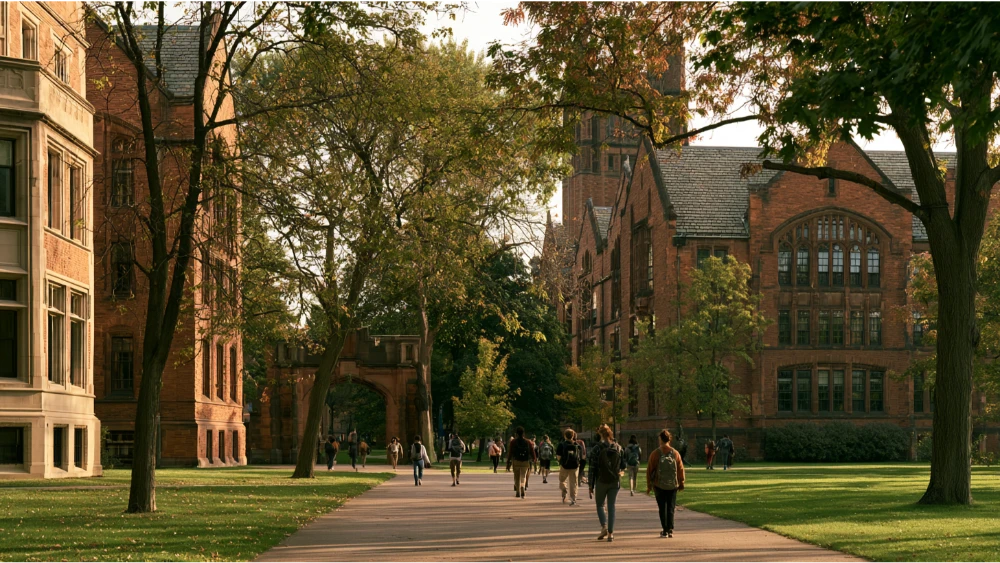
Buffalo City School District reported 27,926 K-12 students and 1,941 pre-K students for 2025-2026, along with 10,853 Buffalo-resident students enrolled in charter schools. Figures near 34,000 that you may encounter reflect an older or differently defined count.
The procedural detail matters more than any ranking, especially for families on a moving timeline. Buffalo does not run purely on neighborhood assignment. The district operates neighborhood schools, lottery schools, magnet programs, and criteria-based schools, and some programs require grades, attendance records, evaluations, testing, gifted screening, or auditions (BPS admissions). The published choice-school application window for the 2027-2028 school year runs September 28 to December 4, 2026. That date changes annually, so confirm it directly with the district before you build a timeline around it.
As of October 2026, general district registration is completed in person through the Central Registration Office. Charter and private options exist alongside district schools. For enrollment, graduation, and performance data, use the NYSED Report Card system rather than neighborhood-ranking websites, which often blend stale data with proprietary scoring.
Higher education is a major piece of the local economy, not just a student story. The University at Buffalo, Buffalo State, and the area’s other colleges feed directly into that 104,200-job education and health services sector, draw researchers and students from across the country and around the world, and run workforce training programs worth exploring if you’re changing fields.
Hospitals and healthcare access in Buffalo, NY
Most relocation guides list hospital names. The useful part is geography. Buffalo Niagara Medical Campus, just north of downtown, concentrates a large share of the region’s specialized care in a walkable footprint served by Metro Rail.
- Erie County Medical Center is listed by New York State as a Level I adult trauma center.
- Roswell Park Comprehensive Cancer Center is an NCI-designated comprehensive cancer center on the medical campus, and its research reaches well beyond New York.
- Buffalo General Medical Center / Gates Vascular Institute provides emergency, neurological, and cardiovascular care and operates a comprehensive stroke center.
- State facility records also list Golisano Children’s Hospital of Buffalo, Mercy Hospital of Buffalo, Sisters of Charity Hospital, and the Buffalo VA Medical Center among Erie County facilities.
One practical caution: proximity means nothing if the hospital is out of network. Confirm insurance-network participation and whether your specific specialists accept your plan before you choose a neighborhood based on how close the hospital is.
Do you need a car in Buffalo, NY? Public transportation, fares, and winter driving
For most addresses, yes. But car-free living genuinely works near Main Street Metro Rail stations and the frequent bus corridors, and plenty of people live that way.
NFTA-Metro’s regular fare is $2 per bus or rail ride, with fare capping at $5 daily, $25 weekly, and $75 per calendar month (current as of October 2026; verify here). Metro Rail runs 13 stations, eight underground and five above ground, from University Station near UB South Campus to Canalside downtown. The city’s mean one-way commute is 19.9 minutes, short compared to most larger cities. Traffic does stack up at a handful of bridge and expressway chokepoints, but a bad rush hour here is a normal Tuesday in Chicago or Boston.
Before you sign a lease, put the exact address into the NFTA trip planner and run your real commute at your real departure time. Public transportation practicality in Buffalo, NY is address-specific, never city-wide, and the difference between a four-minute walk to a station and a twenty-minute one reshapes daily life.
Buffalo Niagara International Airport handles most intercity air travel, and Niagara Falls sits a short drive north. The Canadian border and Toronto are close enough to be a regular trip, which means a passport or NEXUS card is worth sorting out early. For winter driving: good tires matter more than all-wheel drive, remote start earns its keep, off-street parking is worth paying for, and you need a plan for relocating your vehicle during a declared snow emergency.
Buffalo, NY weather and lake-effect snow: what winter really means
NOAA’s 1991-2020 normal annual snowfall at the Buffalo Niagara International Airport station is 95.4 inches. Some relocation guides publish figures around 25 inches. That is simply wrong, and it’s the single most common error in content about this city.
Lake-effect is the reason the number is both high and unevenly distributed. The National Weather Service Buffalo office notes that more than half of annual snowfall comes from lake-effect processes, and that areas south of the city generally receive more than areas north of it. Two addresses ten miles apart can have genuinely different winters. One street gets four inches, the other gets thirty, in the same storm. Ask locals about your specific area, not about “Buffalo.”
Temperature normals (1991-2020) run about 25.5°F mean in January and 71.7°F in July. The lowest recorded temperature is -20°F. On the other end, the city tops 90°F roughly three times a year and has never officially recorded 100°F.
Which brings up the part residents will tell you unprompted: summer here is excellent. Lake Erie keeps the evenings cool, the waterfront stays busy, and the calendar fills with outdoor festivals and community events from June through September. Fall is reliably beautiful. Spring is short and wet. If you can handle January, the other nine months are a genuine selling point, and the summer months are when people fall for the place.
During major storms, follow City of Buffalo Storm Resources and current alerts rather than memorizing an evergreen parking rule, since the city may open municipal lots so plows can clear streets. And revisit the winter lease questions from the renting section above before you commit to any address.
Things to do in Buffalo, NY: parks, museums, buffalo wings, and life in the City of Good Neighbors
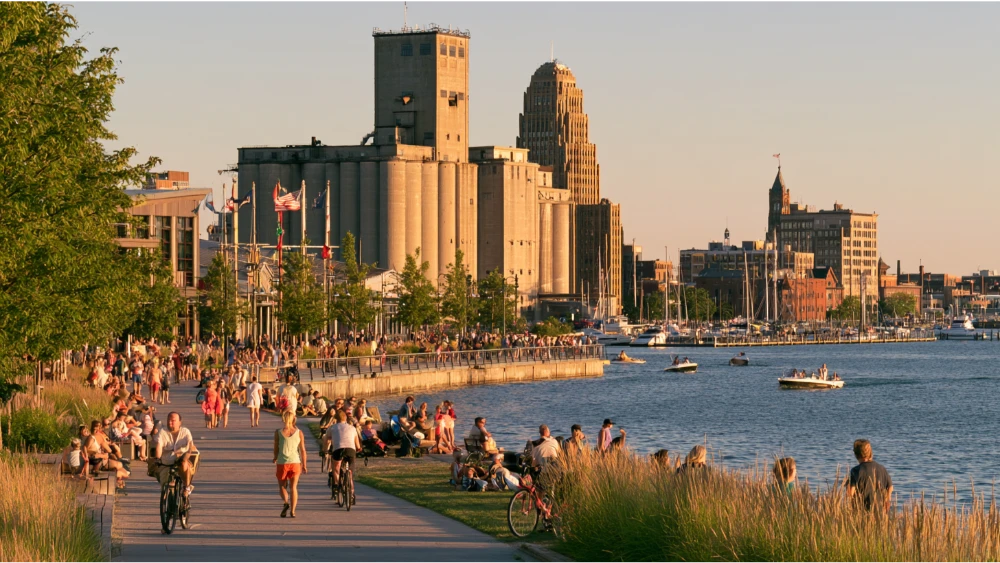
What matters for a resident is what’s walkable, what’s seasonal, how you want to spend your weekends, and what costs money every month.
- Parks. The city’s parks department oversees more than 180 parks and recreational facilities, including seven recreation centers, 12 public pools, and four public ice rinks. The Olmsted system adds 850 acres across six major parks, seven parkways, eight circles, and four smaller spaces, which is why so many residential streets open onto green space. Families with young kids tend to organize weekends around whichever park their children already play in.
- Waterfront. Canalside and the Outer Harbor offer trails, kayaking, seasonal concerts, fitness programming, and winter activities, generally open dawn to dusk. Free to walk, easy to reach by rail downtown, and busy enough in summer that parking requires planning.
- Museums and architecture. The Buffalo AKG Art Museum, known for decades as the Albright Knox Art Gallery, holds more than 8,000 works and is worth a visit early in your first month. Frank Lloyd Wright’s local buildings draw architecture tours year-round from across the world, and plenty of residents never bother because the houses on their own street are a century old.
- Theatre and music. More than 20 theater companies operate in the downtown theatre district, and the Buffalo Philharmonic Orchestra has been performing since 1935.
- Sports. Bills and Sabres fandom is a civic organizing principle and a fast way into the community if you’re new in town. Budget for it if you plan to attend regularly.
- Food. Buffalo wings were first prepared at the Anchor Bar in 1964, and the National Buffalo Wing Festival has run since 2002. The restaurants reach well past wings, with Italian, Polish, Puerto Rican, West African, and Southeast Asian kitchens spread across the city’s commercial corridors and public markets. Hertel Avenue, Elmwood, and Grant Street are where a lot of people start exploring.
- Regional trips. Niagara Falls, one of the most recognized natural attractions in the world, is a short drive. Lake Erie and the Buffalo River support boating, fishing, and paddling through the warm months.
Moving to Buffalo New York: your 30-day moving checklist
- Weeks 4 to 3 out: Compare neighborhoods by actual commute using the NFTA trip planner and a map. Check current BPS choice-application deadlines if you have school-age kids. Run the Cost of Living and Rent Calculators. Shortlist listings.
- Weeks 3 to 2: Tour the exact address. Ask the winter lease questions. Submit your rental application. Confirm deposit and application-fee amounts against New York’s caps.
- Week 1: Transfer utilities, set up renters insurance, and confirm how rent payment and maintenance requests are handled.
- First 30 days in New York: Exchange an eligible out-of-state driver’s license and register your vehicle within 30 days of establishing residency. Register for school if applicable.
- Before the first lake-effect band: Locate your nearest urgent care, hospital, grocery store, public transportation stop, and snow-emergency parking option. Buy the shovel, the scraper, and real winter gear. Not in December. Now.
Moving is stressful. A written checklist is the cheapest thing you can do to make it less so.
Should you move to Buffalo, NY? The honest verdict
Buffalo offers a strong fit if you want housing costs below the national average, a commute under 20 minutes, older architecture with character, major parks and waterfront access, and you work in health care, education, government, logistics, hospitality, finance, professional services, or remotely.
Do more research first if your field has thin local demand in a flat-payroll metro, you need a fully car-free address, you’ve never managed a real winter, or you’re buying an older home sight unseen.
Start with the numbers that apply to your household rather than a generic comparison against other places on your list. Run the Rent Calculator and the Rent vs. Buy Calculator, then explore Buffalo, NY listings and submit a rental application online when you find the right address.
KT Rents has been a full-service, broker-owned operator since 2009, managing 683 units across 34 states with $187M in assets under management as of early 2025, with short-term and long-term leasing, online rent payment, and documented maintenance requests. Find Your Perfect Home Near You. Call us at (800) 716-4950, text (608) 207-0657, or email info@ktrents.com. We respond to form submissions within 24 hours.
Frequently Asked Questions
What is the closest city to Buffalo, NY?
Niagara Falls, NY is the nearest city of size, roughly a 20 to 30 minute drive north. Toronto is the closest large international metro, across the Canadian border, which means you’ll need a passport or NEXUS card. Rochester is the nearest sizable New York city to the east, and the smaller towns of Western New York fill in everything between.
Is Buffalo, NY a good place to move to?
It’s a solid move if you want an affordable cost of living compared to the national average (metro RPP 95.844 in 2024, about 4.2% under the U.S. level), a 19.9-minute mean commute, and work in health care, education, government, logistics, or professional services. The honest counterweights are 95.4 inches of normal annual snowfall and significant block-to-block variation.
Is Buffalo cheaper than NYC?
Substantially. Buffalo compared with New York City comes out far ahead on cost: the Buffalo metro’s 2024 Regional Price Parity of 95.844 puts it about 4.2% below the national price level, while the New York City metro runs well above it. Buffalo’s median closed sale price was around $230,000 (three months ending August 2026) and one-bedroom apartment averages ran about $1,257 in October 2026.
What is the best part of Buffalo, NY to live in?
There isn’t a universal answer, and anyone giving you one is guessing. The right area depends on your commute, public transportation access, parking needs, housing type, and budget. Use the comparison table above, run your address through the NFTA trip planner, pull block-level data from Open Data Buffalo, and walk the specific street in different weather before you sign.