

New York City, New York
Homes for rent and for sale — search the map or open the full city SEO catch-all page.
New York City, New York
Moving to New York City, New York requires budgeting around a citywide median asking rent of nearly $4,000 as of August 2026, with a net rental vacancy rate of just 1.41%. Rent will be your largest expense, and inventory dropped 14% over two years, so speed and preparation matter. Have income documents, references, and bank statements ready before you tour. Plan finances first, then choose your neighborhood by commute and total monthly cost.
Moving to New York City, New York
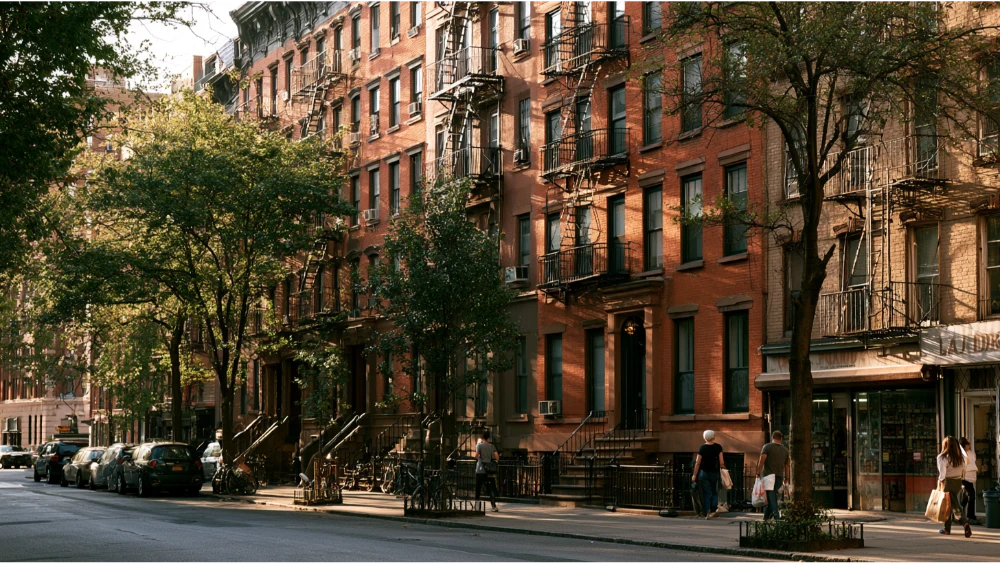
Moving to New York City works if you pick housing by total monthly budget and door-to-door commute instead of borough reputation. Citywide median asking rent sat near $4,000 in August 2026 (NYCEDC), rent will be your largest single expense, and the rental market is tight enough that hesitation costs you apartments. Plan the money first, then the location.
This guide is for anyone relocating from another state, on a short-term or long-term lease. Two terms matter up front: asking rent is what live listings advertise, which is not what long-settled tenants pay, and short-term leasing is a landing pad while you learn a neighborhood before signing for at least one year. We’re KT Rents, a broker-owned, full service property management company working nationwide since 2009.
New York City at a Glance: What You’re Moving Into
The Census Bureau estimated the city’s population at 8,584,629 as of July 1, 2025. Five boroughs, 59 community districts, and hundreds of informal neighborhood names that don’t always line up with official boundaries. Check the Department of City Planning’s community profiles before you decide what “Bushwick” or “Astoria” actually means on a map.
Expect four real seasons. Central Park’s 1991–2020 normals put the average July high at 84.9°F, the January high at 39.5°F, and seasonal snowfall at 29.8 inches. Apartments run smaller than suburban square footage and daily costs run well above the national average, so community matters more here than closet space.
More than a third of New Yorkers are immigrants and nearly half speak a language other than English at home, which is why city services are available in many languages. Se Habla Español at KT Rents, too. One more research step: pull the city’s flood maps before renting a ground-floor or basement unit.
How Much Does It Cost to Live in New York City?
Three different rent numbers get quoted interchangeably. They aren’t the same thing.
| Figure | Amount | Source and date |
|---|---|---|
| Median rent, existing tenancies | $1,641 | 2023 NYC Housing and Vacancy Survey |
| Median asking rent, available survey units | $3,000 | 2023 NYCHVS |
| Citywide median asking rent | Nearly $4,000 | August 2026, NYCEDC |
Rental inventory fell 14% over two years through August 2026, and the 2023 net rental vacancy rate was 1.41%. One-bedroom asking rents commonly land between $3,000 and $4,500.
Upfront money is more regulated than most newcomers expect. Security deposits are capped at one month’s rent, returned with an itemized statement within 14 days of move-out. Application and background-check fees are capped at $20, waived if you supply your own report from the last 30 days. Late fees can’t exceed $50 or 5% of rent. Under the FARE Act, whose implementation date was June 11, 2025, you can’t be charged for a broker the landlord hired. Landlords commonly want income around 40x monthly rent, but that’s a screening practice, not law.
Budget for NYC resident income tax (published 2025 schedule: 3.078%–3.876%, verify the current year), 8.875% sales tax, renters insurance, and an emergency cushion. The Rent Guidelines Board set a 0% adjustment for rent-stabilized leases starting Oct. 1, 2026 through Sept. 30, 2027, though stabilization covers only some apartments. Run your numbers through our Cost of Living Calculator, Rent Calculator, and Rent vs. Buy Calculator first.
Jobs, Schools, Hospitals, and Getting Around New York City

Work and job opportunity
About 4,851,700 total jobs and a 4.8% unemployment rate as of August 2026. Largest sectors: health care and social assistance (1,023,800), professional and business services (797,000), finance and insurance (388,500), accommodation and food services (352,100), educational services (272,000). Private employment slipped that month, so line up work or runway before you arrive. Candidates for public-sector job titles should expect a civil service exam, a formal interview, and a posted list of duties and training requirements. Staff in qualifying government, hospital, and education roles may be eligible for Public Service Loan Forgiveness. Hybrid workers: build the commute around your actual in-office days per week, and remember Monday and Friday office attendance shifts the math.
Education and schools
NYC Public Schools enrolled 884,644 students across 1,599 district schools in 2025–26, plus 285 charter schools. Most K–8 students attend a zoned school tied to their address. Verify yours through the official school search or 311, establish an NYC address for enrollment, visit a Family Welcome Center, and compare schools using official School Quality Snapshots. If a student has a disability, ask about Individualized Education Program transfer procedures early so services continue without a gap.
Hospitals and health care
The municipal system runs 11 hospitals, 29 community health centers, and 70+ locations across the boroughs, serving patients regardless of ability to pay or immigration status. Compare regulated hospitals on New York State’s Health Profiles tool. Confirm your insurance network and a nearby pharmacy before moving day. Keep a receipt for anything you pay out of pocket during the transition. Call 911 for emergencies.
Transit and things to do
Base subway and local bus fare is $3.00 with a $35 seven-day OMNY cap (effective Jan. 4, 2026). Add ferries, commuter rail, walking, and cycling, and most residents skip car ownership entirely. If you drive, the congestion relief zone south of 60th Street costs $9 peak and $2.25 overnight with E-ZPass. For entertainment: theater, museums, live music, pro sports, beaches, parks and greenways, plus free or discounted admission through IDNYC and Culture Pass. Museums and transit schedules shift on major holidays, so check before you go.
Choosing a Neighborhood and Surviving Moving Day in NYC

How to pick your borough and neighborhood
Compare Manhattan, Brooklyn, Queens, the Bronx, and Staten Island on objective criteria: door-to-door commute, subway and bus lines, housing type and size, outdoor space, pet policies, parks, groceries, laundry, pharmacy, and health care access. Ride the actual commute at the hour you’d really travel. Walk the block at different times of day. At this vacancy rate, apartments go fast, so have ID, income verification, references, and bank statements ready before you tour. Be aware that the New York City Human Rights Law and federal Fair Housing protections bar housing discrimination based on characteristics including race, color, national origin, disability, gender identity, and sexual orientation.
Moving-day logistics most guides skip
Movers handling an intrastate move must be authorized by the New York State Department of Transportation; interstate moves are federally regulated. Get at least three written estimates and keep every document. Then the building side:
- Certificate of Insurance naming the building, with general liability coverage of at least $1 million, submitted five to ten business days in advance
- Co-op and condo board rules often restrict moves to weekdays, 9 AM to 5 PM
- Elevator appointments frequently require two to four weeks’ notice
- Refundable moving deposits of roughly $500 to $2,000, with fines in the same range for breaking the rules
- Measure stairs, doorways, and the elevator, and check curb and parking restrictions
Downsize before you pack. Space is limited and you’ll feel it on day one. Hold off on any big furniture purchase until you’ve measured the room.
Frequently Asked Questions
Can I live in NYC on $3,000 a month?
Tight, but possible with roommates or outside the highest-rent submarkets. Against a near-$4,000 median asking rent, a solo lease rarely fits. Transit at $3.00 a ride helps. Run your own numbers in our Cost of Living Calculator.
Is $10,000 enough to move to New York?
Often yes. Budget first month’s rent plus a one-month security deposit, movers, basic furniture, and an emergency cushion. Application fees are capped at $20, and the FARE Act removed landlord-hired broker fees for tenants, which used to blow up move-in budgets.
How difficult is it to move to NYC?
Competitive, not impossible. With a 1.41% net rental vacancy rate in 2023 and inventory down 14% over two years, you need documents ready, planning done, and fast decisions. A short-term lease works well as a bridge while you search. Gather your information in one folder so nothing stalls an application.
Is it worth moving to New York City?
Millions of jobs, transit that beats driving, and culture you can access free or cheap through IDNYC and Culture Pass. Weigh that against higher daily costs, 8.875% sales tax, smaller apartments, and the conditions of a market this competitive. Plenty of people in every income category decide yes.
Find Your New York City Rental With KT Rents
Browse NYC listings on our national marketplace, run the Rent vs. Buy and Mortgage calculators, and submit a rental application online. After move-in, the resident portal handles rent payment and maintenance requests, and our tenant perks include housewarming gifts and discounts on home goods, because you should feel at home, not just housed. If there’s interest in a property, move quickly.
Property owners relocating into or out of New York: we’ve been full service and broker-owned since 2009, and that experience shows in how we ensure nothing is left to you. Tenant placement, tenant screening, rent collection, property maintenance, rental permits, 1099s, property inspections, court evictions… without you lifting a finger, for the equivalence of a cup of coffee and a donut per day. As of early 2025, that’s 683 units across 34 states and $187M managed, with a stated 98% occupancy rate. Our management team shares one standard across all 16+ years: treat every unit as our own.
Find Your Perfect Home Near You. Search Now, call (800) 716-4950, text (608) 207-0657, or email info@ktrents.com. No deposit is required to start a search. We respond within 24 hours. Your Rental. Your Way.