
Ithaca, New York
Homes for rent and for sale — search the map or open the full city SEO catch-all page.
Ithaca, New York
Moving to Ithaca, New York means settling into a compact Finger Lakes city of 33,632 built around Cornell University and Ithaca College, with over 100 gorges and waterfalls within 10 miles of downtown. Expect asking rents averaging $1,820 for a one-bedroom as of October 2026, a cost of living roughly 4% above the national average, and about 63 inches of snow each winter. The job market leans heavily on education and healthcare, making remote work or a confirmed offer important before you commit.
Moving to Ithaca, New York
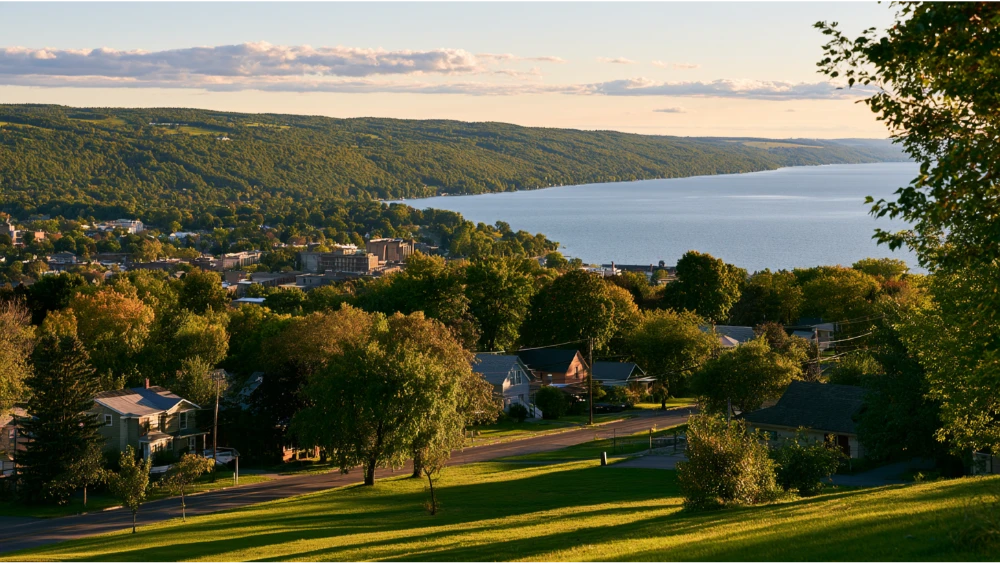
Ithaca is a small Finger Lakes city located at the southern tip of Cayuga Lake, built around Cornell University and Ithaca College, with more than 100 gorges and waterfalls within 10 miles of downtown. You get small town charm alongside arts and music programming, serious restaurants, and outdoor activities that embarrass cities ten times its size. You also get housing that runs expensive for a city of 33,000, an economy concentrated in education and healthcare, and winters averaging roughly 63 inches of snow. “Ithaca is Gorges” is the local slogan on half the bumper stickers here, and locals mean it.
This relocation guide is for renters, relocating professionals, remote workers, and anyone comparing a move with real numbers. Every figure below is dated, so re-verify the volatile ones before you sign.
Ithaca at a Glance: Life in the Finger Lakes Region
- Population: 33,632 in the City of Ithaca (U.S. Census estimate, July 1, 2025), up 4.8% from the 2020 base
- Land area: 5.39 square miles
- Region: Finger Lakes region, Tompkins County, southern end of Cayuga Lake
- Drive times: about 1 hour to Syracuse, 2 hours to Rochester, roughly 4 hours to New York City (227 miles) and about the same to Philadelphia
- Dominant industries: higher education and healthcare
- Average annual snowfall: 62.9 inches (NOAA 1991 to 2020 normals, Ithaca Cornell station)
Imagine a compact city with the cultural calendar of a much larger one, dropped into terrain that rises steeply in nearly every direction. Two things shape daily life. First, an Ithaca address can mean several different municipalities in Tompkins County. Second, the academic calendar runs the rental market.
City of Ithaca vs. Town of Ithaca: Why Your Mailing Address Matters
An “Ithaca, NY 14850” address tells you little about which government you live under, and plenty of those addresses sit outside the city limits. The Town of Ithaca’s new-resident guide notes that 12 towns and villages, plus the city itself, share that mailing address, and locals mix them up constantly. Your municipality sets property taxes, trash pickup and plowing, parking rules, school assignment, and whether City of Ithaca renter protections apply to your lease. Your zip code is a starting point, not an answer.
Before you sign, make sure the lease puts you in the right place:
- Confirm the municipality with the city or town clerk, using the exact street address.
- Confirm the school district by address, not by zip code.
- Ask which local ordinances apply, particularly eviction protections and rental permits.
What Does It Cost to Live in Ithaca, New York?
Ithaca is far cheaper than downstate New York and not cheap for a city its size. The real budgeting problem is the gap between local incomes and current asking rents.
| Category | How Ithaca compares |
|---|---|
| Overall cost of living | About 4% above the national average |
| Groceries and food | Roughly 4% below the national average |
| Utilities | Roughly 6% to 7% above |
| Housing vs. Manhattan | About 65% lower |
| Median household income | $48,784 (Census, 2020 to 2024) |
| Median gross rent | $1,447 (Census, 2020 to 2024) |
That $1,447 median is what existing residents reported across 2020 through 2024, a lagging number covering long-tenured leases. What’s advertised today runs higher. Run your current city against Ithaca in our Cost of Living Calculator before you set a family budget.
The Ithaca Housing Market: What Renters Should Expect
As of October 2026, a major rental marketplace reported average asking rents of $1,767 for a studio, $1,820 for a one bedroom, $2,022 for two bedrooms, and $2,201 for three bedrooms. Those are volatile marketplace averages, not official medians. The Census put the median home price for owner-occupied housing at $342,700 (2020 to 2024), with only 29.6% of housing owner-occupied. This is a renter’s city by a wide margin.
Why rents vary block to block
Proximity to Cornell University, Ithaca College, downtown, and frequent bus routes moves the number more than square footage does. Locals price a place by the walk, not the map. Subdivided houses and shared units follow a different curve than purpose-built apartment buildings, and two listings a half mile apart can differ by hundreds per month.
When should you start looking?
Most leases run August to July, because a large student population keeps the market tied to the academic cycle. Start 60 to 90 days out, and expect peak competition in mid-August when students return and the community effectively doubles. Ask before you apply: is heat included and how is the unit heated, who handles snow removal, is there off-street parking, laundry, internet, or furnishings, and what do renewal terms look like? Our Rent Calculator helps you set a ceiling you can live with.
Ithaca Area Neighborhoods and Surrounding Towns, Compared
Ithaca is a silver-level Walk Friendly Community, but terrain rewrites what “close” means. A half mile on a map can be a steep climb in February, which is why many neighborhoods get described by hill rather than by street. If you prefer flat walking, stay near the downtown core.
| Area | Closest to | Terrain and walkability | Typical housing |
|---|---|---|---|
| Downtown and The Commons | Shops, restaurants, bus hub | Flat core, uphill to Cornell | Apartments, units above storefronts |
| Fall Creek / Northside | Downtown, parks, city services | Walkable, bus service available | Older and subdivided houses |
| Collegetown | Cornell University | Short campus walk, congested | Dense apartments, higher rents |
| East Hill and Belle Sherman | Cornell, East Hill Plaza | Portions are a level campus walk | Residential streets, apartments |
| South Hill | Ithaca College | 15 minutes downhill to downtown | Houses and student apartments |
| West Hill | Cayuga Medical Center | Hills matter in winter; check bus access | Mixed residential |
| Cayuga Heights, Northeast Ithaca, Lansing | Shopping, airport, more space | Car or bus generally recommended | Varied; several sit in surrounding towns |
The Ithaca Police Department’s 2025 annual report cited a 25% drop in violent crime and a 12% drop in property crime versus 2024, across 22,491 calls for service. Those are citywide department trends, not a block-by-block verdict. Visit at different hours to get your own sense of lighting, parking, and the nearest transit stop.
Jobs and the Local Economy in Tompkins County
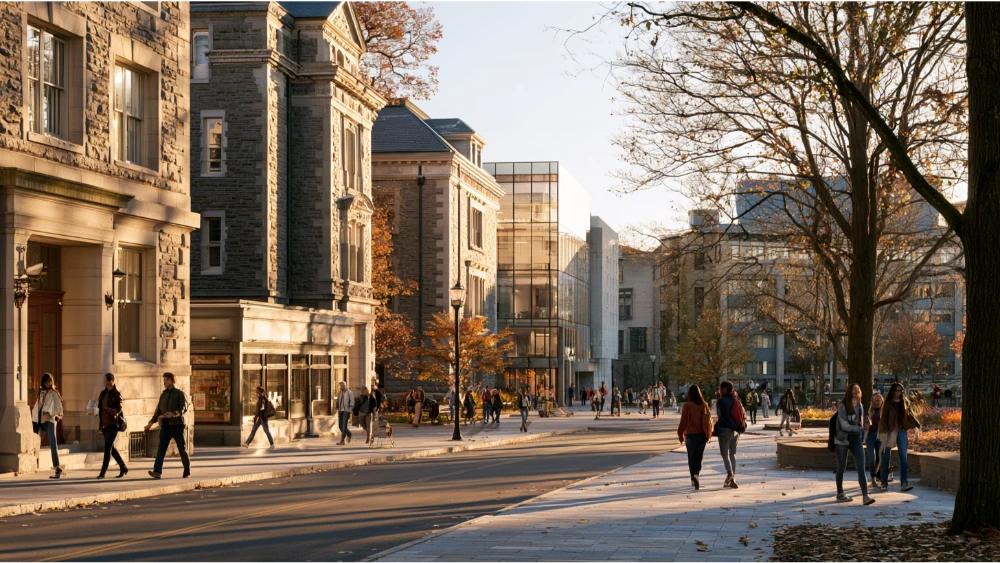
BLS figures for August 2026 show roughly 50,400 nonfarm jobs in the Ithaca area, about 22,000 of them in education and health services, around 44% of all nonfarm employment. Unemployment sat at 4.2%, typically below state averages.
Opportunity is real in higher education, healthcare, research, K through 12, public service, and the professional and tech roles that orbit them. Cornell University alone employs more than 10,000 people. The main employment centers in Tompkins County are Cornell, downtown Ithaca, Cayuga Medical Center, South Hill around Ithaca College, and the airport and business park corridor, and the Tompkins County Chamber is a practical place to start building an employer list. This is not a diversified metro, and a narrow field can mean a long search. Remote workers can treat the region as a realistic base precisely because their income isn’t tied to that concentration. Everyone else should line up work before signing at these rents.
Schools, Cornell University, and Ithaca College
The Ithaca City School District enrolled 5,054 students as of March 31, 2026, and reports an 89.3% four-year graduation rate in its 2025 snapshot. NCES lists 12 district schools and 10.63 students per classroom teacher for 2024 to 2025.
Research by address, not reputation. Use the district’s official boundary maps, program pages, and transportation policy, and visit buildings in person, because an Ithaca mailing address does not guarantee ICSD assignment. For higher education, Cornell University and Ithaca College sit inside the city, and Tompkins Cortland Community College is nearby in Dryden.
Healthcare and Hospitals in Tompkins County
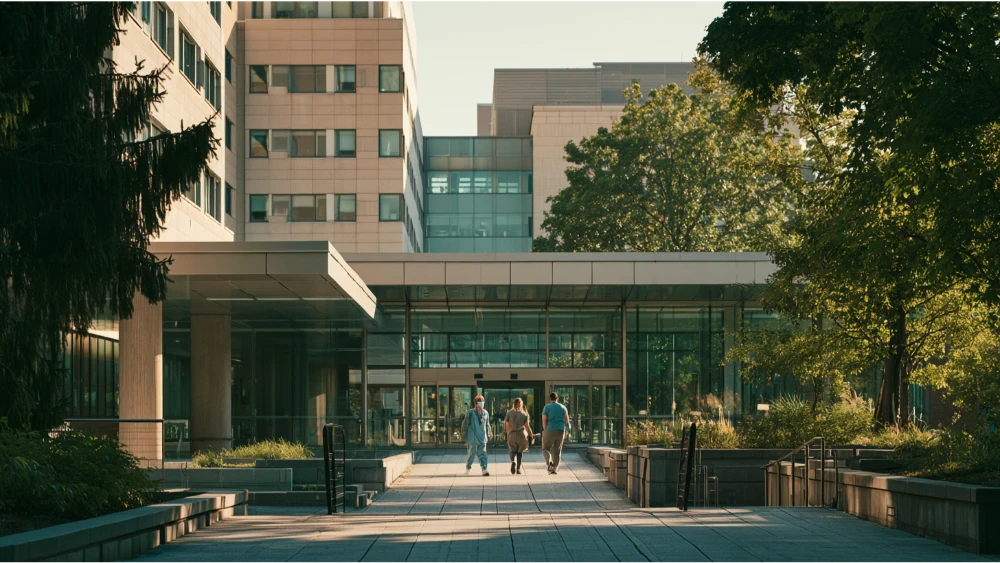
Cayuga Medical Center, located on West Hill, is the area’s principal hospital: 212 beds, more than 1,500 healthcare professionals, over 200 affiliated physicians, a 24-hour emergency department, intensive and cardiac care, maternal-child services, adult and adolescent psychiatry, and rehab and outpatient care. It’s a CMS-designated Sole Community Hospital and a New York State-designated primary stroke center. Family practices, urgent care, and Tompkins County community mental health resources fill in around it. Highly specialized care may mean a drive to Syracuse or Rochester.
Getting Around Ithaca: Do You Need a Car?
TCAT runs 25 routes covering the city, both campuses, TC3, shopping, healthcare, and rural communities. As of September 4, 2026, an adult single ride is $1.50, a day pass $3, a weekly pass $17.50, and a monthly pass $45. Riders 17 and under ride free. Mean commute time in the city was 18.7 minutes (Census, 2020 to 2024).
- Car optional along a core downtown or campus corridor with easy access to frequent bus service.
- Car strongly useful for West Hill, Lansing, Northeast Ithaca, or regular out-of-town travel.
- Car near-essential if you commute in from outside the city through winter.
Check your exact address against the current TCAT route map rather than assuming frequent service. Ithaca Tompkins International Airport flies nonstop to NYC via JFK and to Washington Dulles, and locals log serious miles on the 8-mile Cayuga Waterfront Trail.
Winter in the Finger Lakes Region: What It’s Really Like
Roughly 63 inches of snow a year: January averages 16.6 inches, February 14.5, March 12, December 12.2, with temperatures often between 15°F and 30°F. Winter is a housing decision here, not a weather footnote.
- Winter-rated tires, especially on the hills
- Off-street parking if you can get it
- Who shovels, in writing, in the lease
- Whether heat is included and how the building is heated
- TCAT’s predetermined snow detours on affected routes
The flip side is genuinely good: cross-country skiing, frozen gorges, and winter hiking on trails you’ll have mostly to yourself.
Things to Do: Natural Beauty, Restaurants, and Live Music
Outdoor activities come first, because nature is the headline. More than 100 gorges and waterfalls are located within 10 miles of downtown. Taughannock Falls State Park holds a 215-foot plunge, taller than Niagara Falls, that draws visitors from around the world, with a flat gorge trail locals walk year-round. Four state parks sit in the region, including Taughannock Falls State Park, Buttermilk Falls, and Robert H. Treman, alongside roughly 28,000 acres of public forestland open for hiking, Connecticut Hill included. Cascadilla Gorge and Ithaca Falls are walkable from the city center, the gorge trails stay busy from spring through fall, and Cayuga Lake covers boating, kayaking, and swimming along its southern shore.
Downtown, the Ithaca Commons anchors the shopping and restaurant scene, with family-owned restaurants, cafes, and bars inside a few blocks. The Ithaca Farmers Market gathers more than 160 local vendors and works as a weekend ritual for families and an easy way to meet people when you’re new. Finger Lakes region award winning wineries and cideries are a short drive in most directions, and farm-to-table isn’t marketing here so much as a supply chain. Culture runs deep for the size: museums, galleries, community theater, live music most nights of the week, university events open to the public, and summer music festivals including the GrassRoots Festival. Ask around and locals will share their favorite spots soon enough.
What you won’t find is major league sports or a big-city late-night scene. That’s a road trip to Philadelphia or New York City.
New York State Renter Protections Every Ithaca Tenant Should Know
- Security deposits are generally capped at one month’s rent.
- Rent isn’t legally late until it’s more than five days overdue.
- Late fees are capped at $50 or 5% of monthly rent, whichever is less.
- Credit and background check fees are generally capped at $20, and you must receive the report and invoice.
- Deposits are generally returned within 14 days, with an itemized statement for deductions.
- The City of Ithaca opted into New York’s Good Cause Eviction framework, though exemptions cover some small landlords, owner-occupied properties, condos, co-ops, newer buildings, dormitories, and seasonal dwellings.
Good Cause coverage depends on your municipality and your specific building, which circles back to the city-versus-town question. This is general information, not legal advice, so check the New York Attorney General’s current tenant rights guide. One practical note: a broker-owned, full-service manager answers to licensing standards an unlicensed landlord simply doesn’t.
Your Ithaca Relocation Checklist for Moving to Ithaca, New York
90 days out: run the Cost of Living Calculator and the Rent vs. Buy Calculator, set a rent ceiling, map commutes from candidate areas, and confirm employment or remote status.
30 days out: spend a weekend here in person, verify municipality and school boundaries by exact address, read the lease on heat, snow removal, parking, and utilities, submit applications, and line up renters insurance.
Ithaca moving week: transfer utilities, buy a TCAT pass, sort parking permits, change your address, and photograph everything at walkthrough.
If you own property and you’re tired of the headaches, that’s our side of the business. KT Rents is a broker-owned, full-service property management company operating nationwide since 2009: tenant placement, tenant screening, rent collection, property maintenance, rental permits, 1099s, property inspections, and court evictions, all without the owner having to lift a finger. We report a 98% occupancy rate, with 683 units across 34 states as of early 2025.
Renters, start with the calculators, then browse rental listings and submit an application. Either way: call (800) 716-4950, text (608) 207-0657, or email info@ktrents.com. We respond to form submissions within 24 hours. Your Rental. Your Way.
Frequently Asked Questions
Is Ithaca, NY a good place to live?
For people who want waterfalls taller than Niagara Falls at the edge of town, a strong arts and restaurant scene, and a walkable small city, it’s a great place to land. The tradeoffs are housing that costs more than the city’s size suggests, a job market concentrated in education and healthcare, and real winter.
How much do you need to make to live comfortably in Ithaca, NY?
There’s no magic salary. Median household income was $48,784 (Census, 2020 to 2024), one-bedroom asking rents averaged about $1,820 in October 2026, and cost of living runs roughly 4% above the national average. Run your own numbers.
What are winters like in Ithaca, NY?
Roughly 63 inches of snow annually, with temperatures often between 15°F and 30°F. December through March carry the heaviest snow, and the hills are worth planning around before you pick a neighborhood.
Is Ithaca conservative or liberal?
Ithaca is widely described as a politically liberal, highly educated community, shaped largely by its two colleges.