

Philadelphia, Pennsylvania
Homes for rent and for sale — search the map or open the full city SEO catch-all page.
Philadelphia, Pennsylvania
Moving to Philadelphia, Pennsylvania puts you in a walkable, neighborhood-driven city that costs roughly 14% above the national average but far less than New York, Boston, or Washington DC. The city wage tax of about 3.735% for residents is the most common blind spot in relocation budgets. With over 140 distinct neighborhoods, your exact home address determines your school catchment, parking permit eligibility, and realistic commute time. Do your homework at the address level, not the headline level, before you sign anything.
Moving to Philadelphia, Pennsylvania
Philadelphia is a walkable, neighborhood-driven East Coast city that costs more than the national average but far less than New York, Boston, or Washington DC. It’s a real relocation option if you want big-city food, culture, and jobs without the price tag of those neighbors. If you’re moving to Philadelphia from another U.S. city, this guide shows you how to choose by budget, commute, school catchment, and address-level verification, so you don’t sign a lease on hype. Living in Philadelphia is rewarding, but it rewards people who do their homework at the exact-address level, not the headline level.
Before you fall for a listing photo, know the five tradeoffs that shape every Philadelphia move:
- The city wage tax, which most “affordable city” comparisons leave out of the math. Among east coast cities, few share this exact structure, and it changes what living in Philadelphia actually costs you.
- Parking, which is competitive and permit-based on many blocks.
- School catchments that are assigned by your exact home address.
- Older housing stock, where central air and heating type vary building to building.
- Block-by-block variation, meaning two addresses a few streets apart can feel like different cities.
Get those five right and Philadelphia rewards you. Skip them and you’ll learn the hard way. The rest of this guide walks you through each one with current numbers and the exact tools to check before you commit.
Philadelphia at a Glance
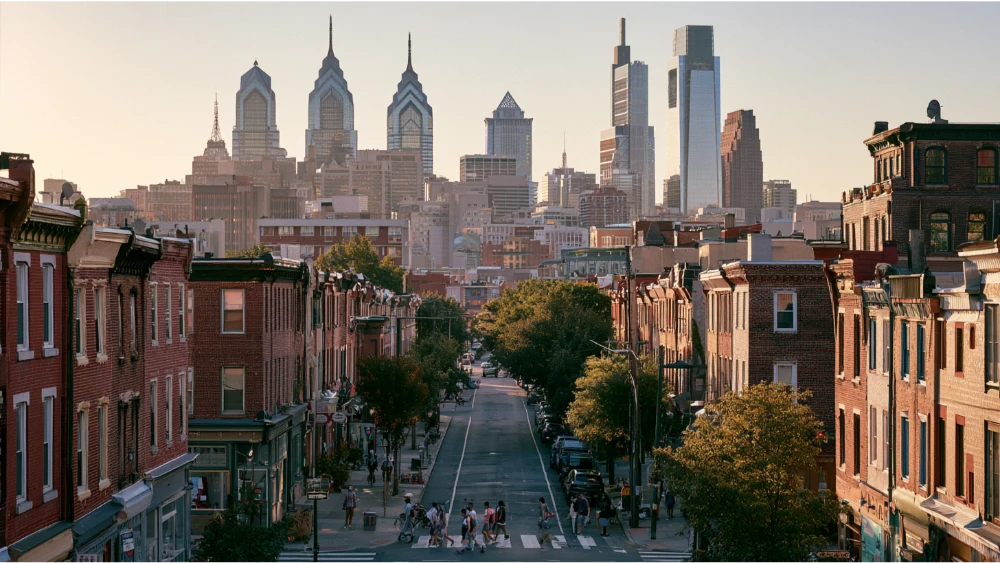
Philadelphia is the largest city in Pennsylvania and one of the most walkable in the country, thanks to a tight street grid laid out centuries ago. The city is organized around more than 140 distinct neighborhoods, each with its own character, food corridors, and pace. That neighborhood identity is the thing to understand first, because almost every decision you make here comes down to which pocket of the city you land in. It is a true big city with a small-town block feel in many pockets, which is a rare combination among other major cities.
Locals are direct, loyal, and famous for a passionate sports culture built around their teams. You’ll feel that energy whether or not you ever set foot in a stadium. The pace is unmistakably East Coast but a notch friendlier than some of its neighbors, and people who move here tend to find their footing fast once they settle into a neighborhood that fits them. The city’s character shows up most in its tight knit community blocks, where neighbors still know each other by name.
A quick snapshot of the numbers that matter:
- Population: 1,574,281 as of July 1, 2025 (Census estimate).
- Median household income: $61,953 in 2024 dollars (2020–2024).
- Mean commute: about 31.7 minutes one way (2020–2024).
- Size: roughly 134 square miles with high urban density in the core.
Those figures set the frame. The real spread shows up once you start comparing one address against another, which is exactly where most generic guides stop and this one keeps going.
What Living in Philadelphia Costs Compared to the National Average
Philadelphia’s cost of living runs roughly 14% above the national average, with a cost-of-living index around 104.3 in recent data. That puts it well below New York, Boston, and DC, while still asking more than the U.S. average. Healthcare is one bright spot, running about 6% below the national average. For many people weighing a move, that balance is the appeal: real big-city amenities without the housing costs that define the pricier East Coast markets. Compared to other east coast cities, the affordable housing picture here is genuinely better for your budget.
Housing is where the numbers get slippery, so slow down here. Housing costs are the single biggest line item in any living in Philadelphia budget, and they swing hard by neighborhood. One bedroom apartments in Center City commonly ask somewhere in the $1,700 to $2,500 range depending on the building and block, while citywide rents sit lower. High rise apartments near the core tend to carry the steepest rents, while rowhome rentals a few streets over can save money for the same square footage. Median home value was $243,100 for 2020–2024, with typical sale prices landing in the $250,000 to $350,000 band. Grocery stores matter here too, because what you spend on food can shift your monthly math as much as a small rent difference. Full-service grocery stores cluster in and around Center City and University City, while some outer sections lean more on corner markets, so factor that into where you land.
Rent vs. asking rent vs. gross rent: know the difference
This trips up almost everyone. Three different “rent” numbers float around online, and they don’t mean the same thing:
- Census median gross rent ($1,397 for 2020–2024) is a backward-looking figure that includes estimated utilities. It is not the price of an available apartment today.
- Asking rent is what a specific unit is listed for right now, and it varies heavily by neighborhood, condition, and what utilities are included.
- HUD benchmarks (used for vouchers) are ZIP-code sensitive and change on their own schedule.
Treat them as separate things. Older housing stock may not have central air, so a cheaper-looking rent can hide higher summer utility bills. Price the exact neighborhood and the exact building, not a citywide average. The gap between a quiet residential block and a busy corridor two streets over can be the difference between an affordable month and a stretched one.
Run your own numbers before you tour anything. KT Rents’ Rent Calculator and Cost of Living Calculator give you a realistic budget for the address you’re actually considering.
Taxes to Budget for Before You Move
Here’s the fact most “cheap city” roundups skip: Philadelphia has a city wage tax on top of state income tax. If you budget without factoring in wage taxes, your take-home will surprise you in the wrong direction. These wage taxes are the single most common blind spot for people moving to Philadelphia from cities that don’t levy them.
- City Wage/Earnings Tax: about 3.735% for residents and 3.425% for nonresidents who work in the city, effective July 1, 2026. Residents pay it on earnings; if you live outside the city but work in it, you pay the slightly lower nonresident rate. Verify annually, because this rate moves.
- Pennsylvania personal income tax: a flat 3.07%.
- Sales tax: 8% total (6% state plus 2% Philadelphia local). Grocery food that isn’t ready-to-eat, most clothing, and prescription drugs are exempt, which softens the sticker at grocery stores a little.
Stack those together when you compare Philadelphia to wherever you’re leaving. A salary that looks identical on paper spends differently once the wage taxes come out. This is general information to help you budget, not individualized tax advice, so check with a professional for your situation.
Choosing Among the Diverse Neighborhoods of Philadelphia
With over 140 diverse neighborhoods, the honest answer is that there’s no single “best” one. The right move is to compare areas on objective factors you can verify: housing type, transit access, commute, parking, noise and nightlife, green space, and general price position. Then you confirm everything at the exact address. The best neighborhoods for you are the ones that match your commute, your budget, and the way you actually live, not the ones a listicle ranks highest. Part of what makes shopping these philadelphia neighborhoods so interesting is their strong neighborhood identities.
A few quick notes on character. Old City and Society Hill keep their cobblestone streets and colonial architecture, with narrow streets that feel like a direct link to the city’s founding era. Many residential blocks across the city are quiet and tree lined streets, often just a short walk from a busy corridor. Fishtown and Northern Liberties have become some of the trendiest areas for food and nightlife, with Northern Liberties in particular drawing a steady wave of young professionals into new-construction lofts and rehabbed rowhomes. Rittenhouse Square anchors upscale shopping and dining in Center City, and the blocks around Washington Square and Rittenhouse Square stay among the most sought-after addresses in the city. University City is the education, medical, and research cluster of the city, sitting at the edge of West Philadelphia and anchored in part by Drexel University.
South Philly deserves its own mention. South Philadelphia runs from the Italian Market down through Point Breeze and Graduate Hospital, and it’s one of the most food-rich parts of the city. Graduate Hospital, sometimes called G-Ho, has drawn a lot of young professionals in recent years for its walkable neighborhoods and its proximity to Center City and Rittenhouse Square. The stretch of South Philly around the Italian Market mixes longstanding family businesses with newer immigrant-run spots, and the rowhome blocks there feel distinctly local. West Philly, meanwhile, offers more space and converted older homes, with University City on its eastern edge and quieter residential pockets of West Philadelphia stretching west from there. Northwest Philadelphia, including Mount Airy and Chestnut Hill, trades some of that density for greener, lower-key living.
| Area | Housing type | Transit | Parking | Noise/nightlife | Green space | Price position |
|---|---|---|---|---|---|---|
| Center City (Rittenhouse Square, Society Hill, Old City, financial district) | Apartments, condos, historic rowhomes | Excellent | Scarce, mostly permit/paid | High | Squares and pocket parks | Higher |
| University City / West Philadelphia | Large buildings, converted older homes | Strong | Competitive | Moderate | Nearby parks | Mid to higher |
| Fishtown / Northern Liberties | Rowhomes, new construction, lofts | Market-Frankford corridor | Tight, varies by block | High | Riverfront access | Mid to higher |
| South Philadelphia (Italian Market, Point Breeze, Graduate Hospital) | Rowhouses | Varies by section | Competitive | Mixed | Neighborhood parks | Mid |
| Fairmount / Art Museum | Rowhomes, apartments | Good | Moderate | Moderate | Close to Fairmount Park | Mid to higher |
| Manayunk / Roxborough | Rowhomes, hillside housing | Regional Rail | More available | Moderate (Main St.) | Trails and river | Mid |
| Northwest (Mount Airy, Chestnut Hill) | Larger homes, lower density | Regional Rail | Easier | Low | Greener, Wissahickon nearby | Mid to higher |
| Northeast Philadelphia | Rowhomes, detached homes | Varies widely | Generally easier | Lower | Spread out | Lower to mid |
Use the table to narrow your shortlist, then pressure-test each candidate address against your own commute, parking reality, and lifestyle. Price position here is a rough guide, not a quote. Rents swing by block, building age, and included utilities, so always confirm the actual number on the actual unit. The city’s diverse neighborhoods reward the person who visits in person over the person who shortlists from a screen.
Jobs and the Philadelphia Job Market
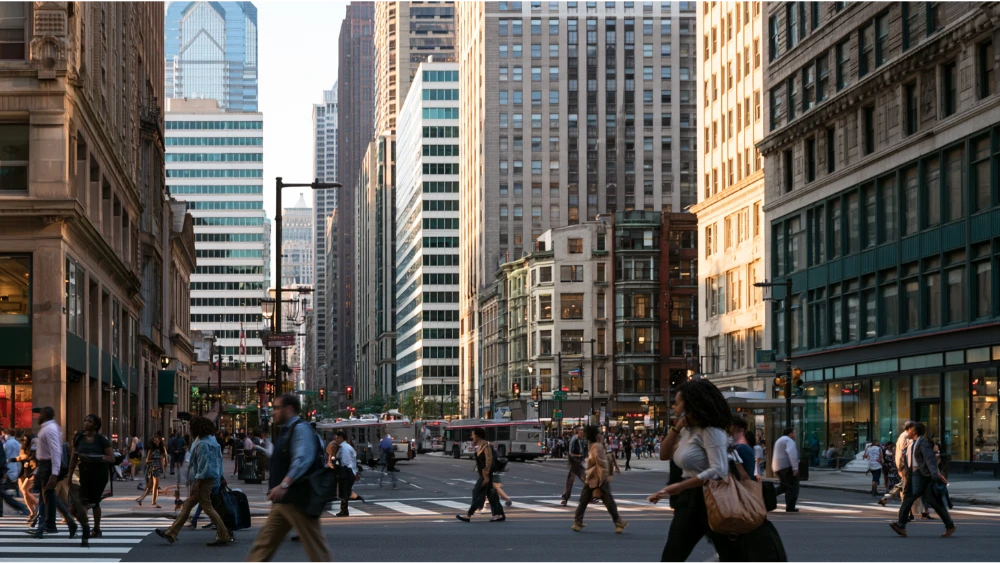
Philadelphia’s economy leans heavily on education and healthcare, and that shapes almost everything about the job market. Education and health services made up roughly 332,300 jobs in August 2026, the largest employment supersector in the metropolitan division. Philadelphia County carried about 720,800 covered jobs in March 2026, the highest of any county in Pennsylvania.
Beyond that anchor, the strongest clusters are professional and business services, government, trade and logistics, hospitality and food, and a growing research and life sciences base. The mean hourly wage across the metro area was $34.49 in May 2025, though earnings vary widely by occupation. Much of the office and research employment sits in Center City and University City, which is part of why both areas draw so many renters who want a short commute.
Now the honest part. The Philadelphia Metropolitan Division’s preliminary unemployment rate was 4.9% in August 2026, running above the national average, and wage growth here has lagged some peer cities. The flip side is a steadily growing, healthcare-and-education-heavy base that holds up well. Many young professionals settle in transit-rich areas close to those job clusters, whether that’s Graduate Hospital for proximity to Center City or Northern Liberties for the nightlife. If you work remotely, Philadelphia offers housing variety and a lower cost than nearby East Coast metros that make it an attractive base, just remember the wage tax still applies to earnings. These job figures move monthly, so treat them as dated snapshots and check current numbers before you count on them.
Getting Around: Public Transit, Parking, and Commuting
The Southeastern Pennsylvania Transportation Authority, better known as SEPTA, runs the region’s transit: buses, the Metro (subway), trolleys, and zone-based Regional Rail. With over 70 bus routes plus rail, roughly a quarter of residents commute by public transit. The average transit commute runs longer than driving, often close to 45 minutes depending on your route.
Current fares, which you should verify right before you move since they change:
- Single bus/Metro trip: $2.90.
- Transfers: up to two free transfers within two hours using a transit card or contactless payment. Cash and Quick Trip payments don’t qualify.
- Monthly pass: $116.
- Free riders: children under 12 ride free with a fare-paying adult, and eligible seniors 65 and older ride free within Pennsylvania with the right fare card.
Can you live in Philadelphia without a car?
Yes, in transit-rich areas, but not everywhere. Center City, University City, and corridors along the Metro lines support car-free living comfortably. Much of South Philly and Northern Liberties works well too, since you can walk to grocery stores, food, and transit. Sections of the Northeast and hillier neighborhoods are harder without a car. The only way to know is to run the actual trip from your candidate address to work, groceries, school, and healthcare before you sign.
If you keep a car, know the parking rules. Navigating the city streets by car is a different experience from most other major cities, and street parking is competitive. The Philadelphia Parking Authority administers the residential permit program, and those parking permits require Pennsylvania plates and a vehicle registered to your home address in the applicable district. Permits only apply on properly posted blocks, so check the block, not the neighborhood. The Philadelphia Parking Authority is also strict about parking regulations and enforcement in Center City and the busier corridors, so don’t assume a free-looking spot is actually free.
Schools and Education in Philadelphia
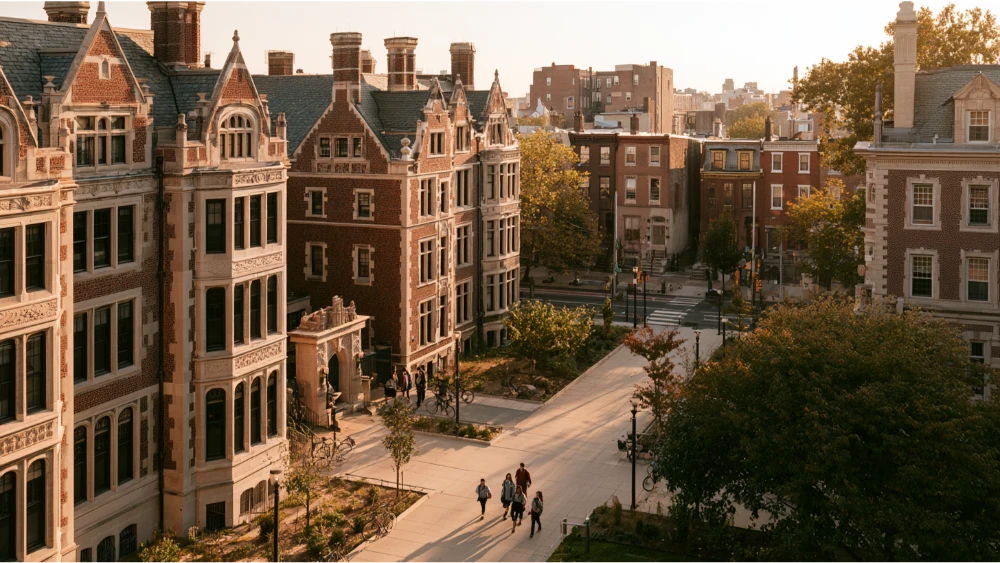
The School District of Philadelphia reported 330 schools across District, alternative, and charter categories, with total public-school enrollment of 198,405 as of October 1, 2025. The single most important thing to understand: students are assigned a kindergarten-through-12th-grade catchment school based on their exact home address. Other options, including many charters and special-admission schools, require the annual school-selection process, and those application windows are strict.
That means you verify the catchment for the specific property before you sign a lease. Two addresses on the same street can fall into different catchments. Use the School District’s address lookup to confirm, and don’t rely on anyone labeling a whole neighborhood “good” or “bad.” Those labels aren’t useful and they aren’t fair.
Philadelphia public schools face real funding challenges, which is worth weighing honestly alongside your options. On the higher-education side, the city holds one of the largest collegiate populations in the country, anchored by institutions like Penn, Temple, and Drexel University. Penn and Drexel sit in University City on the edge of West Philadelphia, and Temple anchors its own corridor to the north, so the student presence shapes the feel of those areas year-round. Philadelphia students also qualify for in-state tuition at Pennsylvania public universities, a genuine long-term benefit for families planning ahead.
Hospitals and Healthcare Access
Philadelphia has academic, pediatric, specialty, and community hospitals spread across multiple parts of the city, which is part of why healthcare costs here run about 6% below the national average. The depth of care is a real advantage, but access depends on where you live. The medical cluster in University City and West Philadelphia is one of the densest in the country, and there’s a reason a whole neighborhood carries the Graduate Hospital name: healthcare is woven into the geography here.
Don’t choose based on reputation alone. Check three things from your exact address: travel time to the nearest facilities, the emergency capabilities you might need (trauma, maternity, pediatric, stroke, cardiac), and whether your insurance plan is in-network there. The City maintains an official patient-receiving hospital list showing facilities and their capabilities, and the Pennsylvania Department of Health runs a facility-search tool with licensing and inspection information. Use both to confirm the hospitals near a candidate address actually fit your needs before you commit.
Food, Culture, Parks, and Everyday Lifestyle
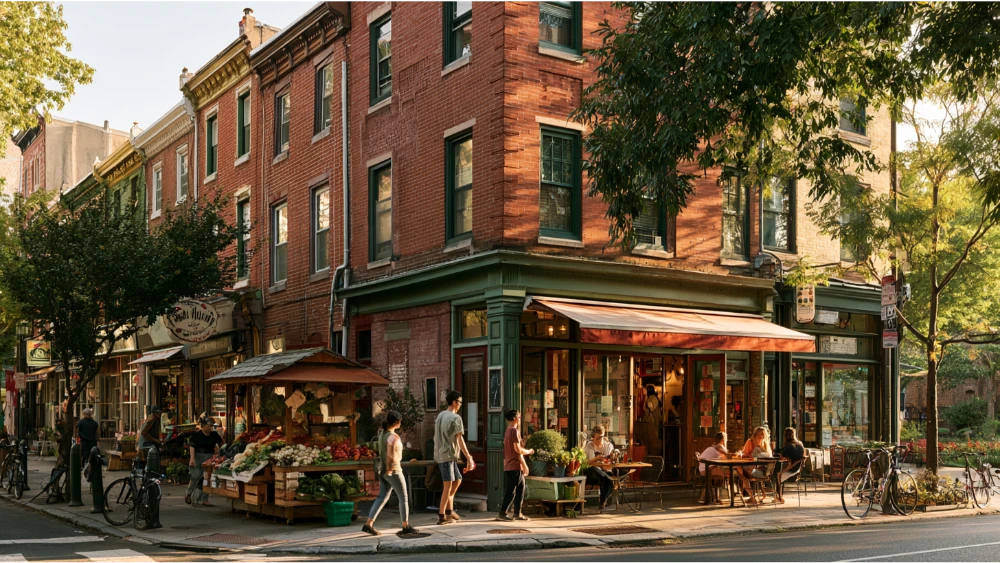
This is where Philadelphia earns its loyalty. The food scene reaches far past the cheesesteak into public markets, immigrant food corridors, BYOB restaurants, bakeries, and food halls. Reading Terminal Market packs more than 80 vendors under one roof. The South 9th Street corridor in South Philadelphia, long known for its Italian Market, now mixes longstanding Italian businesses with Mexican, Vietnamese, African, and Korean food traditions. Few parts of any big city pack this much variety into walking distance, and that depth is a big part of the local culture.
Philadelphia’s food scene beyond the cheesesteak
Everyday eating here is about neighborhood spots. You’ll find bakeries, corner markets, grocery stores, and BYOBs within walking distance in most residential areas, which is a big part of what makes a neighborhood feel like home rather than a place you just sleep. South Philly is especially strong on this front, but you’ll find the same walk-to-dinner rhythm in Fishtown, Fairmount, and the blocks around Rittenhouse Square.
Culture runs deep. The city has world class museums numbering over 30, a sprawling public mural and street-art scene, and the Philadelphia Museum of Art with its famous “Rocky Steps.” The Franklin Institute draws families for hands-on science, and history sits right in the core at Independence Hall and the Liberty Bell, both an easy walk from Center City. The Betsy Ross House in Old City is another quick stop for anyone curious about the founding era. The Philadelphia Orchestra and the performing-arts scene fill the calendar, and the sports culture needs no introduction. Oddball traditions like the annual Naked Bike Ride are part of the local flavor too. For entertainment and urban excitement, the stadium complex in South Philly, home to major sports venues like Lincoln Financial Field, the Fishtown music venues, and the Center City theaters give you a different kind of night out depending on where you land.
For green space, Fairmount Park spans roughly 4,200 acres, making it one of the largest urban park systems in the country, with the Wissahickon Valley adding miles of trails. There’s even a rooftop park, Cira Green, in University City for a different kind of view. For weekend escapes, the Pocono Mountains sit within easy driving distance for hiking, skiing, and lake time, and nearby New York is a short train ride away when you want a change of scene. Expect four distinct seasons, with hot, humid summers and winters that bring around 20 to 23 inches of snow a year (NOAA’s 1991–2020 normal puts it near 23.1 inches). Because much of the housing is older, ask every landlord about heating type and whether the unit has central air before you sign.
How to Research Safety Without Relying on Rankings
Skip the citywide “safest neighborhood” lists. They can’t tell you how two blocks a few streets apart actually compare, and they’re no substitute for your own research. Here’s a process you can run for any address you’re considering:
- Use the official Philadelphia police crime map to look at the hundred-block level, since that’s how incident data is reported.
- Remember that incident data is preliminary and can be reclassified, so treat it as one input, not a verdict.
- Visit the block in person at different times: a weekday afternoon, a weeknight, and a weekend.
- Observe the practical details: how the nearest transit stop feels, where you’d actually park, lighting, and foot traffic.
- Keep in mind that past incidents don’t guarantee future conditions, in either direction.
Spend an hour doing this and you’ll learn more than any ranking could tell you. This is true everywhere in the city, from West Philly to South Philly to the Northeast, because block-by-block variation is the rule here, not the exception.
What Should Renters Verify Before Paying a Deposit?
Philadelphia requires a Rental License for residential rental units, and that license is your first legitimacy check. Before you hand over any money, work through this list:
- Rental License: confirm the property has a current one.
- Lead certificate: for housing built before 1978, owners generally must provide lead-safe or lead-free certification to sign or renew a lease.
- Permits, violations, and inspections: use the City’s Atlas and property-history tools to check the full record by exact address.
- Heating and air conditioning: older stock may lack central air, so confirm the heating type and whether AC is included.
- Utilities: ask exactly which ones are included and which you’ll pay.
- Maintenance process: find out how repair requests are handled and how fast.
- Security deposit: Pennsylvania limits it to two months’ rent in the first lease year and one month in later years.
Those checks separate a legitimate operator from a scam listing. As a broker-owned, full-service company managing hundreds of units across 34 states (as of January 2025), KT Rents handles tenant screening, rent collection, and property inspections, and runs an owner portal with an online maintenance-request flow. That’s the kind of infrastructure that signals a real, accountable manager standing behind a listing rather than an anonymous poster. Roughly 24% of Philadelphia residents speak a language other than English at home, and KT Rents offers bilingual support: Se Habla Español.
Ready to look? Browse KT Rents’ Philadelphia rental listings and submit a rental application when you find the right fit.
Your Philadelphia Moving Timeline
Philadelphia’s move-day rules catch people off guard, especially the moving-truck permit. Work backward from your date:
- 30 days out: lock in housing, set up utilities, verify the school catchment for your exact address, and test your transit routes on SEPTA.
- 1 to 2 weeks out: apply for a temporary no-parking permit for the moving truck through the Philadelphia Parking Authority. It needs at least four full business days to process, so don’t wait. Reserve your street space early. Current fees run $50 per 40 feet per day in Center City and University City and $25 per 40 feet per day elsewhere, with portable storage container permits at $50 per container for up to five days. Verify fees before you apply.
- 24 to 48 hours out: post the temporary no-parking signs on the block so the space is clear on move day.
- After you arrive: new Pennsylvania residents must apply for vehicle title and registration within 20 days and obtain a Pennsylvania driver’s license within 60 days if you hold an out-of-state license.
Those permit and DMV rules are date-sensitive, so confirm current fees and deadlines before your move.
Should You Rent or Buy in Philadelphia?
Both can make sense here. Renting gives you flexibility while you learn the neighborhoods, which is smart in a city this block-by-block. It also lets you test-drive living in Philadelphia in one area before you commit to buying in another, which matters when South Philly, West Philly, and Center City can each feel like a different city. For anyone settling into a new city, that flexibility is a real advantage over the surrounding suburbs, where options are less varied. Buying suits a longer stay, and the housing costs aren’t out of reach: median home value was $243,100 for 2020–2024, with typical prices in the $250,000 to $350,000 range. The owner-occupied rate sits at 51.8%, and median monthly owner costs for households with a mortgage were $1,620.
Decide on the math, not a vibe. Run your actual numbers with KT Rents’ Rent vs. Buy Calculator and Mortgage Calculator before you lean either way, and remember to fold the wage taxes into your take-home when you do.
Find Your Philadelphia Rental with KT Rents
KT Rents is a nationwide, broker-owned, full-service operator and rental marketplace that serves Philadelphia. We’ve been in real estate since 2009, managing hundreds of units across 34 states (as of January 2025), so you’re working with an experienced, accountable team rather than an anonymous listing site. Whether urban living in a Center City high-rise appeals to you or you’d rather have a quieter block in West Philadelphia, we can help you compare real options at the exact-address level. Philadelphia stands out among East Coast destinations for the way it blends history, affordability, and energy, and we’ll help you find the pocket of it that fits.
Here’s your next step: browse our Philadelphia rental listings, submit a rental application, or contact us directly. Reach our toll-free line at (800) 716-4950, text us at (608) 207-0657, or email info@ktrents.com, and we respond within 24 hours. Once you’re in, our owner portal and online maintenance-request flow keep repairs moving, and our tenant perks (housewarming gifts and discounts on home goods) are our way of making sure you feel at home, not just housed. Se Habla Español.
Your Rental. Your Way.
Frequently Asked Questions
What salary do you need to live comfortably in Philadelphia?
There’s no single number, because your real cost depends on the exact neighborhood and the wage taxes that come out of your earnings. Median household income was $61,953 (2020–2024), and comfort depends on your rent, commute, and whether utilities are included. Housing costs in Center City and the blocks around Rittenhouse Square sit higher than much of South Philly or the Northeast, so the same salary stretches differently across the city. Run your target address through KT Rents’ Cost of Living Calculator to budget after the wage tax instead of guessing.
Is $100,000 a good salary in Philadelphia?
Generally yes. Philadelphia’s cost of living runs about 14% above the national average but well below New York, Boston, or DC, so $100,000 stretches further here than in those major cities. Just factor in the roughly 3.735% resident wage tax when you plan your take-home. This is general information, not financial advice.
Which are the best neighborhoods in Philadelphia?
There’s no universal answer, because the best neighborhoods depend on your commute, budget, and lifestyle. Young professionals often gravitate to Center City, Graduate Hospital, Fishtown, and Northern Liberties for walkability and nightlife, while families sometimes prefer the lower-density pockets of the Northwest or Northeast. The honest move is to shortlist a few of these diverse neighborhoods, then verify each candidate address for catchment, parking, and commute before you decide.
Is Philadelphia growing or declining?
The population was estimated at 1,574,281 as of July 1, 2025, down about 1.8% from the April 2020 base. So the recent trend is a slight decline, though the city remains large and economically active, anchored by healthcare and education employment.
Is moving to Pennsylvania a good idea?
It depends on fit, commute, and budget. Pennsylvania offers four distinct seasons, a flat 3.07% state income tax, and a lower cost of living than many East Coast cities, plus a strong healthcare and education economy. Weigh those against the Philadelphia city wage tax and the block-by-block housing variation before you decide.