

Pittsburgh, Pennsylvania
Homes for rent and for sale — search the map or open the full city SEO catch-all page.
Pittsburgh, Pennsylvania
Moving to Pittsburgh, Pennsylvania offers attainable housing with a city median home value around $205,800, strong healthcare and education jobs, and big-city amenities in a midsized setting. The city spans 90 neighborhoods across three rivers, so your exact address determines your commute, school assignment, transit access, and tax burden. Renting first is a smart way to test the terrain and winter conditions before buying.
Moving to Pittsburgh, Pennsylvania
Is moving to Pittsburgh Pennsylvania a good idea? For a lot of people, yes. If you want comparatively attainable housing, strong healthcare and education jobs, and big-city amenities in a midsized western Pennsylvania setting, Pittsburgh delivers. But choose your address carefully. Built around three rivers (the Allegheny, Monongahela, and Ohio), with an economy that shifted from steel to healthcare and tech, Pittsburgh has been called America’s Most Livable City. The historic charm of its old steel-era streets sits right next to new development. The catch is that hills, rivers, and numerous bridges can make two nearby neighborhoods feel like different towns. This guide is for anyone relocating from another part of the country who wants the real picture before signing a lease, whether you’re a single renter, a young professional chasing a new job, or a family looking for the right place to raise kids. We’re KT Rents, a broker-owned company operating nationwide since 2009, and here’s how to plan it.
Pittsburgh at a Glance: Population, Cost, and Lifestyle
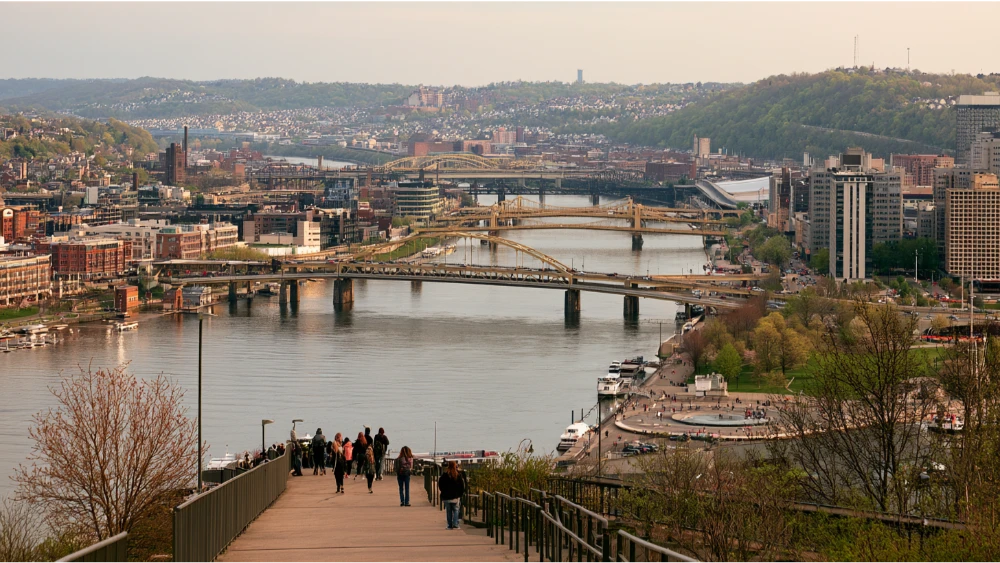
Here’s the quick snapshot. Label matters, so we’ve noted whether each figure is City or metro.
- City population: 307,632 as of July 1, 2025 (up about 1.5% from 2020).
- City median household income: $65,742 (2020 to 2024, Census).
- City median gross rent: about $1,261 (2020 to 2024 Census estimate, not a current asking rent).
- City median owner-occupied home value: $205,800 (2020 to 2024 Census estimate).
- Combined sales tax: 7% in Allegheny County (6% state plus 1% local).
Expect four real seasons, cold winters and warm summers, and famously hilly, steep streets. This is the City of Bridges, with nearly 450 of them, spread across 90 official neighborhoods. Compared with bigger East Coast metros like Philadelphia, cost of living here sits below the national average, which is a big part of what makes everyday living in this corner of the country appealing and a big part of the draw.
Understand “Pittsburgh” Before You Pick an Address
“Pittsburgh” means three different things depending on who’s talking. There’s the City of Pittsburgh (90 neighborhoods), the larger Allegheny County, and the wider seven-county metro that locals usually call the Pittsburgh area. The distinction isn’t trivia. Where you land changes your school assignment, whether you owe the City’s 3% earned income tax, how much transit reaches you, and which municipality handles your services.
The rivers, hills, and bridges complicate things further. Two neighborhoods that look close on a map can require a river crossing, a tunnel, or a steep grade to get between them. A short distance on paper can mean a long, slow commute in practice. It’s no wonder people need a few weeks to learn the geography. Keep that in mind before you fall for a listing or a house based on a map pin alone.
How Much Does It Cost to Live in Pittsburgh?
Rent figures come from different sources that cover different areas and time periods, so don’t stack them blindly. The Census city median gross rent runs about $1,261 (2020 to 2024). HUD’s FY2027 Fair Market Rents, effective October 1, 2026, cover the broader Pittsburgh metro area (Allegheny, Beaver, Butler, Fayette, Washington, and Westmoreland counties):
| Unit size | FY2027 metro FMR |
|---|---|
| Studio | $1,075 |
| 1 bedroom | $1,146 |
| 2 bedrooms | $1,389 |
| 3 bedrooms | $1,773 |
| 4 bedrooms | $1,925 |
Neither of those equals a specific neighborhood’s current asking rent, whether you’re after an apartment or a full house. Layer in utilities, especially heating for older homes, parking in dense areas, and taxes. City residents pay a 3% earned income tax on top of Pennsylvania’s 3.07% personal income tax. To get a realistic monthly picture, run the numbers through our Rent Calculator and Cost of Living Calculator before you commit.
Best Places and Neighborhoods: Choosing Your Pittsburgh Area Address
Skip the ranked “best places” lists that treat the city like a scoreboard. Choose your daily life first, then match a neighborhood to it. Work through it in this order:
- Your work, school, or healthcare commute.
- Whether you need a car or can rely on transit.
- Housing type and budget.
- Food, parks, and lifestyle access.
From there, compare by access, not labels. Downtown puts you at the transit hub with the Cultural District and arts at the door, a great place for young professionals who want to walk to work.
The Strip District and Other Standout Districts
The Strip District offers markets, food, shopping, and converted industrial housing, and it’s one of the liveliest districts in the city for weekend browsing and visiting with friends. Oakland is the university and hospital core, popular with students and medical professionals. Lawrenceville and Bloomfield are dense dining corridors with walkable restaurants, bars, and nightlife. Squirrel Hill, along with Squirrel Hill North, has international dining and busy commercial streets and is a steady favorite for family living. Highland Park sits beside its namesake park and reservoir and draws people who want green space close to home. The South Hills corridor matters if you want light-rail access, and Regent Square sits next to Frick Park, one piece of a park system spanning roughly 15,000 acres with trails made for hiking. You’ll also pick up a little Pittsburghese along the way. To research by exact address, use the City’s official Neighborhood Snapshots, and remember the suburbs are a real option across the Pittsburgh area.
Jobs and the Pittsburgh Economy
Pittsburgh’s economy moved from steel to healthcare and tech, and today education and health services are the largest employers, led by major providers like UPMC. That sector was up 2.8% year over year in mid-2026, while total payroll growth stayed roughly flat, so “booming” overstates it. What’s accurate: a large, diversified labor market with particular strength in health and education, plus solid professional and business services and trade, transportation, and utilities. University-driven research, much of it anchored by Carnegie Mellon, supports a growing tech, life sciences, and clean-tech presence, which keeps opening up job opportunities and drawing professionals who want a career with room to grow and a future in the region. The metro unemployment rate was a preliminary 3.9% in August 2026, with a labor force near 1.253 million.
Schools, Healthcare, and Getting Around
Schools
Pittsburgh Public Schools serves more than 20,000 students and assigns them by home address and feeder pattern. Magnet programs aren’t tied to one neighborhood but require an application. Check the exact school for a prospective address using the district’s address-based school finder and the state’s Future Ready PA Index before you sign a lease. Enrollment typically requires proof of age, two current proofs of residency, and immunization records. The area’s world class university campuses also shape the regional workforce and its future.
Healthcare
Major healthcare corridors, including UPMC facilities, cover the region. Rather than trust a generic “great hospitals” claim, compare emergency-room proximity, specialty and outpatient access, and federal quality data through Medicare Care Compare for the facilities nearest your address.
Getting Around
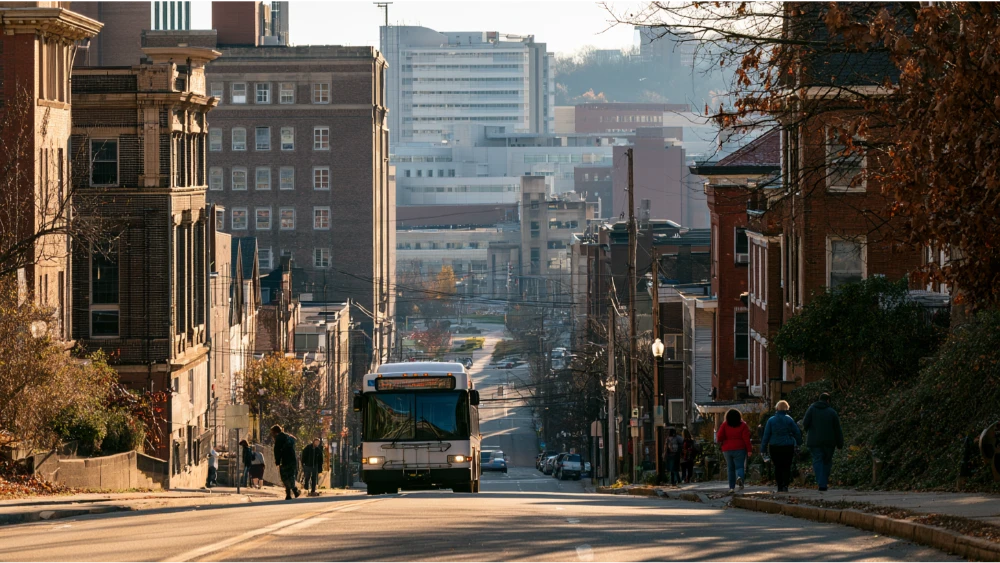
Driving means bridges, tunnels, and hills, which add time. Pittsburgh Regional Transit runs buses, light rail, and the inclines. The airport is about 20 miles from downtown, and the 28X Airport Flyer runs roughly every 30 to 40 minutes for a $2.75 fare. Pittsburgh also makes an easy weekend drive from Cleveland if you want to get out of town. Walkability is address-specific, so test your actual commute at the time you’ll travel it.
Weather, Terrain, and What to Expect Moving In
NOAA normals for Pittsburgh show an annual mean around 51.8°F, about 39.61 inches of precipitation, and roughly 44.1 inches of snow a year, with January highs near 36°F and lows near 21°F. The practical part isn’t the four seasons, it’s the terrain. Hills, steps, snow, ice, and freeze-thaw cycles affect winter driving, street parking, basement moisture, heating bills, accessibility, and even moving-truck access to older homes. Plan the admin too: new Pennsylvania residents have 20 days to apply for vehicle title and registration and 60 days to get a PA driver’s license, and the City requires a moving permit for each address (so two permits for an in-city move).
Pros, Cons, and Should You Rent First?
The pros are real. Housing is attainable compared with coastal cities, the arts run deep (30-plus museums including the Andy Warhol Museum, the Benedum Center, and the Pittsburgh Symphony), sports culture is fierce with dozens of bars packed on game day for the Steelers, Penguins, and Pirates, and you get 15,000 acres of parks plus riverfront trails along the three rivers and spots like Kennywood. Safety varies block by block, so check local data for any address you consider. All of that makes it a genuinely great place to put down roots. The cons: gray winters, hills and older infrastructure, transit that depends heavily on your address, and layered city taxes. Because neighborhoods vary so much, renting first lets you test the commute, winter conditions, and daily rhythm before you buy a house. Watch a few neighborhood videos, then run both scenarios through our Rent vs. Buy Calculator and Mortgage Calculator.
Find Your Pittsburgh Rental with KT Rents
KT Rents is a full-service, broker-owned company operating nationwide across the U.S. since 2009. Browse our complete nationwide rental marketplace and check current Pittsburgh area availability, then submit a rental application when you find a fit. Don’t miss the listings that match your commute and budget. Questions along the way? Call us toll-free at (800) 716-4950, text (608) 207-0657, or reach us and hear back within 24 hours. Our team looks after residents after move-in too, with perks and support, because settling in matters as much as signing. Your Rental. Your Way.
Frequently Asked Questions
Is moving to Pittsburgh a good idea?
For many people, yes. You get attainable housing, strong healthcare and education jobs, and big-city amenities in a midsized setting. Just choose your address carefully for commute and winter conditions.
What salary do you need to live comfortably in Pittsburgh?
Cost of living runs below the national average, and the city’s median household income is about $65,742 (Census). A common guideline is keeping rent near 30% of income, but your real number depends on the neighborhood. Use our Cost of Living and Rent Calculators instead of a single fixed figure.
What are some reasons not to move to Pittsburgh?
Winters are gray and snowy, hills and older infrastructure take getting used to, transit quality depends heavily on your address, and city residents pay an added 3% earned income tax.
Can you live in Pittsburgh without a car?
It’s possible in transit-dense, walkable areas like Downtown, Oakland, and spots served by light rail or frequent bus routes. Many visitors discover the walkable core quickly. It’s very address-specific, so test your exact commute before you commit.