

Hilo, Hawaii
Homes for rent and for sale — search the map or open the full city SEO catch-all page.
Hilo, Hawaii
Hilo, HI, serves as the cultural and economic hub of East Hawaiʻi, offering a grounded, nature-focused lifestyle characterized by lush rainforest surroundings and a more affordable housing market than Oʻahu or the Kona side [1.1.1, 1.2.1, 1.3.1]. As of July 2026, prospective residents must account for high everyday costs—specifically grocery and electricity rates—along with Hilo’s status as one of the rainiest cities in the U.S., which necessitates careful parcel-level due diligence regarding mold risk, flood zones, and lava-hazard areas [1.3.1, 1.3.2, 1.4.2]. A “rent-first” relocation strategy is strongly recommended to allow for a 6-to-12-month evaluation of local microclimates and commutes before committing to a permanent purchase [1.5.1, 1.5.2].
Moving to Hilo Hawaii can be a great fit if you want a slower, rainier, east-side Big Island lifestyle with housing costs that run lower than many Hawaiʻi markets. But before you get too attached to the idea, you need to plan for high everyday expenses, a limited job market, strict pet-import rules, real car logistics, and honest natural-hazard due diligence. This guide is for mainland movers, remote workers, students, families, and retirees weighing Hilo against other Hawaiʻi spots. As the fourth-largest population center in the state and the cultural center of the Big Island, Hilo offers something different from the resort side of the island: a working town where it rains on more than 275 days a year, and where locals still know their neighbors by name.
Here’s the framing that matters most. This is an island move, not a typical cross-state move. The rules, costs, and timelines are different. And there’s a real distinction between Hilo CDP, Hawaiʻi County, and the whole Big Island. At KT Rents, we’re a full-service, broker-owned real estate platform operating nationwide, and our advice is simple: run the numbers and check the address before you commit to living on the island.
Is Hilo, Hawaii a Good Place to Live? Hilo at a Glance

Hilo is a good place to live if you value nature over nightlife, don’t mind steady rain, and want a more local, less polished feel than the Kona side. It’s the east-side hub of the Big Island, home to the University of Hawaiʻi at Hilo, a real arts and culture scene, and quick access to waterfalls, hiking, and snorkeling. Hilo neighborhoods tend to blend everyday amenities with genuine natural beauty. The aloha here is the everyday kind: a slower greeting at the counter, a wave from a passing driver, and a rhythm of life that leans on community rather than crowds.
Downtown Hilo town has a walkable core with locally owned shops, art galleries, and small restaurants that lean into the island’s mixed food traditions. Saturday mornings revolve around the Hilo Farmers Market, one of several farmers markets where growers from around the Big Island bring papaya, taro, tropical flowers, and fresh fish. Outdoor activities anchor daily life too, from black-sand beaches and tide pools to rainforest trails and the drive up toward Volcanoes National Park, where you can see the active volcanoes that shaped the whole region. If you love being outside and eating well, the food scene and the natural setting reinforce each other in a way you don’t find in most mainland towns.
You’ll likely thrive here if you have remote income or secured local work, you want a quieter pace, and you’re excited by rainforest-green surroundings. You may want to pause if you need a wide job market, dislike frequent rain, or expect resort-style convenience. Some young people arrive for the university and the outdoor lifestyle, while others come to be closer to family members already settled on the island. Hilo is famously one of the rainiest cities in the United States, and that shapes daily life. Compared to the sunnier, drier Kona side of the Big Island, the Hilo side trades postcard beaches for lush greenery and a more grounded, working-town feel.
Here’s the snapshot before you go deeper:
| Metric | Figure | Source / note |
|---|---|---|
| Population | 44,186 | 2020 Census (Hilo CDP) |
| Households | 17,750 | Census 2020–2024 |
| Land area | 53.62 sq mi | 2020 |
| Median gross rent | $1,427 | Census estimate, point-in-time, not live market rent |
| Median home value | $483,000 | Census 2020–2024 (owner-occupied) |
| Owner-occupied rate | 66.1% | Census 2020–2024 |
| Mean commute | 20.3 minutes | Census 2020–2024 |
On weather, the numbers tell the story. NOAA’s 1991–2020 climate normals for Hilo International Airport show an annual mean temperature of 74.0°F, a mean daily high of 80.6°F, and a mean daily low of 67.3°F. That’s comfortable year-round. The catch is rain: 120.39 inches of annual precipitation and roughly 273 days per year with measurable rainfall. If you’re picturing dry, sunny beaches every day, Hilo is not that. What it offers instead is lush greenery, a strong sense of place, and an outdoor-focused lifestyle that many residents come to love. Locals tend to keep a good rain jacket by the door and plan beach days around the forecast. Just go in with clear eyes.
What Does It Cost to Live in Hilo? Housing, Utilities, and Everyday Prices
Living in Hilo runs well above the U.S. mainland average, often in the range of 30% to 50% higher depending on your spending, with many estimates landing near 45%. Groceries alone tend to run around 49% higher than the national average, and healthcare about 18% higher. Everything gets more expensive when it has to cross an ocean to reach the island, which is a big reason the rising cost of daily life surprises so many newcomers. Even so, when Hilo is compared with Honolulu on Oahu, housing on the Big Island often looks more attainable, which is a big part of why some movers choose the Hilo side.
Housing costs
The Census median gross rent of $1,427 is a useful baseline, but it reflects existing renters, not what you’ll pay walking into today’s market. Current rental prices average closer to $1,811 per month, and median home prices sit around $642,500. Desirable rentals move quickly, so finding housing in the Hilo area is competitive and worth starting early. Inventory in Hilo town proper is limited, and a well-kept unit in a good microclimate can attract several applicants within days, especially near the university where student and family demand overlaps. Outlying communities such as Hawaiian Paradise Park and the greener stretches of North Hilo can widen your options if the town core feels tight.
Two official benchmarks help you sanity-check pricing. HUD’s FY 2026 Fair Market Rents for Hawaiʻi County list roughly $1,592 for a studio, $1,603 for a one-bedroom, $2,076 for a two-bedroom, $2,622 for a three-bedroom, and $3,024 for a four-bedroom. Hawaiʻi’s HHFDC affordable-rent guidelines for 2026 (based on 30% of income including utilities) list figures like $1,815 for a one-bedroom and $2,178 for a two-bedroom at 80% of median income. Both are program benchmarks, not a promise of what every unit costs, and the HHFDC document itself notes that market rents can come in lower than the guidelines.
Utilities and electricity
Electricity is the budget line that surprises most mainland movers. EIA data through March 2026 reported Hawaiʻi’s residential electricity price at 41.53 cents per kWh, among the highest in the nation. Each of the Hawaiian islands runs its own independent electric grid, which is a big reason costs stay elevated. Many residents offset this with solar. Expect utilities well above what you paid in other states, and treat solar-equipped rentals as a real advantage when you’re comparing units. A home with rooftop solar and a well-ventilated design can quietly save you hundreds of dollars a month once you actually live there through a full year.
Everyday costs and taxes
Groceries running about 49% higher than the national average is the reality, though local farmers markets can meaningfully offset produce costs. Buying seasonal fruit, greens, and fish directly from Big Island growers is one of the simplest ways to eat well without paying full grocery-store markups on imported groceries. Hawaiʻi doesn’t have a traditional sales tax. Instead it has a General Excise Tax (GET) on business gross receipts, taxed at 0.5% or 4.5%, with the 4.5% rate including a 0.5% county surcharge. Businesses commonly pass it on, and the state’s own example shows a maximum pass-on of 4.712% on a $100 sale. You’ll see it show up on retail goods, services, restaurants, and rental-related charges.
For broader context, BEA’s 2024 Regional Price Parities put Hawaiʻi at 110.0 for all items, about 10% above the national average. That’s a statewide figure, not Hilo-specific, and it captures overall price levels rather than the shipping premium and utility costs that hit island residents hardest. Bottom line: budget generously, and remember that costs vary by neighborhood and property.
Renting in Hilo Before You Buy, and What to Check Before You Sign
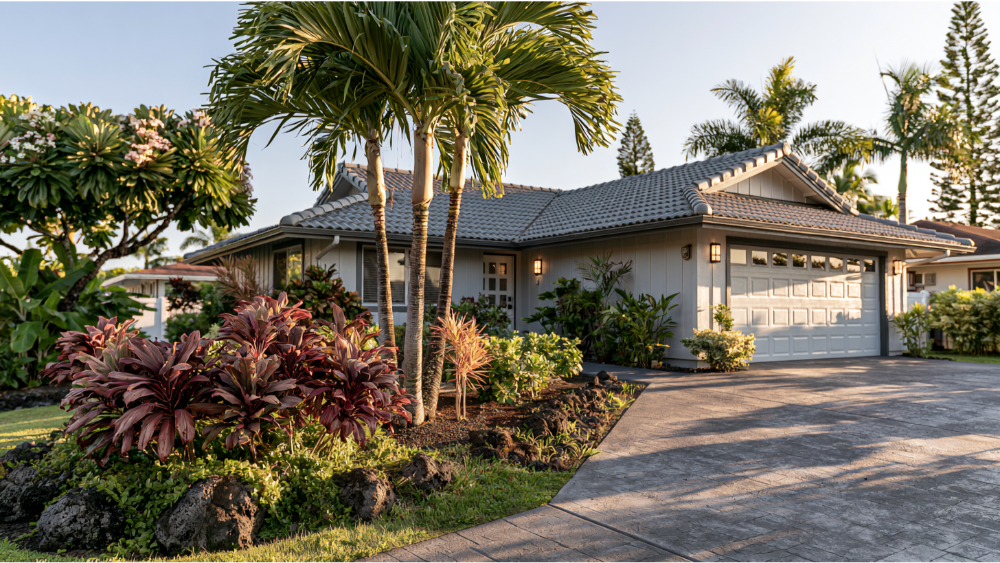
Rent first. On the Big Island, most experienced movers recommend renting for 6 to 12 months before buying anything. It’s the single smartest move you can make, and here’s why: you get to test the rain, learn how a specific neighborhood drains after a storm, feel out your real commute, and confirm your true monthly cost before you tie up hundreds of thousands of dollars. A rainy microclimate two miles away can be a completely different living experience, and only time on the island reveals it.
Why renting first works
Hilo’s weather isn’t uniform. Some pockets stay damp and shaded, others get more sun and airflow. Renting lets you learn these differences firsthand. It also protects you against the classic island mistake: buying a beautiful home that turns out to be wetter, buggier, or farther from work than the listing photos suggested. We’ve handled short-term and long-term leasing for owners and residents across the country for years, and the pattern holds everywhere: people who rent first make better long-term decisions. A short-term lease also gives a family time to test schools, commutes, and daily errands before committing to a specific corner of town. If you have children, that trial run lets you see how the school run and the weather actually feel day to day.
Before you sign a lease
With 273-plus rain days a year, due diligence in Hilo is different from anywhere on the mainland. Do your research and walk through this checklist before you sign:
- Ventilation and mold signs. Check for musty smells, staining, and airflow. Constant humidity makes mold a real concern.
- Parking. Confirm what’s included and whether it’s covered.
- Internet availability. Verify service and speed at the exact address, not just the ZIP code.
- Flood zone. Use Hawaiʻi’s Flood Hazard Assessment Tool, which pulls from FEMA Digital Flood Insurance Rate Maps. Flood data updates continually, so check current maps.
- Tsunami evacuation zone. HI-EMA notes that evacuation zones represent the minimum safe distance, and the 1960 Chile earthquake tsunami killed 61 people in the Hilo area. Check the specific address.
- Lava-flow hazard zone. USGS maps show approximate boundaries, and Mauna Loa’s northeast rift zone can send flows toward Hilo. Look up address-specific maps rather than assuming.
- Pet rules. Confirm whether your animals are allowed before you fall in love with a place.
- Utility responsibility. Ask exactly which utilities you pay, given how high electricity runs.
None of this should scare you off. It’s practical planning for an island, not a reason to panic. Address-specific checks are cheap insurance against an expensive mistake, and the sellers and landlords who take these questions seriously are usually the ones worth working with. If you land in the right place, the routine of island life clicks into gear fast.
Before you sign anything, run the numbers. Our Rent Calculator, Rent vs. Buy Calculator, Mortgage Calculator, and Cost of Living Calculator let you pressure-test Hilo against your actual budget and against other Hawaiʻi markets. Model the move first. Then decide.
Jobs, Remote Work, and Getting Around the Hilo Side
Work and income
Census data for Hilo (2020–2024) puts median household income at $81,779, per capita income at $41,708, and labor-force participation at 59.2% for people 16 and older. Hawaiʻi County’s unemployment rate was 3.0% in May 2026, though that figure shifts monthly. Tourism is a major employment sector across the island, and the job market varies a lot by industry. Healthcare, education, government, and the small-business economy of downtown restaurants, shops, and art galleries make up the majority of local hiring.
Here’s the honest advice: unless your income is remote, secure work before you move. Local employers often prefer candidates already living in the community, and the job pool on the Hilo side is smaller than what mainland movers may be used to. Compared to a big city, openings are fewer and word travels fast, so networking with locals matters. On healthcare access, Hilo Medical Center is a 264-bed facility and the largest in the Hawaiʻi Health Systems Corporation, so major medical care is available on the east side.
Remote work
Hilo works well for remote professionals who bring their own income. About 91.4% of households had a broadband internet subscription (Census 2020–2024), which is a solid base. The one caveat: internet quality varies by location, and in more rural areas coverage can thin out, so verify actual service and speed at your specific address before committing to a lease. What looks fine on a coverage map may not deliver at the property. If your work depends on video calls, ask the current resident or landlord what they actually get, then confirm it in writing. For any person whose paycheck depends on a stable connection, that one step is the most important thing on the list.
Getting around
Hawaiʻi County’s Hele-On bus is free for all passengers through December 31, 2028, which is a genuine break for renters, students, and car-light households (worth confirming near your move date). Hilo International Airport is reachable by car, taxi, and the Hele-On bus. Still, many residents keep a car. Island distances, limited schedules, and errands that span the region make a vehicle practical for most households, especially if you want easy access to beaches, trails, and outdoor activities scattered across the Big Island.
If you’re bringing a car, plan ahead. Shipping a vehicle to Hawaii typically runs around $2,200 to $2,400. Once it arrives, Hawaiʻi County requires an out-of-state vehicle permit issued within 30 days of the vehicle’s arrival, and Hawaiʻi law (HRS §286-54) requires you to apply within 30 days of operating the vehicle in the state. For household goods, you’ll generally choose between a 20-foot or 40-foot container or less-than-load (LTL) shipping, depending on how much you’re moving. Fragile items often travel best in sturdy wooden crates that hold up to a long ocean route. Several island-focused carriers handle this shipment, and companies like Royal Hawaiian Movers are among the names movers commonly compare when quoting a household move, so get more than one estimate before you book.
Moving Pets, Vehicles, and Preparing for Island Hazards: Your Timeline

Moving pets to Hilo
Hawaiʻi is the only rabies-free state in the country, and it guards that status carefully. Every dog and cat entering the state must follow import quarantine rules. You have two paths: the 120-day quarantine or the 5-Day-Or-Less program. Direct airport release is possible, but only if you complete every requirement before your pet arrives. Per the Hawaiʻi Department of Agriculture, that means two rabies vaccinations within the required timeframe and a passing FAVN test for both dogs and cats, all coordinated through the Hawaiʻi Pet Owner Portal.
Start this months ahead. The rules are date-sensitive, the vaccination timing is strict, and getting it wrong means your pet sits in quarantine. Verify the current requirements before you book any flights. This is one of the biggest differences between moving to Hilo and a typical mainland move, so build it into your plan early.
Emergency preparedness
Hawaiʻi’s public-health guidance recommends a 14-day supply of food, water, medicine, and essentials, which is longer than typical mainland prep. Islands can be cut off by weather or supply disruptions, so this isn’t overkill. A stocked pantry of shelf-stable food and drinking water gives a family real breathing room if a storm delays shipments to the Big Island. Pair that with the address-specific tsunami, flood, and lava-zone checks from earlier, and you’ve covered the hazards that matter most.
Your 30/60/90-day moving checklist
- 90 days out: Lock in your job or confirm remote income. Build a realistic budget using the calculators. Start the pet vaccination and FAVN process. Begin your rental search. Gather documents.
- 60 days out: Decide whether to ship, keep, or sell your car. Choose container versus LTL shipping and compare movers. Arrange temporary housing if needed. Sort out insurance.
- 30 days out: Set up utilities. Prepare vehicle paperwork for the out-of-state permit. Assemble your 14-day emergency kit. Do a final lease review with your due-diligence checklist in hand.
Plan Your Move to Hilo, Hawaii on the Big Island With KT Rents
KT Rents is a full-service, broker-owned real estate platform that’s been helping owners and residents plan smart moves since 2009. That’s 16-plus years of perspective on short-term and long-term leasing, rental applications, nationwide listing search, and the everyday questions that come up before a big relocation. We don’t have a Hilo office, and we won’t pretend to. What we do have are tools that help you think clearly before you ship the car, book the pet flight, or sign a lease and start living on the island.
Use the calculators first. Run your Rent vs. Buy numbers, check your cost of living, and see how Hilo compares to other markets you’re weighing, whether that’s Kona, Oahu, or somewhere on the mainland. Some people prefer the drier west side, and that’s fine; the point is to compare honestly. Then browse options and reach out when you’re ready. Reach us at (800) 716-4950, text (608) 207-0657, or email info@ktrents.com, and we’ll respond within 24 hours. Run the numbers and check the address. That’s the whole game with an island move.
Frequently Asked Questions About Moving to Hilo Hawaii
Is Hilo, Hawaii a good place to live?
Yes, if you want a slower-paced, nature-focused, east-side Big Island lifestyle and you don’t mind rain on more than 275 days a year. Pause if you need a broad job market or expect low costs, since living in Hilo runs roughly 45% above the national average. For many locals, the aloha spirit, the food, and the outdoor activities more than make up for the rain. Plenty of transplants only miss the mainland when they think about family and friends back home, and they hope those visitors come to see the place for themselves.
Why do some people call Hilo “run down”?
Hilo is an older working town, not a polished resort area like the Kona side. Heavy rain weathers buildings faster, and the vibe is local and practical rather than glossy. Many residents see that authenticity, along with the walkable downtown, its art galleries, and its restaurants, as the appeal rather than a drawback. It’s an easy town to hang around in on a quiet afternoon.
How much does it cost to live in Hilo?
Plan for costs about 45% above the mainland average. Market rent averages around $1,811, groceries run roughly 49% higher, and electricity is among the nation’s priciest at about 41.53 cents per kWh. Housing tends to be lower than other Hawaiʻi markets, and compared to Honolulu on Oahu the Big Island often looks more attainable.
How rainy is Hilo really?
Very. NOAA’s 1991–2020 normals show about 120 inches of rain per year and roughly 273 days with measurable precipitation, making Hilo one of the rainiest cities in the United States. That’s why checking ventilation and mold signs before renting matters so much, and why locals keep beach days flexible around the forecast.
Should I rent before buying in Hilo?
Almost always. Renting for 6 to 12 months lets you learn the neighborhood, the microclimate, and your true monthly costs before committing to a purchase. It’s the surest way to avoid an expensive island mistake, and it gives you time to check flood, tsunami, and lava-zone maps for any address you’re serious about. Additionally, that window lets you decide whether the Hilo side is truly where you want to live for the long haul.