

Kihei, Hawaii
Homes for rent and for sale — search the map or open the full city SEO catch-all page.
Kihei, Hawaii
Kihei, located on the sunny, dry leeward coast of Maui, is a highly desirable but expensive coastal community that demands rigorous financial planning before relocation [1.1.1, 1.2.1]. As of July 2026, prospective residents should expect high costs of living, with MIT estimates suggesting a living wage of over $33/hour for a single adult to cover basic essentials [1.2.3]. Success requires a “rent-first” approach to test neighborhood fit and commute realities—specifically the congestion between Kihei and central Maui—while strictly adhering to Hawaiʻi’s complex, months-long logistics requirements for pet, plant, and vehicle importation [1.3.1, 1.4.1, 1.7.1].
Yes, moving to Kihei Hawaii can be a great fit if you want a sunny South Maui lifestyle and you lock in housing, income, and island-specific moving logistics before you show up. The catch is cost. Kihei’s 2020–2024 median gross rent was $2,045, the median owner-occupied home value was $919,900, and Maui County’s living-wage estimate for one adult with no children runs about $33.08 per hour. Those numbers are the reality check behind the postcard.
This guide is written mostly for renters, remote workers, and vacationers thinking about a longer stay, with a short section for property owners and investors near the end. We’ll walk through the two things that trip people up most: the smart move of renting first before you buy, and the island-specific logistics of getting your pets, plants, and car here without a mess.
We’re KT Rents, a nationwide, broker-owned, full-service rental and property management platform. We help people with short-term and long-term leasing, and we treat vacation destinations like Maui as places you can actually live in, not just visit. Our approach here is simple: Your Rental. Your Way. But know the numbers before you pack the container. Kihei is home to over 22,000 residents, gets roughly 276 days of sunshine a year, and sees only about 10 inches of rain annually. Life moves at a slower pace than it does in a big city like San Francisco. That’s the draw. The numbers are the homework.
Kihei at a Glance: South Maui’s Sunny Stretch of Coast
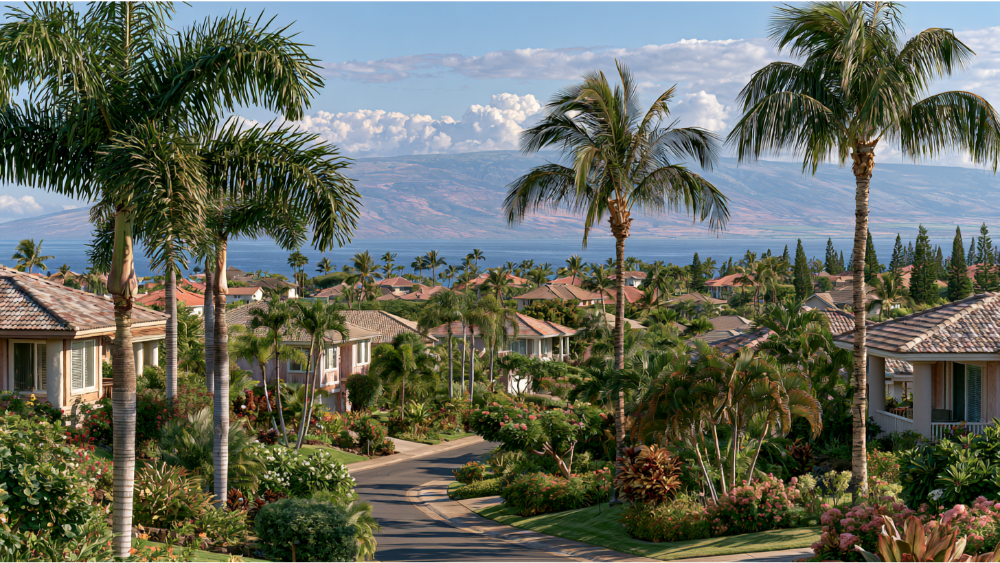
Kihei sits on Maui’s south side, stretched along nearly six miles of Pacific Ocean coastline. About 22,000 people call it home, spread across roughly 9.36 square miles and about 8,182 households as of the 2020–2024 estimates. It’s compact, coastal, and one of the driest, sunniest spots on the entire island. The Pacific Ocean is never more than a few minutes away, and that closeness to the water shapes almost everything about daily life here, from how you spend a free morning to how you plan your week around the surf and the tide.
The weather is the headline. Kihei averages around 276 sunny days a year and very little rain, roughly 10 inches, which is dry even by island standards. Summer highs sit in the upper 80s Fahrenheit, winter lows dip into the low 60s, and trade winds move through at around 20 mph most days. That steady weather is a big part of why so many people fall for South Maui in the first place. Sunsets over the ocean happen every evening, and after a while you stop taking them for granted (or you don’t, which is also fine). Compared to the wetter, greener north shore of the island, Kihei stays reliably warm and bright, which is exactly what most people picture when they imagine island life.
Location helps too. Kihei is about 15 minutes from central Maui and Kahului, which makes it one of the more accessible parts of the island for work, shopping, and the airport. Locals sometimes talk about north Kihei and south Kihei as loose geographic markers, but that’s orientation, not a ranking. North Kihei tends to sit closer to the wide, flat beaches and the drive toward central Maui, while south Kihei runs toward the resort areas and some of the more popular snorkeling spots. Maui Meadows, tucked up the slope above the coast, gives you a bit more space and quiet while keeping quick access to town. The whole area runs along the coast, and where you land usually comes down to what’s available and what fits your budget when you’re searching. Consider this your quick snapshot: warm, dry, close to everything on Maui, and small enough to feel like a town rather than a city. That small-town feel is a real part of the appeal, and it’s something a lot of Kihei residents mention when they talk about why they stayed.
Living in Kihei Maui: The Real Cost of Daily Life
Here’s where the daydream meets the spreadsheet. Kihei is expensive, and the honest way to think about it is in two tiers: what you need to cover basic needs, and what it actually takes to live comfortably with any breathing room. Living in Kihei means budgeting for island prices on nearly everything, since so much of what arrives here has to be shipped across the ocean first.
The federal Census data gives the baseline. For 2020–2024, Kihei’s median gross rent was $2,045, the median owner-occupied home value was $919,900, and the median household income was $87,772 (in 2024 dollars). That median income is a useful anchor when you’re gauging whether the town fits your budget. One caveat on rent: the Census figure is an American Community Survey estimate, so it can lag behind what you’ll see on active listings today. Treat it as a floor, not a ceiling.
MIT’s Living Wage Calculator adds the basic-needs angle for Maui County. As of its February 15, 2026 update, one adult with no children needs about $33.08 per hour, or $68,816 a year before taxes, to cover essentials. One adult with one child jumps to $55.47 per hour, or $115,381 a year before taxes. Read that as survival math, not comfort. MIT’s model doesn’t budget for restaurant meals, vacations, savings, or retirement. If you want any of those, plan for more. Groceries in particular run high, since island supply chains add cost to nearly everything on the shelf, and eating at the local restaurants regularly adds up faster than most newcomers expect.
HUD’s Fair Market Rent figures round out the rental picture. For fiscal year 2026, the Kahului-Wailuku-Lahaina area (which includes Kihei) is set at:
| Unit Size | HUD FY2026 Fair Market Rent |
|---|---|
| Studio | $1,896 |
| 1-bedroom | $2,000 |
| 2-bedroom | $2,624 |
| 3-bedroom | $3,398 |
| 4-bedroom | $4,236 |
These are program benchmarks, not a promise of what a desirable Kihei unit will actually ask. A two-bedroom condo commonly lands around $2,000 a month, but well-located or updated units go higher, and anything with an ocean view or walkable access to the beaches tends to command a premium. A standalone house in Kihei Maui typically costs considerably more than a condo of the same bedroom count, so factor that in if you’re set on a yard. Use HUD’s table for affordability context, then check live listings for reality.
How much do you need to make to live in Kihei?
If you’re a single adult, plan on roughly $68,816 a year just to meet basic needs, and comfortably more than that if you want savings or anything resembling a social life. A family with one child should look at $115,000-plus as the baseline. Before you commit, run your own numbers through KT’s Cost of Living Calculator and Rent Calculator so you’re comparing your current city to Kihei on real figures, not vibes. The people who thrive here are usually the ones who treated the budget seriously before they ever booked a flight.
Renting in Kihei: What to Expect Before You Sign

Start by knowing which lane you’re in. Short-term leasing works if you want to test island life for a season or you’re bridging until a long-term place opens up. Long-term leasing is what most relocators want once they’ve decided to stay. Both exist in Kihei, but long-term inventory is in high demand, so treat a good listing as something to act on quickly rather than sit on. Because so much housing on Maui has historically been tied up as vacation rentals, the pool of genuine long-term housing options in a coastal town like this stays competitive.
A few Hawaii tenant-law basics are worth knowing going in. This is general information, so confirm current rules or talk to a professional if you hit an actual dispute:
- Security deposits are capped at one month’s rent.
- After a lease ends, the landlord must return the deposit balance within 14 days, with written, itemized reasons for any deductions.
- Emergency repairs are supposed to start within 3 business days of notice, and non-emergency repairs within 12 business days of written notice unless the landlord explains the delay.
- For month-to-month tenancies, a tenant gives 28 days’ notice to end things and a landlord gives 45 days’ notice.
- Under Act 278, a two-year mediation pilot running February 5, 2026 through February 4, 2028, a tenant can request mediation within 10 days of getting a nonpayment eviction notice, and the landlord must participate.
Now the warning that matters most for anyone moving long-distance: verify every listing and never send money before you’ve done your due diligence. Rental scams specifically target out-of-state movers who can’t tour a house or condo in person. If someone rushes you, refuses a video walkthrough, or wants a deposit wired before you’ve confirmed they control the property, walk away. This is one of the most common ways newcomers get burned when they’re chasing a listing sight-unseen from the mainland.
Come prepared. Have your income documentation, references, and application materials ready so you can move fast when the right unit appears. This is where working with a full-service, broker-owned operator helps: proper tenant placement and tenant screening protect both sides, and a real company with a paper trail is a lot harder to fake than a random listing. We also care about what happens after the keys change hands, from housewarming perks to making sure a repair request actually gets handled. Feeling settled in a new community matters as much as the lease itself, and we try to make that part smoother. When you’re ready, browse rentals and submit an application through KT Rents.
Rent vs. Buy in Kihei: Which Makes Sense?
Our honest advice for almost everyone: rent first. Buy later, if at all. At a median owner-occupied home value of $919,900 (2020–2024), a Kihei purchase is a serious commitment, and 59.3% of homes here are owner-occupied, so it’s not a renter-only town, but the entry price is steep. Buying a house on the south side of the island means competing with second-home buyers and investors, which keeps prices firm even when the mainland market cools.
The decision usually comes down to a handful of practical questions:
- How long will you stay? If you’re not confident you’ll be in Kihei for five years or more, buying rarely pencils out against transaction costs.
- Have you lived here through a full year? Island life reads differently in February than it does on a two-week vacation. Rent through all four seasons before you commit hundreds of thousands of dollars. The weather is gentle, but the day-to-day reality of being on a remote island in the middle of the Pacific Ocean takes some getting used to.
- Is your income stable and local-proof? A Maui-sized mortgage wants a Maui-sized, reliable paycheck.
- Can you handle the down payment at these prices? Twenty percent on a $919,900 home is real money that isn’t coming back quickly.
Renting first lets you test-drive the neighborhood, the commute, and the actual cost of living before you tie yourself to a property. It also gives you time to feel out whether island fever is going to be a real problem for you, because being far from the mainland wears on some people and never bothers others. When you’re weighing it seriously, run the math with KT’s Rent vs. Buy Calculator and Mortgage Calculator so the decision rests on your numbers rather than a gut feeling about paradise.
Work, Remote Work, and the Kihei Job Market
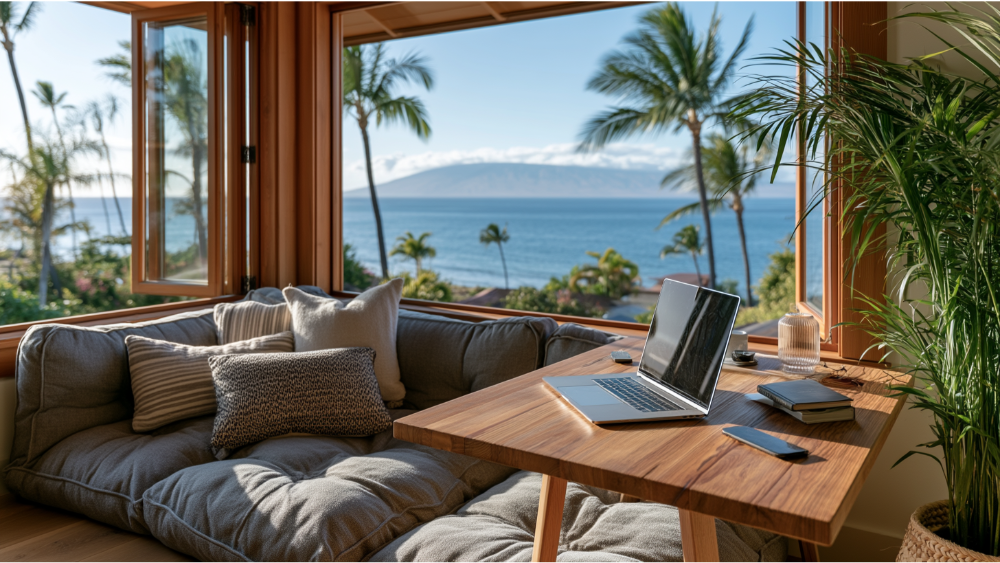
If you’re bringing your income with you, Kihei works well for remote professionals. About 91.3% of households had a broadband subscription in 2020–2024, which is a solid signal for anyone who needs to be online for a living. The mean commute for people who work locally is a manageable 22.1 minutes.
The local economy leans toward tourism, retail, and service work, which shapes both the pay and the seasonality of jobs here. Tourists drive a lot of the demand, so hiring and hours can rise and fall with the visitor season. That’s the single biggest reason we push the same point competitors skip: have a confirmed job or income plan before you move. Don’t count on landing work after you arrive to cover Maui-level rent. The math is unforgiving if you’re job-hunting and paying $2,000-plus a month at the same time.
For digital nomads and remote workers, the work-from-paradise pitch is real, but ground it. Confirm the actual internet speed at your specific unit before you sign, since a town-wide broadband stat doesn’t guarantee your building. Budget honestly. Then enjoy the payoff: an outdoor-oriented day with a slower pace where a morning swim in the ocean before the first meeting is a normal thing to do. Plenty of remote workers structure their week around the water, wrapping up calls in time to explore a new stretch of coast or catch a late-afternoon snorkeling session. That lifestyle is a genuine draw, and it’s a lot more sustainable when your income and your internet are both locked in.
Things to Do: Beaches, Restaurants, and Kihei’s Everyday Fun
Part of what makes living in Kihei feel less like a compromise and more like a reward is how much there is to do the moment you step outside. The beaches are the obvious headline, and Kihei is home to some genuinely amazing beaches. The Kamaole Beaches, three sandy stretches right in town, are favorite beaches for a reason: a short walk from most neighborhoods, easy for families, and great for a quick swim after work. The coastline suits almost everyone, from calm shallows to spots better known for snorkeling and reef life just offshore in the Pacific Ocean. A lot of residents build simple rituals around the water: an early swim, a walk along the sand at sunset, or a weekend spent poking around a new cove.
Water sports are a way of life here. Snorkeling, scuba diving, boogie boarding, and a dozen other water activities are all within a short drive, and South Maui is genuinely good for getting in the ocean. Clear water, protected areas, and reef close to shore mean you don’t have to be an expert to have a good time. Beyond the beaches, the town has a relaxed food scene, with dining options and food options ranging from quick plate-lunch spots and food trucks to sit-down restaurants along the coast. Fresh seafood shows up on plenty of menus, and eating out often is expensive on the island, but the variety is a fun part of settling in, and it’s an easy way to start feeling like part of the community rather than a visitor passing through.
There’s a cool, unhurried aloha spirit to Kihei that tourists notice on vacation and residents come to depend on. Farmers markets, small shops, grocery stores within walking distance in many neighborhoods, and outdoor gathering spots give the town a real center of gravity, and it doesn’t take long before you start running into the same familiar faces and making friends. If you like to explore, the whole island is within reach. Central Maui, the greener north shore, and upcountry Maui are all doable day trips once you know the roads. Paia town up on the north shore is worth the drive, with Mana Foods for groceries and Baldwin Beach nearby, and the natural wonders of the island, from world class beaches to volcanic overlooks, are never far. That mix of a laid-back home base and easy access to the rest of the island is a big reason people call Kihei a wonderful place to land. It is one of the more amazing corners of the state, and among the more affordable places to start out if you rent before you buy.
Getting Around Kihei and Maui: Do You Need a Car?

Short answer: most people end up wanting one. Public transit exists, but it’s limited compared to a mainland city, and daily life on Maui usually asks more of you than a bus schedule can cover.
The Maui Bus does serve Kihei with dedicated routes, including the Kihei Islander (Route #10) and the Kihei Villager (Route #15). Service runs seven days a week, including holidays. Fares are straightforward:
- One-way boarding: $2.00
- Daily pass: $4.00
- Monthly pass: $45.00
That’s affordable and useful for some routines. But once you factor in work, school runs, medical appointments, grocery trips, and getting to the beach or the airport on your own schedule, most residents evaluate car ownership and land on yes. A car also makes it far easier to explore the rest of the island, from the world class beaches on the west side and west Maui to the drive up to the north shore. Kahului Airport (OGG), Maui’s main commercial airport, sits about three miles east of Kahului on roughly 1,867 acres and handles both interisland and domestic overseas flights. Kihei is about 15 minutes from central Maui and Kahului, which is convenient by car and less so if you’re relying on transit and transfers.
One more thing to plan for: traffic. Maui’s road infrastructure hasn’t kept pace with growth, and congestion between Kihei and central Maui is a real part of daily life, especially at commute times. Factor it into where you decide to live and work.
Schools and Family Logistics in Kihei
If you’re moving with kids, the most reliable step is also the simplest: use the Hawaii State Department of Education SchoolSite Locator. You enter a street address and it tells you the assigned elementary, middle, and high schools for that location. The DOE notes the locator is for reference only and shouldn’t be your sole basis for a decision to move, rent, or buy, so treat it as a starting point and confirm directly.
The Kihei area is served by public schools including Kamaliʻi Elementary, Kīhei Elementary, Lokelani Intermediate, and Kūlanihākoʻi High. Which one applies to you depends entirely on the address, which is why the lookup matters. The practical rule for families: run the DOE address lookup before you sign a lease, so you know exactly which schools serve the home you’re considering. Families often find the small-town scale of Kihei a plus here, since the community feels connected and the beaches double as an after-school activity most days of the year.
Moving Checklist: Pets, Plants, Cars, and Your Driver’s License

This is the part most relocation guides gloss over, and it’s the part that actually derails moves. Hawaii’s island rules are strict, and the timelines start well before your flight. Plan early.
Moving to Kihei Hawaii with pets
Hawaii is rabies-free, and the state works hard to keep it that way, so pet entry is heavily regulated. Dogs and cats that meet the requirements can qualify for the 5 Day Or Less program, which allows direct release at Honolulu after inspection. Animals that don’t meet the requirements can face quarantine of up to 120 days, so this is not a step to wing.
- For direct arrivals to Kahului, you’ll need a Neighbor Island Inspection Permit and must follow the applicable checklist.
- Required documents must be submitted at least 10 days before arrival to qualify for the 5 Day Or Less program or airport release.
- There’s a 30-day pre-arrival waiting period tied to eligibility for direct release.
- OIE-FAVN blood test results can take 1 to 2 months to come back.
Add it up and you should start the pet process several months before you move. We’re planning a separate deep-dive, “Moving to Hawaii With Pets,” to walk through the full timeline.
Plants and agricultural items
Hawaii inspects all agricultural items on arrival: plants, plant parts, soil, produce, and related outdoor materials. You’ll declare these on the Plants and Animals Declaration Form and present them to an HDOA Plant Quarantine inspector at baggage claim. The simple version: don’t casually pack soil, houseplants, produce, or dirty outdoor gear. Check the HDOA rules first, or you risk delays and confiscation.
Bringing your car and driver’s license
All vehicles in Hawaii are renewed annually in the county where the car physically sits. To register an out-of-state vehicle in Maui County, you’ll generally need:
- Your out-of-state title and registration materials.
- A Hawaii safety inspection completed after the vehicle arrives.
- A bill of lading or shipping receipt showing the vehicle’s arrival date on Maui.
- A G-27 form filed with the State Department of Taxation when applicable.
For your license, an adult 18 or older can drive on a valid out-of-state license, but if you’re transferring to a Hawaii license you’ll need to do it before the old one expires. That means proof of legal presence, principal residence, your Social Security number, and surrendering your current plastic license. Treat all of this as general information and confirm the current requirements with Maui County before you ship anything.
Short-Term Rentals, Long-Term Housing, and Why Maui’s Rules Matter
Kihei’s housing supply is shaped by a fast-changing regulatory environment, and it’s worth understanding even as a renter. This is general context, not legal or investment advice, and the rules are actively shifting, so verify current status before acting.
Maui County’s short-term rental permits cover bed-and-breakfast homes and transient vacation rentals. Approved short-term rental home operations come with real obligations: a designated manager reachable by phone at all times who can be onsite within one hour, required onsite parking, and the permit number listed in any advertising. County materials also cap these operations at up to six bedrooms across up to two licensed dwellings.
The bigger story is Bill 9. In December 2025, the Maui County