

Bend, Oregon
Homes for rent and for sale — search the map or open the full city SEO catch-all page.
Bend, Oregon
Moving to Bend, Oregon means gaining year-round outdoor access, short commutes averaging 16 minutes, and a dry high-desert climate, but housing is demanding: the average asking rent hit $1,830 in 2024 while the typical renter household could afford just $1,654 before crossing the 30% cost-burden line. Most households need $90,000 to $130,000 to live comfortably. Secure housing and stable income before you arrive.
Moving to Bend, Oregon
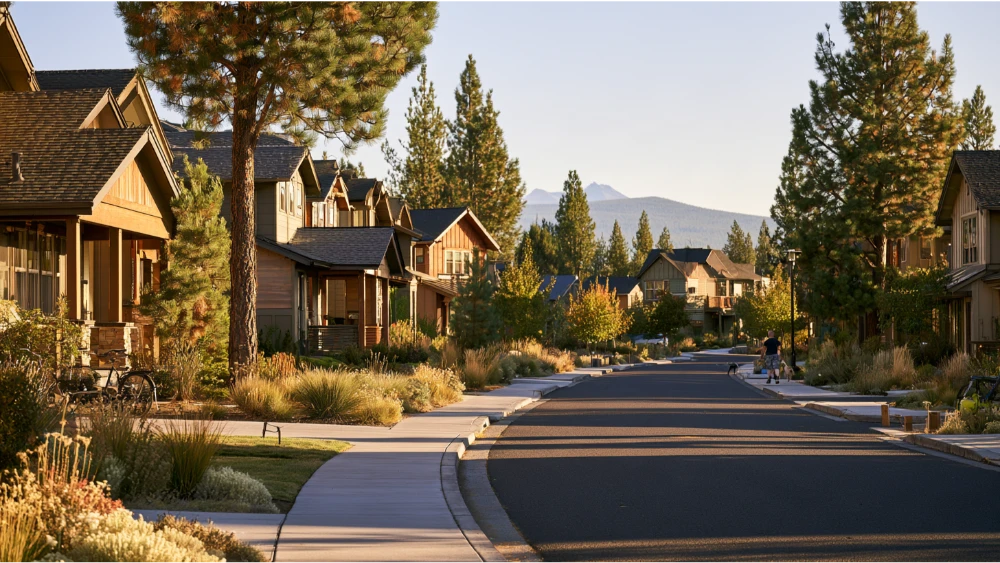
Bend can be a strong fit if you value year-round outdoor access, a dry high-desert climate, short local commutes, and a smaller-city pace. But housing is expensive relative to many local wages, and winter weather and wildfire smoke take planning. The smart move: secure housing, and ideally a job or remote income, before you load the truck.
This guide is for relocating professionals, remote workers, families, and renters comparing Bend with other cities. The real decision isn’t the scenery. It’s the relationship between what you’ll pay for housing, what you’ll earn, and what your actual week looks like once the honeymoon fades. Scenery is easy to fall for. A commute to the hospital at 7am in January is harder. Moving to Bend Oregon rewards people who do the math first and fall in love second, and it tends to frustrate people who flip that order.
We’re KT Rents, a nationwide, broker-owned property management company. We’ve spent 16+ years helping owners and residents sort through rental decisions across the U.S., so we think about relocation the way you should: as a budget problem first and a lifestyle reward second. Living in Bend looks a lot like the postcards once you’ve got the housing, the income, and the routine lined up. Later in this guide we’ll point you to two tools that make that math honest, our Cost of Living Calculator and our Rent vs. Buy Calculator. Use the data below, then run your own numbers.
Bend at a Glance: Population, Growth, and High-Desert Life in Central Oregon
Forget the “unchanged mountain town” picture. The U.S. Census Bureau estimated Bend’s population at 107,342 as of July 1, 2025, up 8.2% from the 2020 base, and the city has grown more than 50% since 2010. This is Central Oregon’s hub, a regional center of more than 100,000 people, not a sleepy village. A lot of that growth comes from people moving to Bend Oregon from bigger, pricier West Coast metros, drawn by the mountains, the trails, and a slower daily pace that still carries a real small town feel.
Bend sits in roughly 33.6 square miles between the eastern slopes of the Cascade Range and Oregon’s high desert, with the Deschutes River running through it. The setting is the whole draw: mountains to the west, open high desert along the eastern edge of town, and a reputation for blue skies most of the year. On a clear morning you can see snow-capped peaks from a surprising number of neighborhoods, and the Deschutes River threads the center of town like a backbone. It’s often described as an outdoor playground of the West and one of the Pacific Northwest’s most livable small cities, and for a lot of residents that’s accurate.
The high desert climate is dry with big day-to-night temperature swings and famously low humidity, which we’ll cover in detail later. On demographics, the 2020 Census recorded a population that was about 88% white, a figure that reflects the region as it was counted that year. The everyday lifestyle leans outdoorsy and comparatively casual. That said, not everyone here skis, cycles, or hangs out at breweries. Plenty of residents are here for the dry air, the short commutes, and the quiet, and that’s a perfectly normal way to live in Bend too. Whether you’re a single remote worker or a growing family, the question isn’t whether Bend is a great place in the abstract. It’s whether this particular corner of Oregon fits the life you actually plan to live.
How Much Does It Cost to Live in Bend?
Bend’s cost of living runs above the national average, and housing is the reason. Before you look at any single rent number, understand the two kinds of rent data you’ll see, because they measure different things:
- Census median gross rent is what existing renter households already pay, including applicable utilities. It skews lower because longtime renters locked in earlier.
- Market asking rent is what a new mover faces right now while searching. This is the number that actually hits your budget.
Here are the key figures, each dated so you can judge how current they are:
| Figure | What it means | Period |
|---|---|---|
| $96,394 | Median household income | 2020-2024 |
| $1,883 | Census median gross rent (existing renters) | 2020-2024 |
| $1,830 | Average citywide multifamily asking rent | 2024 |
| $1,654 | Rent the typical renter household could afford before crossing the 30% threshold | City analysis, 2024 |
| $718,400 | Median owner-occupied home value | 2020-2024 |
Look at the gap. The City’s own 2025 State of Housing Report calculated that the average Bend renter household could afford about $1,654 a month before crossing the standard 30% housing-cost line, while the 2024 citywide average asking rent sat around $1,830. That spread is why nearly 49% of renters were estimated to be cost-burdened in 2024, and why 22% of renters spent more than half their income on housing in 2023. For a typical single-bedroom you’ll generally see asking rents in the $1,800 to $2,300 range, and three-bedroom homes well above that, though those numbers move, so verify them when you search. Rising prices are a real part of the picture, and home prices in particular have climbed fast over the past decade.
One partial offset: Oregon has no state sales tax, which helps on retail and everyday purchases. Groceries, utilities, and transportation still run slightly higher than the national average, and the overall picture is pricier than a lot of lower-cost Midwest markets. Households generally need something in the range of $90,000 to $130,000 to live comfortably here, depending on housing choice and family size. If you’re a family with kids, factor in childcare, activities, and the extra bedroom you’ll want, because those line items push the comfortable number toward the top of that range faster than most people expect.
Renting vs. buying in Bend
With a median home value around $718,400 (and some market reports showing prices higher and climbing fast), buying immediately is out of reach for many relocating households. That’s why a lot of people rent first, learn the neighborhoods, confirm the job actually fits, and then decide whether to buy. Renting also lets you spend a full year in Bend, through smoke season, through the snowy stretch of winter, before you tie up your savings in a down payment. Before you commit to either, run the math. Our Cost of Living Calculator and Rent vs. Buy Calculator let you test real rent and real income against your own budget, which beats guessing off a listing price.
Renting in Bend: What to Check Before You Sign a Lease
Professionally managed properties with five or more units averaged a 7.9% vacancy rate in 2024, higher than the 15-year average of 5.3%. More vacancy does not mean more affordable, since new deliveries often price above what the average renter can pay. So you may have options, but you still need to read the lease closely.
Before you sign, confirm the practical stuff:
- Deposits and fees: amount, what’s refundable, pet deposits.
- Utilities: what you pay versus what’s included.
- Parking: assigned, street, or none, which matters in winter.
- Pet rules: breed or size limits, monthly pet rent.
- Maintenance: who handles repairs and how fast.
- Heating and AC: type and age, since high-desert summers get hot and winter nights freeze.
- Insulation and indoor air filtration: filtration matters during smoke season.
- Snow removal: is it yours or the landlord’s?
- Irrigation: dry climate means watering responsibility is worth clarifying.
Know the rent rules. For covered Oregon tenancies, the maximum annual rent increase for 2026 is 9.5%. Exemptions and notice requirements apply, and not every unit is covered, so read the official Oregon rule rather than assuming. This is information, not legal advice.
Watch for rental scams, especially when you’re renting long-distance. A listing that won’t let you tour, pressures you to wire a deposit, or has no verifiable company behind it is a red flag. One reason to work through a real, broker-owned manager: full-service operators handle tenant screening, rent collection, property maintenance, and inspections through documented systems and owner portals, so you’re dealing with an accountable business, not a stranger with a Venmo request. When you’re moving to Bend from several states away and can’t walk the property yourself, that accountability is worth more than a slightly cheaper listing from an unverified source.
How to Choose a Bend Neighborhood (Without the “Best Neighborhoods” Trap)
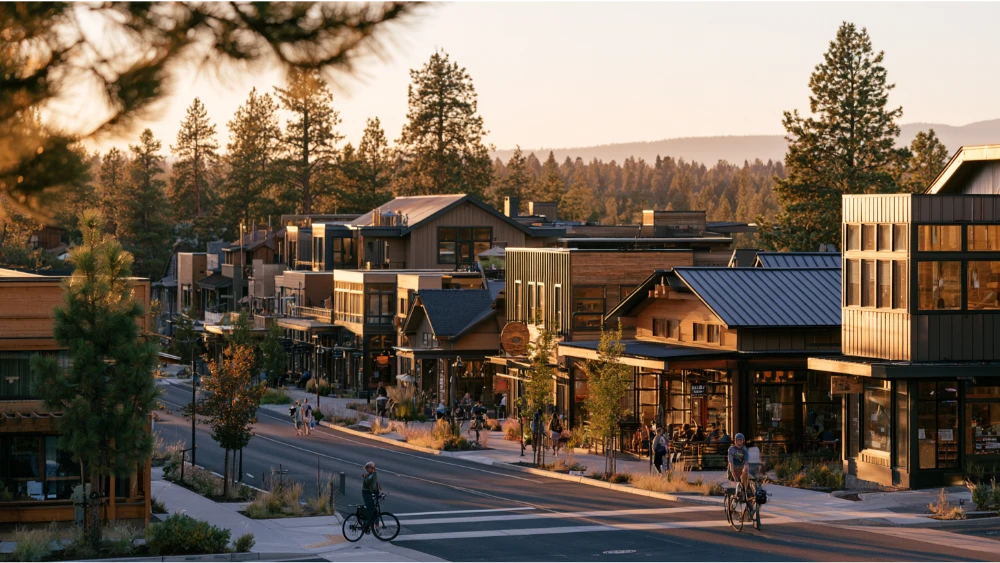
We won’t rank Bend neighborhoods as “best,” “safest,” or steer you toward any particular family friendly environment. Those labels steer people and they say more about the writer than the place. Instead, pick based on objective factors tied to your own week. Every neighborhood in Bend has its own feel, and the right one for a family with school-age kids may be the wrong one for a remote worker who wants trail access out the back door.
The City officially recognizes 13 Neighborhood Districts: Awbrey Butte, Boyd Acres, Century West, Larkspur, Mountain View, Old Bend, Old Farm, Orchard, River West, Southeast Bend, Southern Crossing, Southwest Bend, and Summit West. These districts represent renters, owners, businesses, and organizations, and they aren’t homeowners associations. The City’s interactive map is the best way to verify exact boundaries before you lock in on a neighborhood.
Awbrey Butte, NorthWest Crossing, and the Old Mill District: A Neighborhood Orientation
A few neutral, factual notes to orient you: River West sits within walking distance of cafes, restaurants, and outdoor shops, close to the Deschutes River and the central trail system. Southern Crossing includes single-family homes and townhomes. Awbrey Butte is known for its elevation and stunning views of the mountains, which also means more topography and steeper winter driving, something to weigh if you’re not used to snow. NorthWest Crossing features tree-lined streets and walkable dining. The Old Mill District and downtown Bend function as walkable activity, shopping, and dining hubs along the river, and the Mill District in particular pulls a steady crowd for riverside strolls and events. For many people, proximity to downtown Bend or the Old Mill District is a big part of what makes the city feel like a community rather than just a place to sleep, and it’s a key factor in making Bend feel like home rather than a layover.
Use this matrix to compare districts against what you actually need:
| Factor | Questions to ask |
|---|---|
| Commute | How far to your workplace? Test the real route. |
| Housing | What rent and housing type is available? |
| Schools | What’s the assigned school for the exact address? |
| Healthcare | How far to the hospital and your providers? |
| Transit and bikes | Which routes and bike infrastructure serve it? |
| Daily errands | Parks, trails, grocery, dining nearby? |
| Parking and terrain | Street parking, hills, winter driving, construction? |
| Noise and activity | What’s it like at different times of day? |
The right district is the one that fits your commute, your budget, your assigned school, and your routine. If you have children, the assigned school usually drives the decision more than anything else, so start there and work outward. We’ll publish a deeper renter’s guide to all 13 districts separately, so you can go one layer down once you’ve narrowed the field.
Jobs and Income: What Are the Real Job Opportunities in Bend?
First, a geography note that trips up most relocation guides. The current monthly labor figures are regional, covering the three-county Bend metropolitan statistical area (Crook, Deschutes, and Jefferson counties), not Bend city alone. In December 2025 the Bend MSA had 112,990 nonfarm jobs and an unadjusted unemployment rate of 4.7%.
The major sectors, from the Oregon Employment Department:
| Sector (Bend MSA, Dec 2025) | Jobs |
|---|---|
| Private education and health services | 20,130 |
| Trade, transportation, utilities | 19,010 |
| Leisure and hospitality | 16,150 |
| Professional and business services | 12,370 |
| Mining, logging, construction | 9,510 |
City research using 2022 data found healthcare and social assistance made up about 18% of covered employment, followed by retail and then accommodation and food services. The honest catch, flagged in the City’s own economic analysis: many service-sector wages haven’t kept pace with housing costs. A tourism or retail job that supports a comfortable life in other places may not stretch to Bend rents. If you’re not transferring a job or bringing remote income, compare an actual written offer against the housing numbers above before you commit. This is the single most important step for anyone moving to Bend Oregon without a remote salary already in hand.
Working remotely from Bend
Bend has real pull for remote professionals, outdoor enthusiasts, and digital nomads, and it can work well. Confirm home internet speeds at your specific address, plan a dedicated workspace, and factor in travel: Redmond Municipal Airport is close and offers nonstop regional and national routes. One wrinkle worth planning for is wildfire smoke, which can disrupt outdoor-based routines during late summer. If your “paradise” plan involves working from the deck, have an indoor plan too. The upside is real: wrap up a workday, drive a few minutes, and you’re on scenic trails in the mountains or on the Deschutes River with a paddleboard. That mix of career and lifestyle, plus a steady flow of job opportunities for remote and transferring workers, is exactly why remote workers keep choosing to live here.
Schools and Higher Education in Bend
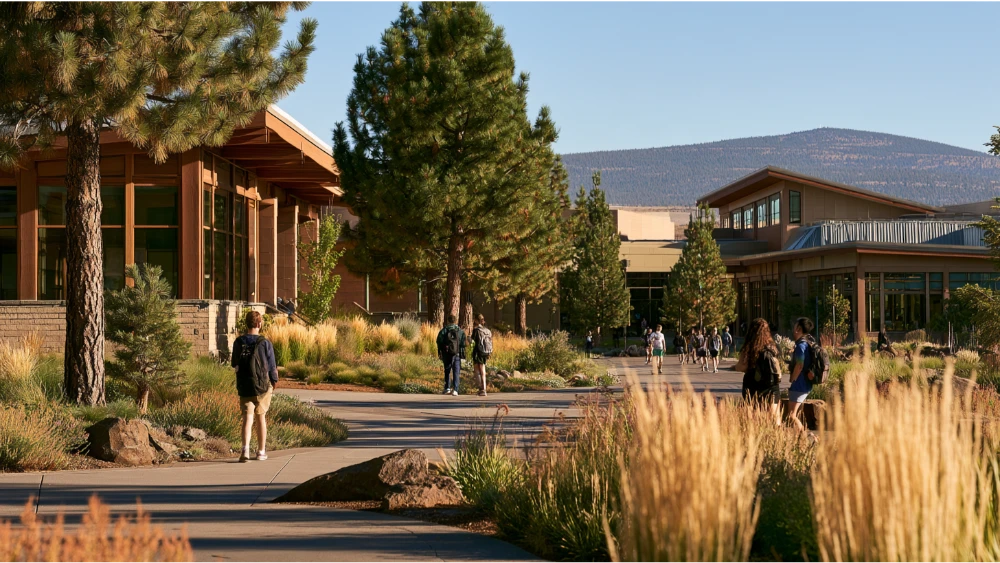
Bend-La Pine Schools reports about 33 schools, roughly 16,700 students, and seven high schools, making it Oregon’s sixth-largest district. Its 2025-2026 adopted budget projected 16,616 students, so treat precise enrollment as a point-in-time figure. For a family weighing the move, the district’s size means a real range of great schools, program choices, and extracurriculars across elementary, middle, and high school levels, which is part of why young families keep landing here.
Here’s the part that matters most for picking a home: students generally attend the school assigned to the attendance area where they live. Boundaries can and do change based on enrollment, program, or building capacity. So confirm the assigned school using the exact prospective address, not the neighborhood name, using the district’s boundary resources. A house two blocks over can feed a different school, so don’t assume the neighborhood name tells the whole story. For performance, research the school on Oregon’s official report cards, which cover attendance, academic growth, ninth-grade on-track rates, graduation, and programs, rather than relying only on third-party rating sites. If you’re considering charter, magnet, or special programs, research those directly through the district too. We’re not ranking neighborhoods by schools here, because that’s a steering trap, and a strong school for one family’s needs isn’t automatically right for another family with different kids and different priorities.
Higher education
For college students, career-changers, and remote learners, Bend has real options. OSU-Cascades enrolled 1,401 undergraduate and graduate students in fall 2025, including fully online students, with an average class size of 20. Central Oregon Community College offers more than 40 programs across eight education pathways, with four Central Oregon campuses plus online study. Between the two, a family relocating with older kids or an adult looking to retrain can find a path without leaving the region, which is a genuine advantage for a city this size in the Pacific Northwest.
Hospitals and Healthcare: What’s Available in Bend?
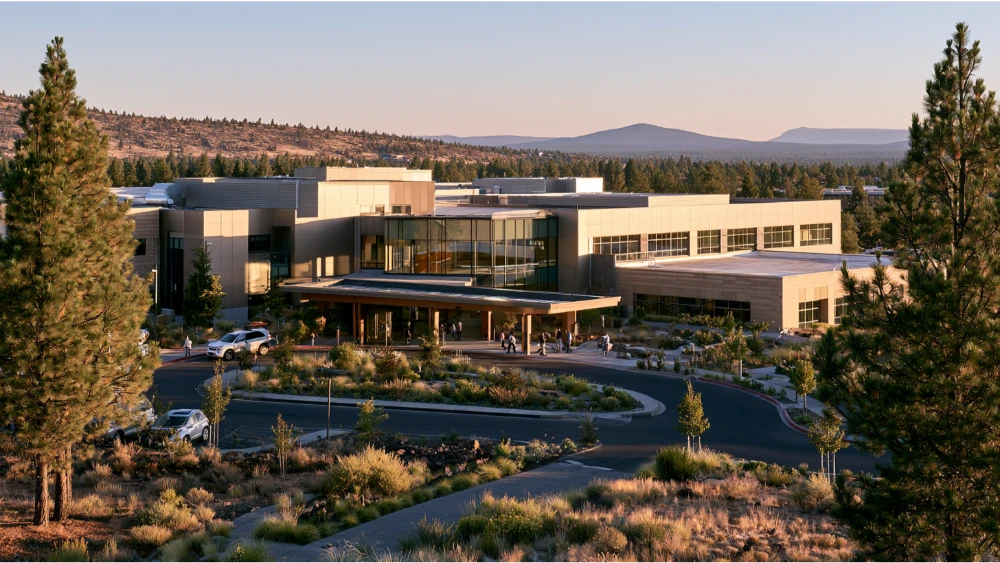
Central Oregon’s regional system, St. Charles Health System, operates four hospitals and more than 40 outpatient clinics. Its Bend facility is Oregon’s only Level II trauma center east of the Cascades, which matters a lot in a region this size and in a place where outdoor recreation means the occasional broken bone or trail mishap. The emergency department runs 24 hours a day, seven days a week.
Demand is clearly growing. The system reported 53,411 Bend emergency-department visits in 2025, a 9.5% increase from 2023, and is expanding emergency capacity. That signals strong regional services, but also a busy one.
One honest nuance for anyone with ongoing medical needs: highly specialized treatment may still require travel to a larger metropolitan medical center. If you see specific specialists regularly, confirm provider availability and whether your insurance network includes Central Oregon providers before you move, not after. For families with young kids or anyone managing a chronic condition, this quick check saves real stress and the occasional long drive over the mountains to a larger city.
Getting Around Bend: Commutes, Transit, and the Airport
Short commutes are a genuine perk here. Bend workers had a mean commute of just 16.3 minutes in the 2020-2024 Census period. Compared with a major metro, that gives you hours back every week, and it’s one of the quieter reasons people say living in Bend improved their daily sense of balance.
A car stays practical for most households, especially for dispersed jobs, trail access, regional trips, and anything outside fixed transit hours. The payoff is easy access to the outdoors from almost anywhere in town. Don’t trust a citywide walk or bike score; test your actual home-to-work route in the conditions you’ll drive it, including winter when snow and ice change everything.
If you’ve read an older guide saying Bend buses are free, that’s outdated. Cascades East Transit resumed fare collection in 2026. Current fixed-route fares:
| Fare type | Cost |
|---|---|
| One-way | $2 |
| Daily maximum | $6 |
| Monthly pass | $60 |
| Annual pass | $500 |
CET runs fixed routes, regional connections, paratransit, and recreation shuttles. Verify current schedules before you rely on them. For flights, Redmond Municipal Airport advertises around 30 daily flights with five commercial carriers and nonstop service to regional and national hubs, though routes change often, so check before booking a move around them. Bend is also expanding protected bike lanes and low-stress “Key Routes,” and for people who like to bike to work the network keeps getting better, but connectivity is still a work in progress.
Weather, Snow, and Wildfire Smoke: Preparing Your Bend Home
Bend’s high-desert climate means dry air, plenty of sun, and large day-to-night temperature swings. The NOAA 1991-2020 normals give you a reliable baseline:
- January: around 42.5°F daily high, 24.6°F low.
- July: around 83.8°F daily high, 48.6°F low.
- Annual precipitation: about 10.6 inches.
- Annual snowfall: about 21.6 inches at the Bend climate station, varying significantly by year and location.
Those freeze-at-night, warm-by-afternoon swings matter for how a home holds heat and how pipes and irrigation handle the cold. The dry weather and low humidity also mean summer heat feels less oppressive than it does in more humid regions. Snow totals vary a lot from one winter and one part of town to the next, and higher-elevation neighborhoods like Awbrey Butte can see noticeably more than lower areas, which is also what puts some of the state’s best skiing within a short drive. If you’re coming from a mild climate, plan for winter tires, a way to clear your driveway, and a few extra minutes on every January commute.
Wildfire smoke is a recurring seasonal planning issue, mostly in July and August, and it swings sharply year to year. Bend recorded only two days at “unhealthy for sensitive groups” in 2025 and zero days at unhealthy or worse, but earlier years were far more severe, so don’t judge the risk off one mild season. Oregon DEQ monitors air quality and issues advisories. When you evaluate a home, check heating type and insulation, whether there’s AC, indoor air filtration, snow-removal responsibility, irrigation, defensible-space requirements, and wildfire-related insurance questions. Then sign up for local emergency and air-quality alerts before smoke season arrives. For families with kids or anyone sensitive to air quality, a good indoor filtration setup turns a smoky week from a disruption into a minor inconvenience.
Food, Entertainment, and Everyday Life in Bend
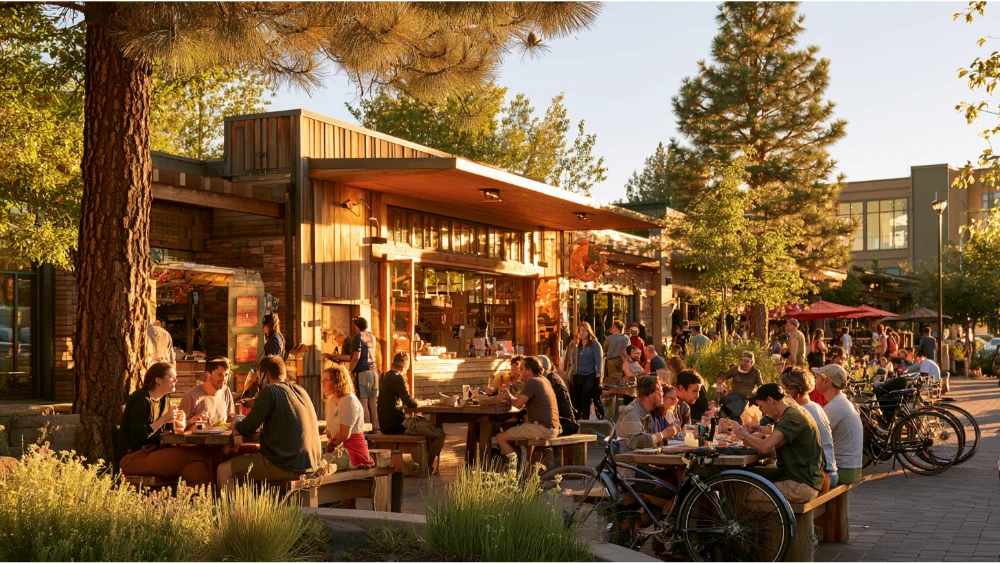
Yes, Bend has a serious craft beer reputation, often cited among the top U.S. cities for breweries per capita. But the food and nightlife story is broader than that, and the great restaurants here cover a lot of ground. Food trucks and food-cart lots are a real part of eating out here, alongside farm-to-table restaurants, cafes, pubs, wine bars, and family dining. Local favorites run the gamut: Sparrow Bakery is a well-known stop for morning pastries, Jackson’s Corner is a go-to for casual neighborhood meals, and Ariana Restaurant leans toward a more upscale evening out. There’s also a growing menu of zero-proof and alcohol-free options, so you don’t need to drink to enjoy a night out, which is worth saying plainly in a town that gets reduced to “beer city” too often. Downtown Bend and the Old Mill District anchor a lot of the dining and local shops, and on a warm evening the riverside paths fill with people walking off dinner.
For entertainment, you’ll find live music, theater, comedy, festivals like the Bend Summer Festival, and visual arts across indoor and outdoor venues. The Bend Central District is developing as a mixed-use arts, food, and entertainment area between downtown and northeast Fourth Street, while downtown Bend and the Old Mill District stay busy with shopping and dining. For families, there are kid-friendly events, seasonal markets, and plenty of casual spots where bringing the kids is the norm rather than the exception.
The community reads as friendly, health-conscious, and civic-minded, with a strong sense of connection built through volunteer clean-ups and outdoor advocacy. People move here and find it genuinely easy to plug into a community, whether that’s a run club, a church, a trail crew, or a neighborhood association. Just don’t assume everyone keeps the same schedule or the same hobbies. As for nightlife, set smaller-city expectations: lively and sociable, but not a big-metro, up-all-night scene. For a lot of people moving to Bend, that mix of a beautiful city with a genuine sense of community is exactly the point.
Parks, Trails, and Outdoor Recreation for Every Lifestyle
This is the payoff section, and the numbers back up the reputation. As of October 2025, Bend Park and Recreation District maintained 3,629 acres, 86 developed parks and natural areas, and roughly 90 miles of trails, plus more than 1,000 recreation programs across age groups and ability levels. Counting all public green space, you’re looking at 80-plus parks around town, which means most neighborhoods have green space and trails within an easy walk, so there’s always somewhere close to explore.
Inside the city, the Deschutes River is a hub for kayaking, floating, and paddleboarding, and the river trail network puts walking and riding close to most neighborhoods. On a summer afternoon, floating a stretch of the Deschutes River is practically a local ritual. Phil’s Trail Complex offers mountain biking for a range of skill levels, and it’s a favorite with mountain bikers across the region. A short drive expands things dramatically: Tumalo Falls (a 97-foot waterfall) is about 12 miles out, and the Deschutes National Forest opens up hiking, rock climbing, and winter ski access in the mountains west of town. It helps to know what’s a walk from your door versus what’s a drive, because outdoor activities like hiking, biking, and river access are a big part of what makes living in Bend feel different from a typical city.
For families, the outdoor options run year-round, and the High Desert Museum is a reliable rainy or smoky-day stop with kids. Recreation programs serve all ages and ability levels, so you don’t need to be a hardcore athlete to use them, and the trails range from flat riverside strolls to serious backcountry routes for dedicated outdoor enthusiasts. Dog owners get nine official off-leash areas; dogs must otherwise be leashed in public parks and on trails. The appeal here is that the active lifestyle folds into everyday life, whether that means a daily trail walk, a weekend of outdoor adventures on the river, or a quick hike after work in the mountains. For many residents, that daily access to nature is the whole reason the Bend lifestyle earns its reputation as a great place to live, and it’s a big piece of what makes Bend stand out from other areas.
Your Moving-to-Bend Checklist
Three short, liftable lists to keep the move organized.
Before the move:
- Confirm a job offer or stable remote income.
- Build a budget that compares real rent to real take-home pay.
- Secure housing in writing before you arrive.
- Line up renters or homeowners insurance, including wildfire questions.
- Verify the assigned school using the exact address.
- Confirm healthcare providers and insurance network coverage.
Move-in week:
- Set up utilities.
- Document the property’s condition with dated photos.
- Confirm parking arrangements.
- Get internet installed and test speeds if you work from home.
First 30 days:
- Get your Oregon driver’s license and title/register your vehicle, generally required within 30 days of establishing residency.
- Enroll kids in school.
- Establish local medical providers.
- Download the transit app and check current routes.
- Sign up for emergency and air-quality alerts.
The Honest Pros and Cons of Moving to Bend Oregon
No postcard, no doom. Here’s the balanced read.
| Bend may fit you if… | Think twice if… |
|---|---|
| You value year-round outdoor access and a dry, sunny climate. | Housing would stretch your budget past the 30% line. |
| You’re bringing remote income or a transferred job. | You’d rely on the local service-wage job market. |
| You want short commutes and a smaller, active community. | You need frequent access to medical specialists. |
| You like a casual, civic-minded town with real arts and dining. | Winter snow or summer wildfire smoke is a dealbreaker. |
Bend sometimes shows up on lists of safer Oregon cities, which is a factual mention and not a reason to pick a specific neighborhood over another. The honest summary: the lifestyle is excellent, the mountains and the river deliver on the hype, the housing math is demanding, and all of those things are true at once. If you go in with clear numbers and a real plan, moving to Bend can be one of the better decisions a family or a remote professional makes, especially if you want more space and a slower pace than a big metro offers.
Test Your Bend Budget Before You Commit
Before you fall for a listing photo, run the numbers against your actual income. Our Cost of Living Calculator and Rent vs. Buy Calculator let you pressure-test affordability so the move works on month three, not just move-in day. You can also browse current rental listings on our national marketplace to see what your budget realistically rents in Bend.
A long-distance move is less stressful with an accountable manager behind the property. As a nationwide, broker-owned, full-service company, we handle tenant placement, tenant screening, rent collection, and property inspections, which is the kind of support that makes renting from afar feel manageable, especially when you’re relocating a whole family to a new community. Ready to talk it through? Call us at (800) 716-4950 or email info@ktrents.com, and we respond within 24 hours. Your Rental. Your Way.
Frequently Asked Questions
Is Bend, Oregon a good place to move to?
For outdoor-oriented households that can comfortably cover the higher housing costs, yes, it’s a great place to live. The honest caveats are that local service wages often lag rents, winters bring snow and freezing nights, and late-summer wildfire smoke can disrupt outdoor routines. If the mountains, the Deschutes River, and the trails are what you’re after, and the budget works, few places in the Pacific Northwest compete.
Why are people moving out of Bend, Oregon?
The most common reasons are factual: high housing costs relative to local wages (nearly half of renters were cost-burdened in 2024), a limited market for specialized jobs, and seasonal smoke and snow. For many residents, those tradeoffs outweigh the lifestyle over time.
How much income do you need to live comfortably in Bend?
Most households land somewhere around $90,000 to $130,000 for a comfortable lifestyle, depending on housing choice and family size. A single remote worker lands lower; a family with kids and a mortgage lands higher. Run your own figure through our Cost of Living Calculator rather than relying on a rule of thumb.
Do you need a car in Bend?
For most households, yes. Cascades East Transit exists and resumed fares in 2026 at $2 one-way, but routes and hours are limited, so a car is practical for dispersed jobs, trails in the mountains, and off-hours trips. Test your actual commute before deciding.
What are the best neighborhoods for families moving to Bend Oregon?
We don’t rank neighborhoods as “best,” because the right fit depends on your assigned school, your commute, and your budget. Awbrey Butte offers elevation and mountain views, River West sits near the river and downtown Bend, and the Old Mill District keeps you close to shopping and dining. Confirm the assigned school with the exact address, then weigh the factors in our neighborhood matrix above.
How bad is wildfire smoke in Bend?
It’s a recurring seasonal risk, mainly July and August, and it varies sharply year to year. 2025 was mild, with only two “unhealthy for sensitive groups” days, but earlier years were worse. Prepare with indoor air filtration and sign up for air-quality alerts.