

Medford, Oregon
Homes for rent and for sale — search the map or open the full city SEO catch-all page.
Medford, Oregon
Moving to Medford, Oregon means settling into a compact Southern Oregon city of about 86,494 people where the cost of living runs below Portland and Seattle, the average commute is just 16.6 minutes, and two major hospitals anchor a strong regional healthcare system. Summers are hot and dry, with July highs averaging 91.6°F, and late-summer wildfire smoke varies year to year. Outdoor access is exceptional, with trails, rafting, and Crater Lake all within easy reach.
Moving to Medford, Oregon
If you’re planning a move to Medford, here’s the short version: it’s a compact Southern Oregon hub with major healthcare, short commutes, a regional airport, and quick access to the outdoors of the Rogue Valley. Around 86,494 people call it home as of mid-2025, and the cost of living runs lower than Portland or Seattle. Summers are warm and dry, winters mild and wet. The tradeoffs worth weighing before you sign anything are hot summers, variable wildfire smoke in late summer, a largely car-oriented lifestyle, and local wages that sit below the national average. This guide is written for someone relocating from elsewhere in the U.S., and we’ll give you the honest answer, numbers and all, so you can decide if Medford fits your life.
Is Medford, Oregon a Good Place to Live?
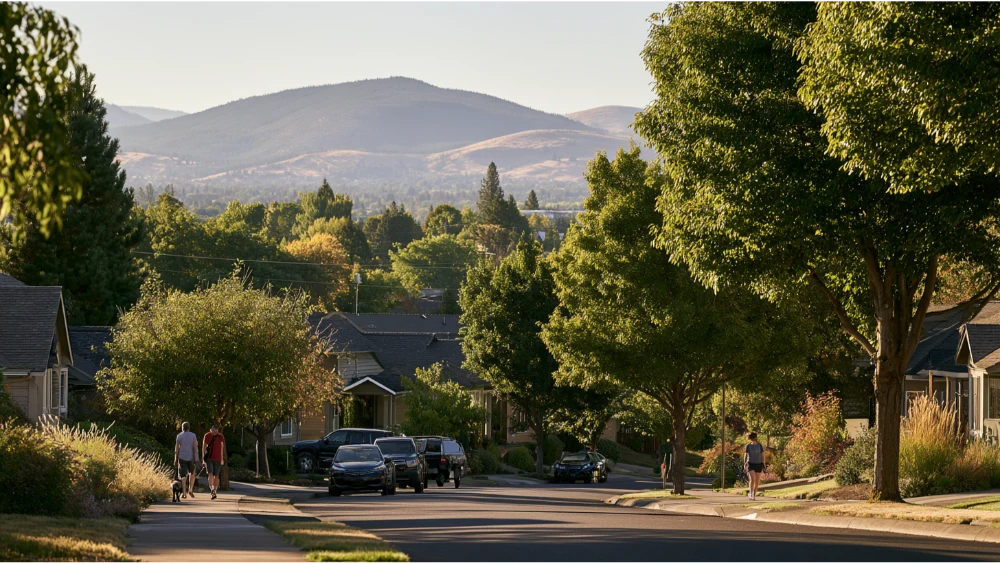
Medford works well for people who want a smaller West Coast base with real outdoor access close by. Outdoor lovers, remote professionals, and healthcare workers tend to find a lot to like here. It’s the primary economic center for the region, the cost of living beats major West Coast metros, and the local culture leans toward neighborliness over partisanship. With roughly 196 sunny days a year, it’s an easy place to get outside. Many locals describe the appeal as small town warmth with just enough city amenities to keep daily life convenient, which is a balance a lot of people are chasing right now.
It’s a harder fit for a few people. If you need corporate or executive-level roles, the local job market is narrower than a large metro’s. If big-city nightlife is a priority, the scene here is regional and locally oriented rather than sprawling. And if you’re sensitive to summer heat or wildfire smoke, those seasonal realities deserve honest thought before you commit. Medford rewards people who want a slower pace with nature at the edge of town, not those chasing a dense urban hub. For a lot of residents, that tradeoff is exactly the point of moving to Medford Oregon in the first place.
Medford at a Glance
Here’s a quick-reference snapshot, with every figure dated.
| Metric | Value | As of |
|---|---|---|
| Population | ~86,494 | July 2025 |
| Median household income | $73,230 | ACS 2020–2024 |
| Mean commute | 16.6 minutes | ACS 2020–2024 |
| Median gross rent | $1,376 | ACS 2020–2024 |
| Typical home value | ~$404,082 | Sept 2026 (Zillow) |
| July average high/low | 91.6°F / 58.6°F | NOAA 1991–2020 |
| Sunny days per year | ~196 | Long-term average |
| Airport distance | ~3 miles from downtown | Current |
| Hospital beds | 378 + 120 | Current |
How Much Does It Cost to Live in Medford?
When we talk about cost of living in Medford, we mean housing plus utilities, transportation, and taxes taken together. Housing is the biggest line item, and it’s cheaper here than in Portland or Seattle. Oregon has no general state sales tax, which helps everyday purchases, but the state does levy a personal income tax that depends on your taxable income and residency status. Property taxes in Jackson County are worth factoring into your long-term math if you plan to buy. One cost people from cooler regions underestimate: summer heat drives up cooling bills, so budget for air conditioning use from roughly June through September. Groceries, dining out, and fuel land close to Oregon state averages, so the place where your budget shifts most compared with a big metro is almost always housing.
Rent, Home Prices, and the Housing Numbers Explained
Housing statistics get confusing because different sources measure different things. These are not interchangeable, so here’s what each one actually tells you:
- Median gross rent: $1,376 (ACS 2020–2024). This is what occupied renter households report paying, including applicable utilities.
- Zillow average asking rent: $1,728 (Sept 30, 2026). An asking-rent index for listed units, not what every resident pays. It moves often, so recheck it.
- HUD two-bedroom Fair Market Rent: $1,539 (FY2027, effective Oct 1, 2026). A federal administrative benchmark, not a prediction of current asking rent.
- Zillow typical home value: ~$404,082 (Sept 2026), up about 1% year over year.
- Median sale price: $420,600 (three months ending Sept 2026), with homes selling in roughly 32 days.
In practice, a two-bedroom rental often lands somewhere around $1,550 to $1,890 depending on age, condition, and location. If you’re hoping to buy, be realistic: homes under $250,000 to $300,000 are tough to find in this market, though they’re still more affordable than many California coastal markets. The gap between the Zillow home-value figure and the sale-price figure is a difference in method, not an error. Prices also vary from one part of the city to the next, with newer construction in South Medford often carrying a premium over older stock closer to the core.
Utilities, Transportation, and Oregon Taxes
Summer cooling is the utility cost most newcomers miss, since the valley sees stretches of triple-digit heat. On taxes, Oregon keeps things simple at the register with no general sales tax, though certain vehicle taxes still apply, and you’ll owe state income tax. For transportation, Rogue Valley Transportation District caps standard bus fares at $6 per day or $56 per month, which keeps regional transit predictable if you use it. Water, sewer, and trash are billed through the city, so factor those into your monthly math alongside power and internet when you compare rentals.
Should You Rent or Buy First in Medford?
For most people moving in from out of state, renting the first year is the smart play. It lets you test a neighborhood, confirm your commute, and see how wildfire smoke affects your specific location before you tie up money in a purchase. With typical home values hovering around $404,000 to $422,000, buying sight-unseen is a big bet. A year as a renter also gives you time to learn which communities and neighborhoods actually fit your daily routine, something no listing photo can tell you.
Renters make up a substantial share of the market here, about 43.7%, since owner-occupied housing sits at 56.3%. Oregon also has a rent-stabilization framework: for covered tenancies, the maximum allowable rent increase during 2026 is 9.5%. That cap doesn’t apply uniformly, though. Exemptions, notice requirements, property age, and tenancy type all matter, so don’t assume every rental is covered.
Before you decide, run the numbers. KT Rents’ Rent vs. Buy Calculator and Cost of Living Calculator let you compare a Medford budget against renting elsewhere. We operate nationwide, so these tools work no matter where you’re starting from.
Understanding Medford’s Neighborhoods and Communities
We won’t tell you which area is “best” or label any of them, because that’s not useful and it isn’t fair. Instead, compare areas by things you can verify: housing type and age, distance from where you’ll work, proximity to parks and the Bear Creek Greenway, how close you are to downtown, whether you’re near highway or airport noise, and elevation. Home values vary across the city’s neighborhoods, generally in that $408,000 to $422,000 band, with older and newer housing stock spread differently across different communities and the surrounding area.
For address-level checks, use the official tools rather than general impressions. Pull up the City of Medford’s map, the Medford School District’s school-boundary locator, the Medford Police Department’s online crime portal, and the Jackson County evacuation-zone lookup. Those four resources will tell you more about a specific address than any neighborhood label ever could, and they beat secondhand opinions from locals who may be describing the city as it was a decade ago.
Downtown and North Medford
Downtown is the most walkable part of the city, with historic buildings, theaters, and a concentration of dining and arts. If you want to run errands on foot and be near local events, it’s the densest option, and Vogel Plaza anchors many of the gatherings and markets there. North Medford is largely established residential with mature housing and is served by North Medford High School. Residents here often value the quieter, settled feel and the easy access back into the downtown core for work or a night out.
South Medford, East, and West Medford
South Medford has seen more recent growth and tends to have newer housing, which draws families and buyers who want modern construction. Head to the east side and you climb toward the hills, so expect more elevation and, in spots, a bit more distance from the city core, along with quick access to trailheads near Roxy Ann Peak. West Medford sits closer to the highway and the airport, which can mean faster access to I-5 and flights but more road or flight noise depending on the exact block. Verify school assignment and evacuation zone for any specific address before you commit.
Jobs, Employers, and Wages in Medford
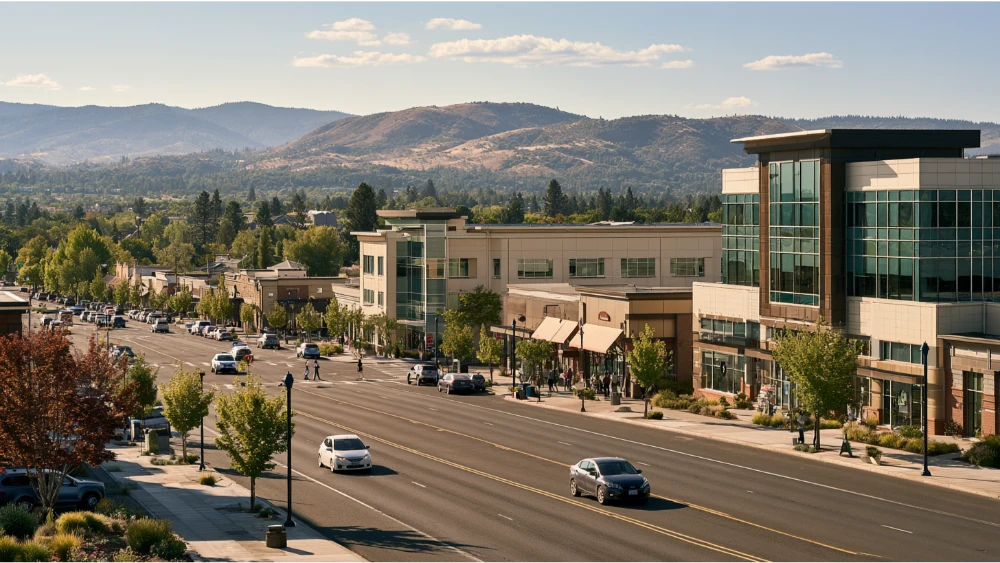
Healthcare anchors the local economy. Education and health services made up about 21,300 jobs in August 2026, the largest category in the metro, driven in part by the two hospitals. Trade, transportation, and utilities followed with roughly 19,400 jobs. Education and hospitality round out the major employers. The metro GDP reached about $12.853 billion in 2023, and health care and social assistance posted the biggest private-sector gain of the past decade.
Now the honest part. The metro unemployment rate was 5.9% in August 2026, above the national average, and these figures are preliminary and shift monthly. The mean local wage was $30.70 per hour in May 2025, compared with $33.54 nationally. Healthcare practitioners do better, averaging $61.76 per hour, but the breadth of corporate and executive roles is limited compared with a large metro. If you can, line up a job before you sign a lease rather than assuming openings will match your field.
Higher Education and the Southern Oregon Job Market
Beyond the schools serving kids, the area gives adults room to study and retrain. Rogue Community College runs campuses in the region, and Southern Oregon University in nearby Ashland adds four-year and graduate programs within an easy drive. Those institutions feed the local job market in education and healthcare, and they give newcomers a path if they want to shift careers after landing in the valley.
Remote Work in the Rogue Valley
Medford is a genuinely workable base for remote professionals. About 91.6% of households have broadband subscriptions, so if you bring your own income, you can trade a pricier metro for valley trails and shorter days without sacrificing connectivity. For people who want paradise-adjacent living with a steady work-from-home setup, the math often favors a place like this. Plenty of newer remote-working residents end up splitting their week between home offices and downtown coffee shops, which is one reason the small town pace suits that crowd so well.
Schools and Education in Medford
Medford School District 549C serves about 13,000 students. Its structure includes 13 elementary schools, one K–8 outdoor school, three middle schools, three high schools, four charter schools, and three schools of choice. The 2024–2025 class-size report listed a median class size of 23. Private institutions are also available in the area, and nearby communities like Jacksonville and Ashland add further options within a reasonable drive.
School placement is address-based, so use the district’s online locator to confirm which school a specific home feeds into. Regular enrollment can be completed online, but charter schools and schools of choice use separate processes, so start those early if they interest you. One timing rule: a child must be five years old on or before September 1 to start kindergarten. Rather than relying on a single rating, review the current Oregon Department of Education profile for your assigned school, where you can see programs and performance for that specific building.
Hospitals and Healthcare Access
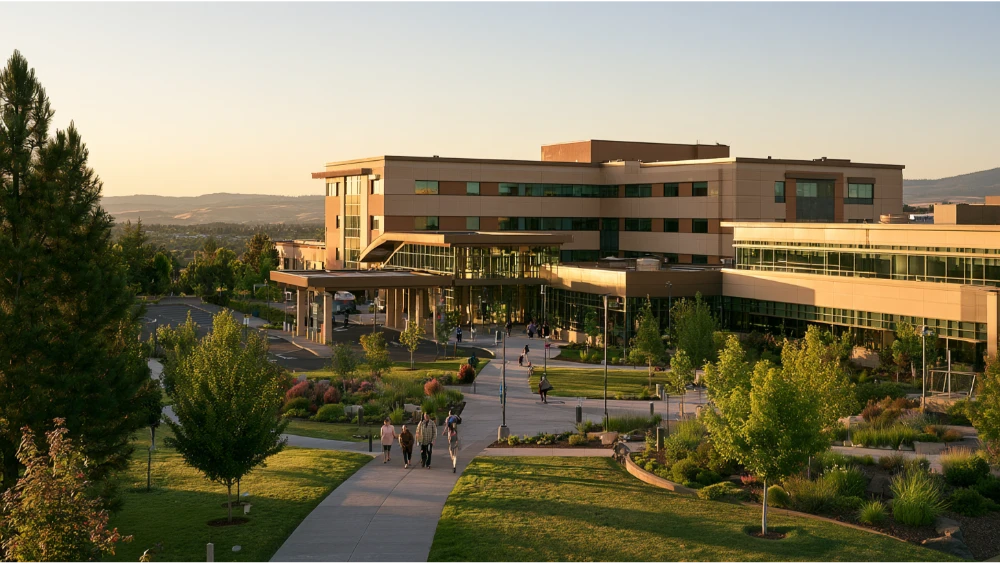
Medford is the healthcare center for Southern Oregon, which is one of its real advantages. Asante Rogue Regional Medical Center is a 378-bed regional referral and Level II trauma center, with heart and vascular care, neurology, cancer and stroke care, rehabilitation, and the region’s neonatal intensive care unit. Providence Medford Medical Center is a 120-bed, full-service acute-care hospital. Because Medford draws patients from across Southern Oregon and Northern California, specialists who would be hours away in a smaller town are often available right in the city.
Before you choose a home, run a quick healthcare check for that address:
- Confirm your health plan is accepted at the hospital and clinics you’d use.
- Measure the distance to your preferred primary-care provider.
- Verify that specialists you rely on are available locally.
- Check urgent-care and pharmacy access from the specific address.
Weather, Wildfire Smoke, and Home Comfort
Medford has a Mediterranean-style climate, and the NOAA normals tell the real story better than “sunny” ever could. When you’re touring rentals, ask whether a property has air conditioning, well-sealed windows, and replaceable HVAC filtration. Those three things shape your comfort and energy bills more than almost anything else here.
Summers, Winters, and the Rogue Valley Climate
Summers are hot and dry. July averages a high of 91.6°F and a low of 58.6°F, with about 61 days per year reaching 90°F or more and roughly 10 days hitting 100°F, with extremes recorded as high as 115°F. Winters are mild by daytime, averaging a January high of 48.2°F, but nights get cold at a 32.5°F low. Those mild winters are a big part of why the outdoor season stretches so long here. Annual precipitation runs around 18 to 19 inches, with only about 3.4 inches of snow. The practical upshot: plan for serious cooling in summer and some heating on cold winter nights.
Wildfire Smoke and Emergency Preparation
Smoke is the climate factor that varies most year to year. Oregon DEQ reported Medford recorded just one day at “Unhealthy for Sensitive Groups” or worse during the 2025 wildfire season, but one quiet year isn’t a reliable maximum. Southern Oregon can see intermittent smoke from in-state and regional fires. Before fire season, look up your numbered evacuation zone through the Know Your Zone program and register for Jackson Alerts. During advisories, check the Oregon Air Quality Index and run high-efficiency indoor filtration. Ask about the evacuation zone for any specific address, since exposure isn’t uniform across the city.
Getting Around Medford
Medford is largely car-oriented, but the payoff is short trips. The mean commute is just 16.6 minutes. Rogue Valley Transportation District runs regional bus service with those fare caps of $6 per day or $56 per month, which helps if transit fits your routine. The Bear Creek Greenway, a roughly 20-mile paved trail, makes cycling a real option for some commutes and errands, and it gives residents easy access between parks, schools, and shopping without touching a highway.
Air travel is easier than you’d expect for a city this size. Rogue Valley International–Medford Airport sits about three miles from downtown, with five commercial carriers and around 11 direct destinations, though routes shift with seasons and airline schedules. Can you live car-free? Possibly, but only with a carefully matched home, job, and transit combination. Most movers will need a car. Before you commit, test your real trips: grocery runs, work, school, and medical appointments, all from the exact address you’re considering.
Food, Entertainment, and Local Culture
Medford’s lifestyle is regional and locally rooted, not a stand-in for a big metro’s nightlife. Downtown is where much of it lives: independent restaurants and coffee shops, theaters hosting live performances, and seasonal farmers’ and crafters’ markets. The historic downtown has public art and classic buildings, and hosts community festivals and local events through the year that give newcomers an easy way to meet locals.
The Medford Carnegie Library and Downtown Draws
The Medford Carnegie Library is one of the classic buildings that gives the historic core its character, and the downtown around it stays busy with markets and public art. Food and drink lean into the region’s agriculture, with pear orchards and vineyards shaping local tasting rooms and menus. Two of the Pacific Northwest’s notable cultural draws are within easy reach: the Oregon Shakespeare Festival in nearby Ashland and the Britt Music & Arts Festival in Jacksonville. Ashland adds a lively college-town energy and a walkable plaza, while Jacksonville keeps a preserved historic Gold Rush character that’s worth a visit on its own. You get a walkable downtown scene plus serious regional culture a short drive away, which is a rare combination for a city this size.
Outdoor Activities and the Rogue Valley Lifestyle
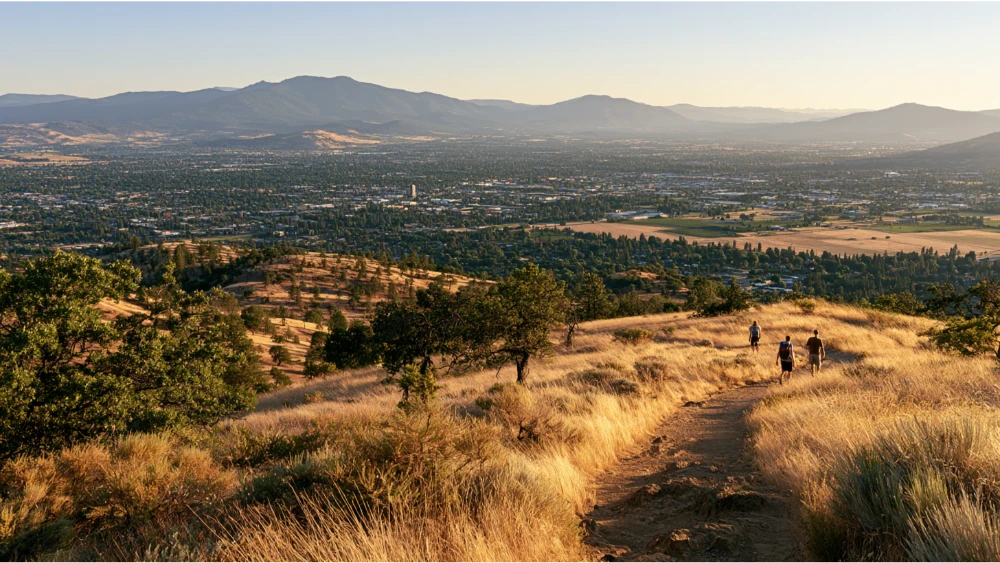
This is Medford’s strongest draw, and it holds up to the hype. You’re minutes from trails, rivers, and parks, and a day trip from some of Oregon’s best-known landscapes. For anyone who values an outdoor lifestyle, the breadth of outdoor recreation here is hard to match at this size.
City Parks: Bear Creek Park and Prescott Park
The city maintains 31 parks, roughly 2,500 acres, with about 45.16 miles of trails and shared-use paths. Bear Creek Park covers around 110 acres and packs in sports fields, a skatepark, an off-leash dog area, a BMX track, tennis courts, trails, and an amphitheater, making it one of the busiest gathering spots for residents on a warm weekend. It also keeps little league fields and other league fields busy through the spring and summer seasons. Prescott Park climbs Roxy Ann Peak for hikes with valley views, and at over 1,700 acres it’s one of the largest city parks in Oregon. The Bear Creek Greenway runs about 20 miles total, with roughly 7.2 of those miles inside Medford, linking parks and neighborhoods along Bear Creek. Between these parks, locals rarely have to drive far to find green space.
Hiking Table Rocks and Roxy Ann Peak, Rafting, and Day Trips
Just outside town, the Table Rocks are a local favorite. Upper Table Rock is a 2.8-mile round-trip; Lower Table Rock runs 5.4 miles with about 780 feet of gain. The Rogue River brings whitewater rafting and fishing within easy reach, and guided trips on the Rogue River are a rite of passage for new residents. For bigger adventures, Crater Lake is a doable day trip, the Oregon coast is a drive west, and Ashland and Jacksonville are short hops for a change of scenery. If an outdoor life is what you’re after, few cities this size deliver this much within an hour.
Your Oregon Moving Checklist
Work through these steps once your move is underway:
- Update your Oregon driver’s license and title and register your vehicle within 30 days of becoming a resident.
- Enroll your kids using the district’s school-boundary locator, and start charter or school-of-choice applications separately.
- Set up utilities and internet before move-in day.
- Secure renter’s or homeowner’s insurance.
- Register for Jackson Alerts for emergency notifications.
- Look up your numbered evacuation zone through Know Your Zone.
- Install an Oregon Air Quality Index app for smoke season.
- Review your lease and Oregon’s rent-increase rules before signing.
- Run an address-level commute test for work, school, grocery, and medical trips.
The Honest Pros and Cons of Moving to Medford Oregon
Pros:
- Lower cost of living than Portland or Seattle
- Short commutes, averaging under 17 minutes
- Major regional healthcare with two hospitals
- Strong outdoor access across the Rogue Valley
- A regional airport three miles from downtown
- No general sales tax
- Around 196 sunny days a year
Cons:
- Hot summers with frequent 90°F-plus days
- Late-summer wildfire smoke that varies year to year
- Wages below the national average and higher unemployment
- A car-dependent layout for most residents
- Limited corporate and executive job breadth
- A tight market for homes under $300,000
Frequently Asked Questions
Is Medford, Oregon a desirable place to live?
For outdoor lovers, remote workers, healthcare professionals, and anyone wanting a smaller West Coast base with lower costs, yes. It’s a harder fit if you need big-city jobs or nightlife, or if summer heat and smoke are dealbreakers.
Is Medford liberal or conservative?
The region tends toward a neighborly, less-partisan local culture rather than fitting neatly into one label. Michael Zarosinski was elected mayor in 2024.
Is there a drug problem in Medford, Oregon?
Oregon’s Measure 110 decriminalized drug possession and was later reversed. For current, location-specific data, check the Medford Police Department’s online portal and crime map rather than relying on a general verdict.
What does rent cost in Medford?
Median gross rent reported by occupied renters was $1,376 (ACS 2020–2024). A typical two-bedroom often runs $1,550 to $1,890, and the Zillow asking-rent index was about $1,728 as of September 2026, so verify current listings before you budget.
Can you live in Medford without a car?
It’s possible with a carefully matched home, job, and transit setup, but most movers will need a car. Test your real trips from the exact address before deciding.
Find Your Next Rental With KT Rents
KT Rents is a full-service, broker-owned property management company that’s operated across the U.S. since 2009, so wherever you’re moving from, our tools travel with you. Use our Rent Calculator, Rent vs. Buy Calculator, and Cost of Living Calculator to compare a Medford budget against your current city, then browse our national rental listing marketplace. Search current rental listings and compare your Medford budget before you move. We care after the keys change hands too, with a housewarming welcome and discounts on home goods to help you settle in. Your Rental. Your Way. Reach us at (800) 716-4950 or info@ktrents.com.