

Eugene, Oregon
Homes for rent and for sale — search the map or open the full city SEO catch-all page.
Eugene, Oregon
Moving to Eugene, Oregon means joining a mid-sized college town of about 178,618 people with strong trail access, bike infrastructure, and a University of Oregon-driven culture. Budget around a median gross rent of $1,402 and expect overall costs roughly 8 to 13% above the national average. Two facts surprise newcomers most: Eugene no longer has a hospital emergency department inside city limits, and housing runs high relative to local incomes at a median of $66,562.
Moving to Eugene, Oregon
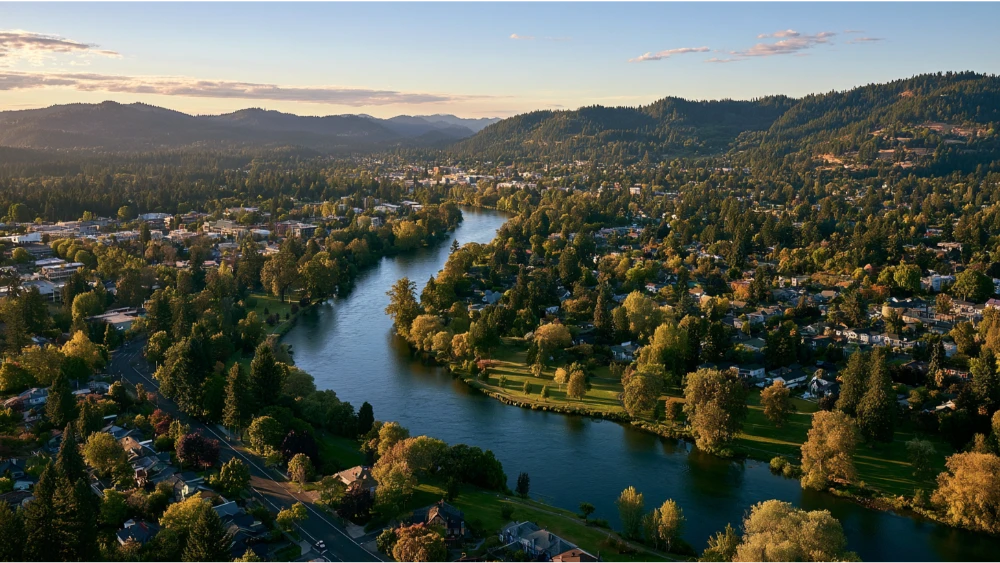
Moving to Eugene makes sense if you want a mid-sized college town with biking, trails, arts, and real outdoor access, and you can line up the housing and job numbers before you arrive. Two things surprise new residents: housing costs run high relative to local incomes, and Eugene proper no longer has a hospital emergency department, so full-service ER care is across the city line in Springfield. Budget around a median gross rent of about $1,402 (2020 to 2024) and expect overall cost of living roughly 8 to 13% above the national average. This guide is for renters and relocating households who want the full picture before signing a lease. At KT Rents, we’re a nationwide, broker-owned rental resource, not a Eugene office, and we built this complete guide to help you compare Eugene honestly.
| At a glance | Figure |
|---|---|
| Population | 178,618 (July 2025 estimate) |
| Median household income | $66,562 (2020 to 2024) |
| Median gross rent | $1,402 (2020 to 2024) |
| Verdict | Great fit for outdoor, university lifestyle if you solve housing and jobs first |
Eugene at a Glance: The Emerald City in the Willamette Valley
Eugene is a mid-sized city of about 178,618 people (July 2025 estimate) in the southern Willamette Valley, with the University of Oregon shaping much of its character and economy. It’s the county seat of Lane County and one of the larger population centers in western Oregon. Eugene sits next to Springfield, and the two function as one metro while staying separate cities, which matters for schools, emergency care, and city boundaries. Local residents call it the Emerald City for its green surroundings, and the running community knows it as TrackTown USA thanks to the University’s track and field legacy. The University of Oregon is the area’s largest employer and anchors a lot of the culture, from athletics to arts. Treat Eugene as a college town with a Pacific Northwest feel, not a small town and not a major metro. That framing drives every decision below, and it’s a big part of the quality of life that pulls people to this corner of the country.
How Much Does It Cost to Live in Eugene? Housing Costs and Cost of Living
Here’s the detail most guides skip: the rent numbers you’ll see measure different things, and lumping them together will mislead your budget. The Census reports a median gross rent (rent plus tenant-paid utilities) for existing renter households over several years. HUD’s Fair Market Rents are an annually updated program benchmark. Active asking rent is what landlords advertise today. All three are useful, but they are not the same.
| Measure | Amount | Date / context |
|---|---|---|
| Census median gross rent | $1,402 | 2020 to 2024 |
| HUD FY2027 studio FMR | $1,157 | Oct 2026 to Sept 2027 |
| HUD FY2027 one-bedroom FMR | $1,182 | Same period |
| HUD FY2027 two-bedroom FMR | $1,546 | Same period |
| HUD FY2027 three-bedroom FMR | $2,141 | Same period |
| HUD FY2027 four-bedroom FMR | $2,584 | Same period |
| Current 2BR asking rent | ~$1,660 to $2,020 | Verify before you move |
On the ownership side, median owner-occupied home value was $460,400 (2020 to 2024), with typical prices now closer to $482,062, and the owner-occupancy rate sits at 47.9%, under half the city. The rental market here favors renters who plan ahead, since single family homes and newer apartments can move fast in peak season. Home values and rents both run above the national average, while utilities and groceries land near or slightly below it. The honest summary: Eugene is more affordable than the high cost coastal cities like San Francisco or the broader Bay Area, but it isn’t cheap, and it isn’t the lowest-cost city in Oregon. Compared to a weekend trip to the Oregon Coast or a quick drive to Portland, daily costs here stay more manageable than many West Coast metros. Run your own numbers with our Cost of Living Calculator before you commit, and recheck asking rents right before you sign.
Renting in Eugene and Lane County: Deposits, Applications, and Renter Protections
Eugene renters get protections beyond baseline Oregon law, and knowing them saves money and stress. This is a plain-English summary, not legal advice, so confirm the current rules through the City of Eugene Rental Housing Program.
- Security deposits are generally capped at two times monthly rent (security, cleaning, and last-month combined); pet deposits are excluded from that cap.
- Applications generally must be processed first-come, first-served, with the unit offered to the first qualified applicant, subject to listed exemptions.
- Applicants who need help because of a language barrier may get up to 24 extra hours without losing their spot in line.
- Landlords must provide itemized photo or video documentation for any deposit withholding within 31 days of move-out.
- A written rental-history reference must generally be provided within five days of a written request.
- Qualifying landlord-initiated moves, no-cause terminations, and certain rent increases can trigger relocation assistance equal to two months’ current rent, though exemptions apply.
- Oregon’s maximum annual rent increase for covered tenancies is 9.5% during calendar year 2026, with exemptions and special rules.
These compliance details are exactly what a full-service, broker-owned manager handles: tenant screening, rent collection, deposit documentation, and lawful notices. Our bilingual team means Se Habla Español, which matters given that language-barrier extension. Before you apply, have your ID, proof of income, rental history, and references ready. Use our Rent Calculator to size your budget first.
Jobs and Salaries: What Is the Eugene Job Market Like?
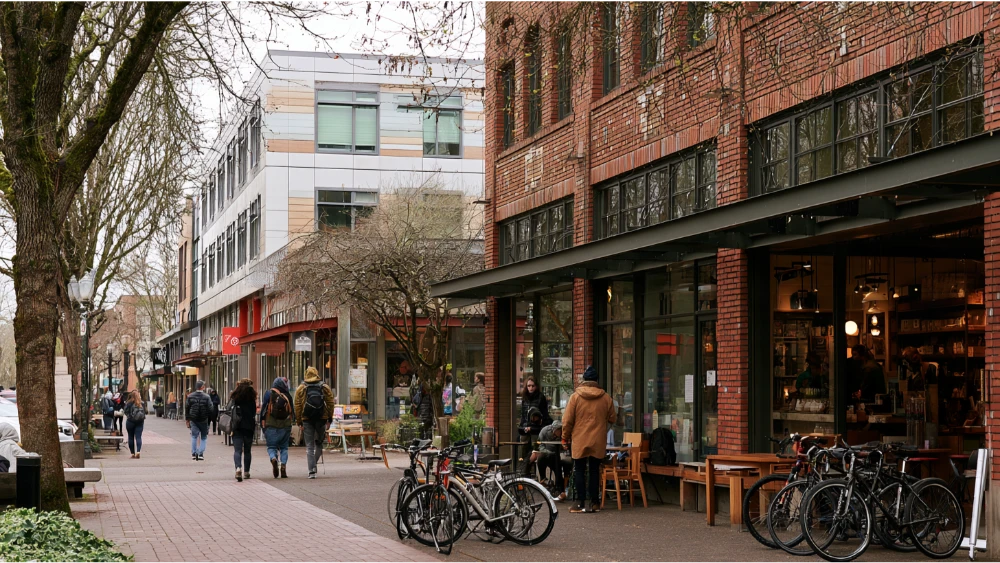
The Eugene-Springfield metro unemployment rate was a preliminary 5.3% in August 2026 (not seasonally adjusted), with total nonfarm employment near 159,300. The metro has real depth in several industries, but a smaller professional job market than a major metro, so not every field has deep employer choice here. Verify current figures before you decide, since BLS numbers update monthly.
- Education and health services: ~32,100 jobs (around 2.6% year-over-year growth)
- Trade, transportation, and utilities: ~27,700
- Government: ~27,000
- Leisure and hospitality: ~17,600
- Professional and business services: ~17,200
- Manufacturing: ~13,800
The University of Oregon is the largest single employer, and local businesses across food, retail, and services round out the picture. Lane County’s minimum wage is $15.55 per hour (July 2026 through June 2027), updated annually. If you’re one of the remote workers who can bring a job with you, or you have a confirmed offer, you’re in good shape. Remote work has made the eugene area more flexible for professionals who value lifestyle over proximity to a single employer. If you need local job opportunities for career advancement in a specialized field, research your occupation’s demand before you sign a lease. Moving first and job-hunting second is the most common way relocations go sideways in a mid-sized market like this.
Best Neighborhoods in Eugene: Choosing by Commute and Lifestyle
Eugene maps 23 recognized neighborhood association areas, each with its own distinct character. These are community boundaries, not quality rankings. Pick an area by your actual commute, transit access, housing type, and proximity to parks, then verify the specific address. Don’t rely on crime-ranking sites or crowdsourced grades, and never assume a neighborhood name equals a school assignment.
| Area group | Near downtown/UO | EmX / bus access | Typical housing form | Trails & parks | Commute notes |
|---|---|---|---|---|---|
| Central & university (Downtown, West/South University, Fairmount) | Closest | Strong | Apartments, student rentals, older homes | Riverfront paths nearby | Most car-light friendly |
| Inner west & river (Jefferson Westside, Friendly, Whiteaker, River Road) | Close to moderate | Good to moderate | Older homes, mixed stock | River access | Walkable pockets, test by block |
| South Eugene & Ridgeline (Amazon, Southeast, Southwest Hills) | Moderate | Varies | Established homes | Ridgeline trail access | Hillier terrain, car useful |
| North/northeast (Cal Young, Harlow, Goodpasture Island) | Moderate | Varies | Larger lots, newer builds | Parks nearby | More car-dependent |
| West/northwest (Bethel, Churchill, West Eugene, Santa Clara) | Farther | EmX serves west corridor | Often more affordable, mixed | Varies | Confirm city limits |
South Eugene is established with trail access, while the Cal Young area tends toward larger lots and Bethel is often more affordable. Cal Young in particular appeals to households that want newer builds and room to spread out without leaving Eugene. Whatever you’re drawn to, drive or ride your commute at the time of day you’d actually travel it, and confirm whether the address sits inside Eugene city limits, since city, Lane County, utility, and school lines don’t always match near the edges.
Eugene School District Options and Educational Opportunities
A Eugene address may fall within Eugene School District 4J or Bethel School District, so verify your exact property address before signing anything. Eugene 4J runs more than 30 schools with neighborhood, language-immersion, alternative, and online options, and transfers depend on space through the district’s school-choice process. Bethel has nine schools and more than 4,800 students. In 4J, children who turn five on or before September 1 are eligible for kindergarten, with early-entry requests possible for those turning five by September 30. Check district boundary tools, state report cards, program offerings, and visit schools in person rather than relying on labels. For higher education, Eugene has the University of Oregon, Lane Community College for two-year and workforce programs, Bushnell University, and Oregon State University extension offerings. Beyond the city, Portland State University adds another public option within reach for the wider region. Bushnell University adds a smaller private option in the mix, rounding out a college town where education shapes daily life.
Verify Your School Boundary by Address
Use the 4J interactive enrollment map to identify the assigned elementary, middle, and high school for a specific address. Boundaries, transfer deadlines, and program availability change by academic year, so confirm for the year you’ll enroll.
Does Eugene Have a Hospital? Where to Find Emergency Care
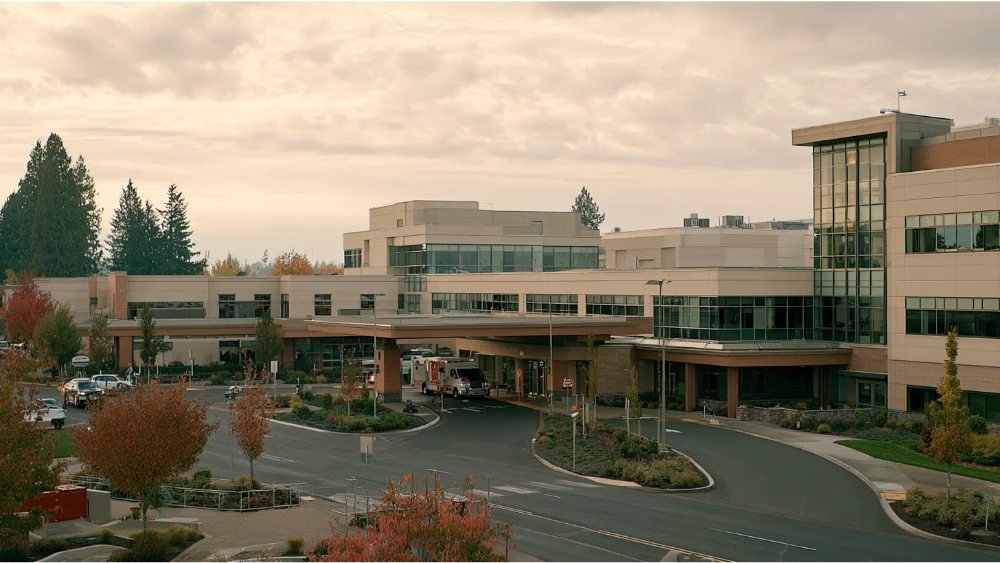
Important correction many guides get wrong: the emergency department at the former University District campus in Eugene closed permanently at 7 a.m. on December 1, 2023. Eugene proper no longer has a hospital emergency department. The nearest full-service ERs are across the city line in Springfield.
- Sacred Heart Medical Center at RiverBend (Springfield)
- McKenzie-Willamette Medical Center (Springfield)
- Cottage Grove Community Medical Center (farther south)
Eugene still has urgent care and outpatient options near central and South Eugene, so the city isn’t without medical care. But emergency volume has shifted: RiverBend’s ED reportedly grew from roughly 55,000 visits in fiscal year 2024 to more than 80,000 projected. If you or a household member has ongoing medical needs, factor ER drive time into where you rent.
Getting Around Eugene: Transit, Bike Lanes, and Car-Light Living
The EmX bus rapid transit line connects West Eugene, downtown, the University of Oregon, downtown Springfield, and the Gateway/RiverBend healthcare area. Regular Lane Transit District fares are affordable, though routes and prices change, so verify before you move.
- Adult single ride: $1.75
- Adult day pass: $3.50
- Adult 31-day pass: $50
Eugene is a Gold-Level Bicycle Friendly Community with an extensive network of bike lanes, including about 8.7 miles of protected lanes. Those bike lanes make commuting by bike a genuine option, not a novelty. Car-light living is realistic when your housing, work, and shopping line up with EmX, regular bus routes, the city center, or the university area. For outer neighborhoods and regional recreation, a car earns its keep. For travel beyond town, Eugene’s Amtrak station offers Cascades service north toward Portland and Seattle plus Coast Starlight connections, so a weekend in Portland is an easy train ride. Eugene Airport runs nonstop flights to western hubs with seasonal changes.
Eugene Weather: Wet Winters, Dry Summers, and Seasonal Living
Expect cool, often overcast, wet rainy winters and warm, very dry summers. The seasonal contrast matters more than the annual total. NOAA’s 1991 to 2020 normals show about 40.83 inches of annual precipitation, but July averages just 0.32 inches while December averages 7.21 inches. January’s average low runs around 34.7°F and July’s average high reaches 84.0°F. When you tour a rental, look at drainage, heating and cooling, shade for hot summer afternoons, and storage for wet-weather gear. Check the specific address for flood or terrain concerns, and lean on current air-quality and emergency-management sources for summer smoke and heat guidance.
Food, Farmers Markets, Arts Venues, Sports, and Outdoor Recreation in Eugene
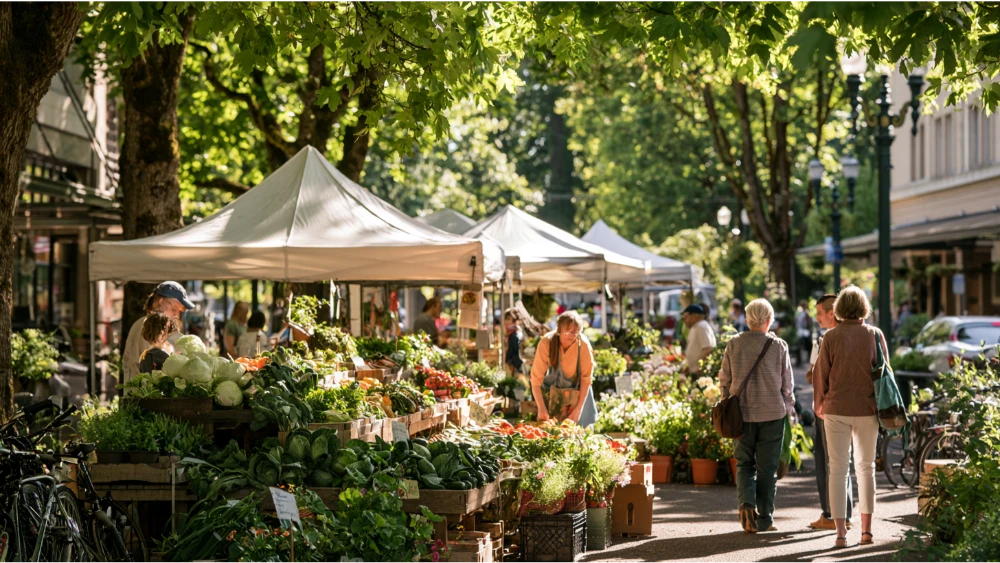
This is where Eugene earns its reputation. Downtown Eugene anchors the arts scene, with performing arts venues like the Hult Center drawing national touring productions and the Oregon Bach Festival filling summer calendars. Those performing arts venues punch above what you’d expect for a city this size. University of Oregon sports pull big crowds, and Hayward Field hosts major track and field each summer, fitting the TrackTown USA nickname and a city that genuinely runs. For food, the Lane County Farmers Market runs through the growing season, and farmers markets here are as much a weekend ritual as a grocery run. The dining scene leans into independent restaurants, coffee spots like Meraki Coffee, food carts, farm to table kitchens, and craft beverages. Agate Alley Bistro is one example of the kind of local spot that gives each district its own feel. Rather than chase a restaurant list that goes stale, know the districts: downtown, the Whiteaker area, and the university edge each have their own flavor, and the farm to table restaurants lean hard on Willamette Valley produce.
Outdoor recreation is a daily option, not a weekend event, and it’s a top reason outdoor enthusiasts settle here. The city has more than 38 miles of unpaved trails, plus green spaces like Skinner Butte Park and the Owen Rose Garden for easy afternoons close to home. The Ridgeline system offers miles of trail with Spencer Butte topping out around 2,055 feet, perfect for a morning hiking habit before work. Alton Baker Park and the riverfront paths follow the Willamette, and the McKenzie River nearby draws paddlers and river anglers. The diverse geography is a big draw: kayaking and whitewater are close enough to keep whitewater rafters busy, the Cascade Mountains are a short drive, and the rugged Oregon Coast with its rugged coastline sits within about 90 minutes, close enough that ocean fishermen can chase saltwater one day and hit a Ridgeline trail the next. That range of outdoor recreation, from morning hiking to coast runs, plus a strong eco-conscious streak, gives you a city built for outdoor enthusiasts. Few places in western Oregon pack this much diverse geography into one easy radius.
Taxes and Budgeting: No Sales Tax Doesn’t Mean Low-Tax
Oregon has no general sales tax, which is real savings at the register. But it isn’t a low-tax state, because Oregon’s personal income tax reduces your take-home pay in a way many newcomers underestimate. There’s also Eugene’s Community Safety Payroll Tax, which applies to employers and self-employed people with a physical business location inside Eugene, along with their covered employees. The key distinction: if you live in Eugene but work remotely for an employer with no physical Eugene location, the city’s guidance says that local payroll tax does not apply to you. When you budget, add renter’s insurance, utilities (near or slightly below the national average), and transportation. Between housing, food, and recreation you can easily spend more than you planned in the first few months, so build in a cushion. Skip any single “overall cost-of-living percentage” claim beyond the 8 to 13% above-average range cited earlier.
Pros and Cons of Moving to Eugene
Potential advantages
- Strong outdoor recreation, from Ridgeline trails to the coast and Cascades
- Bike lanes and bus options, with a walkable core and university area
- Arts venues, festivals, and University of Oregon events
- Mid-sized college town scale without big-metro congestion
- No general sales tax, and a strong overall quality of life with a genuine community feel
Potential drawbacks
- Housing costs that run high relative to local incomes
- A smaller professional job market than a major metro
- Wet, dark winters that stretch from late fall onward
- Emergency hospital care located in Springfield, not Eugene
- A car stays useful outside the central transit corridors
Your 60-Day Eugene Moving Checklist
Work the decisions in order, because each one depends on the last.
- Secure employment or get remote-work approval in writing.
- Calculate your rent budget and move-in funds, including deposits.
- Verify any rental listing is legitimate before sending money.
- Check the school boundary for the exact address using the 4J map.
- Map your real commutes: work, school, nearest ER, and groceries.
- Review the lease against Eugene’s renter protections.
- Arrange utilities and renter’s insurance.
- Update your vehicle registration, driver’s license, and voter info.
- Visit the area at different times of day if you can.
As a broker-owned platform, we can help you confirm a listing is real, which is exactly the reassurance renters want when searching from out of town.
Find Your Next Rental With KT Rents
We’ve been a full-service, broker-owned rental resource since 2009, operating nationwide, and we help you compare the full picture, not just four walls. We don’t claim to manage Eugene properties, so confirm current availability with us before you count on local inventory. Start with our rental listing search, then run the numbers with the Rent Calculator, Cost of Living Calculator, and Rent vs. Buy Calculator, and get your rental application ready. When you’re set, browse listings or reach us: call (800) 716-4950, text (608) 207-0657, or email info@ktrents.com. We respond within 24 hours. Se Habla Español.
Frequently Asked Questions
What salary do you need to live comfortably in Eugene?
Aim your housing budget against a median gross rent near $1,402 and the city’s median household income of $66,562. A common guideline keeps rent around a third of gross pay, so run your own figure with our Rent and Cost of Living Calculators before you commit.
Is Eugene, Oregon a desirable place to live?
Yes, if you want a mid-sized college town with trails, biking, arts venues, and university events, and you can make housing and jobs work before arriving. What eugene offers is a strong sense of community and quality of life for outdoor types. It’s less ideal if you need a deep professional job market or sunny winters.
What is the downfall of living in Oregon?
The honest drawbacks are the state income tax that trims take-home pay, long wet and overcast winters, and in Eugene specifically, emergency hospital care now located in Springfield. None are dealbreakers, but plan for all three.
Should you rent or buy when moving to Eugene?
Renting first is often smart. With typical home values around $482,062, a year of renting lets you learn neighborhoods, commutes, and school boundaries before buying. Our Rent vs. Buy Calculator helps you weigh the math for your situation.
Can you live in Eugene without a car?
Yes, if your housing, work, and shopping align with EmX, regular bus routes, downtown, or the university area, backed by an extensive network of bike lanes. For outer neighborhoods and regional outdoor recreation, a car remains the more practical choice.