

Corvallis, Oregon
Homes for rent and for sale — search the map or open the full city SEO catch-all page.
Corvallis, Oregon
Moving to Corvallis, Oregon means settling into a compact university city of about 61,500 people with fareless public transit, Gold-level biking infrastructure, and a Level II trauma center. Typical home values run around $556,000 and median rent near $1,775, so housing is the biggest budget pressure. The city rewards outdoor-oriented, car-light households with strong parks, a full cultural calendar, and short 16-minute average commutes.
Moving to Corvallis, Oregon
Corvallis is a compact university city in the Willamette Valley with fareless public transit, Gold-level biking infrastructure, a regional hospital, and short commutes. It’s one of the best small college towns in America for people who want outdoor access and a walkable core without a big-city footprint. The main thing to plan around is housing affordability, which is the city’s most persistent pressure point. It tends to fit Oregon State University staff and students, remote professionals, and outdoor-oriented households. Below you’ll find honest data, a neutral area comparison, and a 30-day relocation checklist so you can decide with facts instead of a sales pitch. Your Rental. Your Way.
Is Moving to Corvallis, Oregon Right for You?
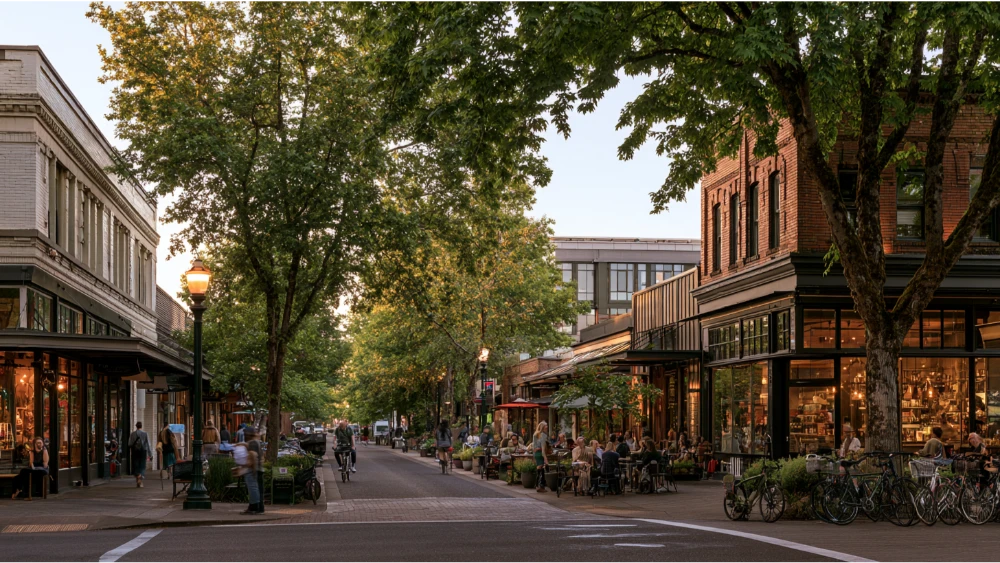
If you want a smaller place that still has a hospital, a real cultural calendar, and quick trips to parks and the coast, Corvallis earns a serious look. The college-town rhythm brings energy, events, and a steady flow of people. It also drives up rent and tightens inventory at certain times of year. If your income is set (or your job is remote), Corvallis rewards a car-light, outdoor lifestyle. If you’re moving on hope of finding work after arrival, slow down and read the jobs section first. This guide pulls together the resources, tips, and advice you’ll want before you relocate, whether this is your first time in Oregon or a return to the region.
What Living in Oregon State University’s Home City Feels Like
This is a small, dense city. The U.S. Census Bureau estimated the population at 61,499 as of July 1, 2025, packed into just 14.27 square miles. A separate Portland State estimate put it slightly lower at 61,247, so treat the figure as an estimate that shifts by method. That density is why so much of daily life happens on foot or by bike, and it’s a big reason locals describe Corvallis as a great place to settle.
Oregon State University sets the tempo. With 25,374 students enrolled in 2025, the campus shapes housing demand, traffic, and the seasonal calendar. Move-in weeks are busy, summers quiet down. A tightly managed urban growth boundary keeps sprawl in check, which protects the compact feel but adds to housing pressure. People who like knowing their neighbors and skipping long drives tend to settle in well here, and most Corvallis residents learn to love the walkable pace quickly.
Cost of Living and Housing in Corvallis
Housing is where Corvallis gets expensive, and where most online guides mislead you by blending numbers that measure different things. Here’s the clean version:
| Measure | Figure | What it means |
|---|---|---|
| Observed/asking rent | ~$1,775 (Sept 30, 2026, recheck) | What the current market is charging |
| Census median gross rent | $1,391 (2020–2024 ACS) | What surveyed tenants actually pay, including some utilities |
| HUD fair-market rent, 2BR | $1,824 (FY2026) | An administrative benchmark, not a prediction |
They differ because one tracks live listings, one tracks existing leases (many signed years ago), and one is a government benchmark. These figures vary by source and by season, so read them side by side. Home values run high too: Zillow estimated a typical home value of $556,438 in September 2026, and the city reported a 2025 median single-family sale price of $525,000. Median household income sits at $65,012 (2020–2024), and the city estimated a family needed $65,720 a year to afford a two-bedroom at the 30% threshold in 2025. Roughly 59% of residents rent. Oregon has no general sales tax, which helps everyday costs, though the state does tax income. Corvallis remains among Oregon’s most rent-burdened communities, so budget carefully.
Renting vs. Buying in Corvallis
With typical homes above $500K, buying carries a steep entry cost and a serious long-term commitment. Renting gives new residents flexibility to learn the city before committing to a mortgage and a neighborhood. Before you decide either way, run the numbers with KT Rents’ Rent Calculator, Rent vs. Buy Calculator, Mortgage Calculator, and Cost of Living Calculator. They’ll show you what a given monthly payment really means against local prices and your income. Working with a realtor or a full-service rental resource can also help you weigh the benefits of each path.
Corvallis Neighborhoods and Area Considerations
Corvallis has several distinct areas, each with its own character. Rather than rank them, compare them by practical factors that actually affect your day. Downtown and the central city put you near shops, the riverfront, and transit. Campus-adjacent and College Hill (including the historic College Hill West District, established 2002) sit close to OSU with older housing and parking restrictions, and the area is dotted with historic places worth a walk. North and northwest areas like Timberhill lean suburban with larger lots. West and southwest neighborhoods mix housing types. South Corvallis has a working-class, diverse character. Willamette Landing is a newer area with contemporary homes. These communities each offer different amenities, so verify two things by exact address before you commit: the school boundary and the natural-hazard maps.
A Neutral Area Comparison Checklist
- Distance to your commute anchor (work or campus)
- Housing type and age that fits your needs
- Transit routes and bike access
- Residential parking permit zones
- Nearby parks and shopping
- School-boundary verification by address
- Flood, slope, and natural-hazard map check
Jobs and Major Employers in Corvallis and Benton County
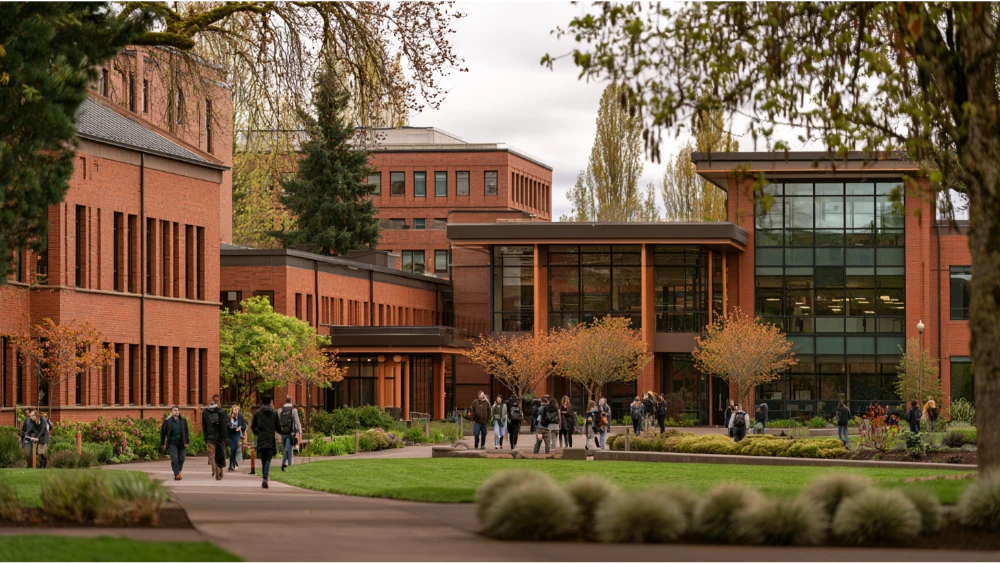
Corvallis has strong employment anchors but a concentrated market. Benton County’s FY2024 report lists Oregon State University (about 14,281 employees), the regional health system (about 3,650), and a major technology operation (about 2,500) as the three largest employers, with county government a key public-sector presence. Treat those as point-in-time figures, not live headcounts. The biggest occupational shares are education and library work, food service, office support, management, and healthcare. The average local wage was $35.58 an hour in May 2025, above the national $33.54. Because the market isn’t as broad as a big metro, secure a job or confirm your remote role before you move.
Schools and the Corvallis School District
If you’re reading an older relocation guide, its school section is probably outdated. The district reconfigured in 2026. The current 2026–2027 setup includes six K–6 schools, two K–8 schools, one junior high, two high schools, alternative programs, and one K–5 charter. In June 2026, Letitia Carson Elementary and Cheldelin Middle School closed as part of consolidation, and Linus Pauling Middle School became Corvallis Junior High for grades 7–8. District enrollment was about 5,859 for 2024–2025 (charter excluded). Assignments depend on your exact address, so use the district’s official boundary locator rather than assuming. For performance data, check the Oregon Department of Education’s report cards instead of third-party rating sites. OSU also offers continuing education for adults.
Hospitals and Healthcare in Corvallis
Good Samaritan Regional Medical Center anchors healthcare here. It’s a 188-bed hospital and one of Oregon’s Level II trauma centers, serving the south-central Willamette Valley and nearby coastal communities. Services include emergency care, a birthing center, stroke and cardiac rehabilitation, surgery, intensive care, physical rehab, and palliative care. That regional role is a detail most guides skip, and it matters when you’re weighing access to serious care.
Getting Around Corvallis
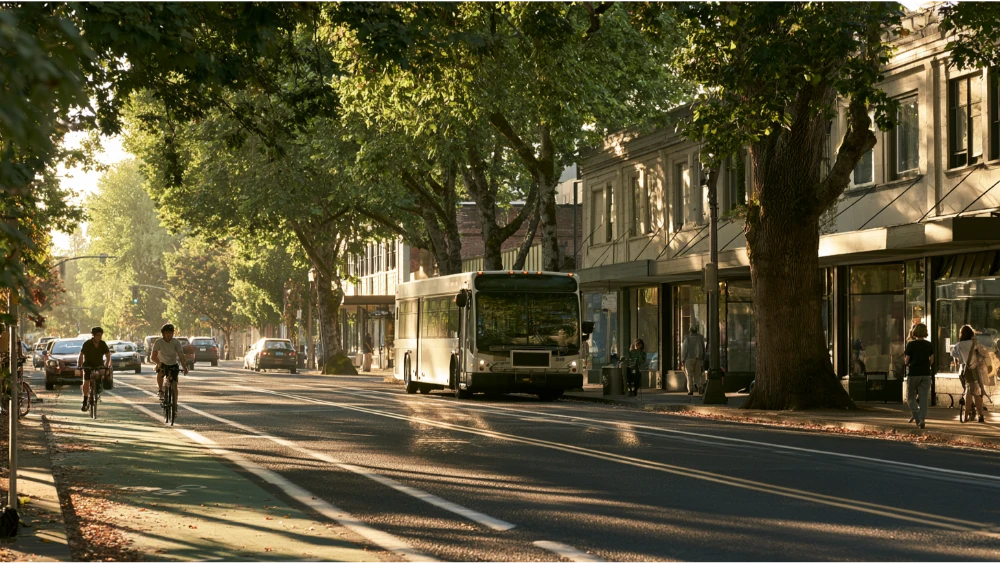
Here’s a genuine standout: Corvallis Transit System buses are fareless for everyone, with no scheduled end date. Add Gold-level Bicycle Friendly Community recognition from the League of American Bicyclists, bike lanes on 98% of collector and arterial roads, and 18 miles of shared-use paths, and car-light living is realistic in the core. The Census reports a short 16.1-minute average commute. Earlier city survey data found 11% of residents bike and 12% walk to work. Near OSU and downtown, residential parking districts limit non-permit street parking to two hours during controlled periods, so check your zone. A car still helps for coast trips, mountain outings, and errands beyond the center, and the nearby highway gives you easy access to Eugene and other valley cities when you want a day away. Driving to the coast or the mountains stays simple from here.
Weather and Climate: What to Pack
Expect mild, wet winters and warm, dry summers. NOAA’s 1991–2020 normals show 43.04 inches of annual precipitation across roughly 167 wet days, with only 2.9 inches of snow a year. July and August highs average about 83°F. January averages a 47.4°F high and a 34.3°F low, so hard freezes are rare. The gray winters run November through March, drizzly and overcast. Pack solid rain gear for the weather, bike fenders if you ride, and plan for light summer cooling rather than constant air conditioning.
Food, Culture, and Entertainment in Corvallis
The food scene runs on Willamette Valley agriculture, so farm-to-table dining, wineries, breweries, cider, and distilling are all well represented. In 2026, the downtown farmers market ran Wednesdays and Saturdays, 9 a.m. to 1 p.m., April through November (recheck the current schedule). Cultural anchors include the Majestic Theatre, The Arts Center, the Corvallis Museum, university arts programming, live music, and seasonal festivals. OSU athletics gives the community a built-in rhythm through fall and winter, with game days that bring the whole city out. There’s usually something happening every weekend, so it’s easy to explore the local calendar and build a social life fast.
Parks and Outdoor Recreation

Outdoor access is a real selling point and one of the genuine benefits of life in Corvallis. As of June 2026, the city reported about 1,800 acres of parks and natural areas and 24 miles of trails. Avery Park covers 75.3 acres and includes a rose garden with more than 250 varieties. Bald Hill, Chip Ross Park, Timberhill Natural Area, the riverfront, Crystal Lake Sports Fields, and Bruce Starker Arts Park round out the options. Hiking the hills, the coast, and the mountains all sit within day-trip reach from the valley, so weekend activities come easy and the trails stay open through most of the year.
Your 30-Day Corvallis Moving Checklist
- Get an Oregon driver’s license and register and title your vehicle within 30 days.
- Request city water and wastewater service at least one business day ahead (a $25 setup fee was listed; verify current fees).
- Confirm electric, natural gas, internet, and waste providers by your exact address.
- Check whether your address falls in a residential parking permit zone.
- Verify your school boundary through the district locator.
- Review flood and natural-hazard maps for the property.
- Update your insurance and voter registration.
The Honest Pros and Cons of Living in Corvallis
Pros: a compact, walkable layout, fareless transit and strong biking, a university and research base, Level II trauma care, abundant parks, a full cultural calendar, and no state sales tax. It’s a friendly, welcoming place to put down roots.
Cons: housing affordability pressure, wet winters, a concentrated job market, university-driven seasonal demand, and fewer big-metro amenities.
How to Start Your Corvallis Housing Search
Start by setting a realistic budget with the Rent Calculator and Cost of Living Calculator. Pick a commute anchor, then compare areas using the checklist above. Weigh renting against buying with the Rent vs. Buy and Mortgage Calculators before you lock in. KT Rents is a full-service, broker-owned rental resource operating nationwide across the states since 2009, with 16+ years of experience helping movers run a seamless relocation search and find a home that fits. Whatever’s located at the heart of your move, reach us at (800) 716-4950 or info@ktrents.com. Your Rental. Your Way.
Frequently Asked Questions
Is Corvallis, Oregon a good place to live?
Yes, if you value a compact, outdoor-oriented college town with short commutes and strong healthcare access. Just plan around higher housing costs, and expect to enjoy a complete, community-centered life once you settle in.
Is it cheaper to live in Corvallis or Albany, Oregon?
Nearby Willamette Valley communities often carry lower housing costs, but it depends on the exact property. Compare asking rent and home values by address and run the Cost of Living Calculator.
Do you need a car in Corvallis?
Not always. Fareless transit and 98% bike-lane coverage support car-light living in the core, though a car helps for coast trips and errands farther out.
What should I do during my first 30 days after moving to Oregon?
Get an Oregon license and register your vehicle within 30 days, start utilities, verify your school boundary, and review the hazard maps. Bookmark this post and come back to it as a checklist.